Destin Histoire
If I remember right, Gosick was a January 2011 TV anime… I followed it at the time, got through 12 episodes, and since I figured it was just a moe vehicle—plus the April slate was stacked—I dropped it. More accurately: “I had no idea this show was 24 episodes!”
So two years later, while bored out of my mind, I remembered, “Oh yeah, I still have 12 episodes of Gosick left,” and opened the files that had been sitting on my HDD forever.
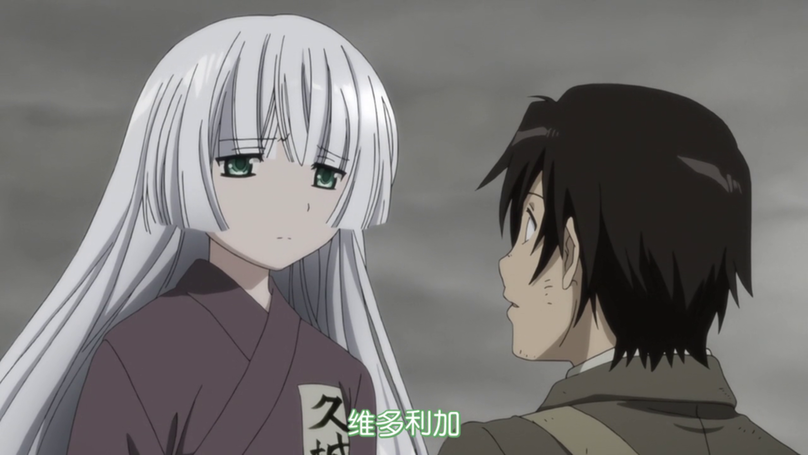
Watched it in fits and starts over two days. My reaction: I wanted to flip a table. “The back 12 episodes are the actual show!”
At first the anime marketed itself as a “loli detective” thing, but judging purely by the deductions in episode one, the depth is laughable. Most of the time it builds up a creepy atmosphere, then the heroine does her little flex, throws in some precise mental gymnastics, and calls it a solve.
That’s not detective fiction, not even close.
Later I found out the author is a woman, which made me a lot more forgiving about the rigor of the mysteries. But after finishing the whole thing, I realized this was never a mystery-first anime. The OP tells you the essence right away: this is a Destin Histoire, “a fate like written history.” Or to put it simply, “destiny.”
Remember the OP lyrics?
ずっと前から决まっていたような〖It’s like it was decided long ago〗 远い昔からわかってたような〖Like it was known since ancient times〗 少しの偶然と 必然をつなぐように〖As if linking a bit of chance with inevitability〗 动き始めた二つの Histoire 〖Two Histoires begin to move〗 まだ知らない世界 新しくめくる度に〖Every time a new page turns in an unknown world〗 解き明かされる确かな Histoire 〖A certain Histoire is unraveled〗
The whole song is telling us that everything unfolds as if arranged in advance—the future is unknown, yet it feels like it was written into history all along.
That idea runs through the entire plot. From the very first murder case, we’re already shown a fate experiment that “predicted World War I.” Then the alchemist murder case looks like mere historical interpretation, but it predicts the future too. What happened to Victoria’s mother seems to repeat itself in Victoria, and even that was decided by someone long ago. The legend of the gray wolf, the prophecy of the beautiful monster—every development plays out as if agreed upon beforehand. The characters struggle against fate, but they still end up walking the tracks of history.
In that light, Victorique’s “Fountain of Wisdom” is just another way of describing Destin Histoire—she merely relates the information she receives.
The fatalism extends to the male and female leads as well: the legends of the Black Death and the monster, the monster and the rabbit, the street fortune-teller’s predictions about the future. Everything develops naturally yet dramatically, and yet it all follows the legends. From their first meeting to their growing bond, even their separation by war—it all plays out exactly as foretold.
All in all, aside from the sheer volume of moe moments (understandable—no moe, no popularity these days) and some loose details (look, Penguindrum wasn’t exactly rigorous either), the story holds together. I heard the original novels weren’t finished—the author just left it hanging—but Bones’ anime-original ending is actually pretty good. I think the author doesn’t need to write a novel ending anymore…
Comments are hosted on the Chinese main site. This mirror is read-only.