GRISAIA Phantom Trigger VOL 2 Review
The Beginning of the Story
Years ago, The Fruit of Grisaia blew up as Frontwing’s anniversary title, and it’s not hard to see why. The game itself is rock solid, and it nails the mix of “daily-life comedy” and “plot-driven drama” — the 30-hour common route is all slice-of-life gags, while the other 30 hours of heroine routes lean hard into wild plot twists. A game that goes “grab both handles and grip them both tight” like that was never going to escape glowing reviews.
The Fruit of Grisaia: possibly a masterpiece
Advertisement
After that, Frontwing struck while the iron was hot and put out sequels in the series, including The Labyrinth of Grisaia and The Eden of Grisaia, plus several DLCs for the game. By the time the last DLC, The Melody of Grisaia, came out, the whole Grisaia series was complete, and the game series even got an anime adaptation. Looks like Frontwing put a period at the end of the Grisaia saga and moved on to making new anti-American propaganda spectacles…
But that new “anti-American blockbuster” they put out, Hatsuru Koto Naki Mirai Yori, got pretty lukewarm reviews. So much for the new brand Frontwing was trying to build…
So what do we see? We see Frontwing expanding in all directions, coasting on the reputation of the Grisaia series, putting moege on Steam, opening up overseas markets… Honestly, by any fair measure, Frontwing is doing a really good job in the overseas market — it’s not just selling its own stuff, it even picked up Sharin no Kuni as a publisher. But that’s not enough. Apart from ISLAND, none of its recent releases are any good. If it can’t put out solid hits going forward, it’s going to be in trouble…
So Frontwing had a bright idea: if the overseas Steam market is doing that well, and Westerners love the Grisaia series so much, then… why not just make a sequel?
So duang duang duang! A new game appeared before us: GRISAIA Phantom Trigger. Except this game turned out a bit different from what we’d imagined…
Three points worth noting:
- GRISAIA Phantom Trigger is all-ages, and it’s got the “sequel” label slapped on it, yet not a single old character shows up — except Thanatos AI, who’s voiced by Kazuki Kazami.
- GRISAIA Phantom Trigger is sold in volumes, one episode per volume, and they haven’t even said how many volumes there’ll be. Frontwing went as far as saying “if it sells well, we can keep making them forever.”
- The only artist left on GRISAIA Phantom Trigger is Akio Watanabe, and the only writer left is Ryuta Fujisaki. Fumio isn’t doing character designs anymore either. It feels like a busted, incomplete “Grisaia” series.
- GRISAIA Phantom Trigger launched on Steam first, and straight up in Japanese and English.
A lot of people, me included, were genuinely disappointed — no Chinese at launch, the lineup is thinner than the Grisaia series, the 18+ content got cut, and on top of that they’re milking it with split volume releases…
So when GRISAIA Phantom Trigger first came out, I wasn’t planning on playing it — who knows how long you’d be waiting for each volume to drop… But in the end I couldn’t help myself and played it anyway. Just the pirated version, though… If I hadn’t been so disappointed in it from the start, I probably would’ve bought it day one on Steam.
I played through the game on and off, and it’s not very long either — the first two volumes launched together. Volume 1 is about 6 hours, Volume 2 about 5, so combined it’s roughly the length of a short visual novel.
And how do I feel afterward, you ask… See the title? It’s just the start of a story… nothing more.
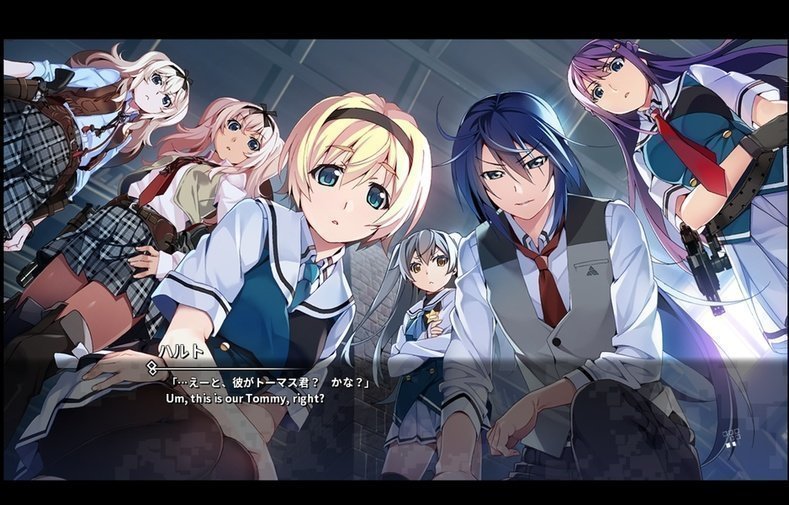
The story is set after the events of The Fruit of Grisaia. The original school gets repurposed as a training academy for a special operations outfit called SORD. The protagonist, Haruto, has grown his hair out long and serves as an instructor there. The students are all orphans taken in through various channels or girls with special circumstances — they attend classes and train day to day, and when the organization needs them, Haruto leads them out on missions. Assassinations, protection details, raids, that sort of thing…
Honestly it’s more like a military academy, or kind of like that movie Naked Weapon — except the heroine in this game doesn’t have to use her body as a weapon.
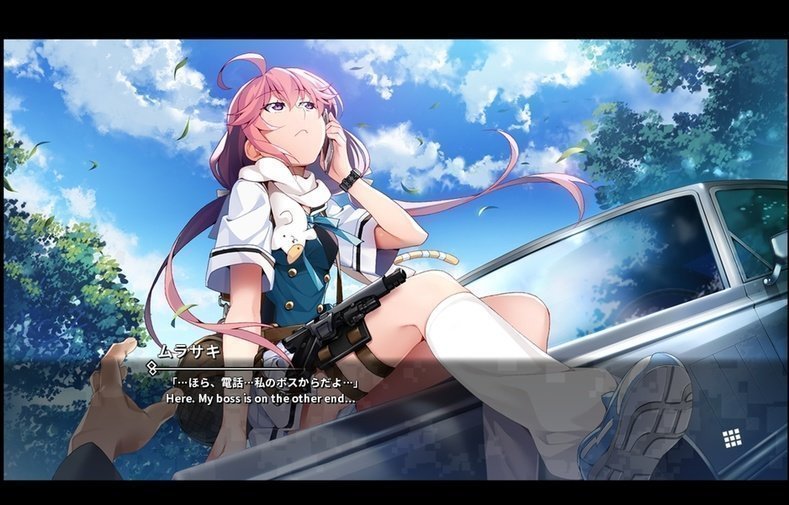
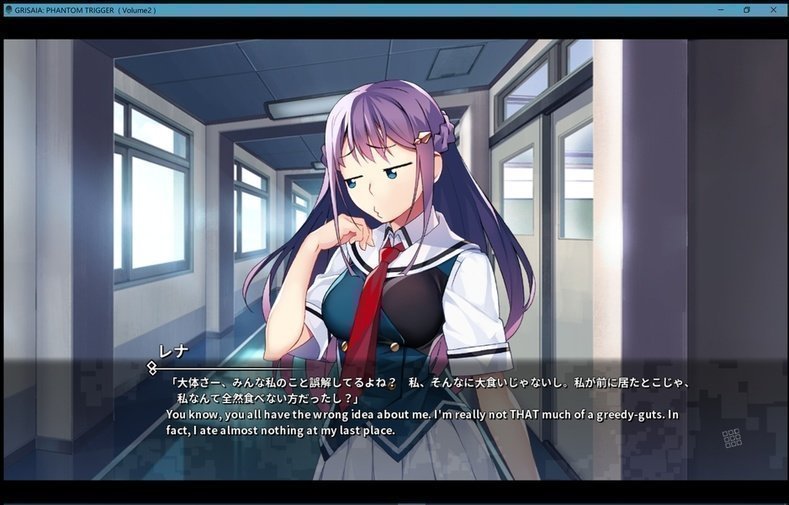
Honestly, there’s not much worth saying about this game’s plot. Volume 1 is told from the perspective of a newly arrived female teacher reporting to the school, and she introduces the game’s setting and characters; at the very end the first incident hits—the teacher gets mistaken for an arms-dealing underworld contact and kidnapped, and the protagonist leads the rescue, giving the game’s heroines their first moment in the spotlight. Volume 2’s story is a bit more serious, though it still has an ulterior motive: to introduce a new character… namely Inohara Maki, voiced by Nanjō Yoshino. It sets up an incident where “the head of a Russian crime syndicate steals a heart intended for an organ transplant,” and Nanjō Yoshino’s character, Inohara Maki, is a mercenary under that Russian crime boss. Naturally, she ends up defeated by the protagonist’s side—and it turns out Rena (the number-one heroine) actually knows Inohara Maki. The two were orphans at the same time and were abducted by the same organization to be sold as goods. After her defeat, Inohara Maki is taken captive by the protagonist and ultimately successfully recruited, becoming one of the team.
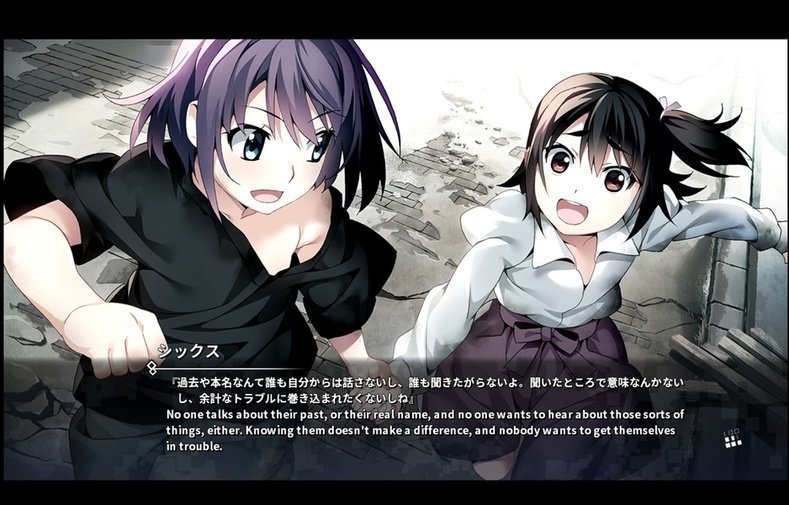
The two volumes of this game cover exactly that much, and it feels oddly familiar — like the opening of a serialized novel or manga. Volume one lays out the setting, volume two brings in new characters, and the actual story hasn’t even started yet.
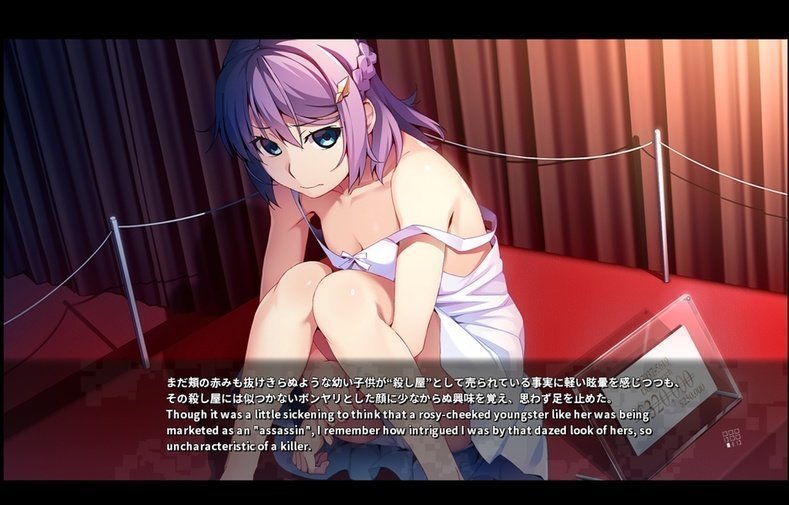
Volume 3 of GRISAIA Phantom Trigger has already been announced, and they’ve made it clear it’ll focus on Touka — the little loli voiced by Ayane Sakura — and her past. So it looks like the games from here on will mostly be about laying out each heroine’s backstory, one at a time; only after every heroine’s past has been covered can the story really move forward. And how long that forward movement lasts… well, that depends on how well the games sell.
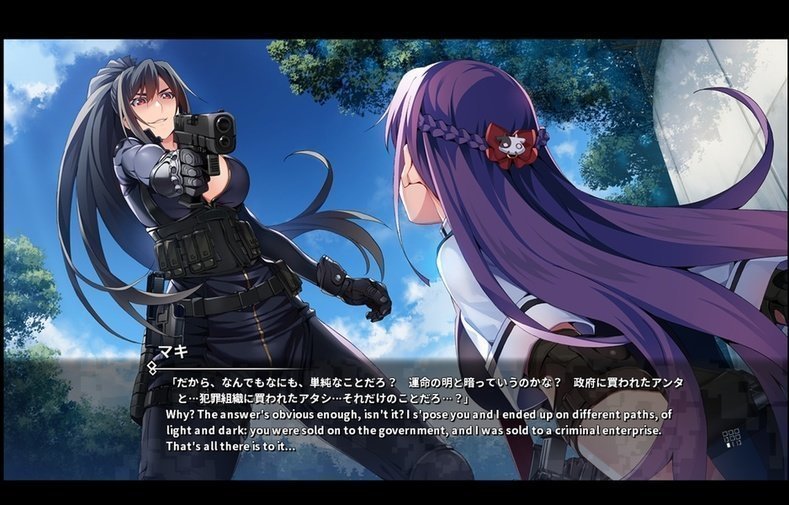
The formula feels really familiar, honestly — it’s exactly the style of a serialized light novel or manga. frontwing just took a different angle, selling Galgame as if it were a serialized work. Whether it’ll succeed is genuinely hard to say, since Galgame’s audience is smaller than light novels’ and manga’s to begin with. But… frontwing has a ton of gaijin fans overseas, and the game sells like crazy on Steam. I think their revenue has already surpassed that of the domestic heavyweight Yuzusoft. Maybe, backed by those strong Steam sales, this game really can keep going — and pull off a miracle.
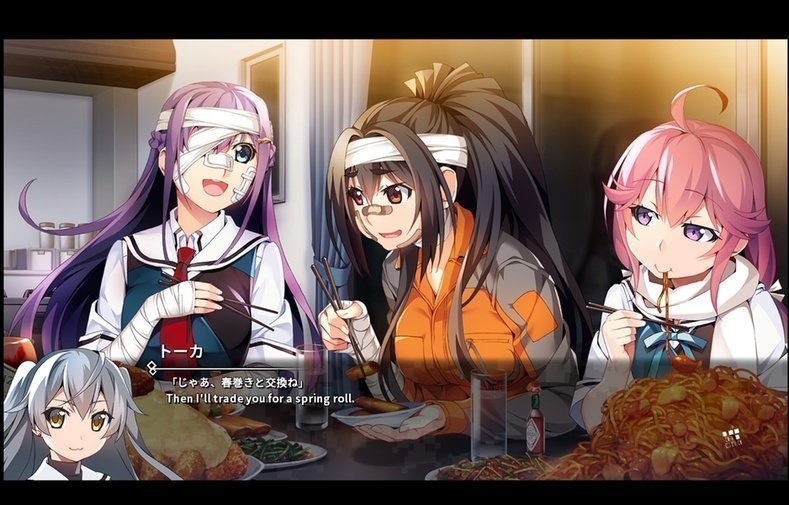
Anyway, I think Frontwing has done a solid job of “trying to push Galgame to an international audience” — lots of ideas, and plenty of formulas too. GRISAIA Phantom Trigger itself is actually pretty good: the combat is exciting, the art is sharp, the CVs put in the work, the marketing is earnest, and the soundtrack is the same as always — the style hasn’t changed. Worth noting: the English translation is genuinely interesting, and I hope people check it out. A lot of it is incredibly well rendered — there’s some real talent inside Frontwing.
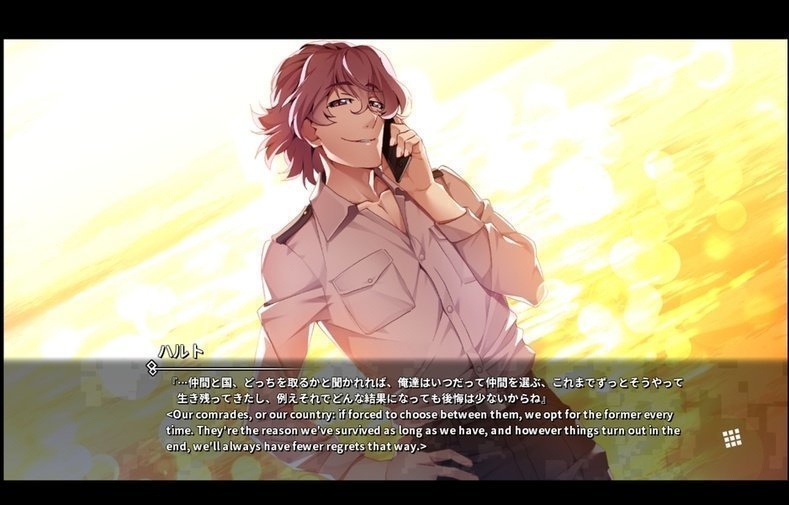
That’s a lot of praise, but I still can’t judge this game as a whole. No matter how good everything else is, the story alone gives you nothing to go on, and the voice acting has its issues too — Uchida’s performance is a bit too unhinged, for one. The art is the same as ever, as I said earlier. How GRISAIA Phantom Trigger actually turns out, I honestly can’t say. After all, this is only the beginning of the story.
Comments are hosted on the Chinese main site. This mirror is read-only.