Hands-on: Sony Xperia XZ Premium
Sony Xperia XZ Premium: My Experience with Screen Protectors and Cases
Disclaimer: I haven’t taken money from any of the links below. If a shop wants to pay me, feel free to do it here. Whether you buy or not is your call—these are just my personal recommendations. Don’t come at me if you buy something and it sucks. And most importantly: if you’ve got the cash, I really don’t recommend using a screen protector at all. The Sony Xperia XZ Premium feels best naked—except it chips easily.
Honestly, I’ve always thought curved screen designs are useless except for decorative light effects. That’s why I think Samsung’s various curved-screen phones are ugly as hell—like a piece of crystal-clear soap. I don’t know if anyone else likes square, boxy designs like I do. That’s why I’m willing to pay for Sony phones. I was also willing to pay for the Smartisan Pro—too bad Luo Yonghao wouldn’t give his own system stock Android.
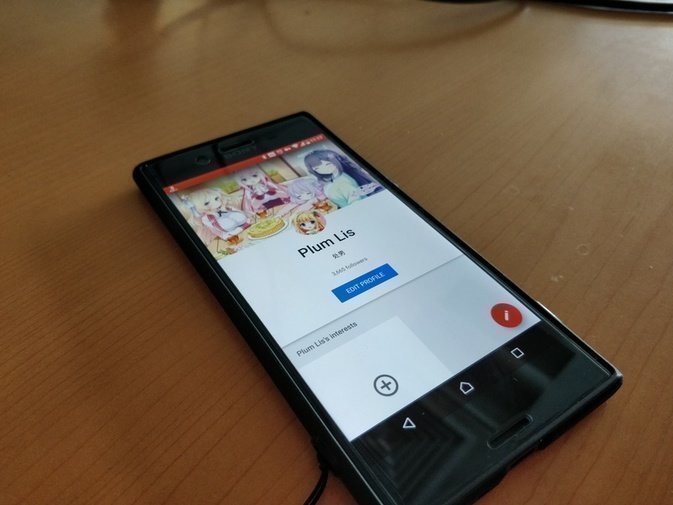
But sadly, even though the Sony Xperia series stuck with the square design for a long time, it eventually fell too and started doing curved screens. Based on my experience with the Xperia XZ Premium, this curved screen is completely useless. Maybe the corners feel better to hold, but the flat bottom still digs into your hand a bit. Sure, they added a bevel at the bottom to reduce the digging, which just proves you don’t need curved sides either—a bevel is enough. Anyway, you can’t make the whole thing curved like a crystal soap bar; doing it halfway is worse than not doing it at all.
But regardless, the Sony Xperia XZ Premium already has a curved screen, which creates a big problem: screen protectors are a pain.
Why use a screen protector?
A lot of people say they don’t use one. I’d like not to either, but I’ve got a few issues.
- My house is super dusty—leave anything out for half a day and it’s covered.
- I frequently use my phone in harsh environments.
- I don’t carry a small bag for my phone, and I often do intense physical activity with it.
- I need to keep the phone in good condition so I can sell it and recoup some cash when I upgrade. I’m poor; my upgrade cycle is 2 years.
So if you drive often, have a dedicated little bag for your phone, live in a clean environment, work in a clean environment, don’t do much physical activity, and can make your phone last 2 years or until it dies—then you don’t need a screen protector. Or if you’re rich and just replace it when it breaks or gets dirty, you don’t need one either.
For me, I have to use a protector and a case too. It’s mainly because I’m poor.
As I said, screen protectors for the Sony Xperia XZ Premium are a pain, but that hasn’t stopped most protector makers. They’ve come up with lots of solutions. I’ve tried basically all of them and stepped on plenty of landmines, so let me share my personal experience. It might apply to other curved-screen phones too.
1. Full-coverage transparent film
The most common type on Taobao. Looks perfect—fully transparent, just slap it on. In reality, it’s the most problematic.
This kind of film only has adhesive around the edges. That means only the edges stick; the most important part—the middle of the screen—isn’t attached. What happens? The film isn’t really a film; it’s more like a shell. Since the middle isn’t adhered, dust creeps in through the gaps. Before long, you’ll find dust and hair packed around the cutout near the camera. It looks hideous. And this so-called full-coverage transparent film has the worst light transmission—the screen looks foggy and disgusting.
Strongly not recommended.
2. Hydrogel film / soft film
The second most common on Taobao. No matter how they hype it as “tempered glass hydrogel film” or “tempered hydrogel film,” it’s all the same thing: hydrogel film, a.k.a. soft film.
This stuff is soft—feels like the protective film that used to come on the instrument panels of old devices. You can touch it, pick at it, and see wrinkles; peel it off and there’s a film underneath. That’s basically what it is. This is the only type that can fully adhere, and once applied it looks decent—at least on the surface. In theory, it’s worth buying.
But there are two kinds: one that encourages wet application (splash some water, apply, squeegee the water out), and one that doesn’t (called “beauty film”). I prefer the latter, because wet application easily leaves water spots, and the wet type usually has terrible light transmission—the screen looks dirty once applied…
The latter is okay, but light transmission is still key. Simply put, hydrogel film isn’t unusable—you just need to make sure it’s clear, not dirty-looking, and ideally has a decent coating so it feels smooth. But it will never match a glass film with a proper coating; it’s just passable.
3. Plastic soft film
The earliest type of screen protector—the plastic film that existed before glass films. The most awkward to apply. First, it will definitely have white edges, because even plastic film can’t bend and conform like hydrogel. Second, the coating is mediocre, light transmission is mediocre, scratch resistance is mediocre—it’s bad at everything and doesn’t adhere well. The only advantage is price: Taobao has 10 for 10 yuan. Nothing else.
Not recommended.
4. Tempered glass film (non-full-screen)
Because of the curved edges, almost all tempered glass films for the Sony Xperia XZ Premium are cut very narrow—just covering the display area. Sadly, even then there are white edges. Why? Because the Sony Xperia XZ Premium starts curving before the screen even reaches the edge…
White edges are 100% unavoidable, no matter the brand, unless the film is cut narrower than the display area.
The solution is a “white edge repair liquid.” It feels like oil—you seep a bit of oil in to fill the last gap. Some say it attracts dust; some say it stops working. But after repair, the whole film looks much better—except it’s still not full coverage.
5. Full-adhesive full-coverage film
A newer type—basically a variant of the first kind: glass in the middle, colored soft layer around the edges. The difference is the entire back is adhesive, not just the edges; even the middle screen area adheres. But it has two big drawbacks:
- The edges can’t be transparent—if they were, you’d see dust packed around them, so they have to be colored. And they can’t match Sony’s special black-blue color; they only make pure black.
- The black edges cover part of the screen, mainly the sides—about 1mm.
And I don’t know if this counts as a drawback, but it’s ugly. This type is the ugliest; go look online if you want to see how ugly.
Still, this is a “full-coverage,” “fully adhering” “tempered glass film.” It just sacrifices too much…
That’s about it for Sony Xperia XZ Premium screen protectors. So which ones are tolerable? First, the full-transparent edge-adhesive type has to go. Then the traditional plastic films have to go. The water-application ones have to go too. The rest are acceptable. Let me name a few products.
1. Soft film / beauty film
I recommend Rasta Banana’s full-adhesive film from Japan. Taobao used to sell it, but that shop stopped and now sells a matte version instead. I don’t recommend the matte version—poor light transmission. You can buy this film on Amazon Japan for under 100 yuan. Application is very easy—there are alignment aids around the charging port, so it goes on easily. Light transmission is excellent, and the film has some coating, though just average. Note it’s a soft film, so hard objects will leave marks… It’s not glass, after all. This is currently the best-balanced protector. You can also refer to a Taiwanese article for more on this film.
If you don’t want to import from Japan, you can buy Taiwan’s Devil equivalent film. It’s cheaper—40 yuan each—but it’s very hard to apply. Unlike the Japanese version, it doesn’t have lots of alignment holes to help you. You also need patience and very fine fingernails to peel it open. Once applied, the result is okay, but light transmission is personally a bit worse than the Japanese banana one. Still way better than most so-called hydrogel films—within acceptable range.
2. Tempered glass film
Tempered glass films must use oil to fix white edges. Worth recommending here are Nillkin and… Fangtai—no, Fangshao Zhimo. There’s not much difference between them; both have white edges and need oil. The difference is Fangshao Zhimo includes repair liquid (oil), while Nillkin doesn’t. Fangshao also claims higher specs than Nillkin and is a bit cheaper. I personally lean toward Fangshao Zhimo. Of course, you can buy Nillkin and drip some oil yourself—it’ll do. Both have coatings and are usable.
3. Full-adhesive full-coverage film
I personally don’t like this one—it’s ugly, blocks the screen, and after applying it feels like your eyes are far from the screen, which is uncomfortable. But it’s the only full-adhesive glass film solution.
The only options I can recommend are Dakang Youxuan and Xiaoxiaoyulei. Xiaoxiaoyulei’s has a logo and cutouts—even uglier. Dakang’s looks better, but I’m not a big fan of the guy—he’s always whining on Weibo. The product is passable, though. Worth noting: different Sony Xperia XZ Premium units vary a lot—some have a bigger curve, some smaller. Even a full-adhesive film might not fit immediately; buying an extra one to try might help.
As for cases, I don’t think there’s anything special for the Sony Xperia XZ Premium. Most are fine—just differences in feel and style. I personally recommend Rasta Banana’s original case. The feel is top-notch, it doesn’t block the fingerprint sensor, and it’s very usable—just a bit expensive.
Another recommendation is Devil’s own metal bumper case, but it’s not out yet. I think it’s promising; I’ll test it once I get my hands on one.
Comments are hosted on the Chinese main site. This mirror is read-only.