Harune Alice Gram (春音アリス*グラム) Review
Game Recommendation: Haruoto Alice*Gram
Haruoto Alice*Gram, also known as My Daily Life With the Black-Tights, White-Tights, and Blonde Big-Tittied Girls in the Mental Hospital, comes from the Japanese eroge company Nanawind. It assembles star artists Nanao Naru and Takanae Kyourin giving it their all. A luxurious voice cast: the 36-year-old Sendai auntie who can’t find work and begs eroge companies on Twitter to no avail voices a heroine, the nearly-30-still-unmarried Ishihara Mai gets picked as a side heroine, and Ozaki Mami — the professional seiyuu who landed one lead in Girls und Panzer and then never got another anime gig — does a typecast brain-dead foreign ojou-sama performance. After several delays and repeated script polishing, it finally launched with much fanfare this month, with PlayDRM standing guard, leaving countless otaku sighing at the mysterious 300 and unable to play. Two weeks after release, it hit fifth place on ErogameScape’s most controversial games of the month, right behind that bug-ridden mess Tantei Seven.
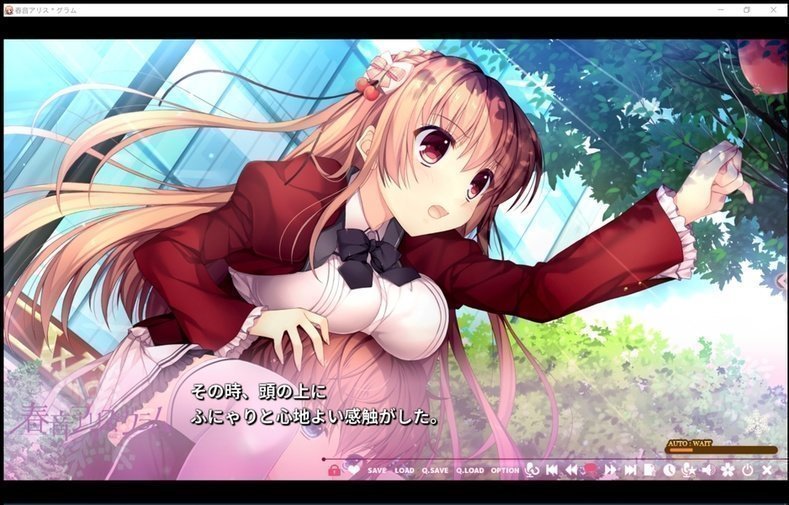
Haruoto Alice*Gram is about a protagonist whose name I still can’t remember, stuck in a mental hospital disguised as a school, manipulated by the hospital director into factional warfare between several hospital organizations. This school-looking mental hospital hosts the “Twilight Club,” the “Student Council,” the “Newspaper Club,” the “Disciplinary Committee,” and more, all entangled with each other, infighting, occasionally cooperating.
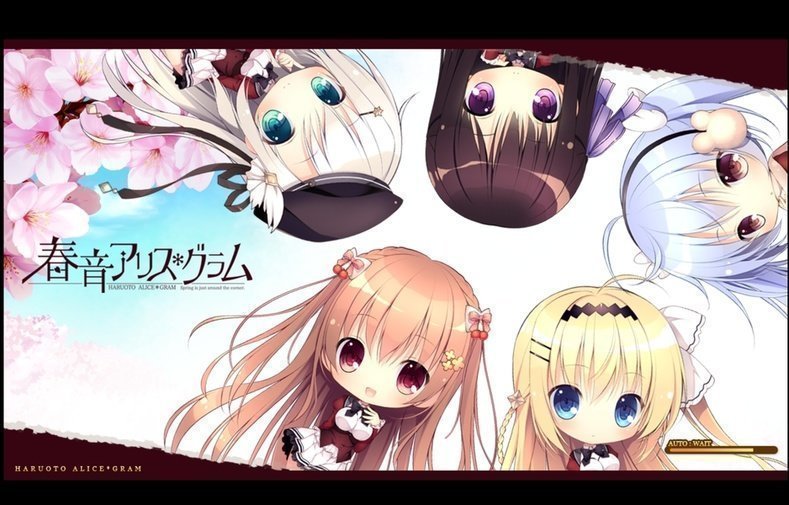
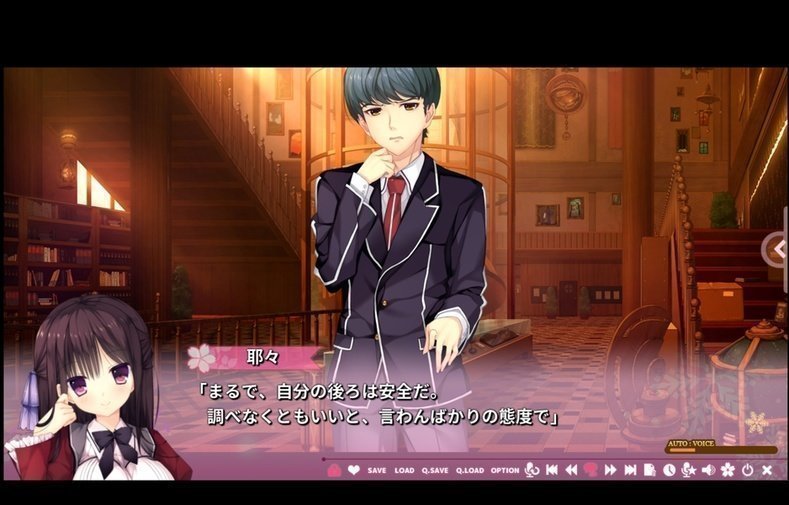
The Twilight Club’s leader is the big-breasted, black-tights, long-legged Rindou Yaya — a deep tsundere with a mild sadist streak who likes to fish for other people’s words first, then add “I was thinking the same thing,” when in reality she can’t do anything but flex.

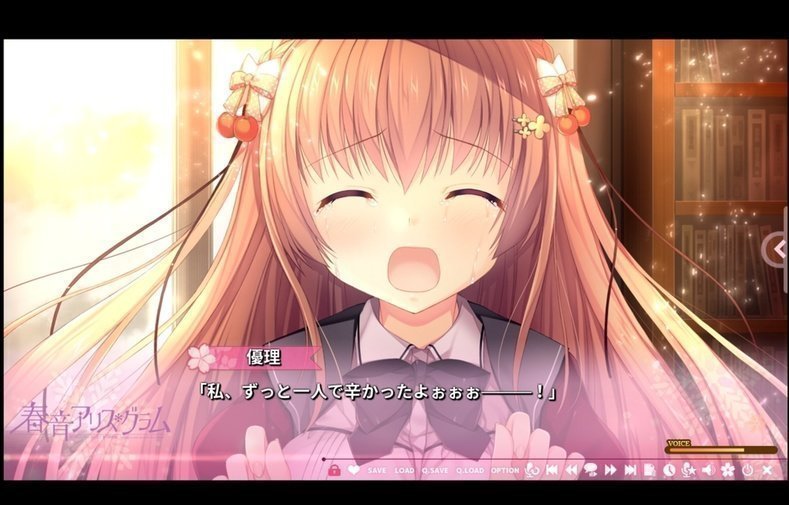
The Student Council’s leader is the big-breasted, white-tights, white-lotus Shiraha Yuri — outwardly proper, inwardly horny as hell, her hormones go into overdrive the moment she sees the protagonist, with CV加成 from the fathead-fish-looking Sendai auntie.

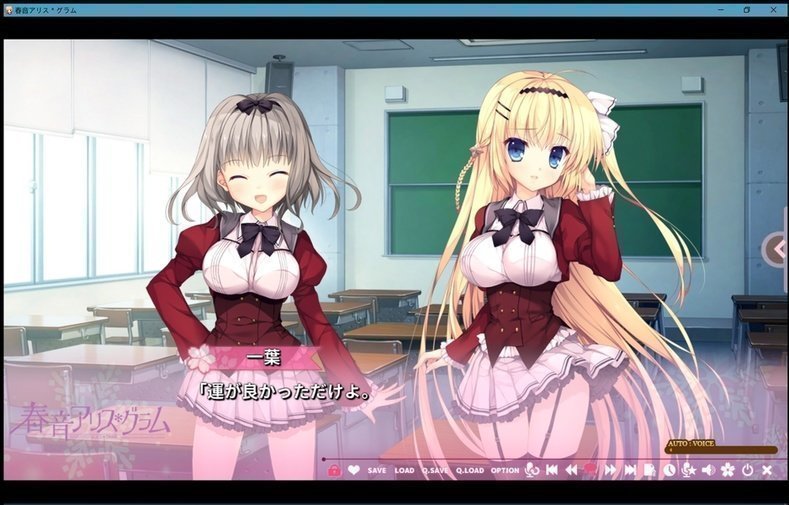
The Disciplinary Committee’s leader is the big-breasted blonde, straitlaced, perpetually in heat over the protagonist while constantly feigning restraint — the seductive bitch Kondoji Kazuha.
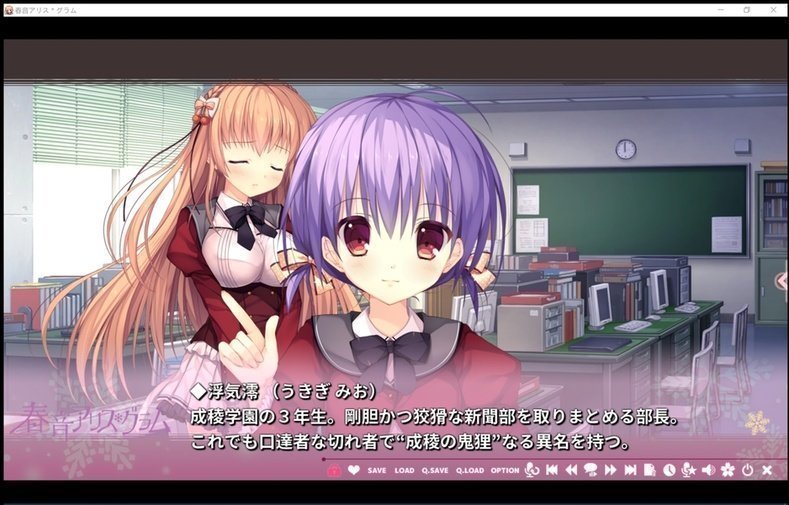
And the Newspaper Club’s leader isn’t even a romanceable target — she spends the whole game being smeared as a villain, only to be revealed at the end as not actually a villain. The purple-haired flat-chested Ukeki Mio, whose name I can’t even remember.
Compared to similar products, Haruoto Alice*Gram takes a unique approach to its characterization: it adopts a realistic method like walking into a mental hospital, vividly depicting the dialogue elements and scenes a mental hospital ought to have. It sets up “cards” — a gimmick whose purpose you still won’t understand by the end — to add chuuni flavor to the narrative, letting each character use her own “card” to summon the power of Alice Gram and briefly boost her thinking ability. The game pours tons of effects into the card-summoning演出, even adding reverb to the voices for mystery’s sake. The card summoning has zero effect on dialogue or plot, but it’s precisely this presentation that better fleshes out the delusional world of the protagonist and his several big-breasted mental patients.
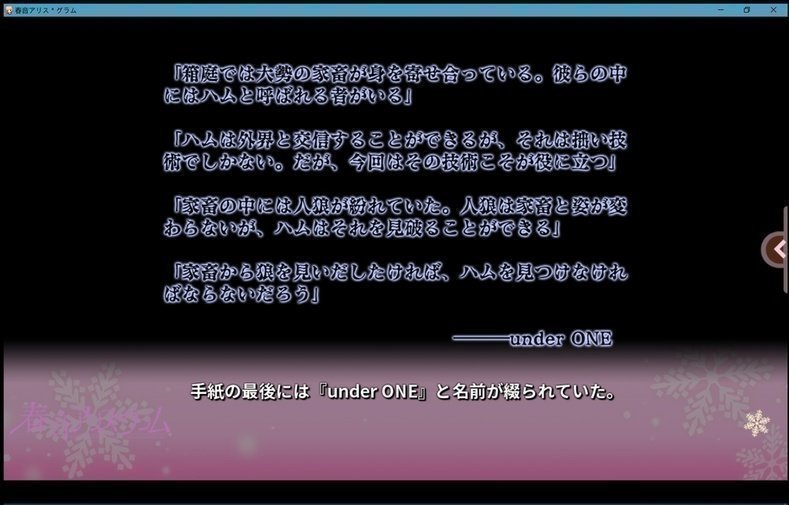
Haruoto Alice*Gram isn’t just unique in its mental-hospital worldview — it boldly fuses “school” and “hospital,” and only at the very end, when the director appears in a white coat, is the truth of this world revealed. The plot advancement combines the hallmarks of psychiatric patients — “making a big deal out of nothing, randomly fucking around for no reason, and deep persecutory delusions” — packaged as “mystery” and “deduction.” It vividly presents the insane scene of “a bunch of idiots seeking counseling from another bunch of idiots,” with a postmodern kind of excitement and fervor within the madness. During the deductions every character acts her heart out, especially Twilight Club leader Rindou Yaya, who’s always unexpected, radiating the stability of someone strategizing in the command tent, syncing her brain with idiots a thousand miles away. The deduction process needs no logic, no thought — just chant the card, summon the power of Alice Gram, open the heavenly eye amid the reverb, declare yourself omniscient, then launch into a long, show-off monologue. Most people would consider this so-called deduction utterly stupid, but for the patients in a mental hospital, it’s already commendable. And all the heroines are big-breasted. All of them.
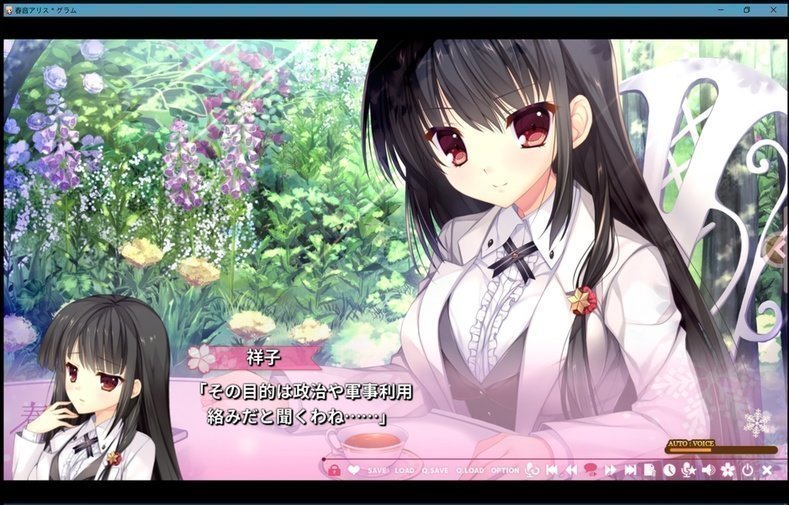
The plot advances in a structured way, nine chapters total. The first seven are all about infighting among the hospital’s major organizations, and in the final chapter the Last Boss finally appears — turns out there’s also a “Phantom Thief Zero” in the hospital. The game never explicitly says who Phantom Thief Zero is, but it doesn’t matter, because the final incident wasn’t their doing either, and the culprit isn’t any of the seductive bitches you can fuck. The game faithfully upholds the Japanese eroge political correctness of “anyone who’s fuckable isn’t a bad person.” When the truth of the final case — “I impersonated Phantom Thief Zero and stole stuff just to smear someone else” — comes to light, you’ll find that the guy who looked like a villain from the very start really was a villain. This suspense-free sense of stability is truly flawless. Rock solid. The game has tons of choices but takes good care of its infant users’ IQ levels, so there aren’t too many problems.
Like most eroge, after chapter eight you can date the heroines. No matter which seductive bitch you pick, all roads lead to Rome, and eventually you climb the stairway to adulthood hand in hand. This is the most anticipated and most valuable part of the whole game, the part that most embodies it being an “adult game.” Boring as it is, it’s necessary for the game — its very existence successfully raises the game’s target audience, because otherwise this game would be better suited for preschoolers aged 8 to 10.

Haruoto Alice*Gram shows traces of “paying tribute to classics” in many places. The game’s setup includes the “Student Council” and the non-Student-Council “Twilight Club,” and the Twilight Club’s reliability is more popular in the game’s reputation than the Student Council’s — this setup feels like a tribute to The Shepherd of the Great Library. The game also centers on accepting and completing requests as plot content, still carrying the same structure as The Shepherd of the Great Library, except the target age bracket takes a different path based on the scenario writer’s personal mental age, opting for more infantile dialogue and puzzles, perfectly matching those players who are “adults in body, infants in brain.” The game’s only foreigner, and the one who looks most like a heroine, Sakimori Elisa, is another highlight. Elisa is supposedly 18 but acts like an 8-year-old elementary schooler at every turn, creating a strong sense of contrast, and she’s constantly shouting “わたし、気になります” (I’m curious… oh wait, I’m curious) — this is mostly a tribute to Hyouka, except Elisa is more like a kindergarten version of Chitanda, which the game doesn’t say outright but is evident from her shrill baby voice alone.

So Haruoto Alice*Gram is a game of many parts: gorgeous visuals, all-big-breasted heroines in matching tiny miniskirts, a soundtrack that alternates between lilting and noisy with sharp contrast, a dialogue style that’s like “viewing the adult world of a mental hospital through infant eyes,” a common route length that lets you fully appreciate the value of time and effectively cures insomnia while cultivating your ability to “do other things while gaming,” and the magic called Alice Gram that ensures “even if you’re playing auto while grinding ranked in Honor of Kings, I’ll make you lose ten in a row.” Add to that its many “tributes” to successful games, infantilized due to the work’s own positioning, and you get a masterpiece that represents this year’s best tool for helping galgamers escape their otaku lives and rejoin society.

If you love someone, send them to play Haruoto Alice*Gram, because this game will make them understand how precious and excellent other games are. If you hate someone, send them to play Haruoto Alice*Gram, because this game is enough to show them what an insult to their intelligence looks like.
Haruoto Alice*Gram: the industry’s hope, the savior of otaku, a fine product made with maximum sincerity for an audience of 8-to-10-year-olds, while users over 10 only need to look at the HCGs to speedrun it — a true “all-ages” work. It’s also a beacon in the anti-piracy world: the unfinished business of president Miyake Kei has been accomplished by Nanawind. So what are you waiting for? Go top up your mysterious 300 already.
Thanks to Well Honey for the PlayDRM crack. If I ever B Princess someday, I’ll @ you.
Comments are hosted on the Chinese main site. This mirror is read-only.