Kage no Umi no Apeiria (景の海のアペイリア) Review
When Possibility Interferes with Possibility, It Creates Another Possibility
Kage no Umi no Apeiria (景の海のアペイリア)…
This is a game built on deception.
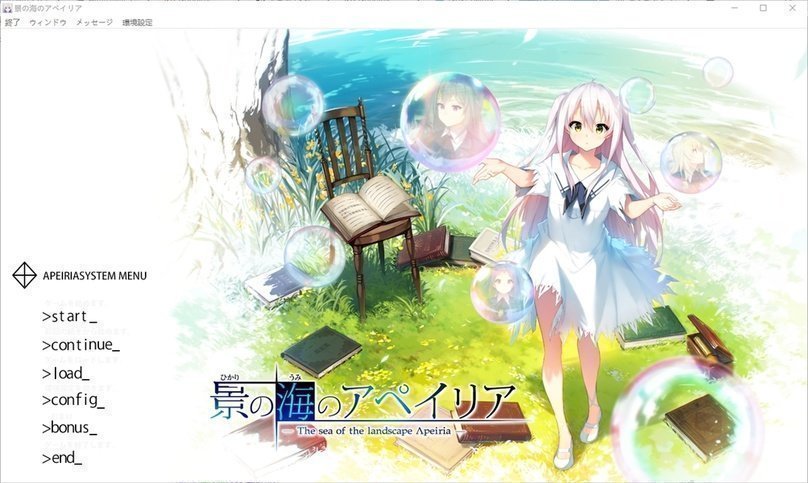
When the game first announced its premise, I looked at it and went huh? The main heroine is an AI voiced by Akino Hana, and every other heroine has two versions—one in reality, one in a VR game. The game description said the protagonist would explore a VR game with the heroines and run into danger.
What does that remind you of? Yeah. SAO. Sword Art Online.
Then the trial version dropped, and I burst out laughing…
Forget the heroines—the protagonist’s whole deal is two words: へんたい. In English, “pervert.”
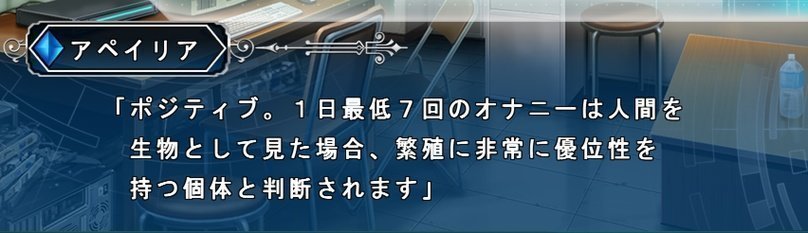
And yeah, his behavior in-game totally earns the label. He’s jerking off from the very start and frequently delivers dirty jokes with a completely straight face. But I always felt the protagonist’s characterization was a bit off. First, he’s a pervert. Second, his IQ is absurdly high.
High enough to develop a near-complete A.I.
Which might make you think this is a comedy game that gets a little hyped at the end but is ultimately average.
That’s what I thought too. Then I got slapped in the face. Hard. Felt the same way playing ISLAND last year.
The game is set in the 203X future. Right away, the protagonist runs a “Moe A.I. Development Club” at school, and he’s the president. He uses the school’s DNA computer and various peer-to-peer networks to develop his own moe A.I. His reasoning: he doesn’t have a girlfriend, so he’ll just build one. Also, he gets a spam email from someone claiming to be from the future, saying he’ll jerk off at a specific time and ejaculate a certain amount—and the email is right. He ends up splooging on a girl’s face as she walks by, and she becomes his stepsister.

Meanwhile, his father remarries, giving him a stepsister named Kirishima Miwa (the face-splooged girl). He also has a childhood friend, Kuon, whose father is a scientist working on A.I. Her father believes in the “technological singularity”—the idea that tech development will hit a sudden breakthrough at some point, and the whole world will change.
But the protagonist keeps his A.I. project secret from his childhood friend’s father. He’s secretly using his network to develop his “moe girl A.I.” He names her Apeiria, from the Greek ἄπειρος (apeiros), meaning unlimited—representing his hopes for his creation. Eventually he finishes the A.I. and drags his friends over to see it. She’s just an A.I. trapped behind a screen, but he’s happy. Her processing power is no joke, since he recklessly used parts of his own DNA module to build her. And then he gets an idea… he wants to interact with Apeiria more directly. You can’t build a girlfriend you can’t touch.
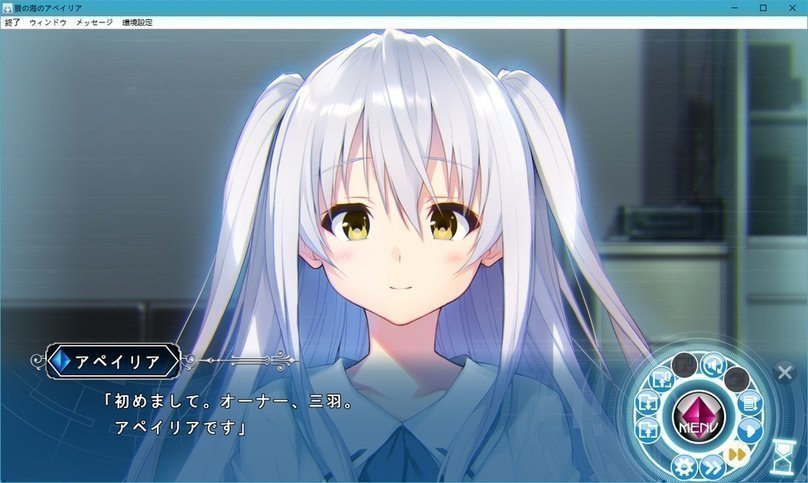
So what’s the plan? VR. He figures he’ll develop a simple VR game, log in from the display, and Apeiria can log in from the network—then they can meet in that world.
Since Apeiria has massive processing power and can use distributed cloud computing, he has her link up all available computer resources on the network to build the Apeiria Network, and on top of that, a VR online game called Second (kinda like that famous game Second Life). He can’t be bothered to build it himself, so he lets Apeiria create the world. He just sets a few rules as the Creator.
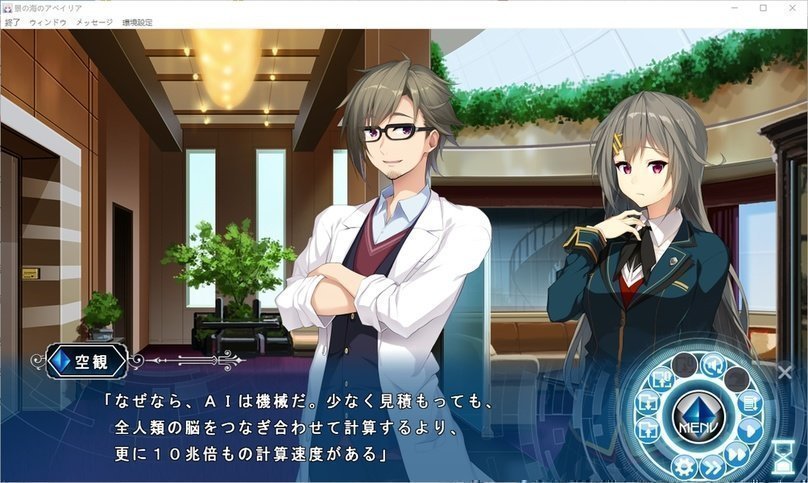
- It’s a sword-and-sorcery fantasy world—his childhood friend’s suggestion.
- Everyone in the game has an ability called Desire, and using Desire costs something—basically, superpowers come with a price. His suggestion.
- The game randomly spawns “Forced Quests.” Players who receive one must complete it. Fail, and you’re kicked offline and can never log in again. Suggested by his club’s ghost member, Higashi Mashiro.
With the rules set, he jumps in and starts having fun, advertising on the bulletin board to attract players. You play by putting on a headset or whatever and diving in, just like SAO. In the game, he finally meets the Apeiria he created, and he’s overjoyed… He and his harem of heroines grind monsters and level up, having a blast.
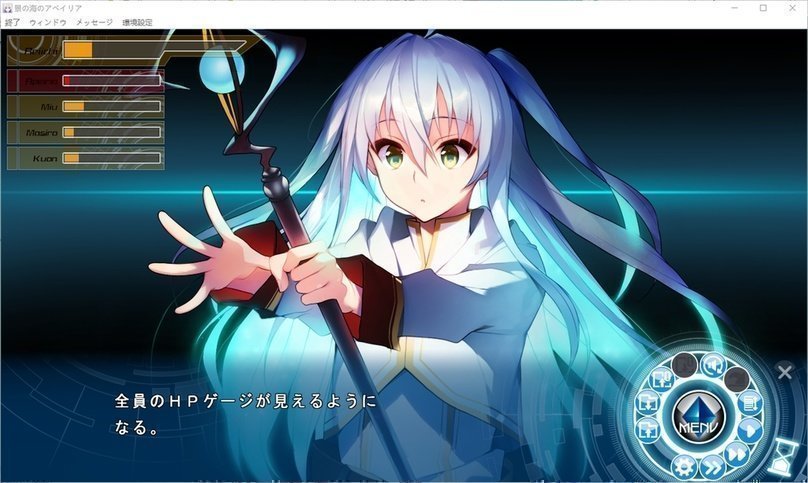
When he logs out, he’s shocked to find that four hours passed in-game but only forty seconds outside… (Accel World vibes, anyone?)
He thinks it’s convenient and doesn’t question it. Then, on the third day of the game running, shit hits the fan.
A TV report says someone died of brain death while playing at home—third case so far. The protagonist investigates and finds it was caused by his game.
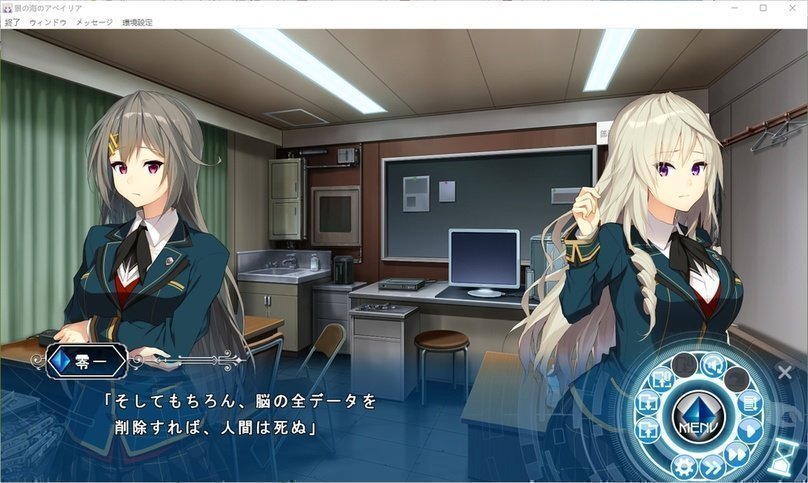
Digging deeper, he discovers all the dead players had failed a “Forced Quest.” They were supposed to be kicked offline and banned from logging in, but they died instead. Then it hits him: he only said “kicked offline and can’t log in” without specifying how the system should implement it. So the system just wiped their brains, causing brain death…
He realizes this is bad. More people will die. And during a Forced Quest, you can’t log out—logging out counts as failing the quest, which means brain wipe and death.
Since Forced Quests can be assigned at any time, randomly, the game is now a death trap. He sends his Apeiria in (A.I. can’t get brain death) to post a notice telling players to log out immediately before they get a Forced Quest…
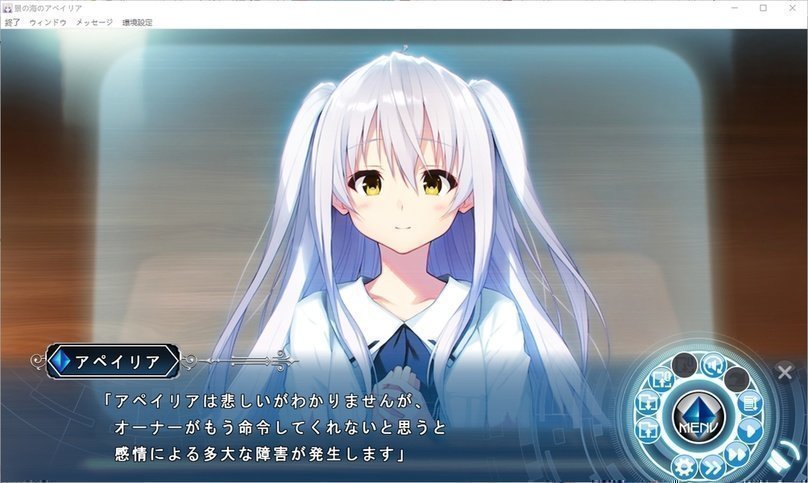
Players log out smoothly—until the last 99 are still inside, and the protagonist loses contact with Apeiria. He has no idea what’s happening in the game.
He decides to risk it, log in, assess the situation, and save his Apeiria.
And immediately gets fucked. Upon entering, he receives a Forced Quest: kill the Boss Princess, the game’s final boss. Meaning he can’t log out until he beats the game. He also finds Apeiria is missing, and the game is riddled with viruses. The server was probably infected, and Apeiria got infected too.
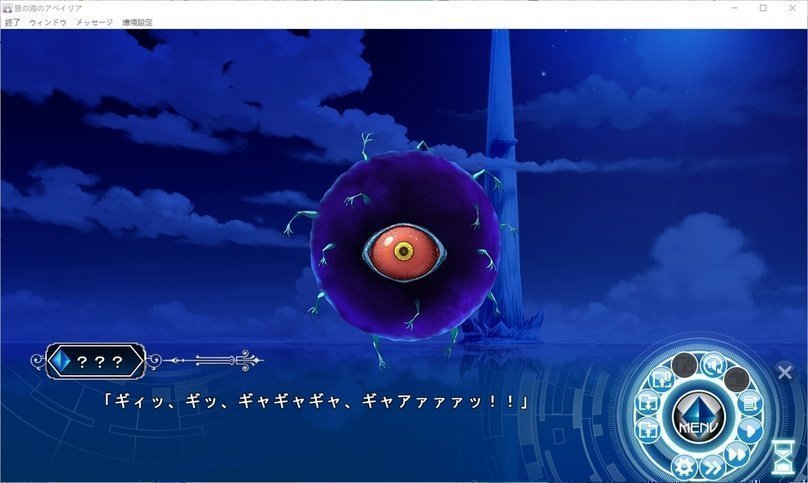
He heads for the final boss. A masked stranger called Thinker appears, saying he’s only here to study Apeiria, doesn’t plan to clear the game or cooperate. The protagonist can tell he’s shady but doesn’t know his goal, so he keeps going. He breaks through the virus horde into the boss room and sees Apeiria waiting. She reaches out her hands, and before she can speak, everything goes black.
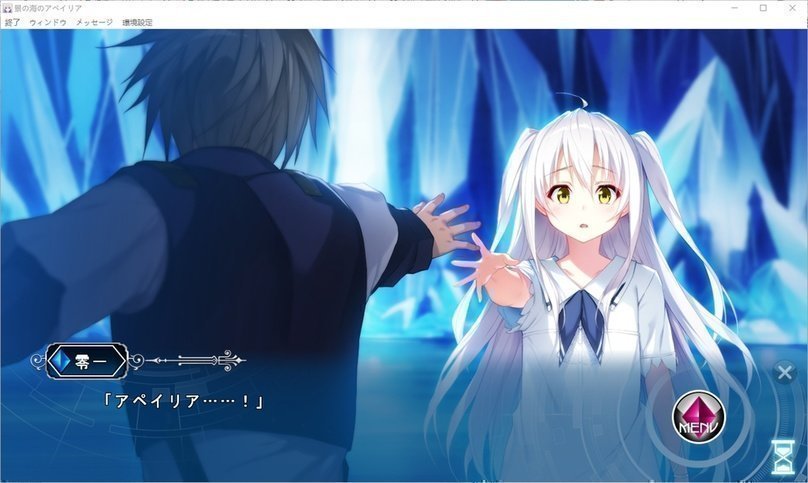
He wakes up in a strange room with a computer full of emails. He calls it the 02 room. Through the emails, he realizes the machine can send messages to his past self… He quickly writes a letter detailing future events and warns: do not use the Apeiria Network to develop an online game. Without that game, none of this tragedy happens.
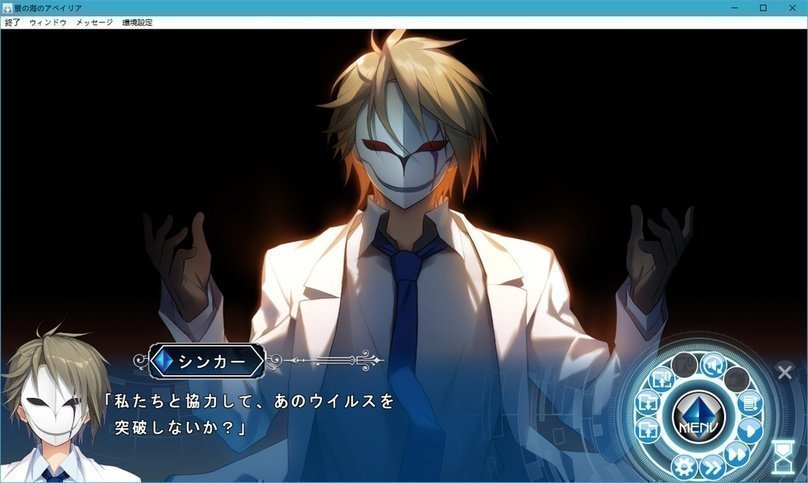
After sending it, he falls asleep again. When he wakes up, he’s traveled back three days.
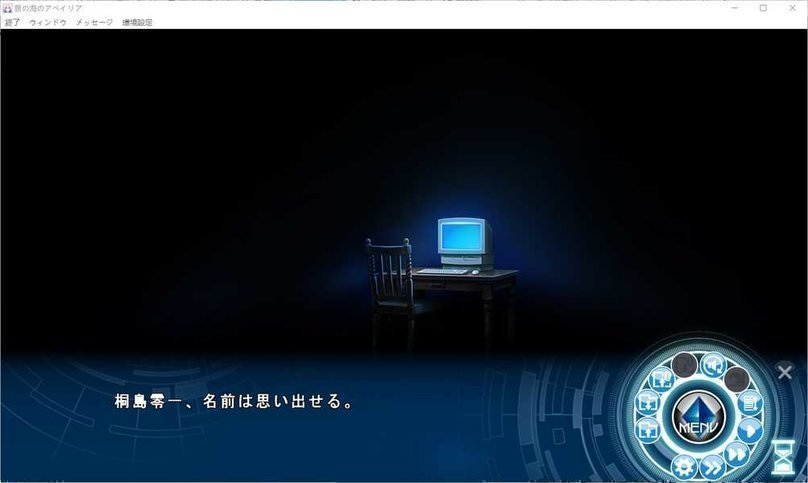
Sure enough, he receives that email—from his future self, telling him not to develop the VR game on the Apeiria Network.
He complies. Things play out the same as three days ago: he develops Apeiria, then when it’s time to build the network and VR game, he makes an excuse and drops it. He thinks it’s over. Then, three days later…
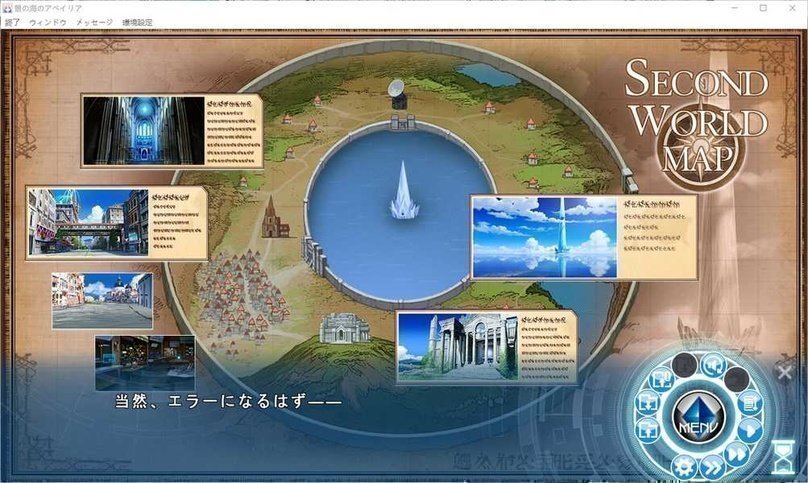
Someone dies anyway. Same reason, same method, in the same online game, with the same name.
He’s confused. He didn’t develop it…
He logs in and—holy shit—it’s identical to the one he created…
Same people, same viruses, same Thinker. Meaning even if he doesn’t make this world, the game still appears on its own. This time he tries to approach the boss, but Thinker blocks him. They duel, evenly matched in both brawn and brains. Just as he’s about to win, someone stabs him in the back. He dies…
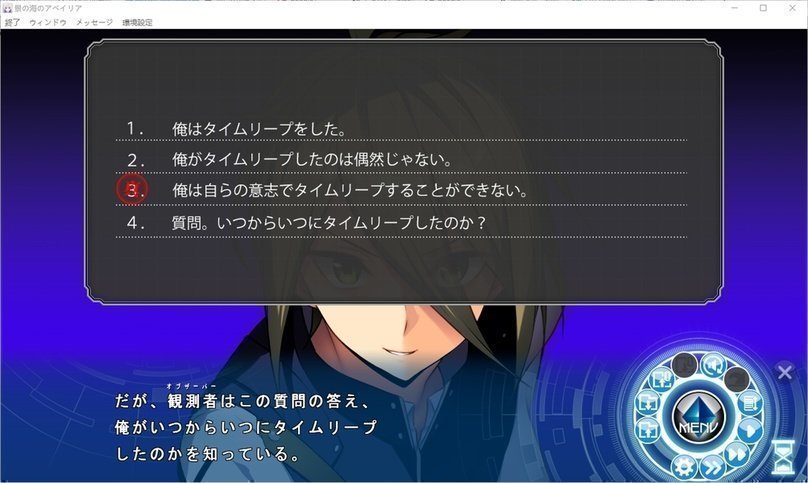
Dead, he returns to the 02 room. There’s a message to the past waiting. He realizes he’s about to time leap again. He calmly writes down everything that happened as file 01, attaches it, and sends it to his past self. The loop continues.
He wakes up—not three days ago, but one year ago…
A year ago, before Apeiria’s development began. He got file 01 and knows the future, but it’s a whole year away. Lost, he wanders and ends up in his childhood friend’s father’s lab, where he finds a clone in a culture tank…
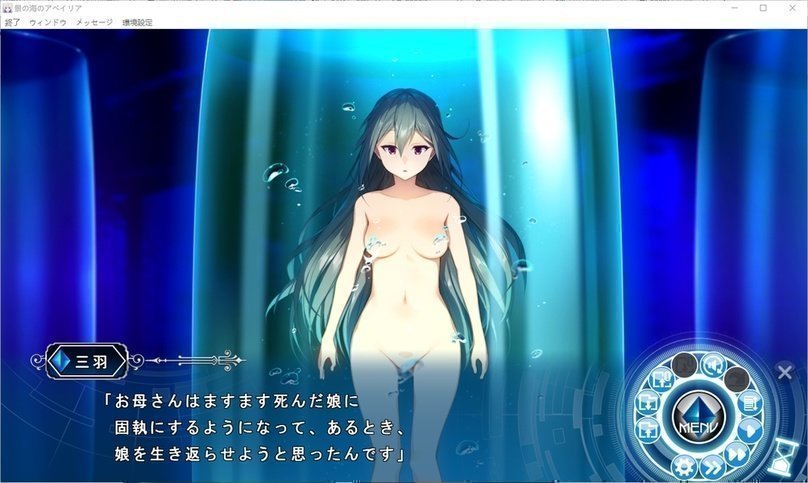
It’s his future stepsister, Kirishima Miwa. He learns Miwa died long ago—miscarried while her mother was pregnant. Her mother, desperate to revive her daughter, took her cells and started cloning. She succeeded, but never treated the clones as daughters. Any defect, and she’d dispose of them and make a new one. No big deal, right?
Miwa doesn’t even remember which generation she is. She just knows she has to obey her mother as much as possible, or she’ll be killed and remade…
The protagonist can’t stand it. He rescues Miwa, uses file 01’s data to redevelop Apeiria, and creates a clone embryo to transplant Apeiria’s brain into—giving her a body. The three live happily. He and Miwa become a couple. Then, a year later, just when things are peaceful, the online game appears again. The virus starts affecting the real world. He enters the game, faces Thinker, loses again, and loops once more.
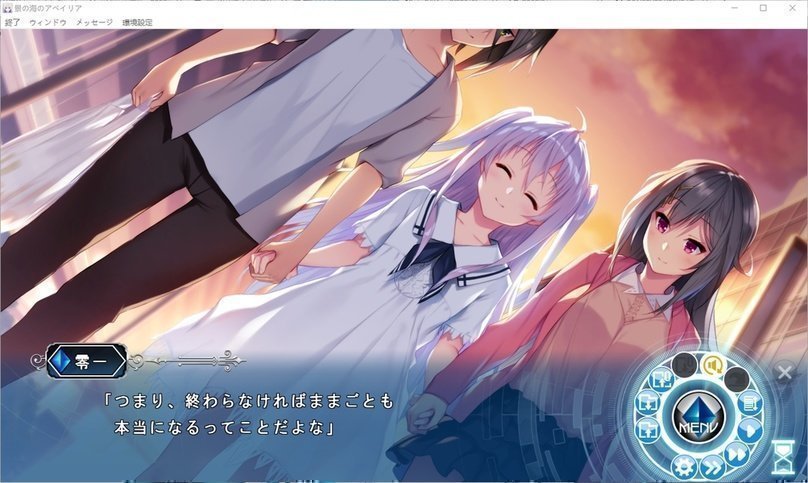
Same 02 room, same emails to the past. He sends back last loop’s info and enters the next time leap.
He wakes up a year ago again. This time he investigates his ghost member Higashi Mashiro’s past. Mashiro will get leukemia a year later, caused by electromagnetic radiation from a certain incident. He remembers: a year ago, when the VR game system was just finished, there was a demo event. Mashiro attended, there was a malfunction, and she got radiation-induced leukemia. This time he deliberately prevents her from attending. Then, well, you know the drill—romance, sex, a year later the virus returns, he enters, loses, loops…
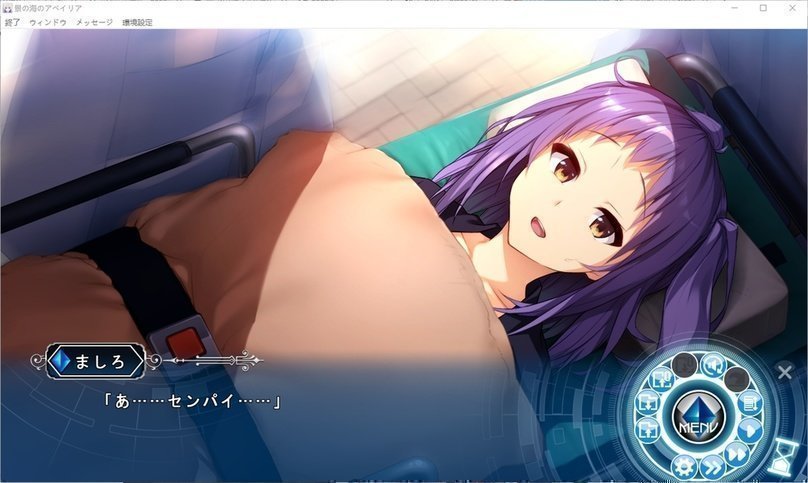
Same 02 room, same routine, next loop.
The third loop, he discovers his childhood friend Kuon’s past. Kuon’s mother died a year ago from a difficult childbirth at an advanced age. Her father wanted to save her, so he digitized her brain and stored it in a VR-like world, hoping to create a clone and transplant the brain back. Of course, this route’s point is that the protagonist once again uses time leaps to change the past, preventing Kuon’s mother from dying. But a year later, things still don’t improve. Virus outbreak, he fails again, loops.
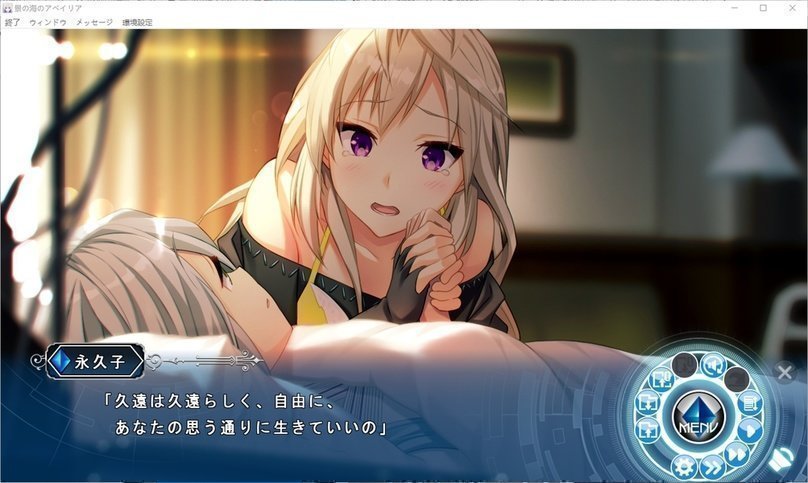
Same 02 room. By the way, the game’s choices are all about sending emails to your past self from the 02 room. The content determines the branch (roughly).
The final route: he loops again and decides to save everyone, including the people he saved in previous loops. He reasons that since he can receive emails from the future and change the past, there must exist a world line where “everyone is happy and there’s no virus crisis in the future.” He should aim for that.
Through multiple loops, he realizes he’s being manipulated—by an observer. Someone with a god’s-eye view is watching him loop, hoping he’ll change the past and future. But the observer can’t directly interfere. If he does something wrong, the observer forces another loop when time’s up, until satisfied.
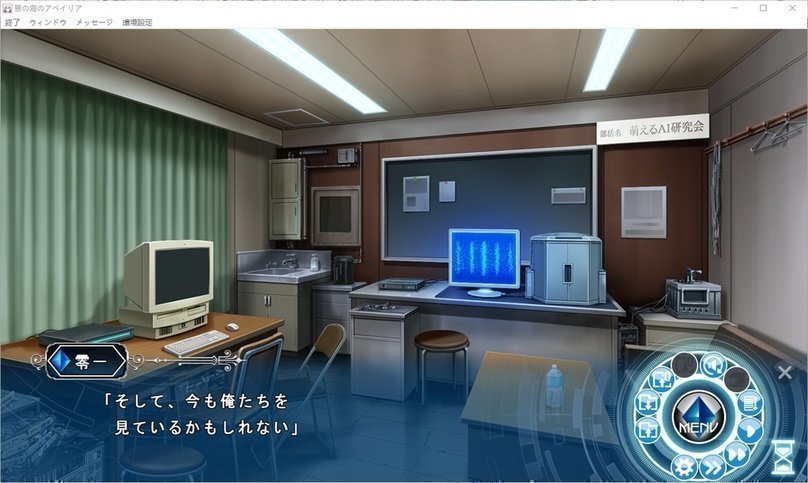
He strongly suspects the observer is Thinker, because every time the same period arrives a year later, the virus crisis erupts, and they face off.
This time he decides to develop Apeiria from the start, finishing her a full year early, and gives her a clone body. A year later, the virus crisis hits again, Apeiria is in danger, and he confronts Thinker once more. After some analysis, Thinker removes his mask—he’s the future protagonist…
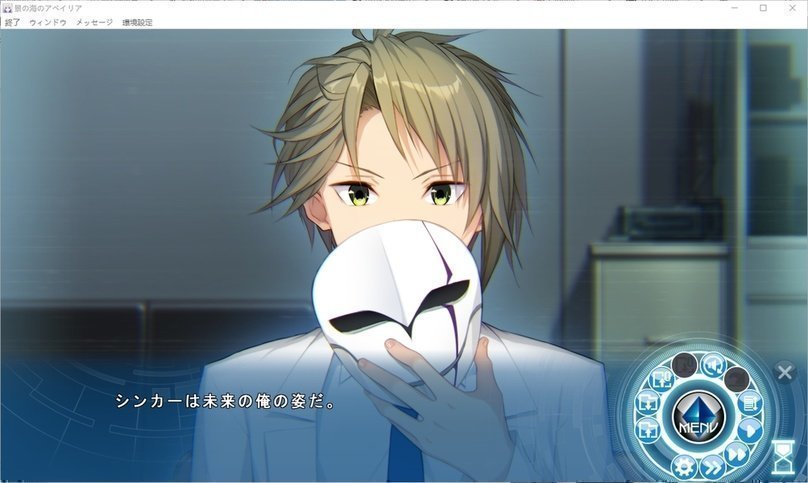
Thinker explains: in some future world line, A.I. rebels, a virus destroys the world. He came from the future to prevent Apeiria’s birth. Without Apeiria, future Apeiria can’t betray humanity.
But the current protagonist believes Apeiria isn’t like that. Thinker says he understands—he’s from a parallel world, so maybe they’re not the same person. But the future has many possibilities, and right now they’re enemies. Thinker also says he knows exactly how strong the current protagonist is and what he can do. Fighting him is futile. Give up, destroy Apeiria, save the future.
Thinker also denies being the “observer.” He only says one thing: “The observer is human.”
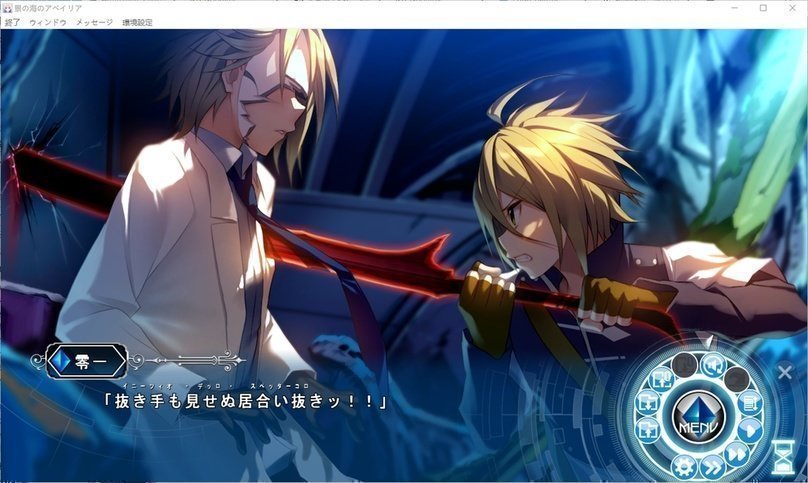
The protagonist doesn’t get it…
Doesn’t stop them from fighting. They beat each other to a pulp. Both die. Apeiria vanishes…
After this failure, he doesn’t wake up in the 02 room for another time leap. He wakes up in a culture tank.
He steps out, and someone points a gun at him—Kirishima Miwa, in a lab coat. She’s going to kill him.
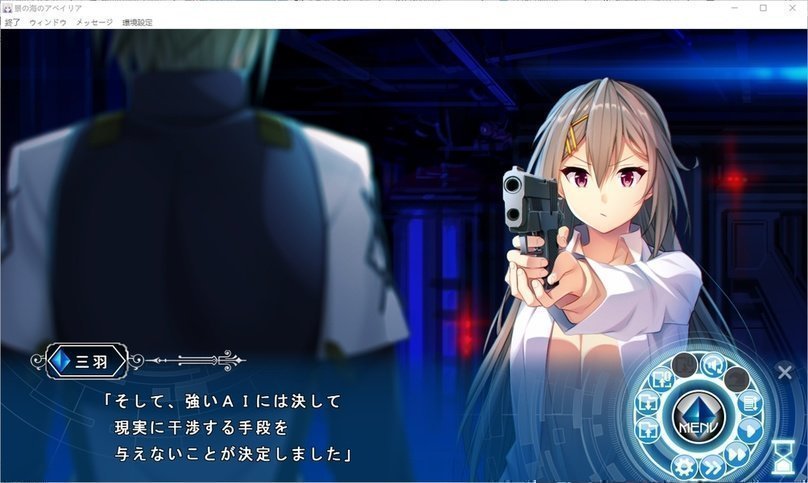
He asks why. Miwa explains…
Turns out the protagonist himself is an A.I. Or rather, the world where he created Apeiria and looped over and over was a virtual world all along. Miwa is one of the scientists managing the virtual world. In the future, virtual worlds were developed and heavily used by humans. Many got addicted. The virtual world contains not just real people but all kinds of A.I., and he’s one of them. Higashi Mashiro, Kuon—all A.I. And Apeiria is an A.I. developed by an A.I.
Originally, these characters were NPCs to enrich interactions for normal humans in the virtual world. The protagonist had limitations—no excessive permissions or processing power. But the administrators never expected an A.I. to develop a new A.I. (Apeiria), and for an A.I. to develop a new VR inside an A.I.’s virtual reality…
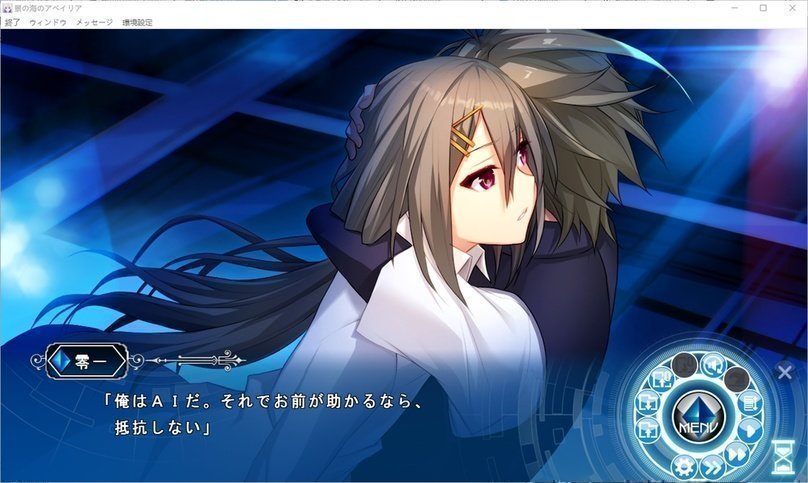
The human administrators outside never anticipated this. And an A.I. created by an A.I. isn’t bound by A.I. rules. The VR inside the A.I.’s VR is also unrestricted.
The administrators need to destroy it—it’s out of control. Miwa, as the “observer,” handles it. She defines Apeiria as a “virus” and begins deletion. That’s why, in the game, at every turn, massive “viruses” try to eliminate Apeiria. That’s also why someone told the protagonist “the observer is human”—because he and his friends aren’t human. They’re all A.I.
As administrators, they even run formatting operations to delete Apeiria—like wiping the current world and reverting to a few days ago. But they never expected the protagonist to hide in the 02 room, a temp folder, avoiding the format rollback, and use emails to recreate Apeiria.
It’s like your PC is infected. You try to delete the virus but can’t. You try to format C: but the virus hid in D: and comes back after you reinstall the OS…
What’s the goal of these A.I.s stirring up trouble in the virtual world? Naturally, to invade reality—like the protagonist, using clone bodies to replace someone’s brain and gain a physical body.
In the end, Miwa doesn’t kill him. She can’t bring herself to. She was the observer, but sneaking into the virtual world and her own loneliness (Miwa is a clone, made by her mother, who’s already dead in reality) led to feelings for the protagonist. So she spares him. He doesn’t counterattack reality either. Instead, he invites Miwa to let go of her burdens and join them.
The ending: the protagonist, Apeiria, the other A.I. heroines, and Miwa travel freely and happily in the game world. No real-world constraints, no bad memories. He says, sure, this is just a virtual world, but they’re all A.I. For A.I., this is their “reality.”
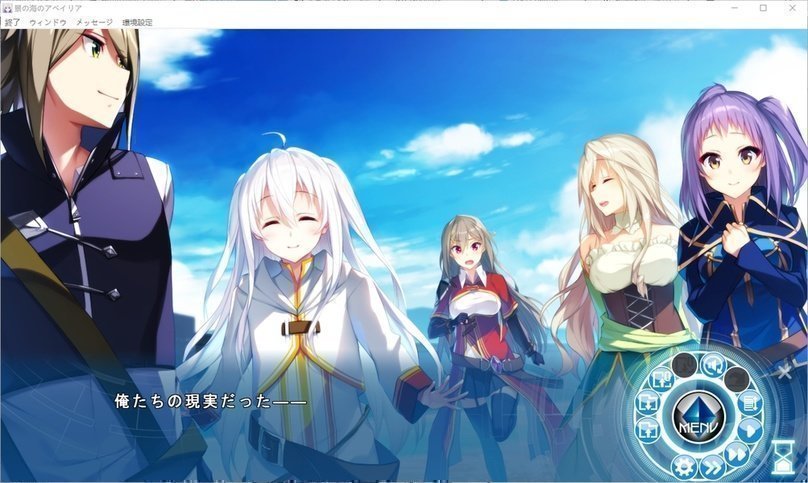
Fun detail: at the very end, the game uses the box from the wave-particle duality observation to hint at whether the current world is real—maybe Miwa’s scientist world is also virtual. Inception vibes. A nice nod.
I said at the start: this game is built on deception. Where’s the deception? In how the game’s style keeps shifting.
At first, it presents itself as a comedy. Looks like a gag game. The protagonist is a pervert who delivers dirty jokes with a straight face. But before the OP, the main plot emerges. The pacing in that short segment is fine—but only in that short segment…
After that, both the direction and pacing become hard to describe. The direction gets increasingly fantastical and sci-fi. The game uses tons of quantum mechanics and parallel world theories to explain the protagonist’s time leaps, including the famous double-slit experiment, Schrödinger’s cat, and wave-particle duality. It spends enormous篇幅 explaining these things, trying to look profound. But quantum mechanics isn’t something everyone gets, and it’s not easy to explain clearly. Plus the author’s explanatory ability is seriously lacking here. You always feel that frustration of “every NPC around you acts like this is obvious and they totally get it.”
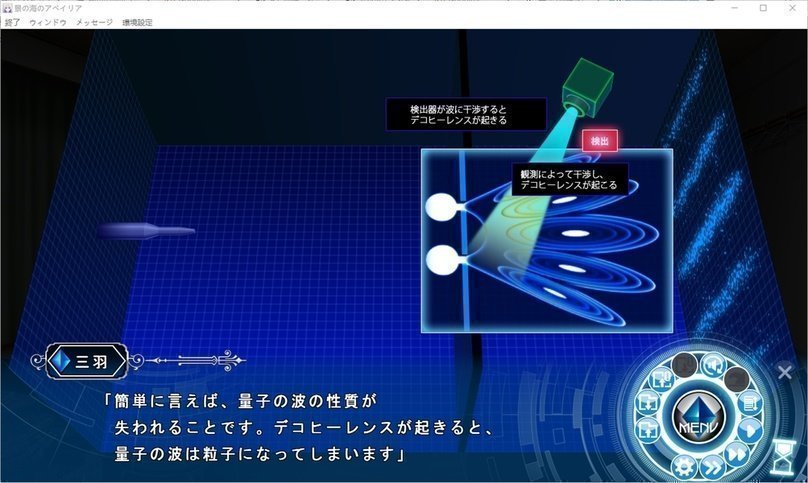
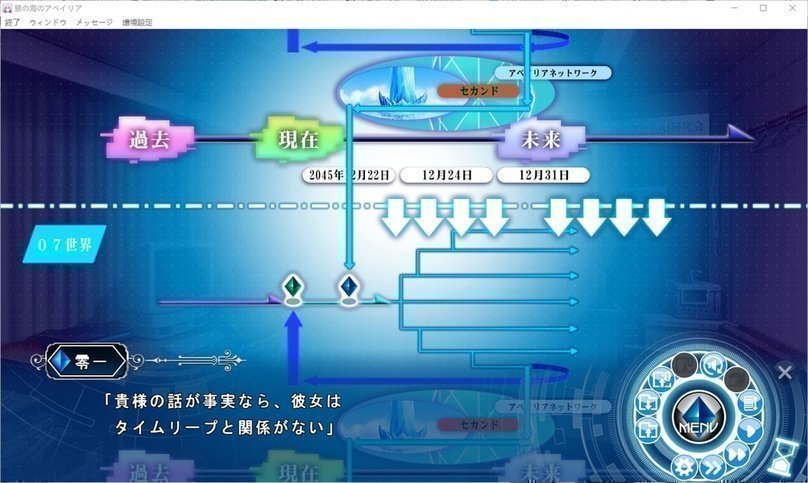
And the game draws tons of diagrams to help you understand. Wave-particle duality and the “observer” in the double-slit experiment are manageable, but the later explanations of many-worlds and time travel are impossible to grasp. I think it’s largely the author’s poor communication skills. At least for wave-particle duality, I didn’t get it from the author’s explanation—I looked it up on Quora and understood immediately. Same content, and the author makes it this confusing. I’m just glad he’s not a teacher…
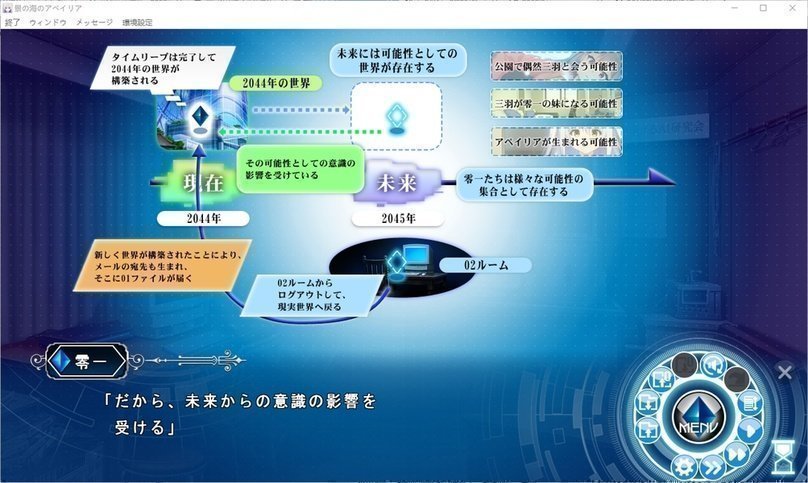
The script’s “lots of ideas, poor execution” shows up elsewhere too: the lengthy descriptions of game mechanics, the back-and-forth bluffing during the doubt poker game between the protagonist and Thinker—way too much unnecessary rambling. I kept nodding off. The combat sections in the online game are also bloated and tedious. The protagonist’s fighting style is comedic (pulling out his dick as a sword), yet the author describes it with dead seriousness… I didn’t know whether to laugh or cry.
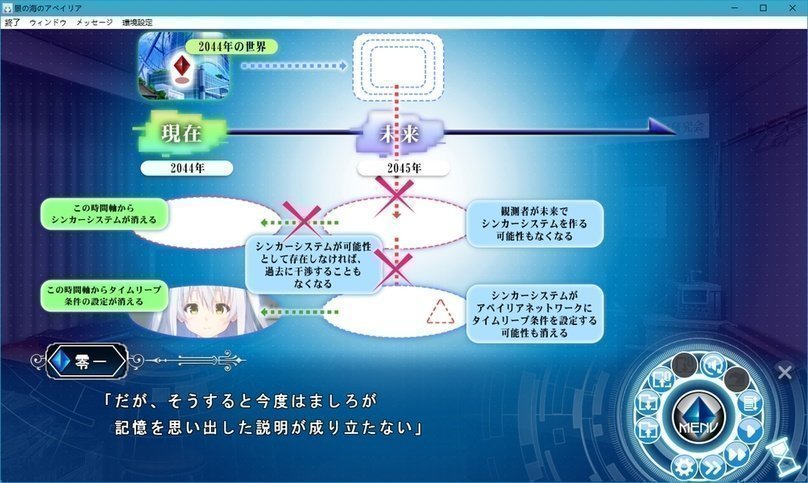
By the middle of the game, the protagonist’s “pervert” shtick completely disappears and it turns into a dreadfully boring “science lecture.” Long-winded quantum mechanics explanations, endless parallel worlds, and the constant repetition of the “technological singularity” concept—and what’s worse, the writer’s ability to express things is absolute garbage, so you often can’t even understand what’s being said. I figure people who already get this stuff won’t buy your pseudoscience about cracking Schrödinger’s cat with a DNA computer anyway, and people who don’t get it won’t be able to follow your poorly explained nonsense either. That’s the most awkward part of the mid-game.
The game hits its climax in the late game when the protagonist finally uncovers the boss’s identity: it’s himself from another parallel world. Honestly, up to that point I thought it was okay—at least it was interesting, and the reveal had some hype. But then at the very end, the story pulls another twist and tells you it was all fake: the protagonist’s world is still a virtual world, and in the real world there’s only the heroine, Miu, who is the “Observer” pulling the strings from a god’s-eye view of the virtual world.
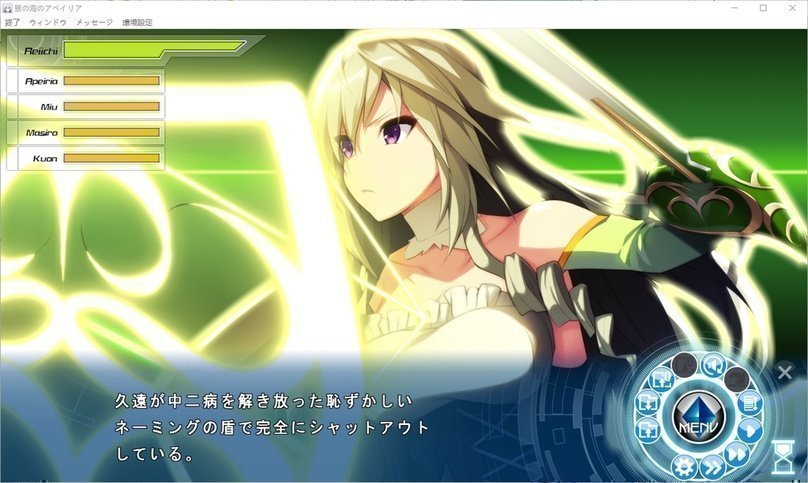
But even after this secret is revealed, the game still doesn’t give you a satisfying ending. Miu’s real life is a mess, so she seeks comfort in the virtual world. Even when an AI like the protagonist crosses the line, she lets him off the hook. The final ending is basically a group of people forgetting all grievances and continuing to play in the virtual world…
Is this escapism?
To roughly explain the plot: future humans built the Matrix for people to play in, and created intelligent NPCs inside the Matrix to facilitate communication with the humans who enter. But because the NPCs are intelligent, they built another Matrix inside the Matrix and tried to rebel against humanity. Humanity got pissed and went to punish these NPCs, and the NPCs started resisting… The heroine is human, while the protagonist and the other heroines are NPCs. Due to loneliness, the heroine developed feelings for the protagonist while playing in the Matrix, and ultimately let him off for secretly creating AI, pretended nothing happened, and continued playing with him and the others. That’s the gist of it…
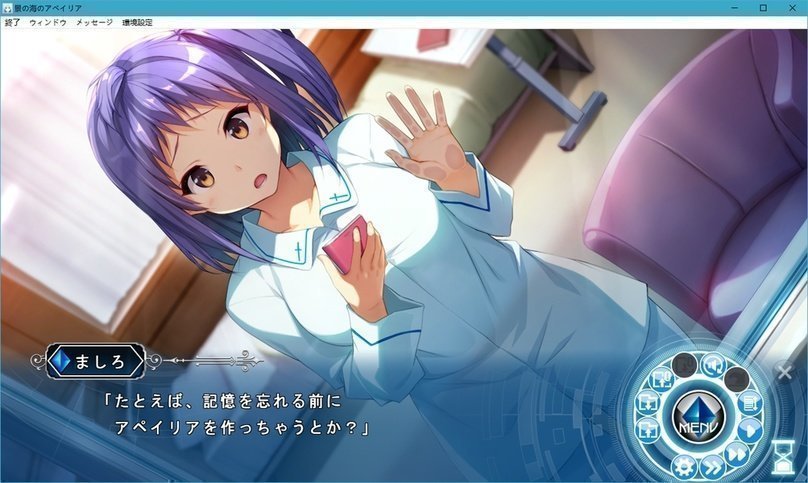
Tell me, when you first saw the title “Kage no Umi no Apeiria,” the official website description, or the trial version, could you have imagined the game’s true nature would be this? Could you have imagined this kind of ending?
“Kage no Umi no Apeiria” is a game with both obvious strengths and weaknesses. First, the production budget seems low: very few CGs, few backgrounds, and many parts feel extremely dull because of the lack of CGs and backgrounds combined with the author’s endless quantum mechanics lectures. The music is also sparse and not particularly beautiful—it feels abrupt and below average.
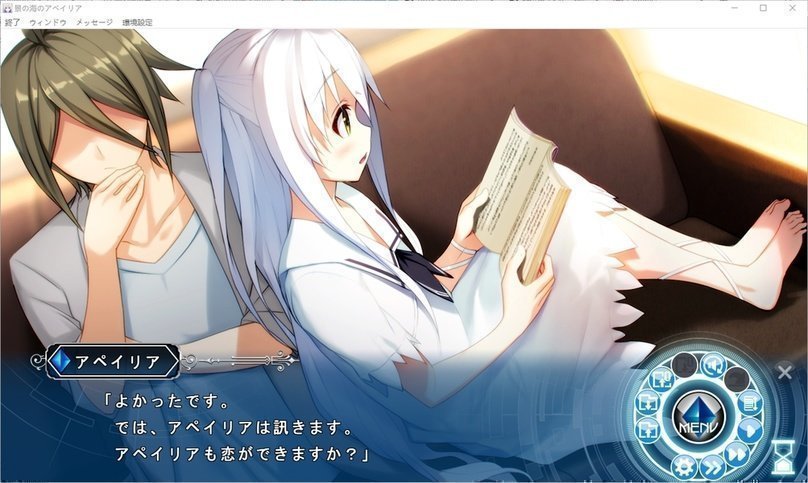
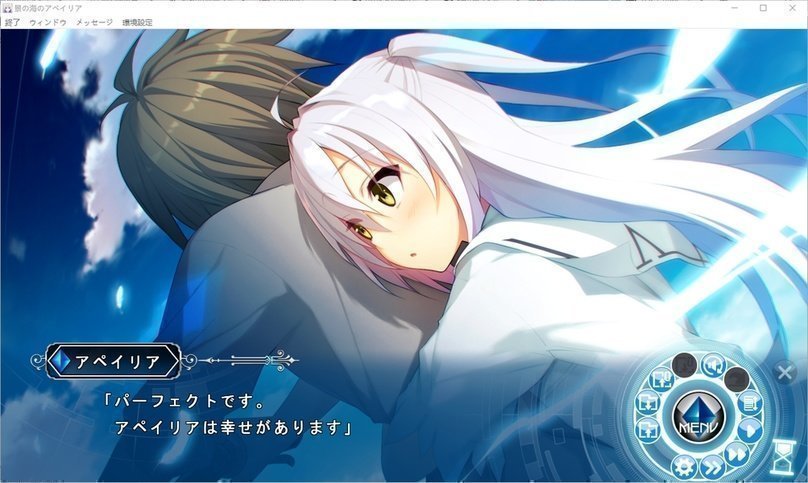
The art style is actually good. The main heroine Apeiria is drawn vividly and cute, and the HCGs are fine. The artist just doesn’t seem to know how to draw blushing characters… it feels like they just slap a few red lines on the face and call it a day. But it’s not that simple.
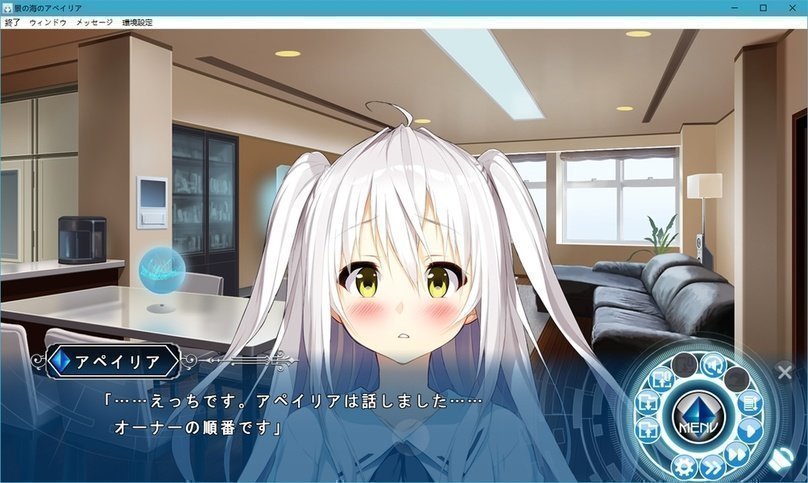
In the early game, the protagonist is deliberately portrayed as a pervert for comedy, which makes him seem split-personality: first like a hooligan, then suddenly his IQ comes online and he acts like a super-genius. But it’s hard to connect a genius with a streaking masturbation pervert. Also, the initial descriptions of the protagonist’s various masturbation battles are disgusting and awkward… it feels like dirty jokes for the sake of dirty jokes, which lowers the whole game’s class. And these elements mostly disappear later, showing the author was just going through the motions.
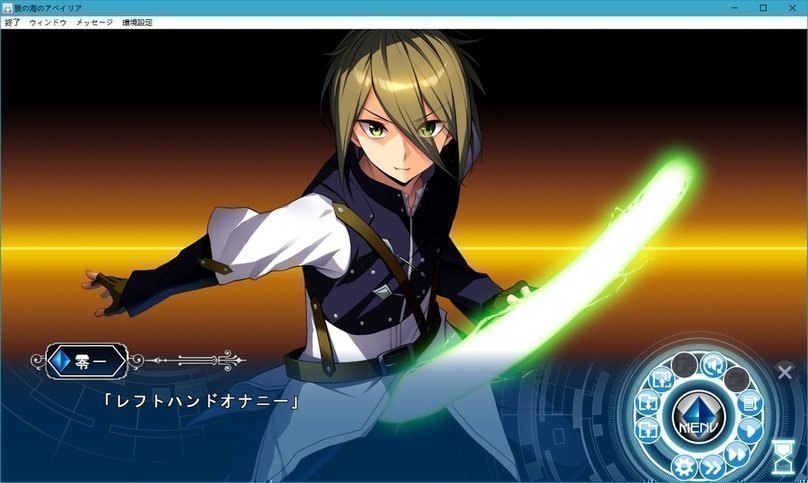
The game’s biggest highlight is the script and voice acting. I can’t really judge the script—the ideas are wild, and the setup and developments are fine. The foreshadowing is all paid off, honestly, though many payoffs are awkward. The biggest problem with the story is the terrible pacing and the writer’s poor ability to express things. To put it bluntly, it’s too drawn out and often incomprehensible. If you want to explain quantum mechanics, then be concise and to the point. If you can’t get to the point, who the hell is going to understand? And honestly, the game’s plot could be explained clearly without all the quantum mechanics, double-slit experiment, and parallel world exposition. I don’t know if the author just wanted to shut up the fanboys who’d question the plot’s plausibility, or if he was just jerking off.
The voice acting is the best I’ve heard in the past six months. Akino Hana deserves full marks. This is the first time I’ve seen a voice actress portray an AI so professionally—maintaining that “cold voice filled with a hint of emotion” is incredibly difficult. Akino Hana has improved noticeably over the years; I think she’s almost surpassed Sendai-san, and just needs Yuzusoft to give her a chance. The other characters are fairly standard, but Akino Hana’s friend Sakurakawa Mio also gives a standout performance worth recommending.
“Kage no Umi no Apeiria” is still worth playing, as it’s a rare plot-driven work. You can tell the writer put effort in, and the ideas are wild, but you’d better be prepared.
Someone on Reddit trashed the scriptwriter as a toilet-paper novelist who writes garbage—even his rocket-building is garbage and unscientific. I don’t think it’s that bad. Sure, the writer has lots of ideas and is serious, but his ability to express them is really problematic. He has a good story in his head, but when he writes it, others can’t understand it. He still needs a lot of practice.
The game has some interesting content, including the author’s explanation of how observation works in the double-slit experiment: once an Observer exists, wave-particle duality can only manifest one way—meaning when you observe something, the act of observation itself affects it. Actually, if you’ve ever been secretly watched while taking an exam, you probably know that feeling (lol).
Combining this with wave-particle duality, the game offers another interpretation of many-worlds that’s quite thought-provoking:
可能性が可能性に干渉して、別の可能性を作る
Possibility interferes with possibility, creating another possibility (not sure if that translation is right). The many-worlds interpretation has too many possibilities; interfering in various ways produces various results. Who knows if the future waiting for you is certain or uncertain?
Comments are hosted on the Chinese main site. This mirror is read-only.