Sakuranomori Dreamers 2 (サクラノモリ†ドリーマーズ2) Review
Happiness in Another World
I played サクラノモリ†ドリーマーズ last year, and my takeaway at the time was: strong opening, decent premise, peaks early and then nosedives, rushed ending. I remember the promo OP being absolutely insane. The buildup before the OP hits is done perfectly—basically the protagonist falls in love for the first time, confesses to the girl he likes, Madoka, and then the very next moment, because he wasn’t paying attention, she gets killed by a serial killer. His rage, despair, regret—all of it explodes the moment that blazing OP kicks in. Hell of an opening.
I won’t get into the rest of the game. It’s a textbook high-open-low-walk. The protagonist starts randomly chasing the killer who murdered his girlfriend, randomly joins a few organizations, solves a few random haunted-house incidents around town, and the plot gets more and more psychedelic. The killer turns out to be a psycho, also bisexual, then the killer himself starts randomly getting superpowers, and the protagonist gets a parasite…
This kind of escalation reminds me of a ghost story I read in high school. The mystery setup was solid, then suddenly the protagonist gains Taoist powers and starts having superpowered xianxia battles with all sorts of ghosts. I literally spat out my drink. It went from mystery to melodramatic wuxia, massive disappointment.
Same with サクラノモリ†ドリーマーズ. Massive disappointment. Great start, then it turned into a mess. After that, the scenario writer for サクラノモリ†ドリーマーズ, Go Nii… oh wait, Mr. Go, went off to write other games. Still heavy horror stuff, but no longer the “dream diving” of the original サクラノモリ†ドリーマーズ. The game called 仄暗き時の果てより tells a story of aliens and Cthulhu-style time travel. It was actually okay, but I was starting to feel fatigue with Mr. Go’s approach of “not enough plot? add ketchup.” Then サクラノモリ†ドリーマーズ 2 was announced as a sequel.
At first I was curious what kind of story サクラノモリ†ドリーマーズ 2 could possibly tell, since the first game basically wrapped everything up. The protagonist’s girlfriend died, killed by a bisexual psycho. By the end, Madoka had ascended to heaven and the protagonist couldn’t even see her ghost anymore. The mastermind, that bisexual psycho, had been taken out by the protagonist. The story had a relatively complete ending. All that was left were some loose threads with the side heroines. I could understand an FD, but a “2”? Are we just calling FDs “2” now?
Then the game came out. After playing through it in bits and pieces over two weeks, I’d say as a “2” it holds up.
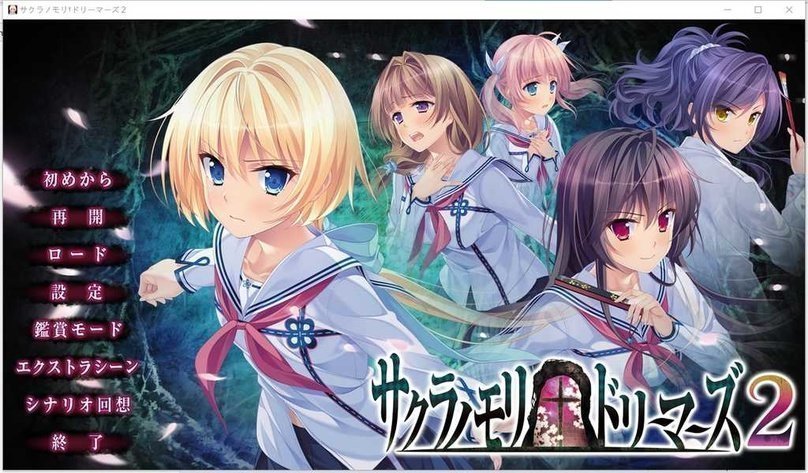
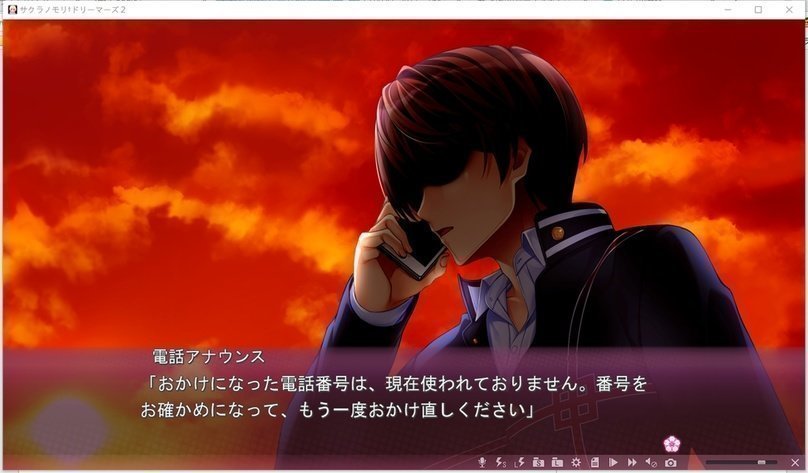
サクラノモリ†ドリーマーズ 2 picks up right after the first game. The protagonist has resolved all the incidents, but he’s still empty inside. His girlfriend’s been dead for two years and he still can’t move on. He pulls out his phone and dials her number hoping for an answer, and stumbles onto something strange…
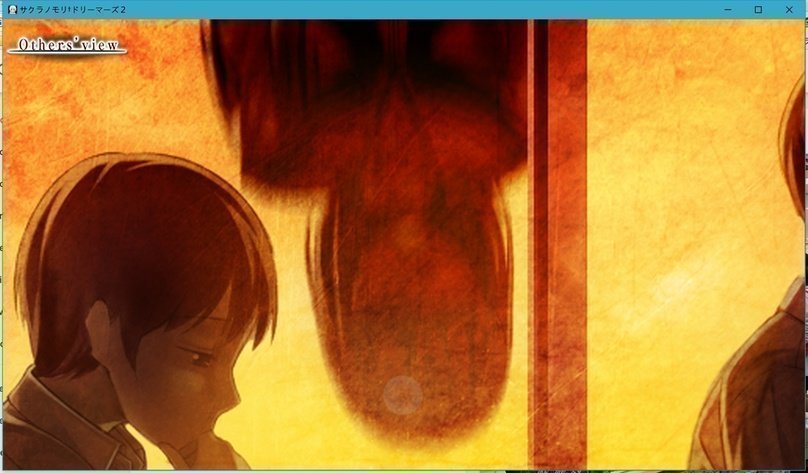
The story of サクラノモリ†ドリーマーズ 2 is split into two parts, two interwoven plotlines. On one side, the protagonist keeps seeing hallucinations—in them, his girlfriend Madoka isn’t dead; she’s living happily with him every day. The other side is the protagonist’s reality: the town is still restless. Everyone in town gets dragged into a “red dream” at night, night after night. Most people forget what happened in the dream when they wake up. The protagonist remembers.
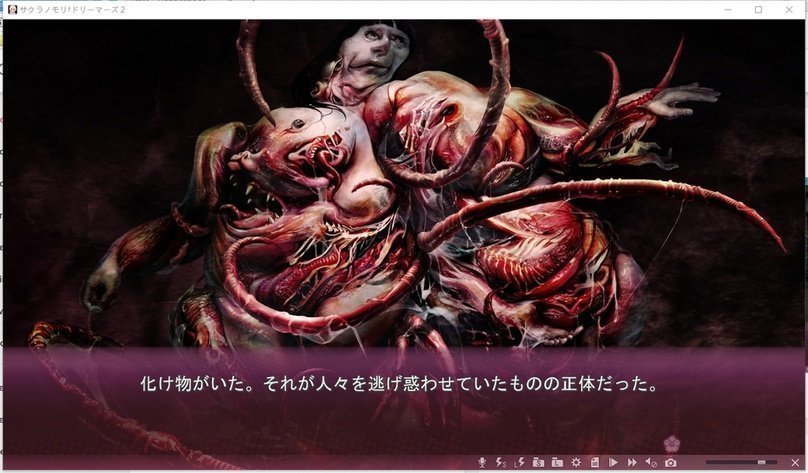
There are monsters in the dream. Monsters kill people in the dream. When someone dies in the dream, in reality they seem to lose their mind and soon kill themselves.
The protagonist sees too many people, familiar and unfamiliar, killed by the dream monsters, and then watches them die by various means in reality. He tries to destroy the visible “evil spirits” (ボタッは, basically like Chinese black-and-white death gods—whoever they get close to dies) to save the people who died in the dream, but it’s all futile.
So the protagonist and crew start investigating where this “red dream” comes from and what the monsters in it are.
In his dreams, the protagonist often sees a subway. Across the tracks, Madoka is smiling happily at her phone. On the glass door of the subway on the other side, a child with a broken neck is pressed against it, reaching out to the protagonist for help.
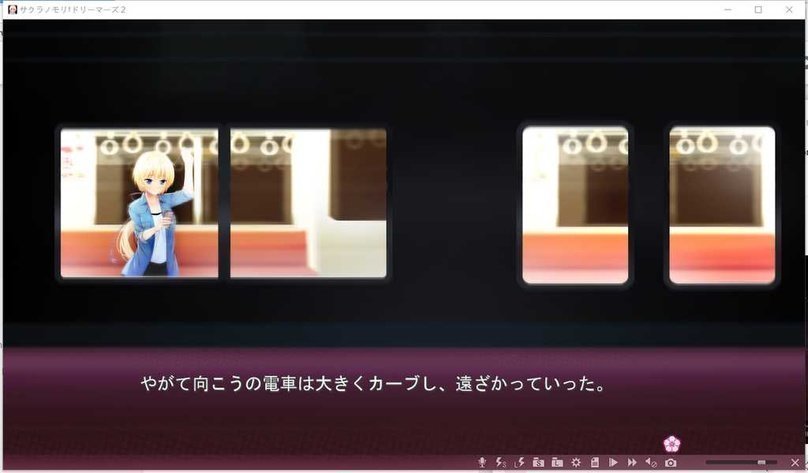
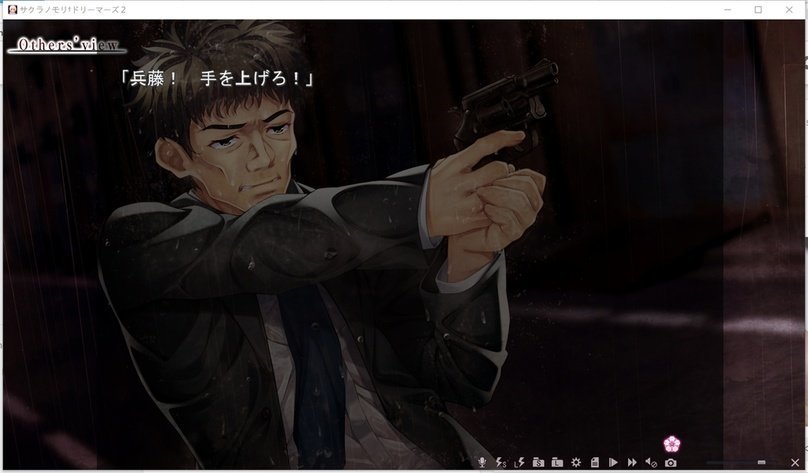
The protagonist feels the child looks a lot like a local detective—probably his kid.
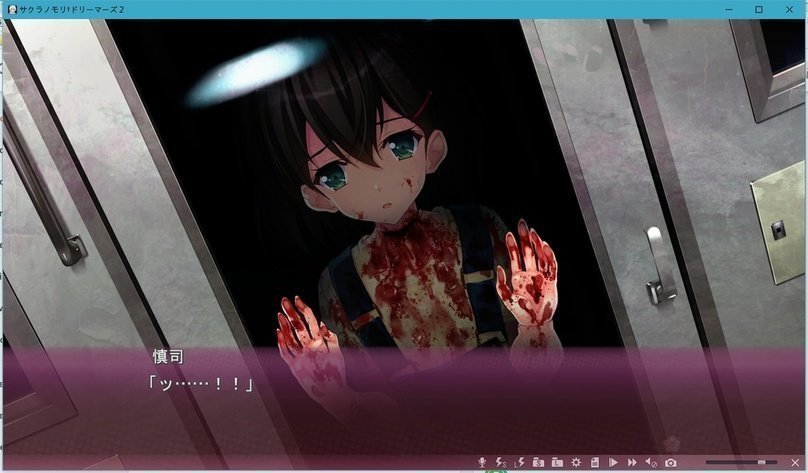
Then the protagonist discovers the detective is also in the red dream. He tells the detective about the child he saw. The detective thinks for a moment and says he’s made his own discovery: a serial killer he once tracked, a killer he thought was dead, is actually still alive and in this town.
After some back-and-forth, the protagonist learns that this town once had a case involving a变态 serial killer decades ago.
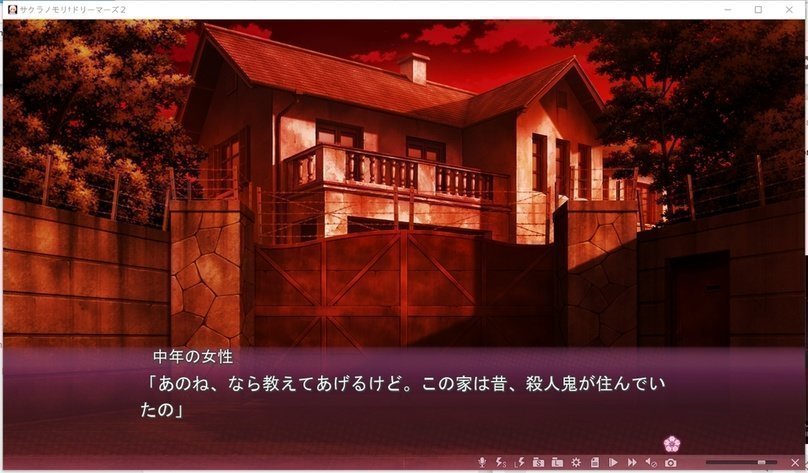
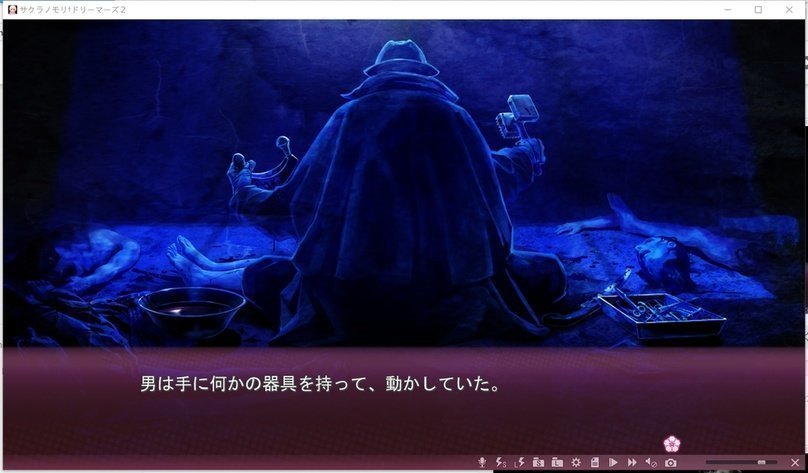
Decades ago, a large number of young children went missing in town. Eventually, after investigation, the kidnapper was found in an apartment. The kidnapper, named Hyodo, had already fled. The detective, then a police officer, found the entire apartment full of corpses, all dismembered—including the detective’s own daughter, part of the body pile…
The detective’s daughter was killed by this变态 murderer, her head cut off and canned. The killer Hyodo escaped through a tunnel in his house. The detective began tracking him, eventually losing his job and his wife in the pursuit, all for revenge. Finally, one day, the detective caught Hyodo. Hyodo tried to run, the detective shot him, and the wounded Hyodo jumped into the sea. The detective never found a trace of Hyodo again. He believed he had killed Hyodo and avenged his child.
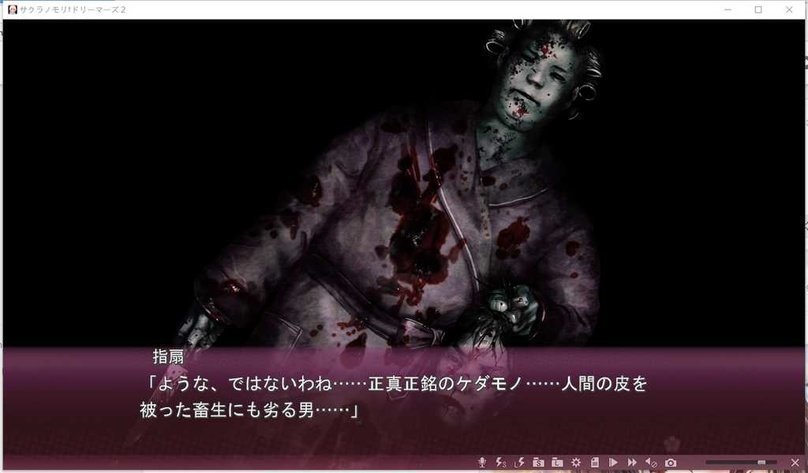
But unfortunately, that killer is still alive, lurking in this town. The red dream, the various evil spirits—they’re all connected to the countless wronged souls that died in this town decades ago.
The protagonist starts searching for traces of the killer. First, using his dreams and his ability to see evil spirits, he visits the killer’s former residence, now a haunted house. There, he finds the ghost of the detective’s child.
The ghost tells the protagonist he knows where the killer is hiding—in an underground passage near the town.
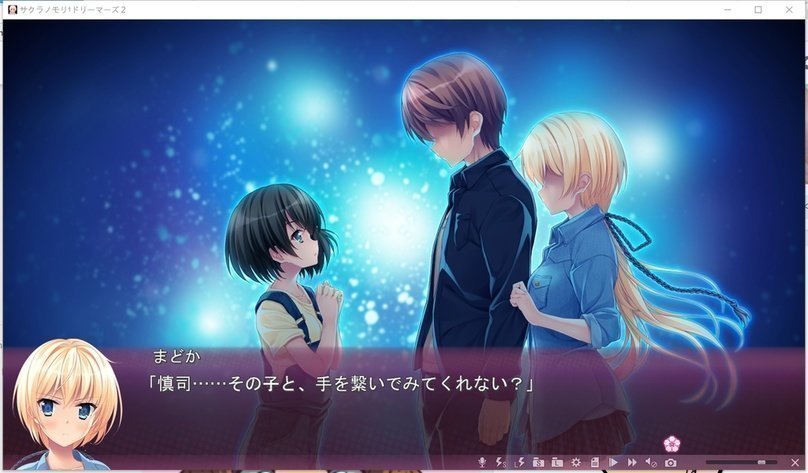
The protagonist begins his exploration of the underground passage. Then he sees that so-called hallucination again—in it, Madoka has come near this place, and a dark shadow is approaching her…
So the protagonist cleverly pulls out his phone and calls Madoka. After some exposition, another version of the protagonist appears in the nick of time and saves Madoka from danger.
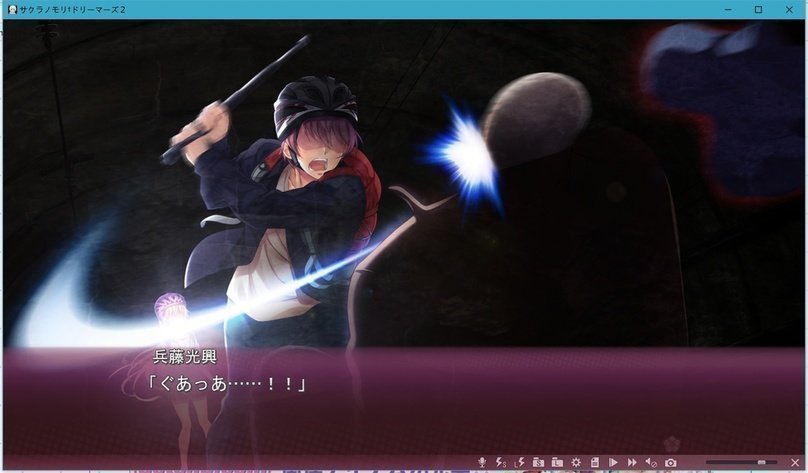
That’s when I, the player, realized: the “Madoka didn’t die” part wasn’t a hallucination at all—it was Madoka from another worldline. The protagonist’s phone call told the other worldline’s version of himself to go save her.
In other words, in the protagonist’s worldline, Madoka still died. But there’s another worldline where she didn’t. She avoided the first killer, but another killer was approaching her. The protagonist, through a cross-worldline phone call, saved his girlfriend in a parallel world.

As for the protagonist in this worldline? He found Hyodo, solved the decades-old case, and ended up on the harem route.
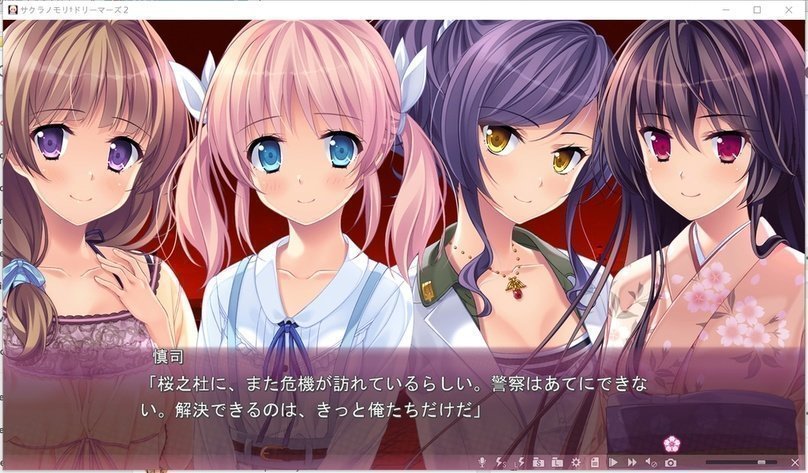
And the Madoka from the other worldline joins the protagonist’s little organization called サクラノモリ†ドリーマーズ, continuing to maintain peace in town by diving into dreams and tracking evil spirits.
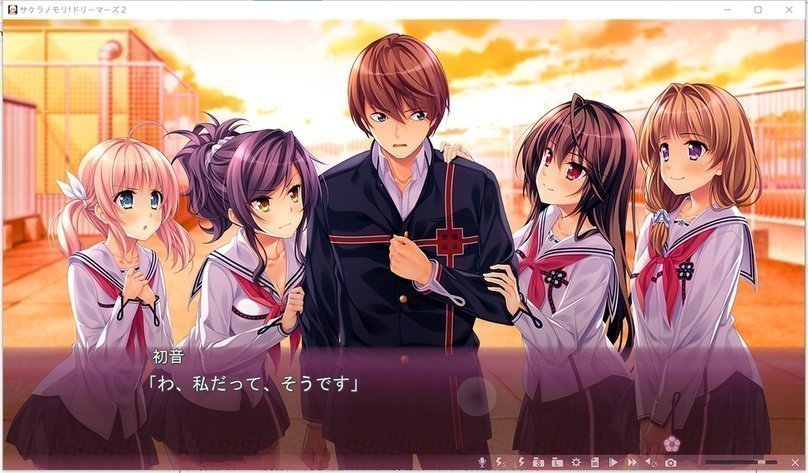
I guess it’s a decent ending? The protagonist who lost his girlfriend gets a harem; the one who didn’t gets sweet couple moments.
But that doesn’t mean the game has no problems.

While サクラノモリ†ドリーマーズ 2 doesn’t peak early and nosedive like the first game, it still has issues—the same obvious “not enough plot? add blood.” In the second half, to emphasize the “bloody” selling point, it throws in a bunch of battles and horror elements that aren’t really necessary for the plot. It feels like a Hong Kong B-movie horror: scaring you for the sake of scaring you. Honestly, for me it’s not scary at all. At most the CGs are a bit gruesome and bizarre—I wouldn’t call it horror. Maybe I’m just old and immune to that kind of visual stimulation. The “psychological horror” this game tries to build is almost negligible; it just slaps CGs in your face to scare you. It’s even lower than a certain game called 尸体派对 (Corpse Party). As horror content, it really doesn’t qualify.
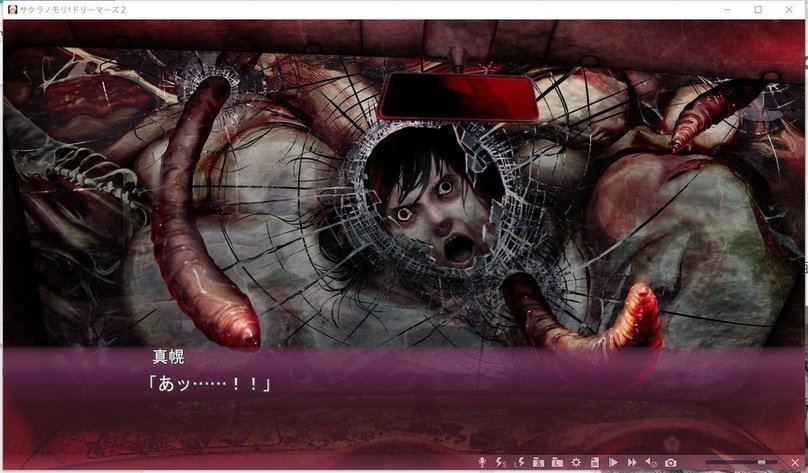
As for the plot, the initial “hallucination” description, which later reveals itself to be “not a hallucination but a parallel world,” is a pretty good setup. It tricks the player at first and then gives you that aha moment. But in between, to insert all that “bloody horror,” it adds too much pointless stuff, making it feel random. At least the mysterious phone call the protagonist gets at the beginning—turns out to be a minor boss, which I found laughable. And in the later parts, the game desperately introduces new characters to patch up the setting. These new characters have little to do with the main plot and are useless by the end. It feels like they were forced in just to add more ketchup.
Overall, サクラノモリ†ドリーマーズ 2 is a bit better than the first game. At least it doesn’t peak early and crash—the trend is more stable. But I still think it could have been better. The game has “horror and gore for the sake of horror and gore,” which is basically padding. Too much padding gets awkward. At least in the later parts, I wasn’t scared by the endless tentacles, aliens, and blood spray—I was just annoyed.
Still, for players who played the first サクラノモリ†ドリーマーズ, the sequel is pretty good. A common complaint was that Madoka, the most well-developed heroine in the first game and the protagonist’s first love, had no route—because she dies right at the start…
But サクラノモリ†ドリーマーズ 2 fills that gap nicely, using a very unusual “parallel world” approach. Oh no, I don’t mean “parallel world” is unusual—I mean the way the game has the protagonist “solve a crisis in the current world and use that information to save his girlfriend in a parallel world who’s about to be in danger” is unusual and fresh. Also, the game has some connections to the previous game 仄暗き時の果てより in small details, so they put some thought into it.
Lately my mental state has been wrecked. Next month I turn thirty. 浅仓杏美 got married too. And everyone around me is pressuring me to get married, showing off their kids, while I’m still in the “want to get married but can’t find a partner” camp. And recently Google+ started running those “memories” things, with all these Casanovas flexing about being single. Makes me sick.
But after playing サクラノモリ†ドリーマーズ 2, I found myself fantasizing a bit. Maybe parallel worlds really exist. Maybe there really is a version of me in some parallel world who’s happy right now.
Happiness in another world. Just that is enough to give me a little comfort.
Comments are hosted on the Chinese main site. This mirror is read-only.