Zannen na Ore-tachi no Seishun Jijou. (残念な俺達の青春事情。) Review
Porcupine Syndrome
Ever run into someone like this in real life? Their mouth is vicious, every word dripping with nitpicking. But they also read the room, and the moment they sense you’re about to blow up they shut it down fast. Sensitive and perceptive enough to know if you’re genuinely pissed or just in a bad mood. They care what you think of them, adjust their talk based on your mood, yet they never actually back down—still keeping up that sharp-tongued high ground. They cut themselves off from others, from every little circle, from socializing altogether. But they’re scared of being alone, scared of being misunderstood, they want friends, yet they can’t let go of whatever’s stuck in their craw………… They want to get close to people, but they’re afraid of being gotten close to too easily. Contradictory creatures, through and through…………
Japanese has a word for this: porcupine syndrome (ヤマアラシ症候群).
Because they’re afraid of getting hurt, they hurt others. Their inherent kindness makes them not want to hurt anyone, but they can’t stop hurting people anyway. So they sink into self-blame and contradiction, sometimes doing ridiculous, absurd things that cause even more damage. That’s the so-called bad side of porcupine syndrome.
In modern society there are actually quite a lot of these people. But they’re pitiful too, because deep down most of them aren’t bad at all—they’re kind. It’s just that fear of being hurt turned them into the “vicious loudmouth villain” on the surface, carrying a reputation they don’t deserve. Like a porcupine: afraid of getting hurt, so it stabs others, curls up and refuses to show itself, leaving nothing but spines for everyone else.
Actually, these people can be saved. They can shed others’ preconceptions—all they need is someone willing to pull them out. And that person needs the capacity to withstand the “porcupine’s” attacks. Put bluntly: they have to get hurt, and not be afraid of getting hurt.
So Zannen na Ore-tachi no Seishun Jijou. (残念な俺達の青春事情。) is, roughly, that kind of story.
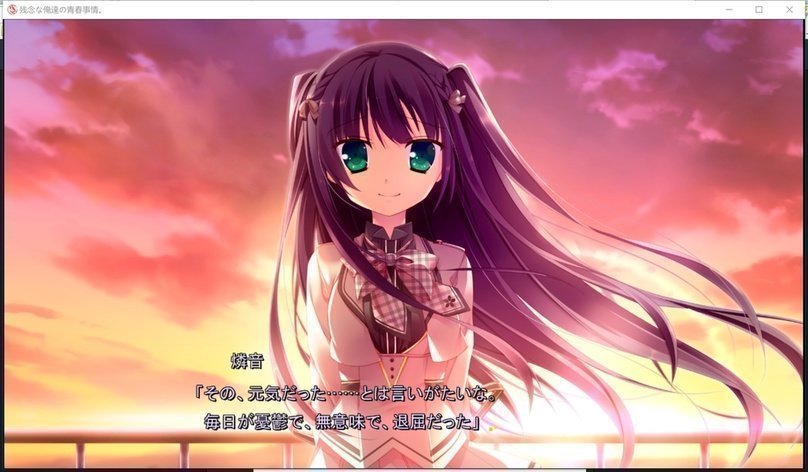
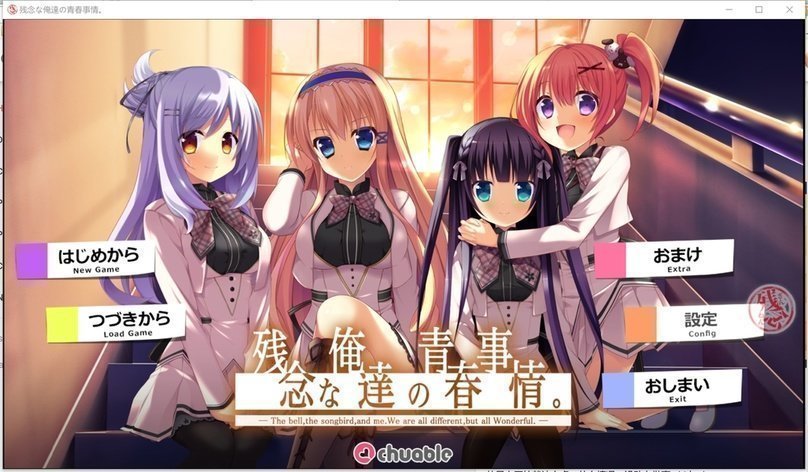
All the pre-release promo gave off a “this is a comedy” vibe, but like most comedies it wears that skin while actually telling stories about people. Going by the key art and the common route, the main heroine is obviously Sumeragi Rinne—the black long-straight girl. And she’s the first heroine to appear in the game, actually, via a flash-forward. The game opens with the protagonist and Rinne bickering on the rooftop, and that’s how it starts.
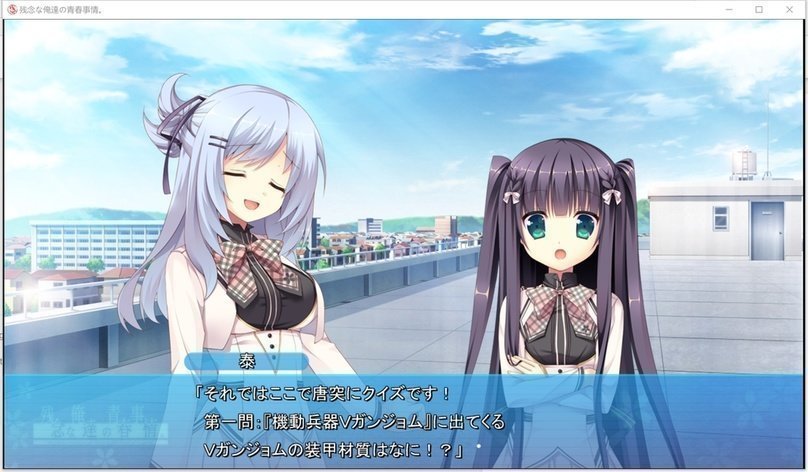
Then the main story kicks in, showing when Rinne first transfers in. The protagonist, a veteran of the school, shows the new girl around campus and notices: man, this Rinne has a foul mouth, talks real ugly, and acts like a total poser—but she doesn’t seem like a bad person per se.
In their conversation the protagonist brings up a personality type: the aforementioned porcupine syndrome (ヤマアラシ症候群).
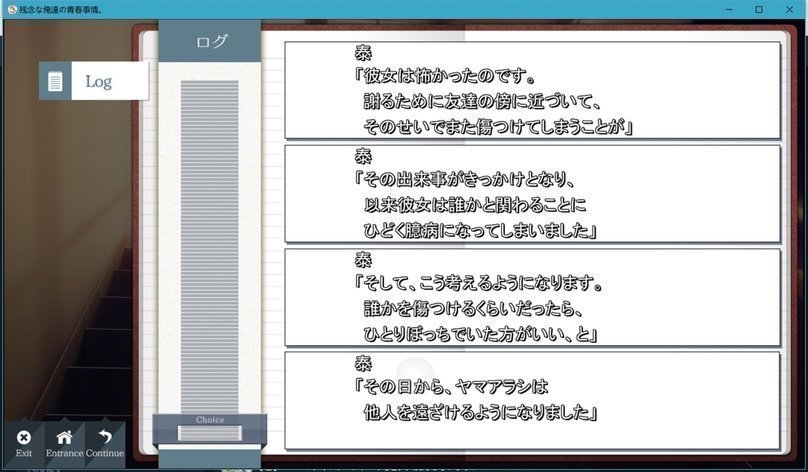
That’s Rinne exactly. Not a bad person, but afraid of being hurt, so she chooses to hurt others—which shows in how she’s constantly snapping at everyone around her.
And our protagonist, being the generous guy he is, decides to drag Rinne into his club: the “Unofficial Student Council.”
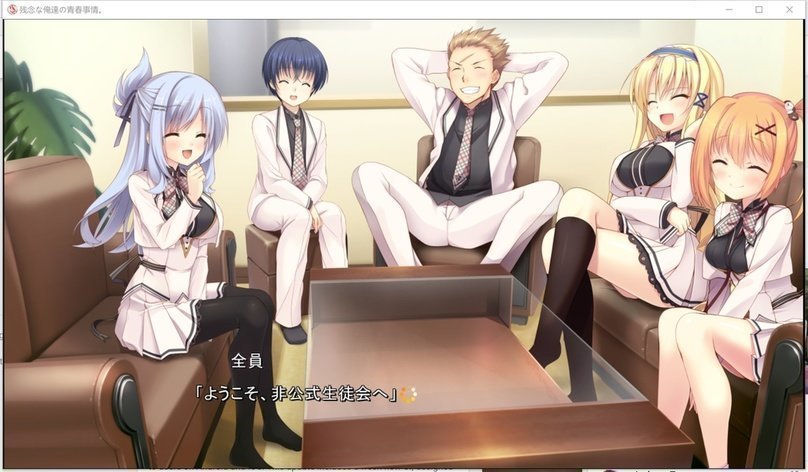
As the name implies, this club exists to oppose the official student council, with the goal of “fully enjoying school youth and fun” rather than studying. The club already has the protagonist and his crew, including love interests Aikawa Sakuya, Nakooka Chimachi, Shinonome Natsume, and two bros. Rinne joining makes her a new member.
What follows is pretty standard: the protagonist and friends screw around every day, basically just playing, dragging Rinne along everywhere. Then comes the school festival (god, another school festival), and the protagonist decides to stage a showdown between the “Unofficial Student Council” and the “Official Student Council”—make a big splash. At first they talk it up huge, then it turns out the big news is just setting off fireworks on the night of the after-party……
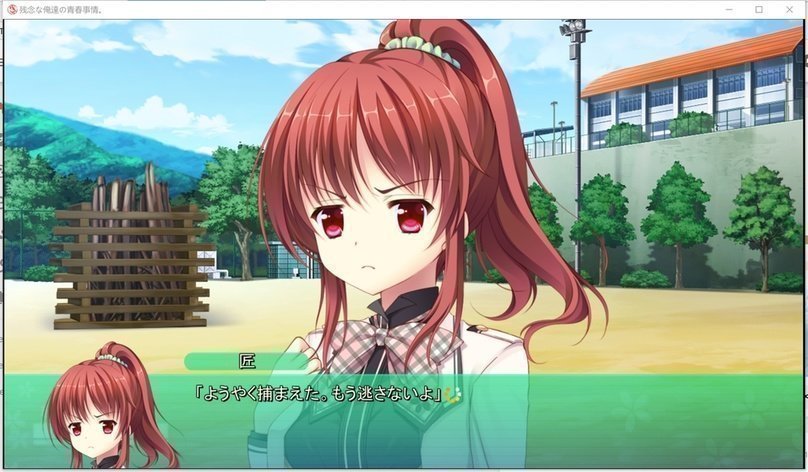
Then the common route ends and the protagonist starts pursuing Rinne.
Ah, but rather than the protagonist pursuing her, it’s more like Rinne pursuing him.
Because he brought her into this little circle-family, Rinne actually has feelings for him. But she’s a sharp-tongued tsundere—won’t say it, and figures if she became his girlfriend the other girls in the club would give her shit for it. So she tells him she wants to study romance and asks him to be her fake boyfriend for practice.
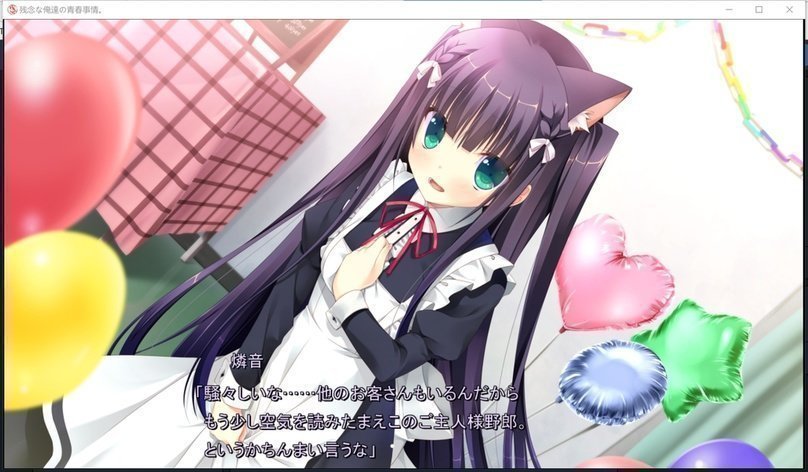
And he agrees. Rinne starts dragging him on dates every day, staying over, sleeping in the same bed—and they do absolutely nothing!!! (Dude, are you even human?)
Then Rinne asks him to kiss her and have sex. He refuses. “What the hell happened to fake couple? Why are we doing this?” He runs away scared. (Holy shit, you can get scared off by that?? Are you gay?)
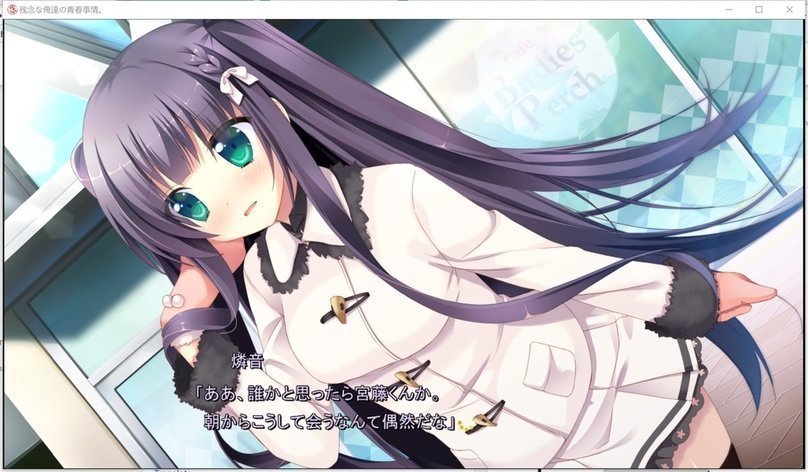
After that Rinne figures she’s been dumped, so she starts avoiding him. He avoids her too, because it’s awkward.
The two are deadlocked. The other girls in the club can’t stand it anymore and go talk to Rinne……
One of them nails the truth: Rinne likes the protagonist, but won’t say it, and is afraid the other girls will judge her, so she cooked up this “fake couple” petty scheme.
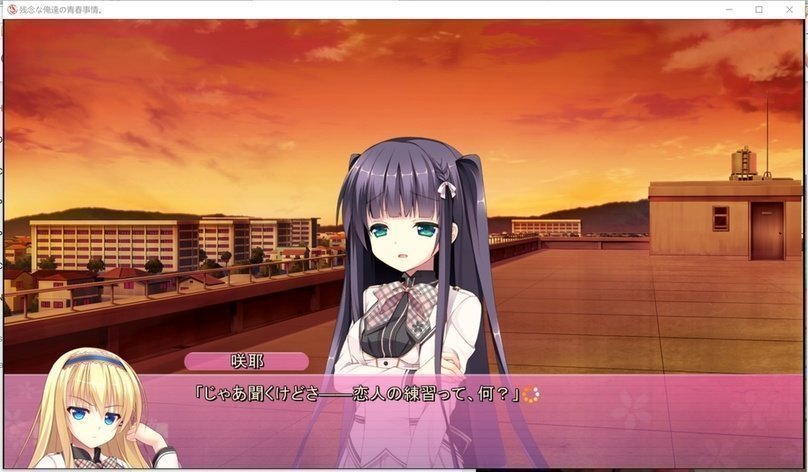
In reality, all the other girls in the club like the protagonist too (I…………). And all of them talk to Rinne, saying they’ll compete with her for him…… (I…………). And the club’s big sister is the first to confess to him…… (I……). Naturally he turns her down, because his heart belongs to Rinne…… (I…………)
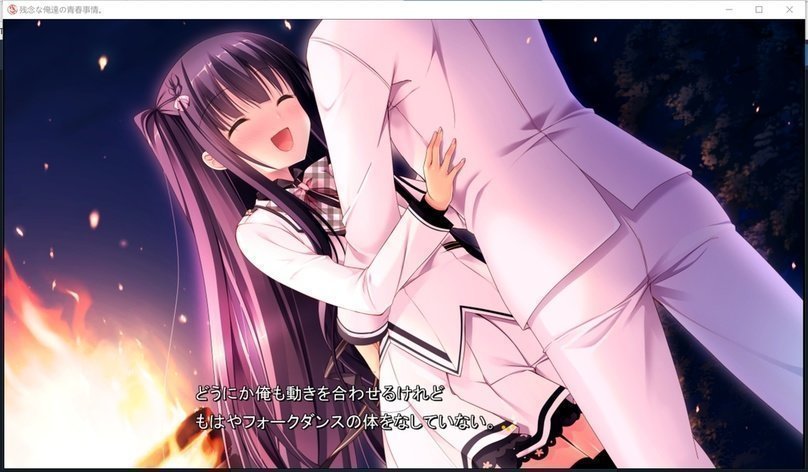
Then they get together. Rinne apologizes to him, he confesses to her, she stops being tsundere and tries to avoid the sharp tongue, they have sex, insert tab A into slot B, ED rolls, game over……
Honestly, Zannen na Ore-tachi no Seishun Jijou. really disappointed me.
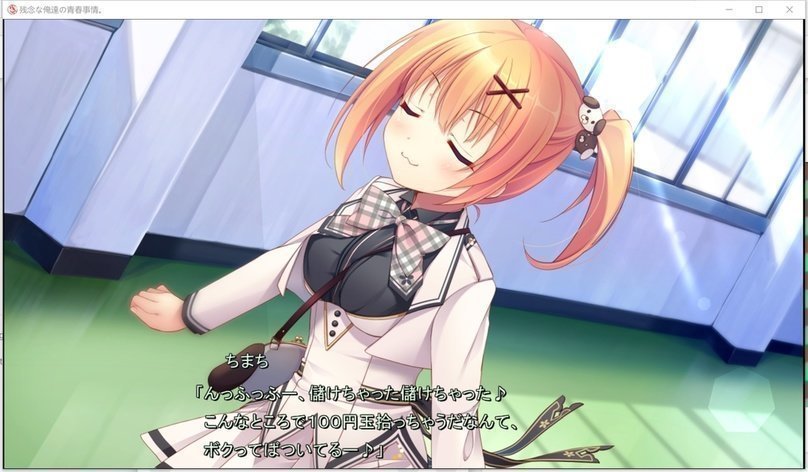
Because I went in thinking it was a comedy, but the game doesn’t actually deliver much comedy. The humor is low—the writing is bottom-tier when it comes to wit, the kind of stuff that just forcibly tickles you. Like a Spring Festival Gala skit. And the writer, worried players would get bored, desperately stuffs in references. Many are super unnatural, making characters look like idiots—Chimachi being the prime example, literally stuffed into brain-dead territory by the gags. I feel for her CV, Kusu…… oh wait, Kuzuhara Yui.
The only watchable part is the banter between the sharp-tongued Rinne and the protagonist. But the protagonist has no voice, while Rinne is doing the tsukkomi. That feels weird—the one with the good lines has no voice, the tsukkomi has voice. I don’t know if playing this gives you the feeling of just hearing one female voice yelling the whole time.
Fukada Mei-san, thanks for your hard work. You always voice these psycho characters in games.
Not only does the game fail at comedy, the story is completely unoriginal—still the typical “transfer student → join club → school festival → individual route” formula. And the “Unofficial Student Council” concept it hypes the most doesn’t really show up in the game at all. Just setting off some fireworks.
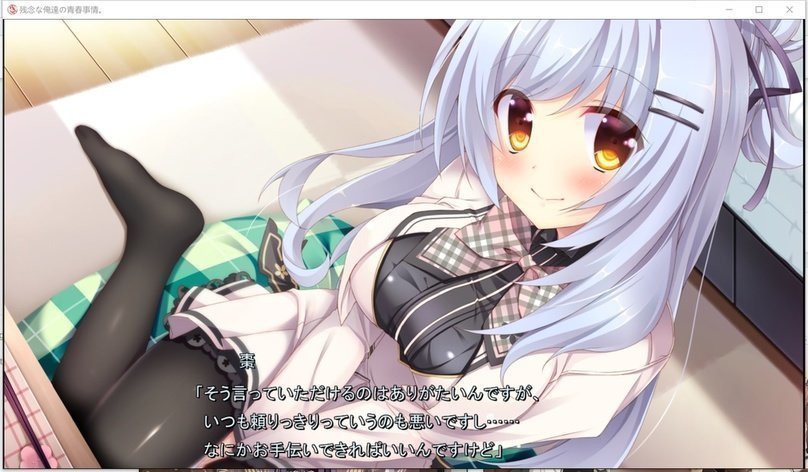
The final route is extremely rushed. Even though you’re already on the designated Rinne route, 80% of it is fake-couple playtime, then suddenly a crisis, then a bunch of girls pop up saying they like the protagonist. In an instant the game isn’t White Album anymore, it’s White Nightclub—all the heroines lined up like hostesses waiting for the protagonist to pick. And the ending is even more baffling: after he confesses, it seems there’s nothing left to write, so quick sex, ED, done……
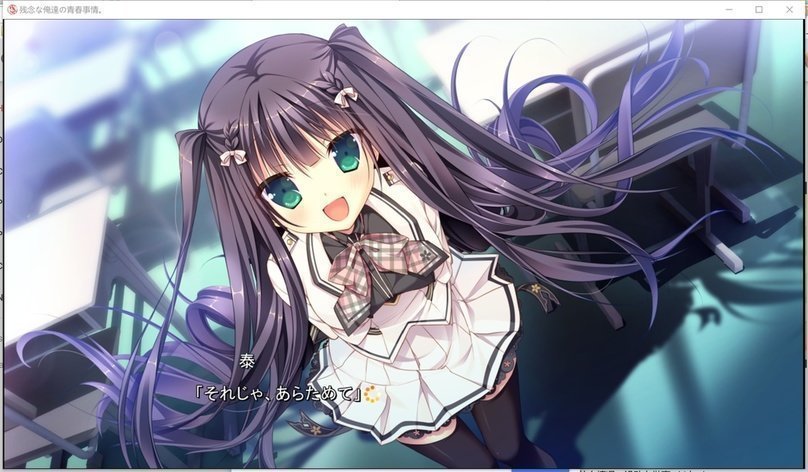
The art is actually very inconsistent. For Rinne alone, her rooftop CG is gorgeous, but her sprite is just okay. Other characters aren’t great either, though a few have nice styles—probably Mango Pudding’s work; she also worked on the company’s later game Suki tte Itte if You Like Me.
Actually, thinking about it, the biggest problem with this game isn’t any of what I said before. It’s………… the title doesn’t match the content at all, does it?
The title: Zannen na Ore-tachi no Seishun Jijou. In Japanese, zannen means “regrettable,” “lamentable,” “a shame.” So the title means “Our youth situation is so goddamn regrettable.”
What’s regrettable about the protagonist, huh?! Regrettable my ass! Every girl in the club says she likes you and you’re calling your youth regrettable?! Regrettable your dick!
The protagonist is in a fun-loving club surrounded by a harem, gets to lose his virginity, gets to fight the student council and live it up—that kind of youth…… “regrettable” my foot!
In Japanese class, my teacher said Japanese people like self-deprecation, always putting themselves down when they speak. That’s why we see Baka to Test with a so-called nobody idiot surrounded by a harem, Haganai where a supposedly unlikable guy gets chased by several big-titted girls, some “great teacher” who claims he’ll stay single forever playing White Album Mark II, this one, that one…………
It feels like when you’re in school and some straight-A student complains to you about how bad they are at studying and how nobody likes them.
Excessive self-deprecation is just flexing. And flexing naturally makes people hate you.
So Zannen na Ore-tachi no Seishun Jijou., judged by its title, leaves me with exactly that unpleasant feeling. Sure, it offers a little life insight—the stuff about squirrel syndrome……
But more than anything it’s indignation at a game made with so little care still trying to flex in your face……
Comments are hosted on the Chinese main site. This mirror is read-only.