Mono no Aware wa Sai no Koro (もののあはれは彩の頃。) Review
When the Maples Fall, Mono no Aware Rolls the Dice
Honestly? I’m a fan of Nanaroba Hana. Yeah, she’s got some black marks in her history, but I’m still a fan. I’ve always felt that when a female artist draws girls, there’s a kind of charm that male artists just can’t replicate—a sort of “cuteness” that only a girl can understand. So Mono no Aware wa Iro no Koro. was naturally on my radar. It got delayed a bunch of times, a trial version came out, I played it, and I felt… weird about it.
How should I put this—Mono no Aware wa Iro no Koro. is put out by QUINCE SOFT, a subsidiary of Lump of Sugar. Quince is a fruit, a very peculiar one with a complicated “don’t just bite into it” nature. The reason the sub-brand is called QUINCE SOFT is probably that Lump of Sugar wanted to spin off that whole line of “somewhat playable, complex games” into its own label. What do I mean by “somewhat playable, complex games”? I mean stuff like Unmei Senjou no Phi, Magical Charming, Rensou Relation. Games that aren’t just simple branches but have a ton of complex choices. Honestly, I like these kinds of games. But for Mono no Aware wa Iro no Koro., it’s a bit too complex.
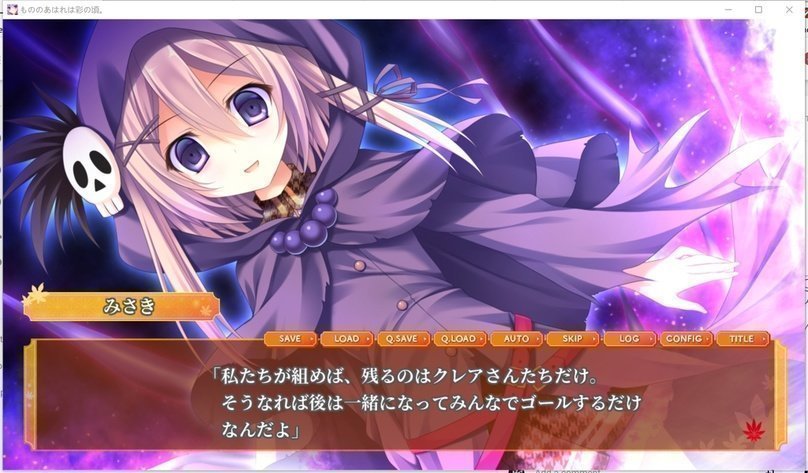
First off, the planner for Mono no Aware wa Iro no Koro. is Fuyu Akane Tomu, who also planned Unmei Senjou no Phi and Magical Charming. The frustrating part is that Unmei Senjou no Phi was dumb as bricks, while Magical Charming was absolutely goated. Both games share one trait: they have a certain Meta element, where all the branch endings lead toward the final True End. It’s just that Unmei Senjou no Phi handled its “detective” premise in a way that was kind of idiotic and childish, whereas Magical Charming nailed the “dating and romance plus magic cards” angle perfectly. Those two games made me cautiously optimistic about this new project. After playing the trial version, I got even more cautious.
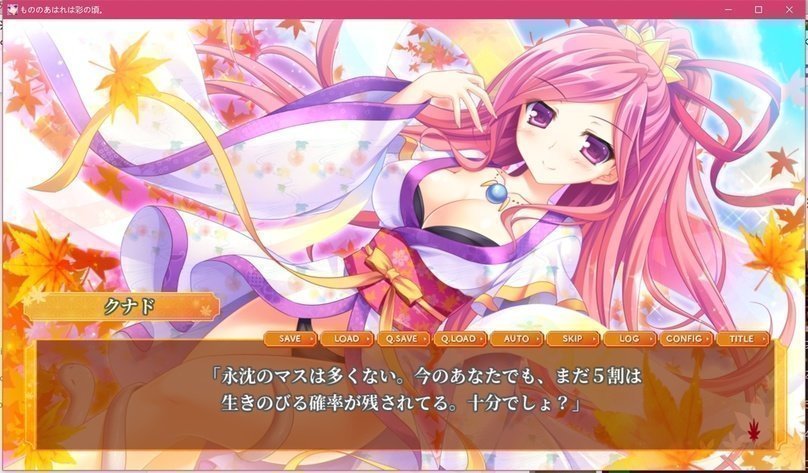
Mono no Aware wa Iro no Koro. uses as its base the board game “sugoroku” (a Japanese variant of snakes and ladders), which made its way from China to Japan. It’s about the protagonist and a group of heroines being dragged into a world that’s one giant board, where they have to keep playing sugoroku to stay alive, and they gradually uncover the truth of this world.
Before getting into the plot, I need to lay out some of the game’s mechanics:
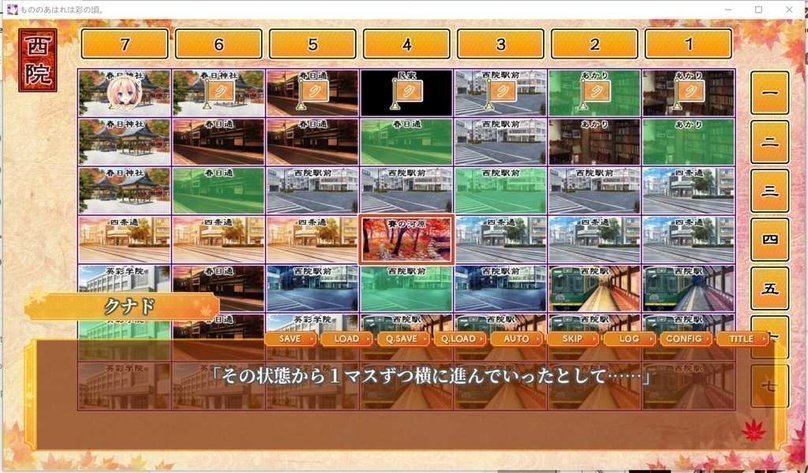
- First, the “sugoroku.” It’s not hard to grasp—it’s basically like Monopoly, the kind of game we’ve all played. Players roll dice and move around the board. Each space has specific rewards or penalties, and whoever reaches the goal first wins.
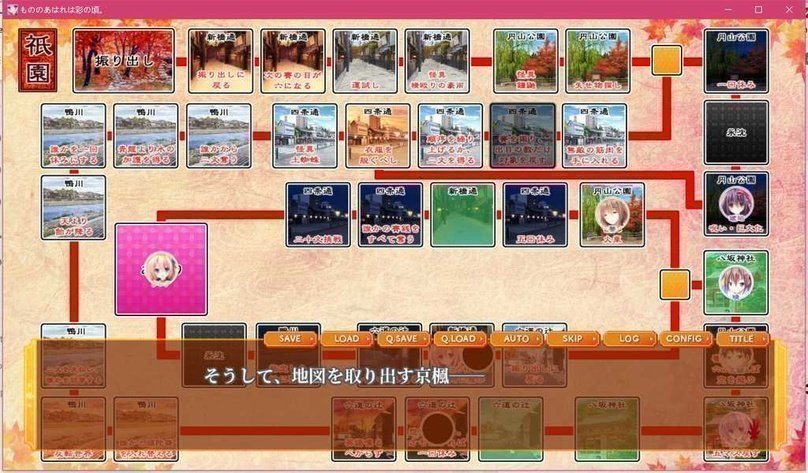
Also worth noting: the board isn’t just a simple Monopoly clone. There are green spaces. When you land on one, it triggers a “Gennichi” (written 幻日, read as “reality”), which plays out a memory sequence where the protagonist and the others aren’t in the sugoroku world at all—they’re in their everyday school life.
The game has multiple boards. Win the first board and you move to the second, then there’s a third. The branching points are decided by the protagonist’s dice rolls. For example, at the first branch, if he rolls an even number, he falls into “Eien Shizumi”—he dies. If it’s odd, he survives. You make the choice right there when you roll.
The characters participating in the sugoroku have no memories of the world outside the game, and each one has their own ability—seemingly called a “Kai”—and there are also “En” (ties) between people. Really, the sugoroku setup is closer to a standard battle royale, just dressed up as a board game.
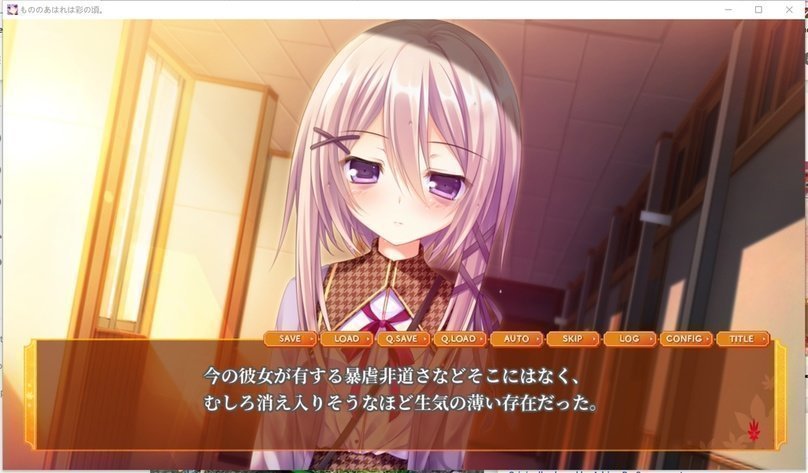
From these mechanics, you can basically piece together that the whole game is the protagonist repeatedly playing this “sugoroku,” triggering the green spaces to collect memory fragments, assembling their lost memories, figuring out why they ended up in this sugoroku world, and seeking the ultimate truth.
So why do the protagonists wake up playing a live-action Monopoly? The game has a cheeky story lock: you need to unlock the first few endings before you can reach the final True End.
There are four prerequisite endings you need to unlock, including the first Bad End where the protagonist rolls a 6 at the first branch point and dies immediately because it’s even. The way to get past it is to keep mashing the dice button when you roll a 6—the screen flickers, the 6 becomes a 5, and the protagonist lives.

The later branches work the same way. You might roll a 4 or whatever, but if you just mash the dice, you can change the number like you’ve got superpowers and keep the protagonist moving forward.
Besides that one Bad End, there are three endings for different heroines: the pink-haired Misaki, the blonde Claire, and the black cat incarnation, Amber. The branch point for these three is basically one of the protagonist’s rolls and which heroine he wins alongside.
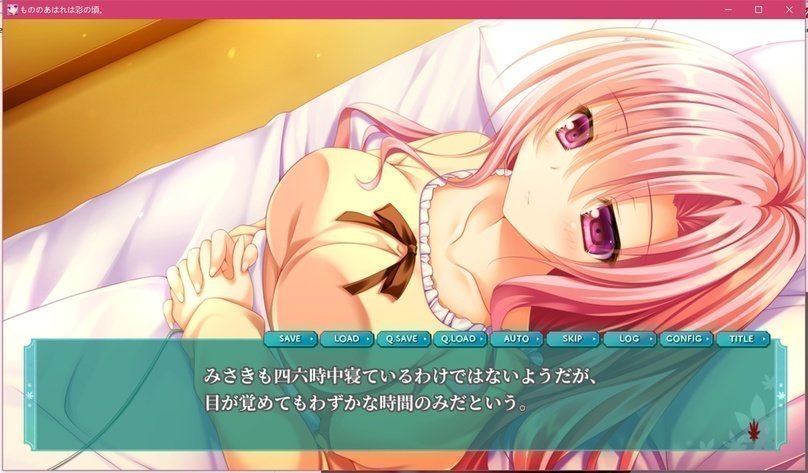
- Misaki: The pink-haired girl from the start. Win with her and you learn that in the real world outside the sugoroku, Misaki is actually a frail girl, often barely clinging to life. She loves Kyoto’s autumn leaves and the legends of the Kamo River. In reality she’s half-dead, which is why she can move freely and energetically in the virtual sugoroku world. In the end, to help the protagonist escape the sugoroku world, Misaki chooses to return to reality. Even though she’ll be sickly there, she’s willing to overcome the hardship together with him.
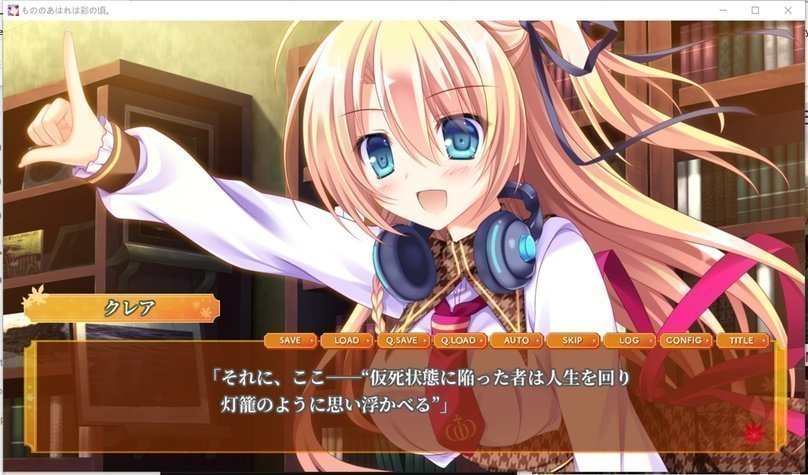
- Claire: The foreign girl with headphones from the start. In reality, Claire is a waitress at a café in town—a café her father owns. Claire discovers that her father has been secretly researching some kind of “live-action sugoroku” ritual, using someone as the board, two other people as pieces, and playing a real-life game where the winner gains the piece’s ability. But weirdly, the ritual only works when the people are “half-dead.” There are several people running around in the protagonist’s sugoroku world—are they all half-dead? Claire also points out something even stranger: the so-called memory fragments they see on the green spaces—could those be the “life flashing before their eyes” that dying people see?
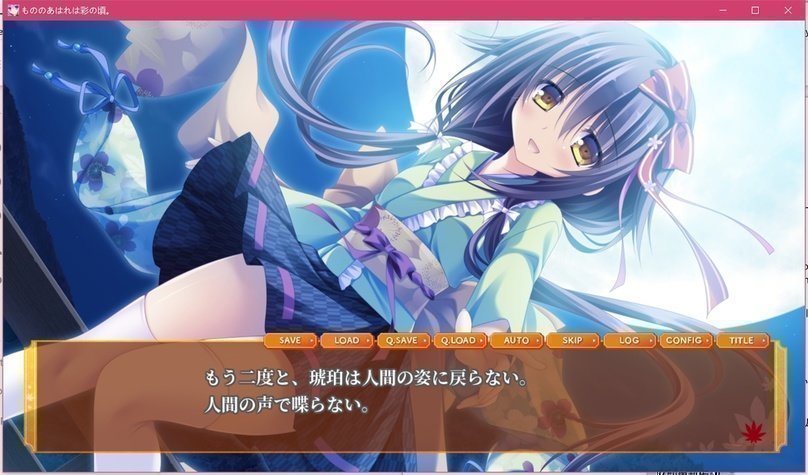
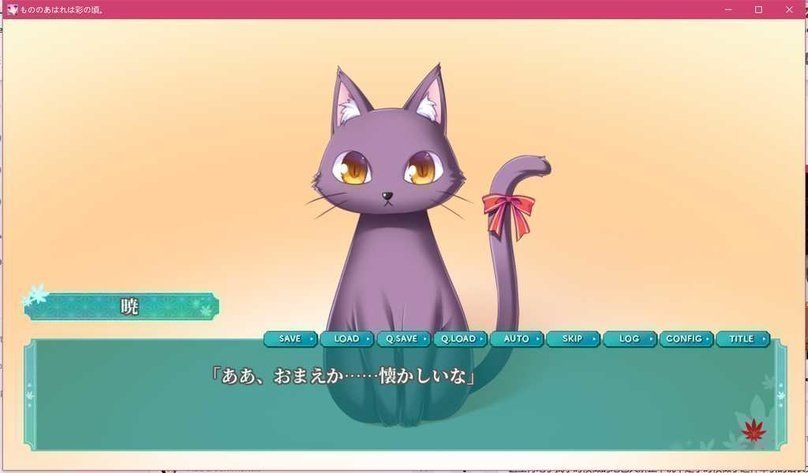
- Amber: In reality, Amber is a black cat, but in the sugoroku world she’s a loli who has taken human form. Amber’s route focuses more on recalling what she saw as a cat in reality, including the protagonist giving her a name and another girl named Kano Yukari. Kano Yukari is a serial killer in the sugoroku world, but in reality she’s utterly pitiful. She and the protagonist are both orphans, but while he was adopted by a good family, she was taken in by bad people and constantly abused, developing a self-aggrandizing, misanthropic mindset. That’s why she starts slaughtering people in the sugoroku world.
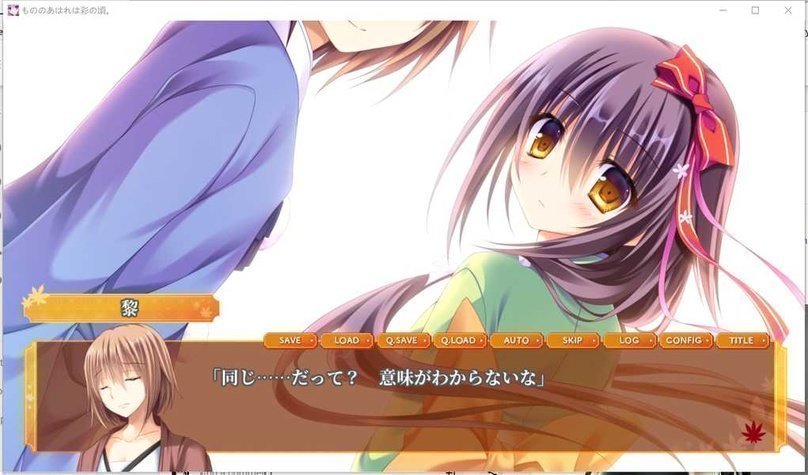
After gathering all the clues from those three routes, the protagonist reaches another branching dice roll. Mashing the dice itself triggers a brand-new event: the protagonist starts questioning the nature of the “sugoroku” world. If he and everyone around him are just pieces… just pieces on a sugoroku board… then who’s the one controlling his piece, forcing him to keep playing this game?
After that burst of doubt, the mastermind appears: the protagonist’s teacher in reality, a person who frequently showed up in the memory sequences. Claire also realizes that her father and the teacher had been meeting to research the “live-action sugoroku” ritual, so he’s a prime suspect.
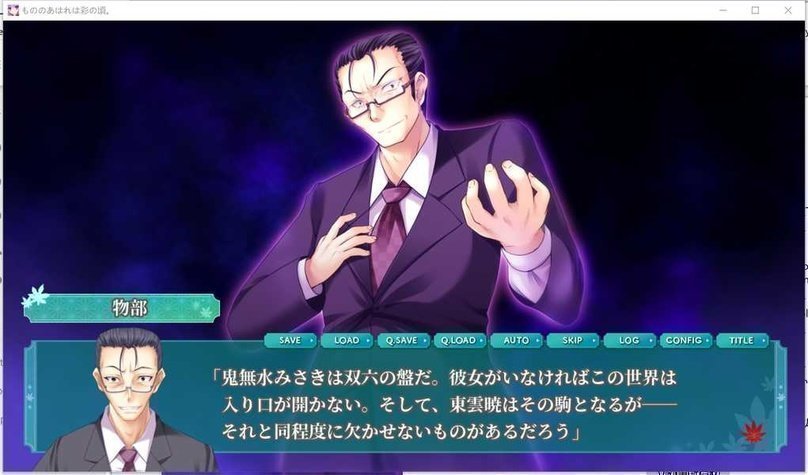
The teacher shows up and openly admits he’s the Player controlling this sugoroku game. Performing the live-action sugoroku ritual requires a board, pieces, and everyone involved as pieces must be in a half-dead state.
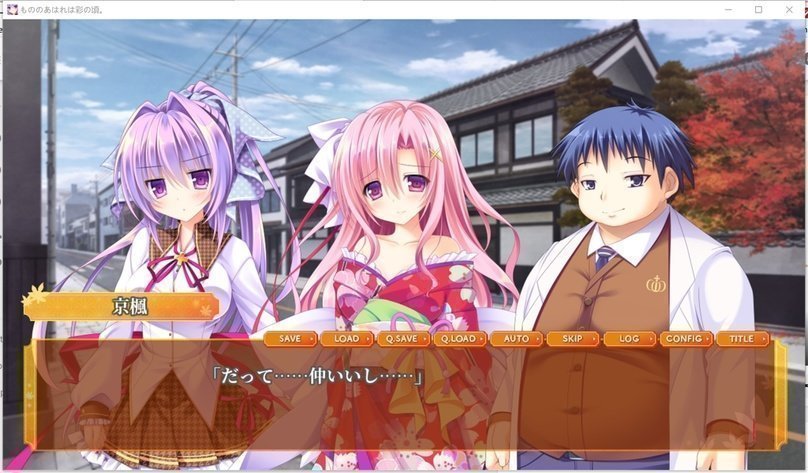
Misaki was already half-dead from illness. Kano Yukari tried to commit suicide by jumping off a building, and the protagonist’s fat best friend caught her with his body—both ended up half-dead. The black cat Amber was half-dead for some reason too (I totally forgot). And the protagonist himself was stabbed by the teacher along with the purple-haired girl who adopted him, leaving them both half-dead.
With Misaki as the board, the protagonist and the purple-haired girl as pieces, and various bystanders absorbed into it, an endless live-action sugoroku begins. And the protagonist and the purple-haired girl are rivals as pieces, which is why she’s always inexplicably hostile toward him in the game.
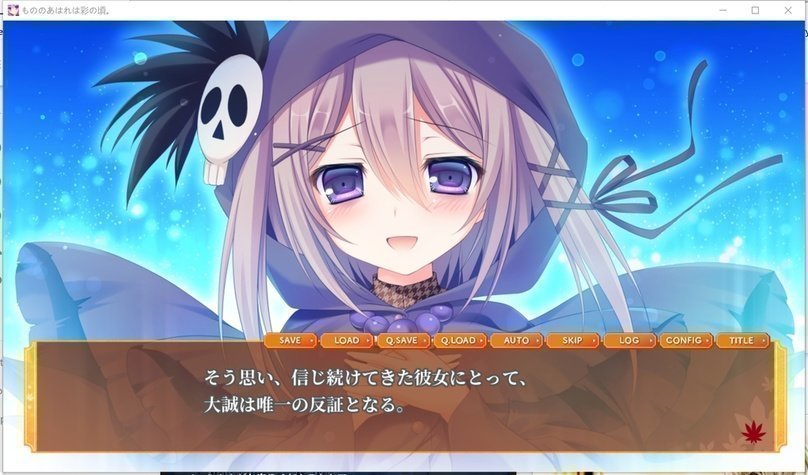
The protagonist wonders why the teacher had to stab him to drag him into this game. The teacher explains: he wants some ability the protagonist has…
As the Player, winning the sugoroku with a piece lets you obtain that piece’s ability. The teacher openly admits he’s already played many rounds controlling the protagonist and the others, and he’s acquired nearly everyone’s “Kai”—their abilities—except the protagonist’s crucial one. So to make the protagonist win, the teacher went out of his way to rig the game. That’s why whenever the protagonist’s dice roll would be unfavorable, the screen flickers and the number changes to something beneficial—and it also Neta’s the player’s own habit of mashing the dice to change choices in the game.
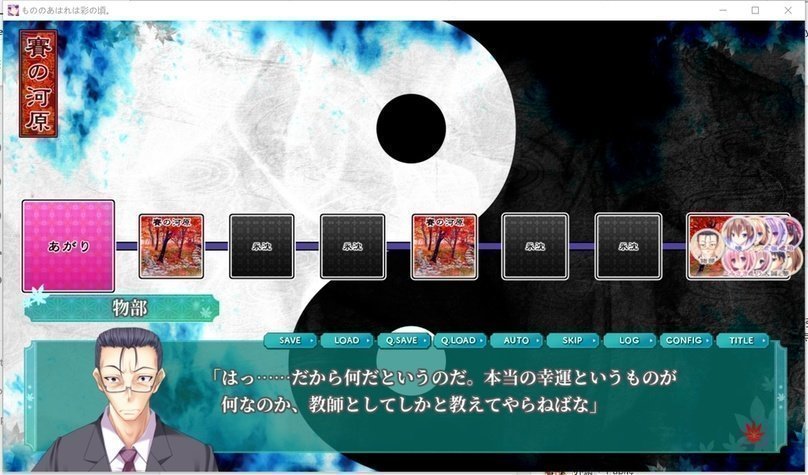
The protagonist always thought he was lucky, but little did he know he was just a piece. His “luck” was bullshit—it was all the person controlling him cheating on his behalf.
After that, the game falls into cliché territory. The protagonist, as a piece, wants to rebel against the Player controlling him, and a war of words with the teacher ensues. Finally, the teacher loses his mind and chooses to join the sugoroku game himself. He was originally in an invincible God mode, yet he insists on stepping in to PK his own pieces, and naturally gets overwhelmed by the protagonist’s group with their protagonist powers and speeches. The pieces gain their freedom and are liberated from the sugoroku game…
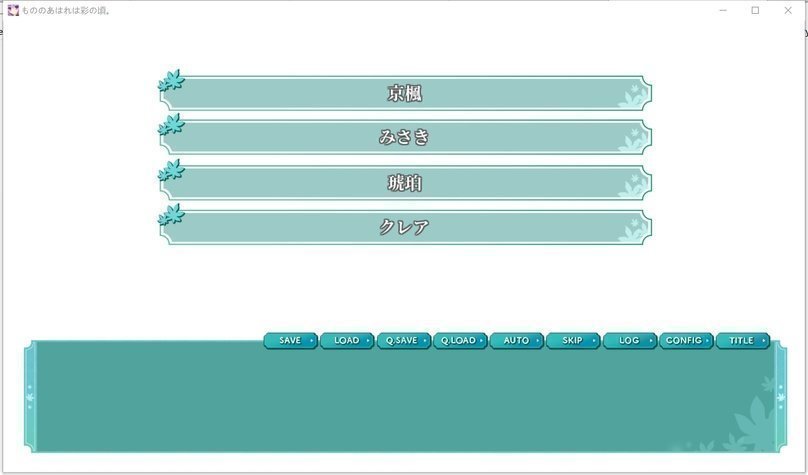
After liberation, the game is basically over. At that point it asks who you want to bang, and then you enter the individual sex routes, and the main plot is done.
Honestly, Mono no Aware wa Iro no Koro. does have its merits. Overall, the story is quite complete. Many foreshadowings serve a purpose: why the purple-haired girl is so hostile to the protagonist from the start, why they see various memory sequences at the beginning, why Misaki’s clothes are different from everyone else’s, why the protagonist’s dice rolls can be changed—all these are setups leading to the True End. Also, every branch point in the game is near the Sanzu River, and the guiding NPC Kunado only appears near the Sanzu River, indicating that the protagonist himself is half-dead, and only near the Sanzu River—the road to the underworld—is the closest point to reality. The game also has plenty of side content: the protagonist’s club chatroom members, the backstories of several side characters, the way his meeting with the purple-haired girl was always orchestrated by the teacher—all these events tie together, maintaining the same “everything has a cause and an effect” style that the same scenario writer had in Magical Charming. You never feel like developments come out of nowhere.
Another point is the game’s attention to detail: the calligraphy on the background in the protagonist’s home changes every time, and the protagonist is written in third person within the sugoroku world but in first person in reality, etc., etc.
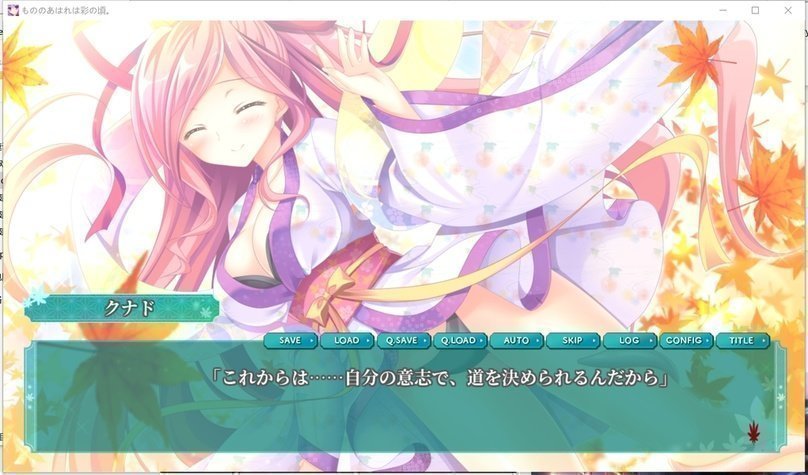
But, but! Mono no Aware wa Iro no Koro. has way more flaws… The first and foremost is that the game is too cheap. A lot of people might think it seems carefully made, but in reality it’s just cost-cutting. There are too few CGs, and most of the time is spent on the “sugoroku” confrontations. When it’s trying to build psychological tension during the board game, the game doesn’t need any CGs at all—it doesn’t even need individual images for the board. The BGM is fairly pretty, mostly evoking Kyoto’s autumn leaves and the Kamo River, but there’s too little of it—too few tracks. The common route requires frequent BGM switching, but it’s the same handful of songs over and over, and it gets annoying fast.
Beyond the lack of CGs and music, the game has one major controversy—something I personally really dislike and I’m not even sure whether to count as a flaw—which is its exploration of Japanese onmyōdō and kanji culture.
The scenario writer seems to have introduced “sugoroku” to promote Kyoto’s classical culture, and then to boost the game’s pretentiousness and mystery, made the protagonist a character interested in “onmyōji.” This results in our protagonist constantly muttering incantations—something about Japanese yin-yang, “Kai,” and “En.” As a Chinese person, seeing this always feels… weird. Because a lot of yin-yang and five-element stuff came from China, and after Japan absorbed Chinese culture, it heavily modified it. The modified version is now quite different from the original Chinese yin-yang and five elements, leaving me unsure how to react. The game also introduces a lot of tricks based on the on-yomi and kun-yomi readings of Japanese kanji—basically the equivalent of that Song dynasty couplet “海水朝朝朝朝朝朝潮落,浮云长长长长长长长消,” which uses polyphonic characters to create a special mood and riddle. But Japanese kanji readings are messy to begin with, so many of their polyphonic reading puzzles feel completely arbitrary and incomprehensible to me.
Honestly, I don’t have much interest in ancient Japanese culture. Japan only really started to rise after the Meiji Restoration; before that, its significance to the Chinese region was mostly about borrowing and learning. I think they were still importing culture from China as late as the Ming dynasty—the reason Japanese still calls a giraffe a “kirin” is one example. I’d rather learn about modern Japanese culture post-Meiji Restoration, including the fact that a huge number of kanji words in modern Chinese come from Japanese. As for Japan’s early ancient culture, I don’t think there’s much need to study it, because… the essence of that era was in China during the Tang and Song dynasties.
To put it bluntly: why would I study your knockoff version when I could just look at the original Tang and Song versions?
Another obvious annoyance is the protagonist’s personality in the common route—he’s too much of a wimp.
I used to not understand why anyone would watch a show as intellectually challenged as No Game No Life. Now I finally get it: because it feels good.
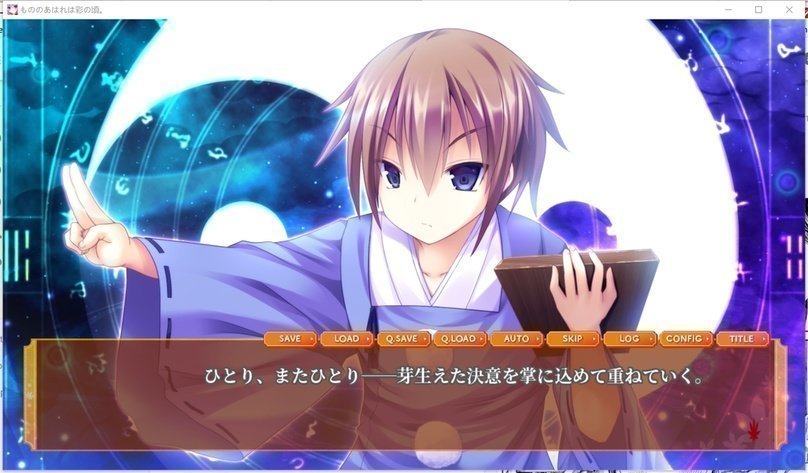
In a confrontation, what we want to see is our protagonist confidently cheating his way to victory, dominating and grinding the opponent into the dirt. But in Mono no Aware wa Iro no Koro., the protagonist doesn’t even look the part, and Nanaroba Hana apparently can’t draw men at all—they all come out kind of chubby. The protagonist’s onmyōji CG looks like a total fat otaku, not to mention his chubby best friend. On top of that, our protagonist is always muttering in the sugoroku world like some kind of shamanistic lunatic. It just makes you feel depressed instead of satisfied. The common route is so long, and I have to watch a coward mumble to himself the whole time, and I can’t even control him myself—I just have to watch him play and cower on his own. What kind of agony is that?
Oh right, I forgot to mention: Mono no Aware wa Iro no Koro.’s marketing gives you the impression that the dice in the game are truly randomly rolled…
For example, the first dice roll defaults to 6, and I accidentally tapped the dice and it became 5, which gave me the illusion that I could randomly roll a 5 or 6.
But an illusion is just an illusion. The game is still a single track. The “random rolls” you think you’re making are all locked in…
Looked at that way, this game has less freedom than Magical Charming…
Overall, Mono no Aware wa Iro no Koro. borrows the “sugoroku” game, but its actual development has little to do with sugoroku. It’s just that the protagonist had his memories stolen and is trapped in a game world, becoming a character controlled by the Boss outside the game—the teacher—and the teacher only makes the protagonist win to use him to get what he wants. That’s it.
So the whole story could be told just fine without “sugoroku” at all. And by the way, the Boss only says he wants to take the protagonist’s ability, but why he wants it and what he plans to do with it is never mentioned… Sometimes I think the Boss must have some unavoidable reason too…
In my view, you could completely ignore the sugoroku part of Mono no Aware wa Iro no Koro. Just understand the basic setup, skip straight to the green memory sequences, piece together enough fragments of reality, and you’d reach the True End directly. The “sugoroku” is so loosely integrated with the main plot that it could be stripped out entirely. Plus, I personally have no interest in the sugoroku descriptions, which is why my evaluation of Mono no Aware wa Iro no Koro. isn’t very high.
I can tell the scenario writer tried, but really, Mono no Aware wa Iro no Koro. is still a long way from Magical Charming. Magical Charming focused on cards and romance, and it did both well and connected them meaningfully. In that respect, Mono no Aware wa Iro no Koro. still has a long way to go.
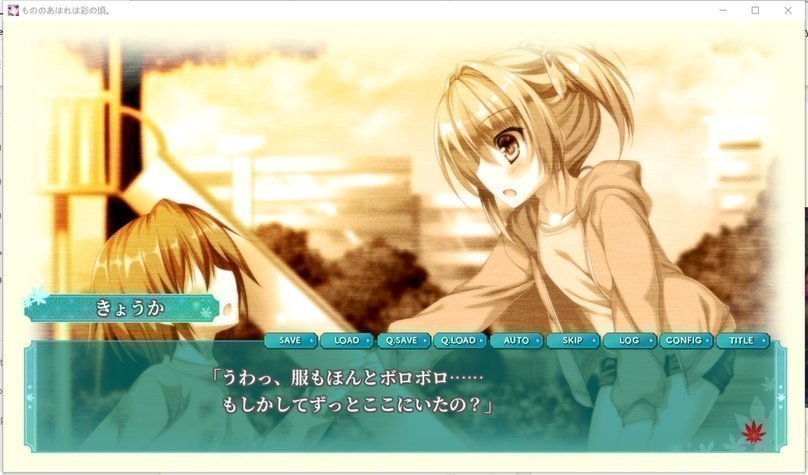
Finally, let’s talk about what the title Mono no Aware wa Iro no Koro. means. “Mono no aware” in Japanese describes a kind of sorrowful feeling you get when seeing or touching something—a “mono no aware” emotion. As for “Iro no Koro,” I thought about it for a long time without getting it. Then I removed the “no” and it hit me… “Sai no koro” = “sai no koro” = “saikoro”… which literally means dice. Fits the dice-rolling setup of the game, I guess.
When the maples fall, mono no aware rolls the dice.
A “mono no aware” that’s all about forced melancholy, and then it turns out to be about rolling dice—the title just feels cheapened, you know…
Comments are hosted on the Chinese main site. This mirror is read-only.