Hoshifuru Yoru no Farnese (星降る夜のファルネーゼ) Review
A Producer's Job Involves Many Things — Like Hitting on a Cosine Girl
Honestly, the visual novel market this year has been pretty boring. From the start of the year up to now, every time I see the new releases for the month, my face just does the slow head-shake. At first I figured it was just me — played too many, tastes burned out — but then I looked again and nope, that wasn’t it. The content of these games has been getting more and more… bland. Actually, “bland” is generous. Let’s go with “boring.”
A lot of studios went with romance stories that aren’t really plot-driven, and most of those revolve around making desserts. If they’re written well, that kind of thing works fine as a sitcom. Other titles started experimenting with the game systems themselves.
What do I mean by “the game systems”? Basically, on top of being an “audiobook,” they started probing how “playable” the thing could be. So we got a bunch of games that look interesting. But what actually fits the AVG format best is “deduction” and question-and-answer “detective” games.
Early in the year there was Ouka Tameshi. That game is genuinely hard, and the story has plenty of twists and turns. It’s just that I’m not a big fan of pre-Meiji Restoration Japan — the setting and culture — so I had a bit of resistance to it.
Then another similar title got announced: original art by Yukie, producer 中澤工, from a new studio called miti. They billed it as something like “Ace Attorney”: Hoshifuru Yoru no Farnese.
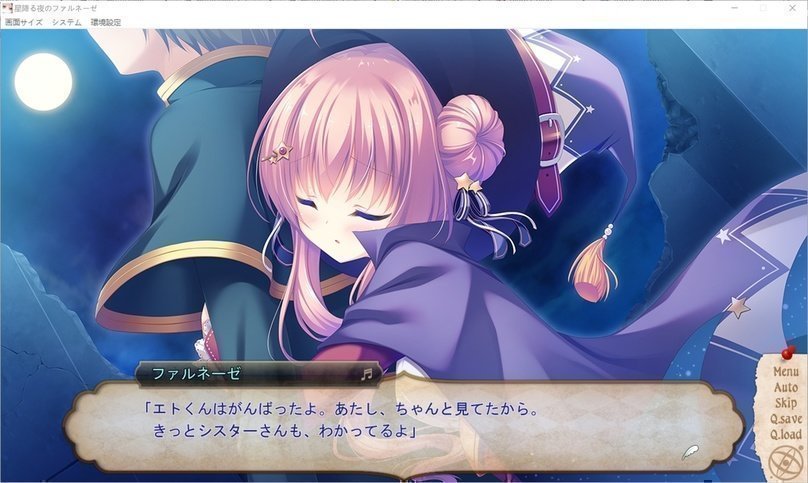
I was really interested in Hoshifuru Yoru no Farnese at first. I like the artist, and the producer is 中澤工 — the guy’s put out a bunch of very meticulous games before, so at least it wouldn’t pull a Tantei 7 and go completely off the rails…
But after playing it, I think I forgot one thing: 中澤工 was the producer, but not the scenario writer. Because a producer’s job is handling the other, more important stuff.
Hoshifuru Yoru no Farnese is set in some fictional European world. The Eiffel Tower you keep seeing in the game makes it clear we’re in France. There are plenty of French words and French-style names too. None of that matters, of course — you know they’re all speaking the universal anime language: Japanese.
The setup is that the protagonist is a rookie 星狩り who joins a famous firm in the capital of the country and starts working there.
So what’s a 星狩り? Time to explain the game’s basic worldbuilding. Right at the start, it tells you this line:
“この世界には、いい魔女がいる、わるい魔女もいる。" (In this world, there are good witches, and there are bad witches too.)
In this fictional world, all crimes are considered witch-related — specifically, the work of evil witches. The job of a 星狩り is to defend the “good witches” and expose the “bad witches.”
Which basically means… a lawyer running a trial, plus some on-site detective work. That’s it.

The game flows like most “detective” games: the hero attends some event, an incident happens, he investigates, and finally he defends in court.
The case structure should be four common-route cases, then one case per romanceable heroine, and finally the True End case. Normally a True End is story-locked, so it should tie all the other cases together…
It doesn’t.
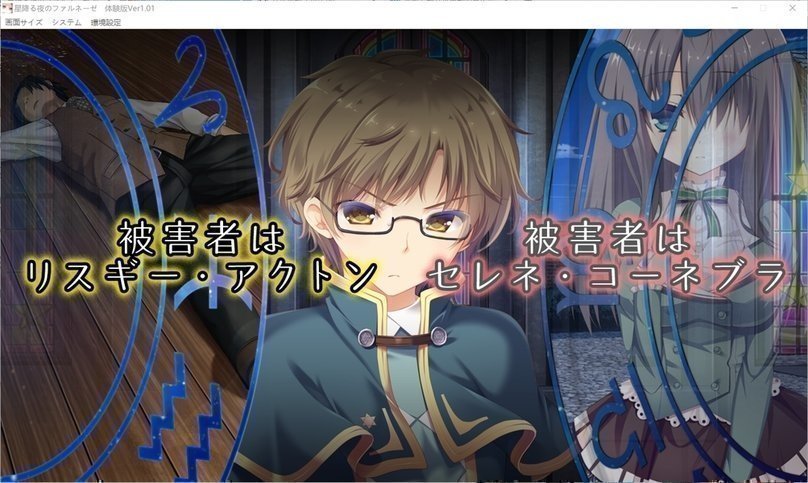
The first case is a warehouse murder. The female secretary kills her boss and frames a schoolgirl who happened to be passing by a warehouse to pet a cat. There’s a death and a gunshot, and the guard knights investigating happen to catch the girl, so they decide she’s the witch.
The key point is that the girl and the murder warehouse are rooms No. 1 and No. 3 — not the same room. The secretary, to mislead the investigating knights, swapped the signs between warehouse No. 1 and No. 3.
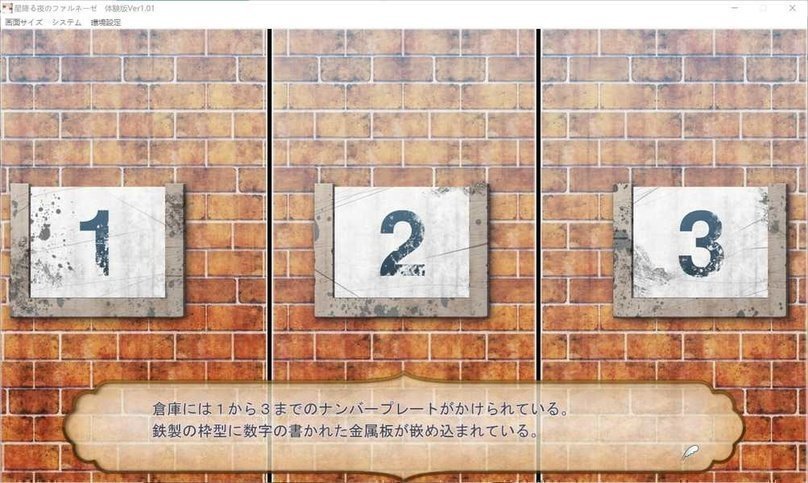
Midway through the case you spot this. Present it as evidence, and the girl’s alibi holds — she’s no longer a murder suspect.
The second case is even simpler. At a girls’ law school graduation party, the corpse of a male teacher falls from the sky and crashes down right where the second heroine set up a glass-ball lamp. So the second heroine gets accused of being a witch.
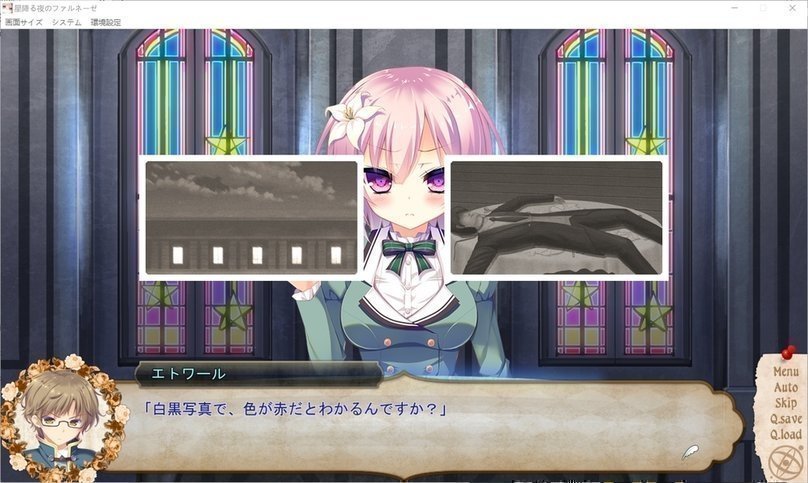
The key to the investigation is simple too: the hero quickly finds out the glass balls weren’t the first crime scene. The teacher was killed three days earlier during rehearsal, and on the day of the party a witch used telekinesis magic to move the body to the venue and drop it. The first scene is the clock tower across the way. Investigate the tower and the truth’s basically out.
The third case is slightly more interesting. The hero and co. are invited to an aquarium to watch a play. A famous actress is supposed to stab someone with a dagger in the final scene — it’s acting, obviously — but that day something goes wrong, and someone actually gets stabbed to death…
The prop dagger was swapped for a real one. The actress says she didn’t know, she was deep in character, so she stabbed — it was supposed to be a prop, she had no idea when it became real. The prop master says he’s not at fault either, he’s always careful with the props, he had no intent to kill. And the man who got stabbed was a reporter who was supposed to be doing an interview — who knows how he ended up on stage, and who knows why the dagger turned real, but stab stab, dead.
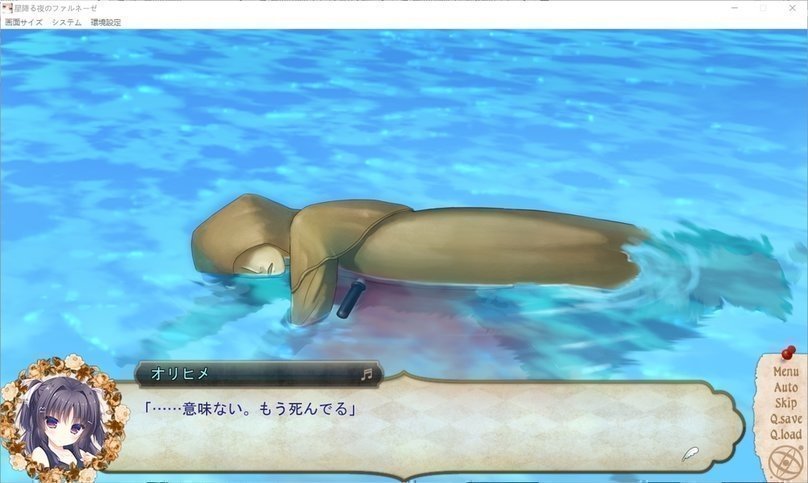
The investigation initially suspects the prop master, since they find in his room a critical article the reporter wrote about his theater troupe — maybe that was the motive. But he denies it flat out.
It turns out to be the female knight in charge of security for the whole troupe. The reporter had dug into a lot of things, including corruption among the knight order’s higher-ups. The female knight read it, her worldview collapsed, and she decided to take revenge…
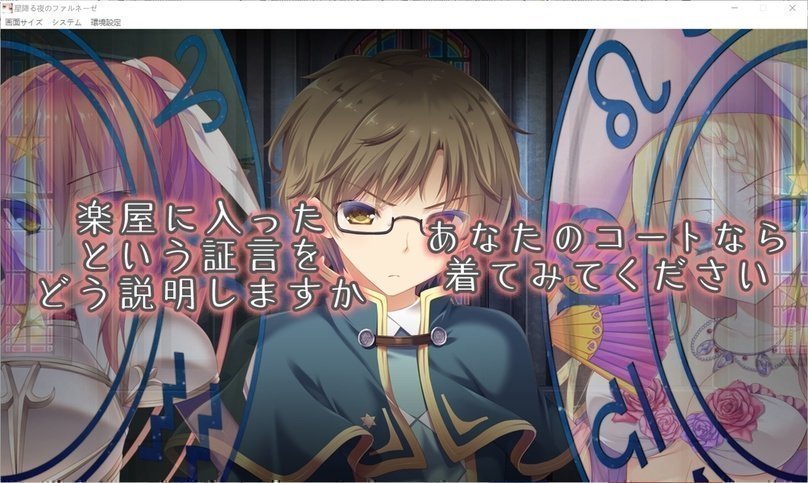
Honestly it’s pretty dumb, but at least it counts as a misdirection?
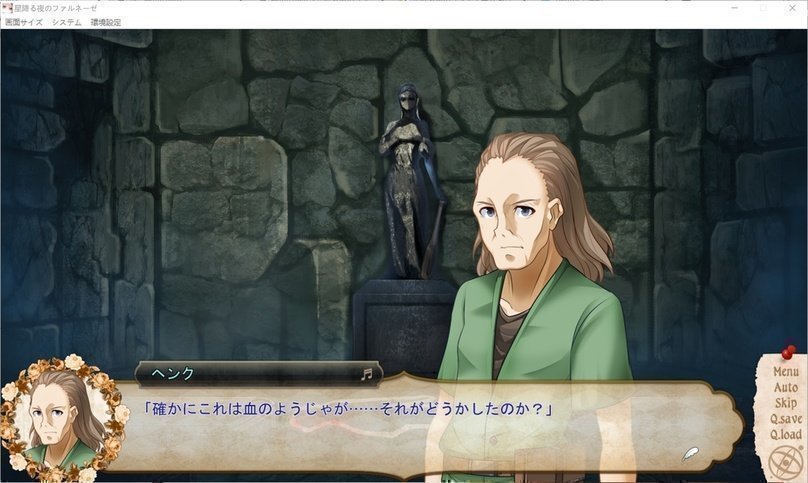
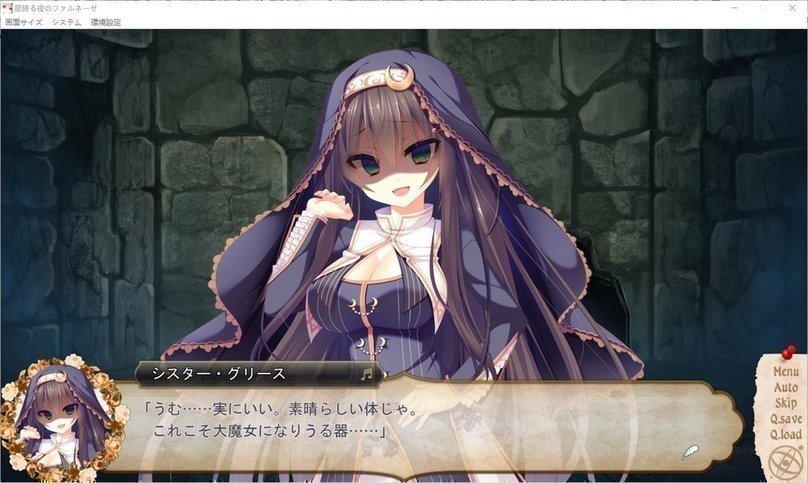
The fourth case is a total non-ending. At the national art museum, something strange happens with a painting of a “Saint.” The museum director is found burned to death in front of it. The same thing happened three years ago — the director then was also burned to death. Investigation turns up nothing. A nun from the church tells the hero a story: her mother worked at the museum three years ago, handling excavation and restoration of old paintings. They dug up a painting called Saint, and her mother restored it. But after her mother touched that painting, the whole family went downhill — the director burned to death, her husband left her, and she died too. The nun thinks there’s something off about the Saint painting, that it brings misfortune.
The hero takes a look and feels the painting might be connected to another cursed painting, Witch, but he can’t put his finger on it…
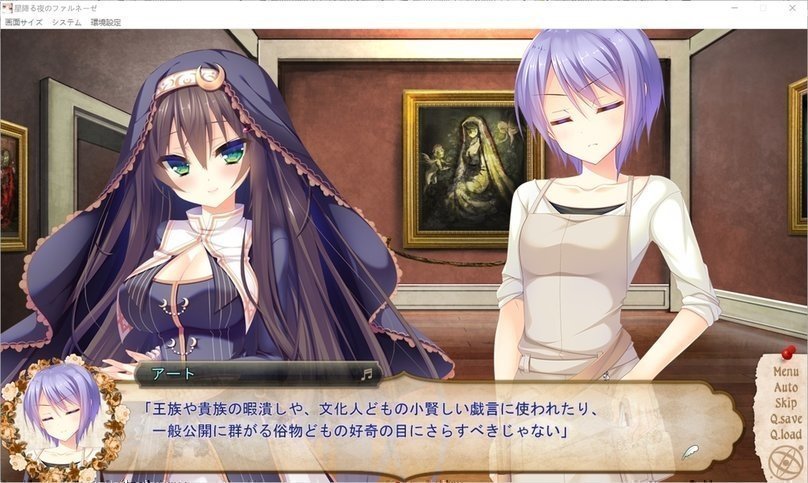
The hero even starts thinking it wasn’t a person who killed — it was the witch’s curse on the painting. The Saint painting seems to have been painted with a “witch’s” blood.
But before the investigation wraps up, at the second court session, the nun suddenly confesses to everything, says she did it all, and begs to be executed quickly…
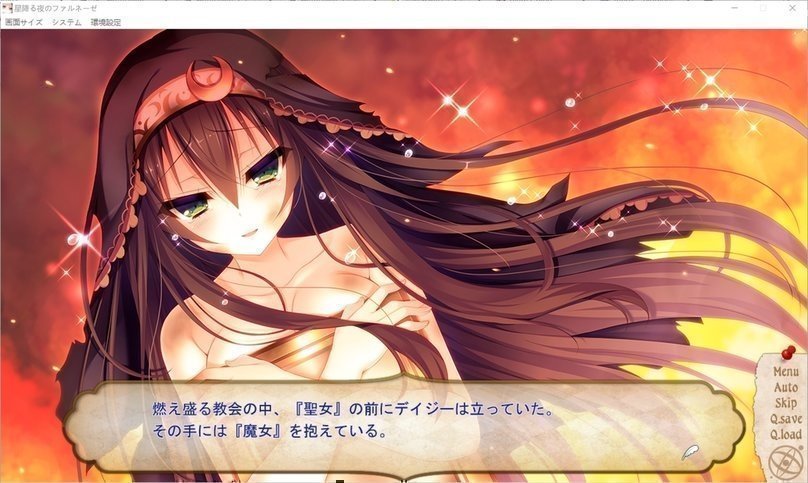
The hero has no idea why, but the nun just keeps saying it, and finally she burns up in the flames clutching the painting. And that’s the end of that chapter. Completely unfinished.
Chapter 5 explains the story between the game’s true heroine Farnese and the hero — this is the game’s main storyline.
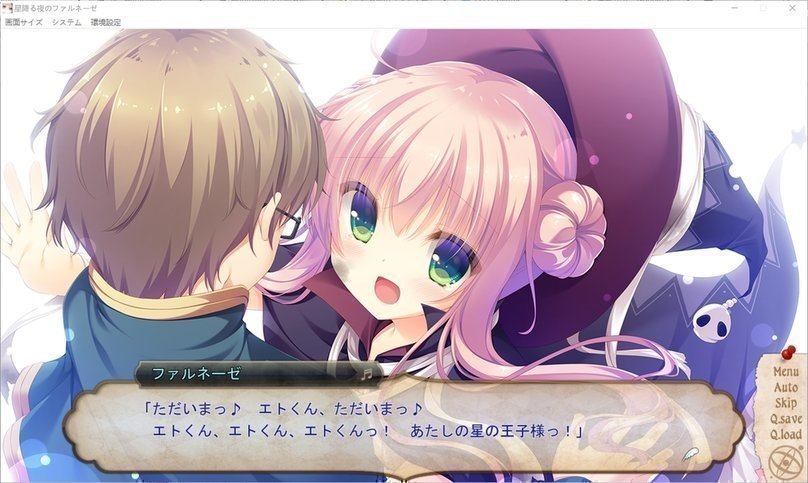
When the hero starts taking cases, he meets a girl: Farnese. She has a little dog with her, and she calls the dog “Mama.” Fun fact: Farnese calls herself the “witch of justice,” carries a spiked club, and says it’s her sacred tool, the “holy club.” She’s completely unhinged. Farnese says she met the hero when she was little, calls him her “prince of the stars,” and declares every day that she’s going to marry him, blah blah blah.
Given how utterly nuts she acts, and given that “witch” is a sensitive word in this country, she’s bouncing around in broad daylight dressed like a witch. Sure, she says she’s a witch of justice, but who knows? She’s literally holding a spiked club…
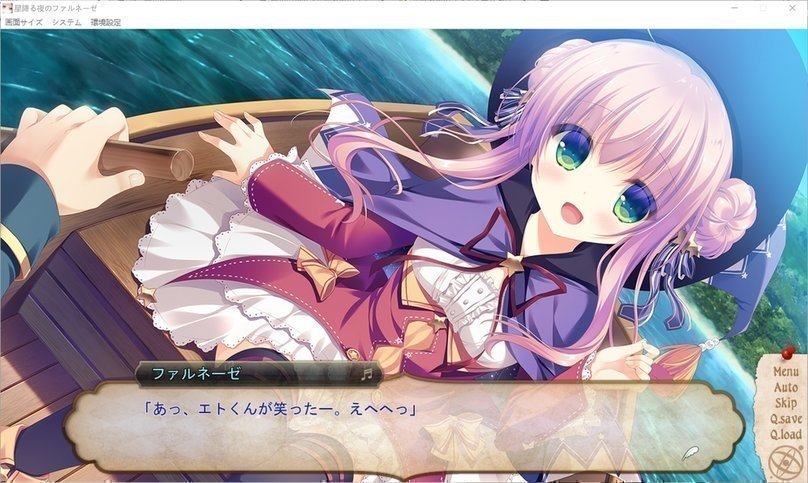
So from the very start of the game, most characters think, “Poor kid, she’s mentally ill,” and don’t take a word she says seriously. She never actually helps during the hero’s cases — just causes trouble and talks nonsense.
Farnese is also suspicious. Every time the hero solves a witch case, he feels himself being eroded by the witch’s constellation magic, and Farnese suddenly gets an evil look on her face, comes over all close, and says she’ll detoxify him. And it turns out the hero really does feel better — Farnese says she absorbed the constellation magic. Sometimes Farnese suddenly flashing that dark expression makes you wonder if she’s the villain.
Once you pick Farnese’s route in Chapter 5, the hero gets time off because the firm is slow, so he goes back to his hometown — and since he and Farnese are from the same village, he brings her along.
Coming back, after years away studying to be a lawyer, the village is basically unrecognizable. He runs into an old man he knows; everyone else avoids him when they hear who he is.
Why? Because when the hero was a kid, his mother was judged by the court as an “evil witch” and executed in a murder case. That’s exactly why the hero insisted on becoming a lawyer — he believes his mother was innocent, and he wants to protect the “good witches” and deliver justice.
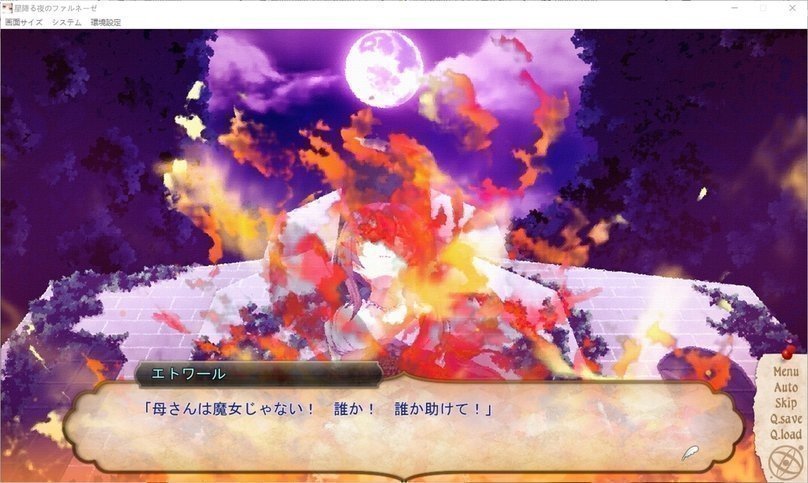
The old man invites the hero onto his boat, and the hero asks:
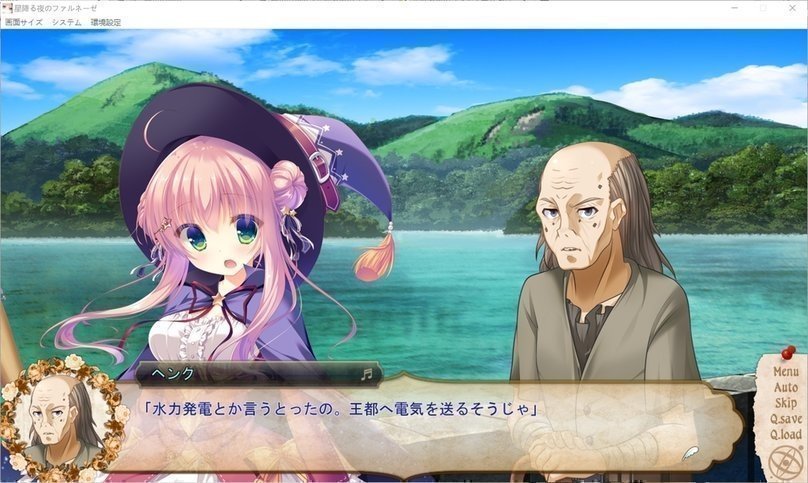
“Old man, where’d the old village go?” “The village? It’s at the bottom of this lake. Flooded.” “…”
Then the hero learns that the royal family, to research hydroelectric power, drove out the villagers and flooded the village to make a reservoir. With the village underwater, there’s nothing left to reminisce about.
While wandering the parts not underwater, something happens: Farnese gets arrested as a murderer. In a cave outside the village, the old man from earlier was struck on the back of the head and killed, and the evidence left at the scene is the spiked club in Farnese’s hands. By any reading, Farnese clubbed him. And there’s a statue of a saint in that cave…
Then comes a forced trial, presided over by a rural priest rather than the capital’s priest — away game. The hero has nothing to argue with; all evidence points to Farnese. But he believes she couldn’t have done it. The judge demands they verify whether Farnese is a witch. She actually is a witch, and probably a “good” one, but if they verify it here, she’ll be executed for real.
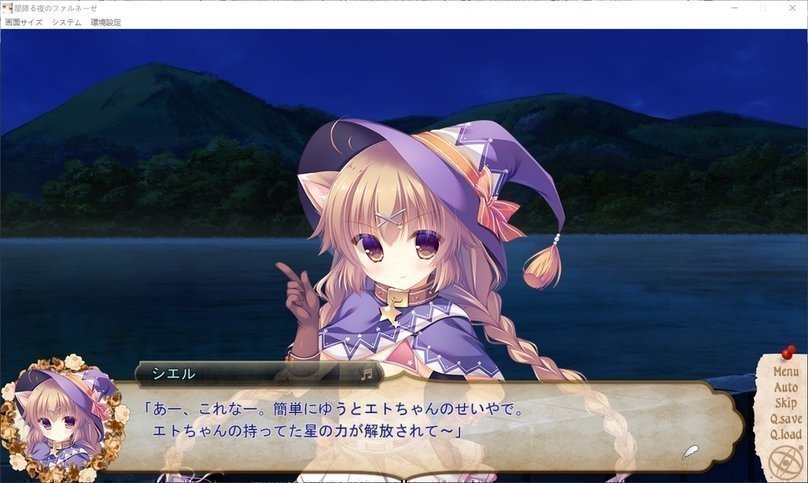
While the hero is agonizing by the lake, the dog that’s always with Farnese shows up, the lake bottom starts glowing, and the dog turns into a little loli… and talks.
She tells the hero she really is Farnese’s mother, cursed into dog form. Farnese is in serious danger, and only the hero can save her — then some spellcasting happens, and the hero gets pulled into a bizarre magic circle.
When he wakes up, he’s traveled to the past — the village ten years ago, right when a witch trial is being held. The defendant is… his own mother.
His mother is accused of beating the village priest to death with a club in a cave outside the village. There’s evidence — blood on the club — and no alibi. Exactly the same situation as Farnese’s.
The hero runs to the cave to investigate and finds something strange: the saint statue has an extra spiked club in its hand compared to ten years later…

He turns the statue, a hidden passage appears… and after some investigating, he’s got a lead.
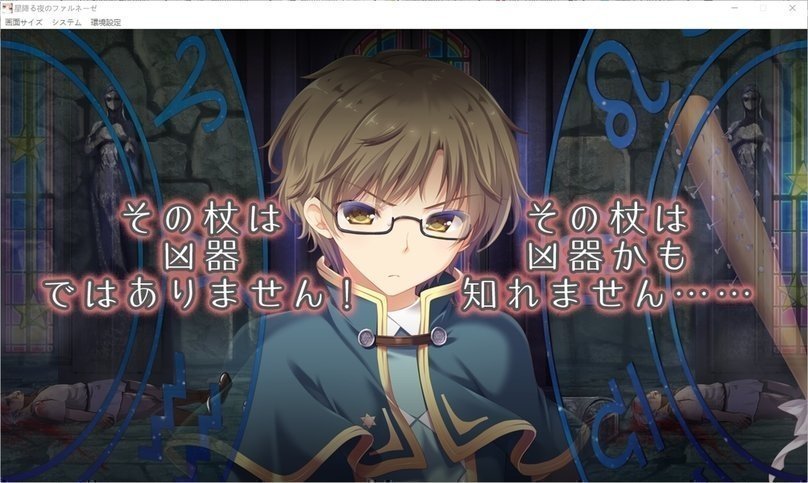
Back at the trial, just as his mother is about to be found guilty, the hero rushes back and announces he’ll defend this woman.
After his defense, he’s basically proven his mother innocent — or at least not definitively guilty. But the presiding priest insists on executing the witch quickly: she’s a witch, witches die. The priest even brings out a nun as a witness, who smirks and says the hero’s mother killed the previous priest, and produces several forged pieces of evidence.
The hero tries his best, but it’s no use. His mother is dragged away to be executed.

And that evil nun has her eye on the hero now. Obviously, the nun is trouble. As the hero walks out to the first crime scene, the nun appears in front of him with the spiked club, blocks his path, and says she’s going to kill him. A passing little witch intervenes — and the hero realizes, isn’t that Farnese’s mother?
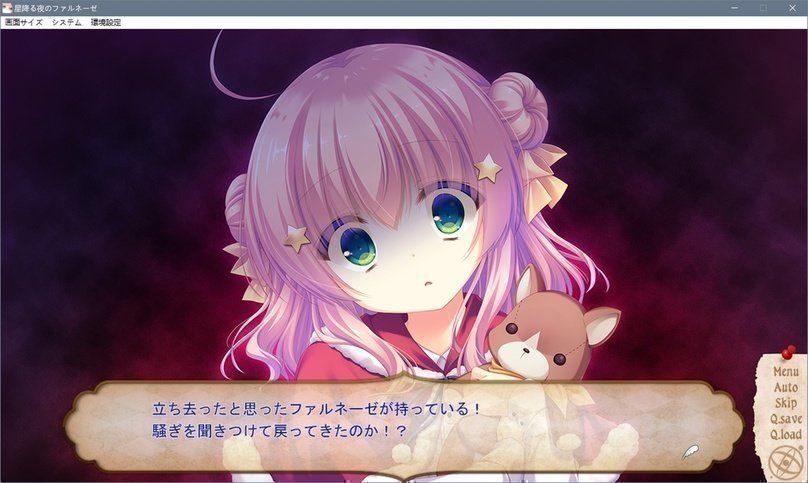
But the nun’s magic is stronger. She turns Farnese’s mother into a dog on the spot… and young Farnese nearby has no idea what’s happening.
Just as the hero is in danger, he starts trading barbs with the nun.
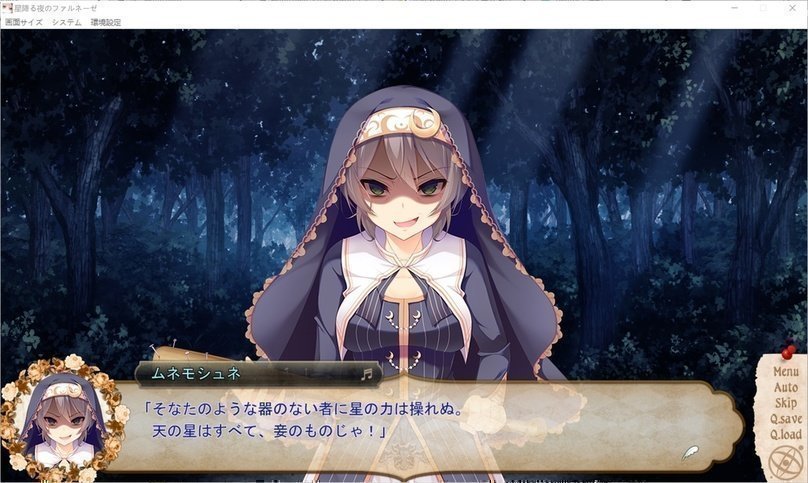
Turns out the nun is actually a great witch. The great witch’s goal is to find every witch in the world and absorb their constellation magic and power for herself. Absorbing others’ magic makes her stronger, and once she’s absorbed it all, she’ll become a world-ruling great witch that no one can stop.
The hero’s mother had magic similar to the great witch’s, but she chose to collect magic in a constellation magic book instead of flexing with it. So the great witch is pissed and wants to take her out first and steal the book.
Right in the middle of the great witch’s villain monologue, the hero snatches her staff — the spiked club — and tosses it to young Farnese nearby…
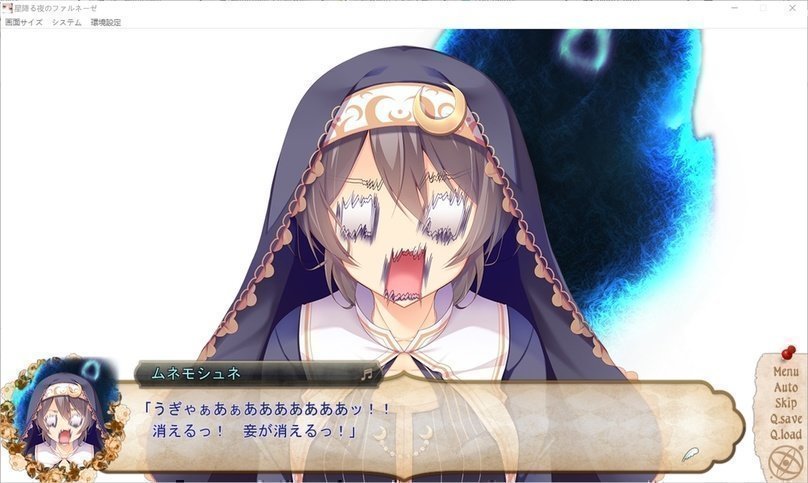
Without the club, the great witch’s magic vanishes. She’s got zero combat power. She shrieks once and fades away.
Farnese, now holding the club, gains new witch power, and seeing how brave the hero was, she says he’s just like a prince — her “prince of the stars.”
By investigating the similar case from ten years ago, the hero also figures out what happened in the cave, including the secret passage. He meets a young man — clearly the old man who’ll host him in the village years later — and tells him:
“Watch that cave with the statue of the goddess. Don’t let anyone in.” “Why?” “If someone goes in again, people will die.”
Unfortunately, ten years later Farnese goes running in anyway.
A flash of magic, and the hero returns from ten years ago to the present.
The hero demands another trial. This time he presents evidence of the secret passage and shows Farnese isn’t the culprit. Just as the case is unresolved and the court is about to adjourn because it can’t find Farnese guilty, Farnese suddenly changes — she goes completely berserk…
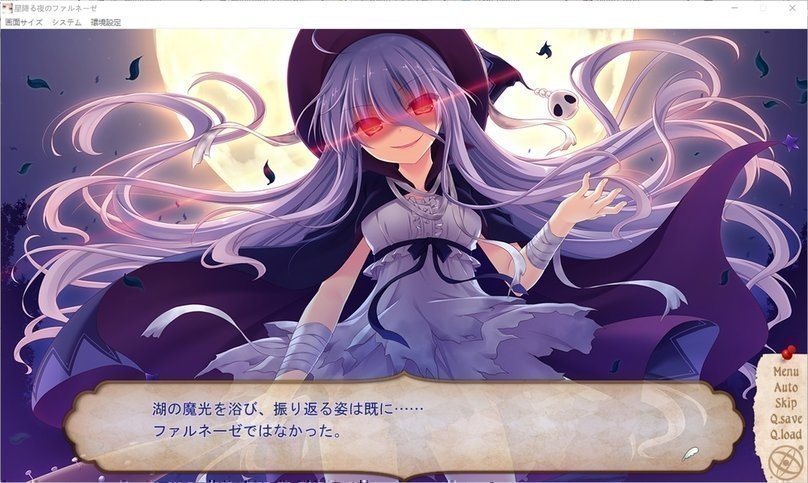
Only then does the hero realize: the spiked club he gave Farnese as a kid wasn’t just a staff. The great witch’s soul was lurking inside it. The great witch waited for the right moment, came out, and took over Farnese’s body.
The witch-ified Farnese tells the hero she’s been following him around, secretly learning most of his magic; she’s read the constellation magic book in his hands too — everything she could learn and absorb, she has. Now all that’s left is the magic inside the hero himself. Once that’s done, she’ll be invincible, and she thinks using Farnese’s body is working out fine, so she’s not planning to leave.
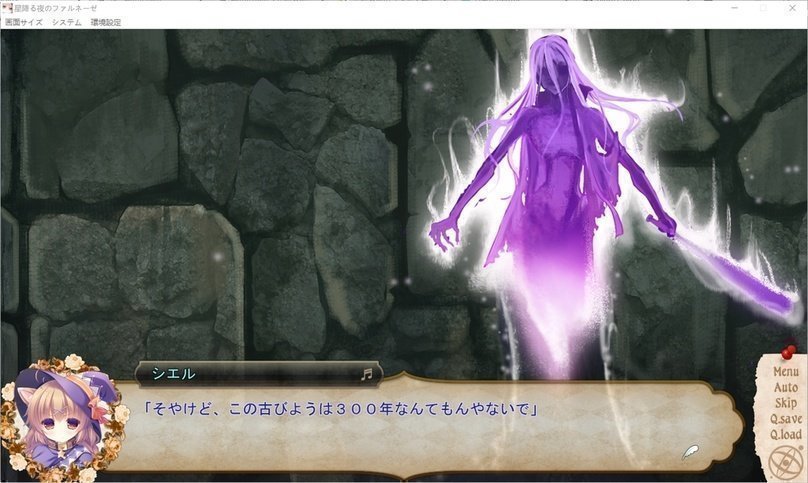
The hero and Farnese’s mother discuss countermeasures. They can’t beat her head-on… so if they can’t win face-to-face, they’ll go…
dig up the great witch’s grave!
The cave with the saint statue is actually the great witch’s tomb. The hero and Farnese’s mom sneak over and smash the urn with her ashes, and the great witch fades away again…
Farnese goes back to normal…
After that it’s easy… the two of them stay together forever.
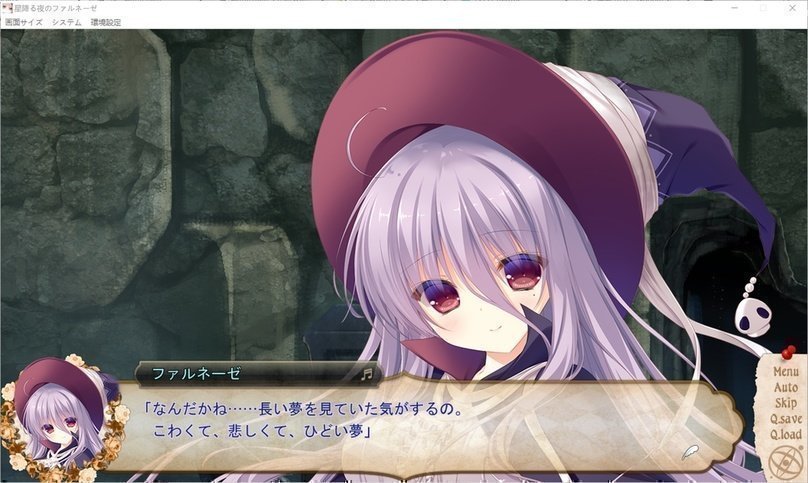
Farnese’s personal route is basically the game’s main route, and it does plant some foreshadowing. Like why Farnese likes the hero so much — because he once traveled to ten years ago and saved her. Why the hero insisted on becoming a 星狩り — because as a kid he saw his future self come back to defend his mother, thought it was cool, admired it, and decided to do it. Why Farnese has a spiked club — also the hero’s doing. Why Farnese’s mother is a dog — also caused by that event ten years ago.
And sometimes, thinking about it — the hero traveling ten years back, meeting the heroine as a kid, solving a case identical to the past — it reminds me of Li Xiaoyao going back in time at the Nuwa statue in The Legend of Sword and Fairy…
Heck, it’s exactly the same!
Both get help from the mother-in-law, both go back and meet the heroine as a kid and forge a bond, both see their younger self and affect the future. No difference at all, right?
But the game doesn’t end there. Like I said, there’s a True End.
The True End unlocks after the other heroine routes. Honestly the other heroine routes are all standalone cases, including the Japanese girl’s route, which is about a big banker looking for a mistress. And the final True End had me not knowing whether to laugh or cry.
In the True End, continuing from that museum painting case, years later, mysterious witch-magic murders start happening in the city, and Farnese is away on business. Everyone starts suspecting Farnese again.
And guess what… the spiked club is still around, the witch’s soul is still in it, and she can still come out and cause trouble.
The final trial is incredibly boring: the witch resurrects briefly, possesses another nun who restores paintings at the museum, gets defeated again. No investigation, no choices — just a bunch of arguing and it’s over. The great witch gets thoroughly killed off by snapping the spiked club in half. That’s it.

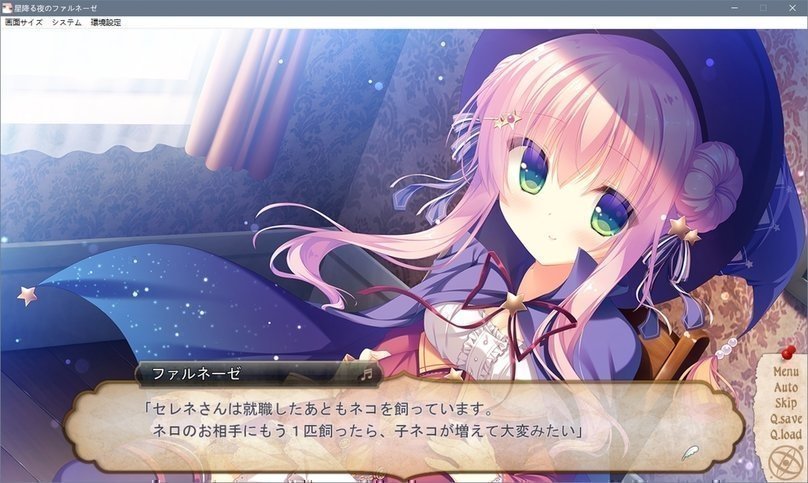
After the ED, Farnese runs through what happens to every side character like a laundry list, and then she and the hero head out to take cases together.
And the game just inexplicably ends…
Simply put, Hoshifuru Yoru no Farnese didn’t live up to what I hoped for. Three reasons:
1. The investigation is insultingly dumb
For a detective deduction game, most of the investigating has no difficulty — you just click. And apparently worried that players with no hands wouldn’t know what to do, the game gives you a “musou mode” — one-click case solving. What the hell, does it need one-click solving? It absolutely doesn’t! The only difficult parts are the court choices, and they’re all two-option picks, only a few of them, so you can just try each one. What’s the point? There are other minigames, like connecting constellations, but you don’t actually need to connect anything — just click and it connects itself. I didn’t even know what I was supposed to do… just click click click and everything’s done. As a detective game… you make it like this, and it looks like there’s gameplay but there’s actually none at all, right?
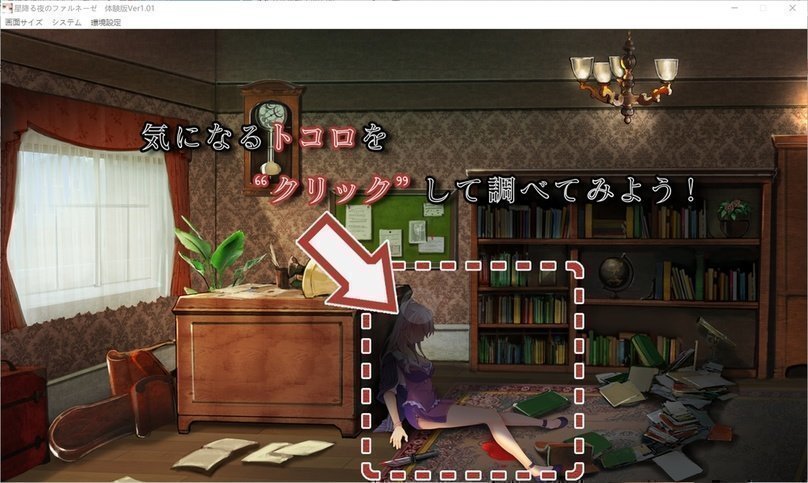
Couldn’t find a programmer, huh? If you can’t find one, don’t make a detective game!
2. The stripping gimmick is too low
Unlike Ouka Tameshi, which raised its own prestige and even aimed for PSV and PS4, Hoshifuru Yoru no Farnese actively piles on the smut. There’s this bizarre rule: in court debate, if one side is proven to be lying, they have to strip a piece of clothing in public. What does that remind you of? Strip mahjong? And the whole stripping process is bizarre and low — after determining someone’s a witch, you have to “palpate” them, i.e., use your finger to trace the constellation spots on the naked witch’s body and link them up. Every time you touch, she moans. It’s obscenely horny…
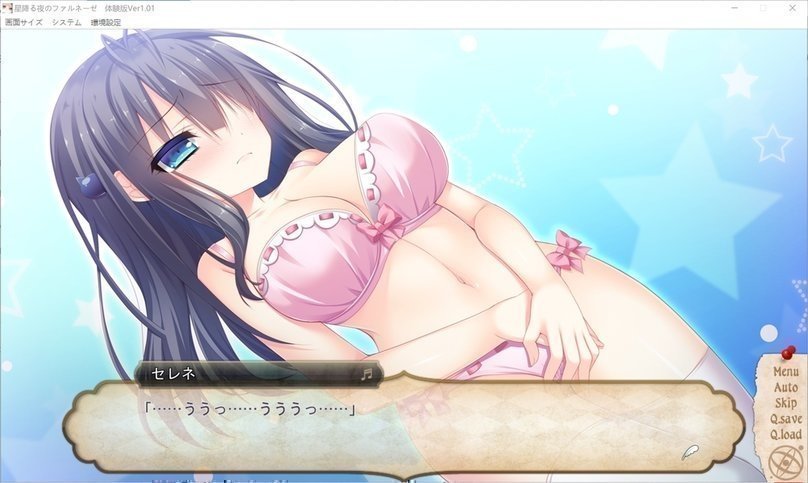
When I got to this part, ten thousand alpacas were stampeding through my heart. So low. A game that could’ve been presentable — why do this? Even if you’re not going all-ages, is it appropriate to degrade yourself like this? And a lot of the seemingly profound choices are basically meaningless…
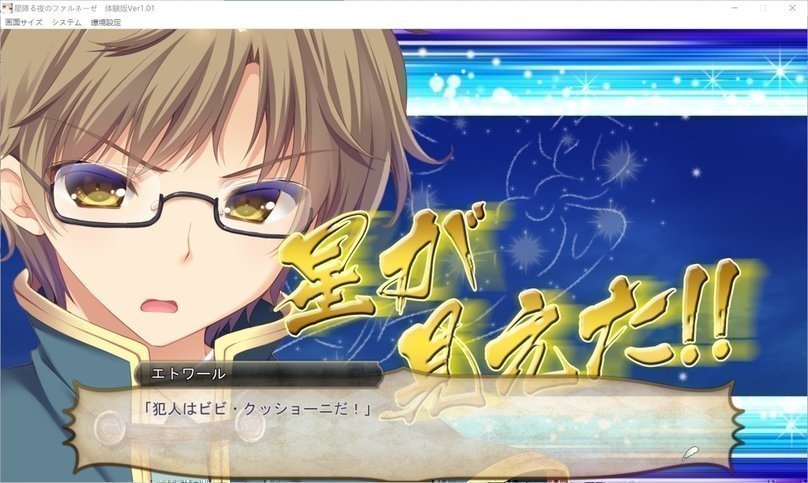
Besides being low, there’s plenty of cringe. The hero gropes a naked witch, and then a handwritten “星が見えた” (I saw stars) pops up. Who do you think you are, Keima Katsuragi?
3. The story is simple and the TE makes no sense
The plot of Hoshifuru Yoru no Farnese is a scattered mess. The first four cases are basically just introducing new characters, with almost no main plot progression. The only part close to the main story is Chapter 5, Farnese’s route, which explains the game’s setup and payoff. Everything else is barely connected. And here’s what bothers me most about this game:
Every case tells you who the culprit is right at the start.
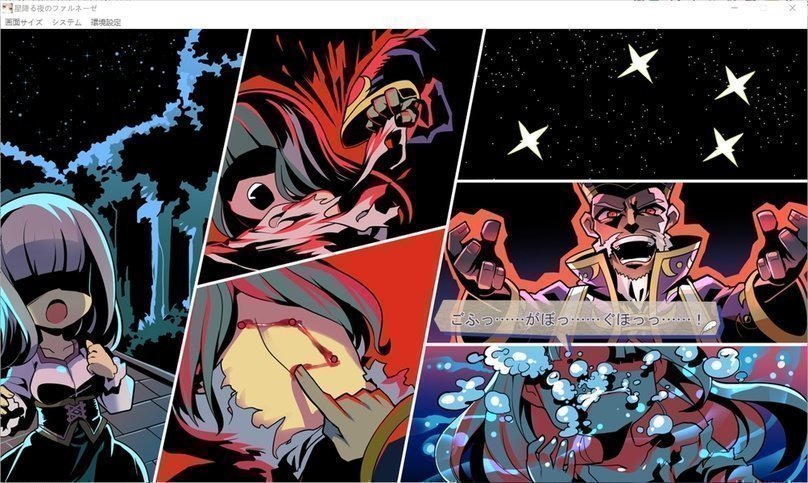
The four-panel comic at the very start basically lays out the entire crime for you, and there’s a good chance you’ll guess who did it right then and there. The rest of the case has zero suspense—you just follow the game as it nudges you toward that person. And when the culprit gets confronted, they always bust out the same three lines:
“Not me, I don’t know, I didn’t do it.”
It’s boring as hell, like kids arguing. There’s also a “Royal Knight” on the opposing side, plus a brother and sister pair who are absolutely insufferable. They’re all talk and no brains, too…
Honestly, the main story isn’t that bad. Farnese’s past and how she meets the protagonist has this whole “fate” vibe going on, which is fine. The game is actually pretty good once everything comes to light, and it even delivers its theme… The boss is defeated, the hero and heroine fall in love, and they’re talking about the future under the starry sky… Everything wraps up perfectly. It should have ended there.
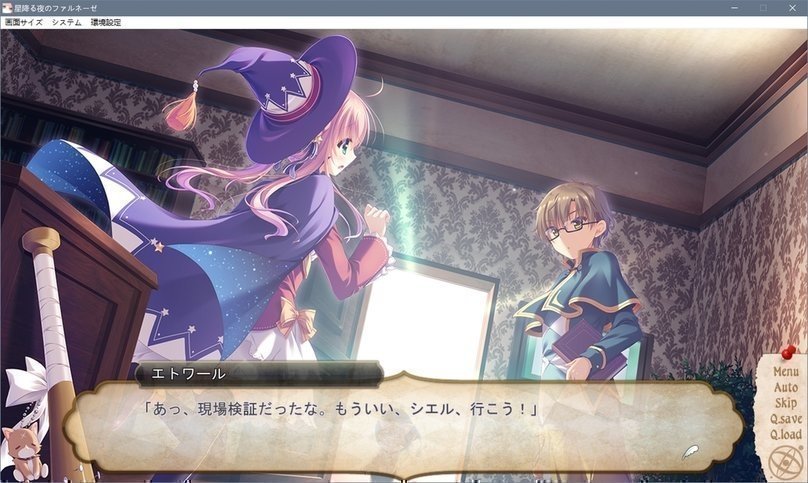
But no, you just had to get a True End…
And the True End is literally just dragging the Last Boss back up and knocking him out again. The process isn’t even interesting—there’s zero content for the core gameplay of “judging.” You don’t need to investigate, you don’t need to make any calls, you just click through to the ending…

So is this True End just a needless sequel?
I think so.
Overall, Farnese sits slightly above average. The main story is OK—passable, at least. Yukie’s art is as gorgeous as ever, the music (supposedly from an old KID composer) is solid, and the voice acting is decent… Aside from that baffling True End, the other complaint is the system. This knockoff “Ace Attorney” setup is genuinely terrible, and the writer doesn’t seem to know how to use it. On top of that, the system’s complexity led to all sorts of weird bugs, and I’m pretty exhausted.
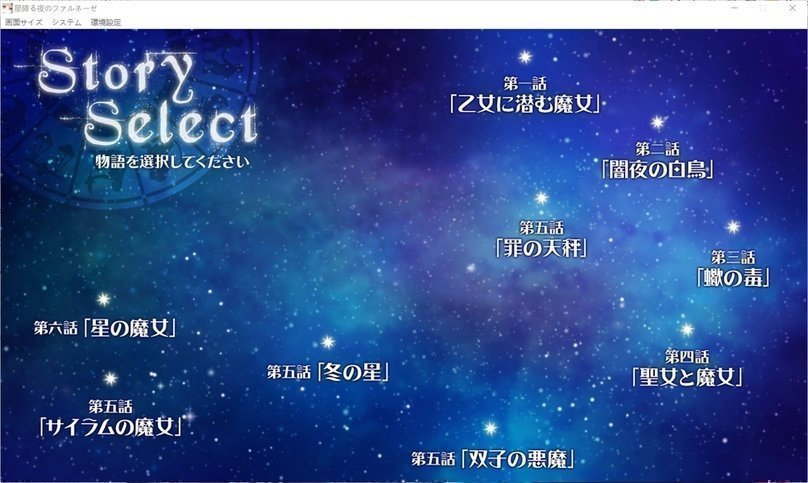
The game lost my save data and made me restart multiple times. Really annoying.
The scenario writer is Iwahira Retsu, and producer Nakazawa Takumi tweeted that this is the man he’s got his eye on…
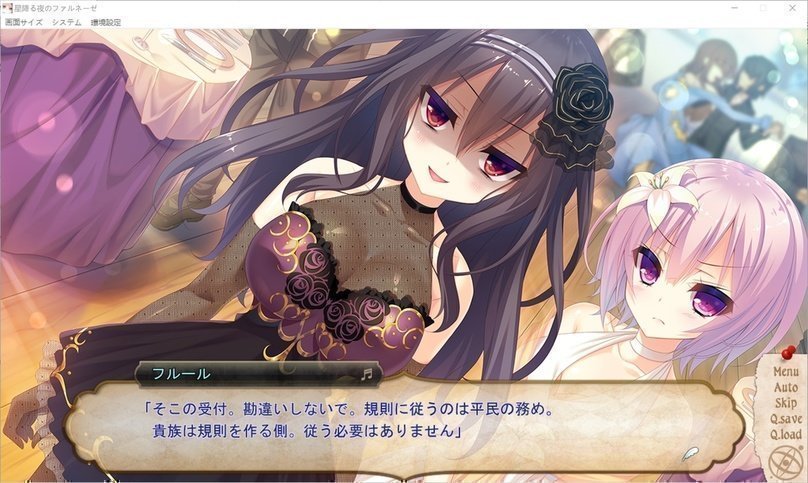
If you ask me, it’s not the man you’ve got your eye on, is it?
As the producer, Nakazawa barely tweeted anything about the game’s story or design ideas. Besides posting patches and retweeting stuff, he was…
Taking photos with cosplayers!
Even before the game came out, he was constantly posting pictures with cosplayer Shino Hotaru. I looked for them—he actually deleted them…
Taking photos is one thing, but Shino Hotaru herself posts edited versions on Twitter. His photos were all unedited, and the results were…

Not only unedited, but he kept getting her name wrong… Who the hell is “Hotaru no Hotaru”?

Honestly, I feel bad for Shino Hotaru. She used to take nice photos when cosplaying other games, but ever since Nakazawa posted that bare-faced shot, she just gave up and started posting unedited photos on Twitter herself. And you’d often see Nakazawa liking her posts…
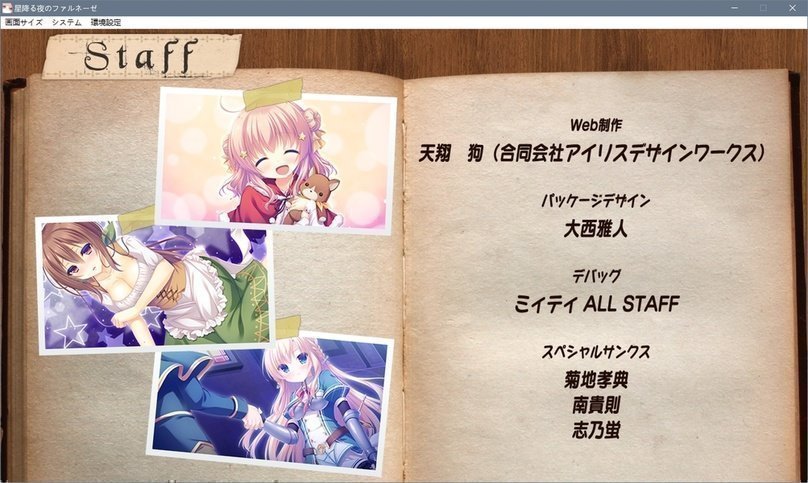
Then Nakazawa even put Shino Hotaru’s name in the game’s Special Thanks…
Combining the fact that the game’s most crucial story setup turned out stupid, and that Nakazawa was the producer, I’ve learned one thing:
A producer’s job includes many things—like hitting on cosplayers.
Comments are hosted on the Chinese main site. This mirror is read-only.