Nora to Oujo to Noraneko Heart 2 (ノラと皇女と野良猫ハート2) Review
Noratoto 2 Fan Disk
I rate Nora to Oujo to Noraneko Heart very highly. Even the anime adaptation.
I’ve never doubted scenario writer Hato’s sense of pacing, and I’ve always thought Hato was pretty smart—especially what they pulled off with the anime, getting maximum effect out of a minimal budget.
So before long, Nora to Oujo to Noraneko Heart 2 arrived. Same team, same flavor, and by all appearances it could stand on the shoulders of the first game and recapture its glory. No need for any wild new developments—just replicate the formula of the first one and it should be a safe bet!
But was it a safe bet? I don’t think so.
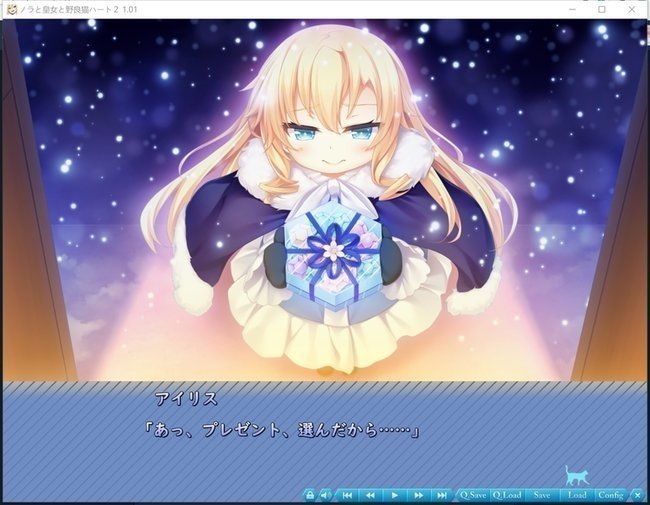
Nora to Oujo to Noraneko Heart 2 picks up right after the first game, adding a new main plotline about Iris, the princess of a forgotten snow kingdom, and her attendant Noel, while also promoting several side characters from the first game to romanceable heroines. That’s the gist of it.
Let me start with this “snow princess” main story…
In the underworld, aside from the necromancer princess from the first game, there’s also a far-northern country, a forgotten snow kingdom. In that kingdom lives a princess who decides to stir up some trouble to revive her nation…
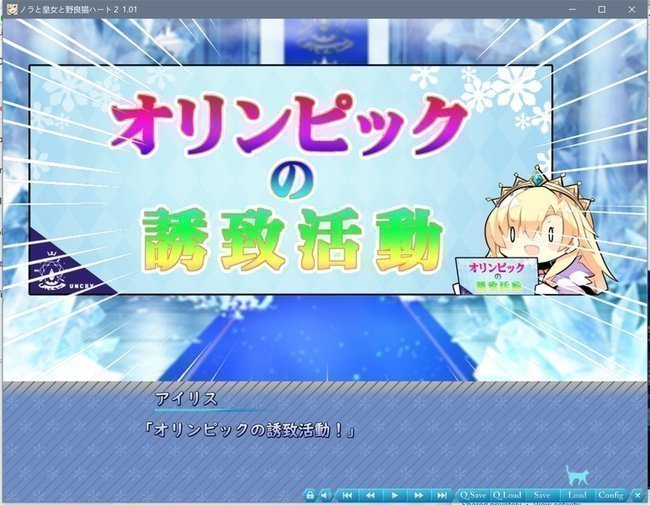
Like, at first she considers bidding to host the Olympics, then she plans to do some publicity on the streets, but none of it gets anywhere. Finally the princess decides to go out into the human world and investigate how to expand her country’s influence.
So the snow princess comes to the human world, which happens to be in summer, and the protagonist just happens to be in cat form. He runs into the princess, who decides this telepathic cat must be some legendary sacred beast from her country, so she scoops up the cat and takes him home, even bathing him in her country’s spring water and washing his fur white. What follows is naturally cliché—the protagonist suddenly turns back into a human, gets grabbed by the princess’s guards, who demand to know where the original cat went and whether this suspicious man stole it.
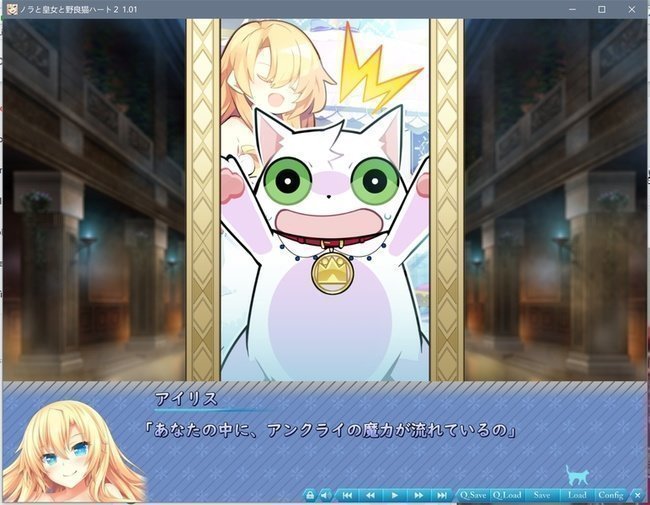
Fortunately, this snow princess is a lot smarter than a certain underworld princess. She quickly figures out that the cat was this man all along. They talk all night and hit it off. When they part, the snow princess tells the protagonist her name, Iris, and asks him not to forget it—because ever since she was little, she’s made many friends, but they always forget her soon after.
Later the protagonist returns to reality. A few days pass, and the snow princess heads to the human world again, this time in grand fashion, planting flags and setting up a base camp—which is, of course, the protagonist’s house.
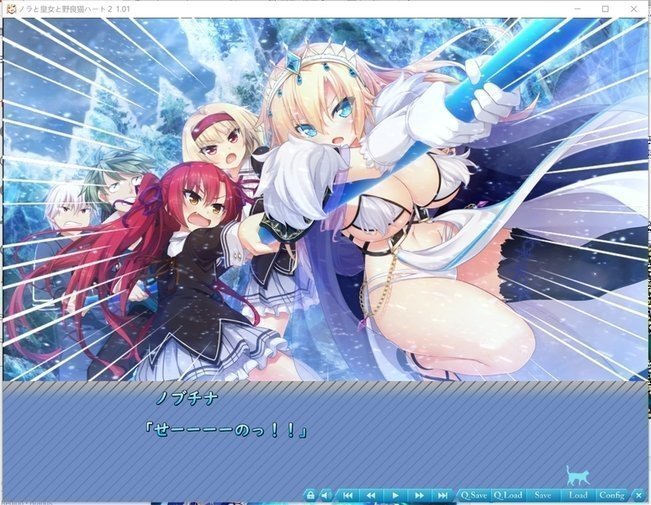
At first the protagonist feels she’s familiar but can’t recall her name. The princess is thrilled, thinking she’s finally met him again, and since he said he wouldn’t forget her name, she demands he say it out loud.
He gets it wrong at first, but eventually says it right, and from then on the princess uses his house as her base. Meanwhile, the snow princess’s mother tells her there’s another mission in the human world: destroy the other underworld country, the family of the first game’s princess Patricia. They’re the snow kingdom’s sworn enemies—they’re the reason the snow kingdom fell into its current miserable state.
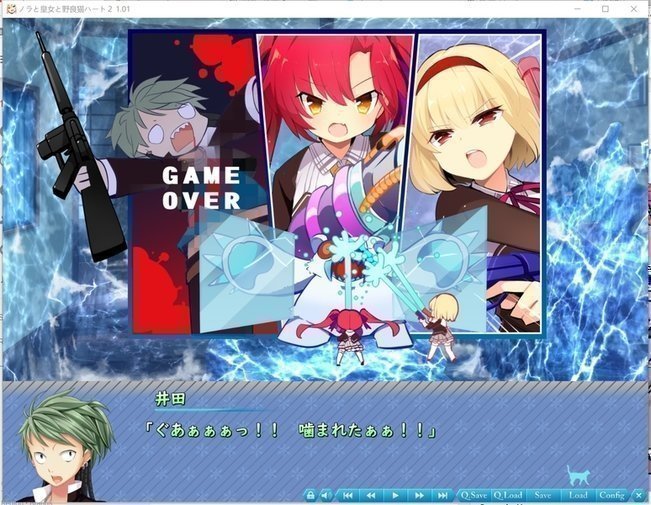
So you’d think the game would kick into gear here—Iris sees Patricia at the protagonist’s house and they fight? An endless battle?
Wrong! The game launches into an absurdly long stretch of skits and slice-of-life… so long that the actual ending gets crammed into the last 10% and then just stops.
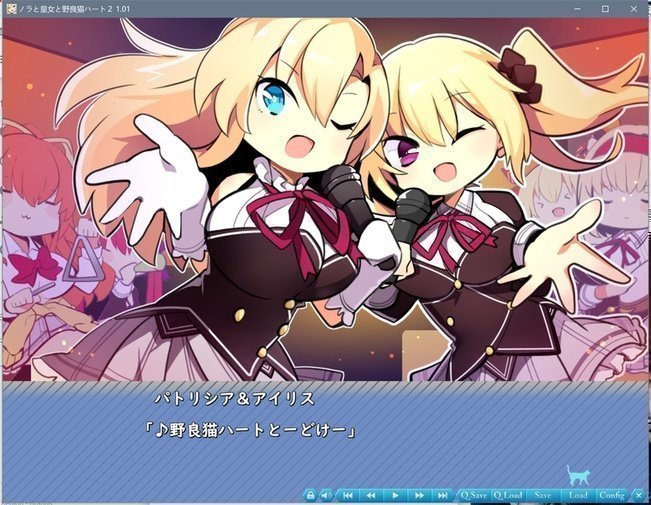
During the game, Princess Iris attends exams at the protagonist’s school, and one subject is “history.” This makes Iris wonder:
“Every country has a history. Why don’t I know my own country’s history?”
So Iris goes home to look it up in the library, but her mother refuses. Later Iris reads another country’s records—Patricia’s country’s records of the snow kingdom. The snow kingdom wasn’t always like this; it went through a tragic past that nearly destroyed it, and it survives by selling the princess’s tears.
Iris grows more curious about her own history and starts digging, but just then the ghosts of the snow kingdom launch a full-scale invasion of the human world. Iris’s mother is furious:
“I sent you out there to wipe out Patricia’s family, and instead you became friends with the enemy and forgot what you were supposed to do?”
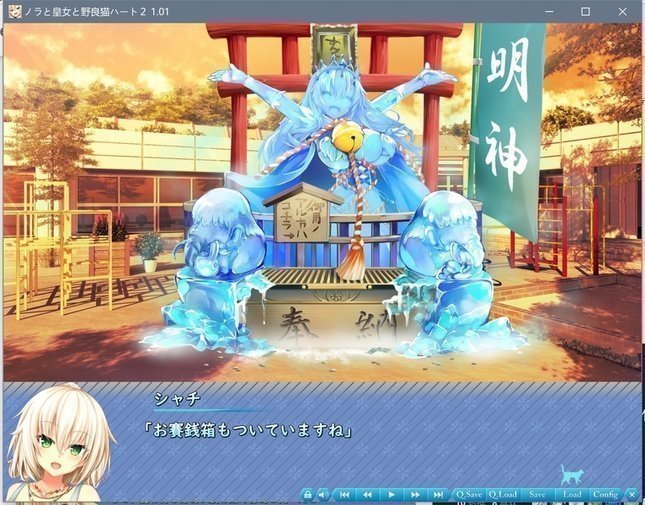
What follows is a fucking enormous wall of ranting, baffling metaphors, and logic-free explanations, until Iris finally understands what her country really is.
And what is it? Sorry, I don’t have a fucking clue either. Something like: the entire snow kingdom has perished, only Iris’s royal bloodline survives, and Iris’s mother never existed to begin with (you only hear her voice in the game, never see her)—the whole mother was a lie, a device like a broken record player set up so Iris wouldn’t be lonely.
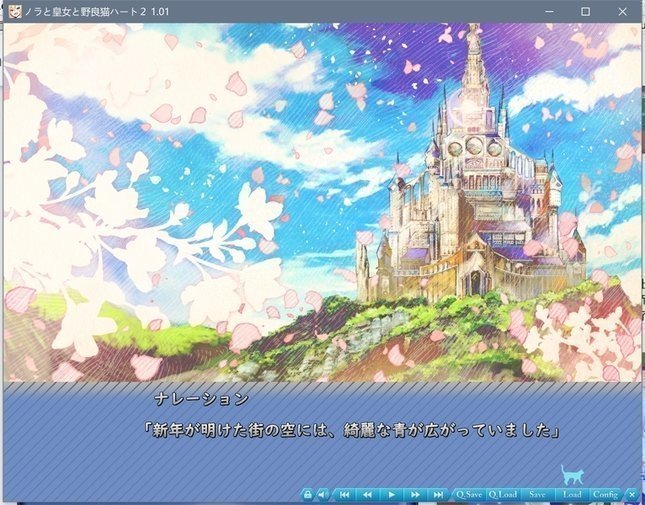
Iris herself is more like a ghost caught between death and undeath. Every year during the human world’s Bon festival (Japan’s Obon), she passes through the gate of death and meets all kinds of people, and then they leave and forget her. That’s why she always “makes friends and then gets forgotten.”
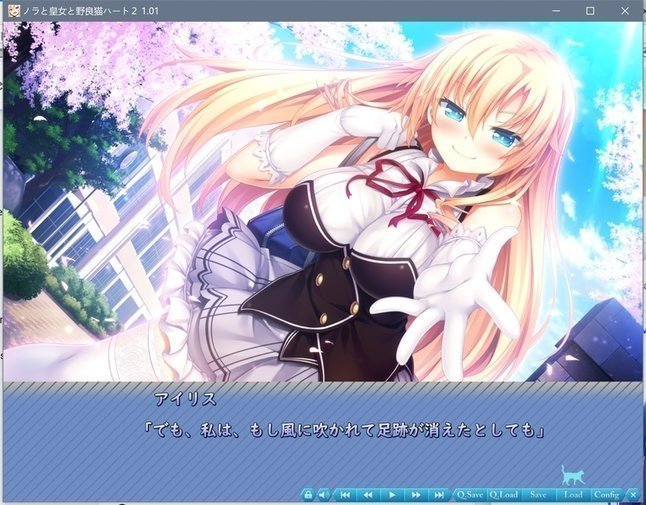
The ending has Iris abandon that freezing castle, choose to embrace the human world, decide she’s “alive,” and walk forward bravely with the protagonist—even welcoming spring.
So how to interpret Iris’s route? My take is: a lonely princess living in lies finally grows up, is saved by the protagonist, and chooses to face the future. That’s roughly it.
But even if I get the meaning, that doesn’t mean the game is fine. On the contrary, this game has huge problems. The biggest failure is that the scenario writer leaned way too hard on meme humor and even ignored the coherence of the main plot.

Remember the first game’s story? A princess from the underworld wants to conquer the surface, but comes to understand the relationship and beauty between the “living” and the “dead.” Sure, she causes plenty of laughs when she first arrives, but ultimately it’s a healing, positive story—especially its core message like “the living don’t fear death, and the dead will bless the living.”
And the comedy was great too: the protagonist’s first time turning into a cat, the princess’s various airheaded moments, and the protagonist’s unreliable classmates goofing around.
All in all, the first game was a great work that perfectly blended “healing,” “story,” and “comedy.”
So how’s this so-called “second game”?
First, the snow princess meets the protagonist, scoops him up, and some comedic stuff happens—fine. Then the snow princess comes to the human world to promote her country’s profile and lives with the protagonist doing slice-of-life—fine. The princess knows nothing and needs the protagonist to teach her everything—fine. Then…
Then the game forgets what its main plot was and starts an endless meme marathon.
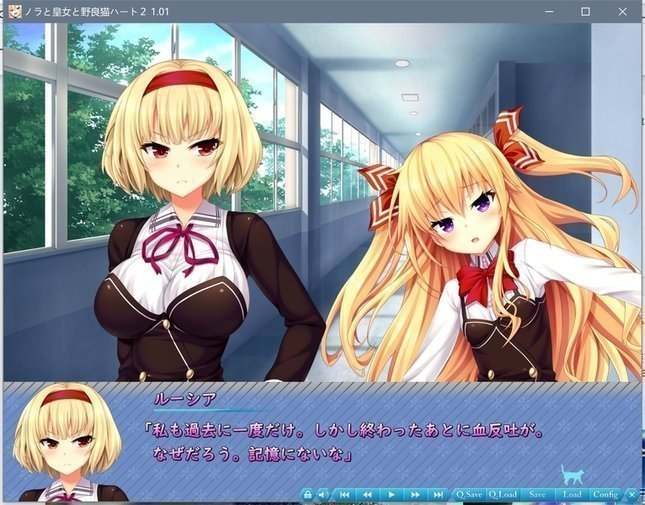
First off, the daily-life cast includes at least: Princess Iris, her attendant Noel, Takada Nobuchina from the first game, the bro Ida, and the three Patricia sisters, plus the already-present Yuri Shachi and Asuhara Yuuki (voiced by Kiritani Hana), and the protagonist—ten people total.
Yes, ten people. In the slice-of-life scenes, almost all of them are present, taking turns talking, and you can’t even tell what the hell they’re saying.
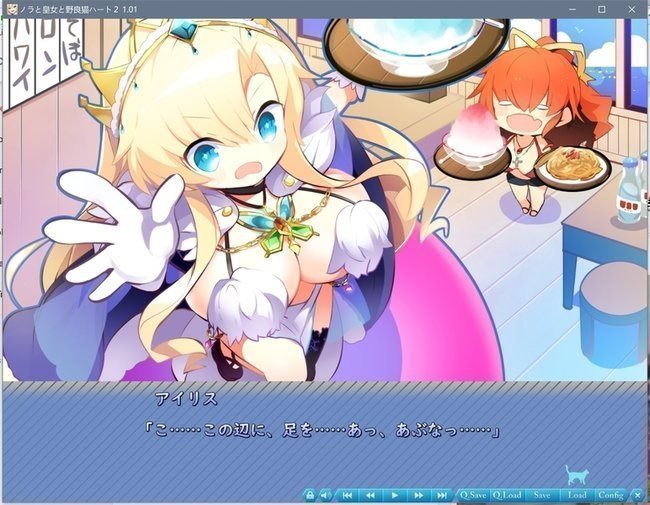
Even so, the game still cut several side characters from the first game, including the most important one: Kuroki Michi, voiced by Sendai-san. The game’s setting says she went abroad and only appears in a brief scene or two.
(I figure Sendai-san was busy breastfeeding her kid and didn’t have time to record.)
So those ten people carry the daily-life sections, chattering away with no focus or anchor. And aside from the protagonist and the main heroine, everyone else is a loose cannon, all talking past each other, making the whole game’s dialogue a mess. In the first game, this only happened for a short stretch late in the story; most conversations were one-on-one between the protagonist and a heroine, especially with Patricia.
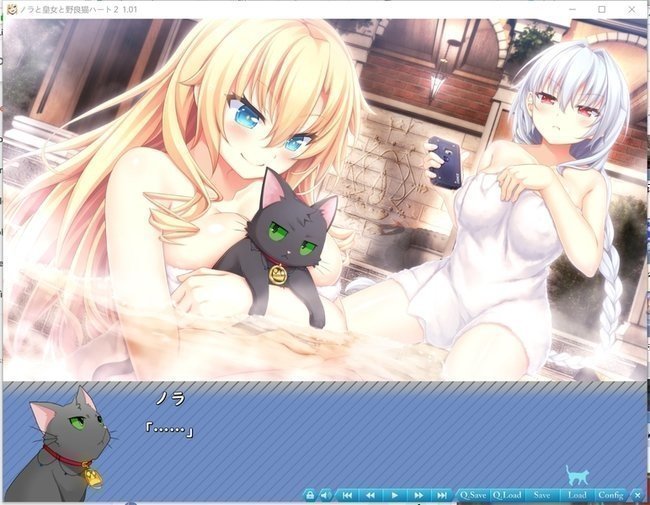
In this second game, the protagonist’s interactions with Iris have basically no “fun chemistry.” I think the main culprit is the heroine Iris’s voice actress, Ishigami Shizuka—her performance is terrible. She’s done a bunch of games since going into eroge, but her voice is always the same tone. She’s suited for the ojou-sama type like in Tayutama 2, but everything else feels mediocre or forgettable. Put bluntly, she can’t shape a personality, and it’s not for nothing she never made it in the mainstream. Look at Kiritani Hana—she doesn’t do much mainstream work, but she’s always memorable. Ishigami Shizuka debuted in Kyoto Animation’s Nichijou, and she’s still less impactful than Honda Mariko…
Also, this game’s meme humor is clearly overdone. Many jokes are forced, and a lot rely on stuff only Japanese people would get. As a foreigner I was completely lost, including the fake ad parodies and such.
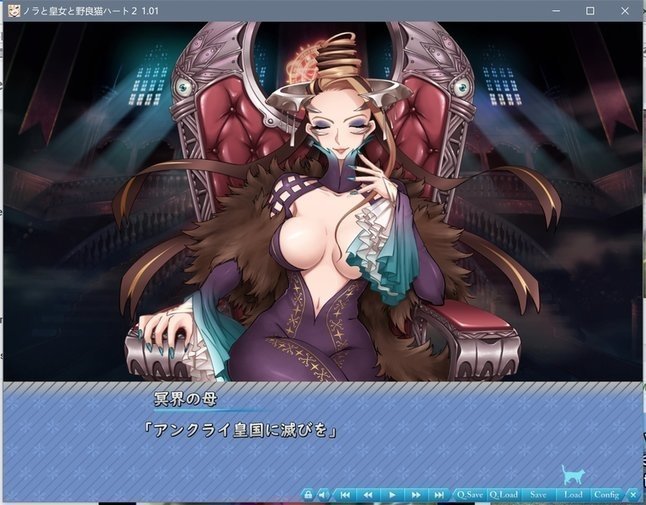
Another reason the daily-life scenes are boring: in a comedy-driven slice-of-life, the first game’s sole straight man—Kuroki Michi, voiced by Sendai-san—is absent here. Meanwhile Takamori Natsumi, who played the airhead main heroine in the first game, here becomes the one delivering sermons. It’s just awkward.
It’s like watching Gintama without Shinpachi: a bunch of lunatics acting crazy with no “normal person” to react and highlight the comedy. Maybe the protagonist counts as the normal one, but he has no voice…
The game’s Iris main plot is “the growth of the princess of the forgotten snow kingdom,” but unfortunately, while playing I honestly couldn’t follow what it was saying. In the second half the game introduces the “Little Match Girl” fairy tale as a metaphor for “the snow princess Iris who is always forgotten,” but it never explains what maps to what. And the late game is full of blatant deus ex machina—just making shit up, saying Iris’s mom was a recording, that the snow kingdom has some “forgetting device,” without further explanation. It feels like “ah, we’re nearing the end, let me just make up something and slap on a Happy End.” I’ll admit much of Gintama works the same way, but Gintama’s story beats still have more tension than this half-assed main plot.
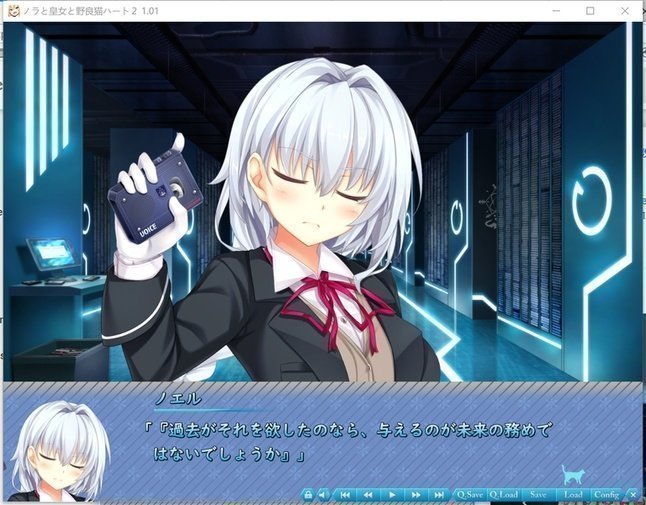
By the way, the Iris main plot only occupies the part before the OP and the final 10%, but that doesn’t mean the main story is contiguous—it’s scattered throughout the daily-life sections. You might be in the middle of a boring skit you don’t understand when suddenly a bit of main plot drops. Just as it gets good and you’re half-understanding, trying to figure out what’s going on, bam—the game’s back to skits… and you might not even get those. That’s a genuinely unpleasant experience.
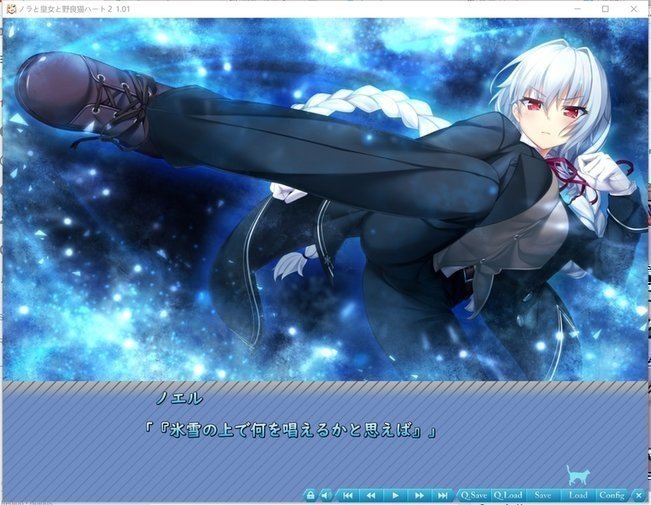
Worse, if you Alt+Tab frequently while playing, the game can get stuck on Skip, and only mashing backlog can stop it. I had to go back and reread the backlog several times because of this, afraid I’d miss something. And after checking…
It was all fucking filler. I missed nothing.
All in all, I’m very disappointed with the game’s handling of Iris’s main route. If the first game deserves a 95, this second one gets maybe a 65 at best. I looked at Japanese reviews, and they say the main plot is a pile of shit; the only thing done well is the redhead Takada Nobuchina’s route, who was also the most popular side character in the first game.
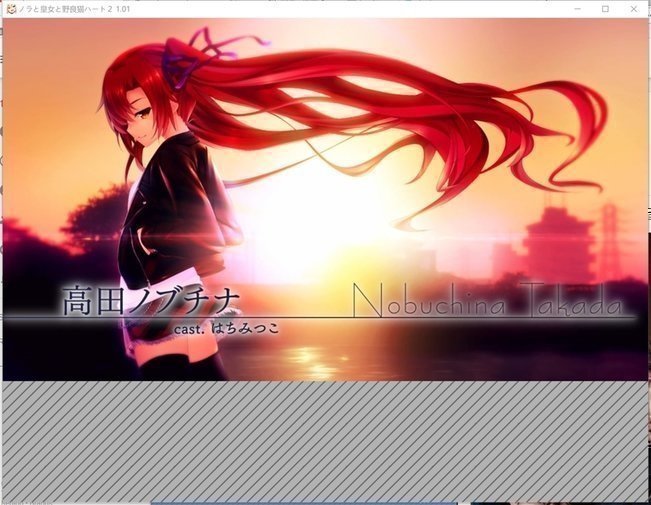
But after finishing the main story, I have no desire to touch this game again. First, I personally don’t like that redhead. She might be a great side character, but I have zero urge to pursue her. Sometimes a side character is just a side character—she has no romantic relationship with the protagonist, she’s just a yakuza-ish delinquent girl, and forcing a romance onto her feels awkward and makes the game drift further off course. I don’t get why so many Japanese otaku see a cute, fun side character and immediately want to fuck her. Wanting to hear her story, sure, but does it have to involve fucking? Besides, sometimes a shining side character isn’t suited for a route—their existence is better served keeping the game’s story complete. Many love stories are doomed from the start: she’s not the one who ends up with the protagonist.
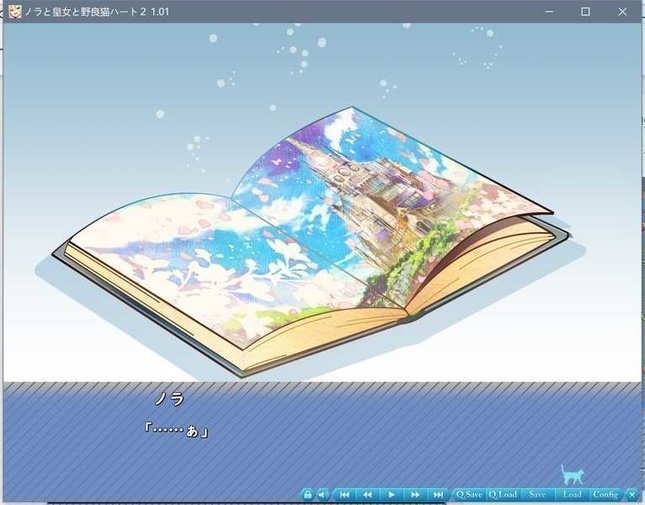
Just as in the first Nora to Oujo to Noraneko Heart, the protagonist was destined to end up with the princess, this second game is about joining hands with a second princess again.
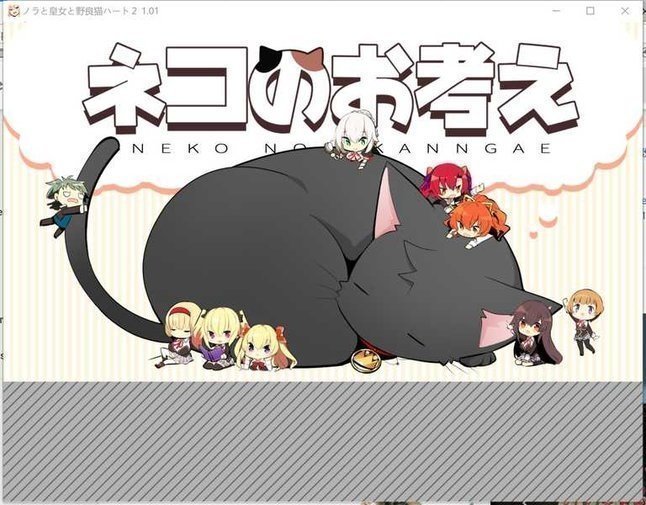
But then again, can this even be called a “second game”? However I look at it, this is just a fan dick… oh, I mean a fan disk!
Comments are hosted on the Chinese main site. This mirror is read-only.