Qie Ting Qin Yu (且听琴语) Review
Pure Hearts in the Catfight Music Scene (juan)
Qie Ting Qin Yu (且听琴语), also known as Pure Hearts in the Catfight Music Scene (juan), tells the story of an artsy but uncultured vagrant of unclear sexuality who successfully infiltrates a music school in a seaside city — a city that has Chinese chengguan and American gay bars, yet everyone speaks Japanese, so who the hell knows which country it’s in; probably some no-name island in the middle of the East China Sea. There he proceeds to chase girls and act unhinged.

This is our protagonist: Takazawa Kotone.
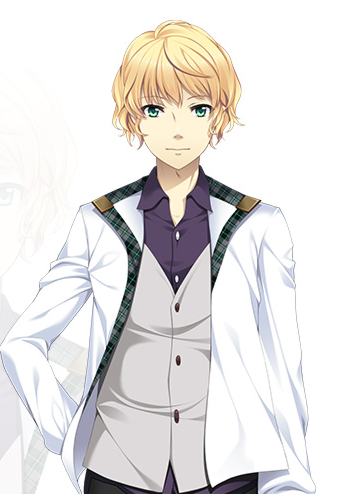
Nationality unknown. Speaks Chinese internet slang, understands Japanese, talks big, loves philoso♂phy, has artistic sensibility but zero culture, a total loser who didn’t even finish high school, and a suspected spokesperson for the water-meter inspection bureau. He carries his mother’s guitar and claims to be searching for the “most beautiful melody” — then immediately faints by the roadside like some new-folk-generation youth.

Everyone says he has immense musical talent, but you never hear a single piece of his work for the entire game. Despite being the male lead of a straight dating sim, he has a keen interest in man-on-man action and philoso♂phy, brings up his philosophical musings more than once, is fond of busting out mysterious dance moves straight out of a Banana Man routine, and repeatedly goes deep (and shallow) into the city’s gay bars. By the end of the game I still couldn’t tell he was straight. His romance and emotions read more like friendship — no love at all. He embodies, by example, the reality and helplessness of “the new-era LGBT crowd forced to half-heartedly chase girls to avoid controversy in a discriminatory environment.”
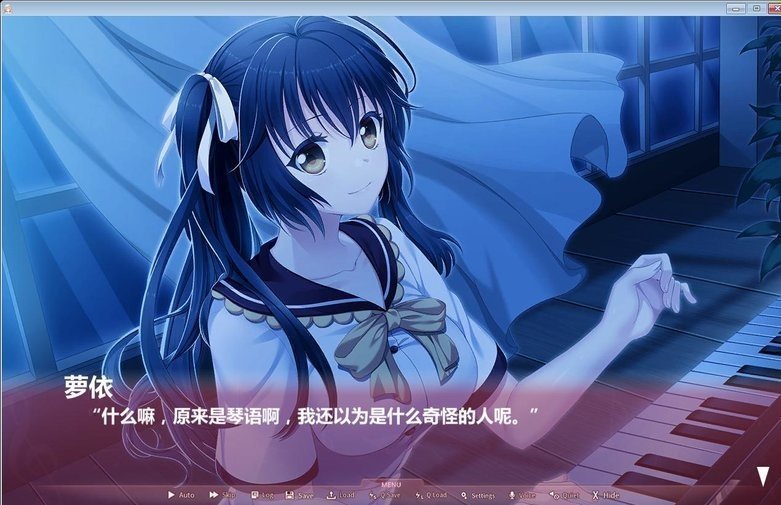
This is one of the heroines: Aikawa Roi.

Lead vocalist of Halfmoon, the band the protagonist joins. She calls herself the band’s big sister, but she’s nothing of the sort — every day she schemes about how to break up the band. To that end she’s split up two couples in the band, vanished without warning, and pretended to be a ghost at night, all to achieve her dream of “disband the band, free myself, dump the blame entirely, not my problem.” Her methods mostly run: suddenly disappear -> don’t see the protagonist -> send someone to say the band isn’t complete -> cancel the show -> band is doomed. She pulls this exact same routine three times in the game. Three identical times.

And yet every single time, someone interferes, waving the banner of “friendship” and “bonds” to wreck her grand plan. She gets so furious she tries to use the protagonist as a borrowed knife, only to be defeated once again by the more skilled second heroine, Shiratori Yuko, becoming a complete and total loser.
This is Shiratori Yuko: the second heroine, nicknamed “Aikawa Roi’s conqueror.”

She grew up alongside Aikawa Roi but constantly outshone her, and thus the grudge was born. In high school she got a debut opportunity and promptly debuted as the lead vocalist of Silver Star, instantly skyrocketing to idol fame — while Aikawa Roi was left grinding away in the school music club. Their resentment deepened, though on the surface they remained all smiles and politeness.
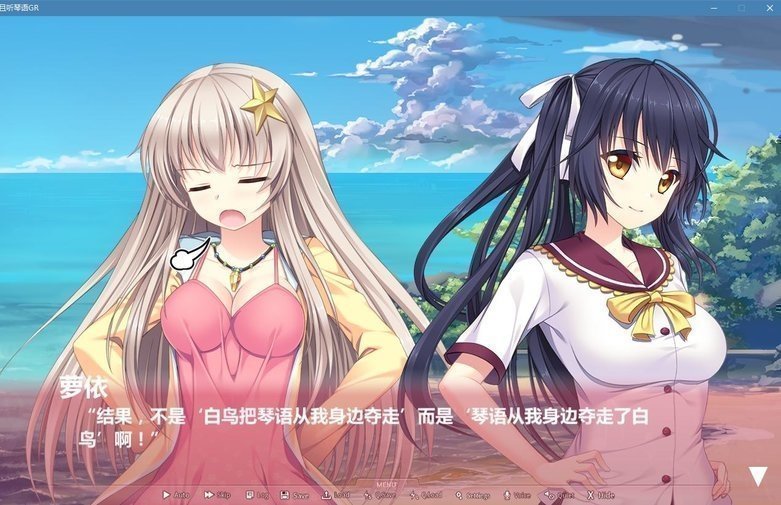
When she learns that Aikawa Roi has recruited the protagonist into her band, she goes on the offensive, launching a full land-sea-air campaign of throwing herself at him — sometimes lurking on his route to school to stage a chance encounter, sometimes crouching by the street pretending to be lost in thought — all hoping he’ll fall for her. She spreads rumors about herself and the protagonist at every opportunity, purely to piss Aikawa Roi off.
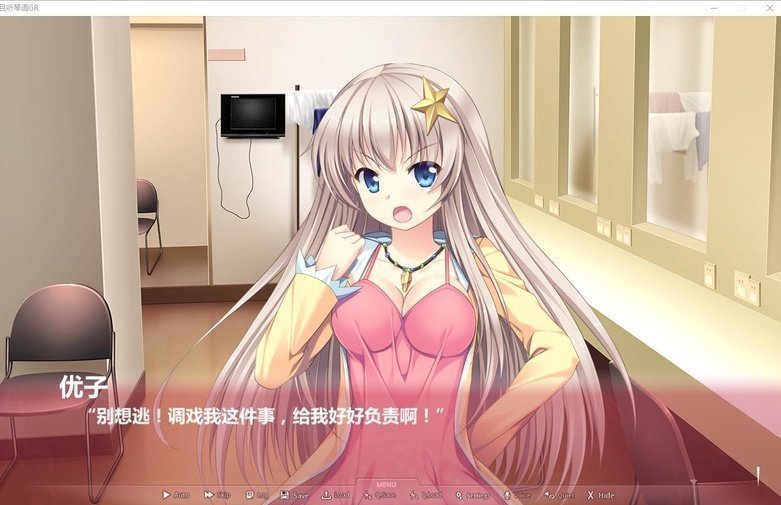
Shiratori Yuko is good at leveraging her physical advantages: bigger boobs, plus a frail-sickly trait. Normally she can run a marathon with the protagonist, but at critical moments she can swiftly have a heart attack and collapse on stage. You have to marvel at Japanese medical technology — you’d never imagine someone with a bad heart could normally run faster than a Hong Kong reporter, yet at some irrelevant moment she’s suddenly like a shooting star, gone as quickly as she came. One second she’s chatting and laughing, the next — gah — she’s out cold.
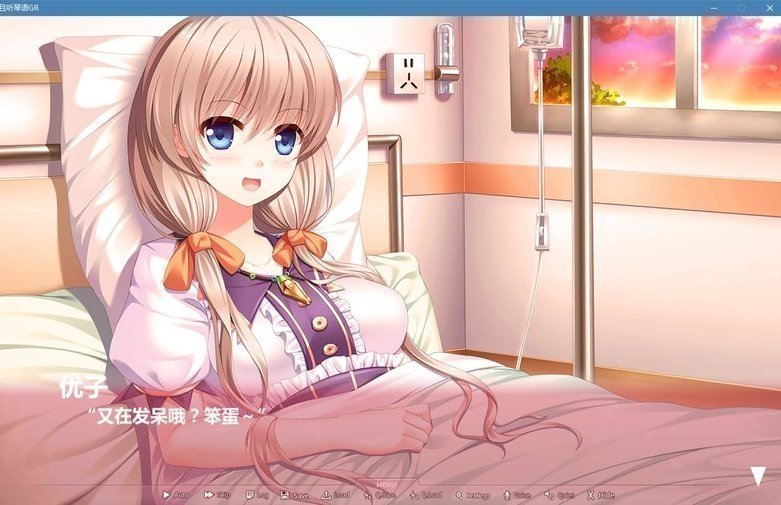
When Aikawa Roi is angry enough to disband the band thanks to Shiratori Yuko, Yuko has a member of her own band conveniently get into a car accident and invites the protagonist to fill the vacancy. Aikawa Roi, enraged, finally tears off the mask, and in the final showdown these two catfight champions toss the choice to the protagonist of unclear sexuality: chase Roi, or chase Shiratori?
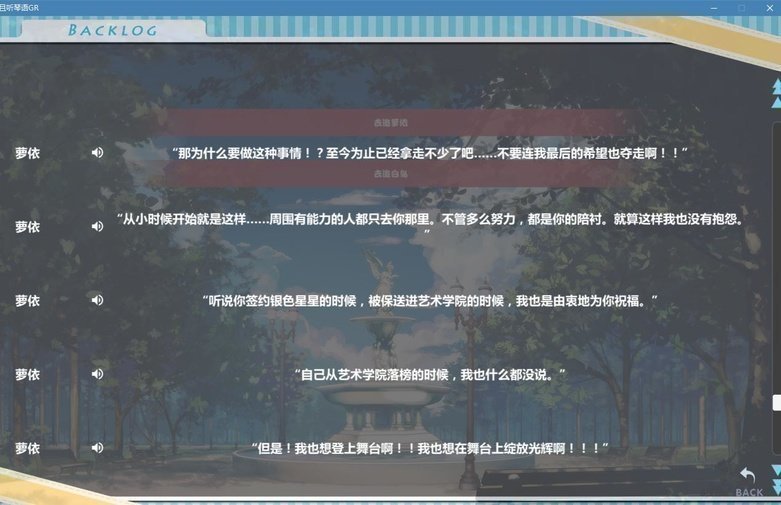
What a disgusting choice. Why do I have to pick one of two catfight queens? Can’t I pick someone else?

Even though this is a visual novel with plenty more beautiful girls, aside from Aikawa Roi and Shiratori Yuko, you’ve got no other options.

Shizuki, the gothic lolita who saves the protagonist at the start, is busy enjoying a love triangle between another tsundere uke and a natural seme in the music club. No room for you in there.
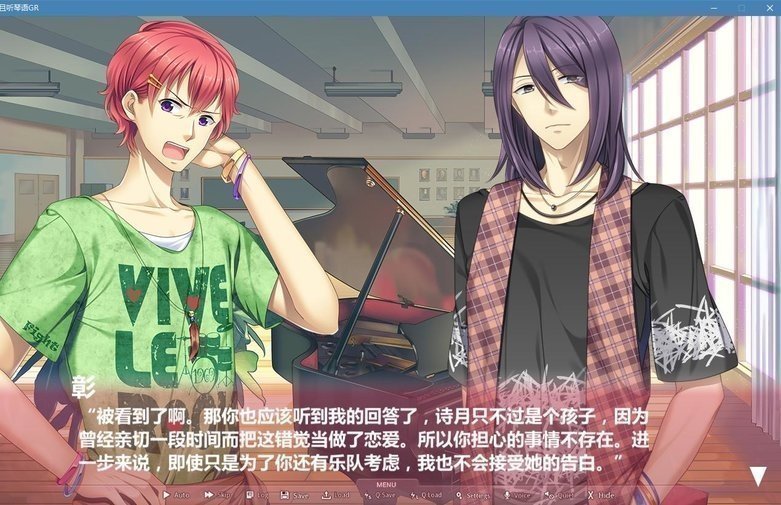
Former band member, the aloof Nanase Ran, has already broken up with her ex-boyfriend — violating the First Law of Galgame: thou shalt not marry the non-virgin.

Kisaragi Ryo from the music academy, who’s always tugging at her bra strap, exists solely to explain the presence of some perverted glasses-wearing gay guy who likes to stand by the sea with his hands on his waistband, ready to drop trou at any moment. Maybe she and he, both tugging at things, are actually a better match.
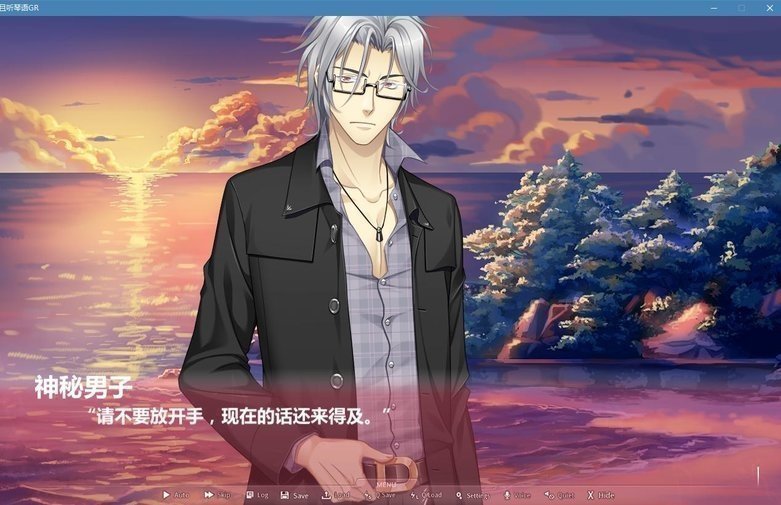
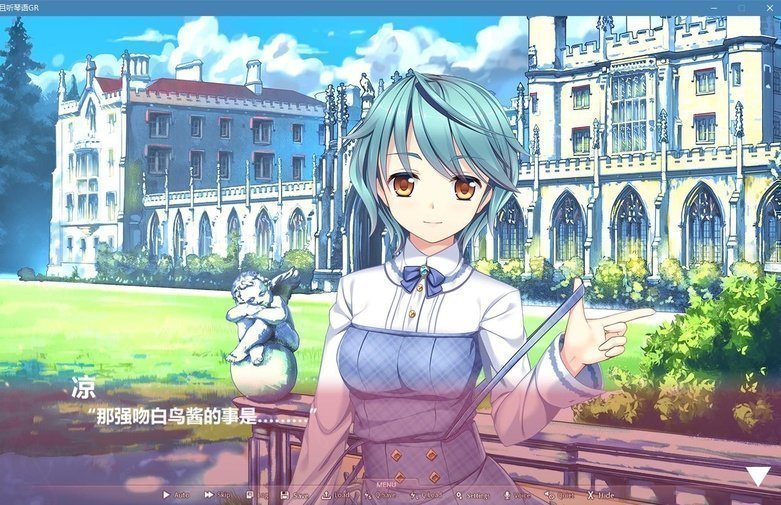
The protagonist’s role isn’t so much romance as it is being the referee in a boxing match, declaring by choice whether Roi wins or Shiratori wins.
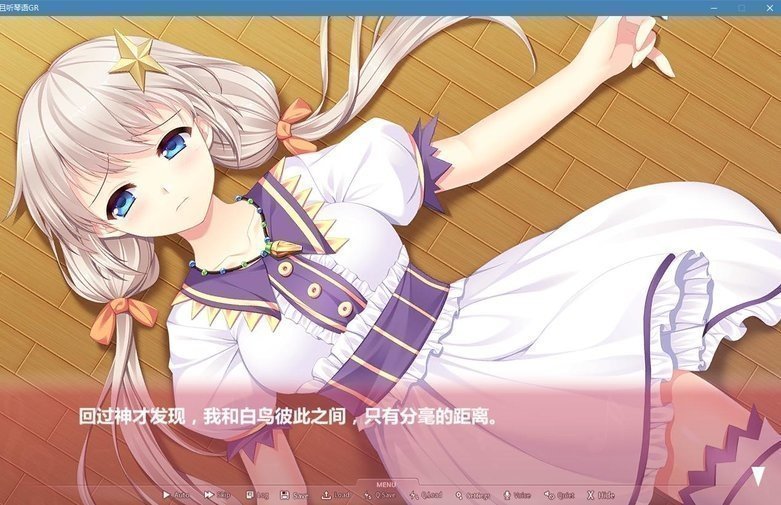
Maybe the catfighting is the real core of this whole game. The entire band is catfighting: former lead vocalist vs. current lead vocalist over the former drummer; current drummer vs. current bassist over songwriting; current lead vocalist vs. another band’s lead vocalist over the protagonist’s very existence. Everyone in the band looks glass-hearted, yet wears a fake smile over deep scheming. You can’t even tell that two guys in the band both like the gothic lolita. You can’t tell that Aikawa Roi, who seems the most open every day, tells the protagonist one second that the band will debut and release an album, then the next day says she never wanted to do the band at all. And you’d never guess that Shiratori Yuko, who seems more energetic than you, is actually sick.
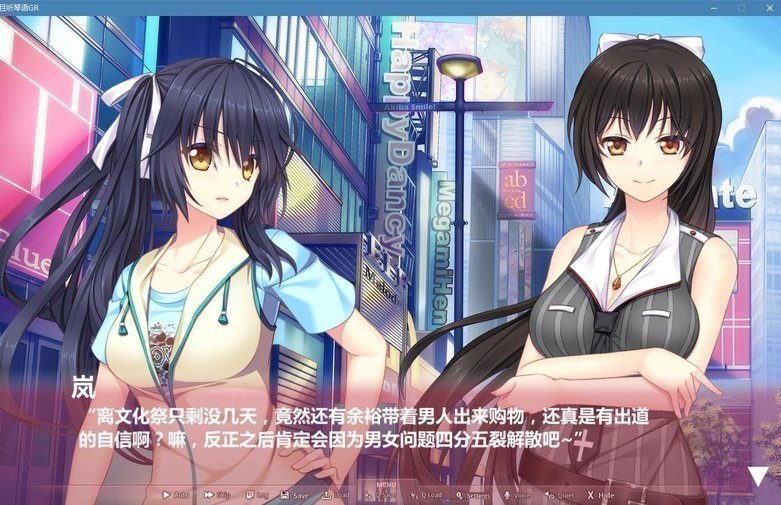
Attention whores, every last goddamn one of them!
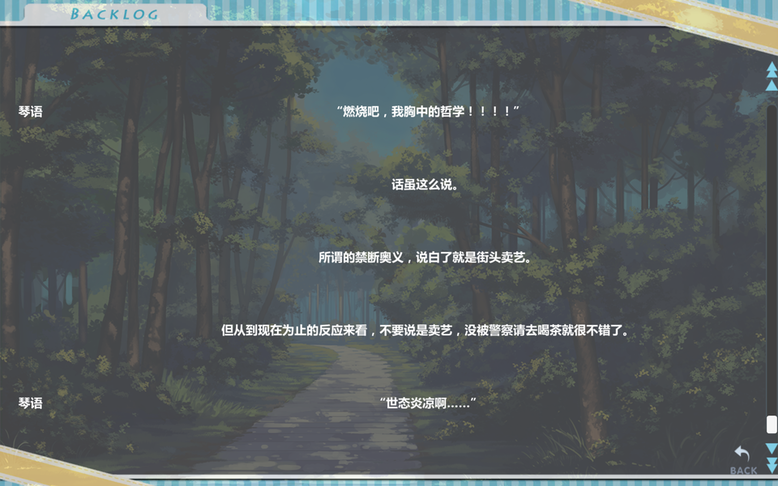
What’s even more infuriating is you can’t tell what country these drama queens are from. They speak Japanese, use Japanese names, some use English names that look like screen names, yet everything shown in the game is Simplified Chinese — and a Japanese-flavored Simplified Chinese at that. A “cell phone” isn’t a cell phone, it’s a “携帯電話.” A “bus” isn’t a bus, it’s a “電車.” “In the end” isn’t “in the end,” it’s “結局.” And that’s before we even get to how the clearly Chinese dialogue is drenched in Japanese flavor. Just when you think they’re Japanese, a line like “checking your water meter” throws you off… and there’s also “chengguan” and “husband-and-wife lung slices.” I still can’t confirm whether the scenario writer is Chinese or Japanese. I want to fire off a flamethrower rant but don’t even know who to aim it at. Man, so frustrating!
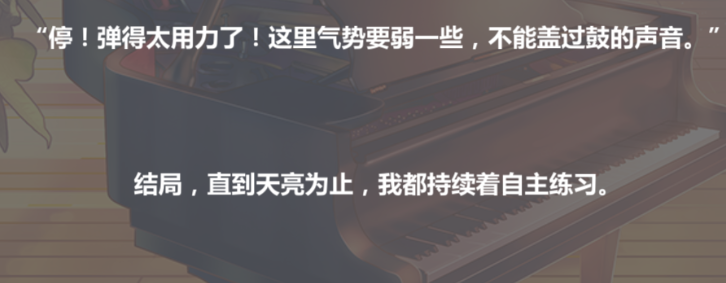
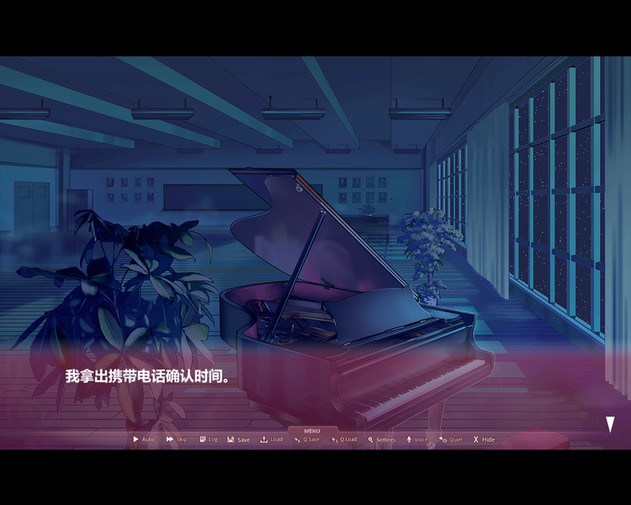
Qie Ting Qin Yu’s core is the protagonist’s search for the “most beautiful melody,” and the game itself serves up the darkness and truth of band life. The overseas-exiled animator and no-longer-fit-to-be-human Yamamoto Yutaka once said: works should present the truth of the industry. And Qie Ting Qin Yu rips open every problem that “forming a band” can cause and lays it bleeding in front of you: members scheming against each other, love triangles between men and women, drama queens putting on their true performances. The protagonist participates in practice and performances fewer than 10 times, yet slides straight into a debuted band — proving that forming a band is useless, and what life really needs is self-struggle.
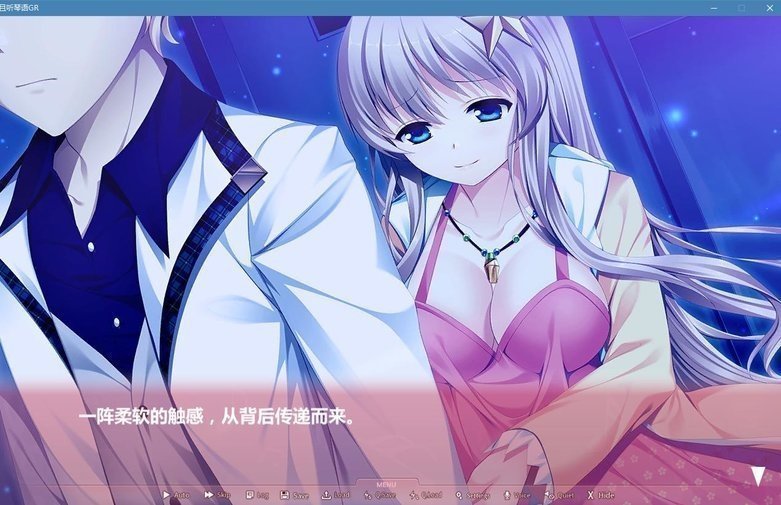
Qie Ting Qin Yu, the new upstart of Chinese-made visual novels, the vanguard of reverse cultural export (even though it seems like it never actually launched in Japan), top-tier lineup in the visual novel industry: the OP sung with feeling by Sasaki Sayaka — the kind of vocalist it takes a new Saga planets release to book — high-end Unity engine, requirements equal to a AAA title, hardware specs that crush kirikiri. Rina Shiratori, Ai Nonaka, Tachibana Sakura and other first- and second-tier famous voice actors from Aoni Production voice the characters, fully demonstrating our nation’s hard otaku power, expressing from inside and out the core value that “money lets you do whatever you want.” The pricing fits the basic conditions of our country’s primary stage of socialism, and meets the broad otaku masses’ basic expectations for a better life’s “soar-ing.” Six RMB! Only six RMB!

Six RMB might not buy you a bowl of hot dry noodles, might not buy you a cup of hot coffee, might not buy you a pirated CD, might not buy you any resource on DMM — but here you can buy Ai Nonaka’s voice. The game’s quality can be ignored; is Ai Nonaka’s voice not worth six RMB?!
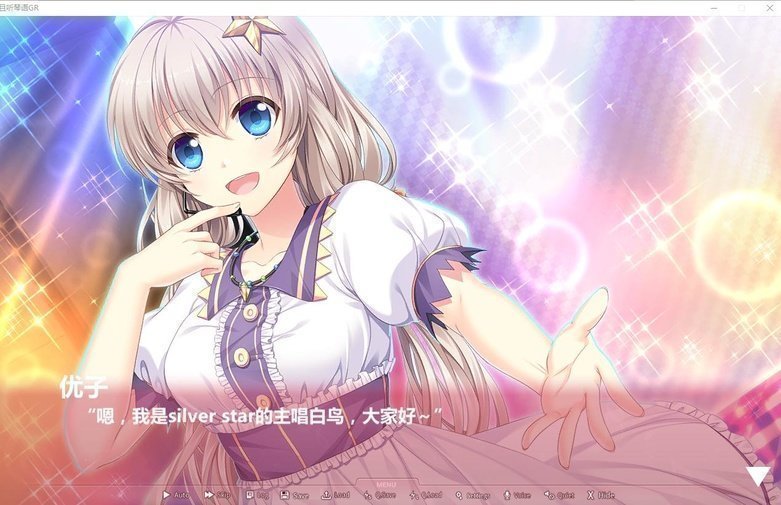
Support the otaku scene, support Chinese-made, and for the sake of Japanese voice actor Ai Nonaka — if you don’t buy it, you’re not Chinese!
Oh right — maybe you, like me, will find yourself hating the catfight between the two drama queens in this game. When you face the “choose one of two” and want to choose neither, you can pick Shiratori, then in the next choice, tear up her letter.
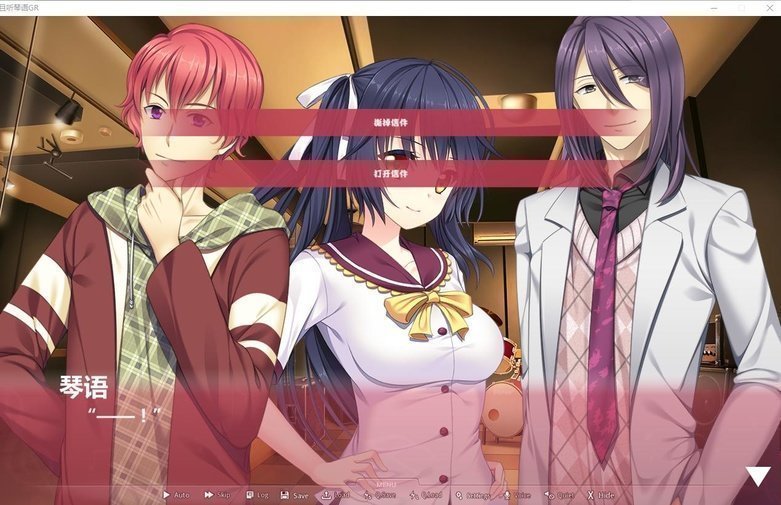
And thus we save the protagonist’s pure heart before it’s tainted by the music scene (juan).
So excited I couldn’t help belting out a song:
Dream-chasing, dream-chasing, dream-chasing the music sc-sc-sc-sc-sc-sc-sc-sc-sc-scene Kotone is a pure, pure, pure, pure, pure, pure youth
P.S.: The original impressions post I abandoned halfway because I felt it wasn’t good enough P.S.: Steam version link
Comments are hosted on the Chinese main site. This mirror is read-only.