Kizuna Kirameku Koi Iroha (絆きらめく恋いろは) Review
Kizuna Kirameku Koi Iroha
AMUSE CRAFT seems like a pretty based company — at least they’ve got several pretty goated game brands under their belt, and a few pretty goated artists willing to work with them, plus they can pull in a lot of famous industry names, Shinjima Yū included.
Oh right, this company also loves to open new brand aliases for no reason. Weren’t both of Shinjima Yū’s works released under new aliases that got thrown away after one use?
So this time they’ve opened another new alias called CRYSTALiA, and very pretentiously announced that the codename for this new game is: Katana, which means “sword” in Japanese.
So the full name of this game codenamed “Katana” is this painfully cringe “Kizuna Kirameku Koi Iroha.” I don’t even know how to translate it into Chinese properly — something like “shining bonds sprouting love,” I guess.
Honestly, I wasn’t very optimistic about this game. The setting is in the future, and you can’t even tell who the obvious villain is. It looks like “using swordplay as an excuse” to date people at school, and when I actually played it, sure enough, that’s exactly what it is.
First off, I have to say the beginning of this game really isn’t interesting. The protagonist is a student at some martial arts school, majoring in the weapons department — meaning his studies are about making weapons — while most of the heroines are aiming for the combat department. Put simply, the protagonist makes weapons, and the other heroines practice martial arts.
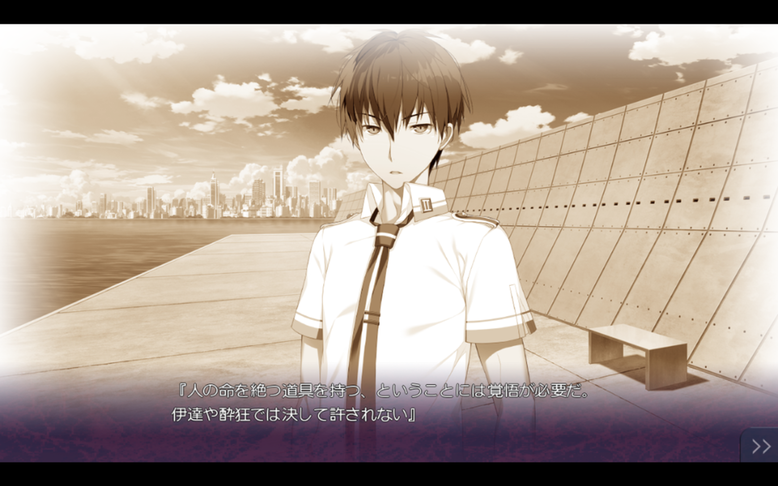
The protagonist is told from the start that his family is a lineage of sword smiths with an incredibly goated bloodline, yet he’s never made a single sword to this day, because something inside him resists it.
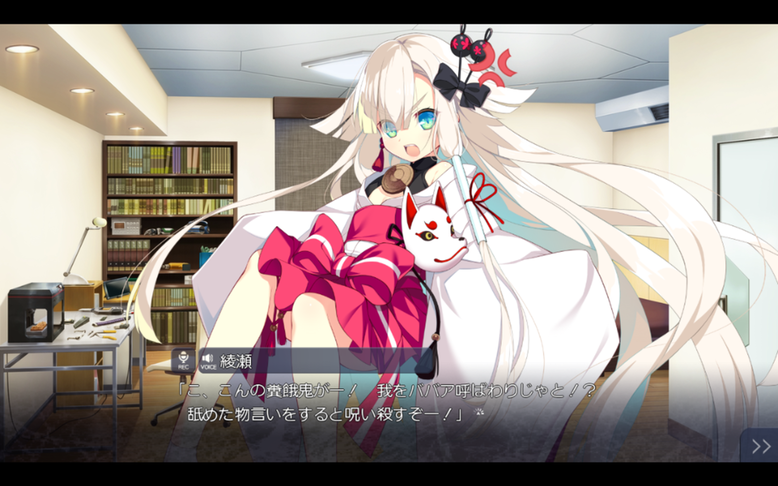
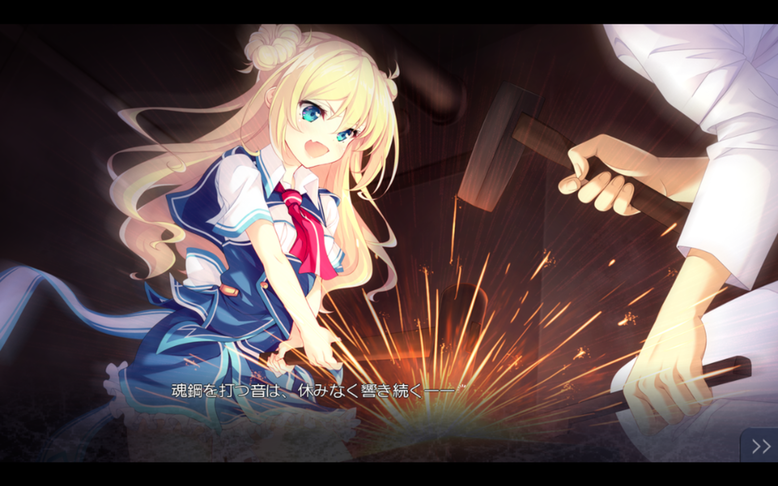
The protagonist’s weapon-making bloodline lets him use “soul steel” to forge weapons — steel with a soul, as the name suggests, which can resonate with the person wielding it. The weapons he makes are called “spirit blades” (why not call them Razer… oh wait, not spirit blades), and the protagonist can also talk to a white fox in the soul steel named Ayase, who claims to be his family’s guardian deity.
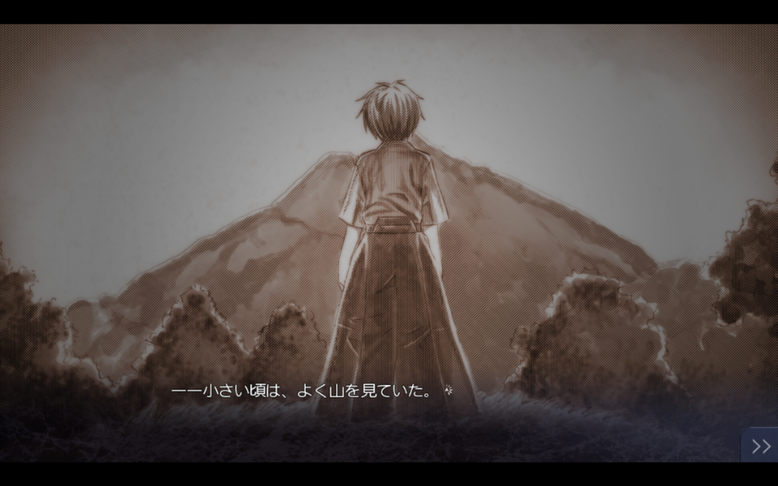
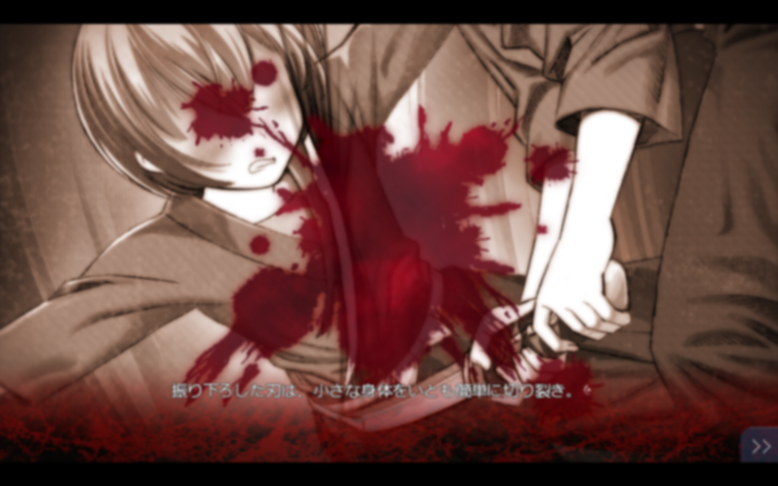
The reason the protagonist refuses to make swords has to do with his childhood. He remembers often going up the mountain to play, feeling like something unique up there was drawing him in. Another little boy used to run around the mountain with him. Then one day, while the protagonist and the other boy were running on the mountain, the protagonist suddenly lost his mind… no wait, lost his reason — and went berserk, slashing the other boy with a sword. After that, the protagonist developed an aversion to swords. He believes that if he makes a sword, someone will inevitably use it to hurt others, making him a murderer. And when he makes a sword, he hears a strange voice whispering inside him, telling him the blade will make rivers of blood flow. So the protagonist can never overcome this barrier and can’t make swords.
Then later, the main heroine, Kamizumi Sakuya, who enrolled at the school, voluntarily confesses to the protagonist that she was the person he slashed on the mountain as a child, and even shows him the scar on her chest. According to Sakuya, the scar isn’t actually a sword wound but something like a “curse” that can’t be healed.
Sakuya explains that she dressed like a boy back then, which made the protagonist mistake her for a boy, and that she never held a grudge against him for cutting her. Seeing how much pain he’s in now, unable to even make a sword, she came forward to tell him about the past and say she never blamed him, hoping he’ll let go of those distractions and make swords properly.
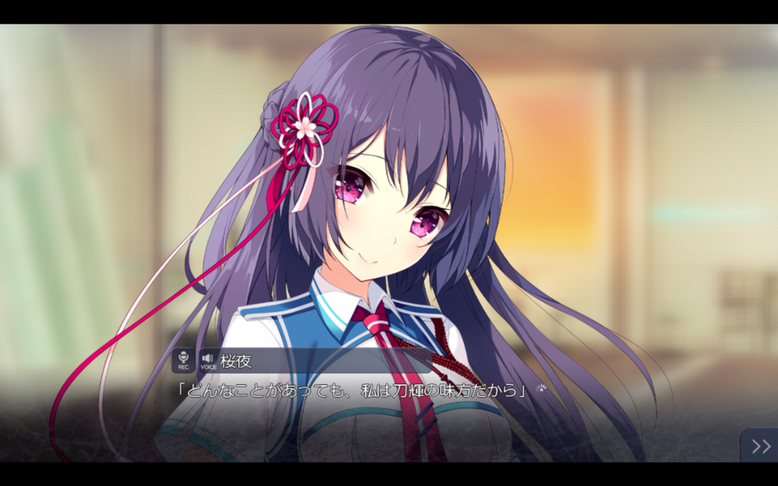
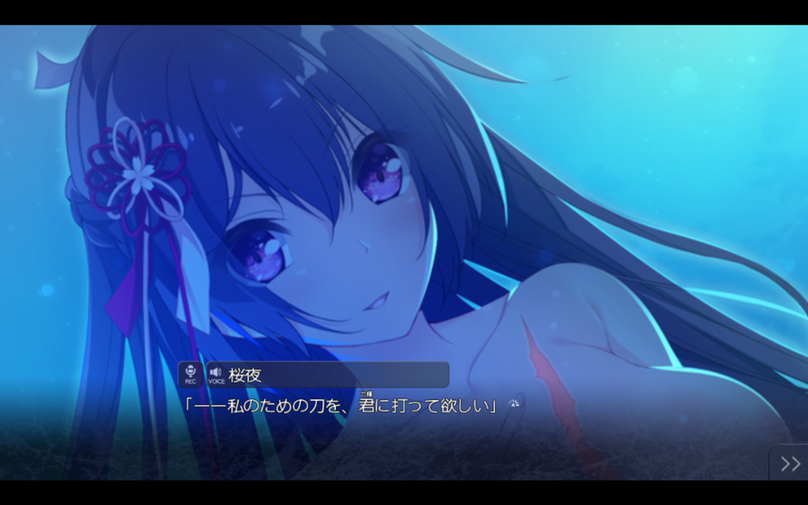
Finally, Sakuya makes a request of the protagonist: she asks him to make a sword for her.
At this point I need to mention some of the game’s lore about “swords.” Originally, Japan had “spirit blades” — the kind forged by the protagonist’s family using soul steel, killing weapons used on the battlefield. At this school, such lethal weapons aren’t allowed; instead they use something called “Origami.” It has properties similar to spirit blades, but with high-tech elements — you can register it, root it, set attributes — it’s basically a smart weapon at this point, and it can be regulated, so it’s also used in practice matches as a sport. The sword the protagonist makes for Sakuya isn’t a spirit blade but an Origami.
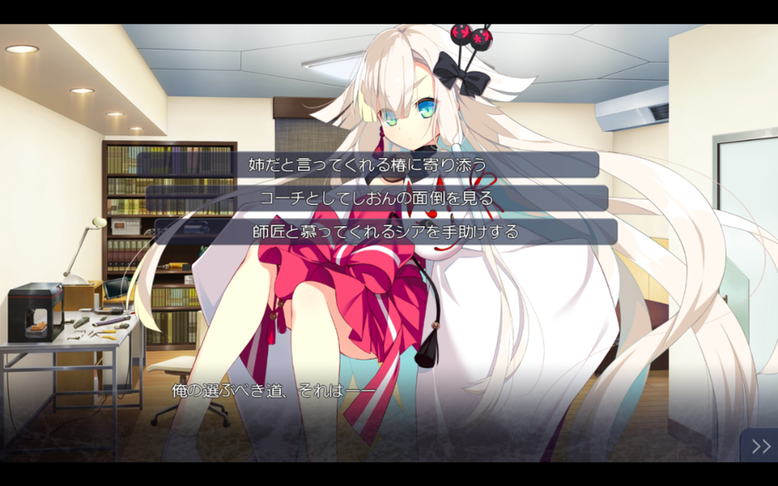
After Sakuya receives the protagonist’s sword, the game branches: the school is holding an “Enbu Festival,” and the protagonist is asked to choose who to support.
And the kicker is this game has a route lock — you have to finish the three sub-heroines before you can pursue Sakuya.
Fortunately, the individual routes are worth mentioning, especially Suzuin Tsubaki’s route.
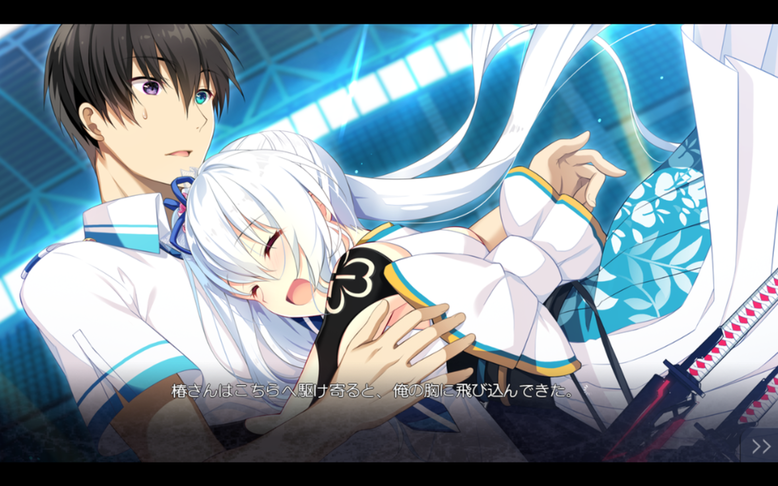
Tsubaki comes from a martial arts family, the Suzuin household. She often acts like the protagonist’s older sister. She’s received a good education and training resources since childhood, and coming to this school represents her family, so she’s always had strong abilities and pride. When the Enbu Festival begins, she naturally aims for the championship.
But staying champion is incredibly hard — it takes a lot of effort and a huge amount of pressure.
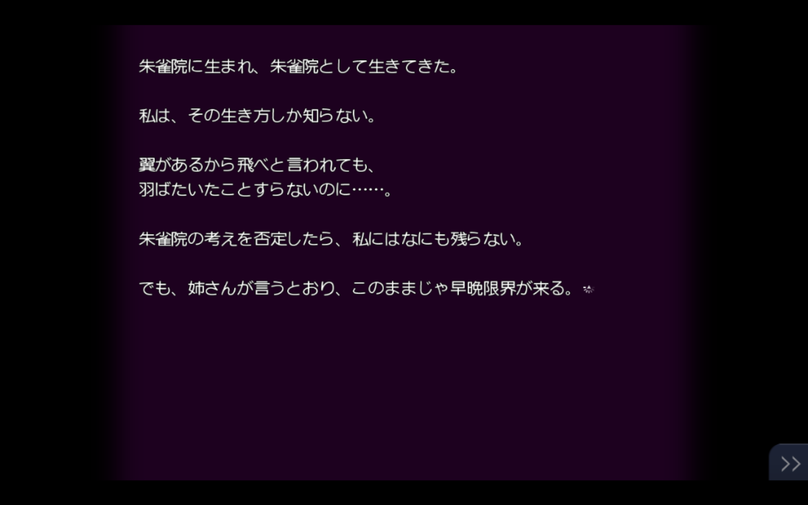
Obviously, Tsubaki can’t handle that much pressure.
In the first match, Sengoku Aoi, a fellow student in the same year, faces someone else. Tsubaki sees Aoi defeat her opponent with extremely violent and powerful combat ability, and instantly feels unsure of herself. The second match is Tsubaki versus Sakuya. At first Tsubaki has the advantage, but she notices Sakuya getting braver as the fight goes on, even starting to enjoy it, morale rising, while Tsubaki grows more and more afraid.
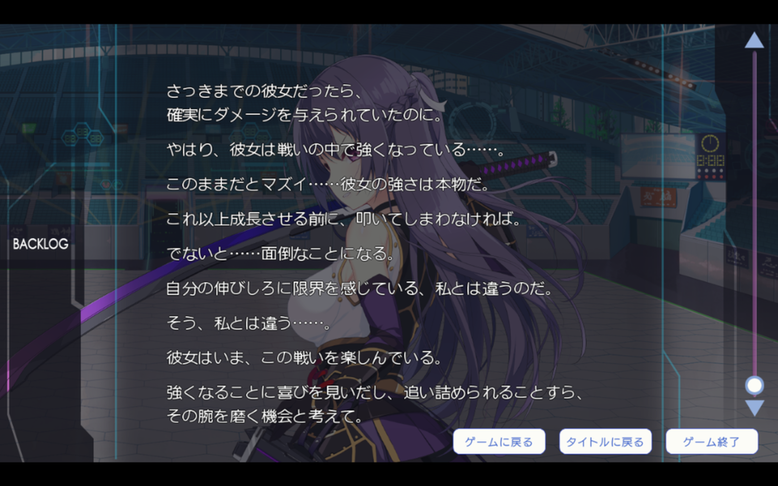
“I can’t lose. If I lose, it’s over.” “I can’t take risks, or I’ll lose.” “If I lose, my family will think I’ve disgraced them. They’ll never let me off.” “I’m standing here because I’m a Suzuin. If I lose, I’ll have nothing.”
So Tsubaki’s fighting style becomes more and more conservative, more and more timid, until she’s being dominated by Sakuya. In the end, she barely wins by hastily using a special move she’s never used before.
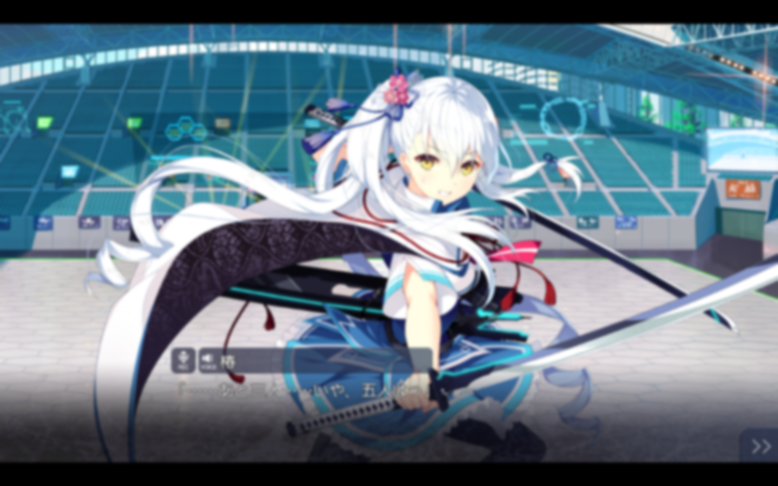
Remember, Sakuya’s combat ability isn’t actually that high. Tsubaki, the top of her year, struggles this much against her — let alone against Sengoku Aoi in the next match.
The next match comes quickly: Suzuin Tsubaki VS Sengoku Aoi.
From the start, Tsubaki draws her dual blades. Normally she wouldn’t use dual blades, which proves she’s afraid, worried she’ll lose, so she brings out her trump card immediately.
Even so, after just a few exchanges, Tsubaki is suffering. Aoi’s strength is beyond what Tsubaki expected — not that Tsubaki is weaker, but Aoi’s fighting style is too fierce, and Tsubaki is too conservative, too inhibited, always worrying about failure.
Aoi’s mindset: “I’ll win. I will win.” Tsubaki’s mindset: “I can’t lose. I must not lose. If I lose, I’ll have nothing.”
This psychological shackle makes Tsubaki struggle more and more. She even notices that Aoi never uses Origami’s special functions during the fight — she’s purely using swordsmanship against her, not using any MP-consuming abilities.
Tsubaki is surprised, but Aoi is dismissive: “When I entered this school, I couldn’t beat anyone. So I made up my mind to work hard. I kept challenging people who beat me, kept training myself, and climbed up the rankings step by step from the bottom to stand here. Meanwhile, you’ve enjoyed your family’s fine education and training environment from the start, with the best weapons, taking first place as if it were your due. You don’t deserve it. I’m going to defeat you.”
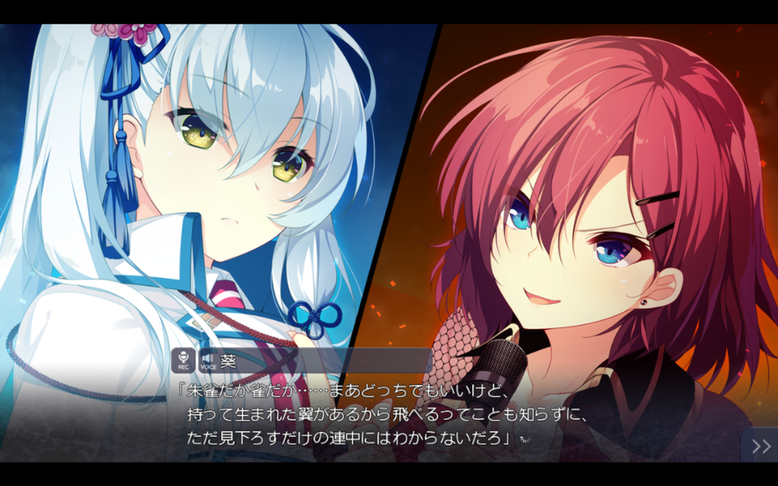
“The way you are now, all hesitant and wishy-washy, you don’t deserve to be number one!”
While Tsubaki is stunned, Aoi lands the final blow. Tsubaki blocks it, but the weapon in her hands shatters.
In a match, if your Origami’s durability is broken, you’re immediately judged the loser. But after deliberation, the judges declare that Tsubaki earned more effective points than Aoi, so Tsubaki wins.
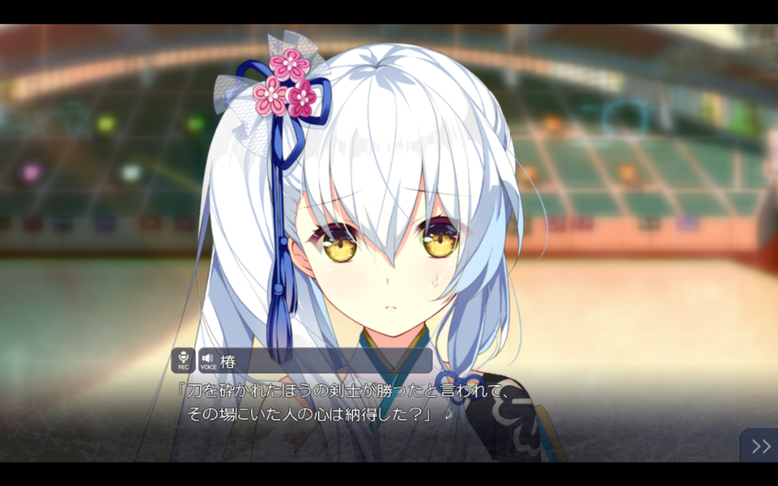
Tsubaki wins the match, but her weapon was destroyed and she has no sword left. The win is purely by the rules — as a samurai, that’s humiliating.
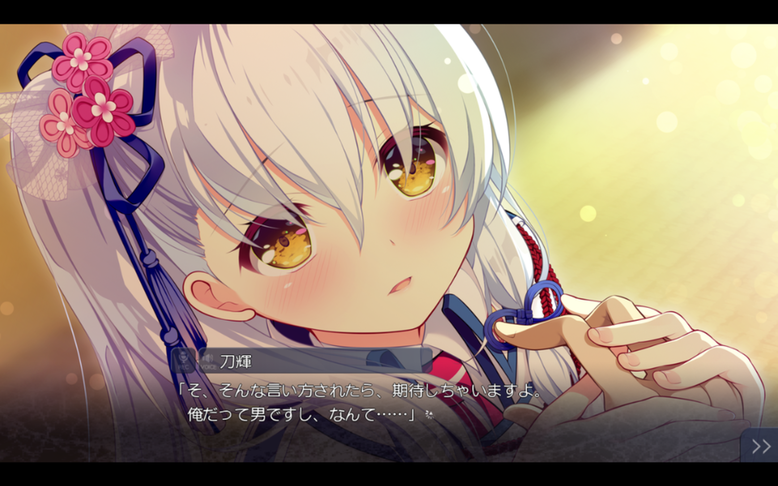
Then the story proceeds as you’d expect: while Tsubaki faces her family’s doubts, others’ mockery, and sarcastic remarks about “winning without honor,” the protagonist steps in, comforts her, and conveniently hooks up with her too. After a few rounds, Tsubaki feels better and stops wavering, and the protagonist makes her new dual blades — in fucking ROG colors, no idea if ASUS sponsored it.
With her confidence restored, Tsubaki meets Aoi again and challenges her to a rematch. This time, Tsubaki has no confusion, no heavy pressure, and fights for herself — naturally she wins easily, because Tsubaki was always strong; last time was just too much mental burden.
Aoi is a straightforward person, and after losing she’s sincerely convinced. Tsubaki asks to be friends again, and Aoi is easygoing, saying she always considered Tsubaki a friend — because they’re rivals, and Aoi never holds back against an opponent, since she believes giving it your all is how you show respect.
Then the route ends abruptly. The Enbu Festival is supposed to be an eight-person tournament, but Tsubaki only wins two matches, and then it’s glossed over with “Tsubaki won the championship” and she stays with the protagonist, sometimes getting jealous and stuff.
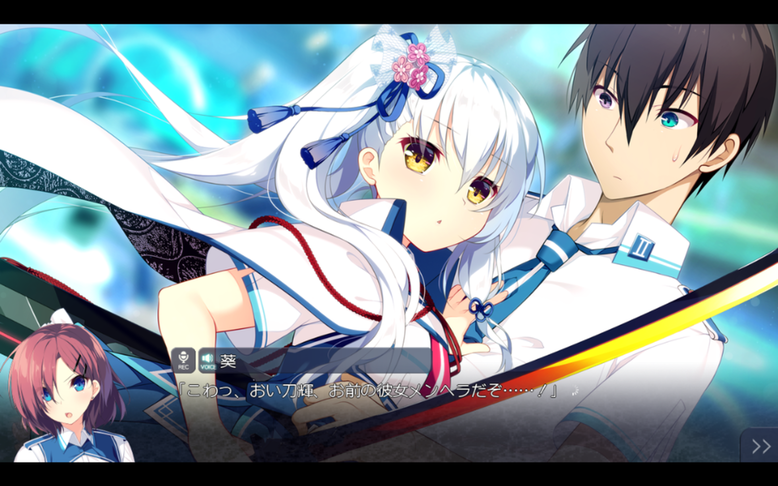
The second route is the kouhai Aihara Shion’s route.
Shion isn’t from a martial arts family. She came to this school because of her grandfather’s influence — she thought being a swordswoman was cool and wanted to be like that, so she came here despite opposition from everyone in her family except her grandfather.
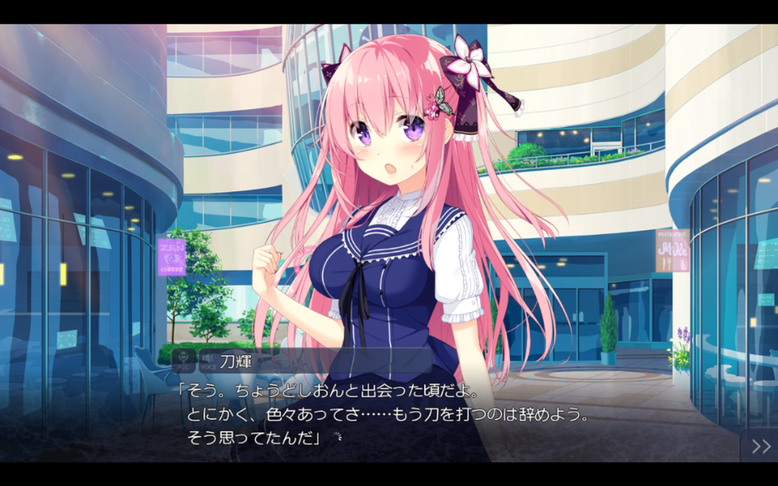
But no help for it — Shion is just too weak. When she first arrived, she couldn’t beat anyone and was at the bottom of the rankings.
She’s crying at the school’s Wall of Sighs when the protagonist finds her.
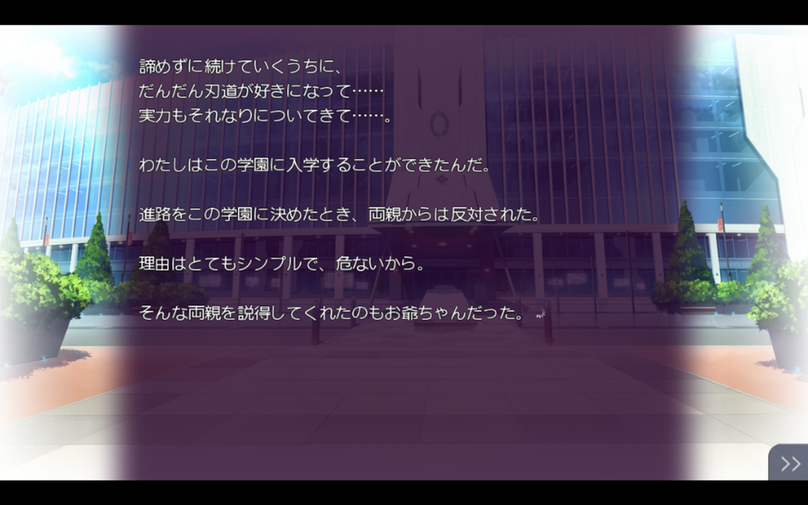
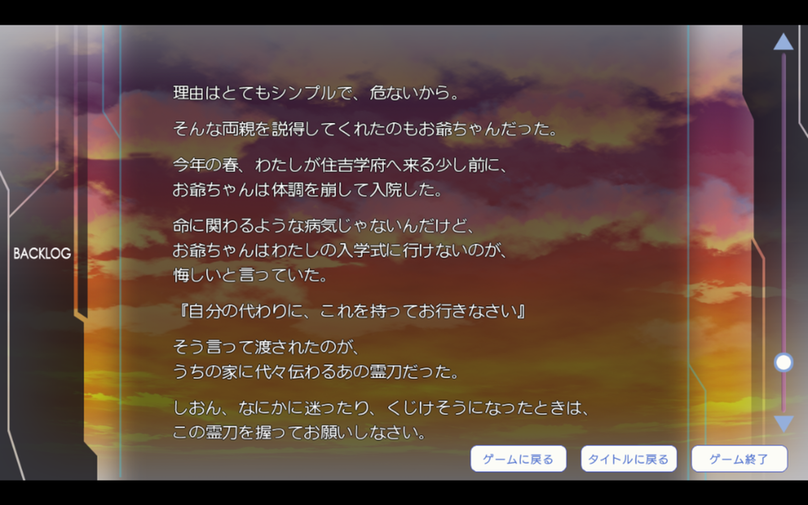
After that, the protagonist helps Shion on purpose or by accident, sometimes acting as her coach. To make her stronger, he forges a sword for her. As a kouhai, Shion often practices with another kouhai, Ichōda Moena, learning a lot from her and gradually improving. When the Enbu Festival arrives, she barely qualifies to compete.
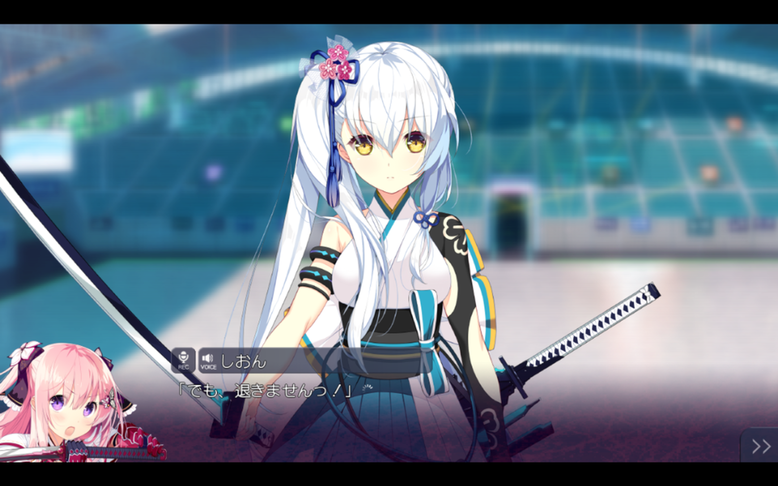
Unfortunately, her first match is against the top of the year: Suzuin Tsubaki.
With the protagonist’s help and encouragement, Shion adopts a tactic of “attacking the opponent’s weapon durability” and avoids facing Tsubaki head-on, knowing Tsubaki excels at “parry and counter,” so she doesn’t give her a chance to parry. She doesn’t do badly in the fight, but ultimately the skill gap is too large and she’s defeated.
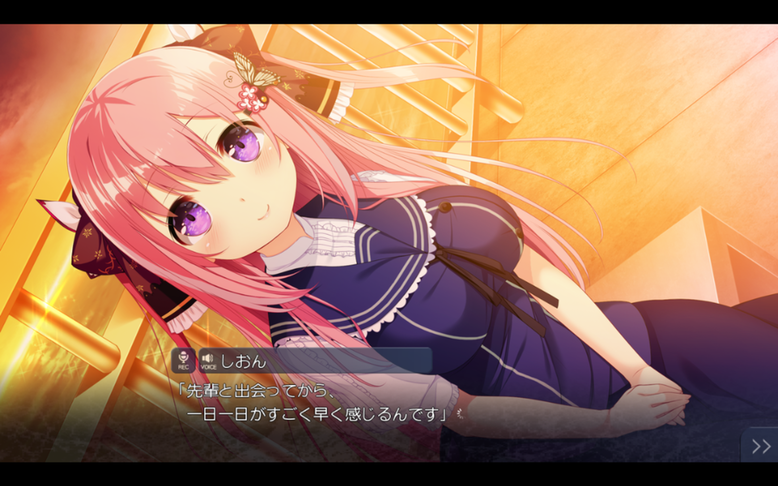
Still, Suzuin Tsubaki is surprised by Shion’s improvement — remember, she started as a total noob. Only the protagonist knows that while Shion’s martial arts level is low, she’s strong on the spiritual level — like low attack power but a huge MP bar. She’d probably be better as a mage than a warrior.
After that, Shion’s story moves away from the Enbu Festival and into the protagonist’s past.
In the common route it was mentioned that the protagonist has a problem: every time he makes a sword, something like a demon whispers inside him. When he forges a sword for Shion, the whisper grows stronger. He suppresses it, but his soul feels corroded.
The protagonist’s teacher, Sasaki Mikoto, seems to know something about him. She starts noticing his condition worsening, and just as she’s about to go find him, she discovers he’s gone berserk.
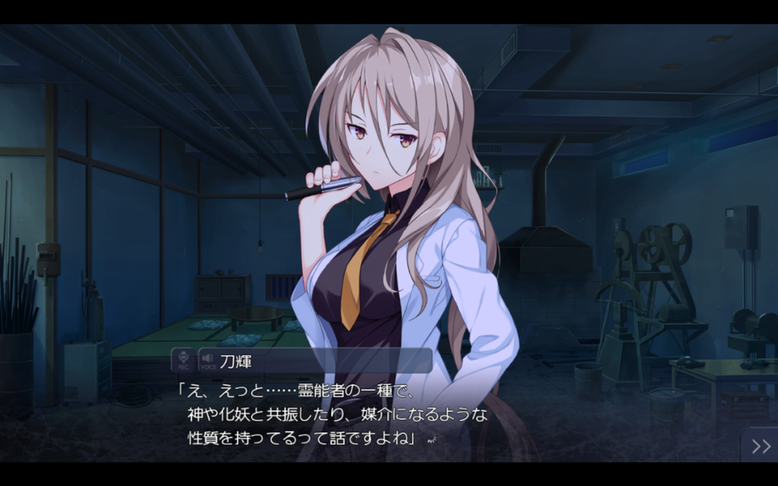
The protagonist puts on a white fox mask and starts killing everyone in sight.
Then his teacher Sasaki Mikoto reveals that the protagonist has a constitution that makes him “easily possessed by spirits.” As a child, he may have been possessed by some yokai for some reason. It was later sealed inside him, but forcing himself to make swords lured it out, and it even took over his mind. The protagonist is now controlled by that yokai.
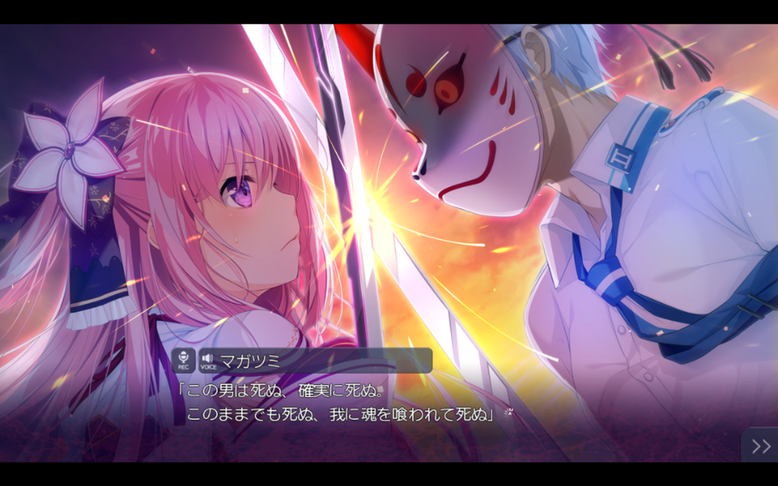
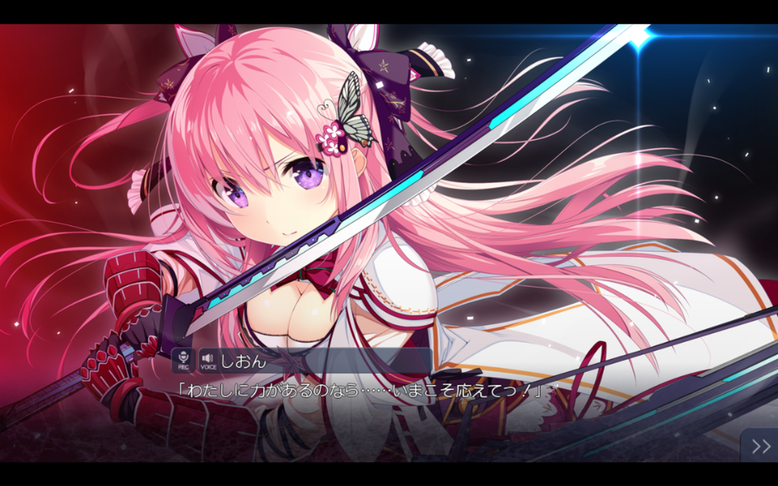
The rest is pretty clichéd: since the protagonist helped Shion, she chooses to save him this time. She takes up her sword and duels the possessed protagonist, finally freeing him.
After that, the romance follows naturally…
There’s also a route for the foreigner Freesia, which is pretty boring. I didn’t read it carefully. She’s a foreigner from America interested in Japan’s high-tech smart sword Origami, so she comes to the school to learn how to develop and manage such weapons, and with the protagonist’s help she becomes an engineer. She never chooses to take up a sword and fight.
And honestly, this foreigner is poorly written. The voice actress is strong, but the character is too stupid — she’s constantly boasting about Japan in every line, plus all sorts of weird katakana writing that gives me a headache.
After unlocking those three routes, you can enter Kamizumi Sakuya’s route.
At first you might think, like I did, that Sakuya’s route would be about winning the Enbu Festival with the protagonist’s help. After all, while the common route is boring, the Enbu Festival fights are pretty entertaining, and the game’s pacing feels a bit like the old Aokana — Shion→Mashiro, Tsubaki→Misaki, Saya→Asuka. Of course, the cringe foreigner has no counterpart.
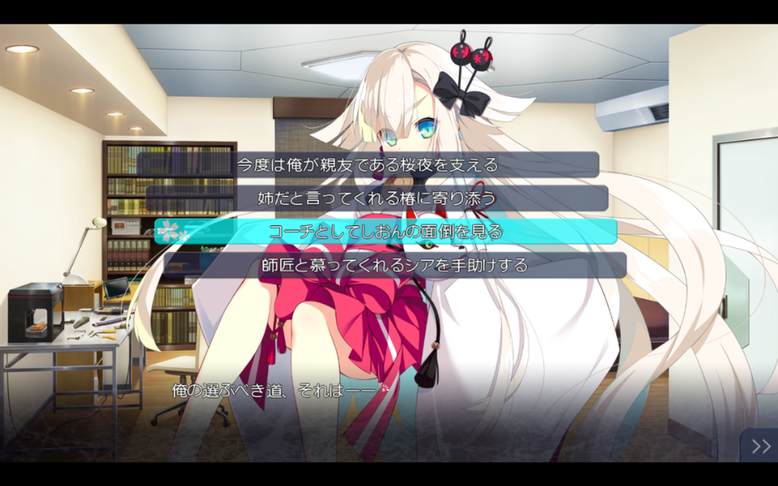
But the game doesn’t go that way at all…
There are a few plot threads left dangling:
- Besides the yokai inside the protagonist, there’s also a fox spirit said to be his family’s guardian beast, that Ayase girl.
- The protagonist’s teacher Sasaki Mikoto seems to know a lot. From the dialogue you can tell she’s actually a fox spirit too.
- The Kamizumi family, represented by Kamizumi Sakuya, and the Suzuin family, represented by Suzuin Tsubaki, have a historical feud. Simply put, the Suzuin family made a pact with fox spirits to enhance their combat power — something about mating with fox spirits and having descendants with fox blood, which boosts combat ability. The Kamizumi family were exorcists, and eventually a Kamizumi killed the Suzuin family’s fox spirit… so now there are no yokai left.
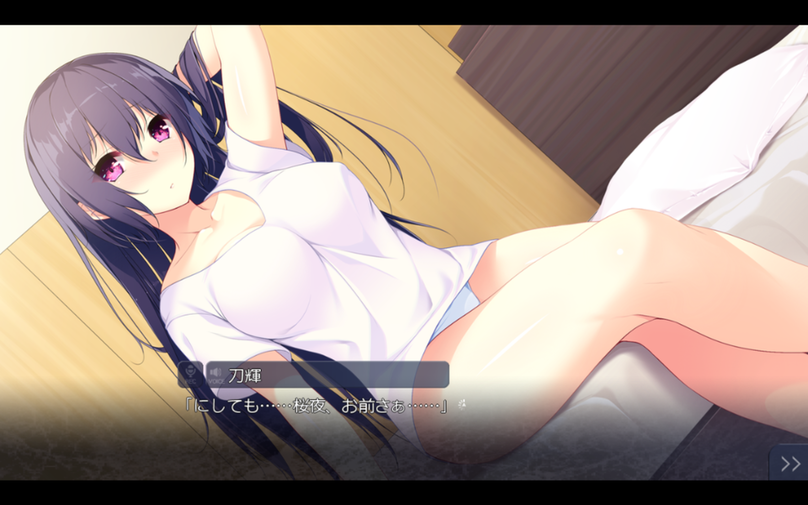
So the final True End route is weird. Naturally, Sakuya wants to enter the martial arts festival and begs the protagonist to make her a sword. But this time, as he forges it, the family guardian beast Ayase appears on her own, hoping the protagonist will use the soul steel she’s possessing as material, saying she wants some novelty blah blah blah…
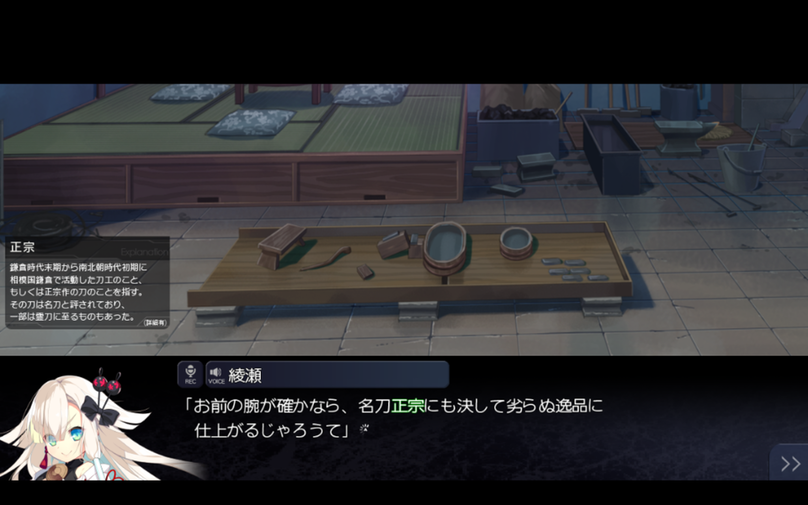
The protagonist agrees and uses Ayase’s soul steel to forge a weapon. Sakuya receives it and often practices with the protagonist to improve, preparing for the tournament.
The tournament begins, and Sakuya fights steadily, quickly reaching the finals, where her opponent is naturally last time’s champion: Suzuin Tsubaki.
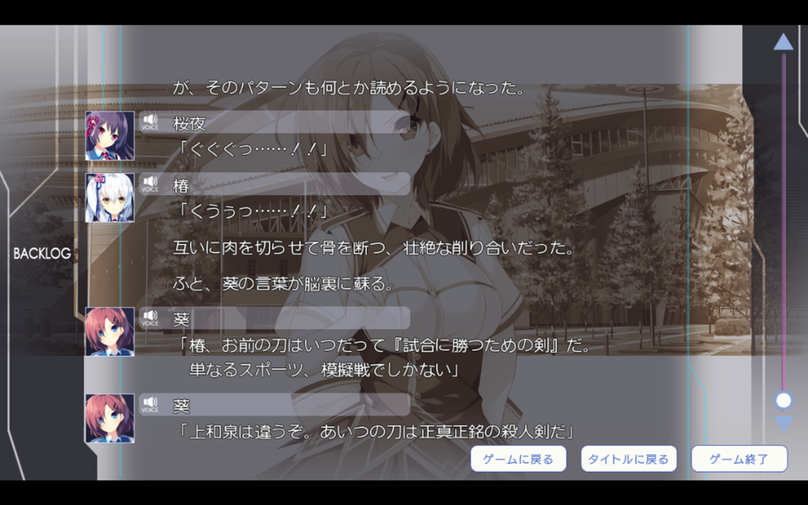
The duel is fairly exciting, but as it goes on, something seems off.
By ability, Sakuya is inferior to Suzuin Tsubaki. But just as Tsubaki is about to defeat Sakuya, Sakuya’s spirit resonates hugely with the weapon in her hands, and the weapon starts releasing enormous energy. Sakuya gains tremendous power, her attack power becomes massive, and even Tsubaki can’t parry.
At this rate someone’s going to die. The protagonist calls for a stop, but Sakuya is completely out of control, a killing machine. Tsubaki struggles to stop her — Sakuya seems to have become a berserker who won’t stop until she kills.
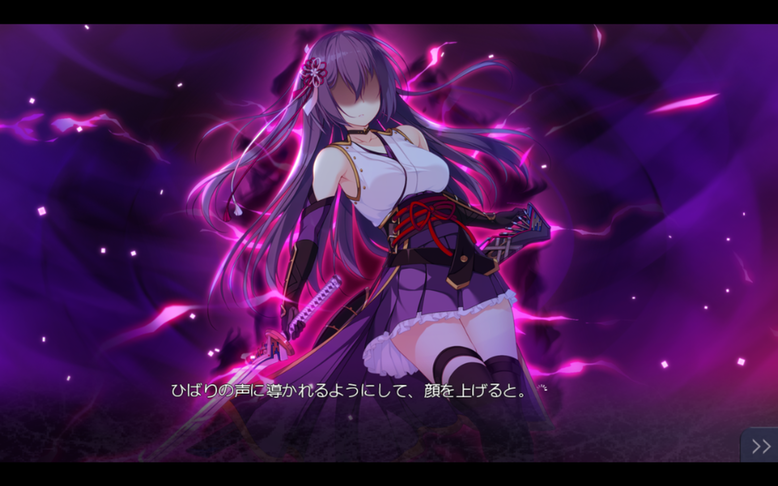
Finally, by forcing her unconscious, Sakuya stops her rampage and falls into a coma.
Sakuya is taken to the infirmary. Sasaki-sensei goes to check on her, and finds Suzuin Tsubaki’s older sister, Suzuin Miyako, already there — holding the sword the protagonist made for Sakuya.
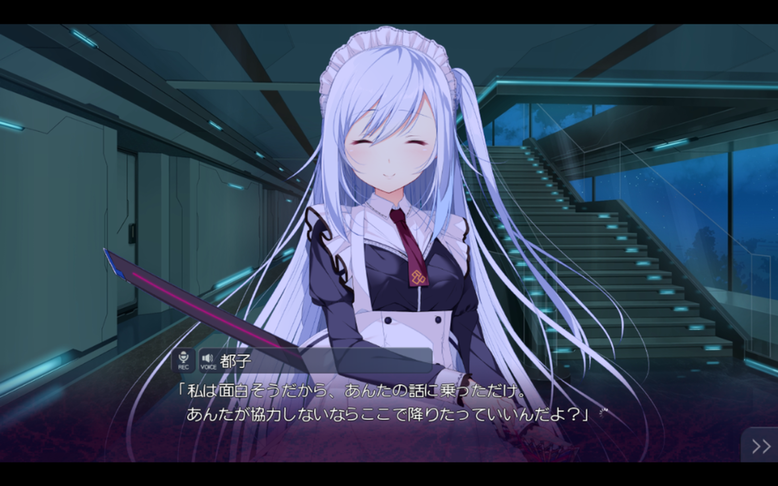
Suzuin Miyako has been infiltrating the school as someone’s maid, actually secretly observing the protagonist, waiting for him to forge a “demon blade.”
The protagonist’s family are swordsmiths, and their guardian deity Ayase is actually a fox spirit. That fox originally belonged to a Suzuin descendant but ended up with the protagonist’s family as a guardian due to intermarriage. And because the Suzuin family’s original fox was killed by the Kamizumi family, they lost their fox bloodline and naturally aren’t as strong as before.
But now things are different — the protagonist has turned his family’s guardian deity, the fox spirit, into a sword.
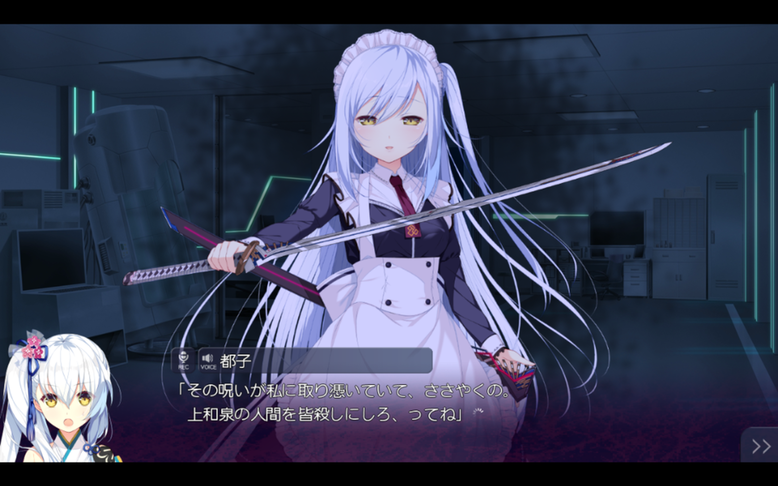
As a member of the Suzuin family, just getting that sword would let them return to their peak, right? Kamizumi Sakuya already demonstrated the sword’s power in the match, and Suzuin Miyako saw it all.
So Suzuin Miyako immediately shows up and steals the sword. Suzuin Tsubaki appears to stop her sister, but gets wounded by her instead. Suzuin Miyako runs off with the demon blade.
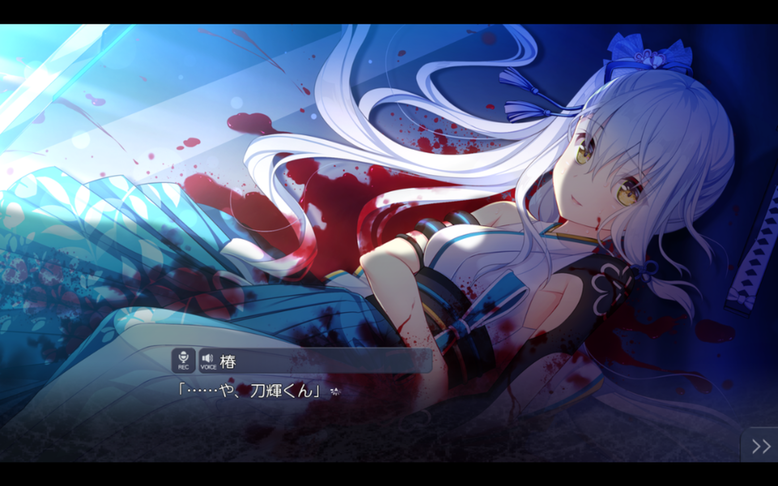
The protagonist and Sakuya give chase, but Sakuya is no match for her either and gets wounded. Only the protagonist remains. He takes up a sword, determined to stop the mastermind himself.
At first the protagonist is completely outmatched by Suzuin Miyako — after all, he has no swordsmanship. Just as he’s about to be cut down, Shion brings her family’s sword, a blade with exorcism properties that is fundamentally effective against demon blades.
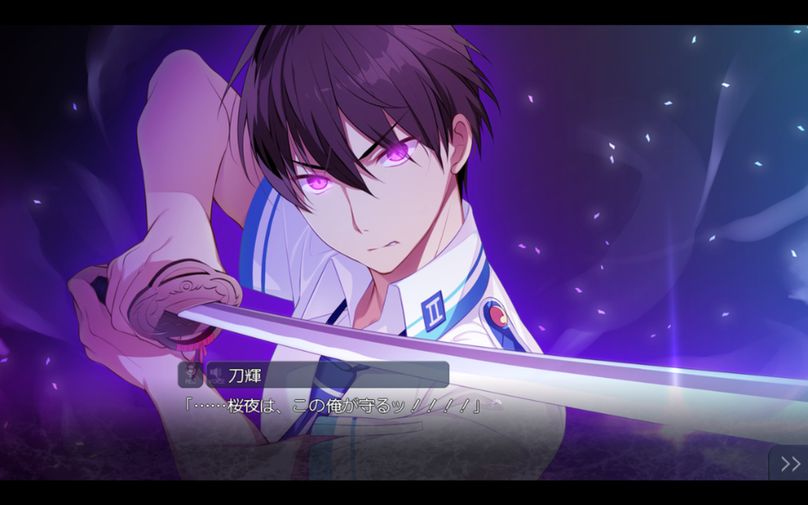
So in the end, the protagonist gets a cheat, the boss gets a cheat, cheat versus cheat, and the protagonist wins…
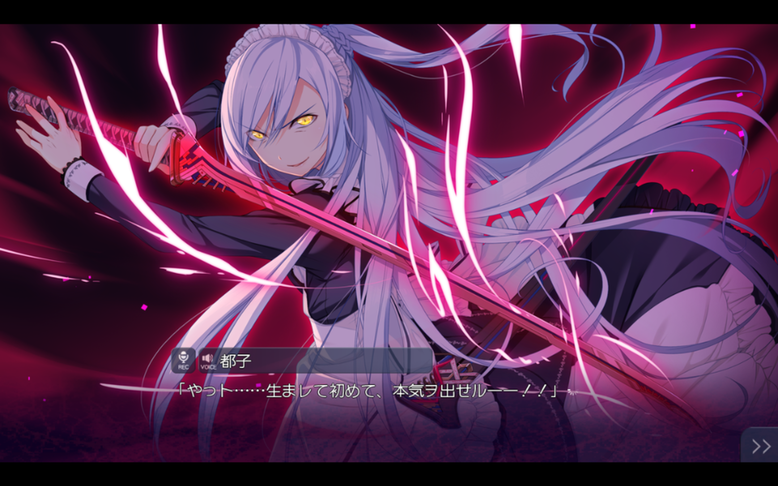
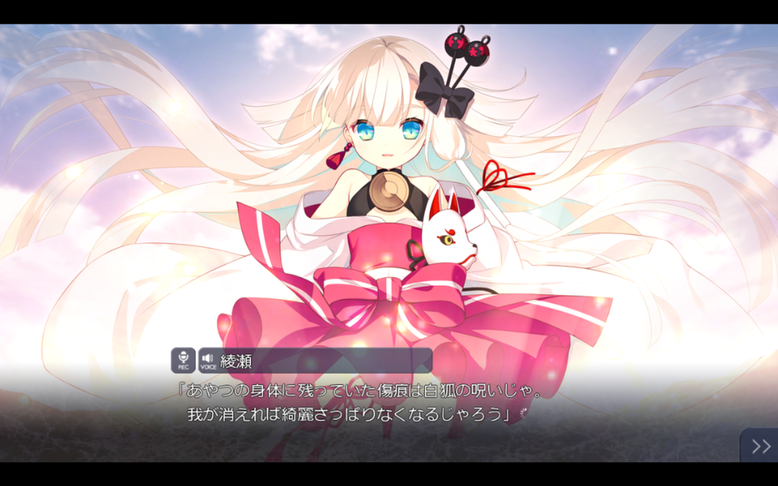
After the protagonist cuts down the reappearing demon blade, Ayase, who was possessing it, appears. She says she knew this would happen from the start, and that asking the protagonist to forge the demon blade again was actually her secretly helping him — using the opportunity to ensure the demon blade never appears again, fulfilling her duty as guardian deity. Ayase also says the curse on Sakuya from the protagonist’s childhood slash is now lifted, and no one in the world will ever be able to use fox spirits to gain illicit power again blah blah blah…
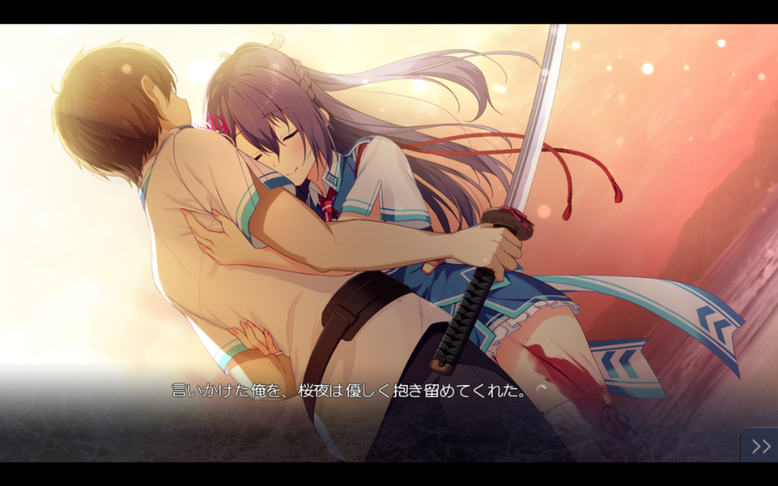
Of course, are there really no fox spirits left in the world? Of course not — the protagonist’s teacher Sasaki Mikoto is a fox spirit, and she says she’s lived for who knows how many hundreds of years, and that the founder of the Suzuin family’s swordsmanship and training grounds was her descendant…
So Sasaki Mikoto-sensei knew about the relationships between these people at the school from the start, and was just quietly observing and helping from behind the scenes.
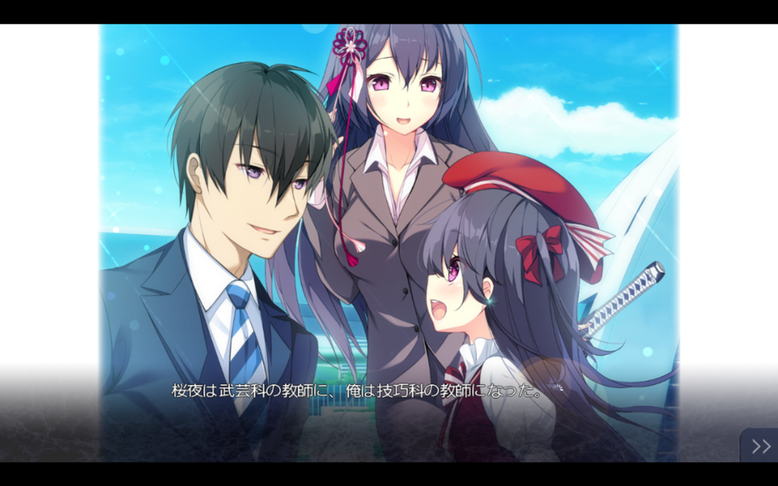
In the end, naturally, the protagonist and Sakuya end up together. Both stay at the school as teachers — one teaching weapon crafting, the other swordsmanship — and they have a daughter. Happy Ending achieved.
If you just look at the True End, the whole game is more like “a blacksmith protagonist accidentally creates an ultimate weapon, which is immediately stolen by someone who wants to do evil, and the protagonist destroys it to prevent disaster.” As for the whole game being about “swords” and “bonds,” the depiction is quite微妙 — subtle, in a bad way.
Why subtle? Several reasons.
- First, the game’s story feels disjointed. The common route is extremely boring, then when the martial arts festival matches start, the game suddenly becomes much more interesting, and after the festival ends, the story wraps up in a hurry, skipping many details. The protagonist’s fight with the boss is resolved in a few lines. How Shion kills the berserk protagonist is also resolved in a few lines. Even worse is Tsubaki’s route — it only shows the group stage, not the final, which is glossed over… really weird.
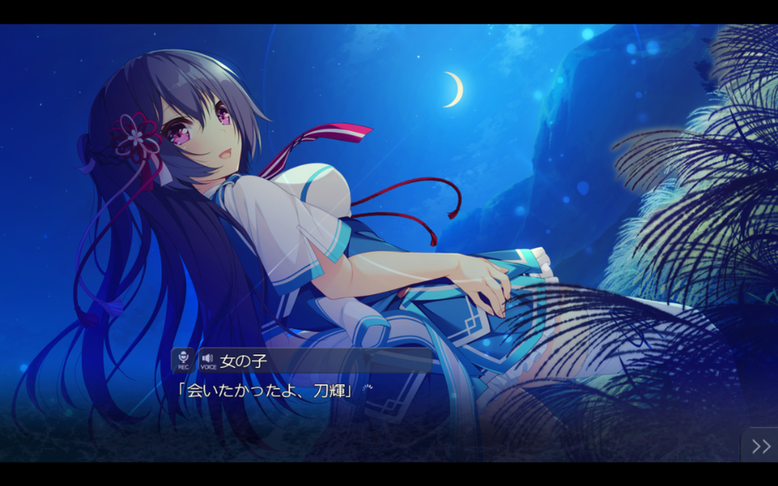
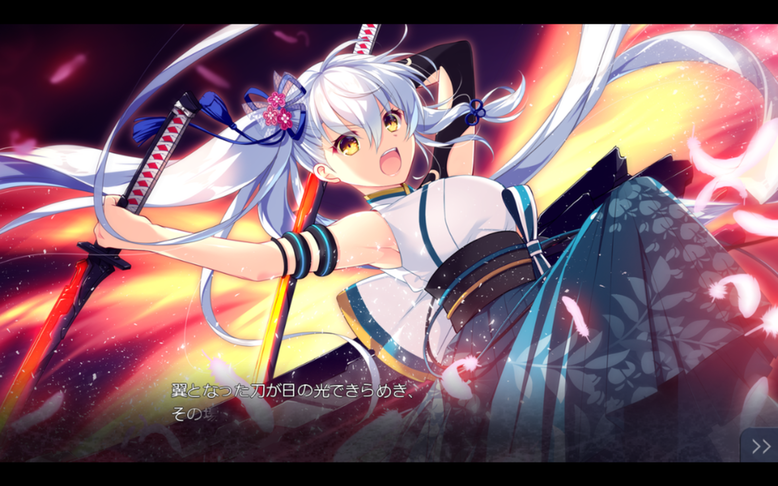
- For a game that has combat scenes, the CG count is way too low. Each character gets at most two katana CGs, and the slashing effect is a single image recycled over and over. It just doesn’t hit. They should’ve taken notes from Lass—that studio’s 11eyes did it right. Maybe it’s understandable since this was their first time doing this kind of game, but the lack of presentation still stings.
- The game’s systems are more about looking cool than being useful. There’s a tips system that explains common terms, but… the explanations are dumbed down to the point of explaining 1+1=2, while key stuff gets left out. Or rather, it’s explained but the explanation tells you nothing. The origin of the family spirit blades, the purpose of soul steel in forging, the random onmyoji lore that shows up later, and why your school’s martial arts festival needs an old man doing a creepy ritual dance before matches like it’s competitive karuta—none of it is properly explained. It all feels arbitrary.
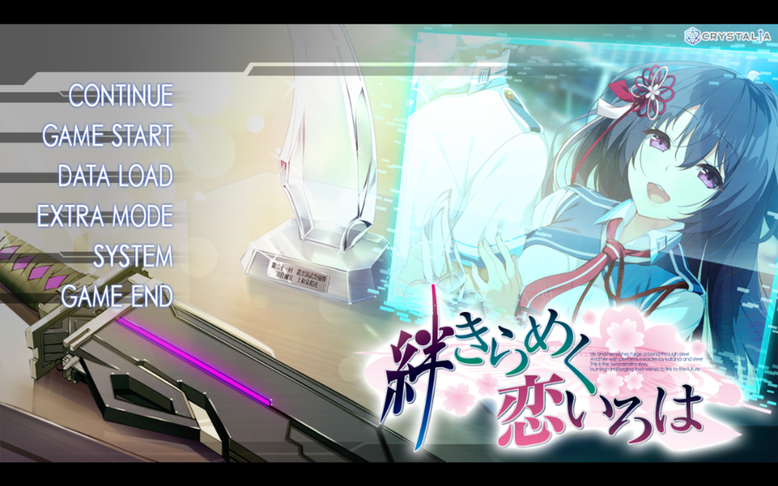
- The story structure and marketing are a mess. Take the title they promoted at the start, pair it with that OP—who could’ve predicted where the plot goes? I didn’t even know what the main storyline was. The “martial arts festival” is never explained, and you only realize late in the game that the whole thing is a tournament. But then the True End isn’t even about the tournament—it branches off into something else entirely, a total asspull. And despite all that, the Last Boss has zero foreshadowing; it’s just dragged out at the last second. When you finish and look back at the OP and the title, they still don’t match the game’s content. Feels like they threw it together half-assed.
Overall, Kizuna Kirameku Koi Iroha exceeded my expectations. The combat sections, Tsubaki’s psychological portrayal, and the final boss fight were all better than I thought. The BGM being all Japanese-style electronica is a nice touch, and the heroine art is solid. The flaws I mentioned earlier—some are forgivable, some are just baffling.
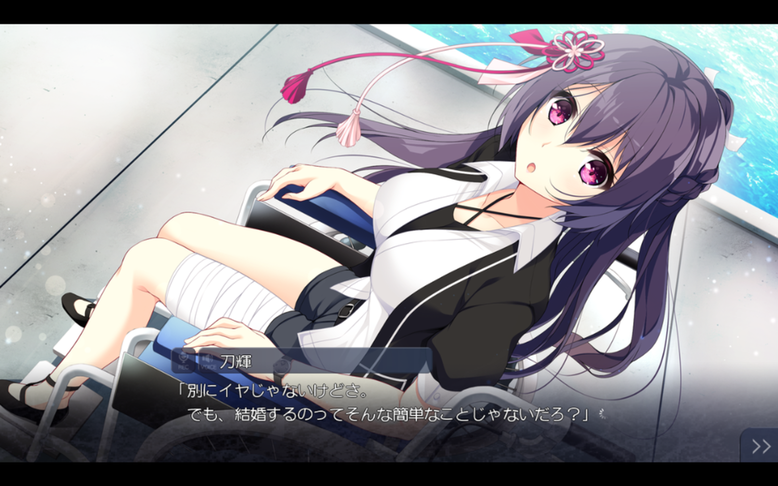
Maybe AMUSE CRAFT is so used to making moe games that when they tried something like this, they figured marketing should focus on “cute heroines” rather than the story itself. That’s why we got that half-baked character-selling OP and such a bizarrely tacky title. The game also has a route lock.
If you ask me, they should’ve just renamed it to katakana for “Blade” or something like “XX no Ken,” swapped in a hype OP, and it would’ve been infinitely better and way more likely to hook players.
Sometimes this game reminds me of that Saga Planets title from last year. Same problems: boring start, explosive later, but as a Galgame that already demands a lot of time, a dull beginning makes it hard to keep going…
Except Saga Planets’ game at least had a good title—after finishing it, looking back gave you an “aha” moment. With this game, after finishing, looking back at the title just makes you go “what the hell were they thinking.”
Comments are hosted on the Chinese main site. This mirror is read-only.