夜巡る、ボクらの迷子教室 Review
On the Weird State of Galgame in Recent Years
Play enough galgames, step in enough pitfalls, eat enough shit, and looking back you start to notice a lot of interesting things.
Most galgame fans got their start with fan-translated versions. First it’s anime and manga, then they hear some games have lewd stuff in them, so they go try those out. A few end up stumbling into plot-heavy galgames that way, but the majority just permanently equate galgame with porn.
Even today, if you ask someone what a galgame is, probably 80% will say “Nekopara”… another 18% might say Steins;Gate, and only that remaining 2% might actually bring up Memories Off.
Yes, I’m saying right here that Nekopara is trash. It’s a pure porn game with zero substance and nothing worth discussing, and personally I don’t even like the art style—can’t even jerk off to it, which is why I’ve played maybe 2 minutes total. What’s more depressing is how many newbies get drawn in by Nekopara and straight-up equate it with galgame as a whole. Makes me sigh just thinking about it.
Sure, plenty of galgames have porn elements, but a galgame with nothing but H has no legs to stand on. If you want to understand galgames, you need some more interesting works to break you in.
The Memories Off series is a solid entry point. It’s also the most honest, unpretentious example of what makes galgame its own genre—the music is fine, the story’s actually decent, not exactly massive waves but plenty of ups and downs, and it genuinely suits most people’s first exposure. If someone gets interested in galgames because of it and goes looking for “more games like that,” that’s when the problems start piling up.
First off, the domestic “weird environment.”
Frankly, the galgame discussion scene in China is a mess. First you’ve got fan translation groups with zero shame. I’m not talking about machine translation or inaccurate translation here—honestly, with my Japanese level, I probably read game content about as well as a polished MTL, and I’m not great at judging whether the language is elegant either, since what I care about is “can I understand it.” No, I’m talking about the domestic fan translation groups’ habit of “taking wild liberties with the script.”
There’s always someone who thinks throwing in fancy literary flourishes during translation shows off their culture, when it actually just highlights their lack of it. I won’t single out the Moe subs group here, because I’ve noticed most groups do this—same goes for some anime fansub groups, throwing clever wordplay and jokes into sentences to show off their so-called humor. This is honestly a desecration of the original work. Good translation should let the reader come into direct contact with the original as much as possible, not have the translator standing in the middle hogging attention.
So in the end, people who don’t know much Japanese can’t tell which jokes are “the fan translation group’s memes” and which are “the original script’s memes.” You’re playing a galgame and it feels like a doujin game—why even bother?
And a lot of groups don’t pick projects based on whether the game itself is good, but on “their own love.” Sure, working for love is fine, but some groups aren’t even doing it out of love—they’re doing it to grab attention. I heard several groups announce they were picking up Yuzusoft’s new game before the trial version was even out. I’m speechless. What if this Yuzusoft release flops (unlikely, but still)? If it turns out to be a landmine, are you still gonna translate it? Translate it and feed people shit?
For example, there are some games from big studios that I think are completely unworthy of translation, like Senmomo—a textbook flop. Translating that game is a total waste of time, because playing through Xuan-Yuan Sword: Scar of Sky once is only gonna feel better, not worse, than playing this. That game doesn’t deserve a translation. Of course, I said this on X (Twitter) a while back and got flamed for it—people said no game is “worthy or unworthy of being translated.”
But think about it: you translate a game because you want more people to play it and say it’s good, not so they play it and say it’s crap. For a game that’s already a flop, why translate it? A sophisticated form of trolling?
On top of that, the domestic galgame discussion scene is full of flexing, misinformation, scamming, and people who literally can’t talk like normal human beings.
Flexing is just showing off your credentials. Anyone who’s spent time on Reddit (r/visualnovels) discussing anime has probably seen it—people who casually mention how many old shows they’ve watched. Nobody bats an eye anymore.
Misinformation and scamming means deliberately tricking newcomers into playing games full of malice. That’s where the “G-Forums X Great Artifacts” lists come from. Actually, I don’t think those “artifacts” count as artifacts at all, because the real artifacts never get translated—they’re way more disgusting than those. It’s probably just a way to enjoy that “messing with people” thrill.
As for “can’t talk like normal human beings,” that’s honestly hard to even describe. You could compare other people’s galgame impressions with what I write and maybe you’ll understand what I mean by “can’t talk like normal human beings.” I’m not trying to boast—I just personally hate that style.
So I’ve always felt there’s nothing worth discussing about galgames. Just write down your thoughts after playing, like after reading a book. Good is good, bad is bad. What the hell is there to discuss? That’s also why I don’t frequent certain forums and sites.
At the same time, I always recommend playing the original version if you can, and if you can learn Japanese, definitely seize the opportunity.
So if you’ve learned Japanese, can read a bit of Japanese text, played the raw untranslated releases and monthly new titles—does that mean you’ve entered paradise?
Not at all!
The most comprehensive Japanese galgame database is definitely ErogameScape. It’s the go-to place for checking a game’s reputation and impressions. However, the ratings on ErogameScape are full of bizarre phenomena.
Some say ErogameScape is a place where fanboy votes get inflated, but that’s not even accurate anymore. From what I’ve seen, the only studios with rock-solid inflated scores are Yuzusoft and August. Those two are genuinely stable—no matter how unremarkable or even landmine-tier the game is, they stay at an 80 baseline without budging. See August’s Senmomo for details.
As for the rest of the high scorers, most fall into these categories: ones calling for you to redo your life, ones with deep chuuni battles that can save the world, ones packed with pretentious pseudoscience that lets you Loop, ones where a god plays gambling games with you, and ones deliberately painting social life as brutally difficult.
Some say ErogameScape’s audience is all 25-34 year old single Japanese men. Thinking about it, it makes sense why so many school games calling for a life redo are so popular. The chuuni battles are probably just Japanese people’s love for hot-blooded stuff. The pretentious pseudoscience lets you feel like you know a lot after playing, even though you actually don’t. Gods playing games with you is a common trope in Japanese anime, so no surprise in games either. And painting social life as hard makes it easier for society’s losers to find resonance.
These genres being popular isn’t surprising. What bothers me is that most Japanese people, because of their bias toward these genres, become way too harsh on everything else.
I remember playing a few good games that got inexplicably bad reviews from Japanese players because the style was too calm, like that one about raising a Canadian goose—poor unlucky bastard. Some games also get singled out and targeted because of their scenario writer. Bottom line: ErogameScape isn’t fair, the environment is pretty stupid, and in the end it’s only good as a database.
I once said there are three unreliable things in the world:
Head-Fi white guys,
Reddit's Sony shills,
Japanese people on ErogameScape.
I said I wouldn’t trust ErogameScape again, but this time my damn hands got itchy again.
Yomemeguru, Bokura no Maigo Kyoushitsu was this month’s dark horse, shooting straight to a 90 on ErogameScape from the start. I had no idea this game even existed, never looked into it, but that score made me aware of it.
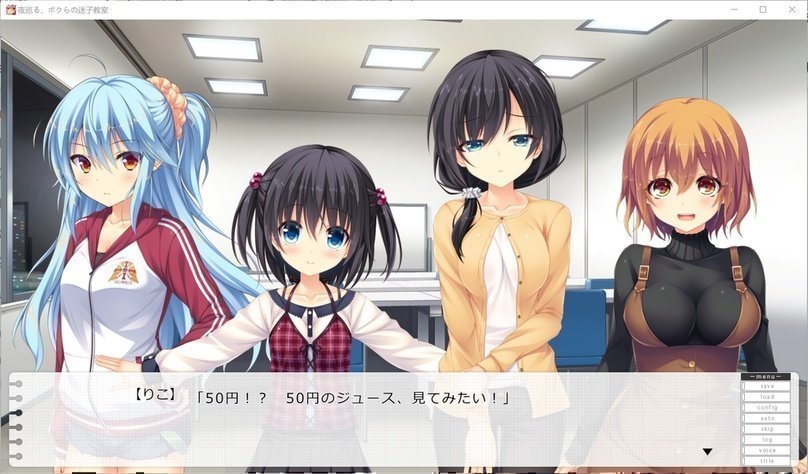
Japanese players praised it as real, moving, hitting right in the heart. I looked at the premise: the male lead becomes a night school teacher and helps the remaining three students graduate. That’s it.
“How the hell does that get to 90?”
That curiosity is why my damn hands got itchy.
After playing it, all I can say is the story structure is way simpler than I imagined.
The protagonist is a teacher. One day his father finds him and asks him to help the students at a school left behind by his deceased mother finish their studies and graduate. After they all graduate, the protagonist gets a large sum as his inheritance.
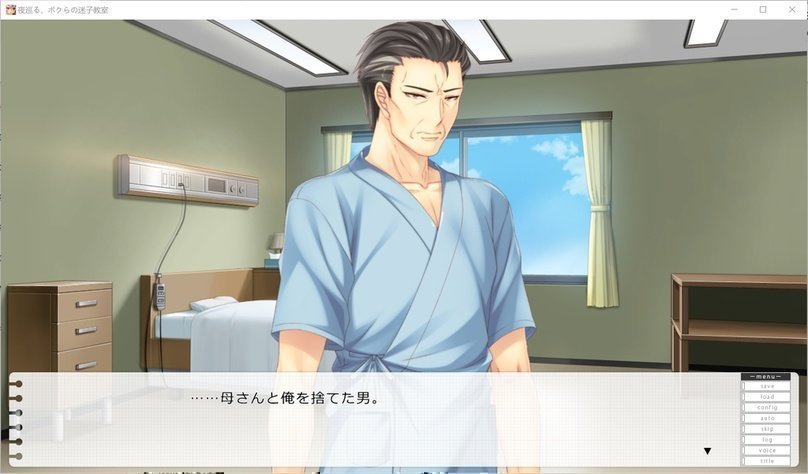
So the protagonist grits his teeth and becomes a teacher, discovering the school has only three students left who can’t graduate: a delinquent girl Koshimizu Hayate (same hair color as Hayate no Gotoku), a mentally fragile and extremely dumb girl Niijima Kina, and a single mother Kadokura Ayako along with her daughter Kadokura Riko. That’s where the game properly begins.
The formula: the protagonist teaches class every day, tutors students, resolves their personal psychological issues, and they graduate.

Of course, the protagonist has his own problems. He used to be a passionate teacher who micromanaged every student with meticulous care, but got mocked by delinquent students and disdained by fellow teachers.
“You’re a teacher. As long as those delinquent students don’t cause trouble, why bother with anything else?”
“But if I don’t deal with it now, they’ll definitely end up committing crimes in society later.”
“When that happens, the police will handle them.”
And so the protagonist gradually gave up on his ideals, turned into someone just coasting through the job, and eventually drifted to this school.
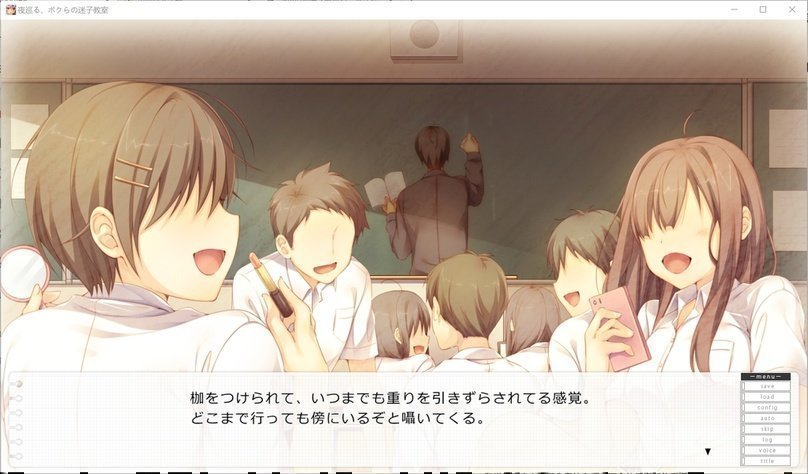
Later the protagonist discovers each heroine has her own problems, but many of those problems have nothing substantial to them. Take Niijima Kina, voiced by Akino Hana—her issue is she was bullied in school. Because she was bad at studying and dumb, delinquents messed with her constantly, even pouring bugs into her privates, causing her mental instability. She’d go berserk at home but be meek normally.
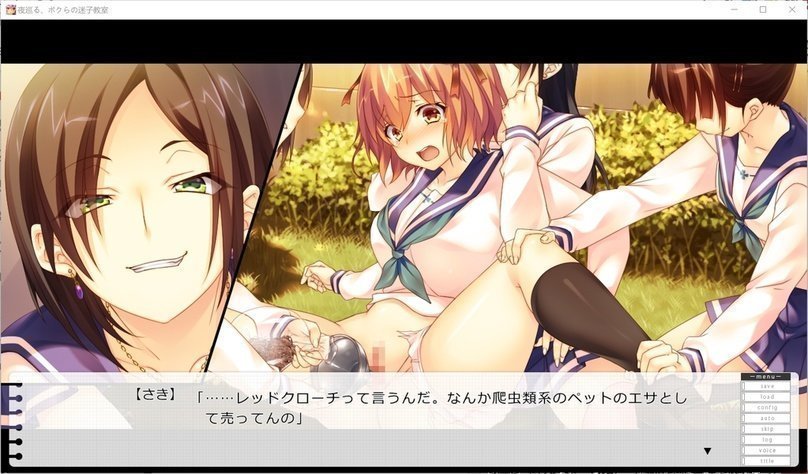
That should be rich material, something worth writing properly, but the game chose to pad out the individual routes.

Yes, Niijima Kina’s route is super fucking long and has zero nutrition—just daily chats showing off the relationship, wanting hugs, wanting kisses, etc.
The protagonist feels dissatisfied as a teacher, and Niijima Kina carries trauma as a student, and the two just huddle together for warmth. Then the route keeps hinting at Kina’s trauma but absolutely refuses to say what it is, leaving the reader endlessly frustrated.
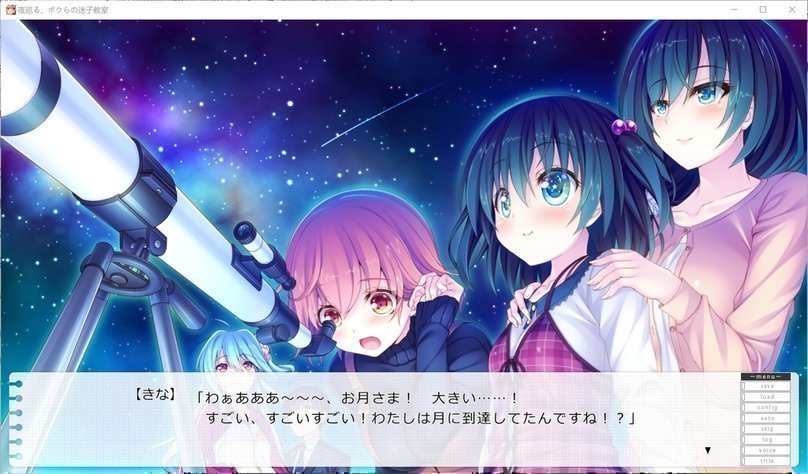
And at the end of the individual route, the trauma description comes out like a constipation finally releasing—everything gushes out in an instant.
The game starts describing Kina’s trauma late in the story, but it’s written so amateurishly that compared to Rukuru it’s heaven and earth.
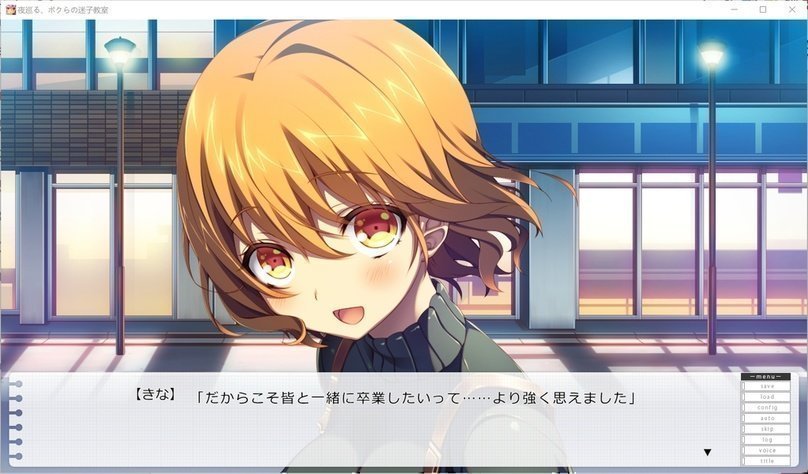
The ending, naturally, is the two overcoming their trauma and getting together.
Overall, the first half of this game is okay, but the second half is臭くて長い—meaninglessly sweet with the student, reusing the same few CGs over and over. I was about to fall asleep.
Really, this game is just a lame story about a teacher (the protagonist) who doesn’t want to follow the herd, takes over a night school for money, and helps a delinquent girl, a retard, and an older woman (too busy with family to study) graduate.
Then the protagonist keeps having flashback moments saying teachers need principles, can’t give up on bad students, must understand troubled students.
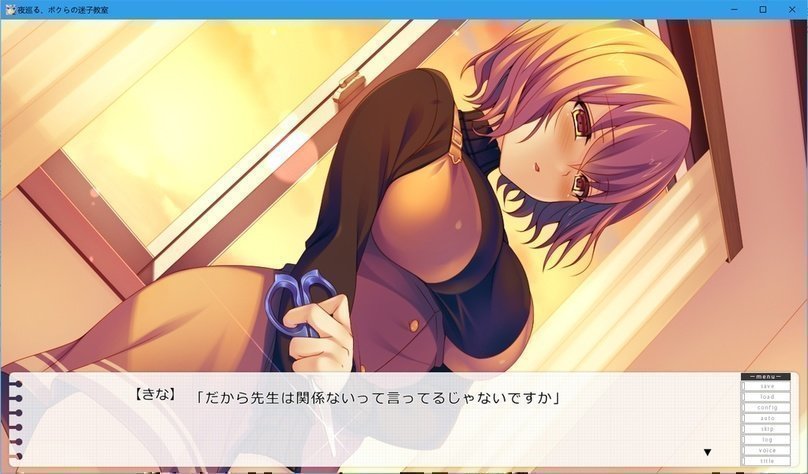
And the troubled students also keep having flashbacks about their trauma, about being looked down on for being dumb. Teacher and student huddle together for warmth, and then it’s over. That’s basically it.
The game has no highlights, just a very ordinary story. I don’t know why Japanese players gave it 90, saying they saw social reality. You get wet from a few lines? Why don’t you mention how boring the rest is?
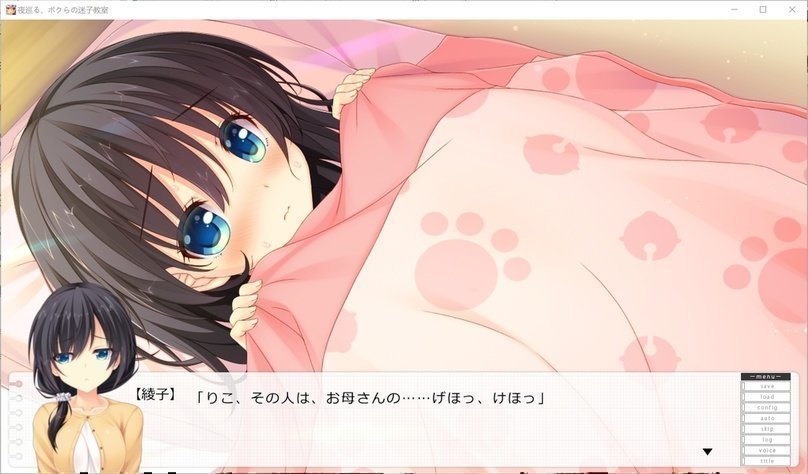
Thinking about it later, maybe I get it. This game happens to match certain inner feelings of some Japanese people—bullied, abandoned by society, dragged down by work, achieving nothing, surviving only in society’s cracks. But in reality there’s no teacher as good as the protagonist, and the outcomes are different.
Anyway, it all feels pretty helpless. Fooled by ErogameScape again. I think this game is about a 70, but it got hyped to 90.
They say trusting books completely is worse than having no books at all. Especially in a community as full of weirdness as galgame, following your own feelings and playing what you enjoy is probably the best approach.
Comments are hosted on the Chinese main site. This mirror is read-only.