Clover Day's Review
The Works That Give Us the Purest Feelings Are Always the Classic "Oudou" Ones
The first time I ran into the word “oudou” was in a Chinese film, where it meant “the way of the king.” Later I saw it again in Japanese anime—specifically episode 9 of season 2 of Baka to Test to Shoukanjuu, when the class rep of Class E yells out “oudou Winning Road.” I figured the word probably carries some different nuance over in Japan.
So when director Ei Aoki said before Aldnoah.Zero aired that it would be an “oudou” work, I thought about it and got what “oudou” means—at least when it’s used as a descriptor for a work.
“Oudou” means template-driven. Sounds like a bad word, but it’s genuinely hard to hate. After all, “oudou” is “oudou” because its templates are mostly the stuff the masses love to see. Present what everyone enjoys over and over, and you won’t get much praise, but you’ll definitely never get panned.
So I don’t know if Aldnoah.Zero counts as oudou, but Clover Day’s absolutely deserves to be called an oudou work among visual novels.
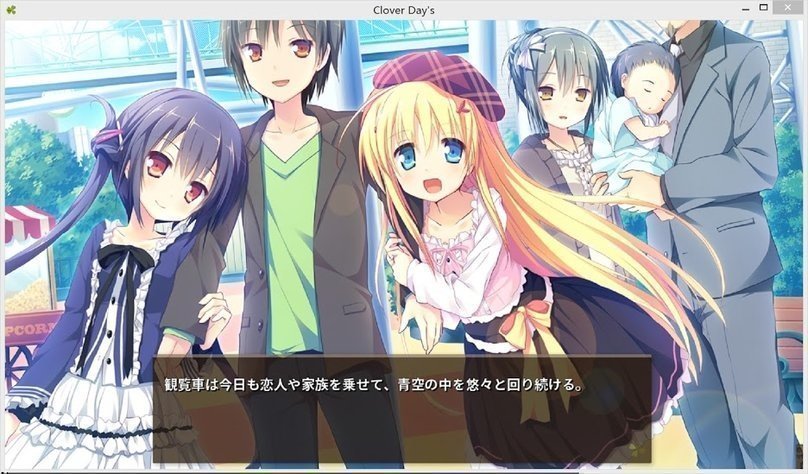
What features should an oudou visual novel have? Back to basics. Visual novels themselves started out as erogames, and later the concept of “gal” was introduced, apparently to avoid the word “ero.” But whether you’re ero or gal, you ultimately can’t escape “Girl and Love”—that’s what the “gal” stands for. Pushing heroines is the core. You can kiss, you can hug, you can fuck, but the core is pushing heroines. Make the girls as beautiful as beautiful gets, as moe as moe gets, voices as soft as soft gets, traits as good as good gets, so that every otaku who sees them gets rock hard below the belt and itchy in the heart… Times have changed, all sorts of traits and elements have been added to gal, but this heroine-pushing core hasn’t been lost. Presenting heroine-pushing in the most classical way—that’s what “oudou” is.
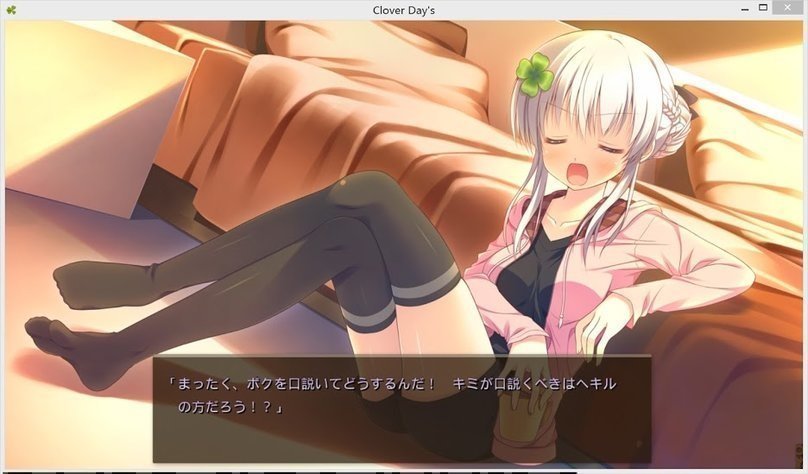
That classical way is the otaku’s beautiful dream. Car and house, parents absent, a stepsister living under the same roof, a childhood friend across the street, a tsundere in class, plus a transfer student—everyone harbors feelings for the protagonist, willing to compete jealously with each other, while the protagonist forever sits atop the harem enjoying his rose-colored days and sighing about his own misfortune. This sense of déjà vu isn’t limited to visual novels; it showed up plenty in later light novels and original TV anime, and got roasted plenty for it, but people still use it tirelessly. It’s old hat, sure, but it’s genuinely well-liked—that’s why it’s oudou.
Clover Day’s had classical elements from the planning stage, because it’s Alcot’s tenth-anniversary work and a tribute to Alcot’s Clover Heart from ten years earlier. The new game’s backgrounds and OP match the old game exactly, and characters cross over between the two titles (teacher Saionji, Rin Asuka). Story-wise it naturally inherits the old game’s style and builds on it.
Classical setup #1: Initial affection at 100% Clover Heart was a story about romance with twin sisters, so… Clover Day’s naturally has twins too—and they didn’t do things by halves, they gave you three pairs of twin sisters (no, I’m not misremembering, three pairs). The emotional portrayal of pursuing romance is basically zero—note the word “pursuing,” because from the very start, even back when the protagonist was a kid ten years ago, he’d already planted romance flags all over the hillside. Ten years later, every woman around him has 100% affection for him. All he has to do is pick one (or two) as his partner. Like that British dude’s roast of SAO’s romance: “every female character in this show is the kind of spineless doormat who can’t live without the protagonist.”
Classical setup #2: The girl confesses first Visual novels were originally developed to give guys with bad luck in real-life romance somewhere to feel satisfied, so naturally they don’t put obstacles in the player’s way. Every heroine likes the protagonist, so confessions naturally don’t fall to the man. Clover Day’s has five romance routes, and all of them are confessions from the girl—several of them even racing to confess. The male lead’s portrayal, meanwhile, comes off as incredibly weak and utterly devoid of presence. His daily routine consists of sneaking glances at his little sister’s and childhood friend’s thighs, hesitating and goofing off, all while waiting for the girls to confess. If you can’t self-insert into the game well, you’ll end up like me, feeling the urge to tear the protagonist apart with your bare hands.
Classical setup #3: The girls’ weakness and their overcoming it I haven’t played much of the earliest visual novels—probably nothing but sex scenes, honestly. Later someone decided pure sex was boring and added all sorts of plot. But the additions always go on the female side; the male lead has no real presence beyond being cute. Partly it’s to help the player self-insert, partly it’s laziness (writing a fully fleshed-out male lead isn’t something everyone can pull off—if players end up hating him, it’s all for nothing). So in Clover Day’s we see each girl has one or two things she agonizes over: Anzu’s attachment to her mother, Anri’s hesitation about a sibling romance, Izumi’s doubts about her origins and her father, Tsubame’s weakness in confronting her own feelings, and the white-haired twins’ agonizing over whether they should… do the threesome thing with the protagonist. The setups exist, but the routes aren’t long—Clover Day’s as a tenth-anniversary work doesn’t reach the insane length of Frontwing’s Grisaia series, and each heroine’s past isn’t described in much detail. Probably they figured that wasn’t the point, and they weren’t aiming for anything deep—mostly just touching on it and moving on.
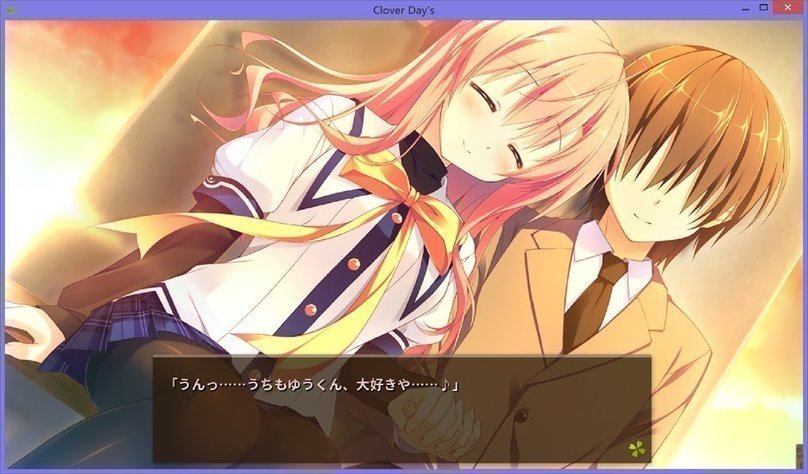
I’ve been going on about how Clover Day’s is steeped in “oudou” vibes, and it probably sounds like I’m mocking how clichéd it is, but honestly Clover Day’s doesn’t feel bad at all. Just as I defined oudou earlier—well-loved elements. It won’t make you slam the table in admiration, but it won’t make you hate it either. In fact, Alcot is extremely good at cooking up this kind of work. For the plot’s flaws and the clichéd setups, they made excellent use of strong art, great music, and a banger OP to patch things over. After finishing it, you think “clichéd,” but also… apart from that, it’s pretty good.
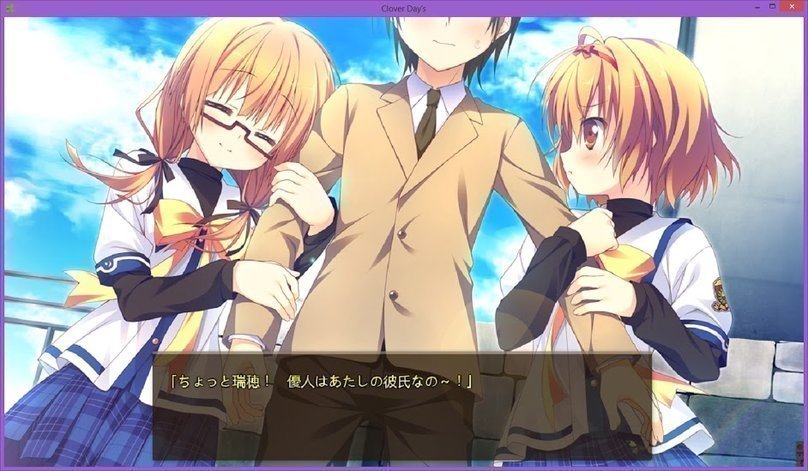
The character designs and art in Clover Day’s probably need no elaboration—beautiful, and not a single CG is off-model. The quality is high, high enough that everyone loves it. The music is even more worth downloading the OST for and listening to on repeat, especially “Clover Day’s” and the rearranged “Clover Heart,” which hit much harder when combined with the story. The key thing to mention here is how the game’s OP2 is introduced—each character gets her own separate OP2, paired with a passing monologue, which builds the atmosphere straight to its peak (even if the later plot makes you feel you were tricked).
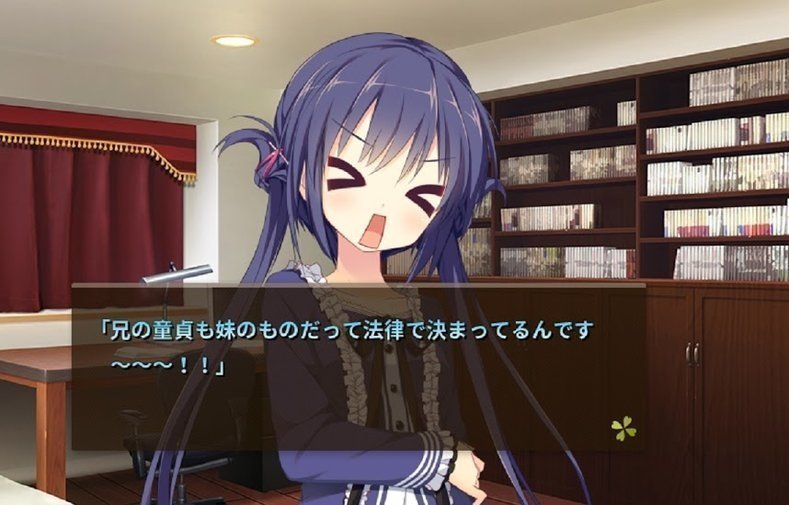
Having finished the game, I’ve got some feelings. I haven’t played many Alcot games—only four—and while the déjà vu between each game is strong, I can’t bring myself to dislike them. Plot may be Alcot’s weak point, but they tell you from the start that they’re here to sell moe, setups, visuals, and ero. They don’t bother putting on airs with the story, either—they go straight for a cheerful tone, even throwing in lots of neta. It’s so upfront you can’t even complain. And for a game like Clover Day’s, apart from a slightly weak plot, there are no obvious flaws in other areas. A beautiful girl stands before you wanting to go out with you—are you really going to turn her down because she only has a two-year college degree?
2014 was a bit of a weird year for me—I played quite a few visual novels, but after finishing Clover Day’s I got that feeling I had years ago playing my very first visual novel. Maybe it’s clichéd, maybe it’s boring, but the works that give us the purest feelings are always the oudou ones. When you’re sick of all the weird fetish stuff and the tedious life-philosophizing, playing a classical-flavored visual novel with a relaxed mindset isn’t a bad idea either.
Comments are hosted on the Chinese main site. This mirror is read-only.