Shoujo Shin'iki ∽ Shoujo Tengoku (少女神域∽少女天獄) Review
A Thousand-Year Web of Girls: LASS's Pipe Dream
If I’m a fan of any visual novel studio, it’s probably LASS.
I can’t forget the shock 11eyes gave me right after graduating college, when I spent half a year clearing it on PSP. Honestly, 11eyes isn’t perfect story-wise—the beginning literally put me to sleep—but its combat scenes and environmental worldbuilding struck a chord. Especially the finale: the Red Night going berserk, the swordsman duel, the scumbag protagonist going full cheat mode while the OST track Eye of the Void plays—it all hit in one continuous rush. Thanks to my fondness for 11eyes, the 11eyes anime remains the worst visual novel adaptation in my personal ranking to this day. I’ve played plenty of games since, but few recapture that feeling. From that moment on, I guess I became a LASS fanboy. I went back and filled in most of LASS’s catalog (except the Nanako series…), and I kept an eye on their future releases.
Shoujo Shin’iki ∽ Shoujo Tengoku (少女神域∽少女天獄) was LASS’s first game in four years after 11eyes sold like hotcakes. Before release, 11eyes’s reputation and popularity drew a lot of attention, but after launch, the reception was wildly different from expectations.
“The biggest landmine of 2013.”
That’s the most widely accepted take. Shoujo Shin’iki ∽ Shoujo Tengoku became Shoujo Tenrai. I didn’t want to believe it, so there was only one way to find out if it was really a landmine: play it myself.
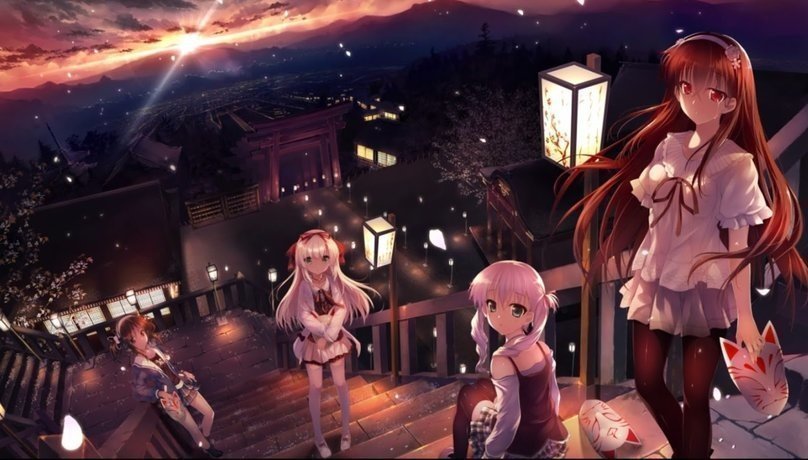
So I cleared it pretty quickly. The game isn’t long. To be slightly objective: it’s not a landmine, but it’s not a success either.
Where did it go wrong? First and foremost, the story. The scenario writer and planner for the whole game was Shishifumuro, the man who shone in 11eyes. From what I know of his style in 11eyes and its fandiscs, he’s great at writing massive amounts of lore and excels at detailed description, which makes his characters feel real and unforced. But the downside is obvious: he lacks the overt deredere and moe elements typical of visual novels. Even when he tries to pander, it feels fake—see Shinano Shiori’s mana replenishment or Kusakabe Misuzu’s finger-sucking. But that’s not the main issue. This guy has one defining trait, and it’s the biggest factor that turned Shoujo Shin’iki ∽ Shoujo Tengoku into a landmine.
He never explains his own lore in the work. Instead, he builds third-party dialogue and lets players infer the rules from that.
Whether it’s the Red Night in 11eyes, Liselotte’s seven-world-line split, Kusakabe Sou’s puppet manipulation, or Tachibana Kikuri’s guardian identity—he never spells any of it out. Players have to guess from conversations. Fortunately, 11eyes was chuuni fare involving something like the Nasuverse and standard magus structures, so it was relatively easy to guess. Plenty of players dug a little and found a new world.
But in Shoujo Shin’iki ∽ Shoujo Tengoku, Shishifumuro boldly mashed together Japanese mythology, Chinese mythology, Norse mythology, primitive definitions of Japanese festival deities, plus a ton of miscellany like alchemy and ancient beasts—and then his old habit kicked in. He wrote it all and explained none of it. From the player’s perspective, all they see is a protagonist born in a small mountain village who returns home for a festival. The four heroines are shrine maidens for the festival. The festival starts, the protagonist transforms for no reason, then dies for no reason—either killed by a heroine or by suicide. Then a heroine gets pregnant for no reason and gives birth to the protagonist’s child, and it ends for no reason…
There might be lots of dream sequences and mythological analysis that Hirohara Fuyuka collected from Hirohara Tsukiko, but those fragments are so scattered that without patience you’ll never piece them together. It just makes everything more confusing.
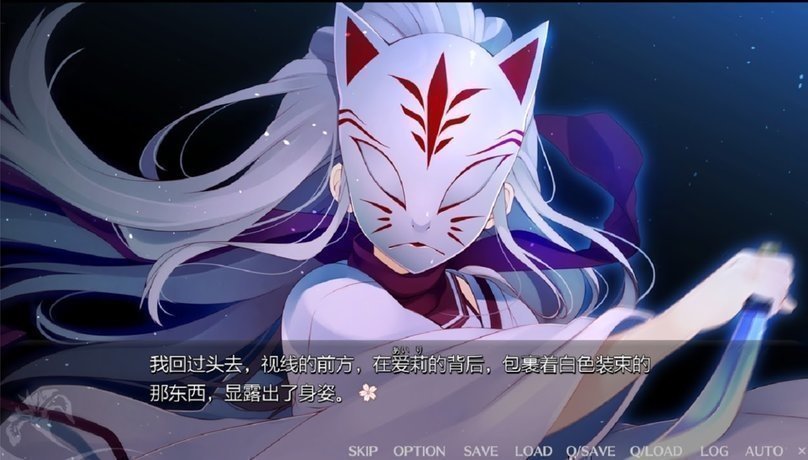
Beyond the story, the game’s structure is also a problem. LASS games never care about individual routes—3days was like this, 11eyes was like this, Shoujo Shin’iki is like this. Finish the main route and you’re done. The other routes differ only in H-scenes. But Shoujo Shin’iki is already hard enough to understand, and the individual routes are even more baffling. The protagonist confesses to a girl before the festival, they go on a date, they do it at the festival, then the protagonist dies and the heroine talks with the protagonist’s son. Except for the little sister, every route follows this exact pattern—only the date and H CG differ. If you play them back to back, you get the feeling:
“Is this literally copy-paste?”
The music is still by Sakamoto Shoichiro, who did 11eyes’s game and anime music. And then I noticed many tracks in Shoujo Shin’iki are awfully familiar, with heavy 11eyes shadows. Especially Truth’s End—that’s literally Waltz of the Red Death from 11eyes. Is it okay to just copy it over? The music switching is also a problem—way too frequent. I thought Hatsuyuki Sakura’s frequent switching was bad, but Shoujo Shin’iki taught me what a BGM change every 30 seconds really means. It’s jarring as hell.
The art is actually pretty good, but there are painfully few CGs—less than a page per character. Many are high quality, but there just aren’t enough! And most of the visuals have picked up Minori’s chuuni-studio habit of extreme close-ups on water basins, pillars, wall corners, etc. In fact, you can see Minori’s name in the ending credits…
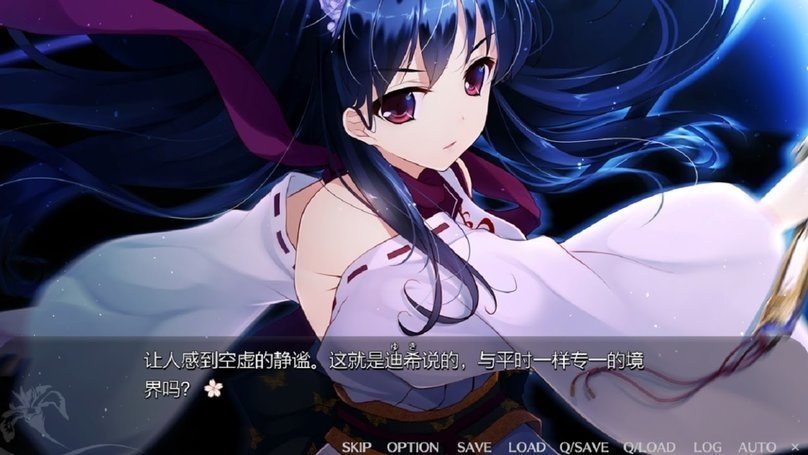
The voice acting isn’t impressive either. Taguchi Hiroko plays a cold-faced woman—competent but standard. Fukada Ai is voicing the little sister again. Beyond that, I barely recognize the rest of the cast. The childhood friend is voiced by Nagatsuma Juri—honestly my most disliked voice actress. Her katana girl in White Album 2 was a perfect embodiment of bitchiness. In this game her character isn’t awful, but her voice has zero distinguishing features.
In short, we can understand players buying the game excitedly, booting it up at home, then enduring a nonsensical plot, pitifully few CGs, BGM that changes like a roller coaster, and unremarkable voice acting. They finally reach the ending, play a few routes, and find they’re all basically identical: protagonist dies, heroine gives birth to protagonist’s child.
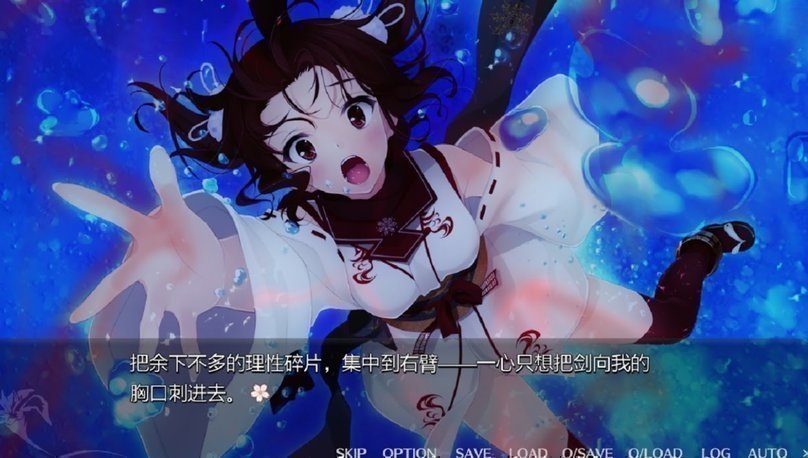
And there’s this feeling:
Why does every route feel like a BAD END?
Finally, after all that suffering, the player reaches the True End little sister route—and discovers:
You can’t get with the little sister!
Well, that’s not entirely true. You can get with her, but:
Do it and you’re locked into a BAD END!
After restraining themselves and reaching the true ending, it’s another round of confusion, and the already-short game ends…
The promotional tagline still rings in my ears: “Not every story has a happy ending.”
But I can imagine players wanting to smash their keyboards like that German kid, and I can understand why they’d curse it as the biggest landmine of 2013.
For LASS, releasing this four years after 11eyes made bank is inexcusable—it feels like slacking off. It also wastes Shishifumuro’s wild imagination.
As a visual novel, Shoujo Shin’iki ∽ Shoujo Tengoku is a failure.
But it’s not a landmine. A real landmine has zero redeeming qualities—like this one.
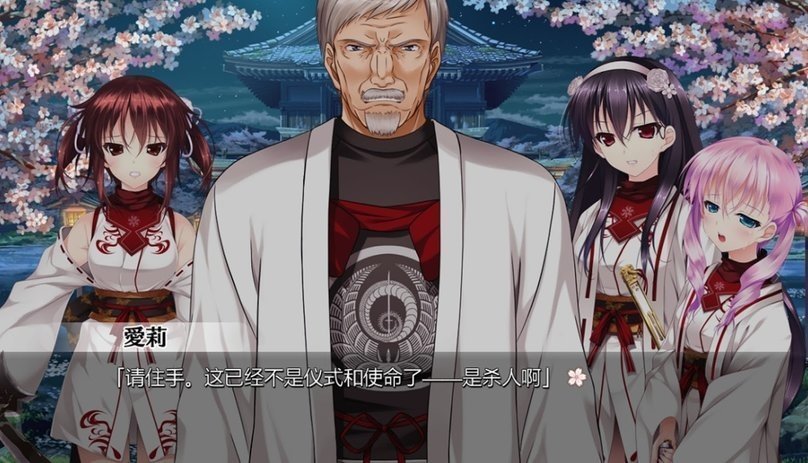
So as a LASS fanboy, I’ve realized the story isn’t simple. By digging into the in-game lore and cross-referencing online info, I roughly understand what Shoujo Shin’iki ∽ Shoujo Tengoku is trying to say.
Kajou City has ancient history. The stone walls covering the city’s hills seal a massive boulder with catastrophic power. The boulder’s name is never given, but it has evil power that absorbs life force from its surroundings.
One day, a man named Prince (Ouji) came to Kajou City, met four princesses, fell in love with one, and sensed the land’s evil power. He sealed the boulder with his own body’s power, but the boulder was too strong. So the Prince established a ritual: every 20 years, hold a festival, select four shrine maidens, copulate with one woman, conceive an heir, then have the woman kill him—splitting the stone’s power and transferring it to the child to weaken it. Twenty years later, the grown child repeats the festival, copulating with a woman and being killed, leaving another heir to further weaken the stone. The stone must remain inside a male body; if the chain breaks, the seal fails and the city faces disaster.
The Prince’s descendants intermarried and formed four families—the four families the heroines belong to. Inheriting the Prince’s bloodline, they have exceptional physical prowess. Every 20 years, the Seikou Festival requires selecting four women from these families as shrine maidens. A shrine maiden serves the god, and their main duty is to enter the room of the god who hosts the stone’s power and, under the influence of aphrodisiacs, copulate with the god to bear an heir.
This ritual is the Seikou Festival the protagonist returns home for. The entire city, fearing the boulder’s curse, has continued this festival every 20 years. The protagonist’s father tried to escape during his own Seikou Festival and was hunted down and killed by the four families. This left the protagonist and his little sister, who were taken in by Hirohara Fuyuka.
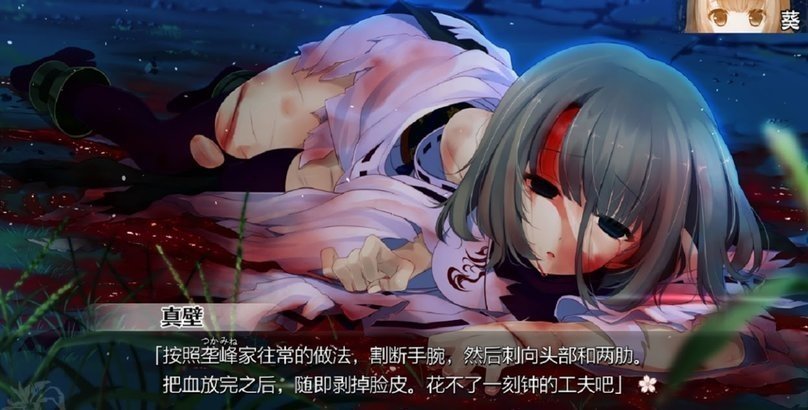
Now it’s the protagonist’s turn. The four families prepare the festival again. One family proposes an idea: every 20 years this cycle repeats, and everyone suffers. If they wipe out the protagonist’s family, the stone problem might end. So in the common route, the protagonist is assassinated by a masked fox girl—which fails, and the ritual proceeds.
Actually, the idea that killing the protagonist’s family would stop the ritual is wrong. According to the original Prince, if the stone isn’t passed through heirs, its power won’t weaken and disaster will still occur.
That explains the four heroine routes. At the festival, the stone’s power awakens in the protagonist, turning him into a beast. But before that, he’s already had sex with the heroine. After the beast-protagonist kills himself, the heroine bearing his child gives birth. The child has the weakened stone power. The ending tells the player this is a cycle—perhaps 20 years later, this child will walk the same Seikou Festival path, become a new beast, and be killed by the shrine maiden who loves him.
The final little sister route is the release from all this.
In the sister route, the protagonist beastifies, the sister is shot dead as an accomplice, the protagonist remembers his father saving him, tears the stone out of his own body, places it in his sister, and revives her—while he vanishes.
For the stone, which had always resided in male bodies and been passed through reproduction, suddenly entering a female body creates a unique new situation. The sister hides in a cave, becomes immortal, eventually becomes mysteriously pregnant, and sees the world as the original Prince saw it. The stone’s power transfers through the sister’s fertility to the dead Prince’s soul in the cave, reviving him. The resurrected Prince seals the stone again, and the protagonist’s soul inside the stone is released. Both brother and sister regain life—a Happy End, more or less…
The protagonist often dreams about his grandfather, his father, the Prince, and even earlier times. These dreams, like the Eye of the Void in 11eyes, are transmitted through the stone. Later, in non-sister routes, it’s mentioned that the protagonist’s son can see the world the protagonist once saw, also called dreams.
In short, the lore in Shoujo Shin’iki ∽ Shoujo Tengoku is terrifyingly dense, and the explanations are terrifyingly sparse. Some players say that after decompressing the game scripts, they found extensive annotations the writer left about the story—but those annotations never appear in-game. Even I can’t fully understand it, including how the Seikou Festival is passed down. What if the woman gives birth to a girl? Why could the protagonist’s father father him before the festival? And through dreams, you can see the stone’s transfer once changed main families, and that it’s connected to Kuroshiba Kanae, the villain from 11eyes. These are hard to grasp, and you’d need fluent Japanese to catch the writer’s puns. Of course, some experts can do it. If you’re interested in playing, consult this analysis of Shoujo Shin’iki ∽ Shoujo Tengoku when confused—it details the origins of various lore elements.
To put it briefly, the story of Shoujo Shin’iki ∽ Shoujo Tengoku is a closed loop, a cycle of reincarnation. Many wonder what “Shin’iki” (divine realm) and “Tengoku” (heavenly prison) actually refer to.
A small city sealed by a megalith, with a ritual protected by the gods—that’s the maidens’ divine realm. Behind that ritual lies thousands of years of girls becoming shrine maidens, sacrificing themselves to seal the curse—a hell.
The girls who are protected and who want to protect others, and an inescapable prison passed down through generations. That’s all Shin’iki and Tengoku mean.
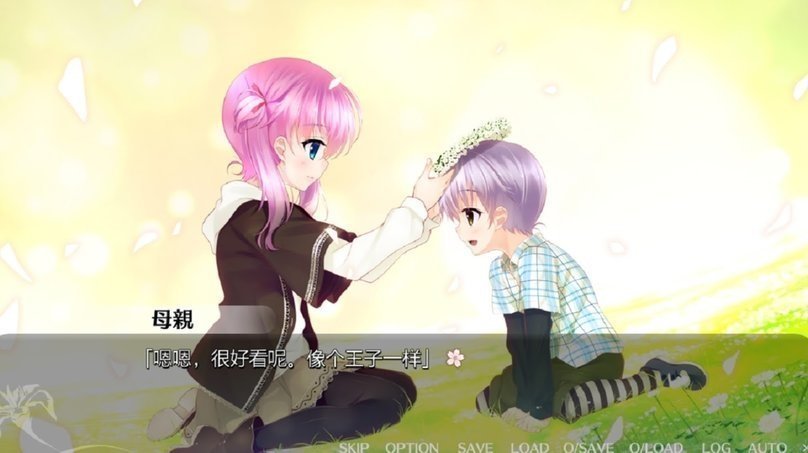
As the True End song punitive justice A Thousand-Year Web goes:
“A thousand-year dream resides within; even if life is reborn, to protect him, it will be passed on.”
In this game, the protagonist is more like a pitiful wretch, protected by the shrine maidens of the four families, and ultimately saved by them.
With such grand lore, maybe LASS intended this as a comeback, maybe more detailed lore would’ve come in a fandisc. But alas, the game became a stain, the fandisc a castle in the air. I have to sigh for Shishifumuro. Maybe because his all-out writing went unappreciated, LASS’s latest game has no trace of him—Kenji handles it solo. And from what I can tell, that latest game is at best a劣化版 of 11eyes.
A grand script that never unleashed its grandeur. The one who wrote the story found that few could understand it. I can relate to that sorrow. LASS isn’t doing well now, and whether there’s a next game is unknown. I hope to see Shishifumuro write for games again. But for Shoujo Shin’iki ∽ Shoujo Tengoku, tangled in the girls’ thousand-year web, it remains a pipe dream that no one understood—LASS’s very own.
Note: If you want a deep understanding of the game’s lore, check here: http://www.lightnovel.cn/thread-588722-1-1.html
Comments are hosted on the Chinese main site. This mirror is read-only.