Enrite Kono Ha wa Kurenai ni (縁りて此の葉は紅に) Review
Momiji
Lump of Sugar. Yes, Lump of Sugar again — the sugar-cube studio. Its new game is here once more.
这次彻底踢掉了其他所有的傻逼画师,只留下了唯一能打的萌木原ふみたけ,而且萌木原作为唯一的画师还进化了画风,简单来说就是看起来更好看了。
I have to say, the game’s promotion came with some big surprises. Beyond what I mentioned earlier about the girls being drawn even better-looking, another surprise was the worldview setting and the game’s overall atmosphere.
The game’s marketing leaned heavily on “Momiji,” and combined with the title itself, Enrite Kono Ha wa Kurenai ni, it finally managed to scrape together a bit of literary flair.
It’s genuinely hard for an eroge to have a title with any literary flair. Everyone knows that these days, dumbass Japanese ACG titles have all turned into the structure of “kanji noun/adjective” + “katakana foreign-word fragment,” and it’s been going on for way too many years. Like “Hoshifuru Yoru no Farnese,” “Shojo Sprinkle,” “Apeiria of the Sea of Views,” “Haruoto Alice * Gram,” “Aokana: Four Rhythms Across the Blue,” “Istoria of the Water-Burial Silver Coin,” “Simulacrum of the Moon Shadow"—and besides that kind, there are even more dumbass game titles written entirely in katakana or hiragana with no kanji at all, so many I don’t even know what to say. So I’m honestly puzzled: aren’t Japanese people always calling for their own native culture? You can’t pull that off if everything’s in katakana, right? Are you all going to write exclusively in katakana from now on? Even Mimorin tweeted that she was taking a walk, and she wrote ウォーキング instead of 散歩. I don’t know if Japanese people just find typing katakana more convenient than kanji, which is why they’re so hooked on it.
All that said, I really like the title “縁りて此の葉は紅に”. I also really like the autumn-leaves mood and the setting. And you can roughly work out what the title means: because of a “connection / fate” premise, “the leaves here have begun to turn red.”
Honestly, I thought January’s lineup was pretty mid all around, and this game ended up being my last hope. After playing it, I’d say it’s a decent step up — though there’s still room to grow.
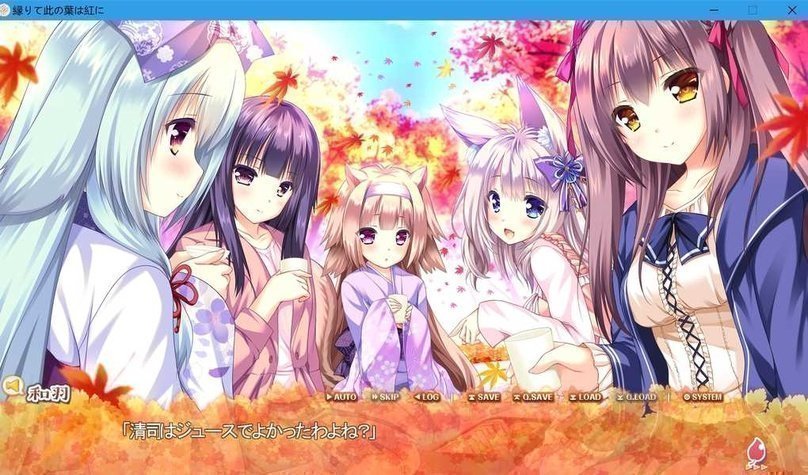
The game opens with the protagonist returning to a small town where he lived as a kid, together with his little sister, and the two of them lodging at an old lady’s house.

Turns out when he gets there, the old lady looks like a little girl. That’s because in the protagonist’s world there are these things called “Gen’i” — which is really just a fancy word for “beastfolk.” No wait… beast girls. You know, the kind with animal ears, basically demihumans. Except in this setting, pureblood Gen’i are pretty much extinct; most of them are mixed-blood, the result of Gen’i and humans interbreeding. Legend has it that pureblood Gen’i had crazy strong magic and could protect a whole region and keep it safe and all that. But the town the protagonist goes back to has plenty of mixed-blood Gen’i, and a lot of people even come to gawk at them like tourists. So the old lady at the place he’s staying is a mixed-blood Gen’i — except Gen’i blood makes you long-lived, so she doesn’t seem to age at all. She’s 200 years old and still looks like a tiny loli.

Man, she’s just a legal loli, and they went and piled on this many settings for her. Exhausting.
After the protagonist returns to his old stomping grounds, he starts wandering around aimlessly. He ends up in a mountain hollow and spots a girl with animal ears. The moment she lays eyes on him she gets all worked up and charges straight at him:
“Master, master! I’m your pet!”
The protagonist freaks out—since when did he get an actual living person as a pet…? This “pet” calls herself “Momiji” (the reading of 紅葉), and she won’t stop clinging to him, insisting she’s his pet. On top of that, Momiji has beast ears and a tail, so she looks like one of the island’s Gen’i tribe. With no other option, the protagonist takes her in for now and goes to ask that 200-year-old loli what exactly this Momiji is.

How do you even look up a 200-year-old loli? No matter where I searched, I couldn’t find any info on this Momiji. She’s not in the family register, and she’s not among the newborns who recently ascended to godhood either. Where the hell did she even come from?
And what’s even weirder is that this Momiji doesn’t look human at all — she’s closer to an animal. She doesn’t see anything wrong with not wearing clothes, she’s got an outstanding sense of smell, sharp hearing, and she loves running around and just can’t sit still. She also really loves drinking milk.
The 200-year-old loli even suspects that this Momiji might have been created by some Gen’i using their divine power (godly power), and even wonders whether the protagonist’s own divine power is connected to this.
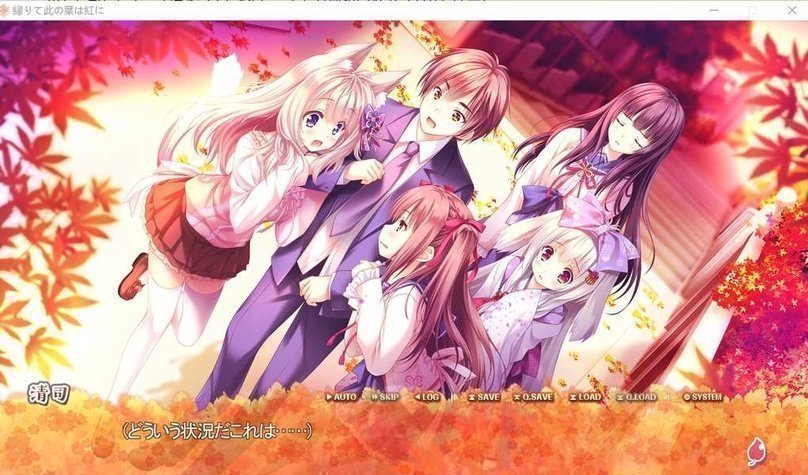
The protagonist himself has the power to “heal” others. Unfortunately, every time he heals someone, he loses some of his own memories—which is why he can’t remember anything from his childhood. The funny thing is, Momiji doesn’t know where she came from either. He starts to wonder if she’s like him: packing some kind of divine power, but with her memories wiped?
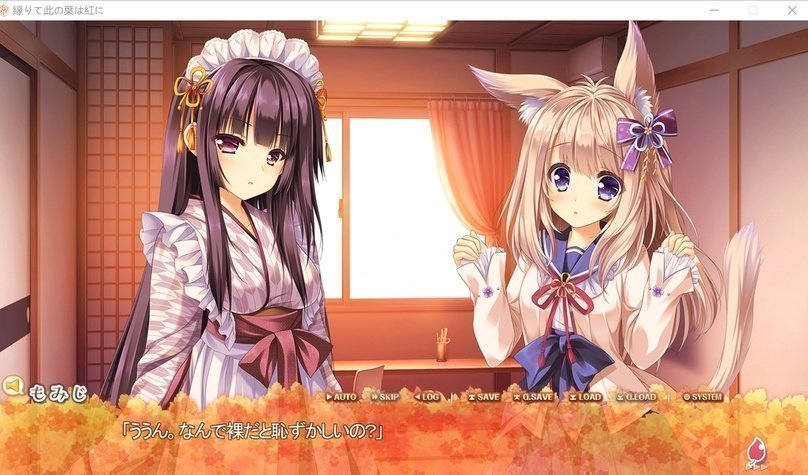
And after a long stretch of plot that was just aimless water-treading, the truth finally comes out.
When the protagonist was a kid, he came to play in the valley near this town and saw a flying dog hiding in the bushes.
“So you’re here by yourself?”
The dog is happy.
“No collar on your neck. Guess that means you don’t have an owner. Want me to be your owner?”
The dog started wagging its tail.
“The maple leaves here look pretty nice, so how about I call you Momiji (もみじ)?”
The dog jumped up in delight.
“Want some milk? It’s really good, you know.”
The protagonist fed the milk in his hand to the flying dog, and it drank it.
Then the protagonist sees this dog looking all pitiful here and builds it a little shelter.
“From now on, this place is your home. Even wind and rain won’t scare you anymore.”
The dog barked happily.
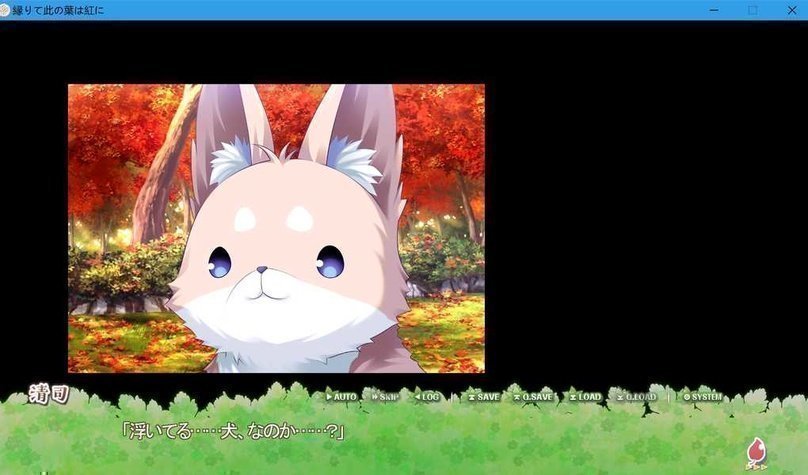
………………
…………
……
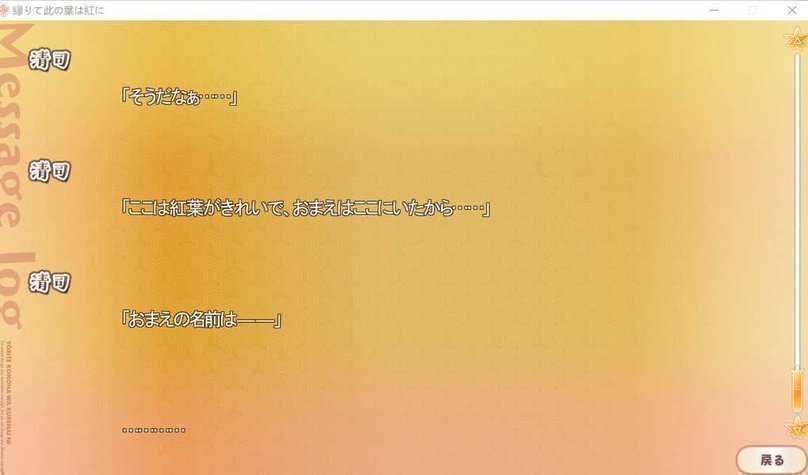
And then, well, you know how it goes—the dog later became an immortal, absorbed the essence of heaven and earth, turned into a purebred wild Gen’i, took human form, and came back to repay the protagonist’s kindness.
So that’s why Momiji sees the protagonist claim he’s her pet, that she’s his master, that he acts like a dog in everything he does, and that he even likes drinking milk.
That simple? Yeah, that simple.
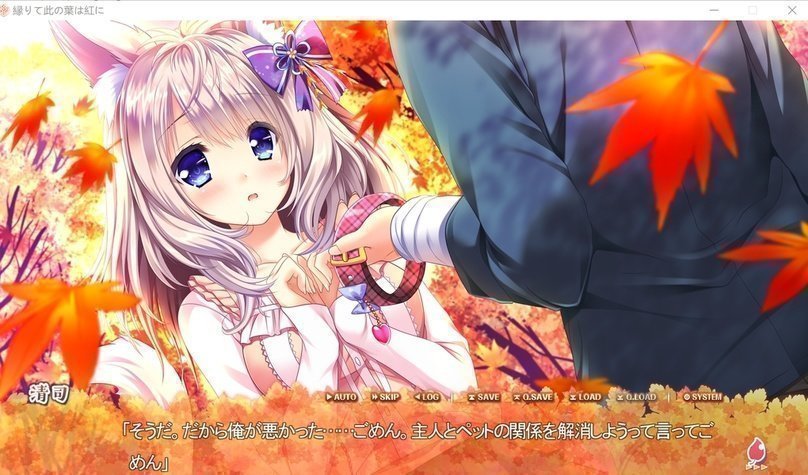
After that the story unfolds pretty predictably. The protagonist learns where Momiji came from, and then out of nowhere he starts getting horny for her. He figures that as a loser with no prospects, he might as well settle for Momiji, so he confesses. Momiji doesn’t get it at all—she still thinks she’s just his pet.
“Lovers—not really sure what that relationship’s supposed to be, but whatever, close enough to a pet and it works.”
So the protagonist puts a collar on his own wife and does all sorts of play with her every day. Because Momiji is a gen’i, when the play gets too fun she carelessly throws around her immense magical power, and when her power runs wild the whole town gets turned upside down. That’s why the 200-year-old loli and her assistants can’t just stand by and watch. Their actual job is to keep the town peaceful on behalf of the gen’i — how can you just run amok here?

The protagonist says he’ll teach Momiji how to control her overwhelming power, but the 200-year-old loli and her lot aren’t exactly convinced.
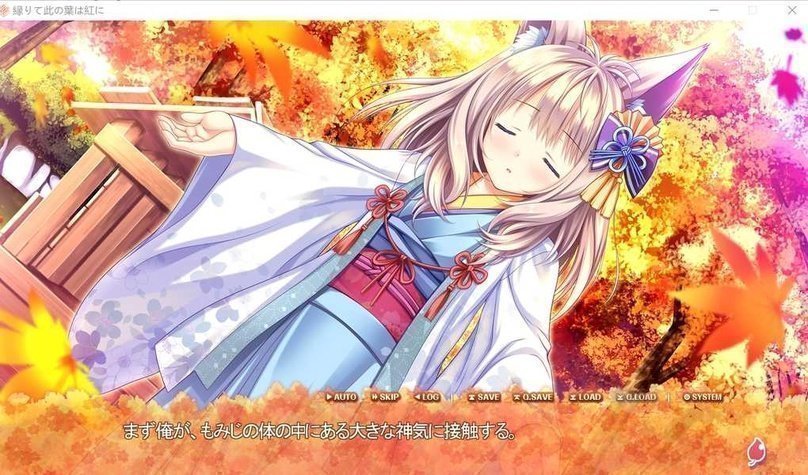
In the end there’s the usual back-and-forth and trash talk, the protagonist wins, and Momiji finishes her training too — a little less beast, a little more human, able to control her own power just fine, and she gets her peace.
The main story is basically this: when the protagonist was a kid he saved a dog, and years later that dog became a divine spirit, turned into a girl, and came back to repay him. Thing is, the other characters’ routes have pretty much nothing to do with that main line. The little sister’s route does shed a bit of light on why the protagonist lost his memories, and where his superpowers come from.
The protagonist’s little sister was frail and sickly as a kid, so he took her to the town to pray for the local god’s protection. That moved the guardian spirit of the land, a gen’i (deity) enshrined there, who granted him the power to heal, hoping he’d use it to look after his sister. Problem is, he spoiled her rotten—every little sniffle and scrape and he’d fire off the power, taxing his own body to the point that he started losing his childhood memories.

So at first the little sister hated the protagonist’s power, thinking he was always healing others at his own expense. In the end, with the help of the 200-year-old loli, he recalls the whole story of how he got the power as a kid, and only then does she realize everything he did was for her sake.
妹妹也不再讨厌男主的能力了,反倒觉得挺感动,于是两人就成了恋人,还特么生了个孩子。

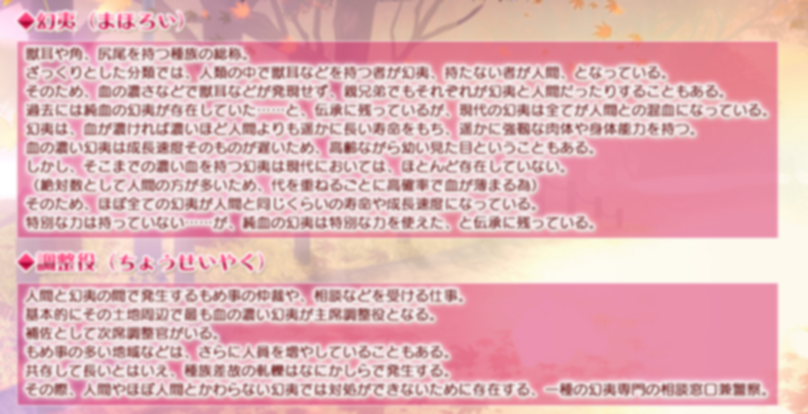
Oh, and by the way, that 200-year-old loli in the game works as a “chōsei-yaku” — something like a management bureau or mediation bureau. The game does give a bit of exposition on the “gen’i” and the “chōsei-yaku.”
So how exactly should one rate this game?
Honestly, compared to previous Lump of Sugar games this one is a big step up. The art style isn’t cheap anymore, and the music is mostly piano plus some violin — way better than the low-quality electronic BGM of the past (though there’s still some of that).
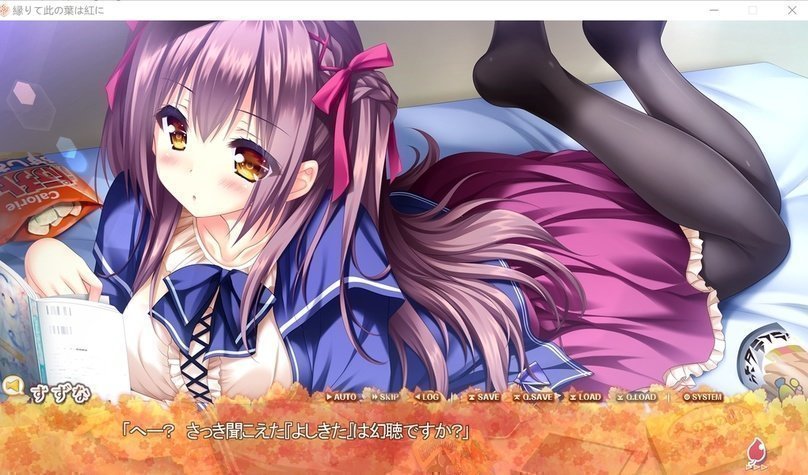
The most, most, most worth mentioning is the game’s OP, アカリノアリカ. You could call it the best game OP of the season and it wouldn’t be an overstatement. Sometimes I wonder if this OP was supposed to be used for that roll-point game Lump of Sugar put out last year, but they couldn’t bear to part with it and saved it for the main title?
另一个值得一提的亮点是声优阵容。游戏里那位 200 岁萝莉大妈的 CV 是三宅麻理惠,而妹妹すすな的 CV 是长妻树里。这俩其实在别的游戏里也经常见到,只是水平真的很一般,我甚至没留下什么印象,可到了这部作品里,不知道俩人是不是年终奖发多了,表现瞬间提升了好几个台阶,不管是三宅麻理惠的萝莉,还是长妻树里的妹妹,都和之前作品里的发挥不可同日而语。
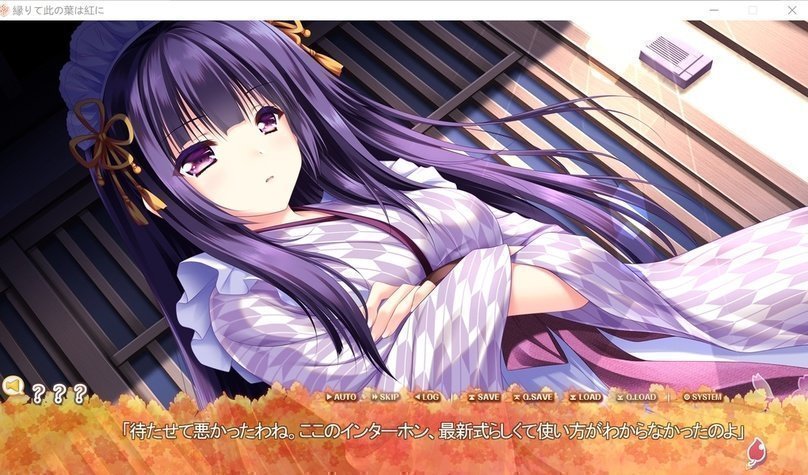
Especially Suzuna, voiced by Juri Nagatsuma. It’s not like I’d never heard her play little-sister types in other games before, but her voice always sounded weird to me — way too much of that announcer/voiceover tone, like she’d be better off doing narration than playing characters. In this game, though, she’s completely different. She even ends up carrying the whole thing. Add in the little sister’s bratty impish personality and those black tights and nice legs, and it’s basically impossible to resist.
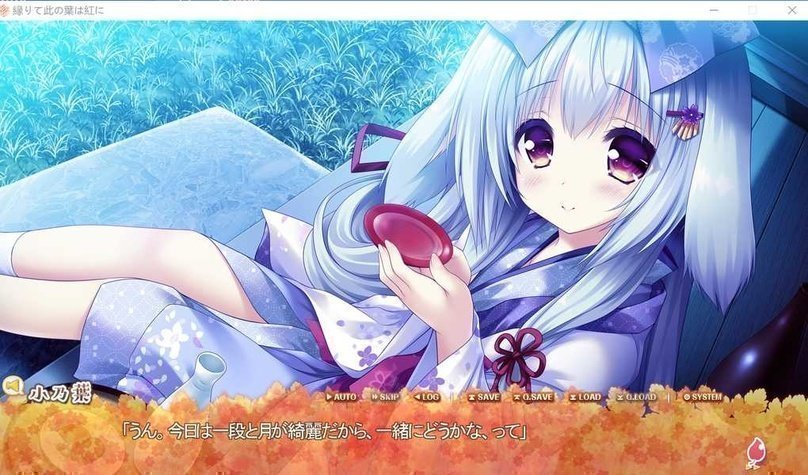
By contrast, the weakest link is the main heroine’s VA, Yamaoka Yuri — it honestly feels like she’s doing an impression of the wolf girl from Yuzusoft’s Amairo. Same verbal tic and everything, only she doesn’t quite have the chops. It’s all playing dumb and mindless clinging, no actual character in it. I’d say the Amairo one was better, for what it’s worth.
If there’s one biggest flaw in the game, it has to be the writing.
Everyone knows this is a story you could sum up in a few sentences — the script just drags it out so hard it took me almost 35 hours. Mind you, over New Year’s I did literally nothing but grind through this one game, and this is the thanks I get: you won’t shut up. If the little sister’s black tights weren’t so damn good, I’d have hit skip ages ago, right?

The story is the weak point, but I wouldn’t call it bad — it’s just watered down way too much. If all you want is to soak in Momiji’s vibes, taking it slow is fine. The game isn’t poison, it’s just that the setup is too similar to タユタマ2, and it doesn’t go as deep as タユタマ2 either. It’s just a simple “save a dog, repay the favor” story. (Man, if only the main heroine had been voiced by Natsumi Kawa… no, wait, if only she’d been cast with Kaho Natsumi.)
Come to think of it, this year is the Year of the Dog. Playing this game in a dog year hits different.
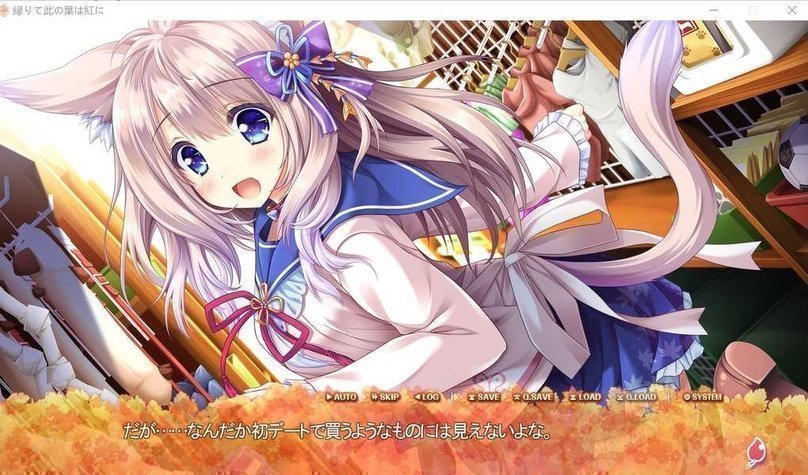
Watching the protagonist put a collar on his own wife and start whipping her with a leather crop, I couldn’t help but get all misty-eyed and compose a poem:
A childhood encounter, a good deed done, and years later, a fated meeting in the spirit valley. In the Year of the Dog, wed to a dog, this leaf dyed by fate turns the red of love.
(End)
The English translation of Enishi Kono Ha wa Kurenai ni is courtesy of a user on PTT
Comments are hosted on the Chinese main site. This mirror is read-only.