Dehydrating the Veggie Packet in Instant Noodles Is Just Something That Has to Happen
As source material, The Fruit of Grisaia is a goddamn monster of a work. Brutal backstories, psychological detail out the wazoo, and just enough military flavor without turning into a comedy act — it hit me hard the moment I finished the game. The setting has plenty of loose ends, but it’s still leagues better than most of its peers. The characters are well-drawn, and the protagonist is assertive instead of some soft pushover. So when I heard it was getting an anime, I was happy. More people learning about this thing is not a bad outcome.
But The Fruit of Grisaia is, at its core, a visual novel, and VN adaptations run into two problems: reproducing the art, and arranging the story. The first one didn’t worry me once I saw the staff list. Akio Watanabe, the chief animation director, was one of the original artists on The Fruit of Grisaia and worked on the game’s OP animation. He’s drawing his own stuff. How bad can it get? The second is even harder to screw up, because the heroine routes in Grisaia have zero interlocking points and zero conflict — they’re barely related at all. You could just tell them one at a time: finish route one, move to route two, then route three. At most you need an order. Then iQiyi confirmed the anime would be 25 episodes, and I stopped worrying about the story arrangement.
“Each heroine’s route is so long, 25 episodes is plenty to do them justice.”
I was too naive.
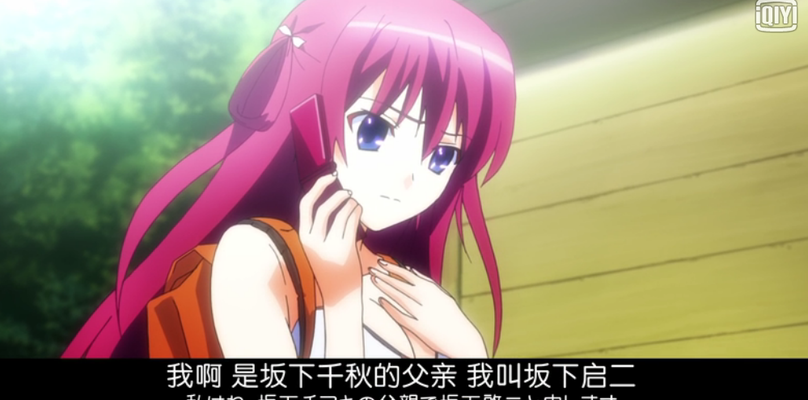
Episode one is the game’s prologue. From the moment Yumiko slaps Yuuji and the music kicks in, the game cuts to the OP — and the anime does too… with the OP’s background music. Everything is the same as the game, a massive fidelity flex. As someone who played the original, that’s exciting. And the bit at the end of episode one where the veggie packet in the instant noodles has to be dehydrated because that’s just how it is — that ending did a great job hooking people by flashing each heroine’s dark side. Plenty of people who’d written it off suddenly realized this show wasn’t messing around.
Honestly, I thought that dark-side reveal at the end of episode one oversold it. I was sitting there thinking, lots of people are expecting a Battle Royale scenario now. Apart from a bit of stuff in Amane’s route, the others are family and psychological problems at most, nothing that crazy. Aren’t those people waiting for the darkness just going to be disappointed?
And the disappointment arrived fast. Episode two starts the common route, and the game’s common route is absurdly long. There’s nothing dark in it, just slice-of-life, slice-of-life, slice-of-life, slice-of-life, slice-of-life. Occasionally it hints at each heroine’s past and her weird quirks. I wasn’t bothered by that length, though — in the game, that endless common route is exactly what lets you understand each heroine. Why Amane is always clinging to the protagonist, why Michiru calls herself an idiot while clearly being smart, why Sachi agrees to every request unconditionally, why Makina is sometimes dumb as bricks and sometimes has that other personality that wants to die. The common route plants the questions; the individual routes answer them.
But! This is an anime! There’s no room for a common route that takes 20 hours to clear!
So episode five cuts straight into Makina’s route, and that’s when I noticed something was off. In the game, Makina’s route spends a long time on her past, including why she’s so dumb and scared. Her father forced all kinds of gifted-child education on her from a young age, and it backfired — no genius, just an idiot. Even the tutor her father hired abused her. Later, the friend she made at school had it even worse, getting deceived by a man and gang-raped or whatever… The anime glosses over it. Quick, Makina splits personalities. Quick, she gets a flashback. Quick, Makina gets a heart transplant. And quick, she’s saved…
Fine… I don’t really like Makina’s story anyway. Limited runtime is better spent on the others. That’s just how it goes with VN adaptations.
Episode seven hits Yumiko’s route and genuinely shocked me. In the original, Yumiko is basically half a true heroine — she’s the reason the school exists. One episode and it’s over. In the game, Yumiko’s tragic past gets at least five hours of explanation. The anime covers it with one line: “Father found a mistress.” The part where her father then fakes sympathy and deceives Yumiko is skipped entirely. Viewers can barely feel why this girl has such a grudge against her dad, or they just accept the premise that her father is a bastard and feel sorry for her. The ending is completely different from the game too. In the game, Yumiko beats her father through the board of directors and earns recognition. In the anime, she just fakes her death…
Fine. This is a VN adaptation. That’s just how it goes.
If the earlier routes were just watered down, episode eight’s Sachi route outright flips the table… What does Sachi’s route even leave viewers with? Peeing play? In the game, Sachi’s route is as long as Amane’s, with detailed writing on the psychological trauma she suffered as a child, her PTSD symptoms, and the torment she endured at her old school. Well, in the anime, Makina says one line and suddenly wants to blow up the school — that’s the last ten minutes of a personal route, goddammit.
Fine… maybe the scriptwriter didn’t like Sachi. I nearly cried playing her route, but hey, VN adaptation. That’s just how it goes.
Then we get Michiru’s route and Amane’s route. Those two are mostly faithful, but various parts get trimmed to different degrees. Amane’s route in the game goes deep into the 15 days she spent stranded; playing it, the despair really lands. The anime skips enough details that viewers are left thinking “how would they even starve, they could’ve just done X,” which hurts their understanding of the story. And the old man who was the final boss of Amane’s route gets dragged out as the overall final boss. Fine. That’s just how it goes.
At the final ending, I finally remembered: hey? Wasn’t this supposed to be 25 episodes? It’s over already? Did it get axed?
Then came the news that The Labyrinth of Grisaia and The Eden of Grisaia were getting anime adaptations. Oh shit. They’d split it into two parts.
So the 25 episodes cover the whole trilogy. 25 episodes might be just right for Fruit’s story, but for the trilogy it’s stretched thin. All you can do is trim the story. That really is just how it goes.
So how is The Fruit of Grisaia as a VN adaptation? Being objective as a game player, it’s not that bad, but it cuts way too much from the original’s big selling point — the story — leaving you wanting more, and it’ll draw plenty of complaints from anime-only viewers. Still, a starved camel is bigger than a horse: if the original story is 100 points, the anime still puts up a solid 70. On the art side I trust 8Bit. The previous year’s VN adaptation Walkure Romanze absolutely crushed Machine-Doll and Tokyo Ravens in horseback combat animation quality. So yeah, Grisaia’s animation breaks a bit in places, but no need to nitpick. Music? Nothing to say. It’s all copied from the game… convenient, and fair enough.
VN adaptations always face this problem: the game’s overall story is great, but compressing it into one cours without losing the flavor is brutally hard. The original Grisaia game is like a bowl of braised beef noodles — delicious, but a short shelf life and a pain to carry. The anime is you turning that bowl of beef noodles into instant noodles for easy distribution. So after drying the noodle block, we also dehydrate the vegetables from the original ingredients.
Maybe this bowl of braised beef instant noodles tastes 70% like the original after adding hot water, but it’s always missing a little something.
Still, no need to be harsh. The anime did about as well as it could. And you know how it is — dehydrating the veggie packet in instant noodles is just something that has to happen.
Comments are hosted on the Chinese main site. This mirror is read-only.