Midori no Umi (翠の海) Review
Midori no Umi: Pretty Interesting... And I Don't Mean the Plot
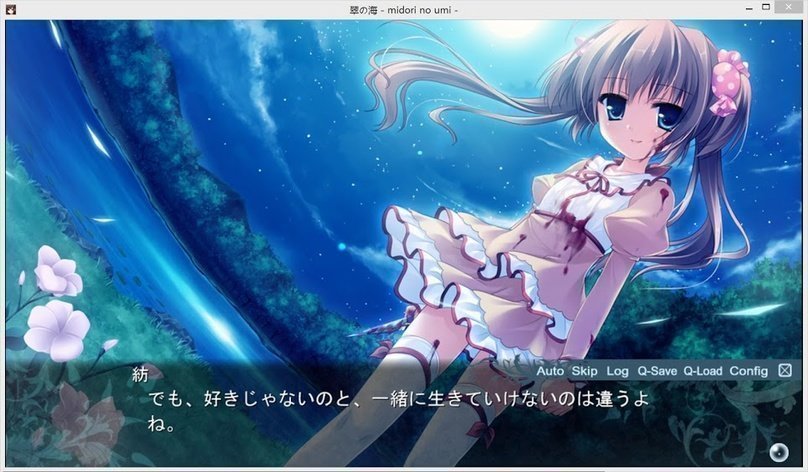
I first heard about Midori no Umi (翠の海) two years ago. I saw a CG of the heroine standing in the moonlight and she looked so goddamn pretty that I went digging for more, and while I was digging I noticed something off about the CGs — same pose, except in this one she’s holding a bloody knife. Oh. Okay. I know what this is. Yandere heroine setup, dime a dozen. A fan translation seemed to be in the works, so I figured I’d wait for the Chinese release. And I waited. And waited. I waited until even a scrub like me had started reading raw Japanese, and the translation still hadn’t shown up. So I just went and got the game itself.
I didn’t know much about it going in. I skimmed some impressions beforehand — mostly positive, but nobody talked about the plot. All they said was that picking the wrong choice gets you killed.
“The protagonist dying is no big deal.”
So the game began again.
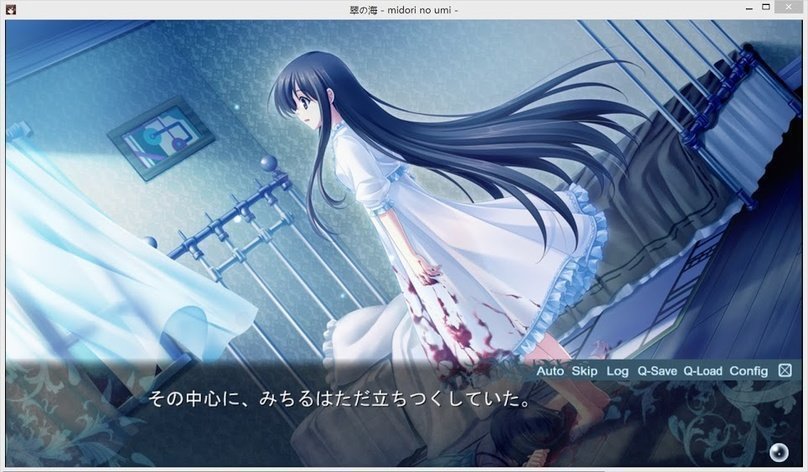
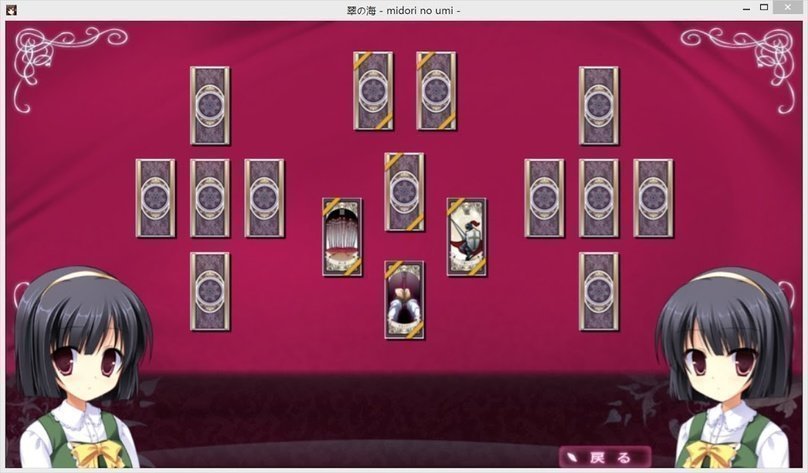
The game isn’t especially long or short, but 100% completion takes a while. Some choices only open up on a second playthrough, and just from the tarot-card structure at the end, it’s clear there are way more endings than the walkthroughs floating around online suggest. Which means a ton of branch choices too — and that’s the “interesting” part I mentioned in the title. Also, as I said up there, “interesting” does not include the plot. That part’s true too.
Because the plot is dead simple.
Short version: deep in the forest there’s a Western-style mansion, built by some mysterious organization that takes commissions from rich people to hypnotize away someone’s memories and keep them locked up here, while telling the outside world the person “went missing.” Mostly it’s what big powerful families do with members who’ve become an embarrassment — a convenient way to clean out the trash.
Supplies get delivered on a schedule, enough to survive on and nothing more. The heroine Michiru (originally みちる, I just call her Xiaoman in my head) was one of the earlier arrivals. Back then there were three others locked up in the mansion with her. There was food and clothing, but the living conditions were awful, and she watched all three of them go — one went mad and killed themselves, one tried to run and got lost in the forest, one got sick and died in bed. She figured surviving here was basically hell. Then a few more people showed up, all amnesiac like her, and Michiru, not wanting to relive that hell, found the woman codenamed ABC who handles the supply deliveries. She asked ABC for more living supplies, and volunteered to stay here forever — never try to leave, never let the newcomers wander off, just live here quietly.
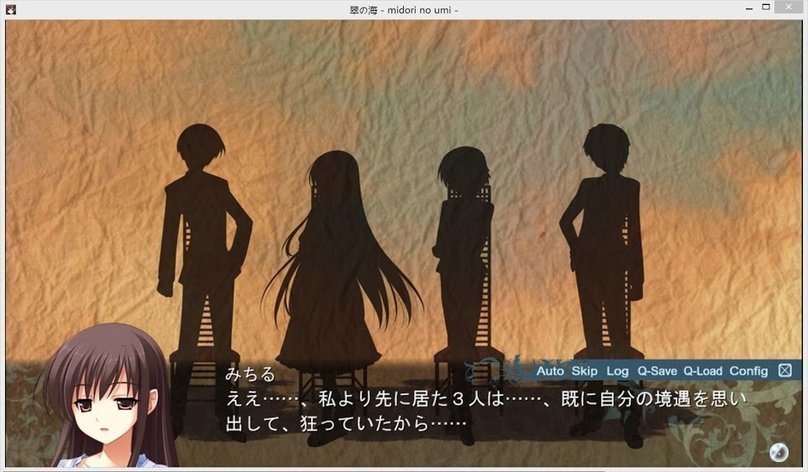
“It’s a prison and you want to turn it into a paradise?” ABC agreed, with a bit of a sneer, and said she could send more stuff every month, within budget.
So with the extra monthly deliveries the mansion got a comfy sofa, a living room, a library, even a music room. The backyard started growing flowers. It really did start to look like paradise. Michiru greets every amnesiac who arrives, helps them settle in, and casually, deliberately, tells them:
“This is paradise. Please don’t go outside. Don’t wander out at night, and make sure you eat on time during the day.”
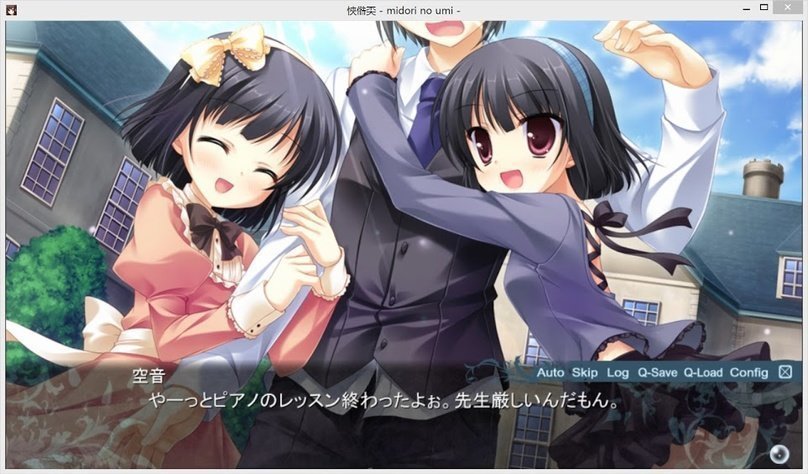
And that’s the setup the protagonist walks into. Day after day in paradise with Michiru, Tsumugi, Chisa, the Riku and Sora twins, and the maid Haina… laughing and chatting together every day. He doesn’t know his past, but life here isn’t painful. Even so, he quickly starts to wonder and doubt:
“Where does the food come from?” “Why do we have to live here forever and never leave?” “Who am I?”
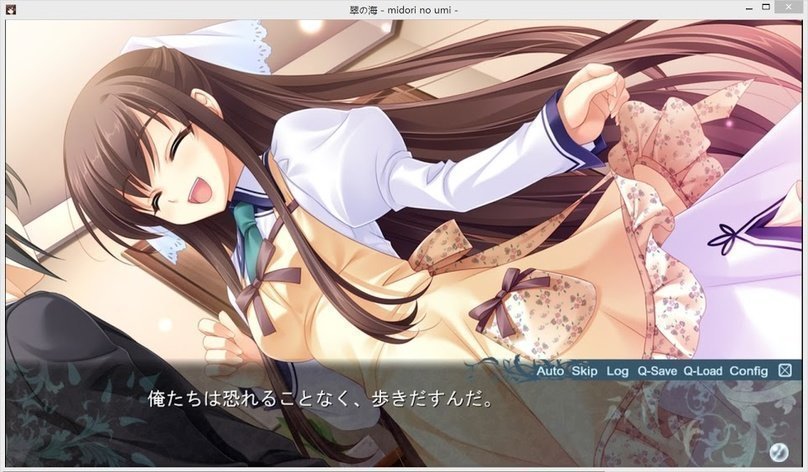
So from this point the game hits you with choice after choice after choice, choices behind choices, up to four layers deep. Each route leads to an ending — mostly Bad Ends, a few Good Ends, and I didn’t see a single one labeled Happy End. After much suffering, the protagonist dodges death long enough to reach the proper ending, gets his memories back, and learns that his genius older brother died in an accident, that his parents went insane with disappointment in him, and that’s why they locked him up here. He also learns that he and Michiru might be siblings. In the end he cleverly finds ABC and gets her to carry a letter to his parents, they come rescue him, and he promises to help the others in the mansion contact their parents and get them out too. The people left behind are full of hope, believing they can escape…
That’s it.
Maybe I’m being long-winded. But the plot really is that simple. Guy gets his memories wiped and locked in a prison, gets them back, escapes.
Plot-wise there are bugs everywhere. Never mind the “forest you can never walk out of no matter what,” the “seamstress loli who looks ten but is actually the same age as the protagonist, goes yandere, and makes clothes,” and the “parents cruel enough to ship their own son or daughter off to be locked up.” The very premise of an organization that does this is dumb as hell, and what’s more, the protagonist gets himself out with a single letter — so why the hell did you people spend all that effort stopping him from recovering his memories? So yeah, the plot has basically no highlights.
It’s framed as suspense. The creepy atmosphere at the start is handled pretty well, but once the story hits the middle the mystery-solving drags. Assume you’ve picked the right route — the protagonist then dithers endlessly over whether to leave, whether he can remember his past, putting it off today, putting it off tomorrow, until things can’t be salvaged and he’s forced to remember everything…
But this is exactly where the game’s fun comes in.
There are a lot of Bad Ends, and the big difference from other VNs is that every time a choice comes up, your pick pulls you into genuinely new story, instead of being irrelevant like in other games, or getting boiled down at the end to a blunt “who do you love?” question. Midori no Umi handles its choices in a really fun way — especially when you’re carrying just a little bit of malice.
Yes! I mean watching the protagonist die.
The first time, out of curiosity, I chose to go out at night and eavesdrop in the kitchen, and got killed by a person unknown… Bad End.
Second time I learned my lesson and didn’t eavesdrop. Then I ran into Chisa, chose to tell her what I’d seen, she told me what she knew, we agreed to run away together, pretended to be a couple, and slipped out at midnight…
Then we got lost in the forest at night and starved… Bad End.
Later a kid in the mansion went missing and I chose to investigate the hell out of it, so one night the protagonist got killed by a person unknown… Bad End.
Only then did it hit me. This game is constantly warning you about one thing:
“If you choose curiosity, or wanting to leave, you die.”
And credit where it’s due: aside from the obvious death flags, this game’s Bad Ends are just as long as its Good Ends. You don’t pick wrong and die on the spot like in other games — you get a long, long stretch of story, and only at the very end does it tell you that he who tempts fate gets wrecked.
So when a choice comes up, figuring out how to get yourself killed, or how to survive into the next branch, becomes genuinely fun.
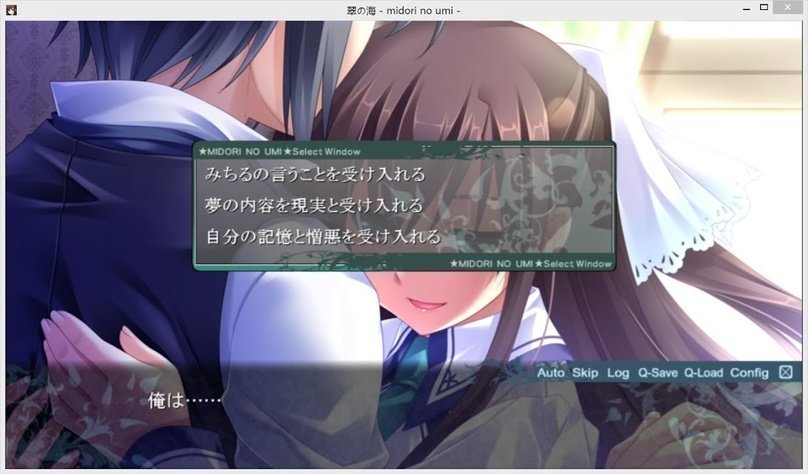
“Handing control of the story to the player is a fascinating thing.” I read that in a game magazine back in middle school, from some developer of a very open-ended game. Honestly, this was the first time in my life I felt what that actually means — and it’s in a visual novel, of all things. It’s a bit like those old audience-vote drama shows on TV where the viewers picked the branches and arrived at the ending they wanted. Weird or wholesome, it was your choice.
The heroine routes in Midori no Umi all follow two patterns: the protagonist escapes the paradise with her, or stays here with her forever. The heroine routes are mostly about uncovering why she came here, and there’s no big secret — just family and relationship drama, and it doesn’t really hold up. But for this game, the choices alone are fun enough — assuming you’re not using a walkthrough.
Last thing: the music in Midori no Umi is genuinely good. The track list is a bit thin, but the violin melodies are lovely, and the tracks that build the horror atmosphere are properly creepy.
Midori no Umi reminds me of the horror stories I read in Tianya’s “Penglai Guihua” forum back in high school. The premise is tacky, sure, but the suspense is built decently — right up until the reveal, when you go “oh come on, that’s it? All that for this?” Good thing Midori no Umi has its tangled choice tree and huge pile of endings, enough that it genuinely is what Cabbit’s official site calls it — a “真実の欠片を探すサスペンスADV” — instead of an audiobook that coasts entirely on its plot.
So even though the plot isn’t much, it’s genuinely fun. If you want to play it, remember — no walkthroughs.
Comments are hosted on the Chinese main site. This mirror is read-only.