Riddle Joker Review
The Mysterious Ace
Around 2010, in my last semester of college. I’d already landed a job, but graduation was closing in and I still had to finish my thesis defense.
I’ve actually forgotten the whole process of writing my thesis by now. I just remember that while I was working on it, it got so boring that I started looking for anime to watch online.
I was looking for anime and saw some shitpost compilation blowing up on AcFun, so I went and tracked down the source material, and that’s how I found this thing called Toaru Majutsu no Index (A Certain Magical Index). Looking back now it’s got plenty to poke fun at, but for me at the time I thought it was a pretty interesting watch.
The interesting part is its setting: battles between scientific ESPers and magicians, with the male lead caught right in the middle as a third-party existence.
Even more absurd is that this so-called “third party” male protagonist is actually the strongest one of all, and the story unfolds in the most formulaic way possible: some Boss suddenly pops out saying he’s gonna take out the protagonist, the protagonist fires off a bunch of trash talk, kills the Boss in one punch, keeps the guys around as bros, and adds the girls to his harem……
Of course, after finishing A Certain Magical Index, I went ahead and checked out its spin-off too — the famously well-known Toaru Kagaku no Railgun (A Certain Scientific Railgun).
Frankly, the story in Railgun is way better than in Index. Most of it has nothing to do with magic — it’s all about espers. The heroine is a fairly strong esper, and she’s constantly running around with her friends solving all sorts of incidents, from espers losing control of their powers to crimes happening in the shadows.
Honestly, the reason A Certain Scientific Railgun is the better watch comes down more to its story and character setups just being way cooler.
The heroine, Misaka Mikoto, is an ESPer. Unlike A Certain Magical Index protagonist Kamijou Touma — the type who talks like he’s hopelessly weak while actually being loaded with cheats — Misaka Mikoto is genuinely strong in her own right. And even then she isn’t absolutely unbeatable in a fight; she runs into trouble often, and she doesn’t fight alone either. She has plenty of friends around her who coordinate with her. There’s the one who handles computer stuff and gives remote support, the one with insane mobility who does recon, and the one who can’t do anything but has sky-high emotional intelligence and provides the mental comfort…
A Certain Scientific Railgun is way more popular than A Certain Magical Index — the heroine’s meme even ended up as the name of a certain website… and that website went public on NASDAQ.
Even though I’ve seen plenty of other shows since, I still find myself thinking back to that summer — the time I spent watching Index and Railgun.
That said, what I miss more is the kind of character setup you get in Railgun. Honestly, that arrangement is just the coolest: a protagonist with insane skills, an info sidekick who stays in touch over the network the whole time, and a comrade who complements you, all moving together to pull off all sorts of missions. It looks like one of those high-tech spy setups from an American blockbuster, and you can’t help but feel it’s cool as hell to watch, seriously hype.
And Misaka’s style of just settling everything with a single railgun blast in particular makes the fights feel way more satisfying to watch.
And so that same character-design style finally got picked up by the moe-peddlers at Yuzusoft, who rolled it out in their new release, Riddle Joker.
Lots of people say Yuzusoft has always been a moege factory. Honestly, after playing their last two games I don’t buy that anymore. In Sanoba Witch and Senren * Banka, the always-cute Yuzusoft had already started shifting toward plot-driven structure. Sanoba Witch already began building out the heroines’ backstories, and Senren * Banka went even further with an interlocking style of writing—each route, put together, forms one complete story. As a visual novel, the quality is already very high.
Of course, I still really hate Yuzusoft’s assembly-line marketing shtick… even though Riddle Joker pulled that same crap again this time…
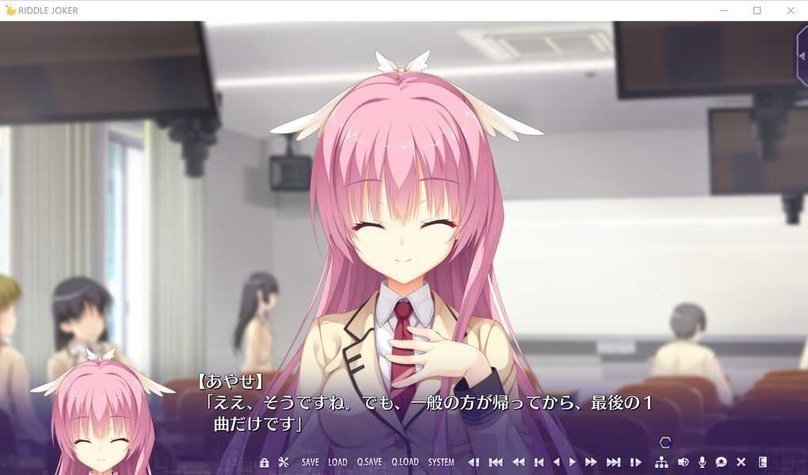
From the very first bit of promo material, the whole thing already reeked of cliché. The setup goes that the protagonist is an agent for some mysterious organization, infiltrates a school, and accidentally discovers that one of the school’s model students, Mitsukasa Ayase, is faking her chest — she’s actually flat.
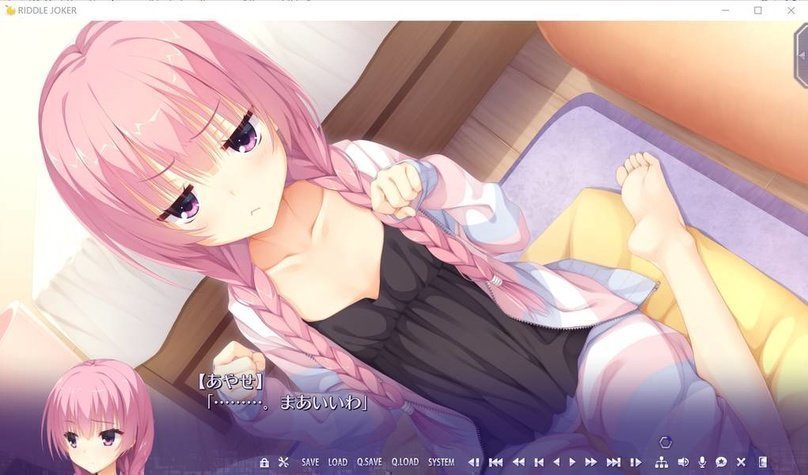
This marketing approach feels familiar, doesn’t it?
Let’s think back to Sanoba Witch (サノバウィッチ) for a sec. The protagonist transfers into a school, and by pure chance discovers that the student council president, Ayachi Nene — the brilliant, well-behaved honor student — is actually masturbating in the library. So she’s a horny slut who gets turned on out of nowhere?
Next up is Senren *Banka (千恋*万花), where the protagonist goes to a rural shrine and somehow ends up pulling out a legendary sword — and whoever pulls it out becomes the miko family’s son-in-law…
If the point of pulling that kind of twist in Senren *Banka and Sanoba Witch was to preserve suspense, then the “her huge tits are fake” reveal for the heroine Ayase Mitsukasa in Riddle Joker feels completely pointless.
Why’s that? Well, take a look at Yuzusoft’s promo art……
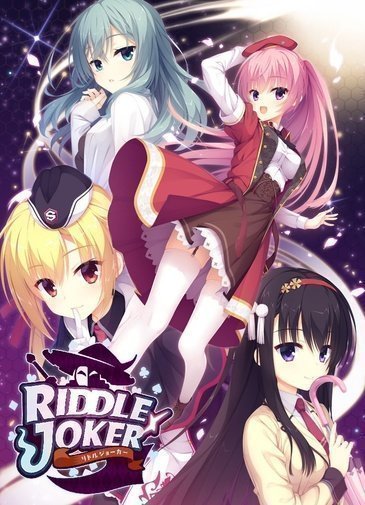
You call those big breasts? Big my ass!
And from start to finish, I never saw anyone who actually cared about the heroine Mitsukasa Ayase’s breasts — except herself, who was obsessed with them and kept threatening the protagonist to never tell anyone.
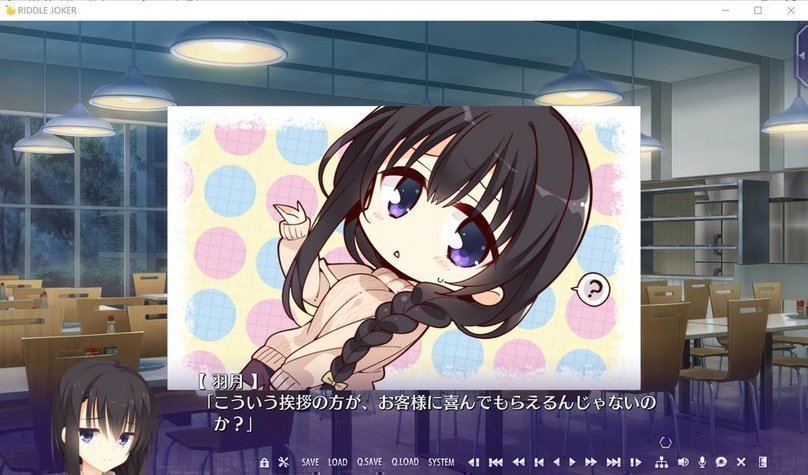
But so what if I say it out loud? Who the hell cares about her breast size? If anything, Mitsukasa Ayase is probably the most invisible main heroine in the entire Yuzusoft catalog—that lack of presence starts in the common route and doesn’t let up until her own route is over.
Let’s start with the common route:
The game opens by telling you the protagonist belongs to some national-level special agency as an operative, and he’s got ESP himself. The game calls this power “アストラル” — Astral in English, written 星幽 in kanji. Someone with it is naturally an “アストラル使い,” which I figure the Chinese release would render as “星幽使.” The agency he works for is basically an outfit that uses アストラル使い — people with this ESP — to carry out special missions.
除了主角之外,这个机构里还有他妹妹原七海;而主角的上司正是他的养父。倒不如说,这个机构的招人方式就是收养那些无家可归的超能力者,让他们来帮自己完成特殊任务。
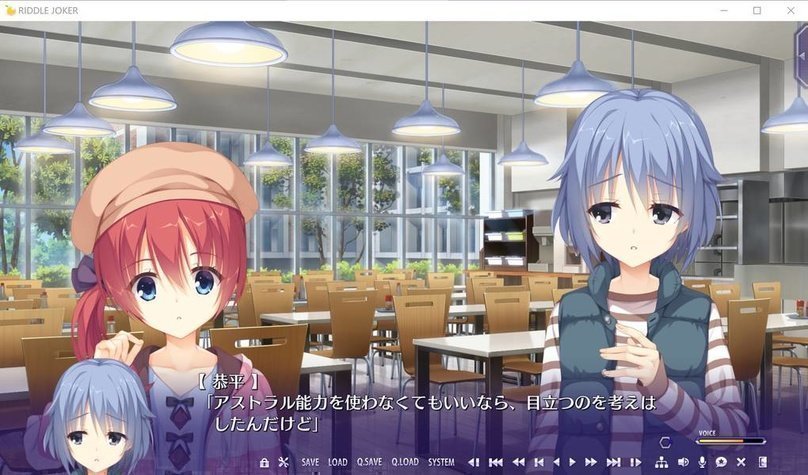
The protagonist’s ability is “brain control” — he can control other people’s brains as well as his own, and once you can control brains there are all sorts of uses. His little sister Nanami’s ability is healing, but Nanami herself is a seriously good hacker, so when they’re out on a job it’s usually the protagonist doing the legwork while his sister handles the network support from the rear.
After one mission wraps up, the protagonist’s superior discovers that a small gang in the city is making counterfeit money — and even trafficking ESPers.
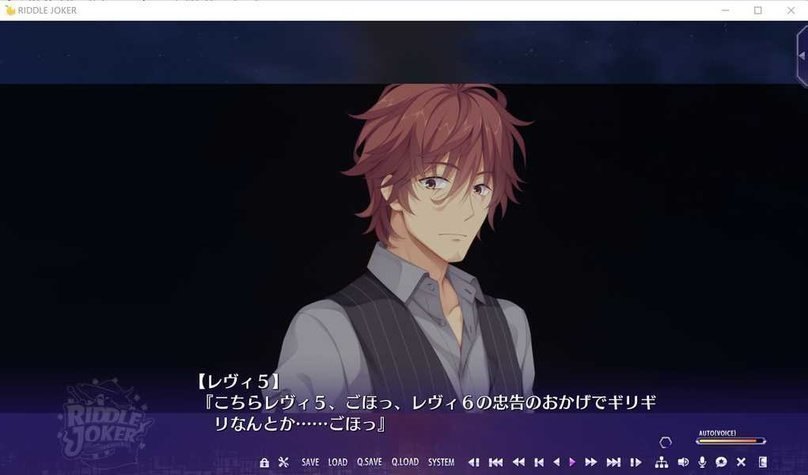
Because espers have basically no standing in society, they’re often treated as “monsters” and looked down on. But they’re also useful — they can do all sorts of things with their powers — so some gangs go straight into human trafficking, hunting down young espers and kidnapping them.
The protagonist’s superior discovers that the criminal gang’s next target may be a school in the city where ESPers are concentrated, so he orders the protagonist and his little sister Nanami to go undercover and infiltrate it to investigate.
The school I’d infiltrated turned out to be a place built specifically for Astral espers to study and conduct research. Nearly all the students there were espers, and the school itself was dedicated to studying the secrets of espers. The hope was to gather more of them together, do something useful for society, and change the public’s prejudice against espers.
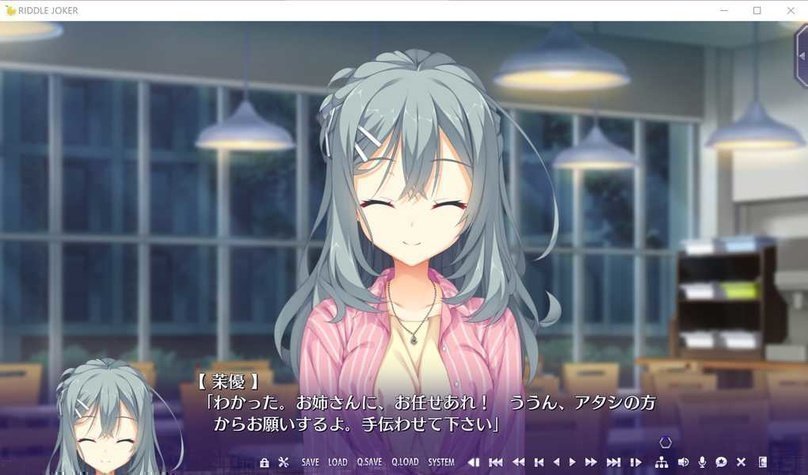
After infiltrating the school, the protagonist first has to go through a physical exam. The one examining him is Shikibu Mayu, an old acquaintance from his childhood. Mayu does research at this school, and she’s also been held back a year—at this point she can’t really be called a student anymore, she’s basically an old auntie. She says she has a research project she needs to finish, and since it isn’t done, she can’t graduate. Mayu and the protagonist met way back—they were already close when they were both at some orphanage. Later the protagonist got adopted by his current adoptive father, while Mayu took a different path, bouncing around several times before ending up at this school doing research.
Mayu is now one of the researchers at this school, holding data access rights to the school’s lab. The school has a database system containing information on every esper, called AIMS, and Mayu conducts her research based on that system.
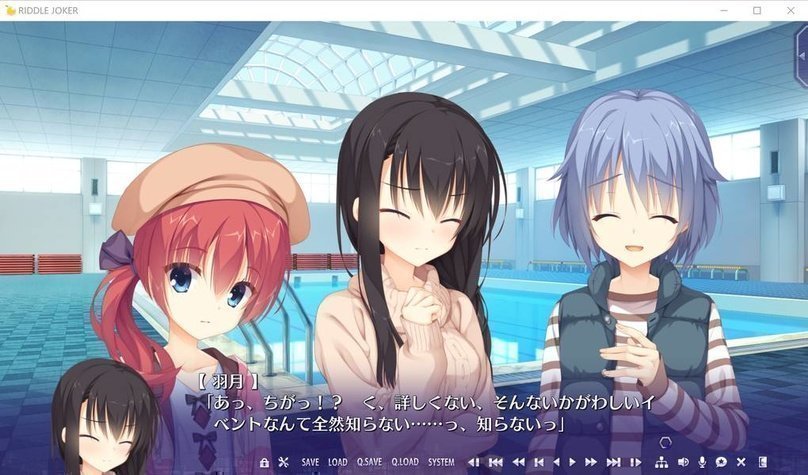
During the physical, Mayu asks the protagonist what his ability is. He lies and says “physical enhancement” — after all, he’s there undercover, so there’s no need to reveal his real identity. Soon enough, he and his little sister Nanami settle into school life, and nobody suspects a thing, Mayu included. The two of them get to know plenty of other students too: dorm head Hazuki Nijouin, and Mibu Chisaki, a younger girl about Nanami’s age. He also meets Sougo Kyouhei, an adorable boy with a serious appetite.
Meanwhile, the protagonist is also investigating the school. The research lab there has absolute dogshit network security — every night he and his little sister can casually hack into the system and look up whatever they want. The investigation doesn’t turn up anything all that valuable, but the criminal gang has already started making its move.
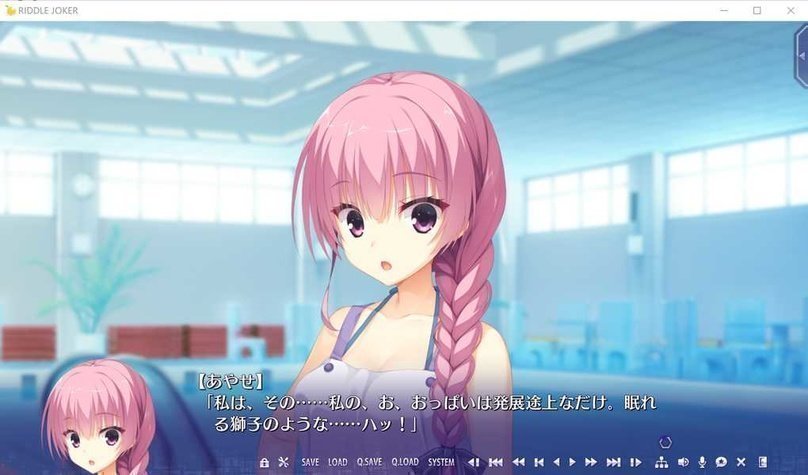
They try to kidnap the school’s poster girl, Ayase Mitsukasa. Fortunately, the protagonist catches them in the act and saves her. He also finds out that while Ayase is always doing interviews as the representative of the espers, her actual ability level is pretty meh. And also… her boobs are fake — they’re padded.
Mitsukasa Ayase is not happy that the protagonist found out her “breasts are fake,” and threatens him daily to keep his mouth shut. The protagonist says he has no interest in telling anyone, and meanwhile his superior hands him a new mission:
“It seems someone is trying to kidnap Mitsukasa Ayase, and they’ll likely try again. For now, you’ll act as her bodyguard and protect her.”
The protagonist has no choice but to obey, becoming Sanshi Ayase’s bodyguard. Around this time, the school holds a festival — a “power showcase festival,” which is basically a chance for people with ESP to use their abilities and put together some kind of project. The protagonist rounds up his friends and they set up a “swimsuit café,” where all the furniture and props inside are made with ESP.
While this “ability unveiling festival” was underway, the protagonist noticed a suspicious figure mixed in among the audience, trying to make a move on Tsukasa Ayase.
The protagonist and his own organization worked together, crushed the gang’s scheme, and rounded the whole lot of them up.
The school festival wrapped up smoothly too, and Mitsukasa Ayase even sang at the end — though the damn game never says what she actually sang……
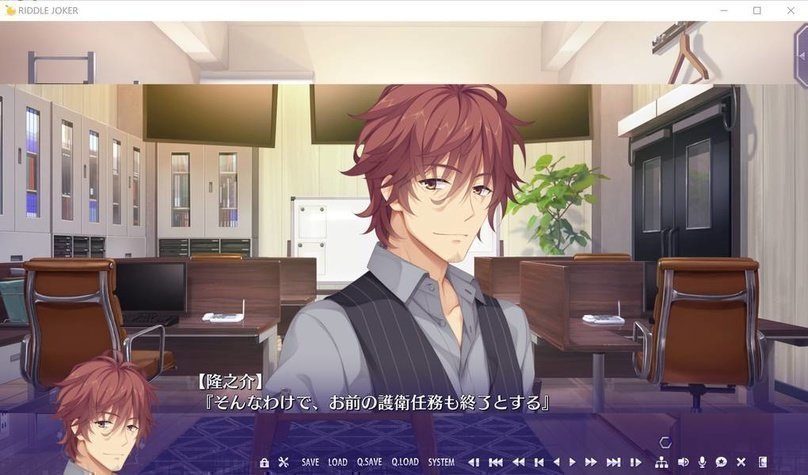
Then the protagonist’s boss tells him, “Your mission to infiltrate the school is over.”
The protagonist just asks: “So once this is over, can I leave?”
“You actually got in, so just relax and stay until graduation.”
So the protagonist doesn’t have much of a job left to do, and all that’s left is to enjoy his youth at school.
That’s the end of the common route. Along the way there are a few small branching choices that raise affection, and that’s how you get onto a heroine’s route.
Route: Arihara Nanami
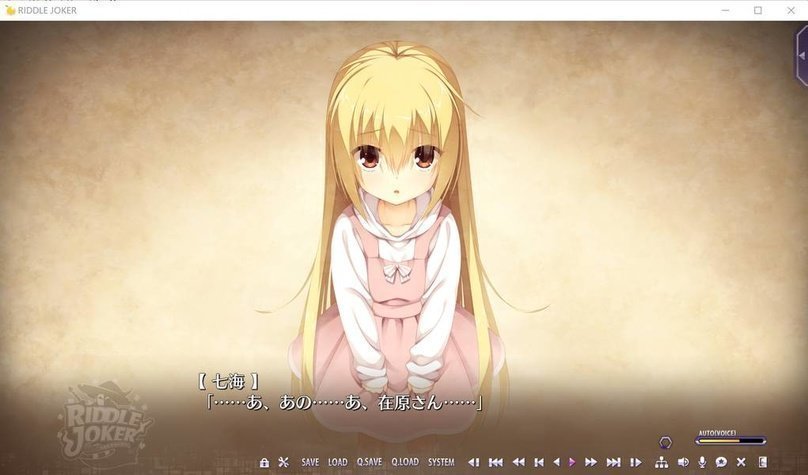
在原七海 is the protagonist’s little sister. Except not really — she’s a stepsister.
Actually, the protagonist isn’t his current adoptive father’s real son either—he’s adopted, after all.
The adoptive father took in the protagonist from a shelter, and later adopted Nanami from another shelter, which is how the two of them became siblings.
And you can probably guess how it unfolds from there, right? Nanami was originally an esper who awakened her ability partway through life. Her parents hated and abandoned her for it, she went through some physical and mental abuse, and then after she was taken in, someone suddenly started treating her kindly — so she developed feelings for the protagonist as she grew up.
Naturally, those feelings have carried through to the present—it’s just that, as his little sister, it’s hard for her to come out and tell her brother she likes him.
But come on! It’s 2018 now — gay people are kicking up a storm all over Weibo, so who gives a shit about sibling romance? Especially when they aren’t even blood-related. It doesn’t even count as incest.
The little sister route is just her nursing a one-sided crush on the protagonist the whole time. Eventually she can’t hold it in anymore and finally confesses to him.
After the confession, the protagonist just goes along with it, and then… and then it seems like there’s really nothing else.
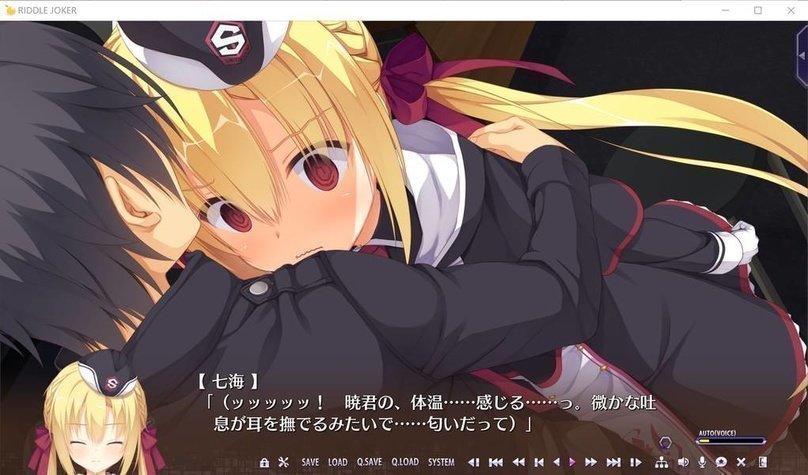
Of course, there are still a few twists in the story, like the protagonist getting injured on one of his missions and his little sister worrying about him and all that. Every other aspect is completely smooth sailing, no turbulence whatsoever — even when the protagonist and his sister report to their adoptive father, he just comes right out and says:
“I knew you two would end up together…”
Two infiltrators, both agents — honestly, that’s just keeping it in the family. And the two of them get up to all sorts of play, going at it like crazy.
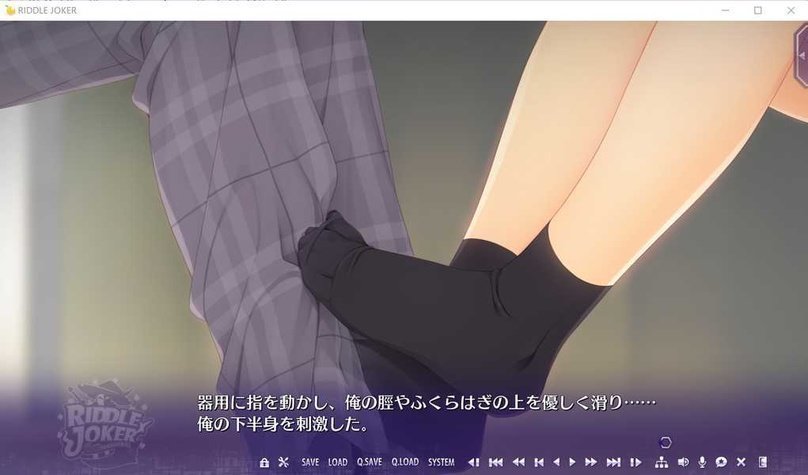
The little sister route isn’t exactly devoid of plot, it’s just that it has absolutely nothing to do with the main story. Something about the protagonist’s investigation turning up a new kidnapping ring that’s after espers, and then the five students he rallies (which is just the game’s five heroines, of course) take them down together. It plays out like Home Alone, honestly…
Oh, and the protagonist also takes on five guys at once at the end, while the other side calls itself “マフィア” (mafia).
This mafia is way too weak…
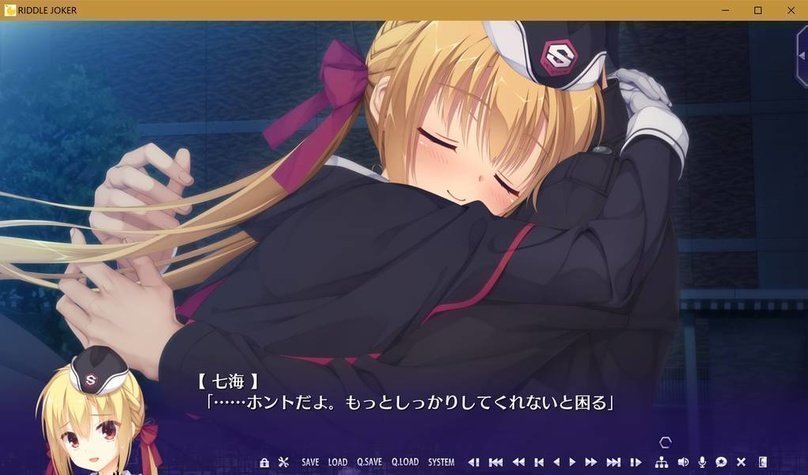
In short, it’s the most clichéd little-sister route imaginable.
Route: Mibu Chisaki
After clearing anyone’s route, Chisaki’s story becomes available.
Chisaki is Nanami’s good friend and her younger sister’s too—she’s got a strong sense of justice, says exactly what she thinks, and every other word out of her mouth is “fuck” or “damn.” Voiced by Natsuwa Koto (夏和小), her sheer presence is off the charts.
And yet in the game she’s a heroine you get for free, like a phone top-up bonus. Painful.
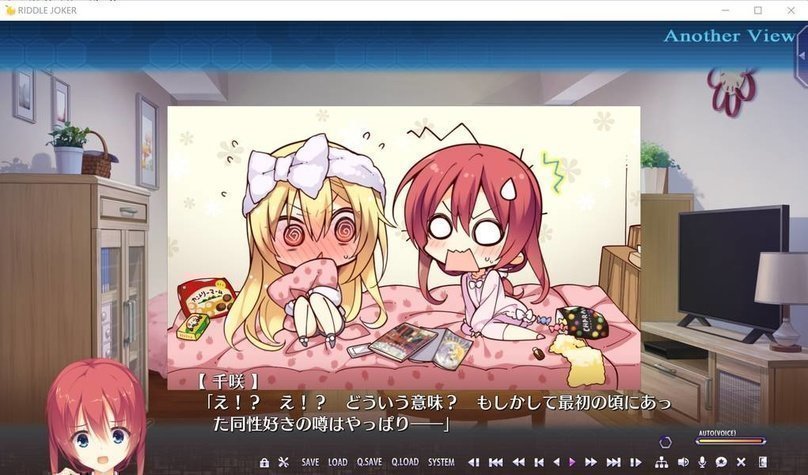
Chisaki’s route in the game is more like a bonus side story. A chikan starts showing up on the train near school, and a bunch of girls from the school get harassed. Chisaki suddenly gets all righteous about it and declares she’s going to punish those scumbag gropers herself.
Chisaki goes to the protagonist asking how they’re supposed to catch the molester — the guy seems to be an ESPer, since none of the victims could even see where he was.
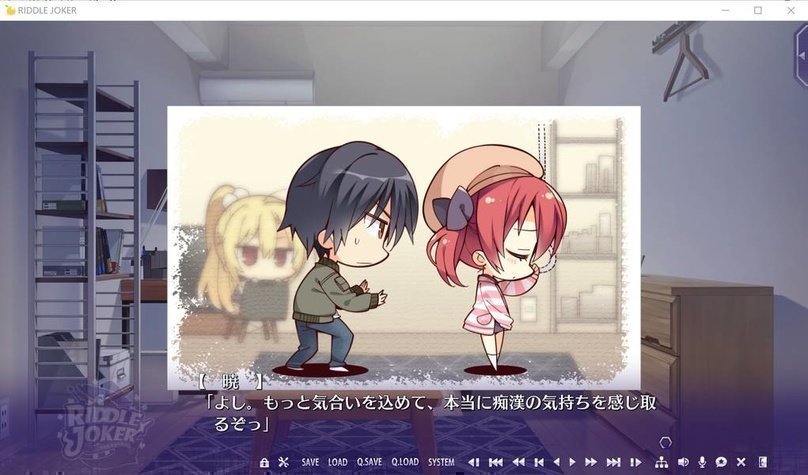
Chisaki suggests: “How about I act as bait and go over there to let the molester grope me?”
The protagonist refuses, saying that Chisaki is too cute, too good-looking — he just can’t bear the thought of anyone touching her.
So yeah, the first sprout of romance sometimes starts with a line of pure shamelessness.
Over the course of all those times the two of them went out to catch chikan, Chisaki started thinking the protagonist was pretty handsome, and the protagonist started thinking Chisaki was pretty good-looking too.
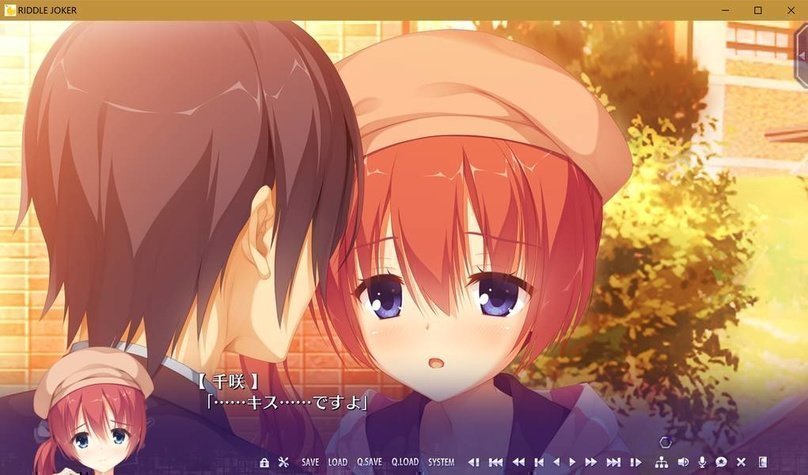
And then Chisaki just up and confessed… and the two of them got it on.
然后他们就啪啪啪了,最后那个痴汉也被抓住了……
And that’s it, since it’s a route that came free with your phone credit refill.
Route: Nijouin Hazuki
Nijouin Hazuki is the dormitory head of the protagonist’s dorm. Hazuki herself is a real stickler for the rules—dead serious and stubborn as hell.
Not that this is surprising. Hazuki really loves watching taiga dramas — period pieces, that is — and she’s into those righteous, sword-swinging samurai types. Her father’s a cop too, and that rubbed off on her, turning her into someone who can’t stand evil.
Hazuki absolutely adores heroes who can hand out justice. In period dramas, those heroes are usually the shogun type — the Tokugawa kind, basically an emperor, or rather a wise ruler. Think of it as her being into something like Kangxi Incognito Travels: people love it most when Kangxi reveals his identity and starts flexing. Same deal with the shogun her girl Hazuki likes, delivering justice.
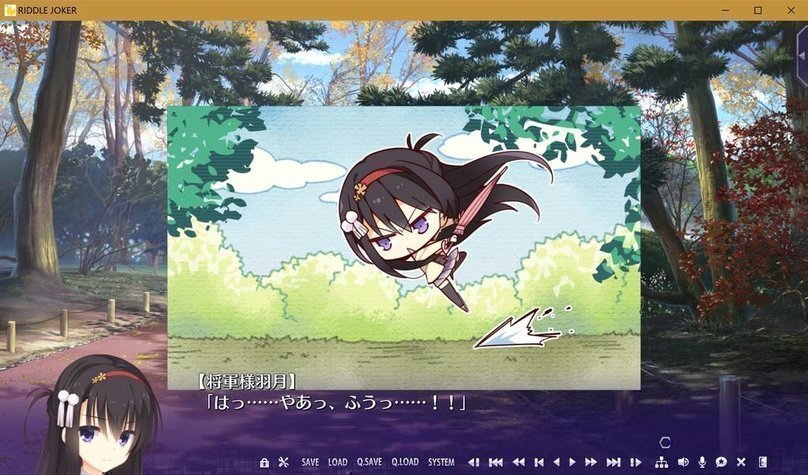
羽月的能力是操控水,但似乎水平不高,经常早上和男主一起跑步锻炼身体,同时还喜欢不停地向男主安利各种古装剧。
Hazuki says she saw a “shogun-sama” once as a kid and has looked up to him ever since. One time when she was little, she got into an argument with her family and went wandering around town, where she saw some punks causing trouble. Her sense of justice kicked in and she stood up to them. But Hazuki was just a little girl, and the punks naturally didn’t take her seriously. Right when things looked bad, a boy appeared, drove the punks off, and saved her.
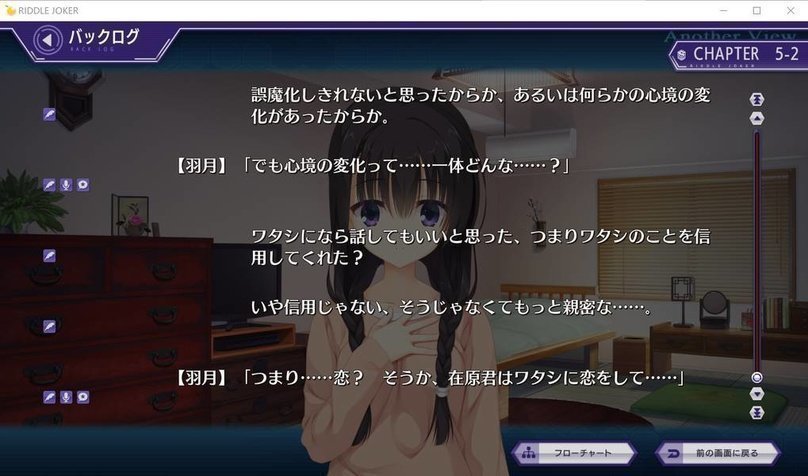
So Hazuki had always looked up to that boy, calling him her “shogun.”
So who’s that guy? Everyone knows — it’s gotta be the protagonist. He actually remembers that incident too, he just doesn’t want to admit it. Hazuki also finds his face familiar, but if he won’t admit it, there’s not much she can do.
Eventually, a new commotion started breaking out across the city. Reports from higher up said that sewer pipes were bursting all over the place, faucets were blowing clean off, and something about a broken water pipe in a movie theater restroom.
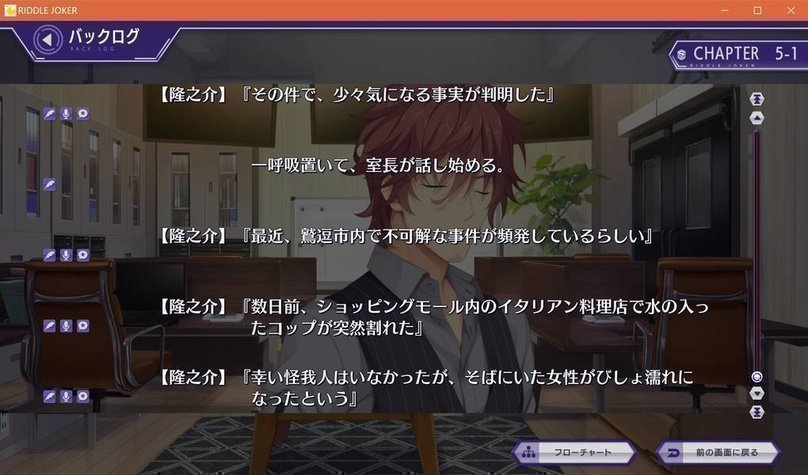
At first it was all prank-level stuff, but then it started getting worse and worse.
His superior tells him that all of this damage is connected to “water.” And the moment he hears “water,” the protagonist naturally thinks of Hazuki.
Would Hazuki do it? No way, right? Someone with that strong a sense of justice, doing something like this?
But the higher-ups say “you can know a man’s face but not his heart,” and want the protagonist to keep investigating Hazuki to find out what he’s actually up to.
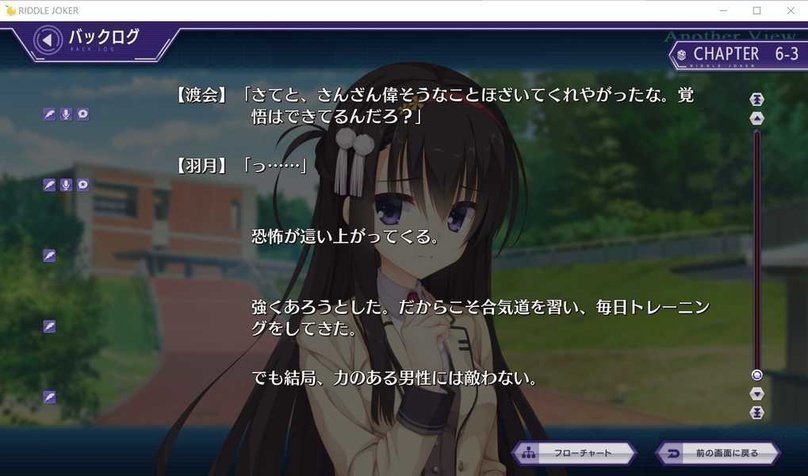
Meanwhile, his superior says that a mysterious force is also watching the protagonist from the shadows… and warns him to be careful.
Hazuki still spends every day wandering around with her sense of justice, and one day she finally runs into some delinquents off campus who aren’t heading back to the dorms on time—so she steps in to set them straight.
As it turns out, Hazuki can’t actually beat the two delinquents… Right at the critical moment, the protagonist bursts in again, drives the delinquents off, and saves her. Hazuki realizes that his stance looks exactly like the “Shogun-sama” from her childhood memories. She can’t help but ask him again:
“I’m asking you—are you my shogun-sama?”
This time, the protagonist admits it.
And then Hazuki switches straight into “in heat mode” — I mean, the person she idolizes is right there in front of her, how could her heart not flutter? This is what you call a girl in love. (Never mind that Hazuki’s CV is an auntie.)
Hazuki spends every day scheming about how to confess to her shogun-sama, how to make shogun-sama like her more. Sometimes her plans backfire spectacularly, but in the end, she does manage to get her confession through.
Turns out the protagonist hits her with a “I’ll hold off on answering your confession for now.”
Hasuki was heartbroken over it — wondering if she just wasn’t good enough for him. She’d confessed, and here she was getting a “we’ll see.” That’s gotta sting.
But what the protagonist has in mind is catching the shadowy culprits behind all those never-ending pipe explosions in the city first.
The protagonist doesn’t believe Hazuki did it — someone else must be behind it. But his superiors and everyone around him say Hazuki is the prime suspect.
The protagonist wants to clear Hazuki’s name. But Hazuki seems to have noticed something off about him too — she finds out he’s been sneaking data out of the school. She’s into him, though, and can’t decide whether to turn him in.
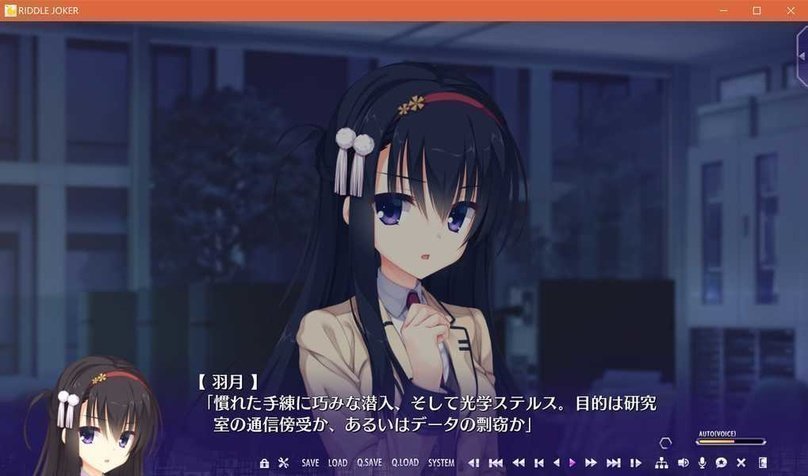
Both of them end up stuck in a bind: one wants to save Hazuki, the other wants to save the protagonist. But Hazuki has a strong sense of justice, and keeping the protagonist in the dark gnaws at her conscience.
After a bit more effort, the mastermind framing Hazuki finally shows up…
He’s another student at the school, and his ability is “pressure control.”
If you can control the pressure, you can make the pipes burst—and the reason he did it was to frame Hazuki and ruin her reputation.
Hazuki says she’s going to punish the culprit, only to find the culprit actually has a better argument than she does—and then lays out the reasoning for why they did it.
As a kid, the culprit was discovered to be an ESPer, and his own father forced him to use his powers as a thief, stealing money for his father to spend.
后来父亲被抓了,而自己也被当作同犯抓了。
In the end, not only was her father convicted, but she was sentenced as an accomplice too. She pleaded desperately, saying her father had forced her into it and she’d only done it because she had no choice — but the police still threw her in prison.
That cop? He’s Hazuki’s father. And the organization secretly watching the protagonist — that’s him too. He’s worried his daughter’s getting scammed.
Even though he never had any intent to commit a crime, he still ended up in a cell drunk alongside his father, which he just couldn’t wrap his head around, and that’s where the resentment started. After getting out, he learned that Hazuki was the daughter of the cop from back then, so he wanted revenge — and that’s how the whole thing went down.
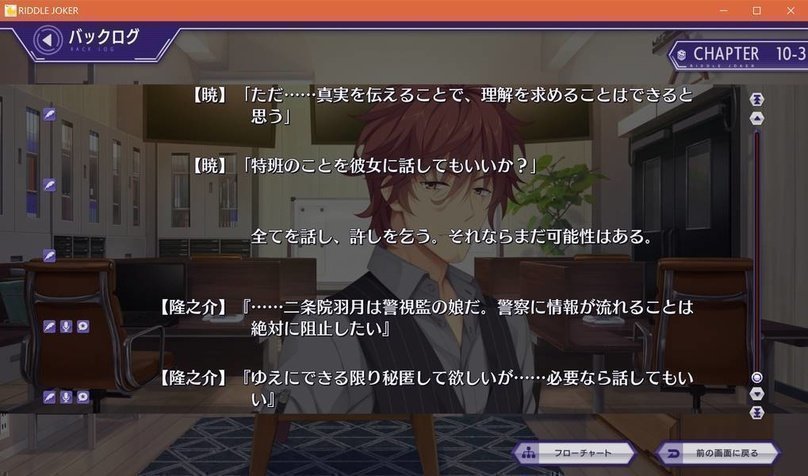
When Hazuki found out, she said that while she did feel sorry for them, wrong is wrong — stealing is stealing, and there’s nothing to discuss.
Yet the student only got angrier — he was a victim too, so why was he being treated like the culprit?
Hazuki sank into thought. She had always been a dualist, believing the world held only “good people” and “bad people”—but the truth was she’d been thinking too simply.
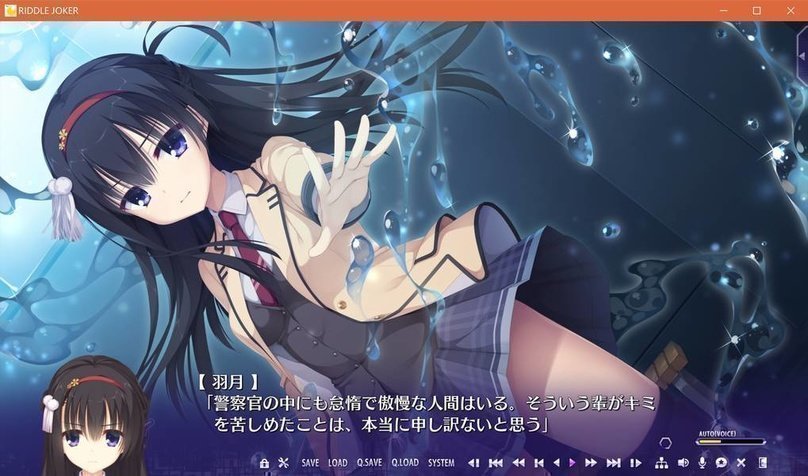
The goal isn’t to round up every villain in one sweep. It’s to stay humane about it—persuasion toward good first, punishment second. Hazuki ends up understanding the protagonist too; she doesn’t press him on what he’s been up to, she just asks him to be a good person.
In the end, it still comes down to putting people first. Hazuki eventually gets her values straight too, and the protagonist agrees to go out with her, and the route wraps up in a quick啪啪啪 and that’s it.
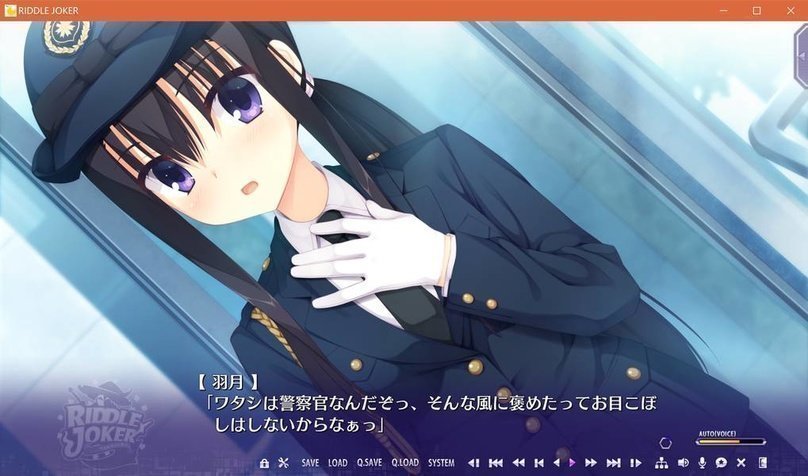
In the end, Hazuki takes over her father’s line of work and becomes a police officer.
Route: Shikibu Mayu
Mayu’s route is a bit, uh, something else — the first half plays like a spy thriller, and the second half goes full cliché.
The protagonist gets a job: infiltrate the school’s database and steal the data.
And the database server is on the internal network, so we need an internal machine to use as a jump host. The best choice for that jump host is researcher Mayu’s computer.
So the protagonist goes and sucks up to Mayu, calling her “big sis” every single day, giving her shoulder rubs for no reason. Mayu already knew him and even had a bit of a thing for him—older women love their young meat, after all. Seeing him fawn over her like that, she figures he’s definitely into her…
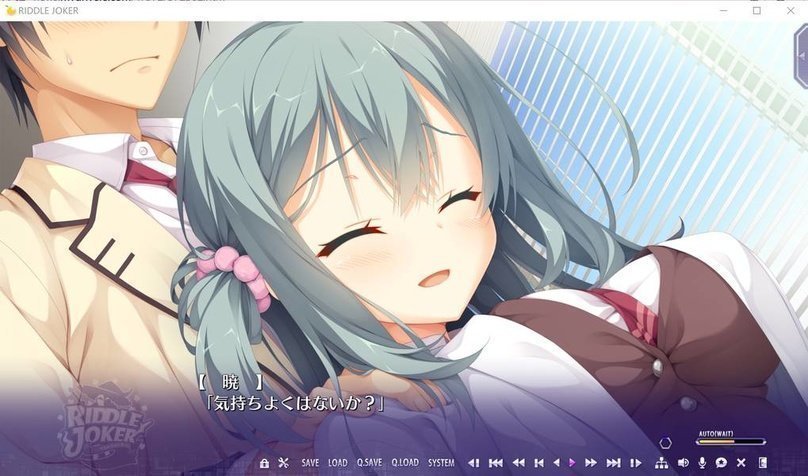
Just as Mayu was getting all starry-eyed, the protagonist had already teamed up with his little sister Nanami to swipe a bunch of data from her—and lift her permissions while they were at it.
Mayu’s still horny, scheming over how to seduce the protagonist even harder… muttering his name while she touches herself.
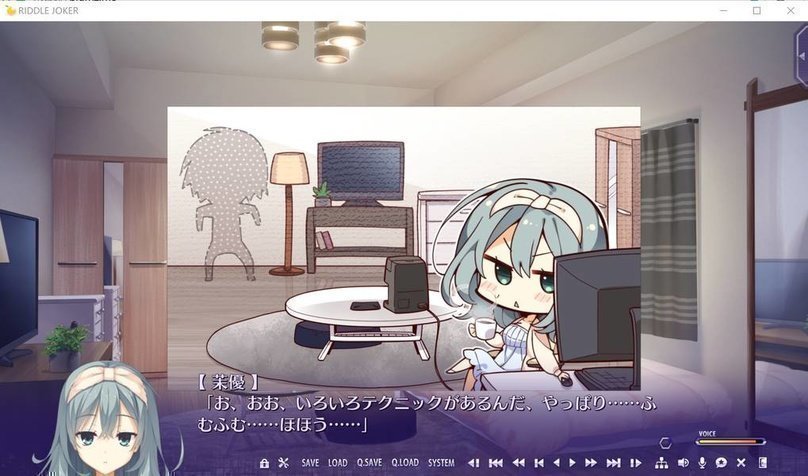
Of course, the protagonist’s data theft still got found out… Mayu noticed something off with her computer… So she swiftly changed the passwords on all her machines and cut the network on the jump box, severing the route into the database…
The protagonist isn’t giving up, and goes to steal the permissions again, only to get caught red-handed by Mayu…
Mayu is heartbroken. She thought the protagonist was into her, but it turns out he just wanted the data… no rights for old hags after all. Can’t even bag a younger guy.
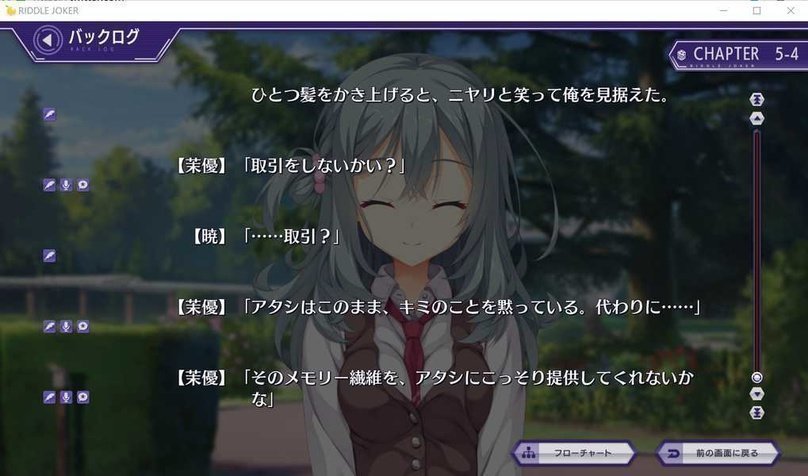
The protagonist gets caught by Mayu. He figures she’s about to rat him out, but she doesn’t do a thing… instead, she lays down some conditions for him.
She tells the protagonist that if he’s willing to cooperate with her and come clean about why he’s stealing data, she’ll even hand over some special item from her organization — and she won’t expose him.
Then the protagonist turns it around: he’s good-looking, and Mayu’s into him. He counterattacks — not only does he leak nothing, but he flips it on Mayu and gets her on the defensive, and she ends up volunteering the details of her own research project.
The research Mayu was doing was meant to wake someone up. Her name is Kotori.
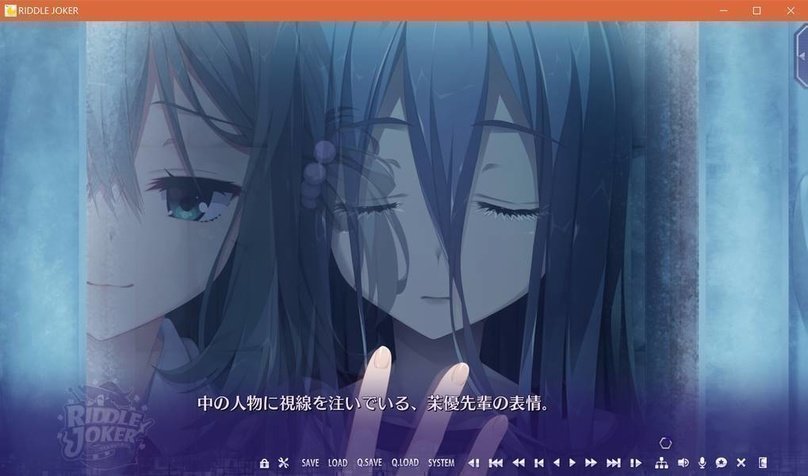
Mayu says that Kotori is the daughter of this school’s principal, and also her good friend. Back when she left the protagonist, Mayu ran into Kotori. Kotori is an ESPer, and she invited Mayu to come study at her father’s school……
The two of them even made a promise: they’d both get into this school, do their research together, and graduate together.
Before the results could even come in, Mayu found out something had happened to Kotori.
Kotori’s ability was atmospheric control. And then, out of nowhere, her power ran completely out of control…
Being out of control means being unable to control her own power. Kotori (琴理) loses control, causes a disaster — and people even get hurt.
In the end, Kotori gets put into cold sleep, but she’s still in an out-of-control state that can’t be undone. Mayu’s research is about how to bring Kotori back to normal. Mayu asks the protagonist for help, hoping his organization can provide research on related ability control.
The protagonist’s organization naturally doesn’t agree, but he goes ahead and agrees anyway, even handing Mayo confidential items belonging to his own organization without permission.
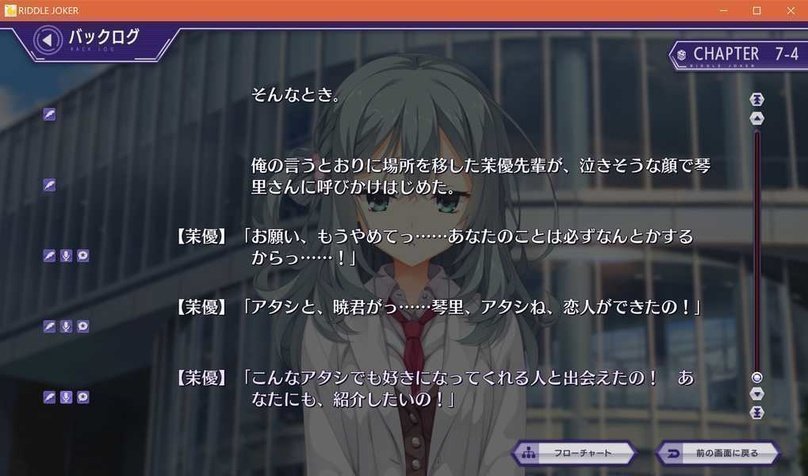
In the end, the protagonist and Mayu successfully strong-armed the organization backing him and the school into working together, and together they developed a drug that effectively suppresses “ESP outbursts,” saving Kotori. At the same time, the organization behind the protagonist got some valuable data out of the deal too—so I guess you could call it a win-win.
Of course, by the time the protagonist decides to team up with Mayu, the two are already a couple, and from there it’s just kissing and screwing around whenever they feel like it.
The part earlier in this route where the protagonist keeps lying to Mayu is still a lot of fun, and things actually get tense for a while when Mayu finds out he’s a spy.
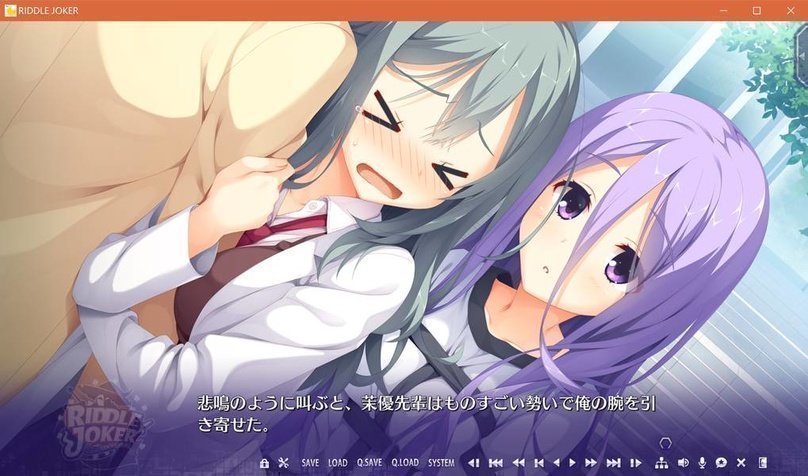
But after that, nothing happened at all. The tension fizzled out and it went back to the usual formula. Guess it’s a wash, fifty-fifty.
Route: Ayase Mitsukasa
I honestly didn’t know what to say about Ayase’s route from the very start.
Ayase calls the protagonist over late at night to help her clear a game — she bought it, never finished it, and feels it’s a waste. There are two games; one’s a zombie-filled horror game, which I’m pretty sure is Resident Evil 7.
The other one is “you die really easily” — I think they might be talking about Cuphead or Dark Souls.
The protagonist spends every day helping her out with her games, and somewhere along the way, all that play turns into feelings…
And then he confessed.
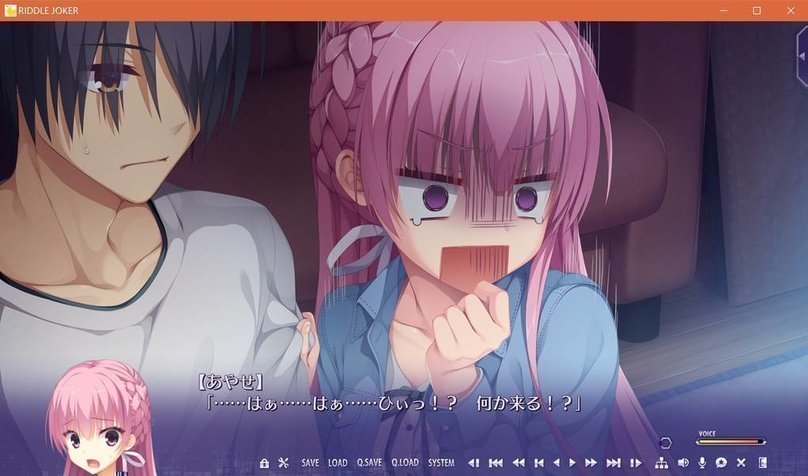
Yes, you read that right. Not even three chapters into the individual route, and the two of them confess. Right after the confession, they start banging.
After the sex scene, the story actually starts to get on track — but by then it’s got not much to do with Ayase anymore.
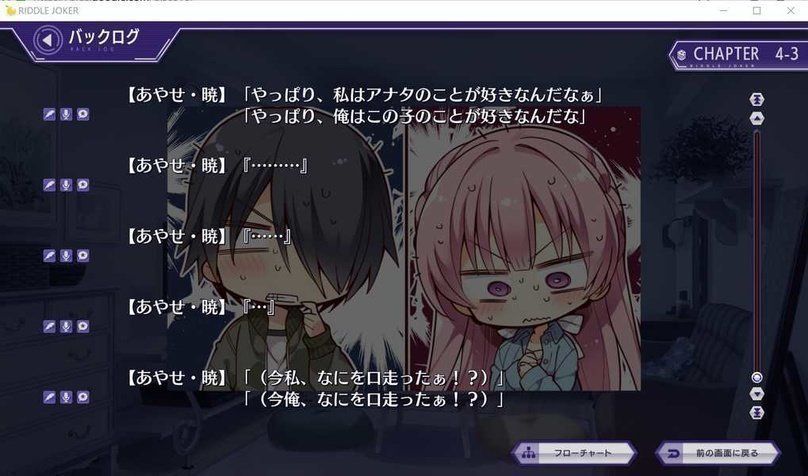
The protagonist starts spending more time around one of the school’s teachers, Kakimoto Kari.
The teacher says she’s doing research at the school too, about ESP, and the protagonist gets curious and asks her:
“Is there any chance this ESP power could be strengthened?”
The teacher’s answer was firm:
“ESP doesn’t get buffed. Not as far as I can tell, anyway.”
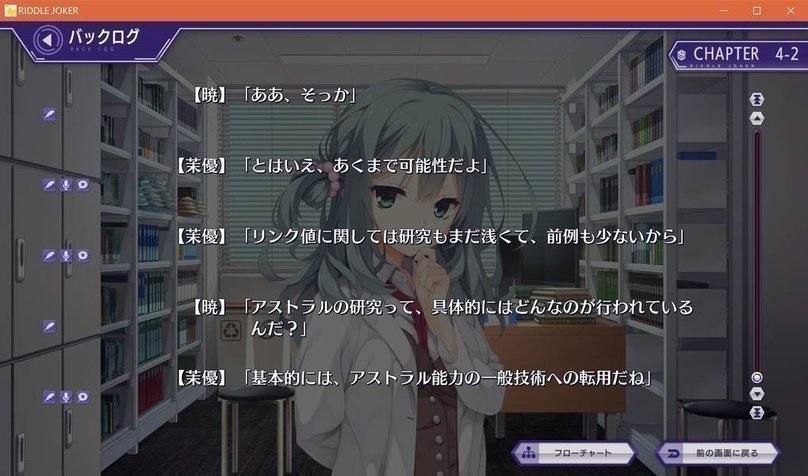
Basically, ESP is innate—once you have it, it doesn’t grow or change, it’s fixed. The teacher did a lot of research on Astral’s ESP too, but it doesn’t seem like there’s been any real breakthrough on that front.
But the protagonist hears a different story from the people around him: a few years back, one Astral ability user’s power went out of control (a “rampage”), and then they vanished without a trace. Anyone who’s read Mayu’s route should know that this “out-of-control ability user” is Kotori.
“If their power could be raised, then maybe an esper’s brain wouldn’t be able to keep the growing power in check, and they’d end up brain-dead, or going insane, or finally losing control and going on a rampage.”
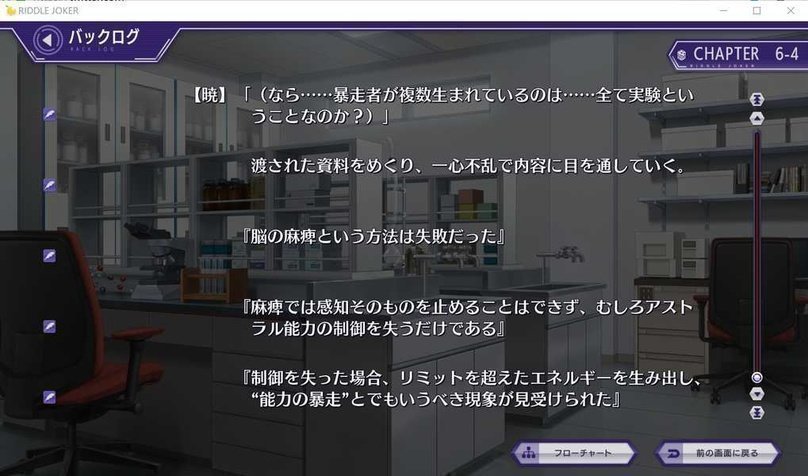
The protagonist’s boss floats a theory: that out-of-control incident—could someone have pulled off an “ability enhancement” that ultimately sent it beyond anyone’s control?
Just then, a student at the protagonist’s school suddenly got hospitalized, supposedly due to feeling unwell. The protagonist wanted to visit, but couldn’t find the person even when he tried — and within a few days, word was that the student had been transferred to a central hospital in the city.
Then another student says they’re feeling unwell, gets hospitalized, and then—nothing. Not a word. The protagonist starts digging, and it turns out every one of these “unwell” students has vanished…
The people above said they couldn’t make sense of it, so they ordered the protagonist to investigate. And everyone, including him, started to suspect these disappearances were connected to the “ability boosts” — in other words, maybe the missing students were all espers, and something had gone wrong with their powers.
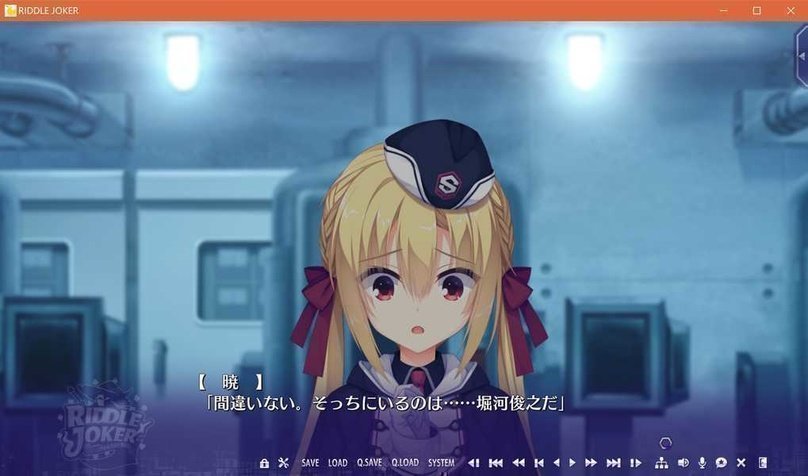
In the end, the protagonist decides to sneak into the school’s research lab to see what the researchers are actually working on—whether there’s anything related to boosting abilities. But he stumbles on a hidden room inside the lab. He slips in and finds a human cryonics facility, and the ones frozen inside are exactly the students who went missing. The info panel beside them spells out the reason for the freezing: “ability runaway.”
Right after the protagonist discovers the room, the school principal finds out about him too—and the principal even says he’d known all along that the protagonist was an infiltrating agent, that he’d just been turning a blind eye to it, and that there’s nothing to hide about any of this anyway, so he decides to tell the protagonist the truth.
The principal says he has a daughter named Kotori, who was frozen a few years ago when her powers went out of control. All these years he’s been organizing research into Astral abilities, trying to find a drug that can “control the powers and prevent another breakdown” — to save his daughter.
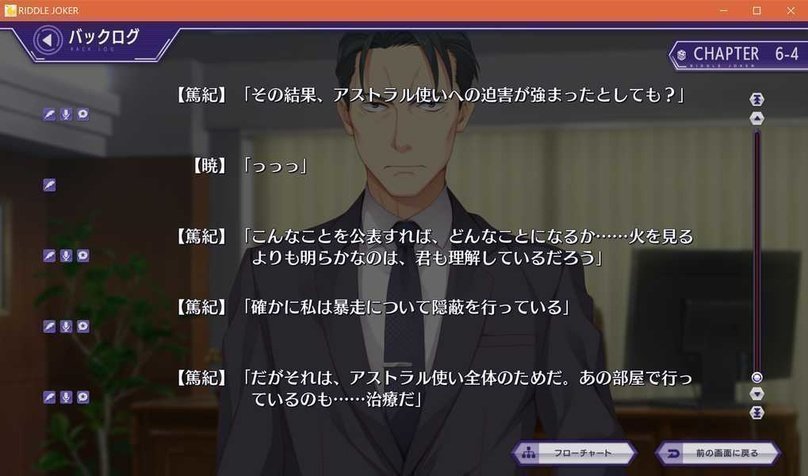
The principal said that society has a lot of misconceptions about espers, and that if more and more espers start losing control and harming society, these espers will find it even harder to be accepted by society. So the principal concealed the fact that his own daughter’s ability had gone out of control, and at the same time some students had recently appeared who were also having their abilities go out of control. These matters were downplayed and frozen by the principal, all so as not to cause trouble and let public opinion turn against espers.
The principal is confused too. He says he’s poured so much into the research, and even teachers like Kashimoto Kari have made a lot of progress on abilities—so why do ESPers keep going out of control? And why can’t they be controlled?
The protagonist goes to ask Kakimoto Kaori how far research on ESPers has actually gotten—whether it’s possible to bring an out-of-control ability back under control.
Then Kakimoto Kari mysteriously whisked the protagonist away, saying she had a secret to tell him.
So the big secret is that Kakimoto Kari suddenly injects the protagonist with some weird drug, and then bares her fangs. She says she’s the one behind the string of ESPers losing control at this school, one after another. Under the guise of “researching drugs to suppress powers,” she was actually developing a drug that makes powers run wild—all so more and more ESPers would lose control and throw society into chaos, satisfying her own twisted curiosity. (The protagonist’s boss figures Kakimoto Kari’s goal was to make ESPers lose control and turn the public against them, but she herself never quite says that.)
After Kakimoto Kaori injects the protagonist with the drug, she just leaves him there to mutate on his own. Her next move is to find Mitsukasa Ayase and use her to make something big happen. For a long time, Mitsukasa Ayase has served as the school’s representative for espers, regularly taking various treatments Kakimoto Kaori gave her — treatments that were actually designed to cause her powers to go out of control. If the cream of the crop among the school’s espers goes berserk, the disaster it causes will be that much bigger.
Turns out right as Kakimoto Kari was about to get Mitsukasa Ayase out of there, the principal caught them. The principal had his own undercover student planted in the school the whole time (the food-obsessed gay guy). He said he’d suspected for a while that someone among the researchers was pulling strings from the inside, but never had proof — and this time he finally caught them.
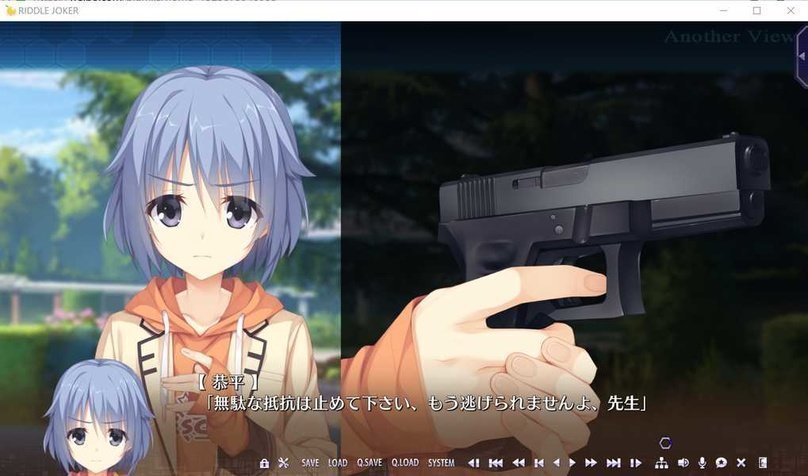
Kakimoto Kari wasn’t rattled at all, though—she said that before long, Mitsuasa Ayase’s power would go out of control, and by then it would be too late for all of them. Except Ayase replied that she actually can’t use her power at all…
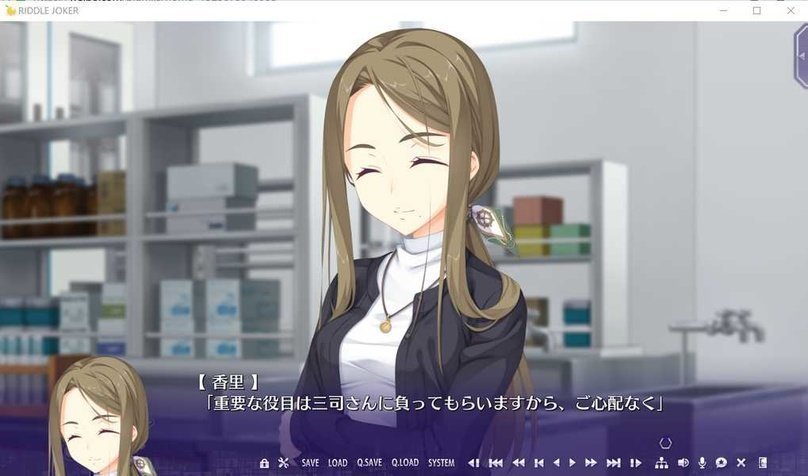
Mitsukasa Ayase insists she’s not an Esper — everything she does is “taking a drug that temporarily gives her the effect of an ability,” she herself isn’t one, so the whole routine Kakimoto Kari tried on her did absolutely nothing.
柿本香里很生气,夺走了三司あやせ的药物,自己也短暂获得了能力,想要和校长那群人对打,结果男主赶到,来了个上条当麻一样的有情破颜拳,打翻了柿本香里,柿本香里很吃惊,说男主不是被自己灌下药物了吗?为什么没有能力失控?
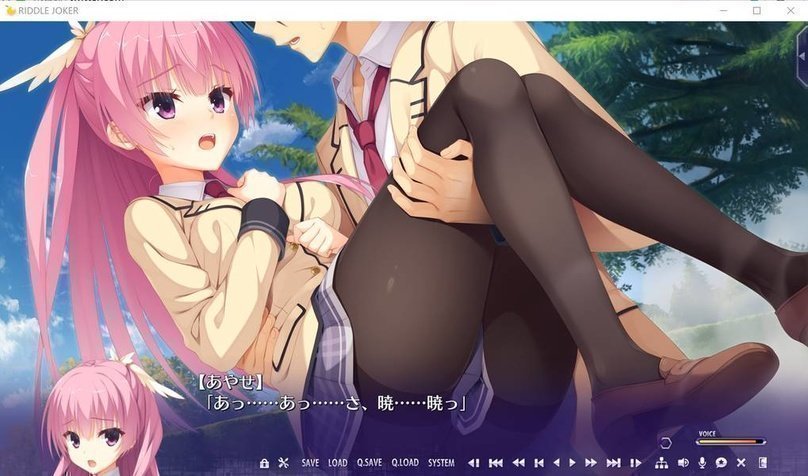
The protagonist says he’s just that good and held it back, and Nahami shows up too and hits him with a healing spell, which nullifies the drug.
(Me & Kashimoto Kaori: ??????)
Anyway, the problem got resolved in the end, the villain was defeated, and the principal revealed another secret: Mitsukasa Ayase is actually his daughter, making her and Kiri, who had frozen herself after her powers went out of control earlier, half-sisters. The protagonist also handed over the stolen research materials on Kakimoto Karin’s powers to the principal, who took them and studied them, eventually succeeding in developing a drug that suppresses abilities. Going forward, research on Astral powers will become widespread, anyone will be able to take a pill and gain abilities, and it’ll be put to use in medicine and so on…
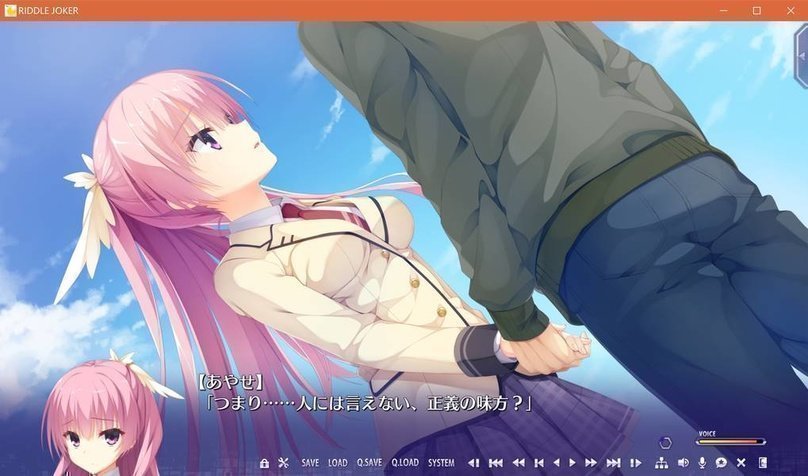
I guess you could call it a perfect ending.
Overall verdict:
Sure, Riddle Joker’s premise is fresh… fresh by Yuzusoft standards, anyway, and the main story does sketch out a conspiracy running underneath it all. But overall, compared to Senren Banka before it and Sanoba Witch before that, it’s still… nowhere close!
So where’s the gap?
First off, the story takes a huge step backward.
The games Yuzusoft has put out over the past few years are genuinely good at the “day-to-day banter” layer — easy to pick up, pretty fun, and sometimes you can just watch them like a chill slice-of-life show. But they already had that nailed as far back as Amairo. Later, with Sanoba Witch and Senren * Banka, Yuzusoft started feeling around for a more “story-driven” direction.
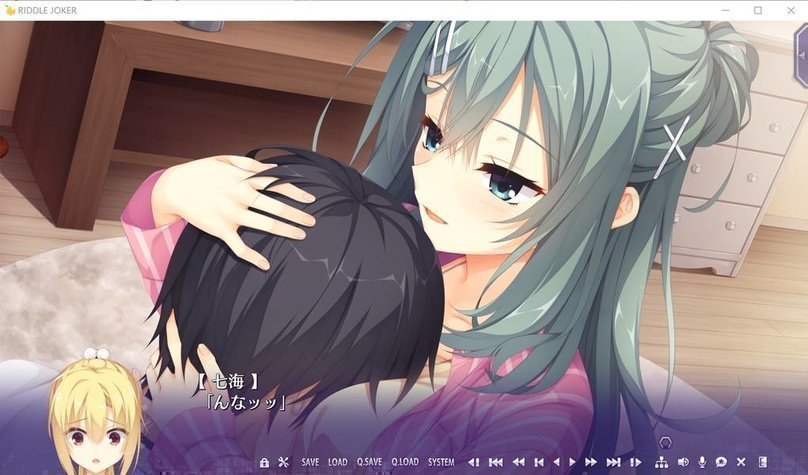
In Sanoba Witch they introduced something like a route lock for the first time. I still think it falls a bit short, but it was a decent step forward. Then Senren Banka finally used that “jigsaw puzzle” structure, where each heroine’s route peels back another corner of the overall story until it all fits together. That feeling is genuinely great—honestly, it already beats 80% of plot-driven games.
By the time we get to Riddle Joker, the slice-of-life chatter still has the same flavor, but the plot feels completely half-assed. The protagonist’s setup is an undercover agent infiltration, yet by the end of chapter 4 or so in the common route, his mission is already declared complete…
The protagonist’s old man just tells him, “Job’s done, so sit tight at school and go chase some girls.”
So the route structure ends up scattered again, kind of like Amairo Islenauts — aside from some link between Shikibu Mayu’s and Ayase’s routes, the other three heroines have nothing to do with each other. And the main plot of the whole game is extremely vague. Ayase, the number-one heroine, only starts talking about “students going missing” in the second half of the game, and it’s those disappearances that finally lead to the last boss. Even funnier, that boss has way too many suspicious points — from the midgame you can already tell she’s not quite right, and there’s not much mystery to it.
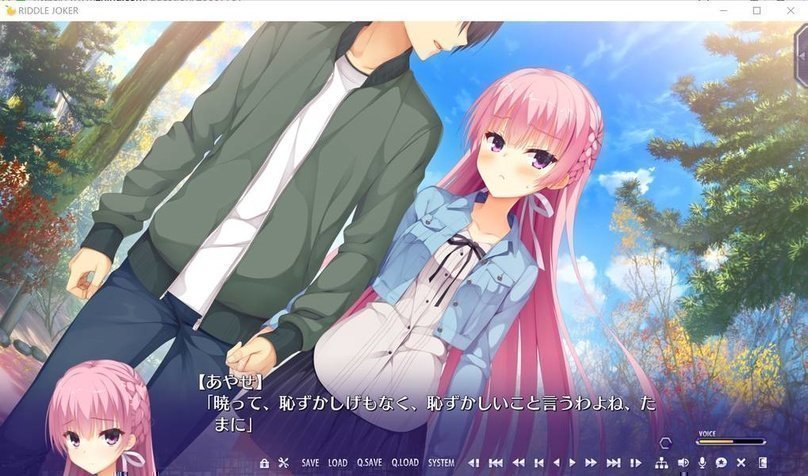
It felt like the game was already over once the common route ended — the individual routes after that were basically just an afterstory…
Another thing worth roasting is Mayu’s route, written by Hokui Kei, the writer I had the most faith in. It’s not that the route has no bright spots — when the protagonist decides to conceal his identity and deceive a pure-hearted older woman, the story is genuinely entertaining. And once his identity comes out, Mayu’s conflicted feelings, unsure whether she should expose the young guy she’s fallen for, are handled really well.
然后这条线就没有然后了,接下来俩人就莫名其妙的搞在一起了,男主也背叛了组织,女主也背叛了学校,俩人在一起完全是为了啪啪啪和亲嘴儿,直到路线最后才勉强想起来还有一个女孩要在拯救……
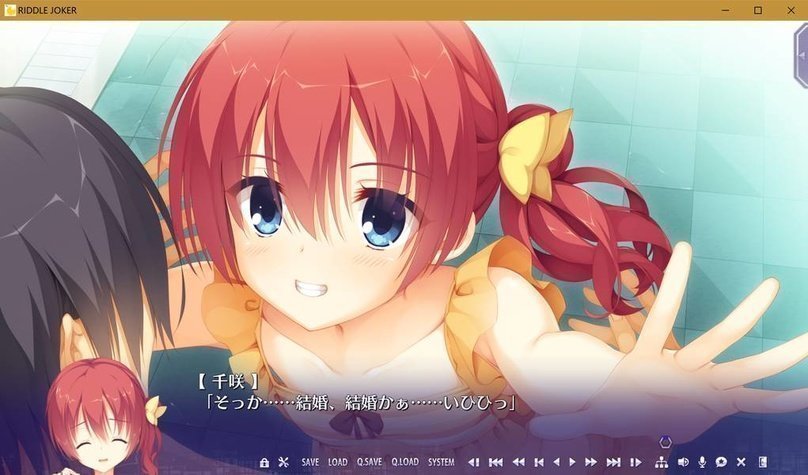
I went down Nanami’s route first, and it felt gross — not that it’s bad, just way too clichéd, like it got copy-pasted from somewhere. Same deal with the sub-heroine Chisaki Mibu’s route: at least it has that molesting-on-the-train setup going for it, but in the end it’s still some inexplicable confession out of nowhere.
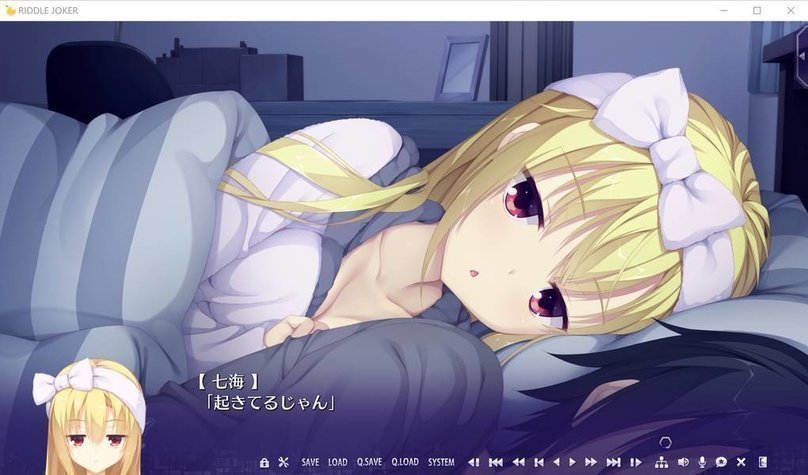
Yeah, pretty much every heroine in this game confesses out of nowhere, and it’s always the girl throwing herself at the protagonist one-sidedly with zero reservation. The cheapest love story here is heroine #1 Ayase — it honestly feels like the writer had no idea what to do with her. She plays a horror game a couple of times and suddenly decides she’s in love. Then the two of them go through a corny, self-insert-tier confession scene… I really don’t know what to say. Compared to the fairy-tale-style confessions that actually land in Chino-chan and Hanano from Senren Banka, or Shiiba from Sanoba Witch, this is nowhere close. Not even in the same ballpark as Amairo’s Shiraga Eri. I have no clue what got into Yuzusoft’s scenario writer. Were you trying to lean into the “infiltration” plot and ended up nerfing the romance on purpose?
And yet the game’s “stealth” sections don’t work either. There’s zero tension in the protagonist’s infiltrations—he hacks shit like it’s nothing, waltzes right in like it’s nothing, wipes the floor with everyone like it’s nothing. The guy is completely invincible; he’s never once lost a fight. Even when the boss drugs him, he’s all “I’m immune.” What the hell am I supposed to say to that?
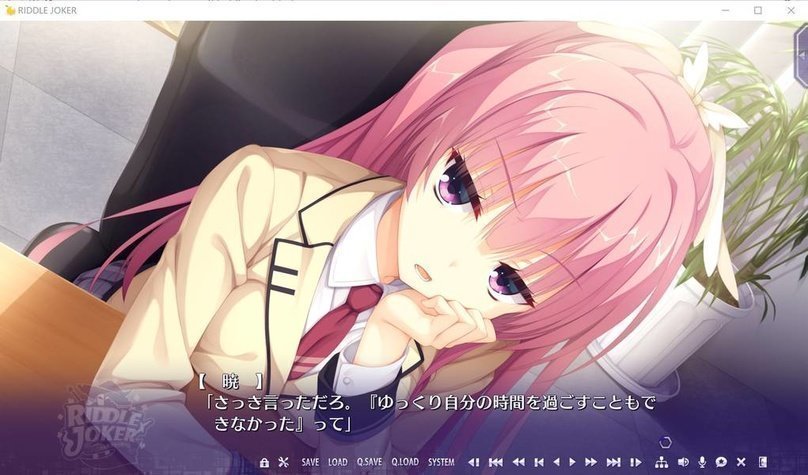
At least Kamijou Touma knows to take a beating first, talk shit after, and then mount his counterattack. The protagonist here just one-sidedly curbstomps the other guy. And the dumbest part? Yuzusoft can’t do fight scenes at all. I remember I already bitched about Whirlpool’s shitty fight scenes, and Yuzusoft isn’t any better. Fine, they’re both dumb, but at least Whirlpool knows to make a badass battle-stance CG. Yuzusoft flat-out refuses to make CGs — the protagonist doesn’t get a single cool-looking shot. Every CG goes to the heroines’ fanservice. Really living up to the fact that all they wanted to draw was porn.
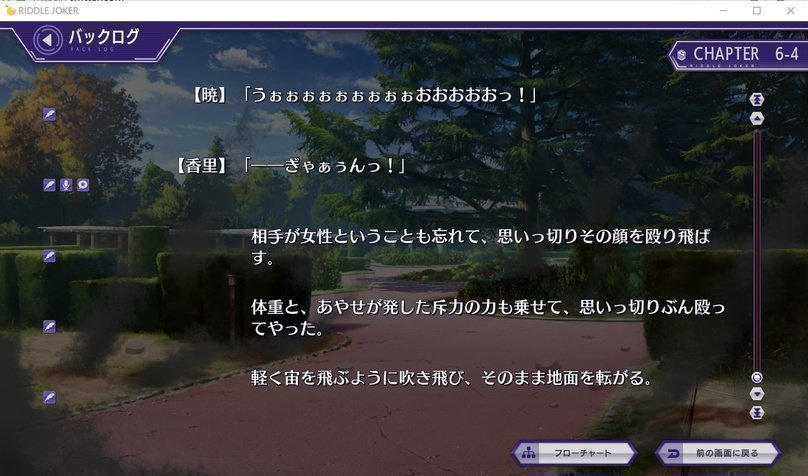
Under some nonsensical setup, with just a few lines of text, the protagonist grinds the Boss into the dirt. No particularly hype BGM, no blood-pumping presentation—every problem just gets solved like that, which really makes me wonder whether Yuzusoft ever even thought about making this setting of theirs look good.
In the end, the “ESP” setting Yuzusoft rolled out this time is just a skin, and what’s stuffed inside is still the same stuff from Amairo Islenauts back in the day. When they were selling the setting, they still played it coy — saying the heroine has big boobs, and the big boobs are fake.
So what if the huge tits are fake? Who cares? If anything, she’s basically useless in her own route — besides one bit at the end where she admits she’s got no real ability, she has less presence than the little sister and that cute crossdressing side character. She’s just dragged out to be cute, says she likes cats, likes games, blah blah blah blah — not a single thing to do with ESP.
By contrast, the other characters are tied much more tightly to ESP. The little sister is an esper who got abandoned, Chisaki has no powers but longs for them, Mayu is someone who researches ESP, and Hazuki has powers herself but can’t control them—she wants to use them to be a hero of justice.
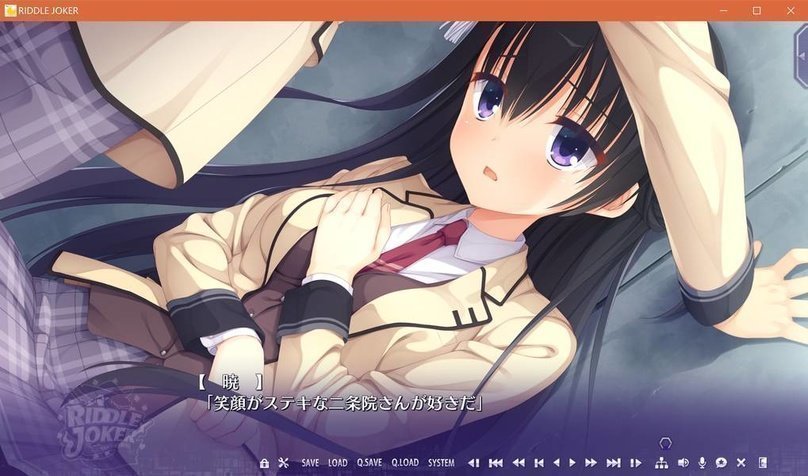
Oh right — if there’s any route in this game worth remembering, it’s Nijouin Hazuki’s.
Nijouin Hazuki is the most fully realized character of the bunch — complete personality, complete backstory, and her admiration for the protagonist actually has a reason behind it. She’s also overflowing with girlishness, and by the end she runs into her own setbacks and grows from them, learning that someone who pursues justice should put people first instead of being rigidly pigheaded.
(I have to rant here: Japan lately keeps pushing the whole “rule by people, not rule by law” thing. That recent Ouka Sabaki was the same way. No idea if it’s because Japan is just too starved for human warmth.)
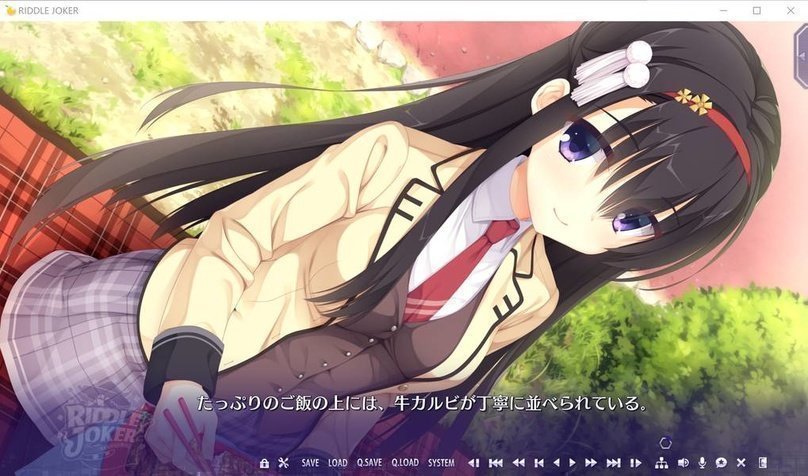
The Nijoji Hazuki route was written by Togishi Daiki, and it’s also the only script that still feels like it’s trying to tell a “complete story.” Hokumare Kei wrote the Shikibu Mayu route — the first half felt fine, but in the second half the old pervert’s true nature comes out and he starts writing every fetish and sex scene under the sun. Which is fitting enough, I guess. It’s an eroge, after all.
As for the other heroines’ routes… well, they’re just another copy-paste job from Yuzusoft’s older games, honestly.
I looked it up, and the two earlier Yuzusoft games whose stories I actually thought were decent both had Tōta (籐太) on scenario duty. I once said on Reddit that Tōta’s writing is solid — at least he’s willing to build up the world and tell you a story instead of just selling moe — and got flamed for it, with people telling me Tōta is a hack who can’t hold a candle to Maruto Fumiaki.
That said, I still think Maruto Fumiaki is a hack. Touta at least is someone seriously trying to tell a story. With him gone from Yuzusoft’s new game, the overall story structure got weird — only Toishi Daiki’s Hazuki route really held together, and you can’t call that the main route.
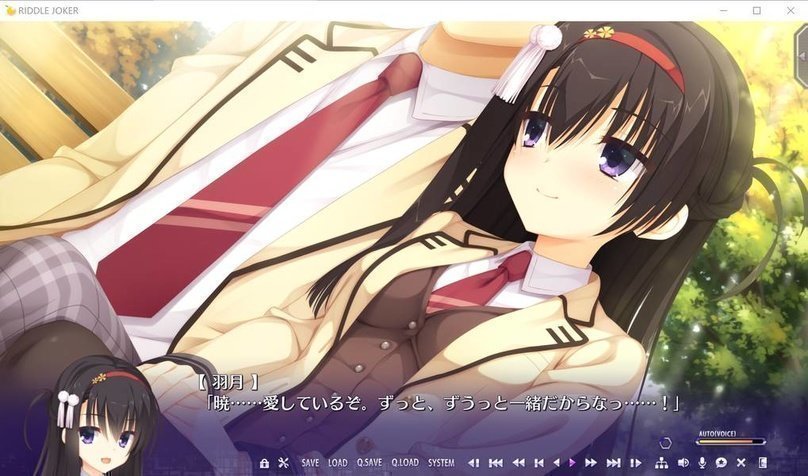
Of course, Riddle Joker isn’t completely worthless this time around. The BGM is a step up from the previous game, and I personally dig the various arrangements of the OP — the instrumental version of the OP is pretty good too. Looks like my wallet’s gonna bleed again if they put out an OST.
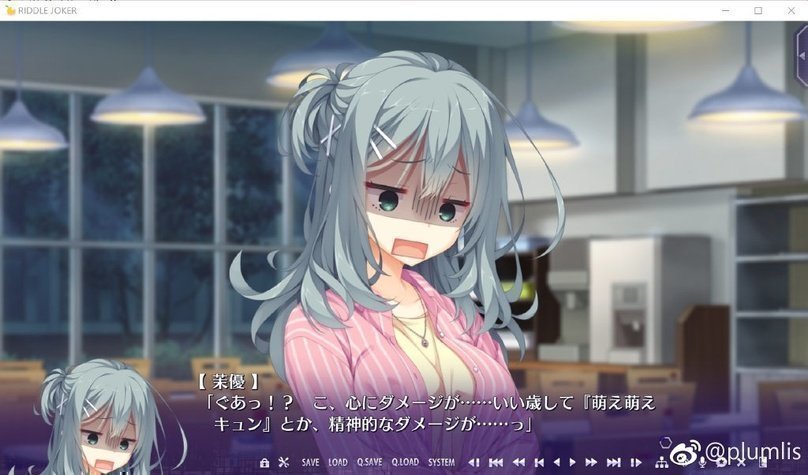
I have to say I was disappointed in Kiritani Hana’s CV work this time. Not sure if it’s that the character herself is written too one-note, or that she’s been putting more energy into anime lately, but in the game she just sounds like she’s “going through the motions.” Her performance of the “two-faced” angle doesn’t land either—compared to those yakuza-daughter-type roles she did early on, it’s night and day…
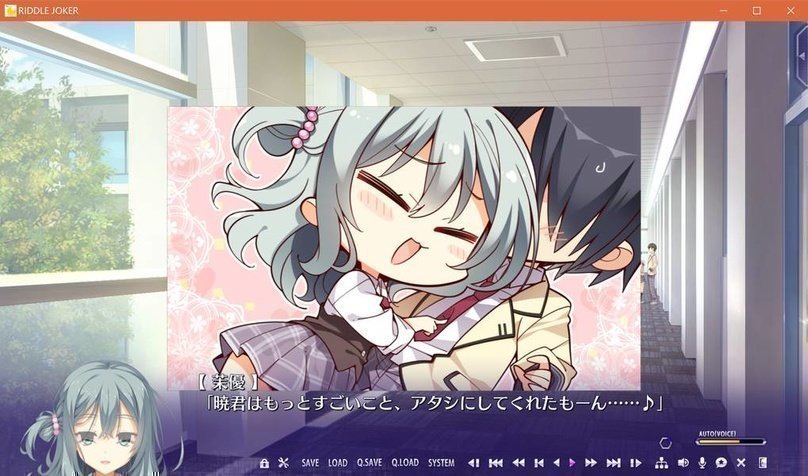
As for the best voice acting… I have to admit it’s only Sendai Erina and Gotō Mai. Sendai-san has plenty of experience playing these dead-serious country bumpkins — she’s voiced princesses and samurai and whatnot over the years. Gotō Mai has gone from voicing Yuzusoft’s little sisters to playing old women now, and sometimes when I think back to the days I was playing Tenshin Ranman, I feel like I’ve gotten old myself.
Closing thoughts:
As Yuzusoft’s new release, Riddle Joker didn’t live up to what I expected from it. It’s like Yuzusoft got knocked back down to its baseline — at least back to the level of Amairo Islenauts. Compared to *Senren Banka, it’s a whole Sanoba Witch short. It waves the “ESP” banner but never actually gets close to an “espers” theme — same old moe-selling, and sold more cheaply than usual…
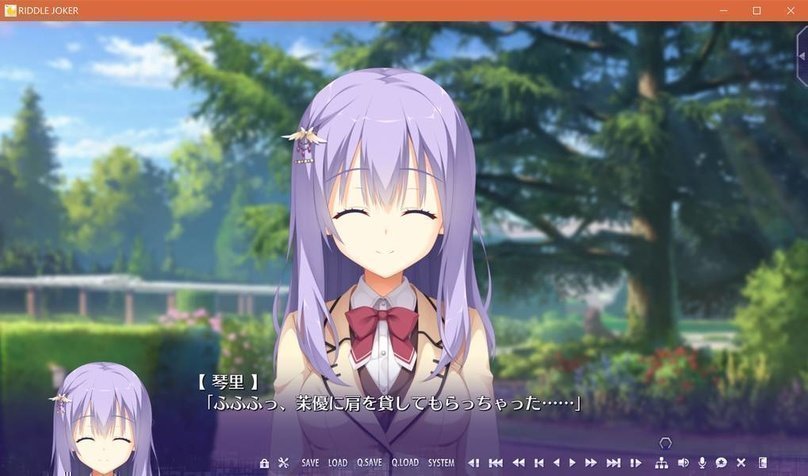
The heroine has zero presence, the advertised “her breasts are fake” gimmick doesn’t amount to much, and the heroine’s “two-faced” personality feels forced — like a setting that exists just to be a setting. The little sister route is pretty average, though not bad. Hazuki’s route is a highlight. Gotou Mai’s route is a bit nukige-ish. Taken as an eroge overall, it’s actually decent — at the very least it won’t leave you feeling uncomfortable.
It’s just impossible not to sigh — the whole world is shifting into reverse, and even Yuzusoft is no exception…
Tail:
Riddle Joker ended up being the visual novel I’ve spent the longest time on, about three weeks. I pretty much read every line of dialogue carefully, hoping to dig up something meaningful — but trying to find that in Yuzusoft’s return-to-moe-moe new release, I guess I was being too naive. The solid showing of Yuzusoft’s previous two games had raised my expectations, but maybe that was just an illusion — like when I watched A Certain Magical Index back in the day. If Index gets a season 3, everyone will still cheer for Touma and Misaka, but if another ACG work comes along with a protagonist who constantly wins arguments with his mouth and slaps people down, maybe nobody would buy it anymore.

The game is called Riddle Joker — a mysterious trump card. But a trump card from Yuzusoft can only ever be the joker printed on its face.
Comments are hosted on the Chinese main site. This mirror is read-only.