Sora to Umi ga, Fureau Kanata (空と海が、ふれあう彼方) Review
Two Women, a Dolphin, and One Man on an Island…
When I first watched Your Name., I saw the heroine frustrated with her mountain village, wanting to go to the big city, wanting to explore a new world.
Honestly this kind of thing isn’t exactly fresh for us. We always see it in Japanese film and TV: the protagonist stuck in the countryside, sighing about how they hate this town, hate the sticks, want to go to Tokyo, want the big city.
But I figure a lot of people might not get that feeling:
“The countryside’s great, what’s so good about the big city? The countryside’s way more free.”
Well, you don’t know what you’re missing till you’ve tasted it. Maybe people who grew up in big cities can’t understand the longing for excitement that exists in small towns. Most of the people talking about going back to the countryside are just sick of the noise of the city.
And a lot of them have no idea what the countryside is actually like. Drop them out there, let them walk into town and fail to find a single Heytea, and no amount of bike-riding with their ass chafing will fill that void inside.
I remember going to the countryside once when I was little. My family’s from a poor county in Kaifeng, Henan — well, not exactly my hometown, my grandma’s side.
How poor was it? I remember when we got there, the relatives served us their best meal: a pot of mian gedda soup with a few beaten eggs in it. That was the top standard. And those eggs only existed because the old hen had graciously laid them that day — otherwise there wouldn’t even be eggs.
The villagers there didn’t even have coops. Just a laying nest. At night the roosters and hens would fly up into the trees to sleep.
Yeah, I only realized chickens were birds too after I personally watched a big rooster fly up to the treetops. They’ve got wings. It’s just that city thinking makes us forget.
As novel as the countryside was, I got bored of it fast. Even with flying chickens, it was just too dull. Too monotonous — not just the food, but the people, the things to do, the scenery.
Lots of people say the mountain valley views are so beautiful. But watch them every day and you’d get sick of them too. Tell someone they have to look at that for the rest of their life and never go back to the city, and they’d probably break.
So maybe now you can understand the mindset of people in the countryside who want to go to the big city. Even with internet and delivery out there now, the exciting world is still better.
And what if that “countryside” is on an island?
Japan is an island nation with plenty of outlying islands, so a lot of novels, anime, manga, and games set their stories in ocean-adjacent areas. Small islands are a common “hometown setting.”
So this time Pulltop picked that subject too. The title Sora to Umi ga, Fureau Kanata means something like “Where the sky and sea touch, just beyond reach.” It’s a story about the ocean, but also kind of not much about the ocean at all.
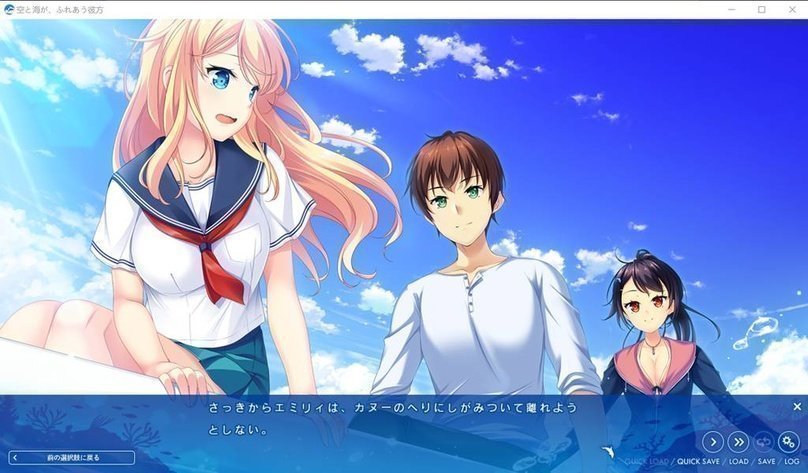
The game opens with the protagonist saying he’s going back to his hometown, the Ogasawara Islands, during his vacation for certain reasons — to help his grandma run her coffee shop. Once he’s back on the island he runs into childhood friends, boys and girls, and most importantly the heroine Chisa. But he also meets a mysterious blonde girl named Emily — well, “Emiry” — who nearly drowns and takes forever to rescue. She says she hates the ocean, says she’s here to find treasure, and then vanishes. The protagonist doesn’t ask too many questions.
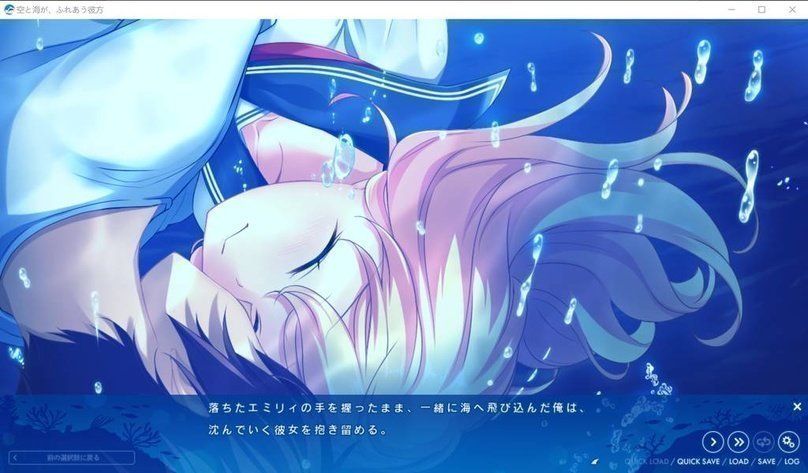
Just as he finally meets up with Chisa and grandma’s coffee shop to start his working life, a missing person notice goes out: has anyone seen a blonde girl, a runaway who needs to be found. The protagonist remembers Emily and starts looking. Turns out she’s starving by the roadside, staring at the coffee shop, and gets caught red-handed.
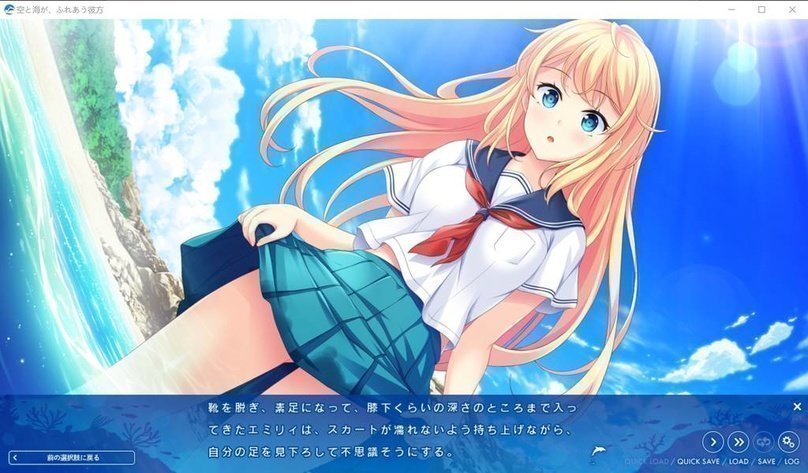
After she’s caught, the police box is notified that the runaway has been found. But Ogasawara is so remote that boats don’t run every day, so she has to wait for the next one to be sent back. Until then Emily has to stay at the coffee shop where the protagonist works. Grandma takes her in, but says she’ll have to help out.
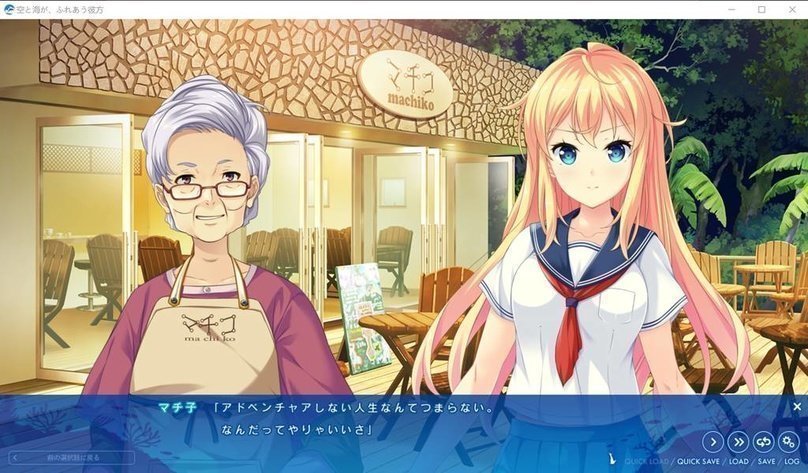
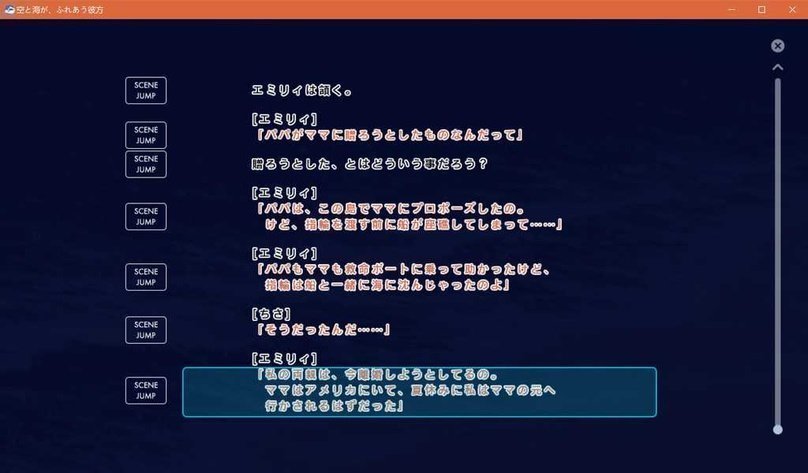
Emily isn’t too happy about it. She tells the protagonist she’s looking for a “sunken ghost ship” in the Ogasawara Islands, and that there’s “treasure” on it. He asks why. She won’t say. Eventually, shyly, she spills it: Emily is mixed-race — American father, Japanese mother. Her parents met on this very island and got engaged here. Then they fell out, divorced, and Emily figures if she can find the ring from their engagement, maybe they’ll get back together.
“So where’s the ring?” “On that ghost ship.”
Her parents’ ship sank near here once, and the ring went down with it, never found. So Emily ran away from home just to come find that ship and its treasure.
But Chisa, a native of the island, pours cold water on it: “That wreck of yours is how many years old? Ogasawara is a tourist hotspot, people come and go all the time. If it could be found it would’ve been found already. What the hell are you gonna find?”
And most importantly, Chisa asks Emily:
“Can you dive?” “No. Can’t I just put on gear? Besides, can’t I learn?” “Learning takes days at minimum. It’s not something you pick up casually.”
Naturally Emily starts to feel hopeless. At one point the protagonist and Chisa take her to a mysterious little island nearby to play, and they get stuck overnight because of a rainstorm. After the rain stops they look at the starry sky, and Emily thinks, well, coming to see the stars isn’t so bad. Not a total waste. If her parents have split, maybe she shouldn’t force it.
And right when Emily has let it go, Chisa dives and sees something mysterious the storm washed in underwater…
It’s the “ghost ship”!
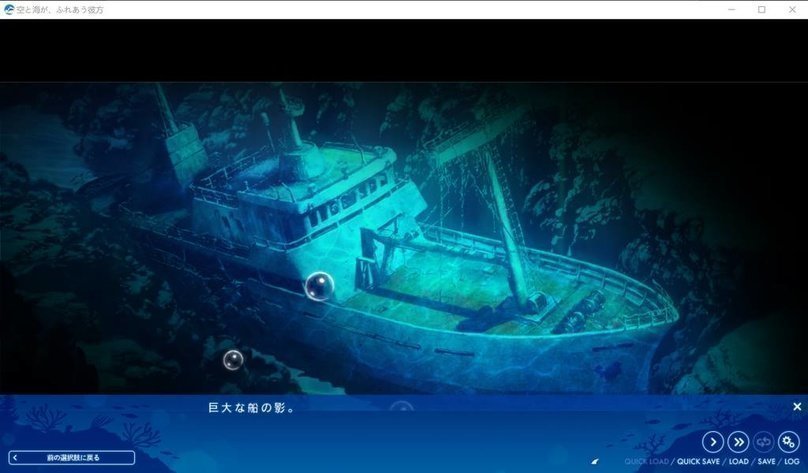
So now Emily finally has a goal. She decides not to take the boat home yet, stays to learn diving, with the aim of getting into the ghost ship and retrieving the ring.
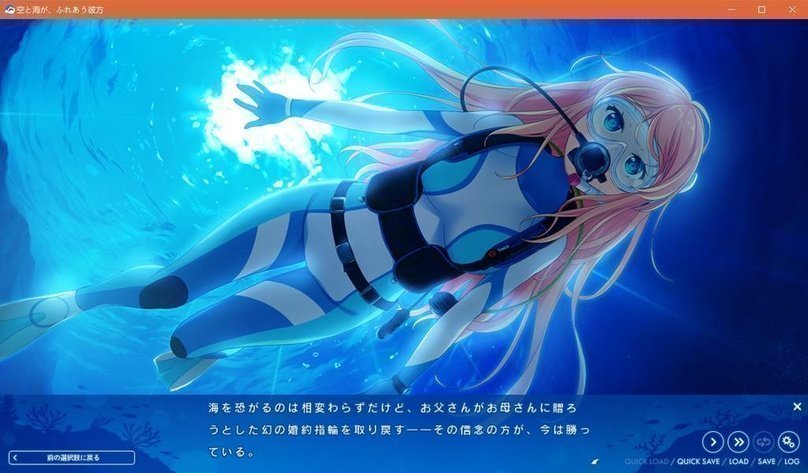
Diving lessons go pretty fast. Emily quickly gets her entry certification, though she still needs more training before she can go into the ship. Then things go wrong…
First, Emily gets injured, and you can’t do deep dives when you’re not feeling well.
Second, Chisa starts throwing tantrums.
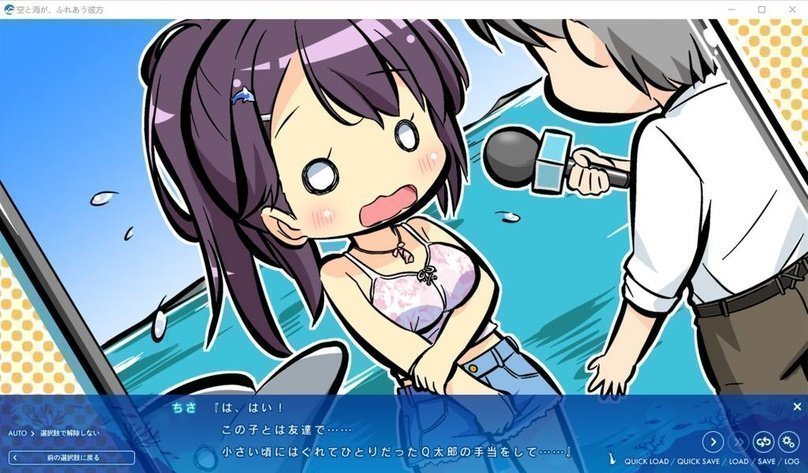
Chisa has taken in a dolphin named “Q-taro.” She says the dolphin was rejected by its pod and was all alone, so she took it in. But a people-friendly dolphin hanging out with a girl every day quickly becomes a media sensation, and some villagers ask Chisa to make Q-taro the island’s mascot to attract more tourists. Chisa hates the idea, opposes it, throws a fit. The protagonist tries to talk her down, and while he’s talking her down, feelings happen.
Turns out Chisa believes Q-taro is a dolphin and will eventually need to return to its pod, can’t stay with her forever. She wants to release Q-taro, doesn’t want it being some mascot. To calm her down the protagonist takes her to see the stars and stuff, and they remember the good old days playing together as kids.
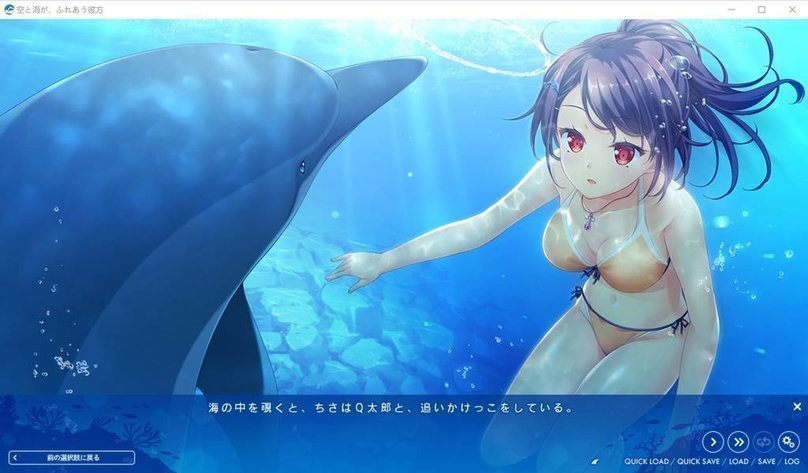
Finally, on the night of the village festival, the protagonist confesses to Chisa. (I can’t be bothered to complain about how every game does it on festival night…)
Chisa is embarrassed and ultimately tsundere-rejects him.
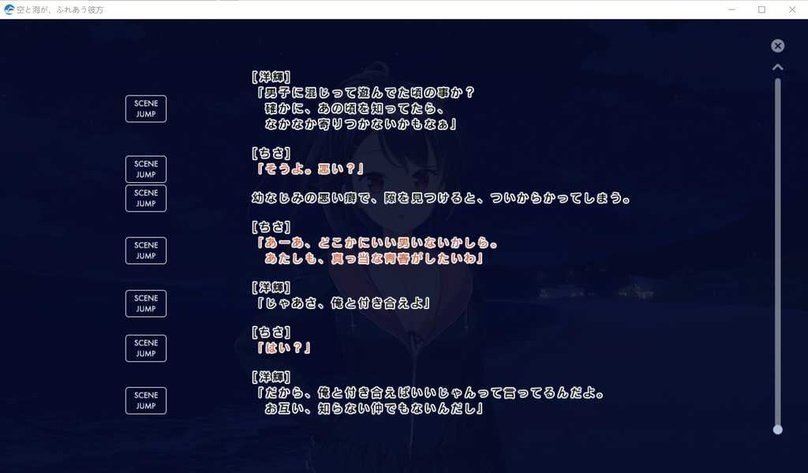
The protagonist takes it pretty well — rejected is rejected. But Emily notices something’s off and asks what happened. He tells her straight, and Emily blows up. She goes to work on Chisa:
“How do you know he’s no good if you haven’t even tried?” “How do you know he’s not right for you without meeting and talking?” “You’re not getting any younger, don’t be so picky. There’s nobody else suitable on this island…”
After enough nagging, Chisa agrees to go on a date with the protagonist to see if they’re suited as a couple. They’ve known each other so long, always friends — going from friends to lovers takes some steps.
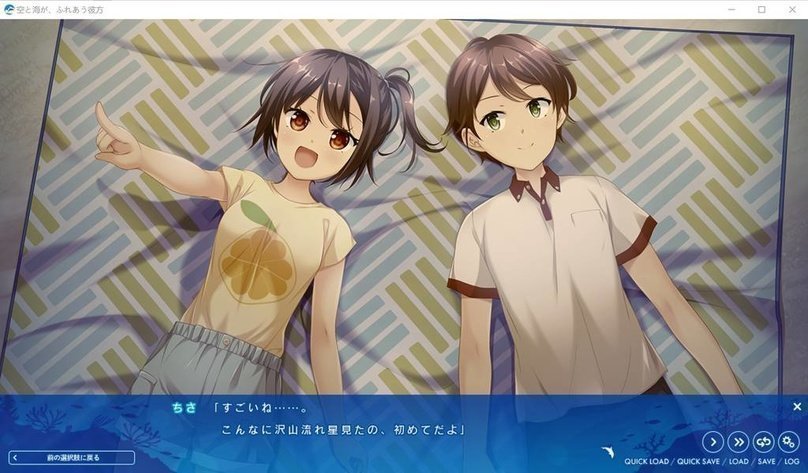
But there’s nowhere to date on this crap island anyway. Besides walking by the sea, there’s nothing to do…
“See, this is why I hate the countryside.”
Chisa says what she really thinks. She grew up by the sea but doesn’t like it. She’s never been anywhere but this little island, and she feels a deep loneliness. She thinks the Q-taro she released is a lot like her — she says she took it in because “Q-taro was lonely,” but really she took it in because she was lonely.
Chisa wants to see a wider world, doesn’t want to spend her whole life on this island. And if she agrees to date the protagonist, in the near future grandma’s coffee shop will close because of her age, the protagonist will never come back, and nobody wants to return to such a remote island. They’ll end up apart anyway.
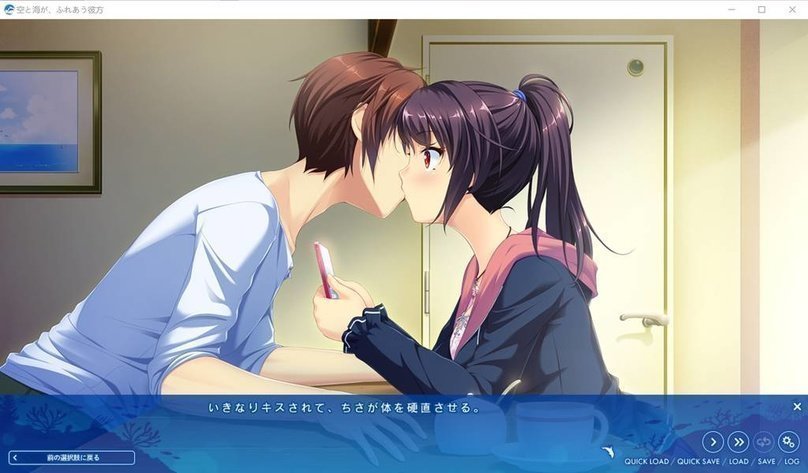
Naturally the protagonist seizes the moment — no, takes the opportunity to comfort her, saying he’s not that kind of guy. In the end he wins Chisa’s heart, they kiss and hug and become a couple. Don’t get any ideas though — this game is all-ages. Wholesome!
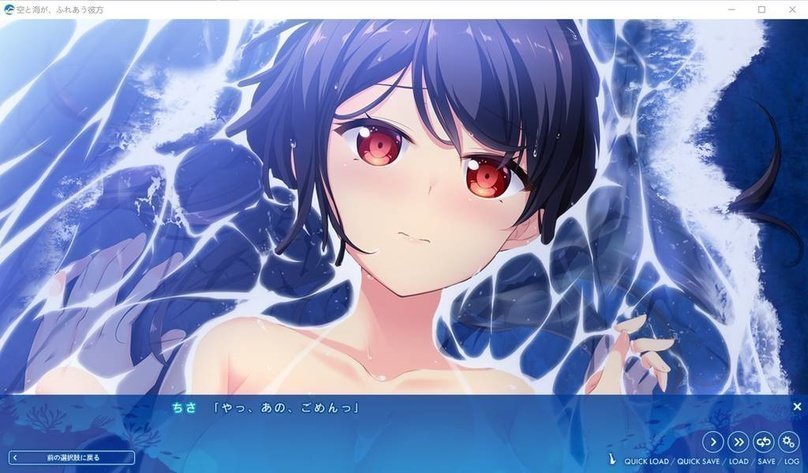
Once the protagonist’s love life is settled, it’s time to solve Emily’s treasure hunt. Chisa agrees to dive in her place to find the ring.
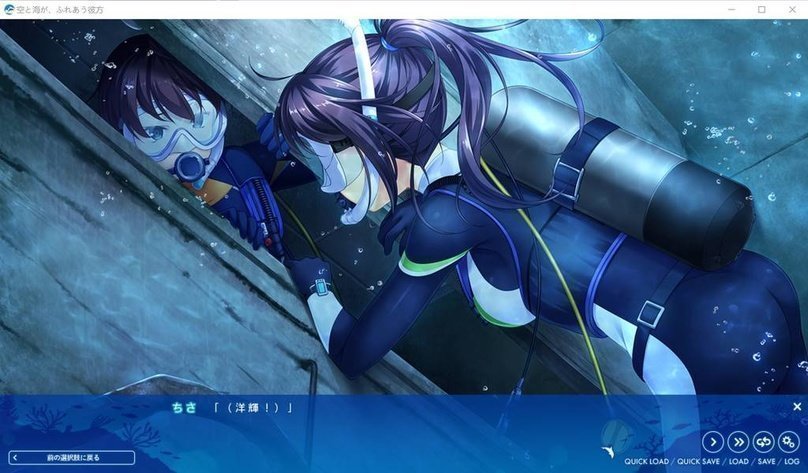
Chisa dives with the protagonist, finds the ring box inside the ship, and inside is the treasure Emily wanted most: her parents’ rings.
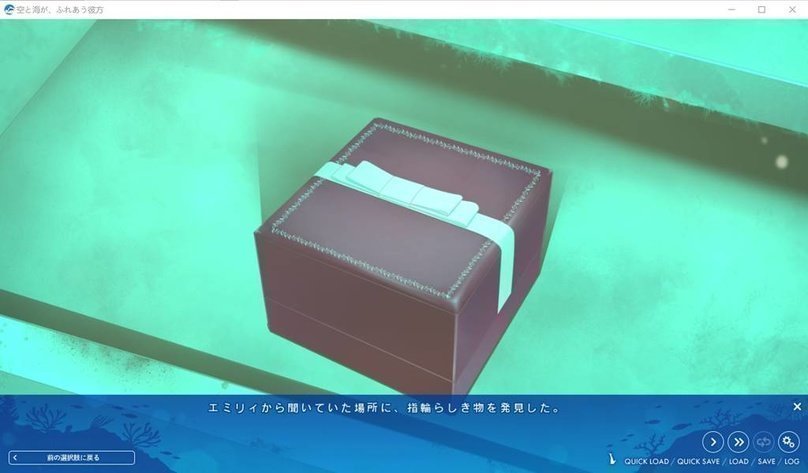
There are some dangers during the dive, but this isn’t a horror game — it’s tense but safe.
Eventually the game hits its Happy End. Chisa and the protagonist are together, and the homewrecker Emily gets the ring she wanted. Chisa ultimately follows the protagonist to the big city and lives there, and every holiday they go back to the Ogasawara Islands — after all, that’s their hometown. And Emily messages them: her parents met again because of the ring, and there’s a chance they’ll reconcile…
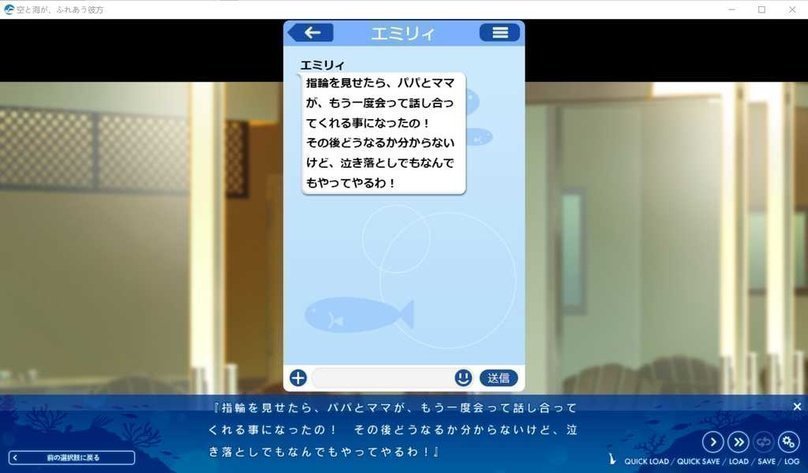
So everyone got what they wanted, and the game ends.
I have to say, Pulltop finally figured it out with this one. Compared to last year’s “robot doll VR breakdown” game, this is miles better. Maybe Pulltop finally realized it’s more comfortable making this “some sport + sightseeing + hometown” style of story. It’s basically a full rehash of the old “stargazing” formula, just swapping astronomy for diving and a mountain town for island vibes. The hometown is the same hometown, and a dash of childhood memories works like a charm.
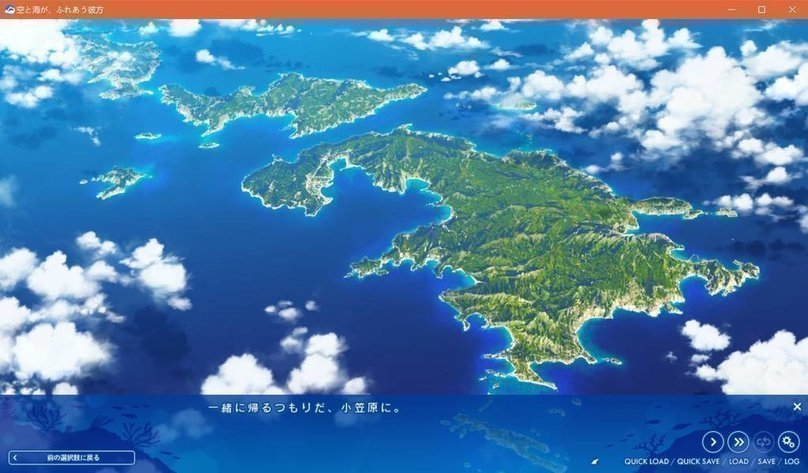
Even more notable is the OP, Into the Ocean. The rhythm and vocal style are infinitely close to the stargazing OP. I don’t hate that trick — I liked stargazing plenty. The music feels close to some early Pulltop Latte island game, too. There’s a whiff of “take the stuff that worked before and stitch it together into a hit.”
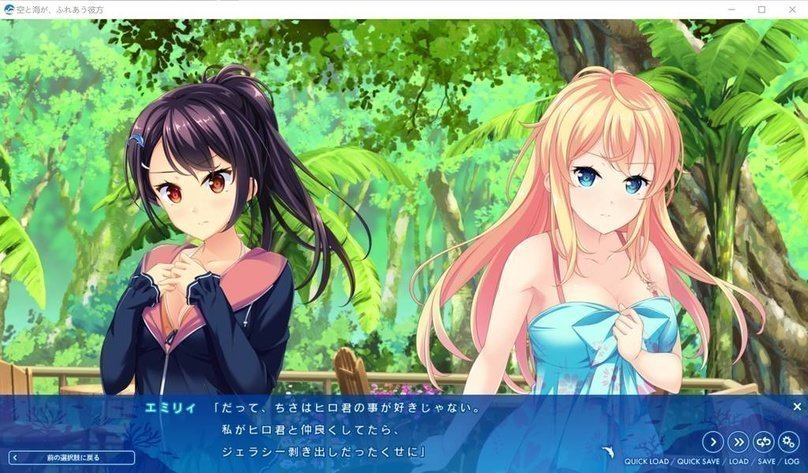
None of that really matters. What matters is the game is pretty good overall. At first it feels cliché and pointless, but as the characters gradually show up it gets interesting. That “interesting” isn’t about dramatic plot twists — it’s the daily banter. Chisa’s little sister especially, small body big attitude, sometimes carries the everyday scenes. And the game clearly spent a lot on the “waves” and “diving” presentation. At 3000 yen it’s a steal.
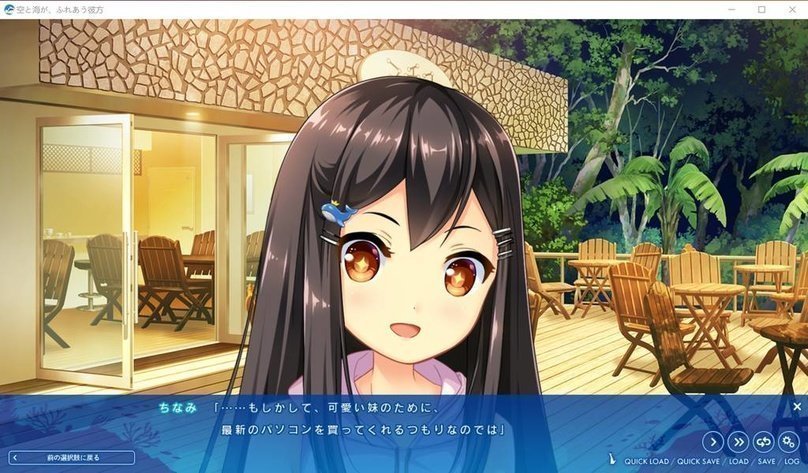
Of course, at only 3000 yen, I figure there’s a good chance it’ll come to Steam. First, it’s all-ages. Second, the OP credits list all the staff in romaji and English. That’s the prelude.
Honestly if it comes to Steam at this quality I’d recommend it. The game isn’t toxic, the music’s good, the plot is a bit cliché but the voice acting is great. You can’t really say it’s bad in any area. In smartphone terms, it’s a “water桶 phone” — a solid all-rounder…
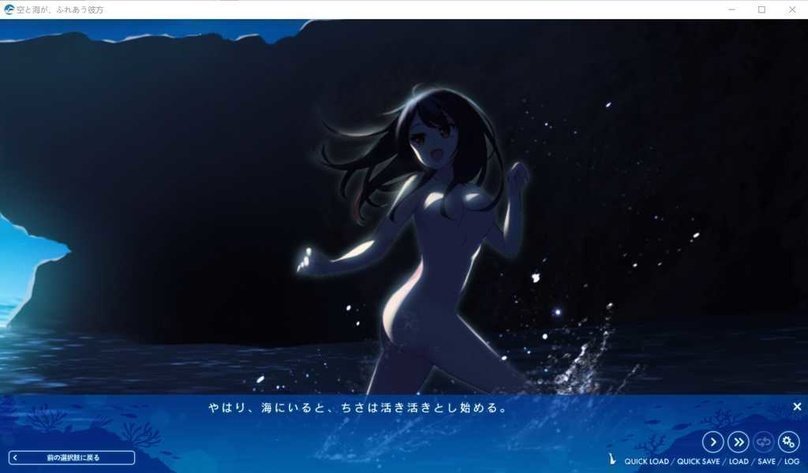
Oh right, speaking of voice acting, the game uses two relatively new VAs. One is Yuki Takada… I only know her as Aoba from New Game! The other is Akari Kito — I only know her as the lead girl from Blend S, and her legs aren’t as nice as Kana Kiritani’s…
But that’s not important. Even if I keep hearing Chisa’s voice as Choko Moka, playing a game with summer vibes right as summer approaches gives you a cozy feeling. And it’s wholesome all-ages, so it won’t give you any dirty evil thoughts. Even if I titled this review “Two Women, a Dolphin, and One Man,” it’s still a wholesome pure game…
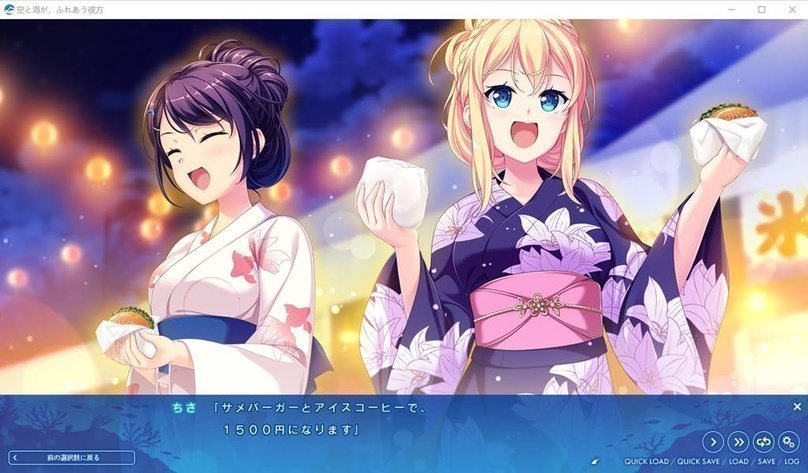
Ah! Pure and innocent! Ah! Youth without regrets! Ah! I damn well want to go to the beach too…
Thanks to the Japanese friend on Twitter who corrected me about the actual coordinates of the Ogasawara Islands.
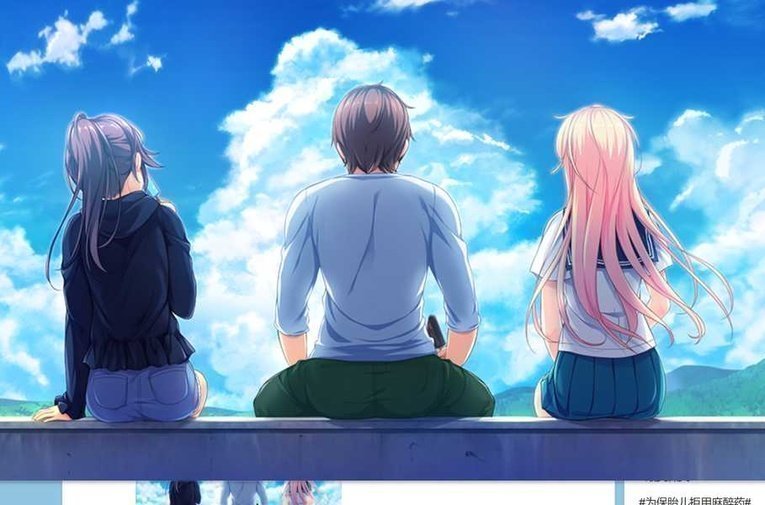
PS: The protagonist has a huge ass.
Comments are hosted on the Chinese main site. This mirror is read-only.