Koisuru Kokoro to Mahou no Kotoba (恋するココロと魔法のコトバ) Review
A Fairy Tale Not for Children
I’ve played a fair number of visual novels, and there’s one thing I’ve never quite understood.
Since most Galgames are eroge—18+ games whose selling point is the presence of sex scenes—they should by definition sit squarely in the adult game category.
People who buy adult games are, for the most part, adults (at least on paper). So when it comes to how the content is presented, you’d think the “adult factor” would be played up even more.
But here’s the ridiculous part: in the Galgame market, aside from the handful of developers who actually deliver on “adult game,” the majority of mainstream players have some really weird demands:
- The story can’t be cruel, or I’m sending you razor blades.
- The game can’t skip the sex, or I’m sending you razor blades.
Logically, an “adult-rated” story worth its salt is bound to have cruel elements—the better it is, the more indispensable the cruelty. Yet the Galgame audience refuses to accept it.
If you won’t accept a “cruel” story, then you must like pure love stories, right? But the sex is still mandatory—and not just any sex, you need all kinds of positions, all kinds of play to be satisfied…
So what kind of twisted demographic are you people who play 18X galgames, anyway…
The story has to be pure, and it has to fuck… where do you even find a story like that…
Until some mysterious person on Google+ showed me an 18X doujin that “perfected” this niche, I sort of got it… and I also got why “moe-otaku” and “otaku” exist. Maybe a lot of people still have beast-like sexual desires inside, they’d just rather vent those desires inside a fairy tale…
It’s no wonder so many games that claim to be pure love yet are stuffed with mosaics sell like hotcakes. No wonder so many people love “fairy tales not for children.”
To build a “fairy tale,” you first have to work on the setting. And what shows off the setting best? The art style, obviously.
Cute art, cute girls—naturally that makes a cute fairy tale!
And who has the cutest art? None other than Shira Mochizuki (白もち桜)! Whether it’s the teacher from Witch’s Love Diary (魔女こいにっき) back in the day, or the main heroine of last year’s Natsuiro Kokoro Log, she’s my favorite.
People always rag on Shira Mochizuki for drawing the same face every time, but I think her CGs are rock solid. This time the studio Hearts noticed her strengths too and directly had her do the art for their new game: Koi Suru Kokoro to Mahou no Kotoba (恋するココロと魔法のコトバ).
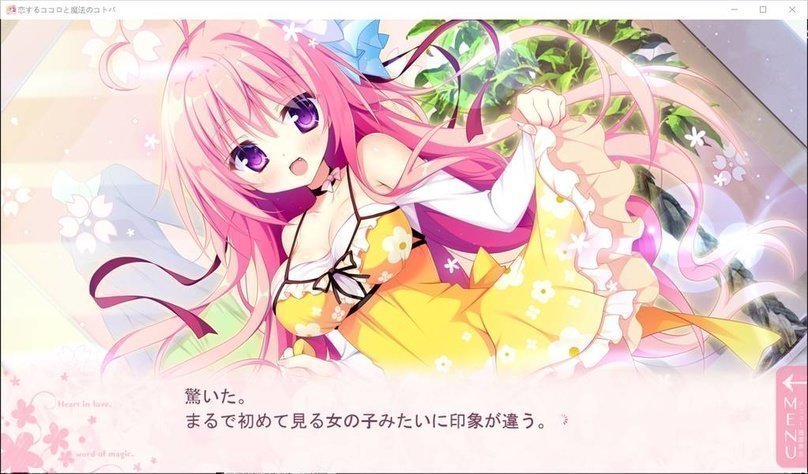
Koi Suru Kokoro to Mahou no Kotoba—Chinese name: 恋爱之心与魔法之语—cute art, a magic and witch setting, immediately pierces the hearts of the moe-otaku crowd. Not me, though—partly because I’m not a moe-otaku, but mostly because I was just hoping the heroine would give me the same feeling of love that Kuon from Natsuiro Kokoro Log did.
The game was announced early and the release schedule went like clockwork, but I had a bad feeling the whole time. The scenario team is the same as last year’s Anata ni Koisuru Renai Recipe, but a lot is missing. That game had Suigetsu Ryou on BGM—this one doesn’t. Natsuiro Kokoro Log had Kihara Arata on scenario—this one doesn’t.
That bad feeling was basically me thinking the staff for this game was cobbled together…
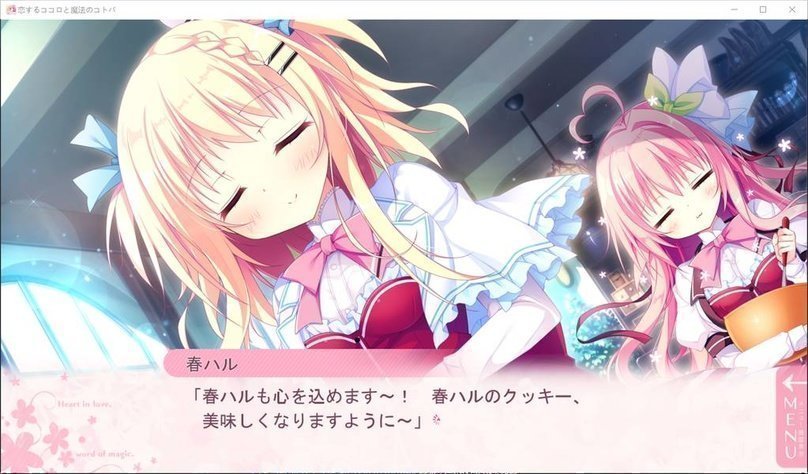
Not long after the game came out, I played it and found my premonition was right.
This game has an extremely simple setting, but it tries every which way to imitate last year’s Anata ni Koisuru Renai Recipe—and doesn’t even imitate it well… it’s awkward.
The setup: the protagonist one day wanders into some school club and finds it full of girls who claim to be witches. He also somehow summons a pink-haired girl from the club’s magic circle, gets deemed a magician himself, and is forcibly drafted into the club…
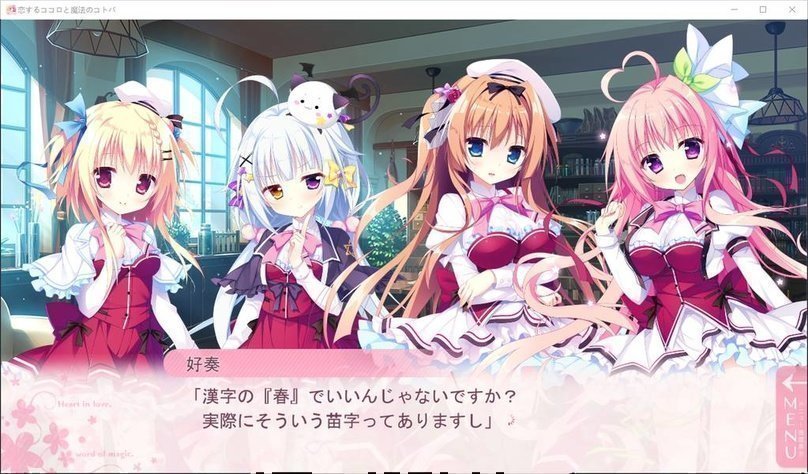
Then the girl gets named Haru (Haruharu), and everyone determines she’s actually a “high elf”—the embodiment of an elf who gained a physical form because her magic power was so strong.
After that… the game launches into a long, and… indescribably bland common route.
How to describe this common route… should I call it boring, or just lukewarm tap water? It’s basically every day explaining to the protagonist what these witches do, then tea and chatting…
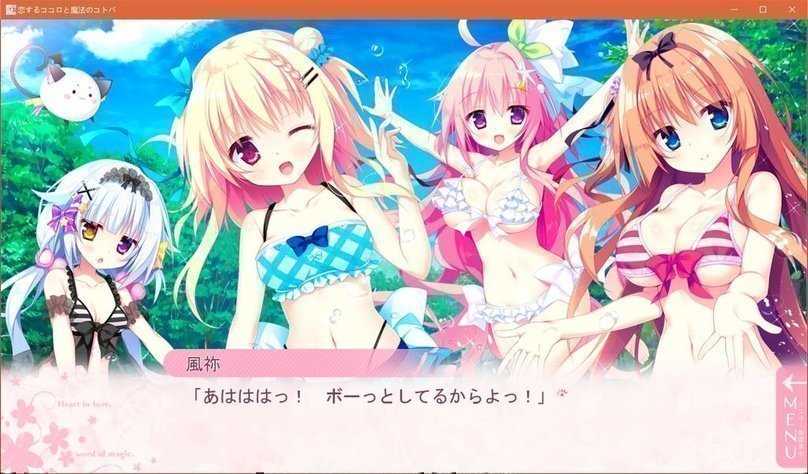
Actually, the witch setting in this game is pretty interesting. When you hear “witch” most people probably think of a girl who wields magic, but the “witches” here are more like “shaman” from World of Warcraft… they “commune” with different species—spiritual communication, basically. Everything has an “elf” inside: light has a light elf, grass has a grass elf, water has a water elf, flowers have a flower elf, vacuum cleaners have a vacuum cleaner elf, vibrators have a vibrator elf, panties have a panty elf, Smartisan phones have a Luo Yonghao elf, big dicks have a big dick elf, Zhu Niubi has a Zhu Niubi crazy elf…

And what these witches do is “commune” with the elves—which is just communication—and then do stuff (like rescue cats and dogs)… promoting world harmony…
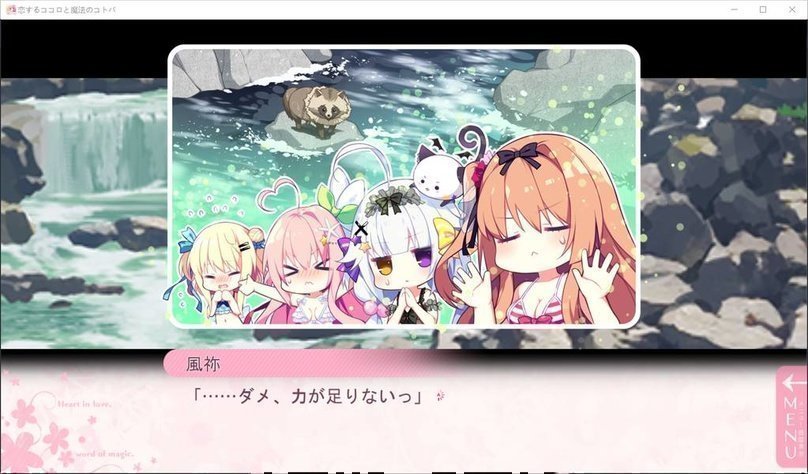
No matter how you look at it, they’re shamans… or druids… The game itself even jokes that “witches” are called Shaman in other parts of the world.
Anyway, after the protagonist joins the club, every day is tea, chatting, and going to commune with elves. Nothing else, really. He also finds out there are plenty of other old witches at school—Ashely, the manager of the café where he’s staying, might be one too. Witches everywhere, communing everywhere, shooting the breeze with no real substance. Until the game hits the school festival… and the protagonist has to pick a heroine to pursue at the after-party…
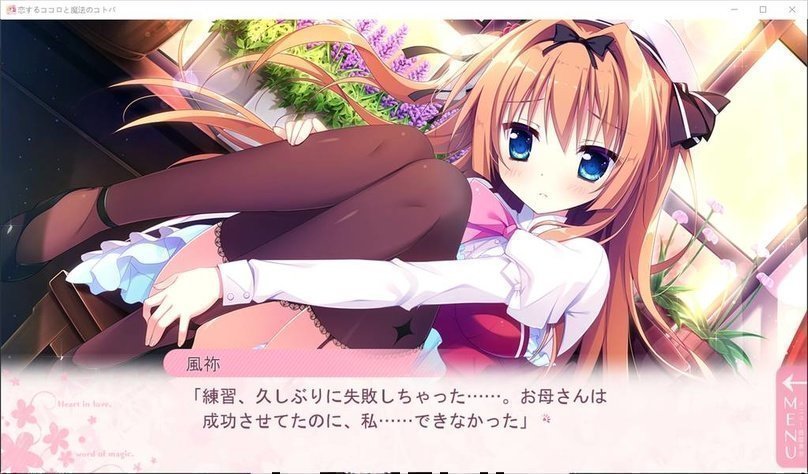
I don’t know how many times I’ve typed “the game reaches the school festival and you pick a heroine” on this blog. All these games follow the same formula… I’m too tired to even complain.
Honestly, there’s no big mystery in this game’s plot, and no heroine really drew me in. Frankly, none of the four heroines holds a candle to Kuon from before—mostly a character design and CV problem… I’ll skip that for now. My only real question was: where did Haru the high elf come from? Why did the protagonist summon her? Why is she so special that even non-witches can see her, when all other elves are visible only to witches?
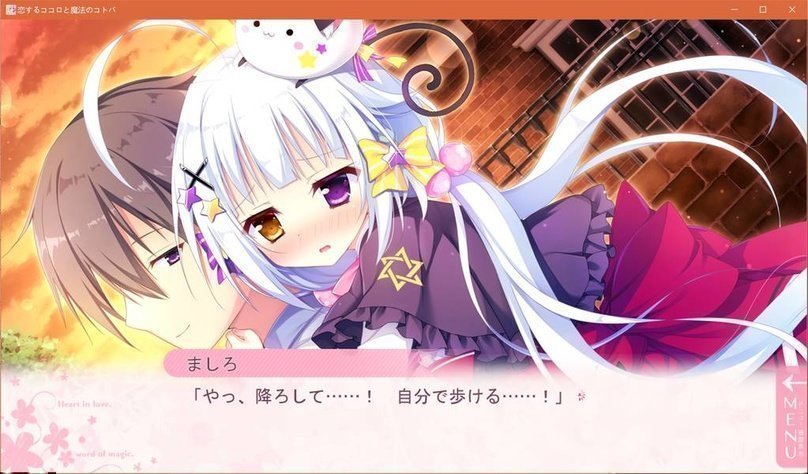
Once you enter her route, the protagonist just keeps hanging out with her every day… confesses, falls in love, has sex—the usual flow. Haru acts like a total airhead, speaks in a naive sweet voice, nothing else to her. Then one day the protagonist falls and gets hurt, Haru gets worried and uses magic to heal him—and that healing drains her own magic power.
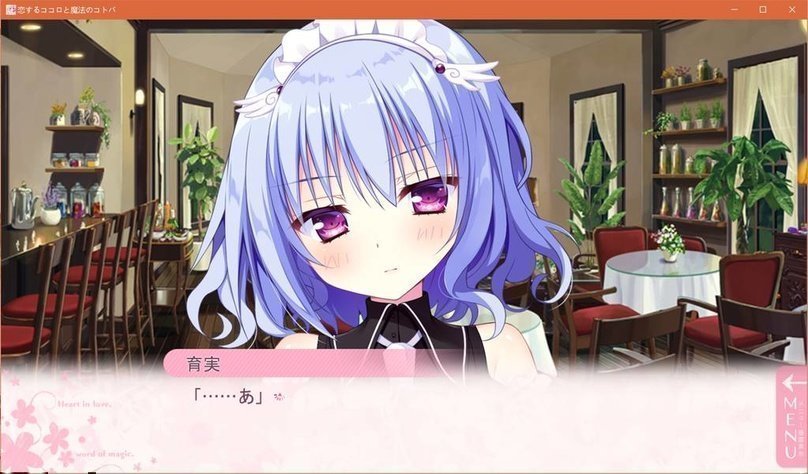
At this point Ashely—the older lady—sees Haru’s symptoms and suddenly says it’s bad. Haru is going to disappear…
Why? Because Haru is an elf. With no magic left and no new supply, she’ll gradually become invisible to others like other elves, and eventually vanish completely.
Ashely suddenly starts recounting Haru’s origin like she just discovered a new continent. This town used to have a land god who was very good to the locals, granting every request. But the residents asked for too much, the land god was too selfless, and used up all her magic. Once the magic ran out, the land god couldn’t maintain herself and dissipated. Later, the land god’s elf form was reborn among the flowers and took the shape of a little girl, who happened to meet the protagonist as a child. The protagonist played with that little girl and named her “Haru.” “Haru” was happy and said she wanted to keep playing with him, but that “Haru” didn’t have enough magic either—no way to replenish it—so she disappeared again, turning into a magic stone. The protagonist, playing by the sea as a kid, happened to pick up that stone and treasured it, carrying it with him.
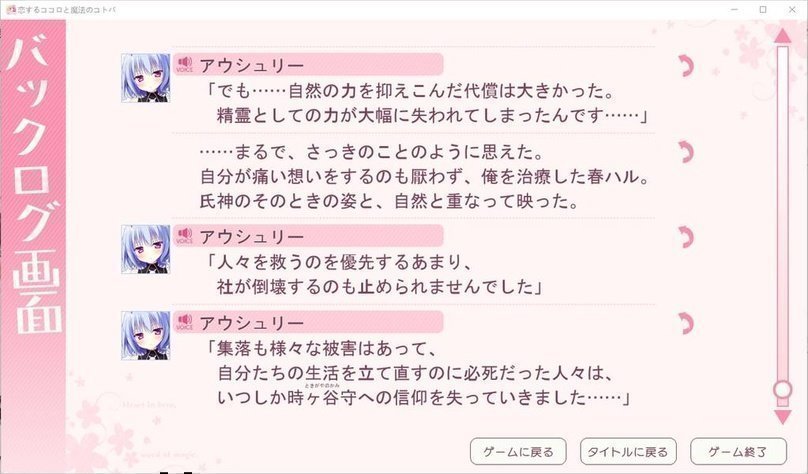
So the day the protagonist visited the school club, he brought the magic stone into the magic circle, triggered the magic, and summoned “Haru” once more. But “Haru” had slept too long and forgotten her past.
In short: the protagonist met an elf as a child, the elf lost her magic and turned into a stone, and when he grew up he summoned her again…
And now the situation is that the summoned elf is about to lose her magic again… meaning she’ll turn back into a stone.
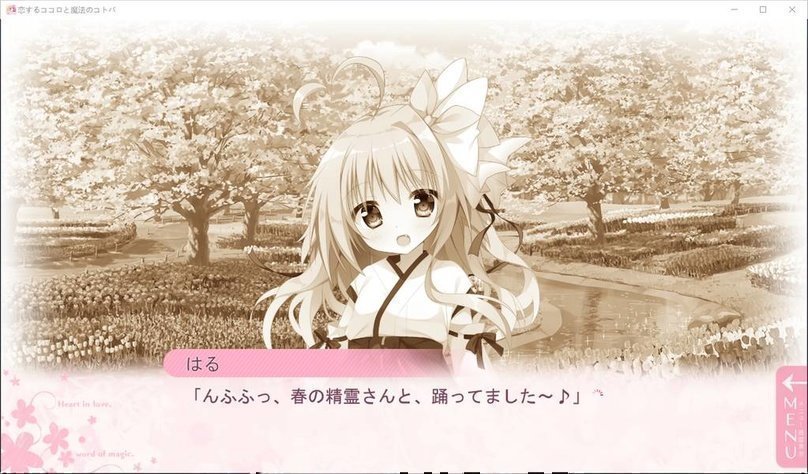
The protagonist asks if there’s a way. Ashely says there’s no solution. Elves need to absorb the essence of sun and moon to survive. Once an elf gains humanity, or interacts with humans—like having sex with the protagonist—she loses her connection to her original elf nature. No magic, and without magic, she starts to disappear… a vicious cycle.
Haru’s doom is sealed. The protagonist can only take her to eat good food, keep dating her, and tell his friends that if one day Haru can’t be seen anymore, if her magic runs out, don’t call it out—let her enjoy her last days happily.
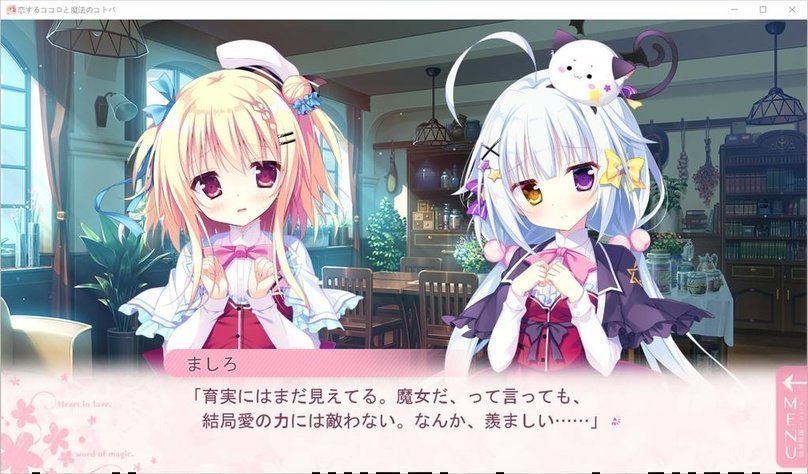
That part was actually quite moving—the protagonist and his friends lying for Haru’s sake, a white lie.
But in the end Haru still dissipates among the flowers, in the protagonist’s arms. She turns into a stone.
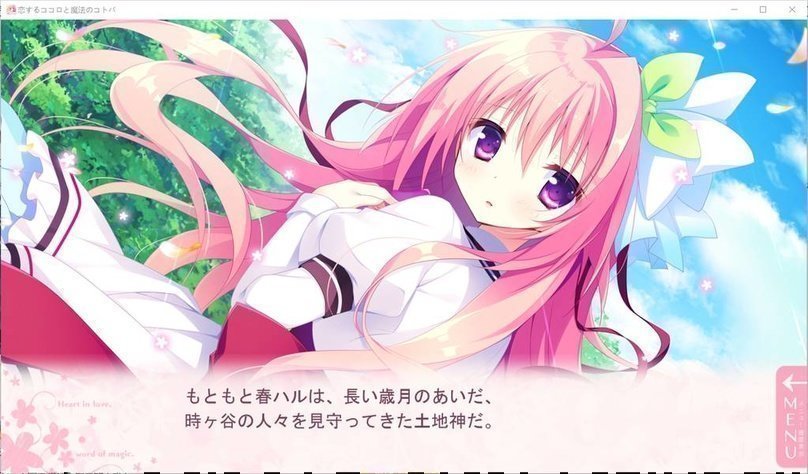
Who knows when the stone will awaken next time. But the protagonist’s friends find some ancient magic book that describes a situation like his—a mortal and an elf in love, the elf loses her magic and turns to stone, but the mortal carries the elf’s stone around the world, maintaining their spiritual connection. Soon the elf regains the bond with the mortal, gets new magic, and is reborn.
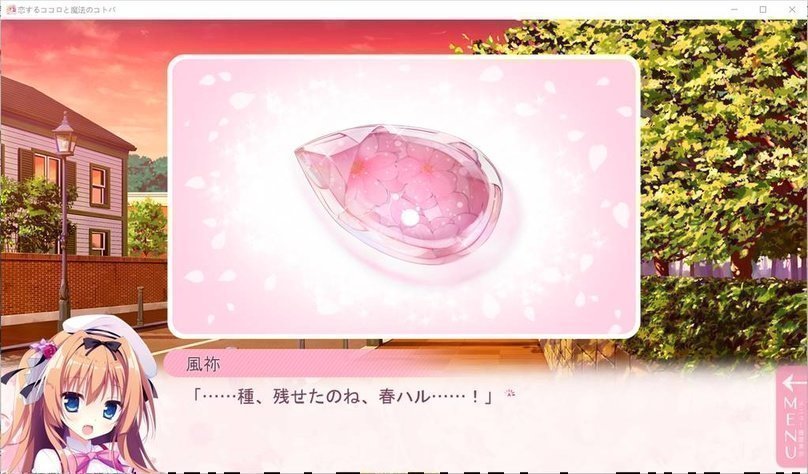
The protagonist copies this—carries Haru’s stone around looking at the sea, dicking around… within two weeks, he summons her again…
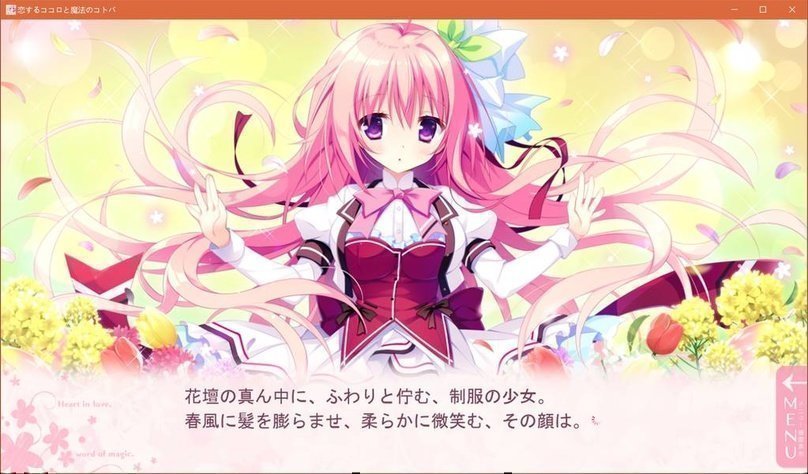
Holy shit, that was fast… I didn’t even have time to be moved…
Naturally, it’s a Happy Ending—the protagonist and the elf he summoned are together forever.
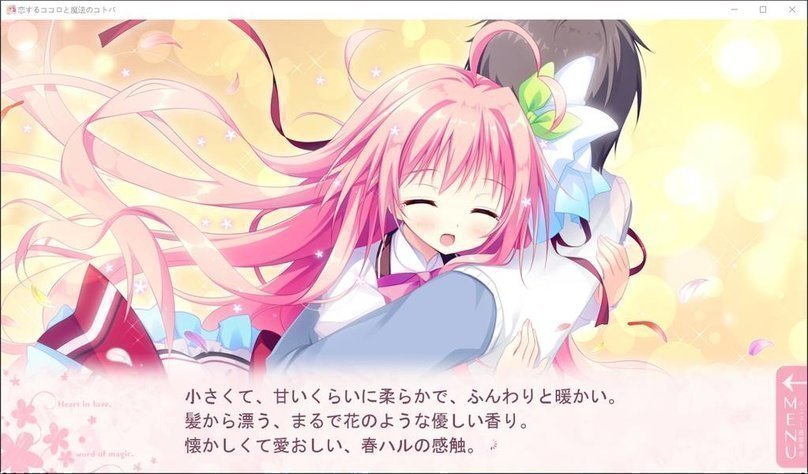
As my title says, this game’s main story is a fairy tale—a mosaic-covered fairy tale not for children.
The theme: the protagonist, as a shaman, falls in love with the element he summoned. The element loses her magic, becomes elemental essence, and he summons her again.
A very ordinary fairy tale—in World of Warcraft it wouldn’t even qualify as a side quest—yet it’s the only thing holding this game up. And it only starts to pick up in the second half. The common route before that puts you to sleep.
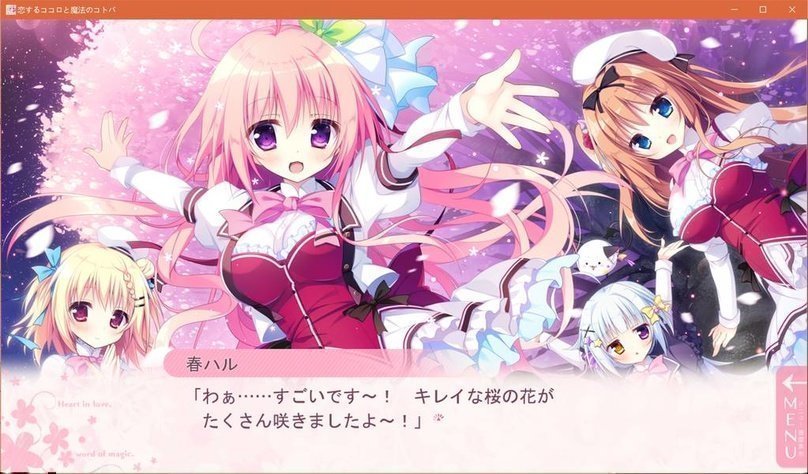
The music is by ALVINE, that circle of Fuyuno Sakura’s. You can tell they really tried to imitate Suigetsu Ryou, using lots of strings to build a magical atmosphere. The soundtrack has plenty of highlights but still falls short—the transitions aren’t natural enough. I can’t really evaluate the scenario writers. These people seem to have no idea how to write “witches” and “magic.” They just think “magic” should be harmonious and not cruel. But magic, by its nature, involves “cost” and “responsibility.” Strip that away and you’re just using “magic” to write a tea-drinking slice-of-life. Magical girls are supposed to fight tentacles, you know. Who ever heard of a magical girl communing every day? Not to mention this game lacks the crucial “transformation.” I don’t understand what the so-called “magic” definition even does in the main route. Take magic out, and it’s just the protagonist summoning an elf by himself—that would work fine…
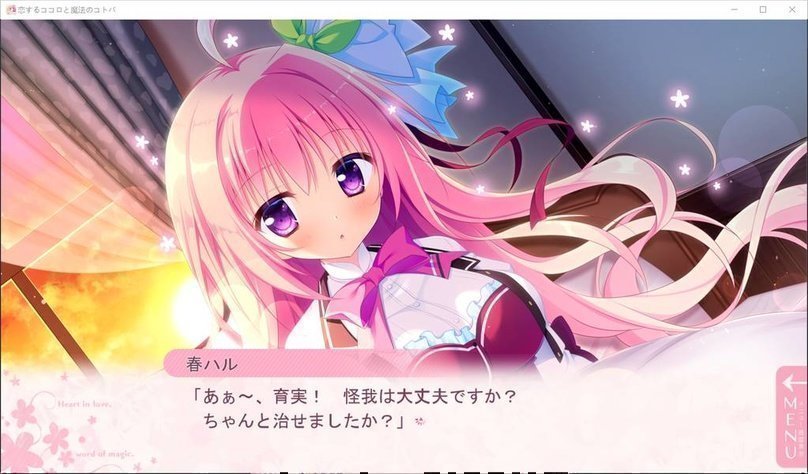
Finally, I have to roast the character setup. There’s no core plot engine. Everyone is a nice girl, all the girls speak softly, nothing interesting. Natsuiro Kokoro Log had Tokiwa Kuon’s tsundere to drive the plot. Anata ni Koisuru Renai Recipe had Miru’s loli to drive the plot. This one has nothing. Everyone talks in the same tone. Shiratsuki Kaname didn’t even voice properly. Akino Hana sounds like she was introduced by Shiratsuki Kaname to fill numbers. The rest are all naive sweet voices. Very harmonious, but boring. Think about it—Yuru Yuri is good because the characters have conflicts and distinct personalities. If you took out Kyouko, you’d lose at least half the appeal. This game’s fatal flaw is no character conflict. Everyone has the same face and the same personality. What am I even playing for?
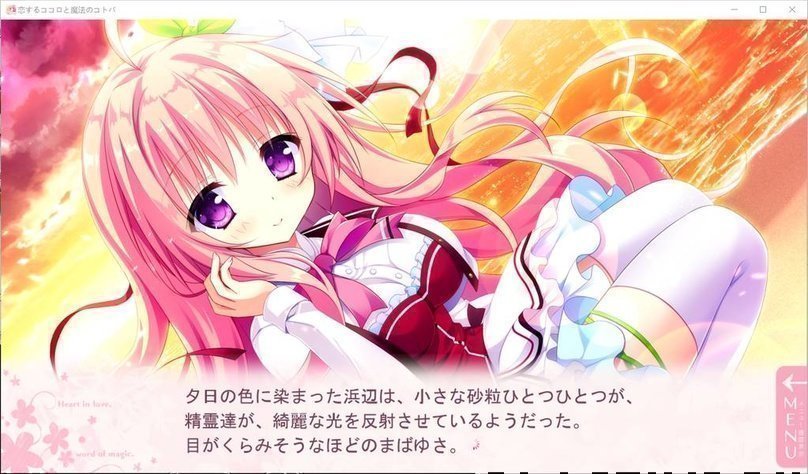
Still, this game just didn’t meet my expectations. At least compared to Natsuiro Kokoro Log and Anata ni Koisuru Renai Recipe, it’s a step back, but it barely holds the passing line…
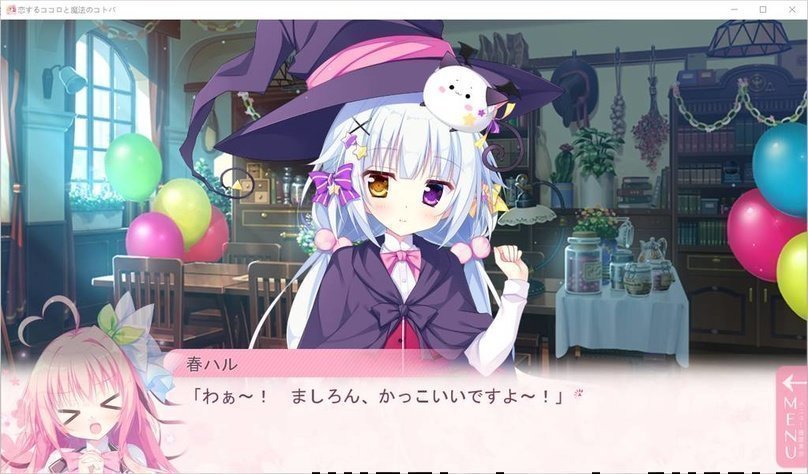
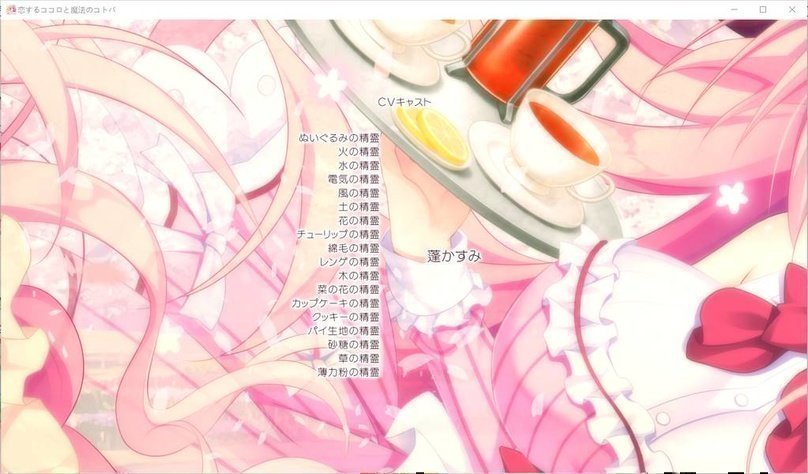
First, as a fairy tale, it’s harmless, and the second half of the main route has decent pacing. Second, as a moe-otaku product, there are plenty of CGs, and the quality is good. The style goes without saying—just look at the faces. Third, the magic theme—the strings are used well, and the OST is worth multiple listens. And the most insane thing: one CV in this game voiced over a dozen characters, but not a single line of human speech. Absolutely insane.
Aside from that… there’s not much else. But maybe that’s enough. For the audience that loves “fairy tales not for children,” isn’t this exactly what they want…
Comments are hosted on the Chinese main site. This mirror is read-only.