Nvidia Shield K1: First Thoughts
Maybe the Prototype of the Switch: Nvidia Shield K1
The reason I bought this is still the Pixel C breaking……
Lenovo P8 screen was too stupid, sold it, so I chose a dedicated tablet for gaming, and after looking around, I picked the Nvidia Shield K1.
First off, this thing is cheap enough — on Xianyu you can get a 99-new-in-box one for 900 yuan. However, what I got was 99 new with a controller.
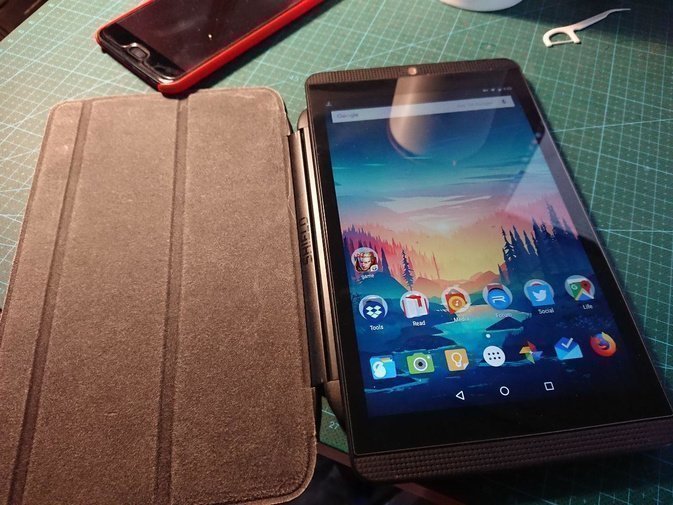
System impressions:
Native Android 7.0, the Nvidia Shield K1 should be the most conscientious tablet out there — the official support actually upgraded it all the way from Android 5.0 to Android 7.0. The system is pure stock; if you want, you can also flash Lineage OS, which has Android 7.1 and Android 8.0. Though the 8.0 version seems to lack YouTube hardware acceleration.
Personally I think stock is fine, the stock settings are all pretty good, and it’s more or less enough.
Tablet performance:
The Nvidia Shield K1’s performance actually isn’t as good as the Pixel C, but… its CPU and GPU are full-fat, while the Pixel C is a cut-down version, and the Nvidia Shield K1’s resolution is only 1920x1200.
One reason I bought it was for gaming, should be playing Arena Of Valor… oh no, not Honor of Kings.
My personal test is that in Honor of Kings, with high frame rate + everything maxed, no character outlines, the frame rate floats around 35–60, averaging about 45 fps, and you don’t need to spoof the device model either. I tried the Vulkan acceleration too, found it ran out of memory, and gave up in the end.
Actually the stock setup is playable, which also shows that for phone gaming, the CPU isn’t the key, what matters is the GPU, and Nvidia’s GPU really is bug-level performance.
Battery test:
The Nvidia Shield K1’s battery life isn’t great — one round of Honor of Kings eats about 18% to 20% of the battery, which means on a full charge you can only play for about two hours…
The solution is simple and crude: get an angled charging cable and hook up a power bank.
Although there are many issues online about Nvidia Shield K1 Battery Drain, saying it keeps losing charge just sitting there.
Many people say this is an Nvidia firmware problem, but I think it should be a battery problem, this battery is very prone to aging… you can try replacing the battery to fix it.
At first I wanted to learn from this foreigner and solder the battery myself… and the soldering failed. The control board absolutely requires soldering skills, otherwise it’s useless…
In the end I chose to buy a dead unit on Ebay; the foreigner said his Nvidia Shield K1 wouldn’t power on, but the battery seemed fine. You should know the Nvidia Shield K1’s battery is very hard to find, so I bought this dead unit cheaply for 20 USD.
After it arrived, I went to the local tech market and had someone solder it, and the tablet came back to life, and the battery life also returned to normal levels.
So if you feel this tablet drains fast, it can only be battery aging.
Other accessories:
The controller that comes with the Nvidia Shield K1 is actually a Wi-Fi controller, first time in my damn life I’ve seen that. And the Nvidia Shield K1 also has a Stylus touch pen, but that pen is useless, you can only doodle with it. Although some Japanese artists use it to make nice stuff, they’re them, you’re you…
There’s no suitable screen protector for the Nvidia Shield K1, you can only order from intelliarmor overseas. The machine also has a protective cover, detachable, actually pretty good.
Summary:
Overall, if you’re just gaming, the Nvidia Shield K1 is still worth buying — first it’s cheap, then the GPU is powerful, fully full-fat. The only downside is the battery life isn’t good, and it gets hot too. But the heat isn’t scalding, and the battery life issue can only be solved with an external power bank. Maybe you think an external power bank is too dumb.
But think about the Switch, gaming battery life is also under three hours, and it also needs an external power bank…
And the recommended way to use the Nvidia Shield K1 is to output via HDMI and play with the controller. This feeling makes it very close to the Switch, maybe the Switch itself also referenced this thing’s way of running.
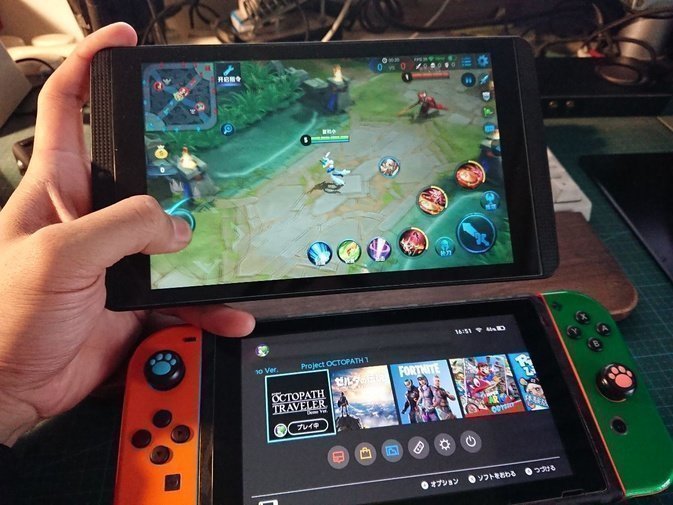
Sometimes I think, maybe this thing is a kind of prototype of the Switch?
Comments are hosted on the Chinese main site. This mirror is read-only.