Karigurashi Renai (かりぐらし恋愛) Review
I Lived With Four Girls and Chose to Get With the Class Rep Instead
Asa Project. Once my favorite brand.
I used to think Asa Project was the Wong Jing and Stephen Chow of the visual novel world, especially after my first encounter with their games.
For a while it seemed like they’d found their lane: exaggerated faces plus comedy. They put out some decent stuff, and by the time Kara Kurashi Renai… no, by the time Hitotsu Tobashi Renai (ひとつ飛ばし恋愛) came around, the meme game and the parody had hit its absolute peak. First time I played it, it honestly kind of “scared me” — felt like they were trying way too hard. Years later, going back to it, I realized that was Asa Project’s actual peak.
And when you say peak, you’re also saying everything after it is downhill…
Pura Main Wars (プラマイウォーズ) just barely held the rhythm together. Then came that baffling Suki to Suki to de Sankaku Renai (スキとスキとでサンカク恋愛), and I felt it deep: Asa Project had lost the plot.
They seemed to be dropping the parody angle and pivoting to pure romance, leaning harder into making the girls bashful and cute — without fully giving up the old “parody skit” stuff.
The result is a mess. If you want pure romance, commit to it. Stop having the girls spew dirty jokes every other line. If you want parody, then set up a proper straight man and funny man, let the characters actually play off each other.
Sadly, Asa Project trimmed the game’s “plot engine” down to one character — or half of one — and slowly pushed her to the margins, turning her into a mascot whose only job is reminding the player “this is an Asa Project game.” Nothing else.
The games started cramming in more and more tsundere bashful cuties, and, well, you know how it is — Asa Project’s artists are what they are. Not exactly boner-inducing. So the games got weirder and more boring: no comedy, no romance either. Funny thing is, under the same HOOKSOFT umbrella, Asa Project is getting outclassed by smee. smee’s skits keep getting sharper, the atmosphere keeps getting cozier, and the romance is still there. Asa Project, meanwhile, became a neither-here-nor-there mess. Painfully awkward.
So with that awkward feeling, we arrive at Asa Project’s new release: Karigurashi Renai.

Worth noting: “karigurashi” in the title means “staying over.” Literally borrowing a place to live — the protagonist crashes at the heroines’ houses.
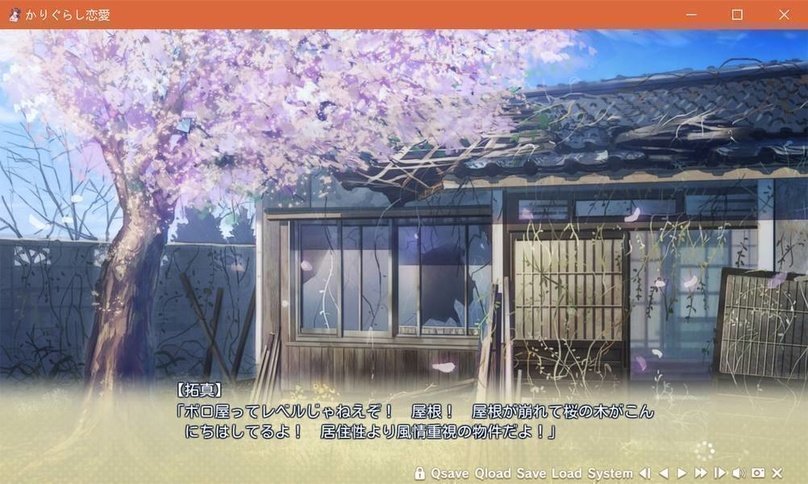
The setup: the protagonist gets shipped back to his hometown by his parents to go to school. They tell him there’s still a house back there. He gets there and the roof is basically gone.

He’s got no money to fix the place, so he asks his hometown friends for help. His hometown friends are, of course, his childhood playmates — and since this is a visual novel protagonist, they’re all girls. The osananajimi you all love. The girls see him sleeping under the stars on their property and figure that’s not great, so they propose rotating him between their houses, two days each, to solve his housing problem.
There are four heroines: Riho, An, Hiyori, and Ayaka. Of course, they’re not the only routes — there are two more girls and one guy.
Round one order: An -> Hiyori -> Ayaka -> Riho.
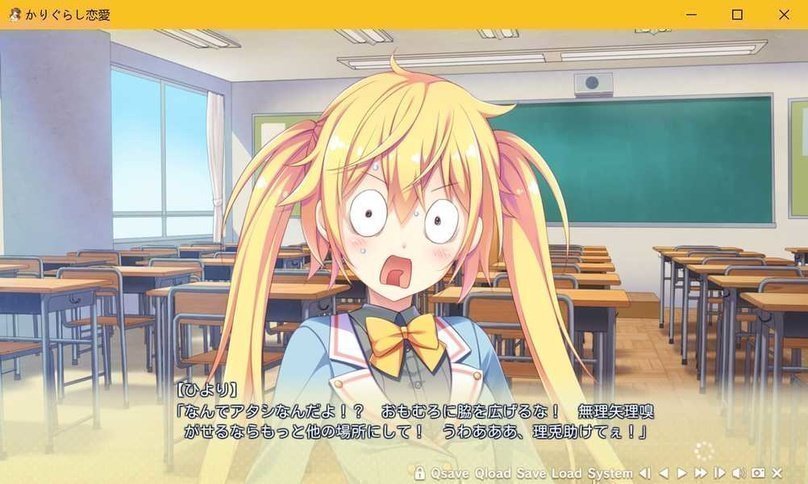
Aranami An:
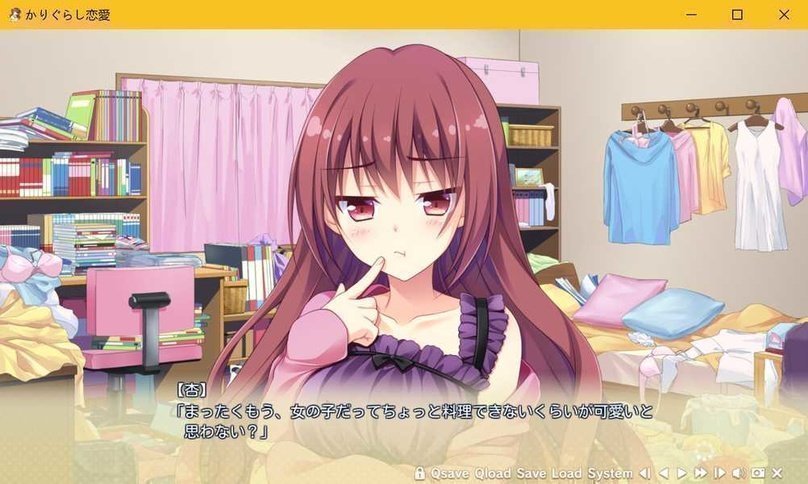
An’s supposed to be the “reliable older sister” type. In reality she’s the exact opposite. The protagonist moves in and her image collapses immediately.
An does nothing at home, and her mom does nothing either. They lie around on the sofa watching TV all day while the dad does every single chore. An can’t cook, and when she tries, things explode and she produces dark cuisine. Her mom is even worse, dumping everything on the sole man of the house, An’s father. The rest is just whining and being spoiled.
Short version: the man of the house spoils both mother and daughter. He earns the money, does the chores, plays dad and mom both. Marrying a wife is basically raising a daughter.
An’s room is a disaster zone. She cleans nothing. Total himono-onna…
An’s dad is thrilled when the protagonist shows up. Why? Because now the chores aren’t all on him. He doesn’t have to be so tired.
The protagonist takes it in stride, just feels bad for the man of the house. But An herself isn’t really a bad person.
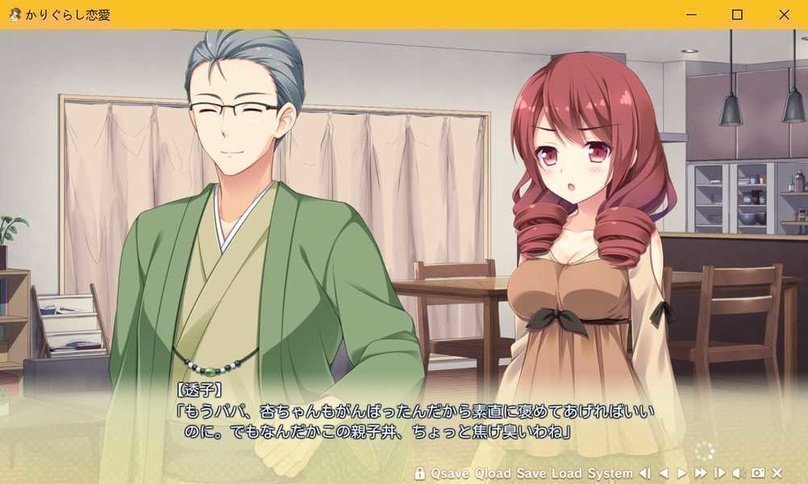
What’s different: An’s dad pushes the protagonist and An together with everything he’s got. Reason’s obvious — he sees the protagonist as a way to offload some of his own work.
This family feels familiar somehow… An’s dad looks exactly like future me (stares into the distance).
Niizuma Hiyori:
Hiyori is this game’s face-game carrier, except compared to previous games she’s been nerfed hard. The exaggerated expressions have almost no personality left — just one surprised face.
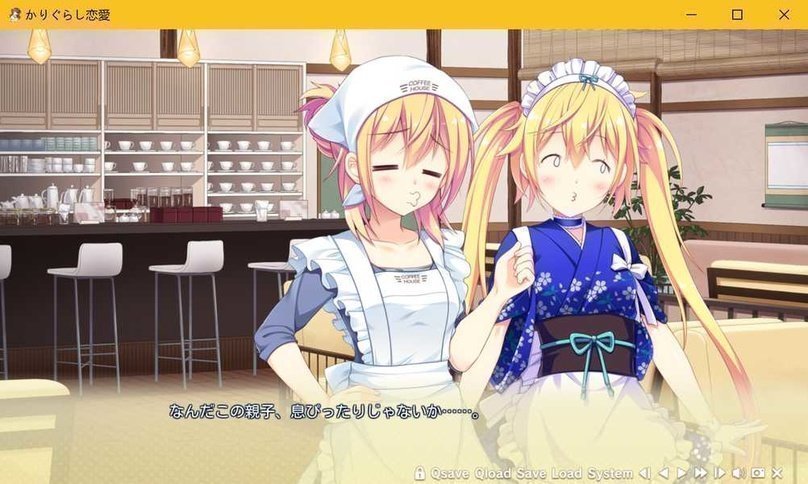
Also, Hiyori isn’t the “weirdo” role anymore. She’s shockingly normal. Her family runs a tea shop, her mother manages it, and she helps out as a waitress sometimes.
Her mother, on the other hand, is shameless as hell. Constantly saying she wants to date the protagonist, calling herself a “girl widow with childbearing experience.” Hiyori doesn’t act out much; she just keeps roasting her own mom…

Overall this household has no father, the mother’s a bit flirty, and the heroine has completely lost the “plot engine” face-game role. She’s just a totally normal girl who says more than once she’s not interested in the protagonist…
Which killed my interest too.
Seike Ayaka:
The most complicated household. Before the protagonist moves in, people warn him: that family is a swamp full of lunatics.
And yeah, it’s true. Ayaka’s father greets the protagonist with “Touch my daughter and I’ll kill you.” Her mother has a phobia of the opposite sex and sprays insecticide on sight. Her little sister is a hardcore siscon who spits in the protagonist’s face and hunts him like a ghost.

And Ayaka’s little brother is even worse. His daily hobby is holing up at home jerking off. Seven times a day is normal for him. He hears the protagonist doesn’t do it much and is shocked:

“How do you even survive without at least three times a day?”
The protagonist suffers horribly in this house. Aside from Ayaka herself, not one normal person in the family. It’s basically an asylum.
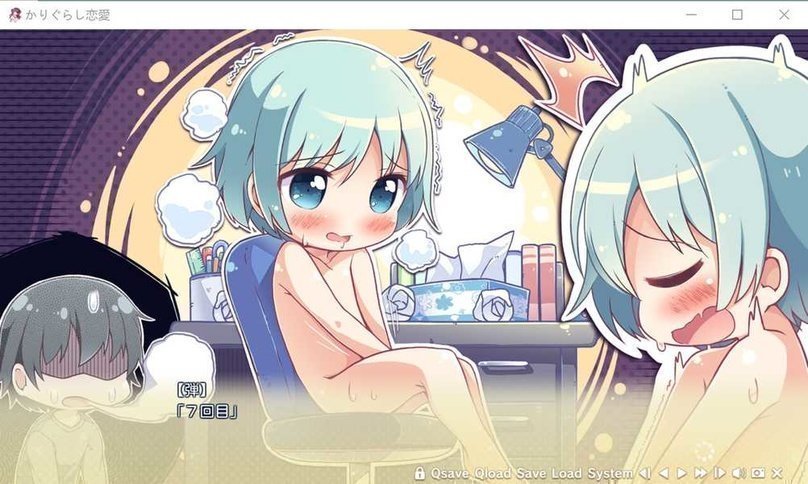
Maybe the whole family crawled out of a manga.
Sakuragibashi Riho:
The protagonist’s narrative destination. The heroine the plot forgives everything for.
He pisses Riho off the moment they meet. He’d always thought Riho was a boy as a kid. Seeing she’s actually a girl, he says: “Oh, so you weren’t a guy after all?”
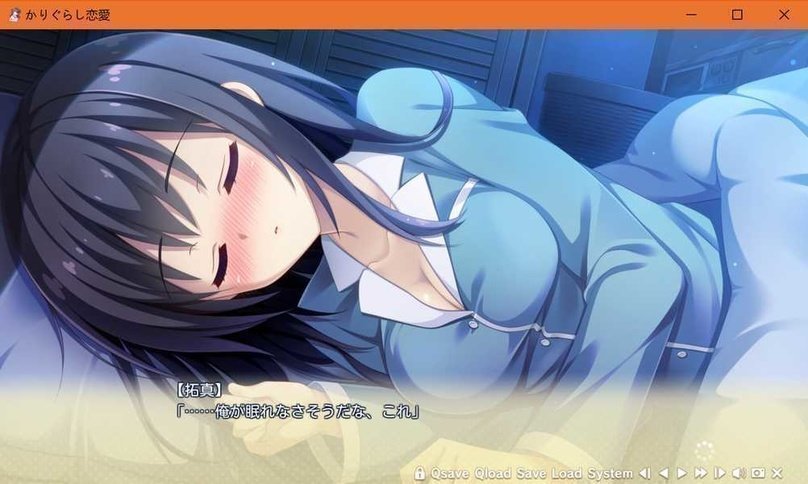
Riho takes it as an insult and stays cold to him, making the stay at her place a nightmare.
In truth Riho has no real malice toward him. Staying at her house is the game’s main line — the protagonist and Riho clear up the misunderstanding, make up, and conveniently fall in love along the way.
After round one, the game runs a second and third round of stays, and after round three comes the critical route choice.
Honestly, the first round is pretty fun, and the later rounds get tedious. Same few gags, reused over and over, and they just get annoying. The inserted OP is genuinely bad to listen to (the ED too, by the way). I’d rather they fleshed out round one properly and went straight to branch selection after a single round.
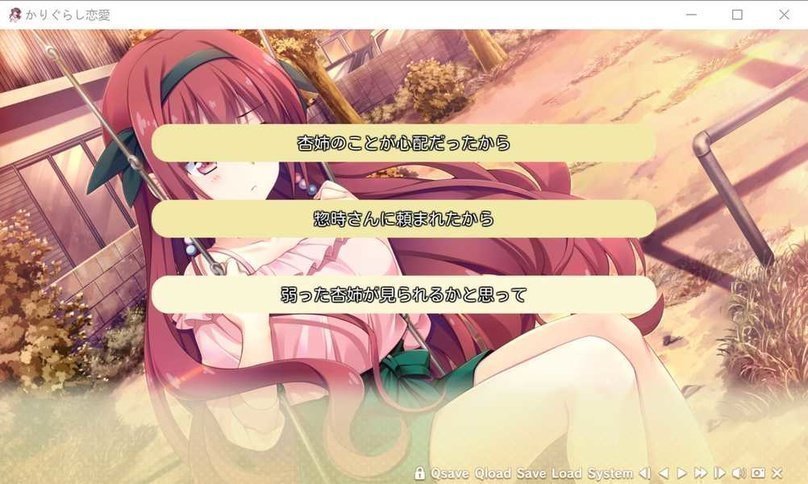
The route-selection method is also stupid as hell. After one round of stays, you pick which girl you’re interested in, one by one. If you pick one, the others are OUT. Meaning if you don’t bite for a girl, you move to the next.
That’s different from earlier Asa Project games, which were equal choice. This one has an order, a linear route, and the endpoint of that linear route keeps nudging you toward Riho.
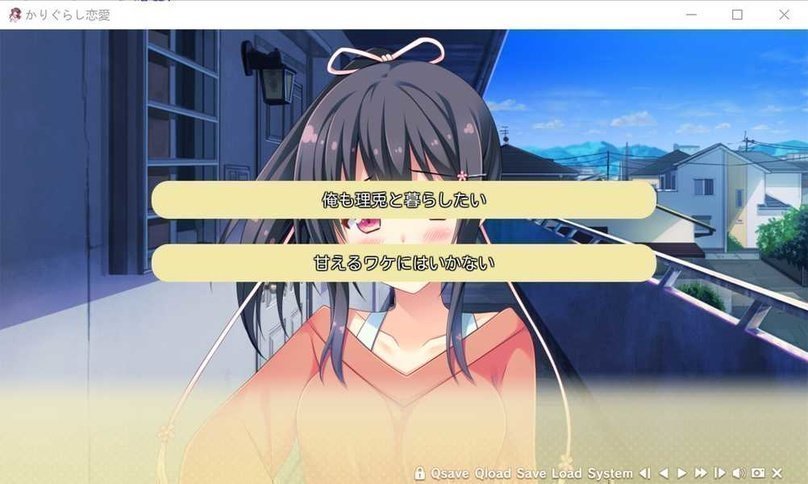
Basically Riho’s the game’s designated orthodox route. The protagonist starts with a misunderstanding, then they fight and end up a couple. Very standard anime scripting.
Beyond that, the character setup itself is stacked in Riho’s favor: An is a useless no-skills girl, Hiyori is a smooth talker who isn’t that into the protagonist, and Ayaka calls him “onii-chan” but her whole family is insane…
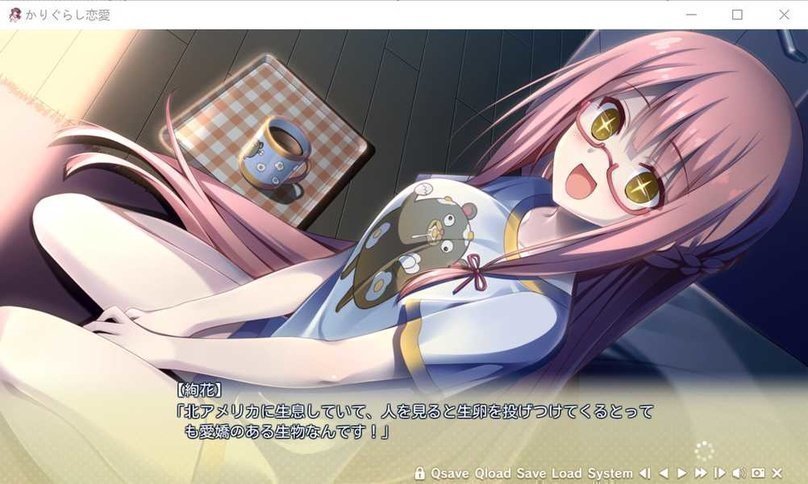
Think about it. You’re a otaku. Pick An and you do chores for the rest of your life, losing your freedom. Pick Hiyori and she’s not that into you, and you have to grind out a living with her. Broke. Pick Ayaka and you get spit in the face by your sister-in-law daily and have to hang out with your brother-in-law while he jerks off. Think about it. If you’re a otaku, your pick is obviously the wife with big tits, money, housekeeping skills, and who shaves 30 years off your grind.
In this game, that person is Riho!
Honestly the plot bias is blatant. Riho’s almost a perfect setup — except her CV.

The game clearly wants you to reject each girl in turn and land on Riho for the true Happy Ending. In Riho’s route, the protagonist marries her and lives happily ever after.
But I don’t like this Riho. You think I’d submit to the game’s designated pick? Naive!
As a Galgamer, I take fate into my own hands. If I reject Riho at the final choice, what happens?
The plot continues, and a new girl appears: Usujima Nanako.

Nanako’s a side character, voiced by the long-absent Tōno Soyogi. As a side character she carries about 50% of the game’s plot engine. But she barely shows up — aside from scamming the protagonist out of food every day, she doesn’t do much.
I was shocked this game even had a route for her.
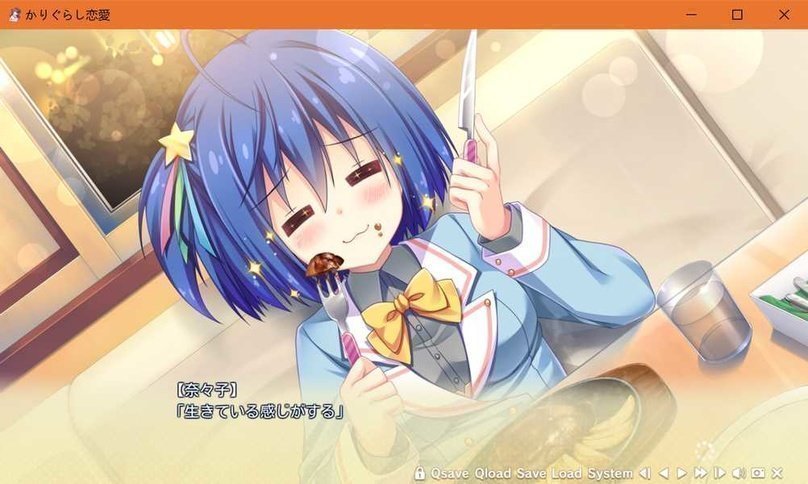
You can reject all the heroines. The protagonist feels too embarrassed to keep borrowing rooms, so he tags along with Nanako.
Nanako says she’s run away from home too, so he follows her around the streets. Besides buying her meals, he ends up inexplicably sleeping with her.
“You buy me food, I sleep with you.” Deal.
Nanako’s route ends with the protagonist shamelessly mooching off every heroine’s house with her, until Riho finally kicks them out. Then the game just stops.
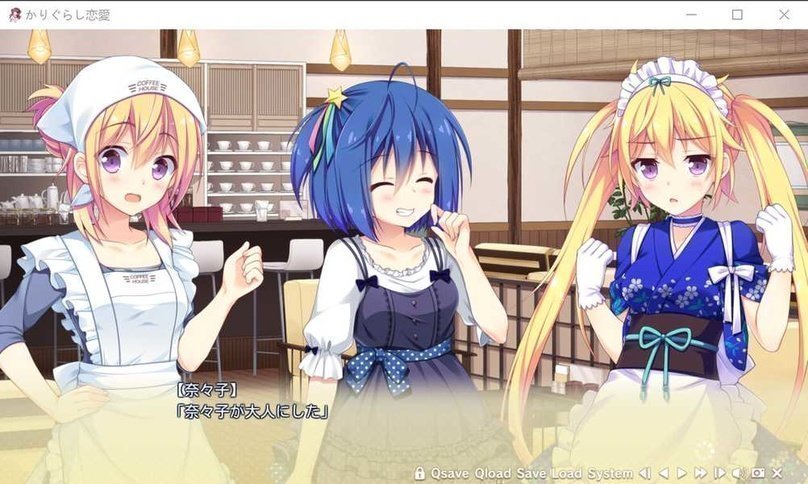
Honestly, aside from the pre-OP part, Nanako’s section is the most fun in the whole game. She gets an ENDING but not even an ED animation? That’s blatant favoritism. What’s wrong with Nanako? Her CV, personality setup, and overall performance dunk on those useless heroines. Without Nanako, the game’s worth skipping after the OP.
Whatever. At least there’s a Nanako route. Can’t ask for more. But does the game really end there?
Naive!
When you pick Nanako’s route, you can still reject Nanako. If you do, whose route do you get?

The student council president — a shirtless muscle guy — appears before the protagonist.
“Young man, come work out with me!”
The protagonist chooses to train muscles with the student council president, abandoning all heroines and dedicating himself to the muscle route.

Golden Week arrives. The protagonist goes nowhere, choosing to stay with the class rep, enjoying the friction of muscle and friendship. The two even return to the protagonist’s roofless house to keep sweating and training muscles.
Nanako shows up and gives a brief appraisal of the protagonist and the president’s relationship.
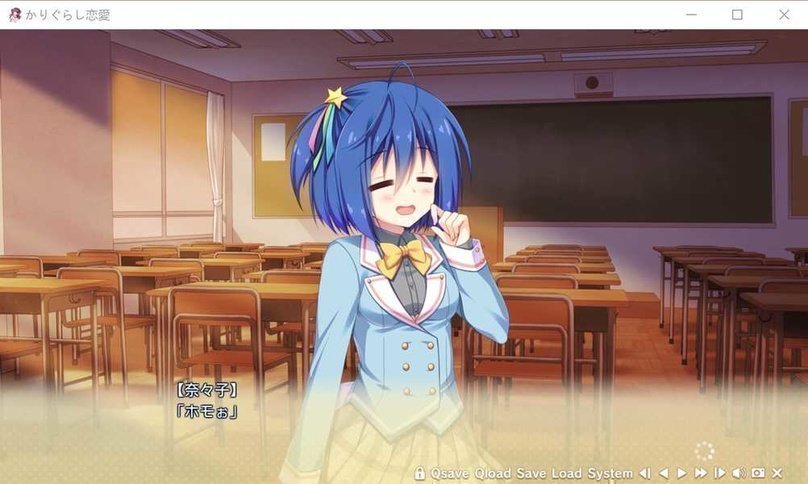
And the game has no more choices. It reaches its definitive ending.

So it seems… the game’s real ending is the protagonist staying at four heroines’ houses, picking none of them, kicking Nanako aside, and returning to the arms of his gay class rep.
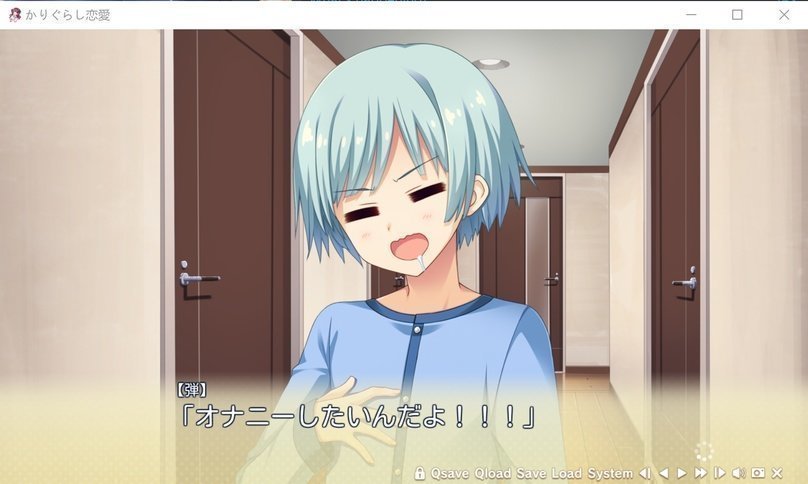
As the title says, this game should really be called “I Lived With Four Girls and Chose to Get With the Class Rep Instead.”
Maybe that’s the True End.
One last quiet sigh: Asa Project is nothing like the original Asa Project anymore. This one’s a bit better than the last, at least there’s something worth watching.
And one more thing… the ancestral cafe background is gone! (Replaced with the ancestral mall, though).
Comments are hosted on the Chinese main site. This mirror is read-only.