Koisuru Kanojo no Bukiyou na Butai (恋する彼女の不器用な舞台) Review
Koi Suru Kanojo no Bukiyou na Butai: Buy the Art, Get the Aphrodisiac
Every adult who’s never been in a relationship has, more or less, gone through a phase of wallowing in “2D delusions.”
Don’t rush to deny it. Either you’ve dated someone, or you won’t admit it. Otherwise… why would a life winner like you be reading my blog?
I had that phase too. Back then I thought way too highly of myself, carrying a bit of detachment and aloofness, full of imagination about the world.
Seeing other people in relationships always made my chest tighten: why can even that kind of person get a partner? Why do those couples always look kind of dopey?
There are so many girls in this world—how come none of them notice me? Maybe my “her” just hasn’t shown up yet?
I once firmly believed: I should have a childhood friend who’s been by my side since we were kids and messages me first every day; in school, I’d always run into one or two girls in my club who blush when they talk; or maybe, by some chance, I’d learn a mysterious girl’s unspeakable secret and we’d forge a bond that belongs only to us…
Just like girls get hooked on Qiong Yao novels and teen romance, the harem works guys consume build us a dreamlike ideal world too.
“Why doesn’t this stuff ever happen to me? Why aren’t there girls like that around me?”
As they say, people grow by gradually coming to understand themselves. When one day you look in the mirror and think, “Who even is this, who’d want to get close to you,” you probably get why the so-called “protagonist halo” never once favored you.
Growing up teaches you that without enough resources and charm, no miracle’s going to drop out of the sky. Those old dreams, looking back, feel more like the real world’s little contrast-and-mockery routine aimed at you. Fiction is fiction; no matter how pretty something unrealistic is, it can’t stand in reality. The more you sink into it, the bigger the gap and the more exhausted you get.
I eventually climbed out. But there are always people still soaking in the rose-colored dream, unwilling to wake up. Real-life frustration needs some fantasy to cushion it—and the brief thrill those dreams give might just be the start of another kind of addiction.
So today’s subject is exactly this kind of fantasy-projection work—
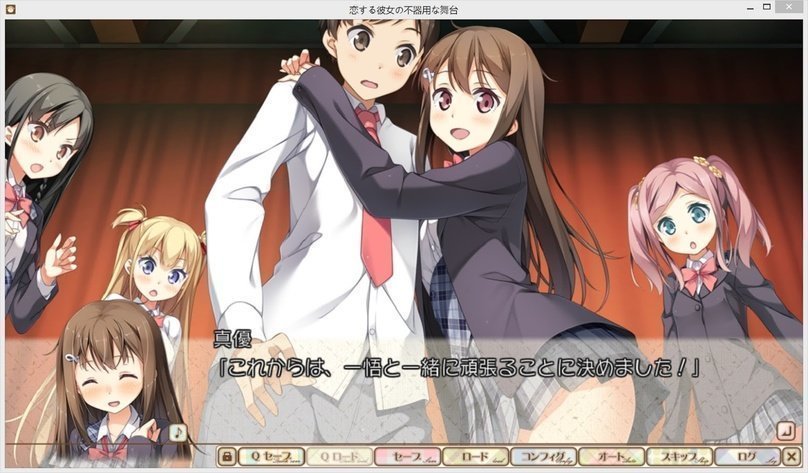
Koi Suru Kanojo no Bukiyou na Butai (The Clumsy Stage of the Girl in Love) is CUBE’s second collaboration with the well-known artist Kantoku (Kantoku), following Your diary. Kantoku’s style hardly needs an introduction—you can recognize it at a glance. I’d been on the fence about playing this one ever since it was announced. The earliest screenshots on the official site reeked of “selling characters,” and the plot description was vague as hell. The CGs looked striking, sure, but they didn’t spark any interest in the story.
Later I checked the scores on ErogameScape, and most people filed it under “by-the-numbers work,” with generally unflattering reviews. Funny thing is, Your diary, which I’d thought was decent, landed in the same score bracket as this one.
“It’s gotta be those stuck-up otaku posing again,” I told myself back then. Besides, the artist is Kantoku—surely the visuals wouldn’t veer all the way into pure “adult” territory?
Turns out I underestimated it…
The game isn’t long, and the plot is fairly plain. The main setup: the school’s drama club is about to be disbanded, and the protagonist teams up with his childhood friend to put on a performance at the school festival to save the club. The common route is mostly light slice-of-life. The protagonist no sooner shows up than he’s already “living together” with his childhood friend, runs into the enthusiastic student council president on the way to school, and there’s a quiet, introverted literary girl in the lit club plus a gentle ojou-sama in the drama club… A whole bunch of heroines seem sweet on the protagonist, and the childhood friend gets jealous about it constantly.
But the “club disbandment” thing gets glossed over—five minutes of discussion and done. What follows is basically the protagonist’s relationships developing: the childhood friend staking her claim everywhere, the other characters gradually getting closer. The actual play rehearsals are barely depicted at all; progression happens through idle chitchat. There’s no clear hook, no jokes, no ups and downs—the only thing with any tension is the childhood friend’s jealousy toward the other heroines.
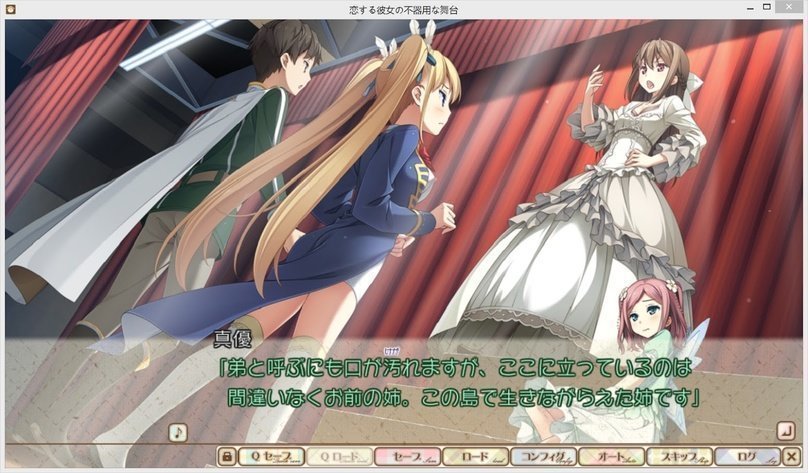
After the school festival performance, the game branches into individual routes.
Worth noting: only the first heroine, Tozawa Mayu, gets a relatively complete route. She’s the protagonist’s childhood friend—as a kid she got scouted as a child actress after appearing in a script he wrote, and as she got more famous she felt herself drifting from him, so she quit on her own and went back to a normal life. In the latter half, she returns to the stage, performing in a script he wrote, and uses that to support his dream. The story is warm and grounded overall, just a little skimpy.
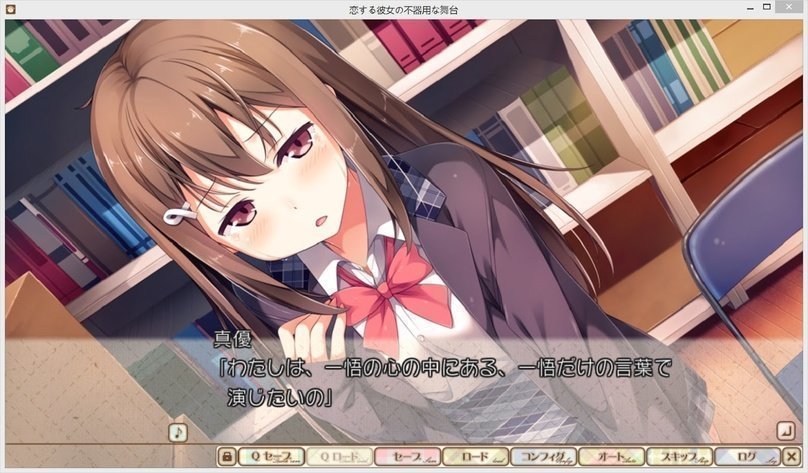
The other routes kind of do their own thing. China is a tsundere literary girl with a creative passion burning inside; her route revolves around her trying to write more expressive emotional prose, and the two gradually build trust and intimacy. The content skews spicier, some scenes are a bit over-the-top, and it has a slightly exaggerated “love impulse” flavor.
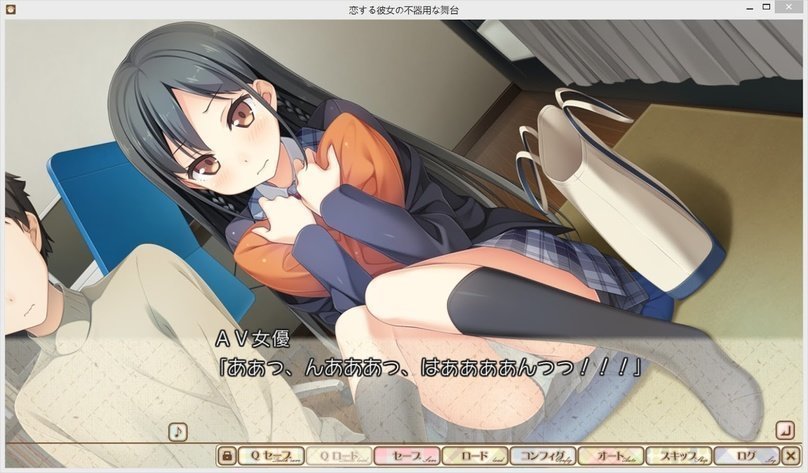
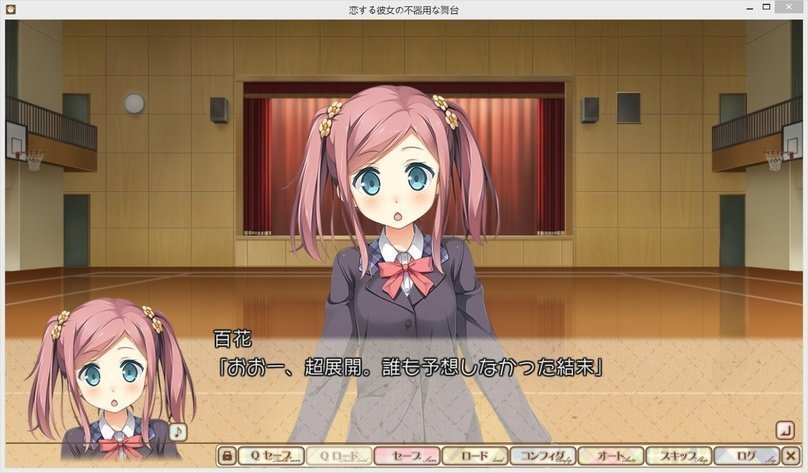
Momoka’s route is comparatively thin, lacking tension; it’s mostly about her working hard to improve her acting and crossing paths with the protagonist along the way. The character work is a bit one-note, and the story never has a moment that really lands.
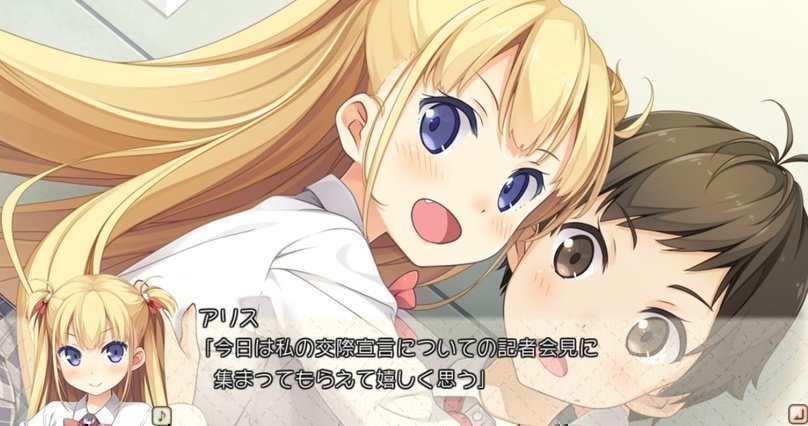
Alice’s route casts her as the foreign exchange student type—direct personality, lots of spark in her interactions—but the confession comes out of nowhere and the pacing afterward feels rushed.
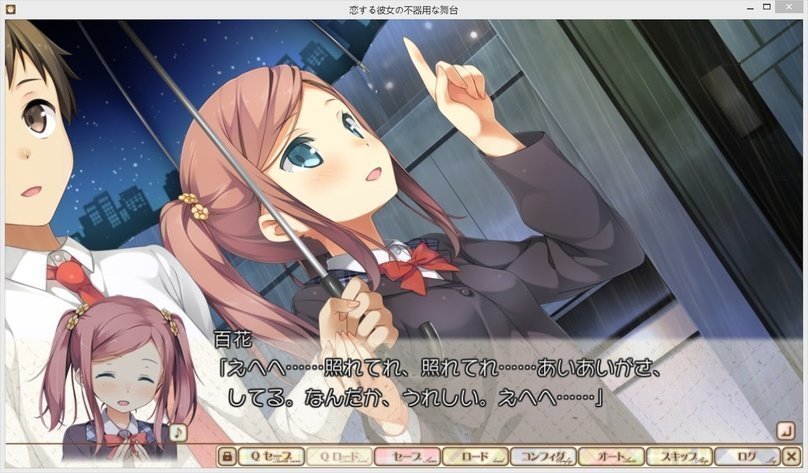
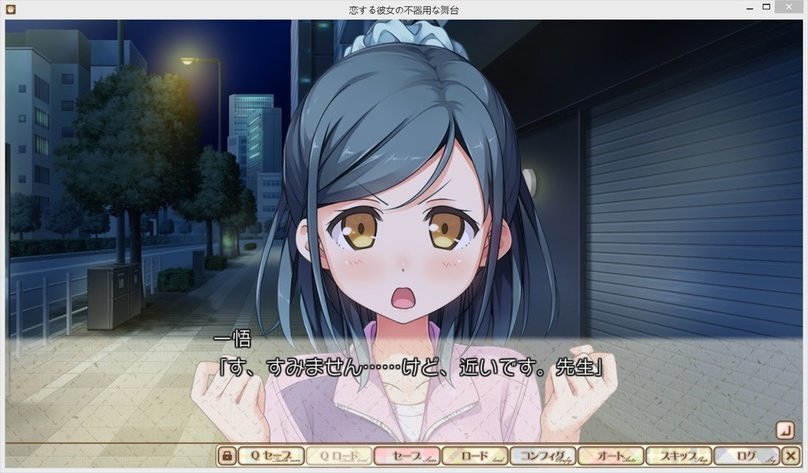
As for characterization: Tozawa Mayu is the standard “petty but sincere” type, China is the cold-outside-warm-inside tsundere writer, Momoka is the expressionless refined young lady, and Alice is the slightly aggressive one. Comparatively, Mayu is the most three-dimensional, but she frequently “just doesn’t react” in other routes—like when she sees the protagonist getting close to someone else, one second she’s declaring “I’ll fight to the end,” the next she’s gone to karaoke, sung a song, and let it go… It feels a little disjointed.
By comparison, a similar cast in Koi to Senkyo to Chocolate is handled with more finesse—especially in the small details and emotional logic, which are more convincing. This game uses a “theater club” backdrop, but the setting and writing don’t stay focused; it’s like it missed a chance to dig deeper.
On the music side, it’s the same team as Your diary, but the overall showing is a step down—almost no memorable melodies. The OP gets dropped right at the start of the story with no emotional buildup, and the ED doesn’t even get a video sequence, just plays over the credits.
That said, there are a few little crossovers with Your diary—like the advisor teacher Chisa sharing a similar setup with Your diary’s teacher Xianghui: similar hair color, similar VA, similar behavior style. A little easter egg from the dev team.
Getting back to this game: judged on overall quality, it’s genuinely a step below Your diary in a lot of ways.
But if you look at character interaction—especially the adult scene direction—this one clearly put in the work. Every interaction segment includes player choices, with dialogue and character reactions synced up, emotions rendered more delicately, and even the background audio keeps running without cutting out on choices. That “instant feedback” design is genuinely rare in this genre.
Overall, the flow is: a fairly bland common route → school festival → distinct heroine routes. If I had to label it, I’d call it a “story-leaning character-interaction work.” Rather than a traditional “romance adventure game,” it leans toward light-plot work carried by its characters.
The voice cast: the protagonist is voiced by Tatsumi Yuiko, her first lead role, and she does okay. Moriya Miyoshi is solid, the rest are serviceable.
Koi Suru Kanojo no Bukiyou na Butai’s biggest draw is, without question, Kantoku’s art. Without Kantoku’s character designs, the story, music, and voice work would all probably rank below average. Most players come for the art style, and that’s beyond dispute. The CG count is generous and the detail is fine—but if you’re expecting a deep story journey, you’ll be disappointed.
Not that it’s a “landmine,” exactly—it’s just that it falls a bit short of what we imagined… The characters all throwing themselves at the protagonist, the repetitive plot beats, the overemphasized interaction content—it feels like the writer just dumped his personal fantasies out all at once.
Like I said at the start, some people need a little fantasy as comfort, some dreams for brief satisfaction.
And Koi Suru Kanojo no Bukiyou na Butai fills exactly that role. For players who love Kantoku’s art, it’s more like a “buy the illustrations, get the aphrodisiac thrown in” kind of work…
Comments are hosted on the Chinese main site. This mirror is read-only.