Butterfly Seeker: Chaos Nightmare (バタフライシーカー ~カオス・ナイトメア~) Review
Butterfly Seeker: Chaos Nightmare
Butterfly Seeker came out early this year, so naturally in the back half of the year they put out Butterfly Seeker: Chaos Nightmare, billed as its fan disc.
Usually a game that sells well gets an FD, and sometimes a game that sells like shit gets one too — making a visual novel isn’t expensive, the worst that happens is the voice actors get tired, everything else is copy-paste. Why not squeeze some money out? Going by the other titles from this brand… (yes, I’m looking at you, Kage no Umi no Apeiria), the FD should just be a little slice-of-life sideshow with no real connection to the main plot, lower quality than the main story, maybe giving a route to a heroine who didn’t get one, maybe just shooting the shit.
In short, a cash-grab riding on nostalgia. No reason to expect much.
But Butterfly Seeker: Chaos Nightmare genuinely brings a lot of surprises.
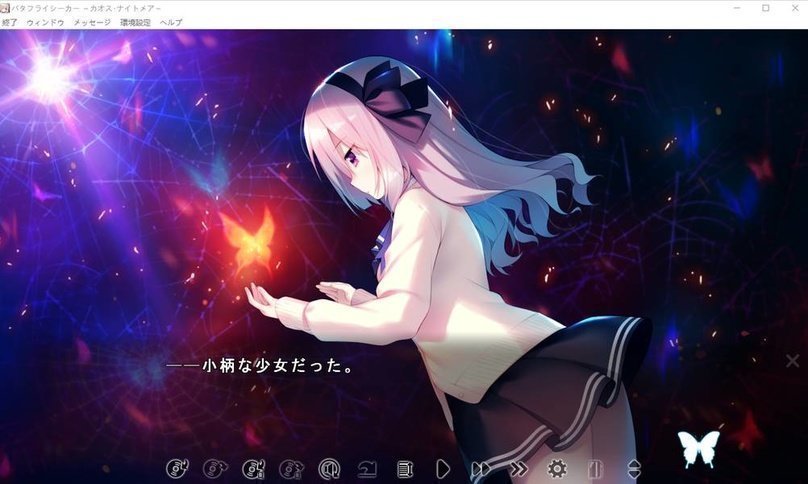
First, the name: バタフライシーカー ~カオス・ナイトメア~, in English Butterfly Seeker: Chaos Nightmare. The story isn’t standalone at all — it picks up right after the original, more like a sequel than anything.
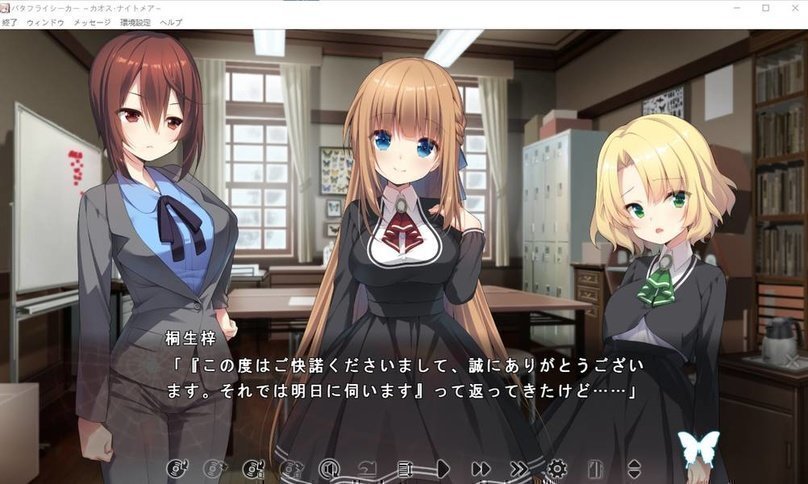
The original ended with the protagonist cracking a case about the mayor’s children conspiring to commit crimes, clearing some of the charges against the murderer sister, and declaring he’d wait for her to get out of prison. Basically the plot was over, nothing more to say. The FD starts out exactly like that, wrapping up where everybody ended up — his senpai Himuro Chitose has graduated and moved on to studying criminal investigation, while the protagonist and his kouhais stay at school keeping the “Insect Cuisine Club” alive, helping the police with their pseudo-scientific bullshit investigations.
And right at the start of the game, a new case drops: a string of throat-slitting murders.
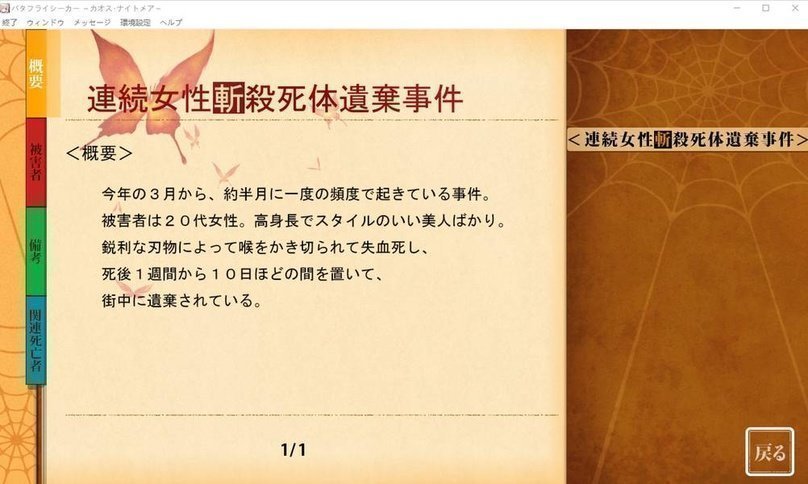
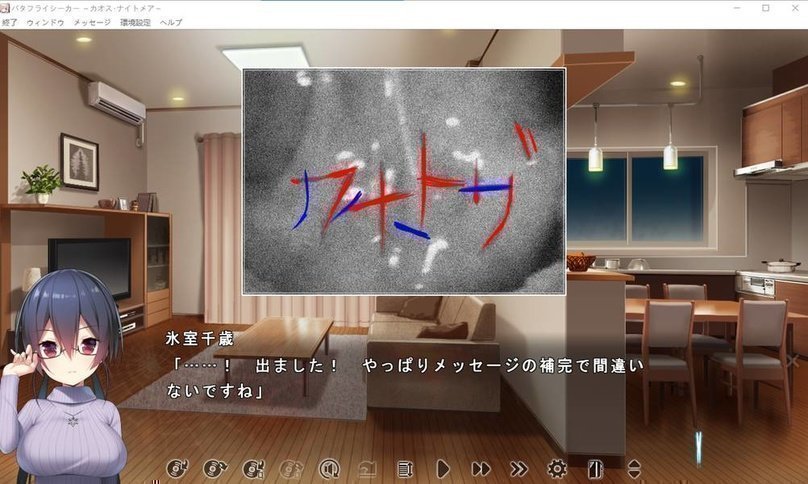
Three women, killed one after another, their throats cut, bodies dumped a week later. Each of the dead women had some hard-to-wash-off red ballpoint ink on them, and the last one had not just the red ink but some marks left on her body — marks that look like Japanese katakana but are too unclear to read…
The protagonist investigates and finds plenty of suspicious things about all three women. Using his Butterfly Seeker ability, he traces the images of how they died — and what he sees is shockingly identical:
A hand, on a doorknob. Except each of the three images shows their own hand.
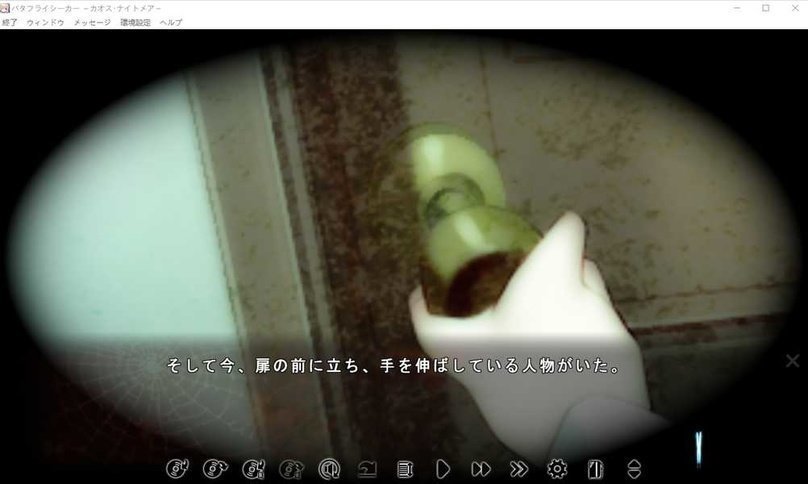
No doubt about it: if these three hadn’t opened that door, they wouldn’t have died.
But where is that “door”?
Just as the protagonist and his crew are stuck, the investigation makes a little progress — except the progress is weird. The three victims have a new thing in common:
Before they were killed, each of them had a relative or acquaintance die — mothers, sisters, a fuckbuddy. The deaths were suicides, car accidents, that sort of thing. They weren’t murdered.
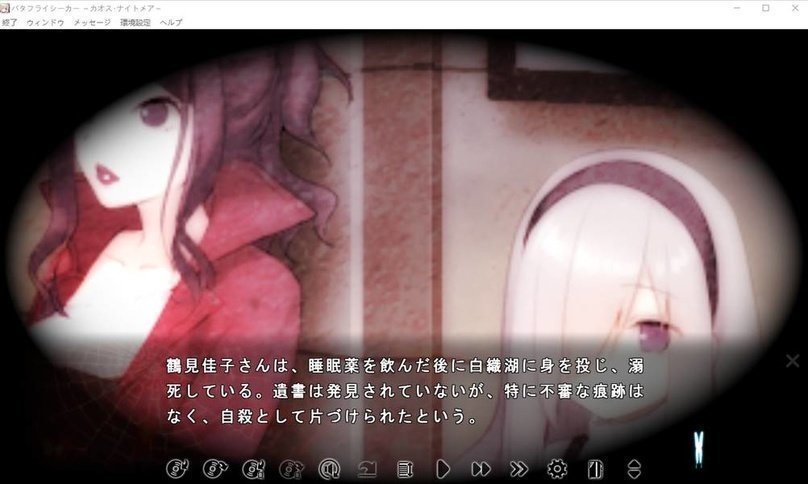
The protagonist gets strands of hair from these victims’ acquaintances and uses his ability to investigate their deaths, and the results are unexpected again.
In the images of these people’s deaths, a girl appears — white hair, wearing a ribbon…
Later he recognizes her: she’s a kouhai at school, Otonashi Rinko.
Did this kouhai kill all these people? The protagonist and the others call her in and start pumping her for info, asking if she knows the victims’ acquaintances…
And once she tells her side of the story, you actually feel a bit sorry for her:
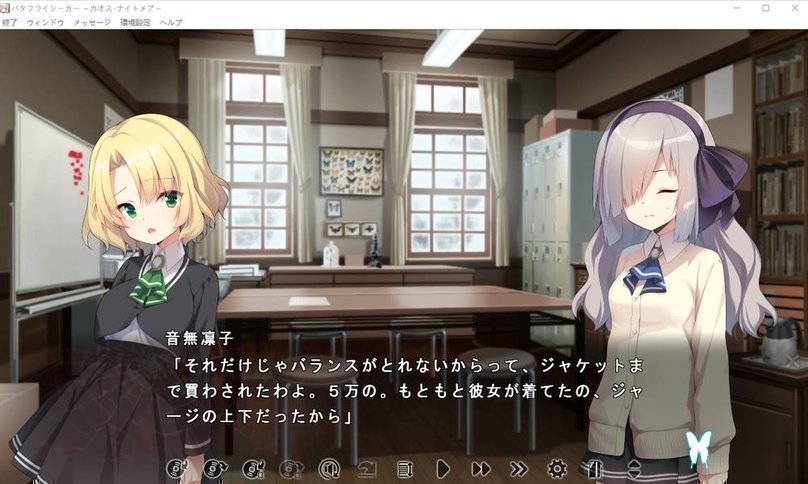
The kouhai says the first person was someone she bumped into while eating ice cream somewhere — she got the person’s clothes dirty and had to buy them an expensive dress as compensation.
The kouhai says the second person took her limited-edition snack, the kind you wait in a long line for, because it was sitting next to their shopping bag and they grabbed the wrong one.
The kouhai says the third was when she saw a drunk old man and helped him to the station, reminding him to get off at his stop, and he didn’t even appreciate it.
Basically, the kouhai meant no harm — either she got scammed, or she did a good deed and got misunderstood, or she was just unlucky… Looking closely, none of it seems to have anything to do with those people’s deaths. The whole case grinds to a halt.
Then it’s the girl they were interrogating, Otonashi Rinko, who starts getting suspicious of the protagonist’s group.
“What do you people do? How do you know I ate ice cream there, bought snacks, or reminded an old man at the station?”
The protagonist plays dumb, and the kouhai gets angry, feeling she’s being used or followed. They get into a scuffle, and during the shoving, she touches the protagonist’s body — and he immediately enters the Butterfly Seeker state… the space where he usually goes to trace the images of the dead before they died. And in that space, there’s the kouhai too.
The kouhai sees the protagonist in that space too. Their bodies separate, the space vanishes.
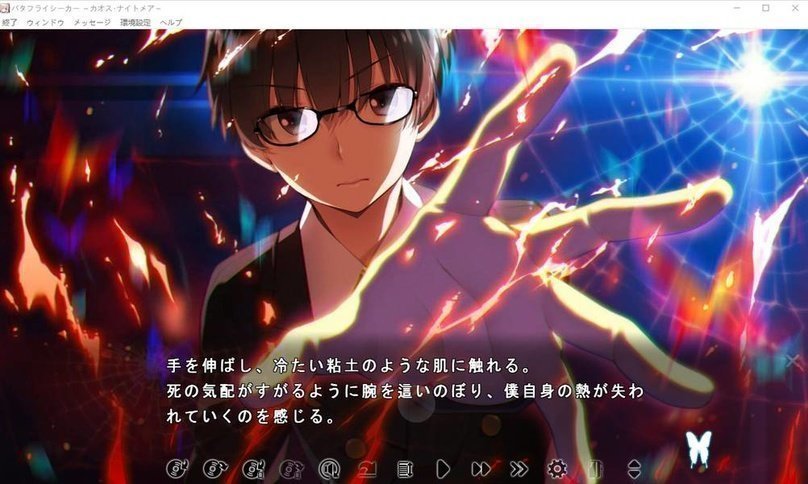
The protagonist senses this kouhai is unusual, and she senses he’s hiding something.
The protagonist and his friends start investigating the kouhai and find her life has been pretty tragic too.
Otonashi Rinko has an older sister, Otonashi Ryoko, a cosmetics saleswoman. The two sisters apparently had a falling out with their parents over something and both moved out. The sister was about to get married, but one day when Rinko came home, she found her sister had killed her best friend and was dumping the body…
Rinko, who witnessed this, was spotted by her blood-soaked sister, who immediately rushed at her to kill her and silence her. Rinko passed out… and when she woke up, her sister had vanished…
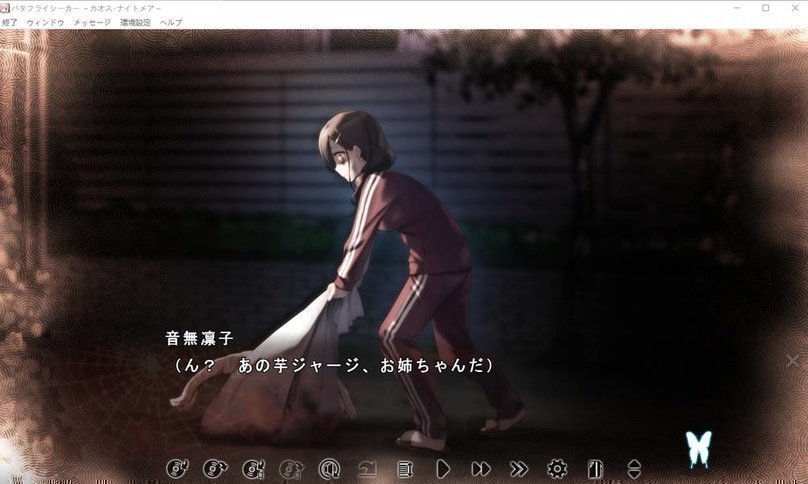
Vanished for six years, no news to this day.
The teacher of the protagonist’s investigation group says she knows about that six-year-old case — a female college classmate of hers, Ogihara (name might be wrong, I don’t remember, whatever), originally wanted to be an actress and was good at acting, but after graduating she went into criminal investigation, specializing in undercover work. Another kind of acting, I suppose…
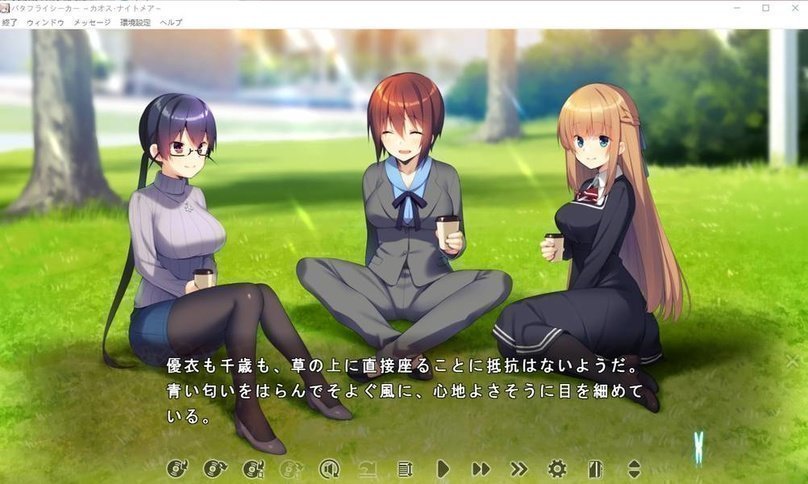
That Ogihara went missing in that case. She was the first to arrive at the scene, was attacked by Otonashi Ryoko, and the two vanished together. Nobody knows where they are to this day.
The police’s official take on the six-year-old case: Otonashi Rinko’s sister, Otonashi Ryoko, suspecting her classmate of hitting on her fiancé, killed her classmate, then tried to silence her sister who came home and saw it, fought with the arriving detective Ogihara, and finally both went missing…
And who was Otonashi Ryoko’s fiancé? None other than the psychiatrist treating one of the heroines, Tendo Yui — a doctor named Sagara. The protagonist and Tendo Yui go visit the doctor, who says the events of years ago were regrettable but he has nothing else to say, he’s a victim too.
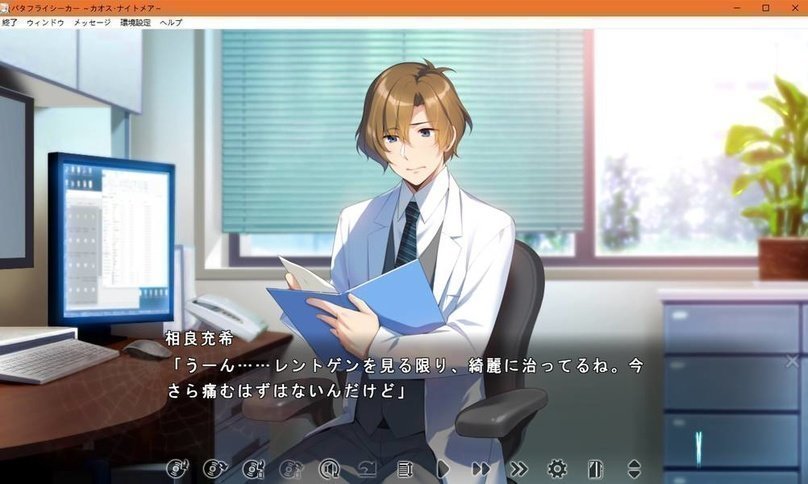
Tendo Yui, though, feels the doctor is hiding something and has a “dark side” — intuition, of course, no evidence.
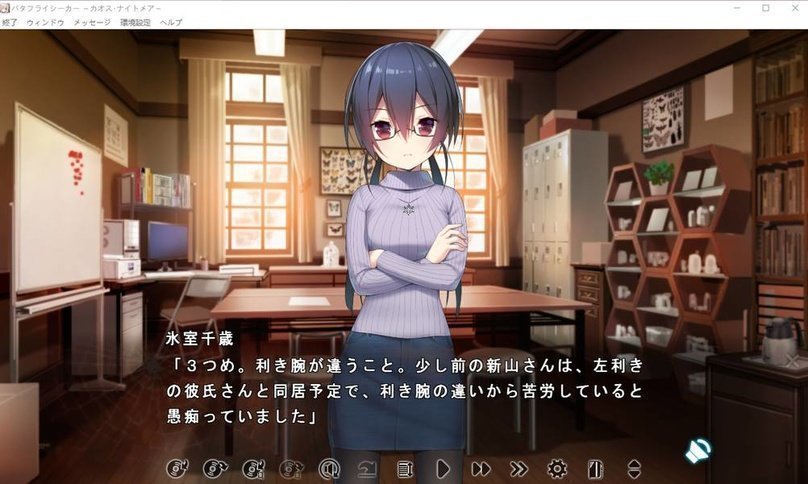
Meanwhile, the now-university-student senpai Himuro Chitose comes back from college, saying she’s made a blonde new friend there, though that friend is sometimes a bit moody…
So the whole case is a scattered mess with no leads, all over the place.
The throat-slitting murders, where everyone who dies has relatives or friends who died violently too.
And those dead relatives and friends all had contact with the schoolgirl Otonashi Rinko before dying — but the contact was just her doing good deeds, no malice.
And the girl herself was involved in a case six years ago that left two people missing, one dead, and still unsolved.
How do these connect? Where’s the link? Only at the very end does the case start to reveal the truth bit by bit.
The truth starts unraveling from the senpai, Himuro Chitose. In college she made a good friend, they ate and chatted together often, but one day the person seemed different from usual — she used to love spicy food, but this time got angry after eating something spicy, and the person who held chopsticks in their right hand switched to the left…
Himuro Chitose got inexplicably chewed out by her good friend and couldn’t understand it: “She’s like a different person.”
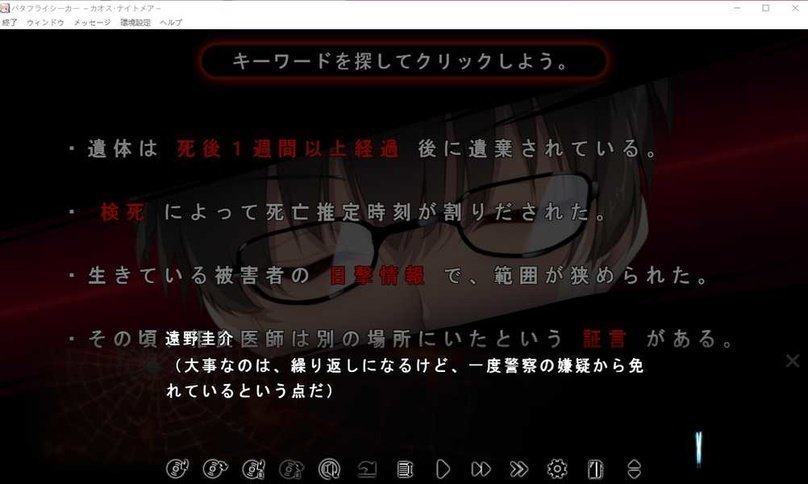
Meanwhile, the protagonist goes to the prison to get advice from the sister again, and after hearing about the case, she poses him some questions:
Since the kouhai Otonashi Rinko interacted with the victims’ friends, and after those interactions the friends all died violently, think about it…
If “Otonashi Rinko” hadn’t made contact with those people, what would have happened to them?
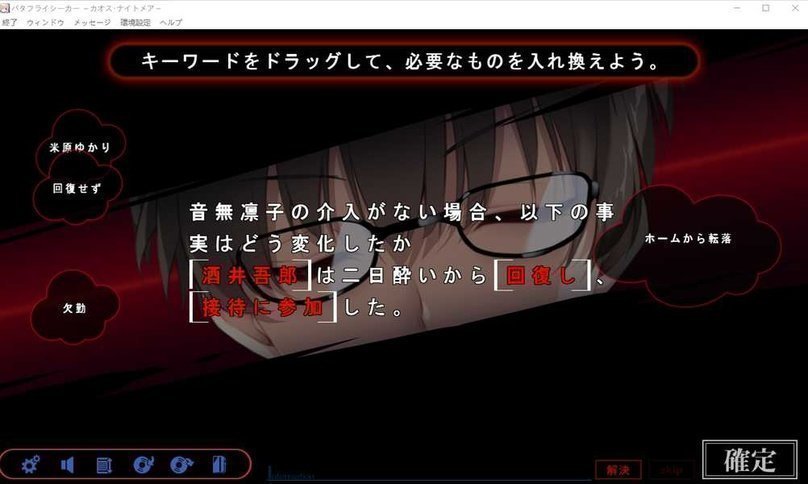
- Without Otonashi Rinko’s contact, one victim’s relative’s clothes wouldn’t have gotten dirty, and they wouldn’t have demanded Rinko buy them a new dress to wear home.
- Without Otonashi Rinko’s contact, one victim’s relative wouldn’t have grabbed Rinko’s bag by mistake, and would’ve gone home with what they originally meant to buy.
- Without Otonashi Rinko’s contact, one victim’s friend would’ve ridden past their stop, and the next day would’ve been too hungover to show up to work on time, and wouldn’t have met the client, or the fuckbuddy.
So by that reasoning, if Otonashi Rinko hadn’t interacted with those people, would they still have died violently?
Did Rinko’s actions trigger something like a butterfly effect, indirectly causing those deaths?
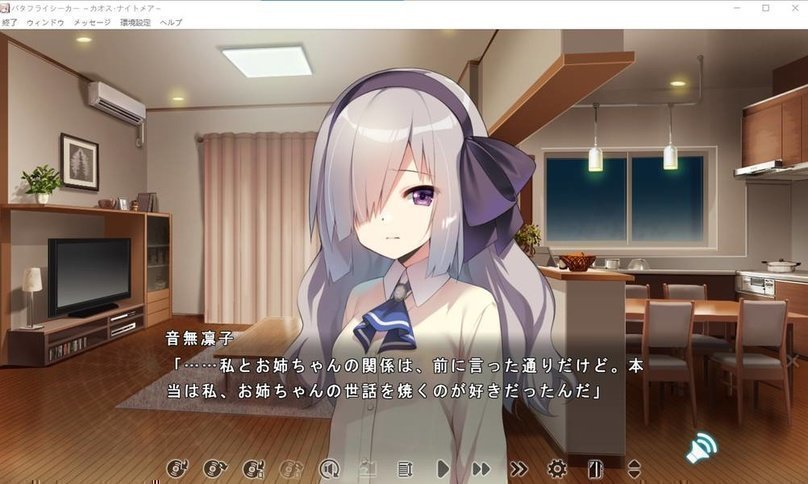
And more interesting: why would Otonashi Rinko so precisely trigger that “butterfly effect”?
After the protagonist’s pursuit and interrogation, Otonashi Rinko admits she also has a “Butterfly Seeker” ability. Only hers is different from the protagonist’s — he touches someone’s belongings and sees images related to the victim’s past death; Rinko touches people and sees the influence of possible futures.
Driven by her longing for her missing sister, Otonashi Rinko followed the images she saw and did a series of things, including meeting those three people, and never expected it to cause three deaths.
Finally the protagonist persuades Otonashi Rinko to bring hair or whatever from her sister’s body and search for where the sister went, dead or alive. The result of the ability search isn’t surprising: Otonashi Rinko’s sister, Otonashi Ryoko, is dead. And what the protagonist sees in her death images is the same as the recent victims: a door… and a hand opening it.
Meaning: Otonashi Ryoko died the same way as the recent throat-slitting victims — the killer is the same person, and she died because she opened that door.
Then Otonashi Rinko tells the protagonist about her sister’s situation, the story of the last few days she saw her sister. Her sister was going to marry a doctor at the hospital named Sagara, but Rinko saw that doctor on the street — her sister’s fiancé, being intimate with another of her sister’s female classmates. Rinko told her sister to go confront the man, but the sister didn’t believe it. Rinko got angry and ran away from home, and when she came back she saw her sister killing her classmate and dumping the body.
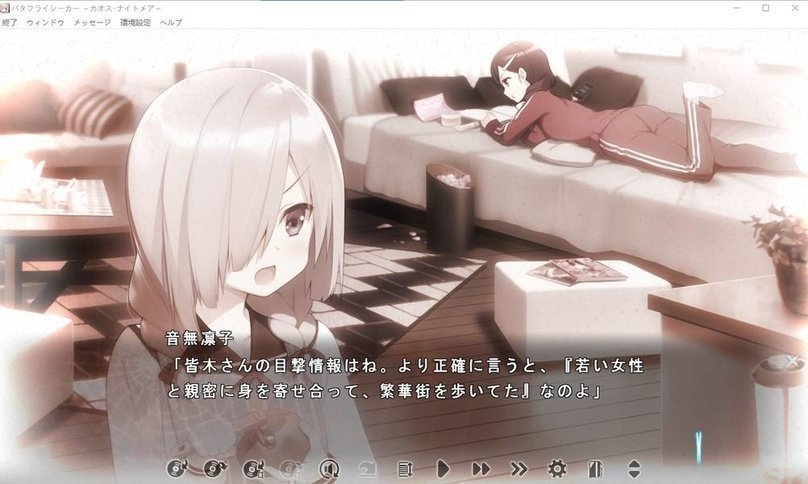
So you can infer that Otonashi Rinko’s sister, having discovered her fiancé was cheating, killed the other woman and fled.
But Rinko thinks the sister she saw wasn’t normal… Her sister was a glamorous office lady on the surface, but at home she was utterly useless, terrible at cooking… needing her younger sister Rinko to take care of her, let alone wielding a knife to kill someone.
And Rinko also noticed at home that her sister had thrown out all the spicy dishes she’d made, which the sister normally wouldn’t do.
At this point the protagonist and the others connect the sister’s last abnormal behavior to what senpai Himuro Chitose said — the same thing: noticing someone nearby acting strangely, and hating spicy food…
Himuro Chitose remembers the teacher’s story about the missing classmate Ogihara, skilled at disguise and makeup, who disappeared along with Otonashi Rinko’s sister… She hypothesizes: could someone have been impersonating the people around them…?
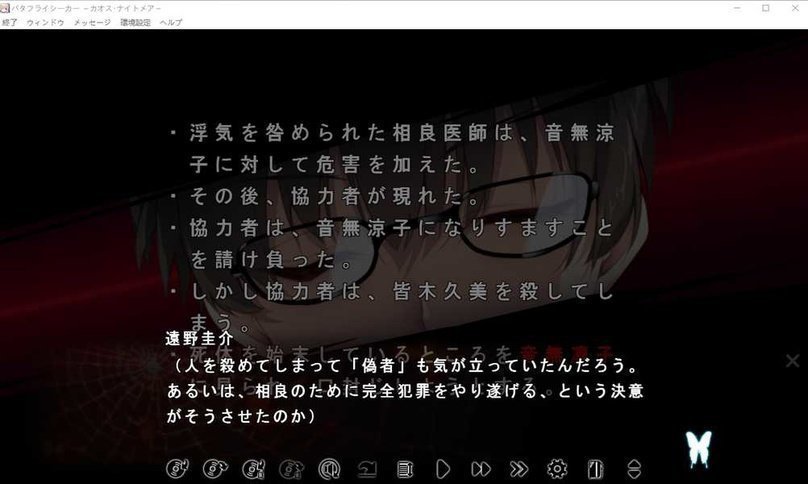
Then comes a round of hypothetical deduction. If someone was impersonating people, a lot of things make sense.
First, the throat-slitting case: all the bodies are dumped a week after death, meaning the killer has a place to store corpses, and the autopsy results show the time of death is very vague — someone deliberately stored the bodies for a while before dumping them, to prevent accurate estimation of the time of the crime and thus create an alibi.
At the same time, the protagonist notices the three throat-cut victims share a trait: they’re extremely solitary, with little contact with others, and their dead relatives and friends were the only people they had contact with — mother, sister, fuckbuddy… And senpai Himuro Chitose’s classmate also lived alone, with little contact with others.
So the hypothesis: someone wanted to kill these three, so first kidnapped and killed them, while finding someone to impersonate them and live their lives for a while, making everyone think they were still alive. After some time, dump the bodies. Witnesses can’t prove when the person actually died, because it was long ago, yet they clearly saw them alive just before… even though it was an impersonator.
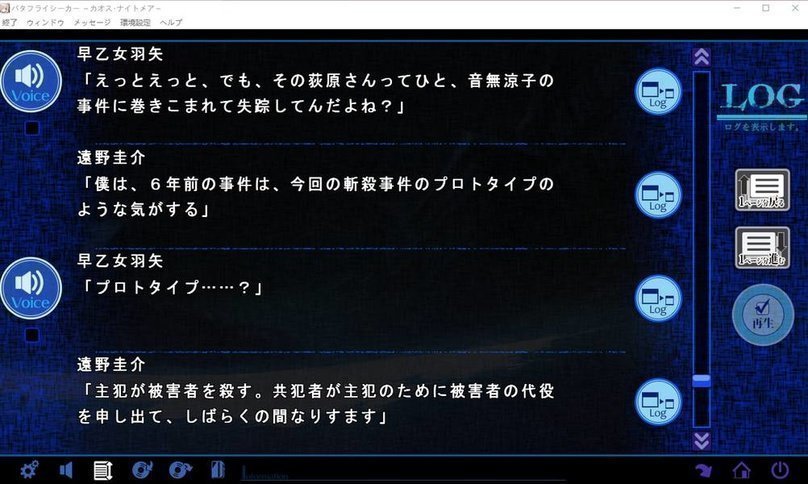
So if the three killed are mostly solitary people with little social contact, wouldn’t they be easy to impersonate? But why impersonate them? Why did their relatives and friends die?
Then someone proposes a hypothesis: could the relatives’ deaths be because the impersonator was found out, and they killed to silence them?
In other words: the victims may have died first, and the victims’ relatives and friends died after. But by having someone impersonate the victims and delaying the body dumps, they created the illusion that “the victim’s relatives died first, the victim died after,” while also giving the criminal an alibi.
The victims’ relatives all died shortly after contact with Otonashi Rinko, so maybe Rinko’s actions made the impersonator slip up…
Investigation confirms it…
Otonashi Rinko bought one person a dress as an apology, but the real victim had a wound on her shoulder and the impersonator didn’t. After going home and meeting family, she was quickly suspected — so silenced.
Otonashi Rinko mixed up shopping bags with one person, but the snack brought home was a different flavor. The real victim hated that stuff, but the impersonator loved it and ate it up — spotted by family, so silenced.
Otonashi Rinko woke one person up, so they didn’t miss the train and weren’t late the next day. The next day that person hooked up with the victim again, and when stripped down, it wasn’t the real person — impersonation failed, so silenced.
Otonashi Rinko’s actions just happened to expose the impersonators, ruining the original plan, leaving only silencing?
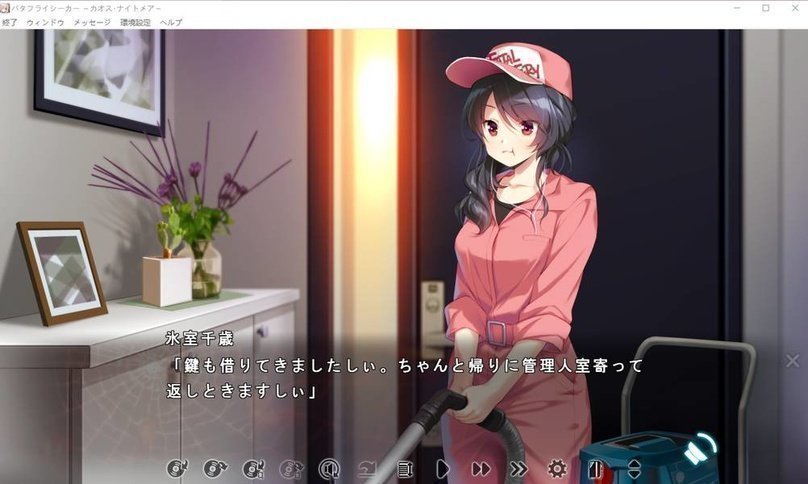
Meaning: the criminals originally just wanted to kill those three solitary women, then have someone impersonate them for a while to confuse the autopsy’s estimate of the time of death. But Otonashi Rinko’s appearance caused accidents, so they had to kill three more related people.
At this point, who the impersonator is has probably become obvious. The sister Otonashi Rinko saw six years ago may not have been her real sister. The “Ogihara” detective who arrived first at the scene after Rinko was knocked out by “her sister” is the prime suspect.
The protagonist’s teacher said Ogihara was her college kouhai, best at disguises and acting… In the six years she was missing, maybe she was helping the criminal kill people.
Meanwhile, the disguise-skilled Ogihara gradually infiltrates the protagonist’s group, impersonating the teacher… Of course that story’s too long, skip it. Let’s get to the final deduction.
The final assist comes from the protagonist’s sister again, tipping him off about the nature of the case with a “Bluebeard” hint.
With the police finally telling the protagonist that Otonashi Rinko’s sister’s body has been found, dead six years ago, the mastermind is confirmed to be that Doctor Sagara. It all started six years ago.
Doctor Sagara and Otonashi Rinko’s sister Otonashi Ryoko fell in love. The sister later found out, on her younger sister’s tip, that her fiancé was cheating with a classmate, and went to raise hell. This stirred Sagara’s resentment, and he decided to get rid of her.
After accidentally killing the sister, Sagara didn’t know what to do. Then Ogihara, secretly in love with Sagara, appeared and gave him a plan.
First hide Otonashi Ryoko’s body, have the disguise-skilled Ogihara impersonate Ryoko for a while, and after some time dump the body — that way no one could estimate the time of the crime.
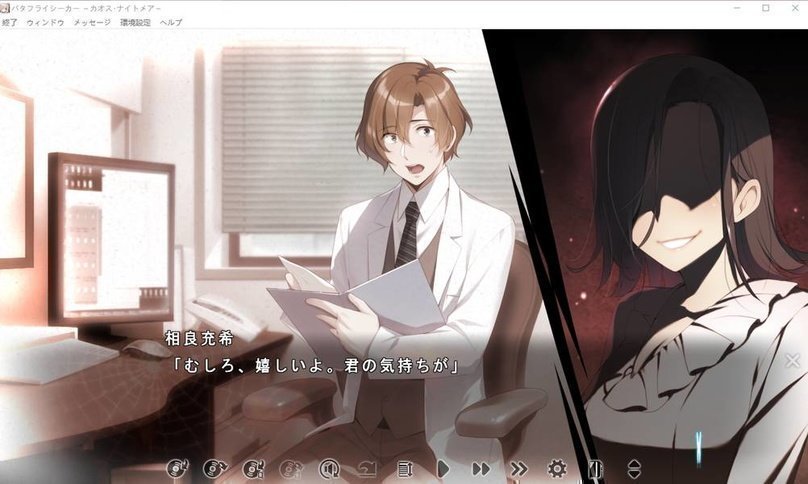
But while Ogihara was impersonating Ryoko, the mistress classmate came to provoke her… and found out she wasn’t the real person, so she was silenced.
After silencing her, the clever Ogihara deliberately left the body for Otonashi Rinko to find, making her firmly believe her sister had killed the classmate.
Ogihara also impersonated the arriving police officer, then vanished, making it look like she’d been coerced and killed by the murderer.
So the two just disappeared, and Otonashi Ryoko’s body was hidden away by Doctor Sagara.
After that, the girls who died followed the same pattern as Otonashi Ryoko. It was all caused by Doctor Sagara’s personal psychological twistedness.
Sagara’s mind is warped; he doesn’t trust women, thinks all women are liars who don’t keep promises. But he also loves women, so he keeps picking up girls, keeps making the girls he picks up betray him, then stands on the moral high ground, says women are all liars, and kills them.
According to the protagonist’s sister’s hint, the message left by the last dead girl was: あおひげ. That is, 青ひげ — Bluebeard.
Bluebeard is a well-known fairy tale, and a dark one: a rich King Bluebeard marries a queen and tells her, “You may open every room in my castle except one. If I find you’ve opened it, I’ll kill you.”
Bluebeard’s wife can’t resist her curiosity and opens it, finding the bodies of Bluebeard’s previous wives, all killed for opening it out of curiosity… and now this queen faces the same fate.
So he’s just like the fairy tale Bluebeard. He tells every woman he dates: “There’s a certain door in my house you must never open. If you open it, I’ll kill you.”
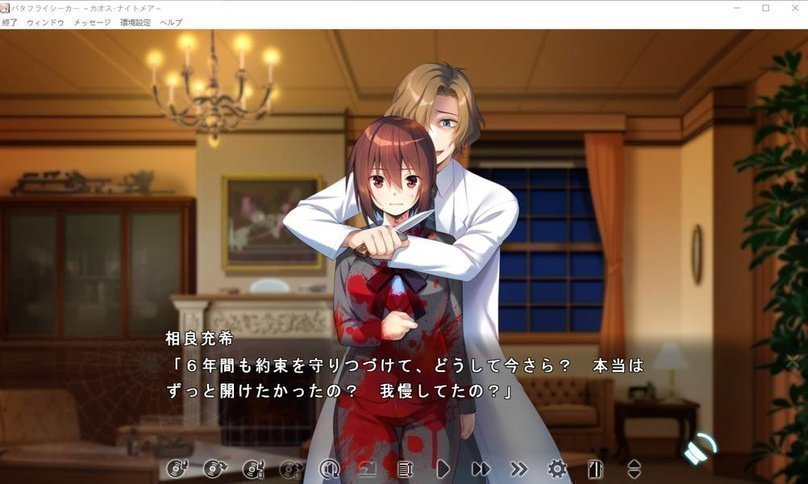
The three women after that all broke their promise and opened the door. There’s a mechanism behind it — opening it sprays red ink all over you that won’t wash off. Doctor Sagara finds out, shouts “women are all liars,” and kills them, then has Ogihara impersonate them for a while and dumps the bodies…
The three dead solitary women all went like this, which is why the protagonist’s death images all show the victims opening that door…
And what Otonashi Rinko saw of the future was indeed connected to obstructing “the murderer who killed her sister,” but unfortunately, though her actions disrupted Ogihara’s smooth killing spree, they also cost other people their lives.
And the person Sagara most wanted to kill was precisely Ogihara. Ogihara had assisted Sagara for six years without ever opening the “door you must not open” he’d told her about. Sagara was getting impatient… like an angler who can’t get a bite…
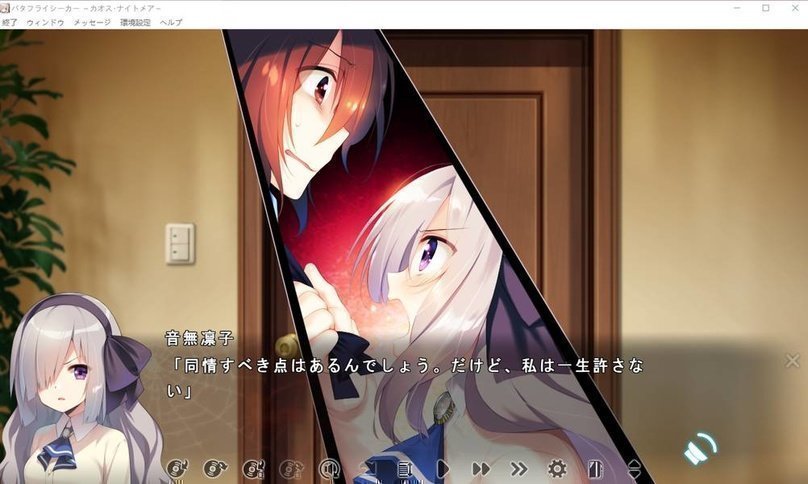
In the end, Ogihara out of curiosity opened that door, and Doctor Sagara suddenly appeared:
“I’ve waited so many years, and you finally betrayed me. I’ll kill you!”
The protagonist, of course, also figured out the killer, showed up in time, and took care of the twisted doctor… The murderer was caught.
And what was actually behind the doctor’s door?
Actually, it was the doctor’s mother’s outfits and various women’s clothes. So the doctor has a mother complex? But not quite a mother complex — more like mental illness. If people found out his secret, maybe no woman would like him.
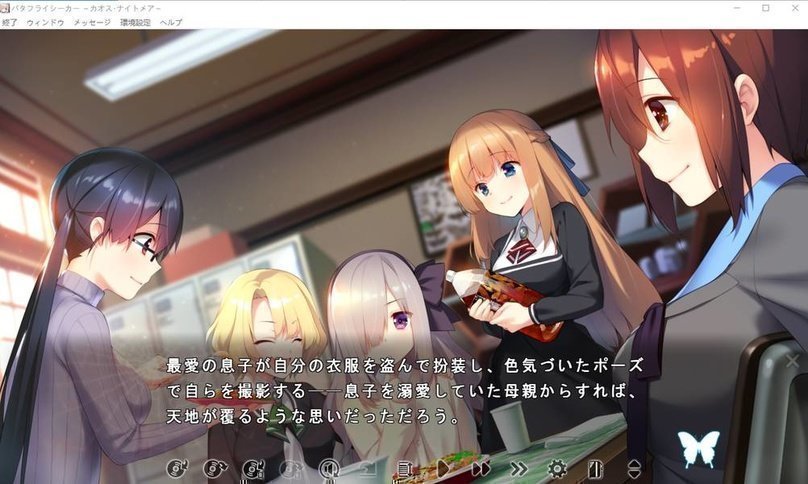
Maybe the doctor initially killed people who discovered his secret just to cover up his mother-fixation and narcissistic crossdressing, but later he seemed not to care about the secret anymore and turned the door into bait, luring people to betray him and giving himself a reason to kill. And in the game’s after-story, the protagonist says Sagara’s real target was Ogihara all along, and the three people he killed before weren’t the point — they were to spark Ogihara’s curiosity and force her to open the door.
Just like the fairy tale Bluebeard, the queen who truly takes the place is Ogihara; the six people who died before were just supporting characters.
After the case is solved, Otonashi Rinko realizes she’s in love with the protagonist, so while he’s asleep she touches his body and enters the ButterFly Seeker virtual world with him to have sex. The protagonist treats it as a wet dream… and in the end nothing happens between them…
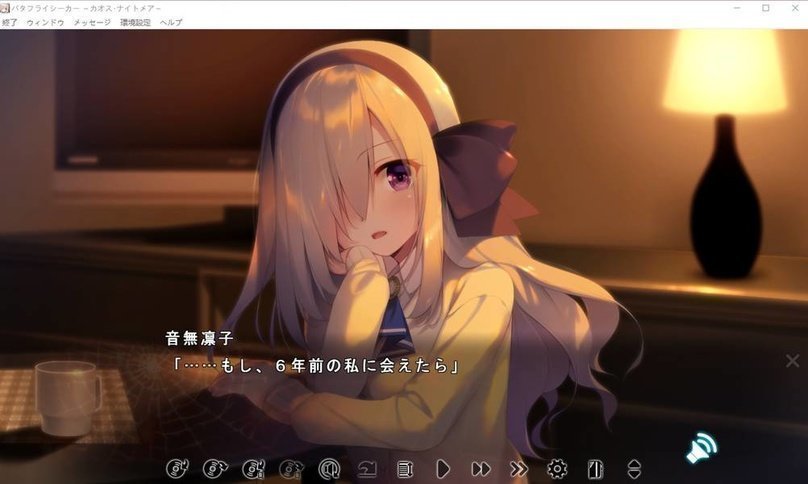
So in the end the protagonist is just the object of the kouhai’s one-sided love, and his true love is still the sister. The story ends there. That’s roughly the plot; some details I don’t remember, if there are mistakes go by the game.
But then again, this game has almost no romance elements — it’s purely a detective story. The sex scene tacked on at the end is really jarring, probably just to satisfy the otaku who want to see the HCG.
First, the big picture: Butterfly Seeker: Chaos Nightmare only has one case, but that one case is better constructed than any case in the original game. From the very start it sets up an elaborate puzzle, sprinkling clues at you in a way that feels almost offhand. Early on those clues have no real connection to each other, and even at the midpoint everything is still scattered. Then in the back half, all these seemingly unrelated events start linking up, and it turns into one big case behind everything. The storytelling isn’t linear — it’s closer to how real detective work goes. You have to admit most cases get solved through a single breakthrough point, and once you hit it, everything clicks.
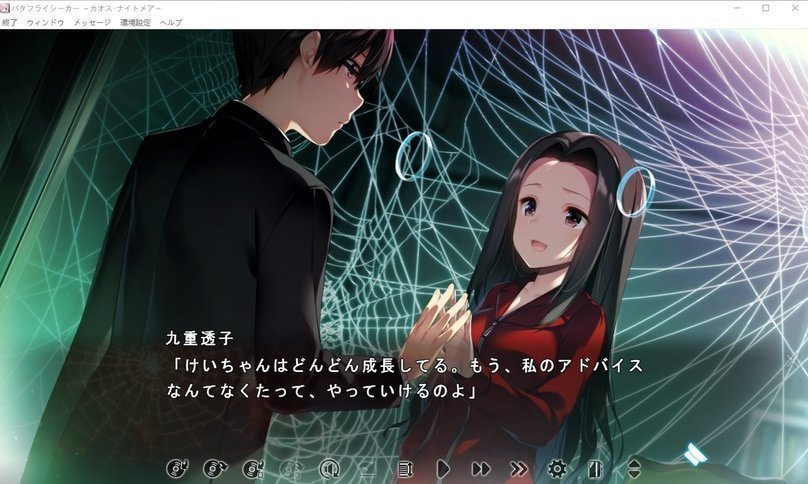
And those breakthroughs don’t fall out of the sky. They all start from a “what if” — and in the case of this Chaos Nightmare fandisk, that what-if is “someone is impersonating the victim.” It’s a bold assumption, but it doesn’t come from nowhere. Right at the start, the protagonist’s teacher mentions that her underclassman was good at acting and disguise, and later went missing while working a case. There are plenty of other hints like that, some of them hidden right in the CGs — like the fact that a certain impostor is right-handed. If you don’t look closely at the CGs, you won’t notice when someone is real and when they’re not. All these little clues, big and small, get paid off in the end.
The game does have its flaws, though. The main one is the new heroine, Otonashi Rinko. She’s actually the heroine who fits the protagonist best: she has the same kind of power, and the powers complement each other — he sees the “past,” she sees the “future.” In theory there should be way more sparks between them. But maybe because the protagonist already became a siscon in the main game, the FD didn’t want to cuck his poor sister, so it just made the new heroine’s feelings one-sided. Kind of pathetic, honestly. She’s so cute, too.
It’s a fandisk, and a lot of the sprites are reused from the old version, but there are plenty of new backgrounds and new CGs. Like I said earlier, a lot of those CGs are themselves clues. There’s also a new OP — except there’s no video OP, so this “new OP” is just a plain music player…
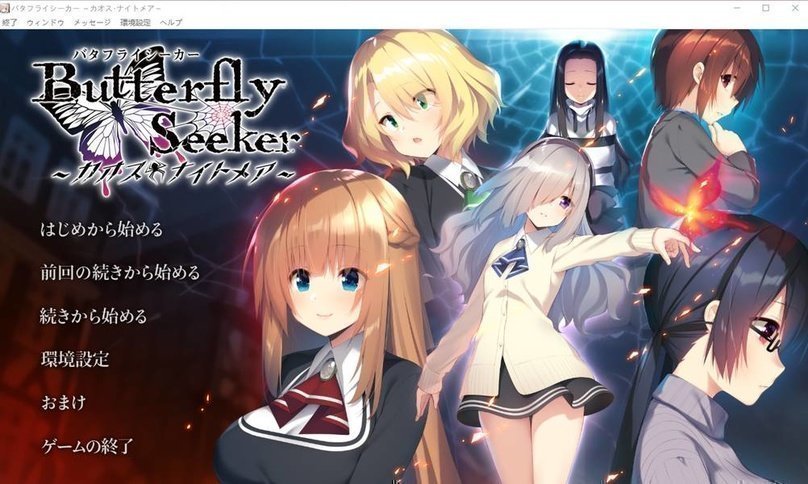
Sure, they cut corners here and there, but considering how insanely good the core story is, this FD ended up way better than expected. It goes beyond what a normal fandisk is — it’s closer to a DLC.
I remember at the end, Otonashi Rinko says that after her sister went missing she gained the power to see the future, and the futures she saw were clear but always felt like one long nightmare. That ties into the subtitle: Chaos Nightmare. Only after meeting the protagonist does her chaotic nightmare finally scatter and fade…
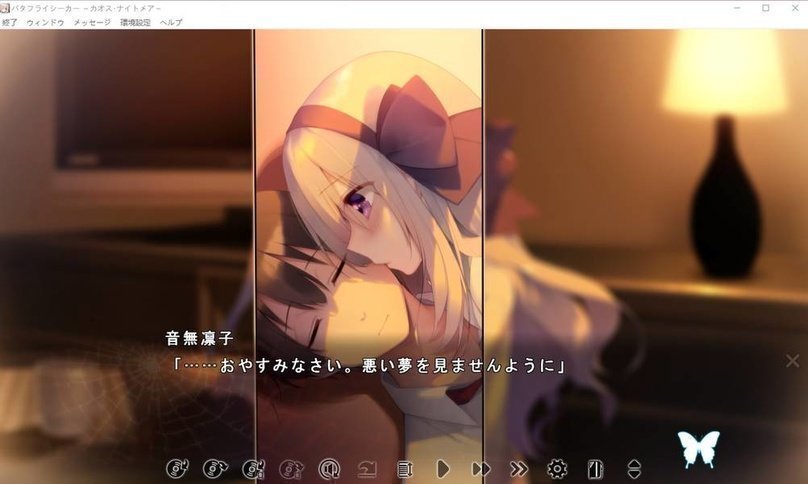
Shame, though. The protagonist is a hardcore siscon, so he can’t save this girl or give her happiness. All I can do is sit on the other side of the screen and sigh at the poor thing…
Comments are hosted on the Chinese main site. This mirror is read-only.