Erewhon Review
Erewhon: A Crimson Nightmare
Personally, I really like ClockUp’s games, because I always feel they’re very “real.”
Yes, real — the kind of game that’s genuinely 18+ for adults, not one of those “it’s 18+ only because they bolted on some sex scenes” games.
Honestly, if you stripped the optional HCGs out of a lot of 18+ games, the age rating would suit thirteen-year-olds better. ClockUp’s games are the opposite: even if you deleted every HCG, they still wouldn’t be okay for anyone under eighteen. It comes down to the content and the emotions the game expresses — stuff that’s hard for minors to stomach. Most of it delivers shocking gore and violence, and through those shocking images, thoughts about life and human nature.
I always praise ClockUp’s games as insane, but not every ClockUp game is like that — it mostly depends on the scenario writer. Some bring in Light’s lead writer, like Nemurenu Hitsuji to Kodoku na Ookami and Maggot baits. Others are the series of small, deep works by Asa Ei, like Natsu no Kusari and euphoria. And this time Asa Ei took the pen again, teaming up with ClockUP on a new title: Erewhon.
I was following Erewhon from the start. My first impression was that it looked like a horror game — probably ghosts or tentacles — and that the content would be a small-scale work like Natsu no Kusari. After nearly half a month of playing through it, I realized I was completely wrong…
First, Erewhon isn’t a small-scale work. The main story isn’t short, and it has a set structure and route locks. Second, Erewhon doesn’t just have ghosts and tentacles… it also has group sex, rape, gang rape, training, cumdumps, incest, Freud, cannibalism, aliens, time travel, reincarnation, legends, folklore, mythology, and… ancient Chinese gods…
All in all, this game is hardcore as hell, and the story twists and turns. The feelings it gave me were like a roller coaster. Let me walk you through it.
The game opens in the protagonist’s dream. He wakes up and finds himself in a mysterious village full of red flowers. Inside one of the flowers, a girl beckons to him. He goes to meet her, and she doesn’t hesitate to start having sex with him…
He wakes up thinking it was a wet dream, but it seems to be reality. He realizes he’s in a mysterious village, and many of the villagers start calling him a “god”: Mikomisama.
Where this “Mikomisama” came from, the protagonist has no idea. Later he comes to his senses and understands why he’s here. He apparently used to work in the city as an ordinary office worker, then suddenly lost his job. At a loss, he was leafing through a newspaper and found an article about a mysterious, undeveloped village in some mountain valley — kind of like one of those “forbidden zones” in China. So he went to explore. I’ll skip the expedition itself; the result was that he found the village but landed in danger, and the villagers rescued him — and then started calling him a “god,” this “Mikomisama.”
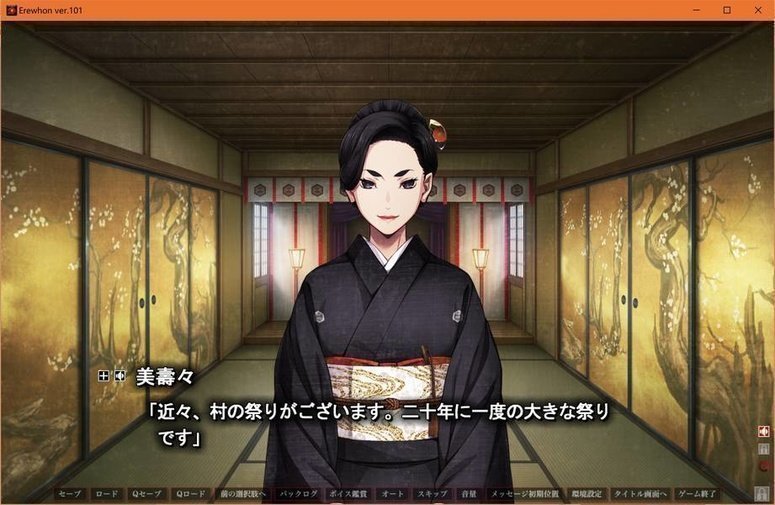
The protagonist is baffled at being treated as a god out of nowhere, but the villagers quickly get to talking: they invite him, as their god, to take part in the village’s grand ritual, held once every twenty years.
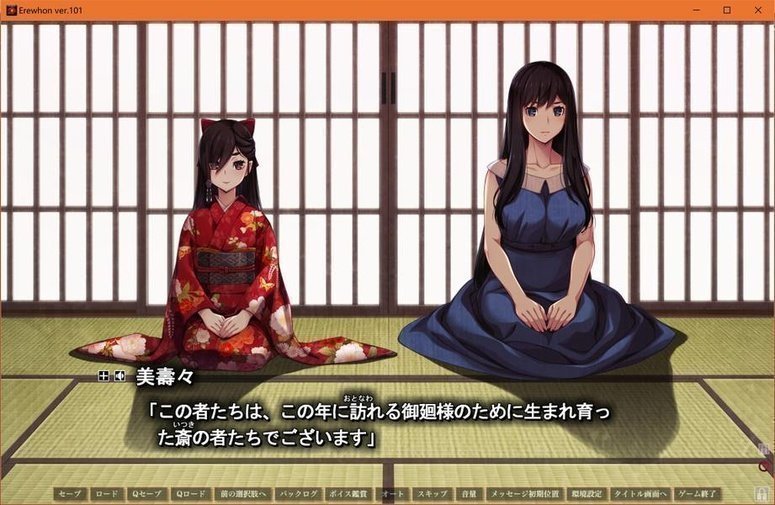
With that, they bring out two girls and tell him these two are the shrine maidens for the ritual, and until the ritual comes, they’ll serve him every day.
The protagonist is completely lost, and one of the two girls he actually recognizes: one is Nagami Kiseyo, the other is Ashiki Touko. And the one called “Kiseyo” is the girl he was having sex with among the red flowers in his wet dream a few days ago.
Then the village chief comes out and explains: the village once offended a malevolent female spirit, and to suppress her evil, they hold a ritual every twenty years. Before the ritual begins, a “god” descends upon the village. Since the protagonist has arrived, that means he’s the fated “god,” and the god’s duty at this ritual is to choose a wife from two beautiful girls selected by the village, and marry her during the ceremony.
“So the two girls — one gets picked as my wife, and the other?”
“The other just gets to play the female spirit~ the one possessed by the vengeful ghost that destroyed the village. Then you, as the god, suppress her.”
Then, before the ritual starts, the protagonist spends every night rotating through those two girls like he’s picking tiles, sleeping with them — and having sex, of course.
The protagonist notices the two girls chosen to serve him have different personalities. Kiseyo may be small and skinny, but she seems to enjoy sex and is very erotic. The other, Touko, seems proper and looks more like a “normal person.”
Speaking of “normal people,” the protagonist starts noticing more about the village: a lot of the people seem abnormal, with all sorts of bizarre customs.
- The village seems to have more men than women, and quite a few of the women are “shared wives” (figure out what that means yourself).
- The village actually has a custom where the chief deflowers every adult girl to claim her first night.
- The village has three great families, each represented by a woman, and those women are all shrine maidens.
- These three shrine maidens seem pretty loose; some will even offer to sleep with the protagonist, on the grounds that “a shrine maiden’s job is to serve the god.”
- The village has a “forbidden zone,” said to hold the village’s “treasure.”
- The village has a legend about a “taisui dug up from the earth”; eating the taisui is said to cure all illnesses and grant immortality. (That part matches China, actually.)
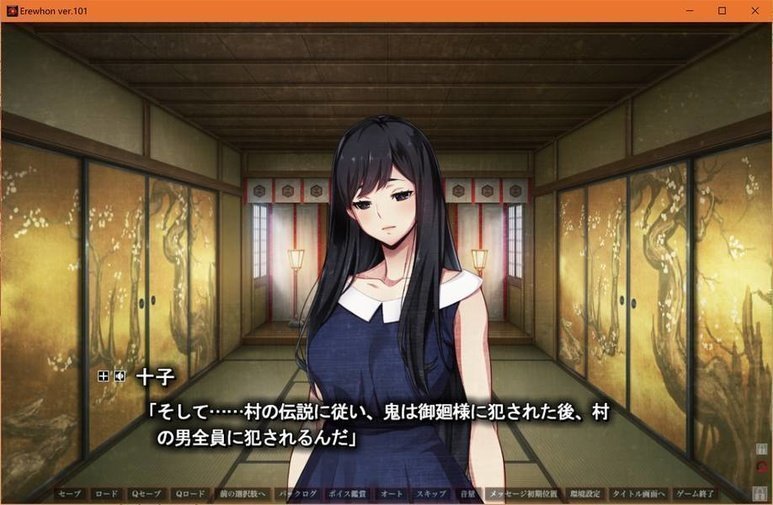
And the most important thing: when the ritual begins, the so-called “suppression of the female spirit” means the heroine the protagonist didn’t choose as his wife gets tied to a pillar, plays the demon, and is violated and gang-raped by every man in the village in turn… that’s the “suppression.”
The protagonist thinks the villagers have all gone insane, doing things against all common sense, and it’s just… he doesn’t know what to say. But he also doesn’t know how to get out — the village seems to have no exit. And he realizes that although he’s called a “god,” he’s being watched.
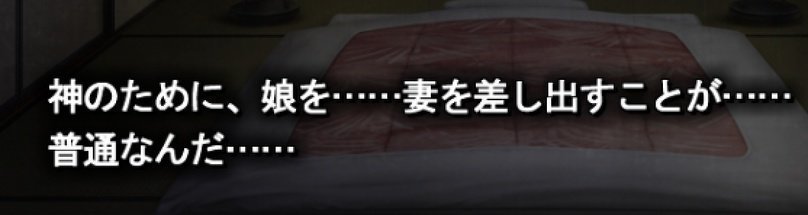
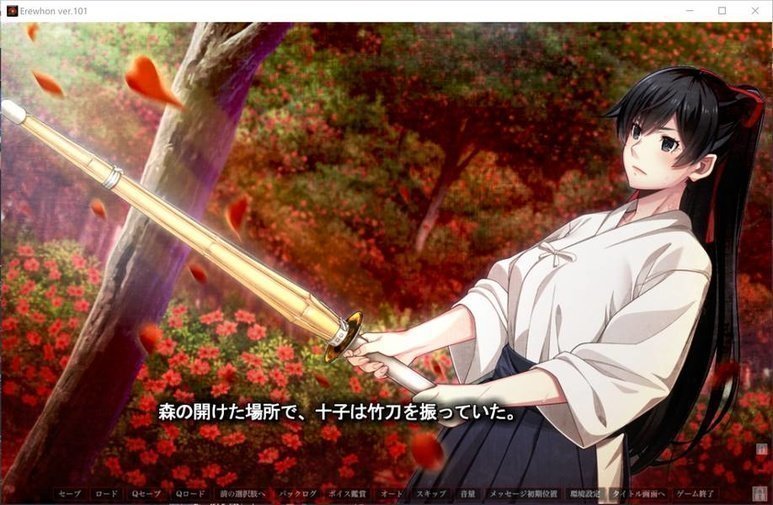
The ritual is approaching. Between the two heroines, Kiseyo and Touko, the protagonist actually wants to choose Touko, because she seems more like a “normal person.” Kiseyo says she doesn’t mind being gang-raped by the whole village as the female spirit. But Touko is unhappy about it — she says she’s strong, while Kiseyo is frail and would die from gang rape.
But the choices in the game are basically useless. If you pick Kiseyo, the ritual begins, and Touko gets violated as the female spirit, becoming the village’s cumdump. And even if you pick Touko, at the start of the ritual Touko suddenly goes mad, saying she’s possessed by a ghost (no idea if it’s real or an act), and in the end she still gets gang-raped and turned into a cumdump…
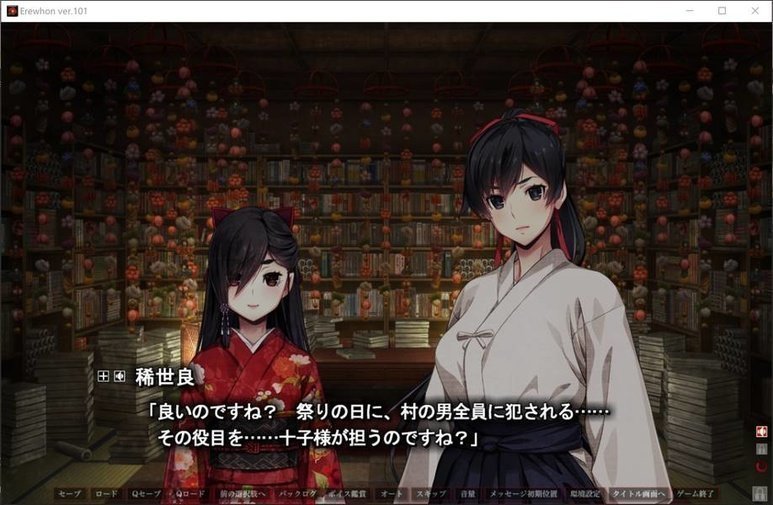
And what’s even crazier is that the start of the ritual is the start of a village-wide orgy — everyone swaps wives and takes turns screwing each other… you can’t even tell who’s who. The protagonist is stunned.
The first few playthroughs are basically this: choose one of the two heroines, and one becomes a cumdump while the other becomes your wife…
Of course, there’s a third route where you can choose the maid who serves you, Sae. The story has the protagonist fall in love with the servant girl Sae, elope with her, escape the village, and return to the real world.
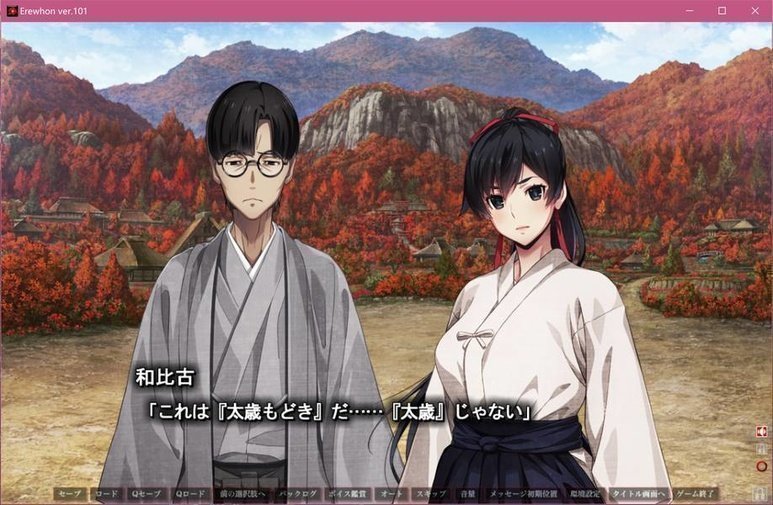
But you thought this game was just a simple nukige story? How naive. There’s still so much unexplained, especially those weird customs.
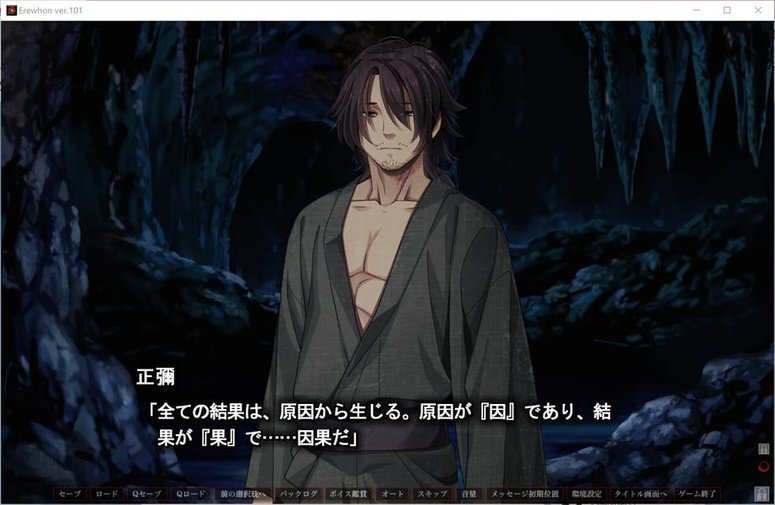
On the fourth route you can choose to save Touko. The protagonist obsessively insists on making Touko his wife, refuses to let her become a cumdump, and wants to leave with her. In the end the ritual turns into a tragedy: the village burns down, people die, and the protagonist and Touko flee, escaping into a cave. Touko falls, her body impaled on a stone pillar, and she’s about to die. With her last breath, she tells the protagonist:
“This cave is the forbidden zone. People who go in never come out… If you get hungry, eat me.”
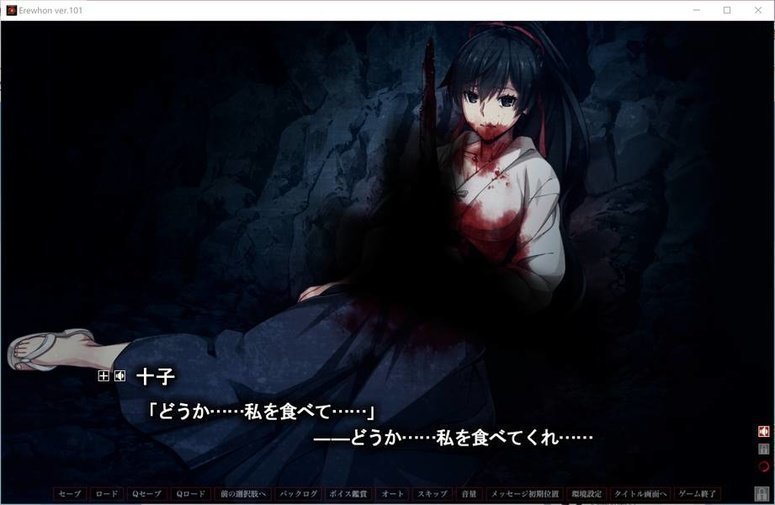
In the end the crazed protagonist, starving, does exactly that.
After eating Touko’s flesh, the protagonist starts seeing visions…
And so the game’s True End begins…
The protagonist sees many, many visions — things from very, very long ago, about the “taisui.”
He realizes he seems to have gained some of the taisui’s power, able to see the past scenes the taisui saw.
The “taisui” is a god from another world who loves the color red. This taisui god came to the human world through some path and was discovered by humans. The taisui’s true form is like a lump of flesh — what we commonly call a “meat lingzhi” — and this meat lingzhi can cure all diseases and grant immortality, so humans began enshrining the taisui they found… as a god.
Over time, the taisui absorbed human vital essence and took human form… becoming a girl in red robes.
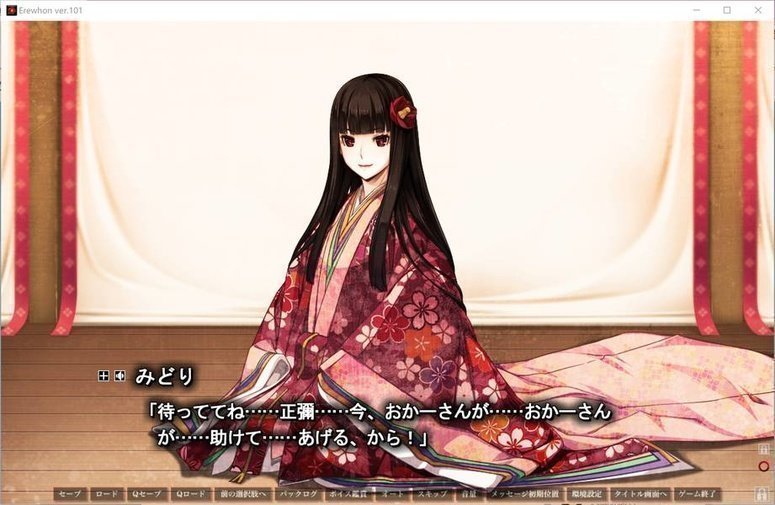
This taisui who became a spirit was called “Hime” by humans — “princess” in Chinese.
A great family in Japan enshrined this “princess,” and through her power gained status, authority, and wealth. But unfortunately, World War II broke out.
To preserve the princess, this great family sent part of its members — especially the “head shrine maiden” and two assistant shrine maidens — to lead the princess to a remote mountain region in Japan, the very place where the taisui was first found. They hoped the maidens would protect the princess and the wealth they brought, and when the war ended, the family would send someone to retrieve them.
There was already a village in that mountain region. Seeing guests arrive, the shrine maidens negotiated with the village chief, and the chief agreed to let them stay until the war was over.
But war is cruel, and that great family was wiped out entirely… (I figure the atomic bomb got them).
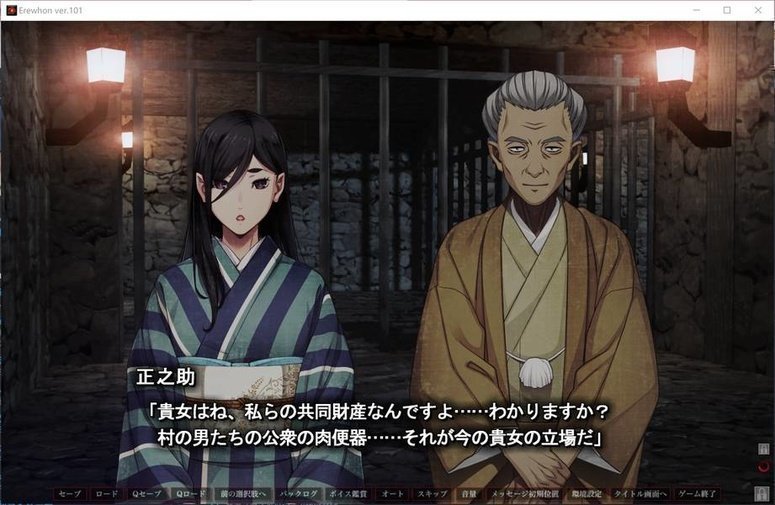
No one would ever come for the head shrine maiden and the princess she brought. When the village chief heard the news, he didn’t tell the shrine maidens right away — instead, he had an evil thought.
The chief gathered the original villagers, and they rose up together, killed the shrine maidens’ family guards, and began plundering the treasure the maidens had brought, taking it all for themselves. The head maiden was furious, but the chief wasn’t afraid of her — their backing was gone, after all.
The head maiden accused the chief of being a bandit, and the chief simply had the villagers drag her and the other shrine maidens out, throw them in the dungeon, and use them as comfort women for the whole village (a real Japanese tradition, this).
So the chief got massive wealth, and the shrine maidens the great family brought became his cumdumps…
The maidservants the family brought became the village’s “shared wives,” locked in some attic, available to any man.
The shrine maidens were screwed by the villagers endlessly… but they hadn’t forgotten their mission: protecting the “princess.” They begged the chief to let them see the “princess” just once.
The chief reluctantly agreed and let them look — and the moment they saw her, the shrine maidens went insane with rage…
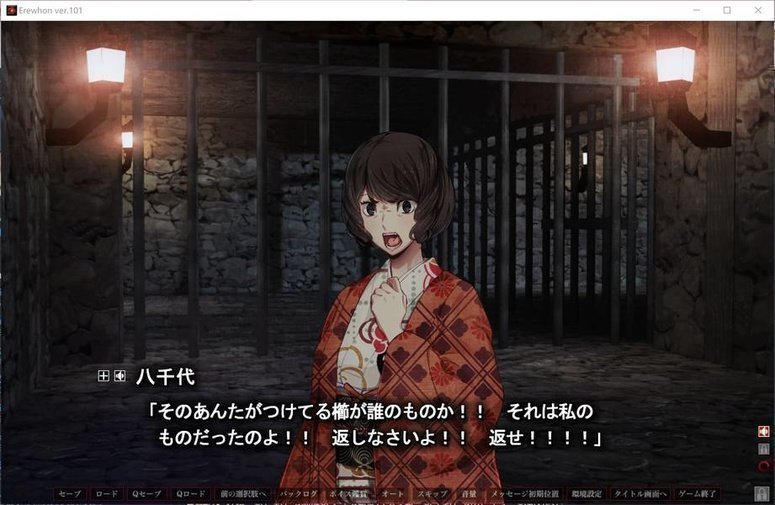
That taisui god in human form — her body was that of a woman, after all — had likewise been turned into a cumdump by men the chief found…
Their own god violated like that, the shrine maidens were furious and despairing… but there was nothing they could do. They’d failed to protect the “princess.” They wanted revenge, revenge against those villagers, but no chance had come yet…
Then, soon, the chance came…
The war ended, but the village had been cut off from the outside world for too long, and the villagers themselves didn’t know if they could leave. And the village itself began to suffer disasters — typhoons, torrential rain, calamities — leaving the villagers with failed harvests and on the verge of starvation.
And then the chief’s son… fell off a cliff on the east side of the village while tripping, and was barely alive.
The village had no doctor. The only people who knew how to heal were the shrine maidens who’d come here.
The chief’s wife went to beg the shrine maidens. They refused to help and even gloated — but one maiden softened and said…
“That princess… just one bite…”
Don’t forget, the princess was actually the taisui’s incarnation. One bite of her flesh could cure all diseases and grant immortality.
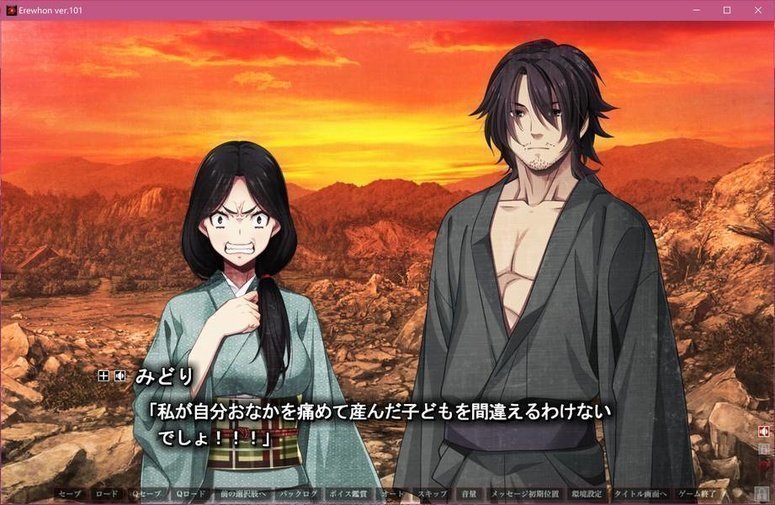
The chief’s wife stopped caring about anything. She went back, found the princess, chopped off her hand with a knife, and immediately took it to feed her son…
After the son ate that piece of flesh, he came back to life at once — from barely breathing to bouncing around in an instant.
But a bigger problem followed. The villagers saw this and asked:
“We’re all about to starve — where did that meat come from?” “Did the chief hide grain for himself?”
Finally a young villager jumped up and exposed it: the meat was actually from that “princess.”
The villagers scattered and immediately rushed to devour the poor princess…
In the end… the princess’s flesh was eaten by the villagers…
The shrine maidens were force-fed the princess’s flesh too. They refused to eat, but to keep these cumdumps alive, the villagers forced human flesh down their throats… (even if it was meat-lingzhi-made-human, technically).
The only ones who didn’t eat were the chief and his wife. The villagers despised them too and drove them out of the village.
Eating the “taisui” flesh meant immortality, no more illness, not even needing food.
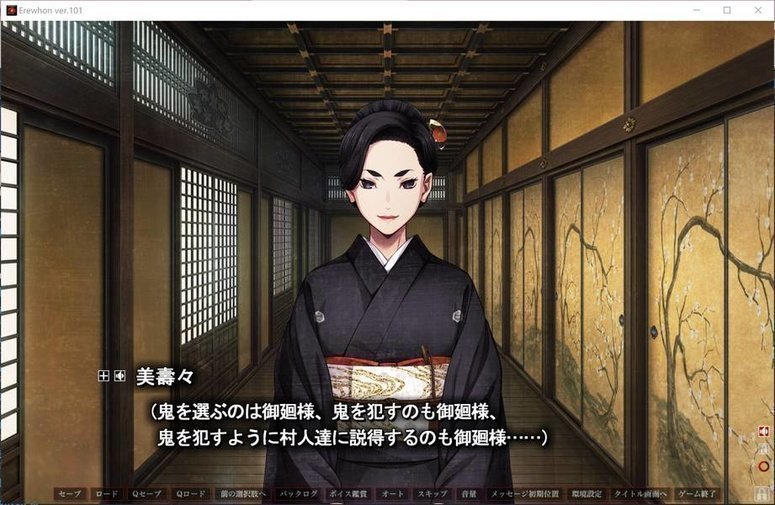
The young villager who led the exposure became the village’s new leader. When he became chief, he took the three shrine maidens who’d fallen into cumdump status out of the dungeon, married one of them himself, and found a villager husband for each of the other two.
Because the young villager had little education, he had to rely on the shrine maidens’ advice for many things. During this reconstruction, the maidens realized this chief had no vision, and using their wisdom, they gradually took over the village’s management and development.
The shrine maidens also began their revenge plan.
The head maiden wrote the village’s history and culture, and even invented a custom: a female spirit haunted the village, and every twenty years a ritual was needed to suppress her.
At the same time, the shrine maidens proclaimed that every year someone would come to the village — that was actually a god descending to the mortal world. The villagers must treat him well, feed him, and let him preside over the ritual.
And the ritual every twenty years was even more important, because after twenty years, a new “taisui” reincarnation would be born. Marry the god to a wife, wait for the new taisui to be born, and the villagers would have a brand-new “princess” — this time they wouldn’t have to eat her; just keeping her around to heal people would be great.
The villagers who ate the “taisui flesh,” including the shrine maidens, stopped aging and became immortal, right up to the present — though new life kept being born in the village too, all from the “shared wives.”
Among them, Touko and Kiseyo are both girls born there. And some of the bad customs were inherited too, including the former chief’s “every girl must be deflowered by the chief when she comes of age…” and so on.
But can the true “taisui” really reincarnate every twenty years? The shrine maidens admit they probably made it up. If it really reincarnates, the maidens will claim it for themselves and use it to rule the village again. If it’s fake and no reincarnation happens, the maidens will shift the blame to the “outsider”:
“The outsider chose the wife.” “The outsider god made the children. We shrine maidens did nothing. If anyone’s at fault, it’s that outsider god.”
So that’s the origin of everything the protagonist went through…
The protagonist’s visions end. He understands the whole story now — but what about the cave he’s in?
Then the protagonist meets a scholar in the cave. The scholar says… he’s a person from 2007, while the protagonist himself is from around 1970.
Only then does the protagonist realize: this cave seems to be a passage connecting the “human world” and the “taisui” world. It seems to have no concept of time or space — kind of like Doraemon’s time machine tunnel. No wonder the “taisui” was first discovered in this village; maybe the taisui came from the other world through this passage.
The protagonist suddenly wonders: if he traveled through this cave back to the moment before the village ate the “princess,” could he save the village?
He doesn’t really want to save the village — he just wants to save Touko.
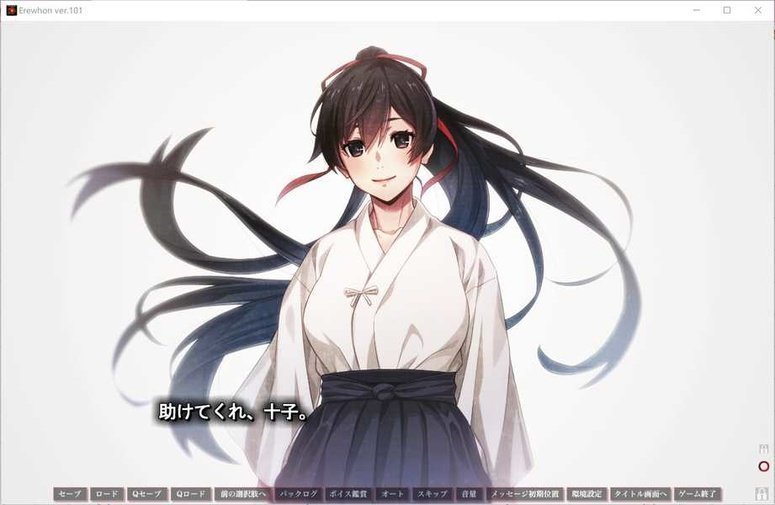
(Hell, I don’t really get it either. I don’t like Touko at all, but she’s the goddamn designated heroine.)
Because Touko is the reincarnation of the “princess” — the “taisui.” That’s why the protagonist, after eating Touko’s flesh, got an immortal body and the ability to see the taisui’s past.
In the end, naturally, the protagonist travels back in time and stops the chief’s wife from feeding her son that piece of meat — but he finds he can’t stop the villagers from devouring the “princess,” so he has to try again and choose to save the Touko of that time.
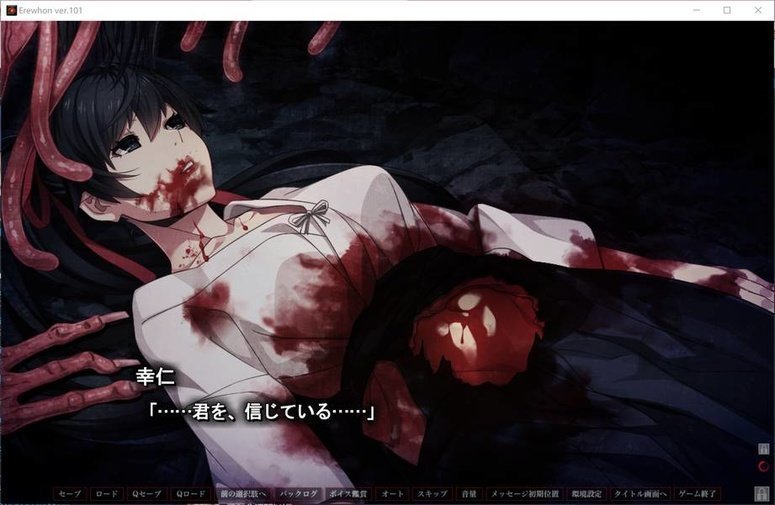
Touko is still impaled on a stone pillar while fleeing. The protagonist appears, lets Touko eat a piece of his own flesh in the cave, her wound heals, she’s saved, she doesn’t die — and the game ends.
Oh, and in the last scene the protagonist’s body is no longer human… it’s become something like tentacles. Probably he stayed in the cave too long and turned into a taisui himself — just without absorbing much vital essence, becoming a walking meat lingzhi with tentacles… the CG is genuinely shocking to look at.
All in all, Erewhon looks like a horror game on the surface, but it’s actually a tragedy: a chain reaction of events in a village, looping through reincarnation.
Why a tragedy? Look at the ending: the village is destroyed, the villagers are dead, and Touko has only survived by eating taisui flesh — still trapped in the cave, with no idea if she can ever escape. The protagonist has turned into a monster, and maybe Touko will turn into one too.
I don’t really want to comment on how the game unfolds. The story’s ups and downs are actually big, because at first the game looks like a simple nukige, and then after a few routes, a memory chapter fairly thoroughly explains all the questions from the beginning — a pretty perfect payoff, I’d say.
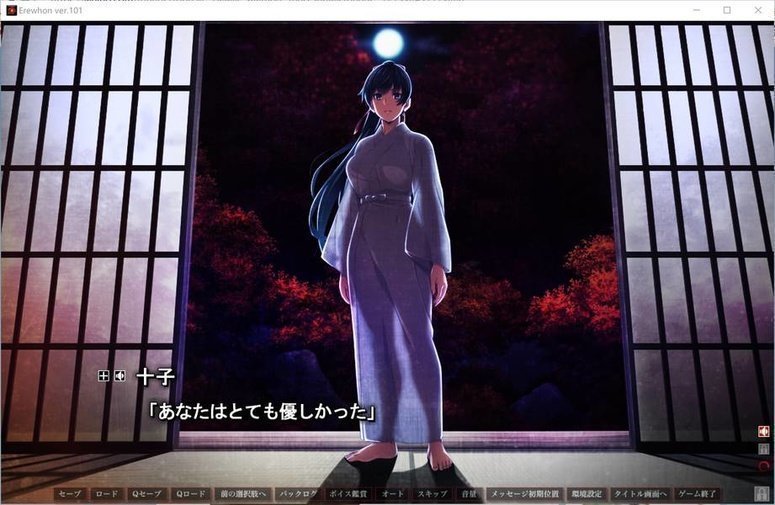
So if I have to say it, this game left me fairly satisfied. At least after playing I didn’t feel cheated — just impressed. That should be enough.
Of course, Erewhon’s flaws are obvious too. First, the budget was insufficient — ClockUP clearly didn’t give this game much money, so apart from HCGs there’s barely any standalone CG worth looking at. The music is decent but too repetitive, and the story is long, so a few BGM tracks looping over and over can’t meet the game’s needs.
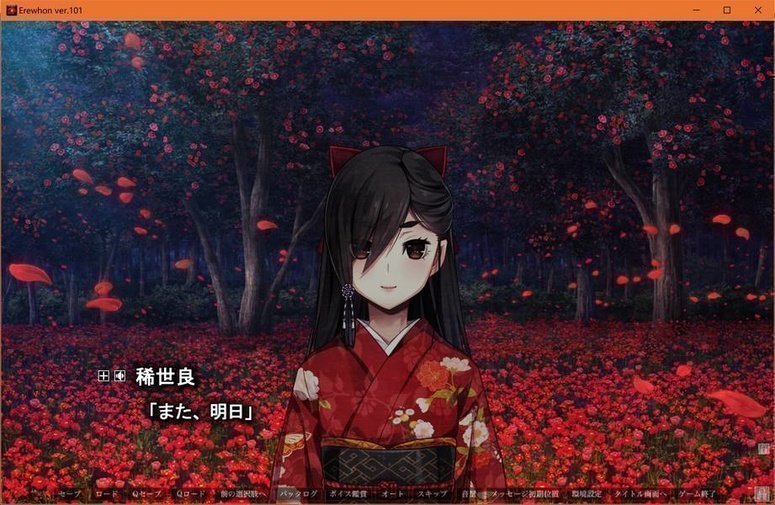
And the absolute most most most most unbearable thing: only the few heroines have voice acting. Every male character is silent…
It’s awkward. A lot of the villains are clearly standout characters, but they have no voices. It pains me.
If this game had been made with proper care, it could have been an epic on the level of something like Sakura no Uta. The structures are similar — that one’s the taisui legend, this one’s the baku that eats dreams; both are about great families raising cumdumps to pass on supernatural powers. Pretty much the same. But because of the insufficient budget and the overemphasis on hardcore content, it ended up feeling a bit like a small-scale work.
Another awkward point: the game’s meme is embarrassing for people from mainland China. Everyone knows the word “taisui,” but in mainland China, every week some rural area claims to have found a “taisui,” and if you search it up, it’s always laughable…
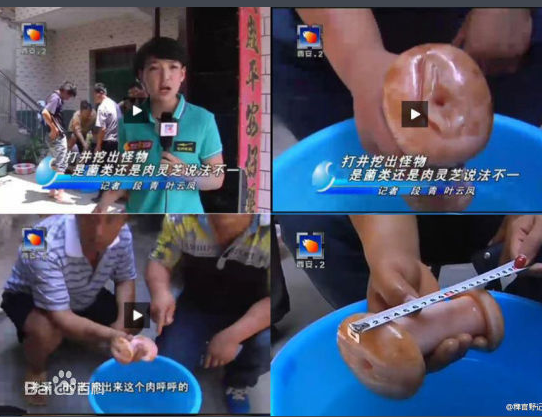
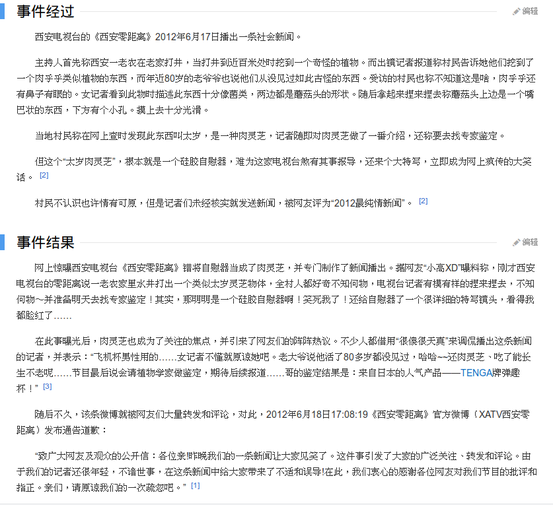
Still, even though the game’s “taisui” stuff isn’t too over the top, settings like “the taisui can become a spirit and turn into a person” and “the taisui comes from another world” still seem ridiculous to me…
Even so, I don’t really recommend ordinary players try this game, because Erewhon doesn’t just have ghosts and tentacles… it also has group sex, rape, gang rape, training, cumdumps, incest, Freud, cannibalism, aliens, time travel, reincarnation, legends, folklore, mythology, and… airplanes… no, wait, ancient Chinese gods… the taisui.
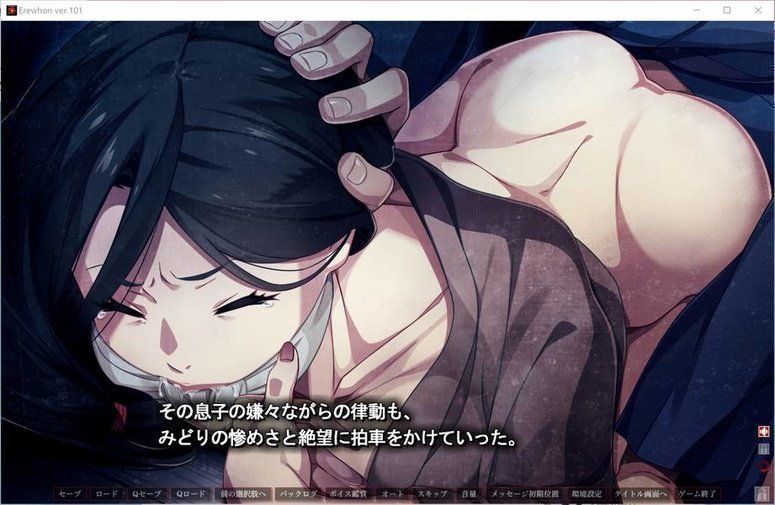
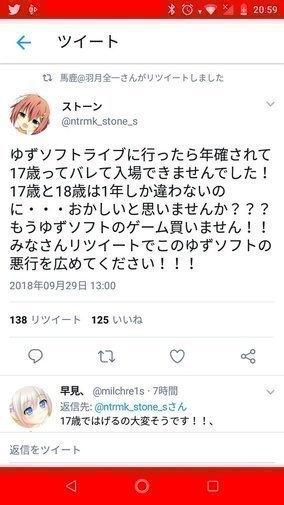
The game has a lot of scenes that make you uncomfortable, and I skipped quite a few — including the twisted plot where the chief’s wife’s son is made to rape his own mother and father a child with her… even I find that hard to accept. Though I know people playing 18+ games these days aren’t 18+, especially Yuzusoft fans in Japan, most of whom aren’t even 17. If they played this game, it could only give them more nightmares.
I actually don’t know what the game’s title “Erewhon” means. Maybe it really does mean “crimson nightmare,” like the Japanese say? Yeah — just as the game says at the very beginning, Erewhon itself is a crimson nightmare.
Comments are hosted on the Chinese main site. This mirror is read-only.