Hands-on: Sony D100
Musicality and Monitor Style
Audiophile mysticism is mysticism because so much of it can only be felt, not explained, and often can’t even be put into words.
The vocabulary grows with the years. Back when I was in high school, most of it was “bass extends moderately, highs are transparent, mids are sweet, good resolution.” Now it’s “wide soundstage, bass loose vs. tight, mids forward vs. too far back.” I don’t know about the rest, but “extends” is a word I haven’t seen in ages.
Another trait of the mysticism is that it can’t be expressed precisely and has no unified standard. Plenty of gurus like to measure frequency response curves with pro gear, but nobody tells you what curve counts as “female-vocal poison,” what curve counts as a “wide soundstage,” what curve counts as “pop tuning.” And the funniest part: even if you produce the curve, someone will tell you music isn’t for looking at, it’s for listening to, and how it sounds is what matters…
I don’t get it. I really don’t.
There are also plenty of weird terms in this mysticism that can’t be explained, or you can’t even say what they mean.
Recently I heard two of them: “musicality” and “monitor style.” Someone said the Sony D100 recorder isn’t suited for listening to music, and gave a reason.
“Sure, this thing crushes the ZX1 in every way, but the sound is too cold, too dry, too monitor-flat, too compressed, no musicality. It’s not as smooth as the ZX1 and PHA-2.”
I didn’t know sound could be heard as “smooth,” or that sound has a taste… and that it fails on taste even while crushing everything else on every count…
So what exactly is musicality? What is monitor style? And how is the D100 as a music player, for a device that’s a voice recorder? After reading a pile of guru talk I got nothing usable out of it, so I had to listen for myself.
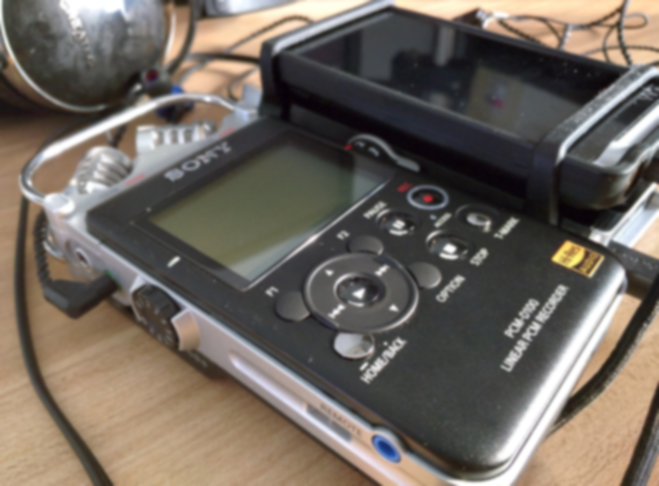
As a professional product in Sony’s recorder line, the D100’s build is beyond reproach. Way better than the ZX1 with its crooked buttons, and it runs on AA batteries, which is a sure cure for perfectionists. On the music side, unlike its predecessor the D50, it takes a bold step and adds a “music” playback module with FLAC and ID3 support. In short, using it for music is completely fine… For controls you can skip forward and back directly with buttons. Blind operation in a pocket is a bit awkward but not entirely unacceptable. The bundled remote can control it from a distance, but it needs the receiver and an infrared line of sight.
Oh right, my desktop’s sound card is an ASUS Xonar, which has no mic input. Paired with the D100, you can do line-in/line-out audio and get a mic-like effect — considerably better than a five-dollar mic.
My PHA-2 happened to break recently and just came back from replacement, so I stacked them for a comparison. Size-wise, the D100 is actually thinner and lighter than the ZX1 stacked with the PHA-2… meaning if you’re a stacker, this recorder brick is more portable than your rig.
The D100 supports SD cards; my Kingston 128GB card was recognized with no trouble. The annoying part is that by default the D100 formats the card as exFAT, which Linux doesn’t support out of the box — you need the FUSE components. For syncing music I recommend pulling the SD card and copying directly. With the old create-an-.is_audio_player-file trick, you can sync through rhythmbox.
The D100 has two mics because it’s a recorder, which means you can record ASMR-ish stereo audio on your own. In fact, quite a few ASMR streamers on YouTube use the D100. It also does DSD decoding, though that’s useless to me…
As many people say, the D100’s sound presentation is a completely different style from the ZX1. After listening to the ZX1 for a while and then suddenly switching to the D100, it feels like the world suddenly opens up…
Yes, the ZX1 sounds muddy, some tracks especially so, and the D100 is immediately much brighter. That’s an obvious, audible difference. Stacking the ZX1 with the PHA-2 reduces some of that muddiness, but it still doesn’t come close to the D100.
I tried the D100 with the ER4P on a lot of songs, and the ER4P felt completely different from how it performed on the ZX1. The transparent sound got more transparent, resolution went up noticeably, and the bass, previously a weak point, gained some bounce.
Is that the D100’s high output power at work?
Not really, because when I pulled out the Audio-Technica im03, its performance on the D100 was downright awful — completely piercing, and the bass vanished. The im03 actually suits the ZX1 better.
What about the Logitech UE900 then? It’s a jack of all trades, doing decently on the ZX1, the PHA-2, and the D100. No highlights, of course — never stands out at anything.
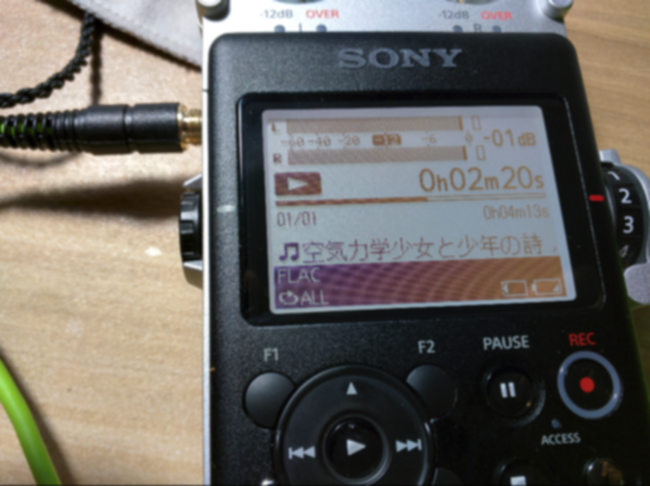
I listened to the D100 for quite a while and still couldn’t figure out where the supposed lack of “musicality” was. I just thought the D100’s music playback quality was genuinely solid. At least the output power is there, and it responds fast. Apart from slightly inconvenient controls, there’s nothing bad about it. Compared with the ZX1, which occasionally has audible noise floor, the D100 is an unbeatable black background.
Someone said: “Listen to the D100 too long and you’ll feel tired.”
So on my second day with the D100, I finally started to feel the music getting noisy. The details I’d been focusing on were presented in such abundance that my brain found it loud. Then I remembered the terms “monitor grade” and “musicality.” Could this be what lacking musicality looks like? Listening too long tires you out?
So I turned the D100’s volume down a bit. I lost some of the detail, but my ears were comfortable again right away…
And I think I understood what most people mean by listening feeling tiring…
To hear the details, you nudge the earphone volume up a bit too high, and over a long session that really does hurt your ears… With a high-output player like the D100, low volume always gives the feeling that it isn’t driven properly.
Honestly, on this “easily feels noisy” trait, my desktop’s Xonar is way more aggressive than the D100. I remember listening to A-Lin for two hours once and feeling it was loud.
But I just turned the volume down and it was fine… I didn’t feel any of that supposed tiredness.
Well… this mysticism really is mysterious. Turns out I’m just a guy who simply likes listening to music.
Comments are hosted on the Chinese main site. This mirror is read-only.