Amazing Grace -What color is your attribute?- (アメイジング・グレイス -What color is your attribute?-) Review
God Loves the World, But He Might Not Love You
There’s a fairly famous song called “Amazing Grace.” The Chinese translation usually goes with something like “divine grace,” though the official rendering in a lot of places is “wondrous grace.” It’s actually a religious song with deep roots in Christianity, but it got so famous that it spread around the world and stopped being confined to religious use.
The gist of “Amazing Grace” is right there in the name—praising the grace God has given you, basically a hymn. But what people actually like about it is being moved by that sense of the “sacred” in the song. Maybe that’s the unique appeal of religious music in general.
So at the end of this year, a game showed up carrying the “Amazing Grace” title—an 18X eroge, no less, with Korie Riko as the artist and Tsukiyashiro Tomu on scenario. A stacked lineup.
The last time Tsukiyashiro Tomu and Korie Riko worked together was Magical Charming, and I called that one “the most insane galgame ever”. The slice-of-life content, the way the foreshadowing unfolded, even the system itself—all of it was full of highlights. After that, Tsukiyashiro Tomu planned a few more games, but they felt a bit middling. Last year’s Mono no Aware wa Iro no Koro. had plenty of highlights in its story too, but something still felt like it was missing a step. So this year Tsukiyashiro Tomu came back, and not only did he drag in his old partner Korie Riko, he also brought out Sakura Saori, who sang the OP for Magical Charming back in the day, and put together this new work: Amazing Grace -What color is your attribute?-. The title means exactly what it says—“Amazing Grace, what color is your attribute?” But look at the staff and it screams Lump of Sugar from every angle. If that bright “Cabbage Soft” logo weren’t sitting right there on top, I think 99% of people would assume this was Lump of Sugar. Same scenario writer, same artist, same OP singer—it’s the exact same formula.
Of course, the reason I played this game wasn’t because I had any expectations for a Cabbage Soft title, and it wasn’t some particular fetish for the writer. It’s just that this is a game about “winter.”
Yeah, anyone who knows me probably gets it. I like the atmosphere of winter, the way everything looks when it’s snowing, so naturally I like games set in winter.
So I looked at the release list, saw Amazing Grace, saw the winter setting, saw that the writer probably wasn’t going to screw it up, and decided to give it a shot.
At first I figured this would be a straightforward moe-ge. I know Korie Riko flat-out can’t draw overly complex CGs, and even if Tsukiyashiro Tomu is good at pulling crazy twists, the artist is a hard limit—and this studio seems to have a very deep partnership with Korie Riko, so you can’t exactly swap the artist out…
So this is a small moe-ge studio that occasionally does crazy twists and sells fanservice (remember their first game, Hoshikoi*Twinkle?). Which means this game wearing the “Amazing Grace” name was probably just another by-the-numbers thing: a winter town, the protagonist goofing around with a bunch of girls, a little conspiracy discovered at the end, everything resolved, happy ending.
But after playing it, I realized I was completely wrong. Not a single one of those predictions held up…
The game builds a deeply unsettling atmosphere right from the start.
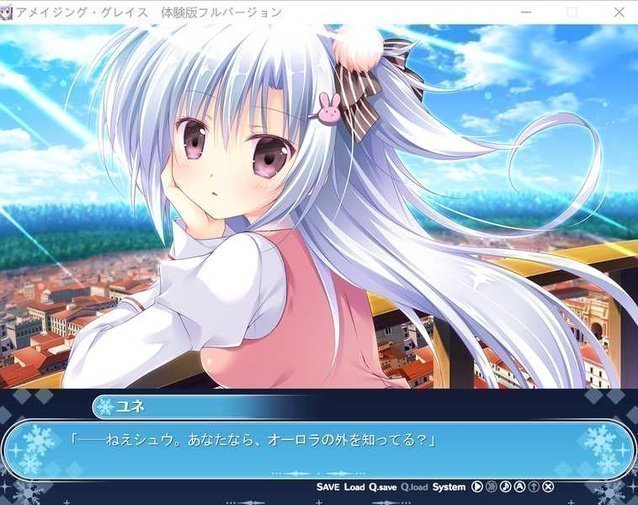
The protagonist wakes up by a lake with no memories, picked up by a white-haired girl named Yune, with a big-breasted girl named Sakuya nearby. Yune and Sakuya tell him they all live in this town, all attend the town’s only school—an art school—and everyone studies art there. As for our protagonist, aside from discovering his name is Shuu, he doesn’t remember a thing.
What surprises him even more are the other things about this town.
The people here don’t seem to know what “smartphones” are. There’s no internet. They don’t know much about history either, but they do know all about European Renaissance oil paintings, especially Christian ones. There’s even a nun named Sister Lili who guides the students through art appreciation.
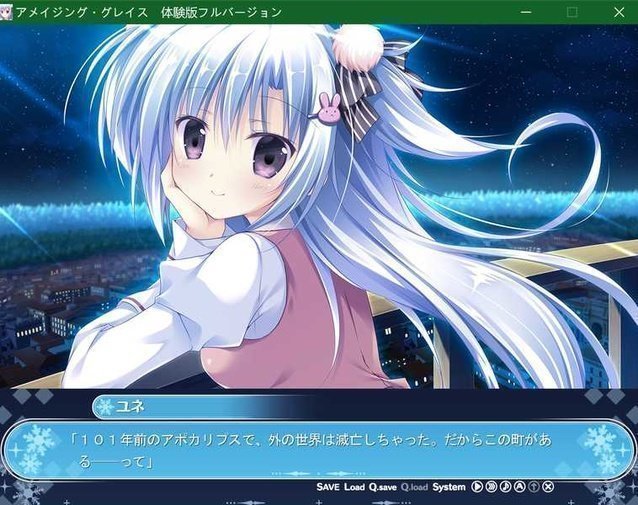
And that’s not all. Most importantly, Yune tells him the town is enclosed by an “Aurora Wall,” and nobody knows what’s outside. She also says that over a hundred years ago, the world outside the wall was destroyed…
The protagonist is baffled. Did he escape from the outside world and get inside the Aurora Wall?
Well, when in Rome. He decides to stay and live here for now. Eventually he notices plenty of differences between this town’s school and what he remembers of the “outside world.”
- No internet, no computers, no smartphones.
- Heavy religious atmosphere—the nun regularly takes students to galleries full of Christian paintings.
- The townspeople’s understanding of many things is very “pure.” Christmas is just Christmas, not the modern version that’s turned into hookup season.
- No internet, computers, or smartphones, yet some password-locked doors use fingerprint and voice authentication… which feels weird.
- The protagonist keeps hearing strange voices in his head, as if someone is hinting at something.
- There’s no other media in town, but there is a radio program. The host, Lila, seems to know everything about everything and appears to know some secrets about the town.
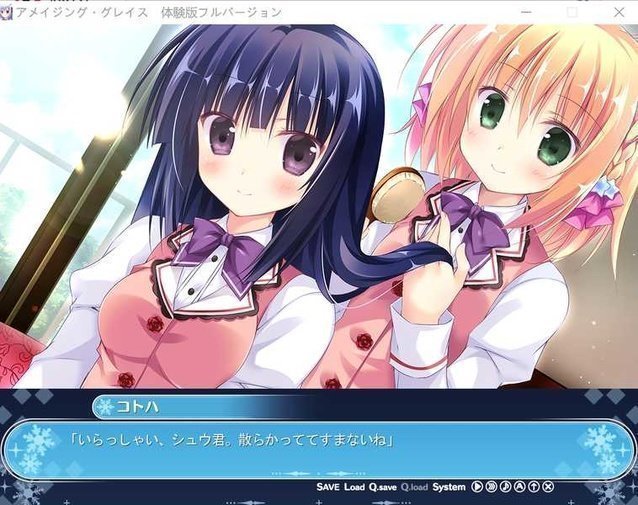
Otherwise the town doesn’t seem that strange. Everyone lives well enough, the protagonist’s school life is decent, and he meets a bunch of friends—Yune, Sakuya, the secretly thirsty Kotoha, the explosion-obsessed Kirie, and male classmates Gidou and Youji. Every day is spent chatting and messing around, and it’s honestly pretty fun.
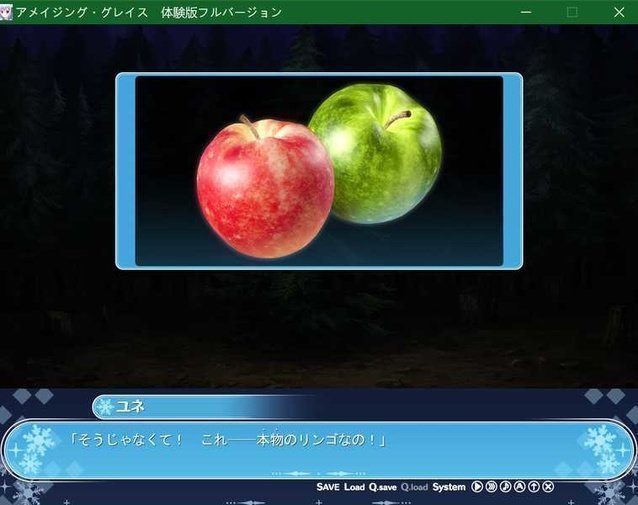
Soon Christmas approaches. Before Christmas, on Advent, the protagonist and his friends go into the forest to decorate the Christmas tree. While he and Yune are hanging decorative apples on the tree, two apples fall off—and they’re glowing. They look, and holy shit, the apples have turned real. One red, one green.
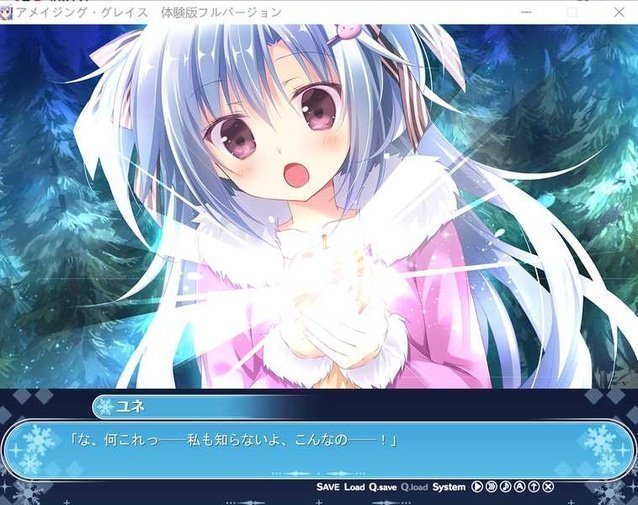
Then, somehow or other, out of curiosity, they eat them. Yune eats the red one. The protagonist eats the green one.
The next day, the protagonist doesn’t really remember eating the apple. Yune doesn’t seem to remember either. But nobody cares—Christmas is coming. Everyone keeps doing their thing, and the school is holding a festival for Christmas. Looks lively enough.
But the problem starts on Christmas Day itself.
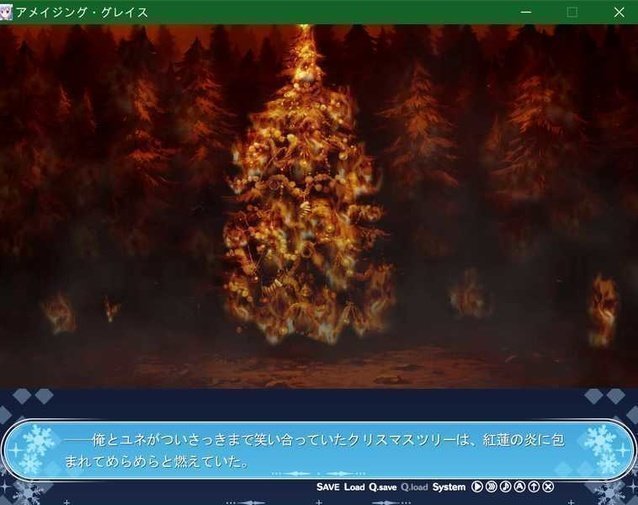
Christmas arrives, everything seems normal, there are various ceremonies including a trumpet performance, and then at night the protagonist notices people on the street acting off. Some look drunk, minds not clear. Then a trumpet sounds, and suddenly explosions erupt across town—the school, the plaza, around the Christmas tree. The whole town goes up in flames in an instant. His friends are nowhere to be found, lost in the fire, and he doesn’t know if they’re alive or dead. In his despair, everything goes white, and he finds himself in some kind of space.
It’s the town’s gallery, but it doesn’t feel like just a gallery—more like a special space. And Yune is there.
After some aimless chatting, Yune discovers she has a special power, probably connected to eating the apple on Advent Day. The power lets her send the protagonist back to the days just before Christmas, right after the day they ate the apples, hoping he can change history and uncover the truth behind the town’s destruction.
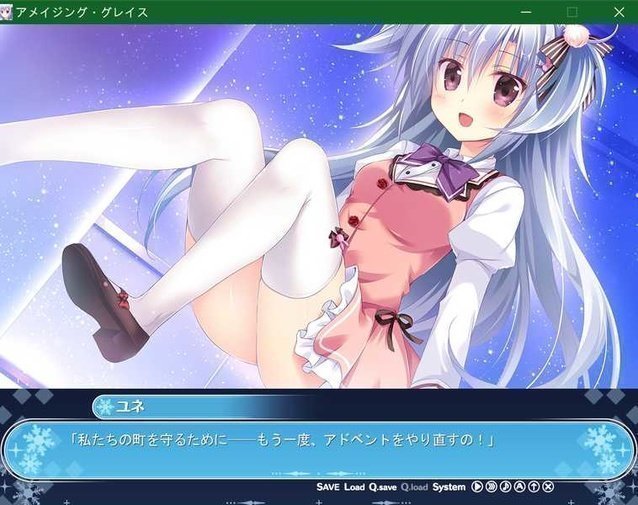
So the protagonist gets sent back—and that’s where the death loop begins.
After a successful jump, the protagonist realizes that although he’s back a few days before Christmas, only he retains memories from before the jump. Nobody else knows anything. What’s stranger is that after the jump he has no idea what to do, so the first loop ends with not much accomplished. Christmas comes anyway, the explosions happen, the town burns again, and he’s back in that space with Yune.
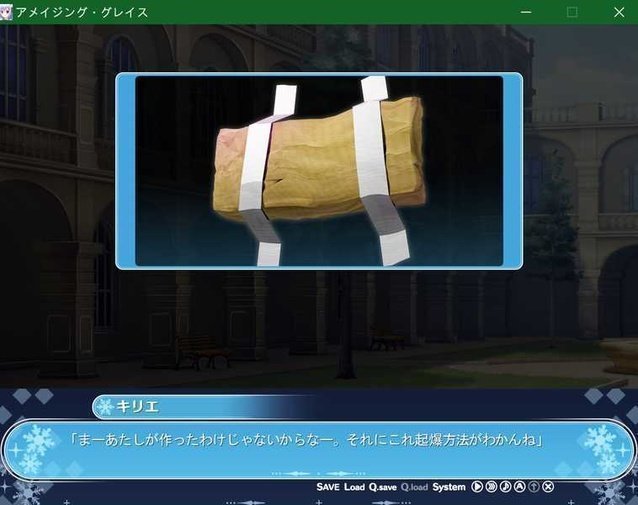
One loop leads to another. Yune explains that it’s all the apple’s power, and if he wants to go back, then go back—there doesn’t seem to be a limit on uses. It’s like the two of them set a save point on the day they ate the apple, and he just has to keep loading.
So the protagonist starts several loops, gradually making discoveries:
- He finds bombs planted in hidden locations around town, but even after removing all of them, the explosions still happen on Christmas.
- He finds scraps of paper with an owl symbol on them, and Kotoha warns him they’re forbidden—some kind of drug that causes hallucinations.
- He and Kirie dig a tunnel to get under the “Aurora Wall,” but from the tunnel they find a sewer, and in the sewer there’s a room that looks like some kind of monitoring station.
And most importantly: no matter what the protagonist does after a loop, on the night of December 25th, the explosions and the town burning—that history never changes.
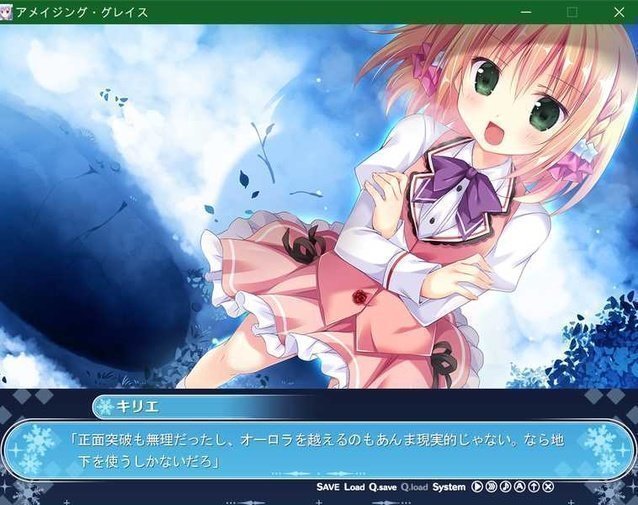
Just as the protagonist is about to start another loop, Yune shares a lot of her thoughts with him:
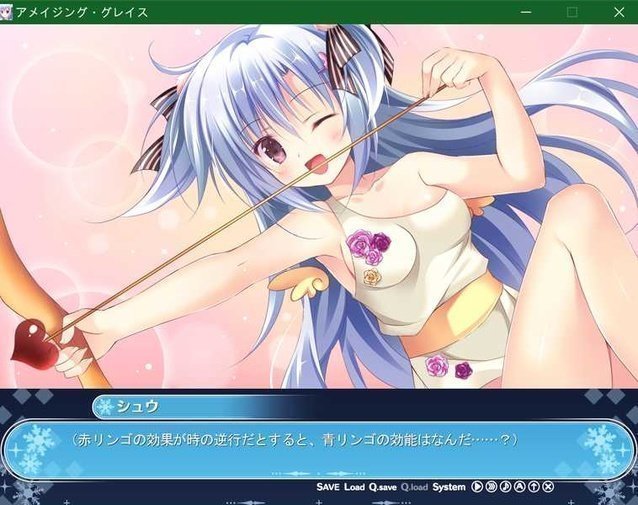
- She and the protagonist have the power to jump because they ate the apples on Advent. Going by the Garden of Eden analogy, Yune ate the red fruit, the fruit of life, and the protagonist ate the green one, the fruit of wisdom. The one who ate the fruit of life becomes a “bow,” shooting the protagonist back through time like an arrow. It’s not literal archery, just a metaphor and image.
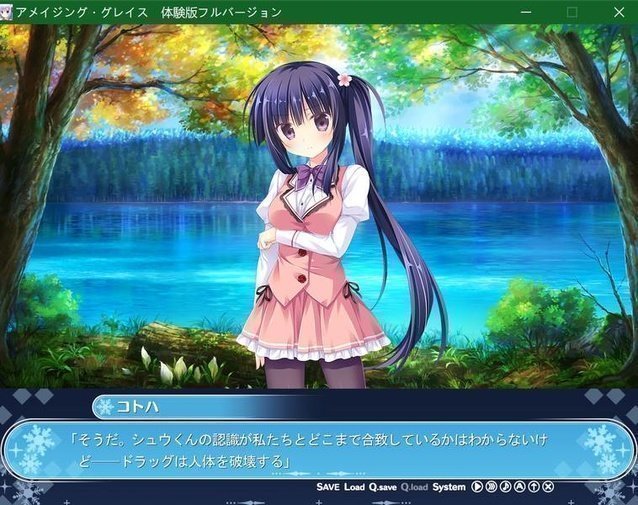
- Yune says that every time she draws the bow, it feels incredibly heavy—as if she’s not just shooting the protagonist but another arrow as well. So she suspects someone else is joining the protagonist in each loop, and whatever he does, that other person does the opposite to ensure the Christmas explosion goes off as planned.
So next jump, the protagonist starts focusing on finding “the other jumper”—the one who’s probably the enemy, connected to the Christmas explosion.
But finding that person is easier said than done. In the following loops, he does make some new discoveries.
- The room in the sewer can never be entered again.
- Bomb locations he found before no longer have bombs.
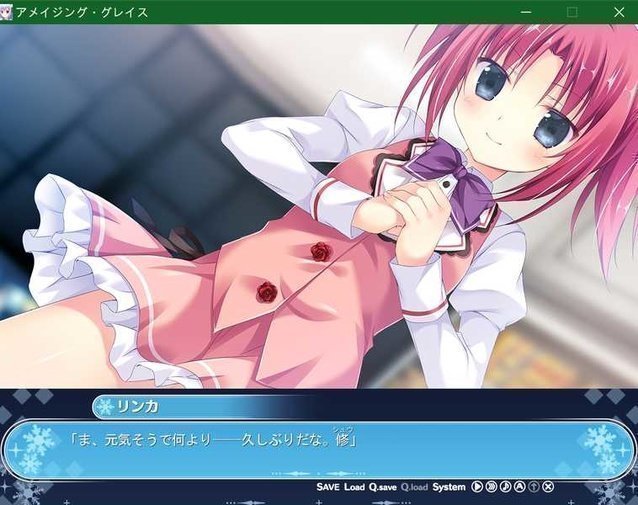
- Kotoha mentions someone named Rinka, who once found that room in the sewer too, and discovered a lot of crazy stuff inside. But afterward she was taken to the confession room by the nun for breaking the rules, and when she came back, she’d lost her memories… she didn’t remember any of the “forbidden materials” she’d seen.
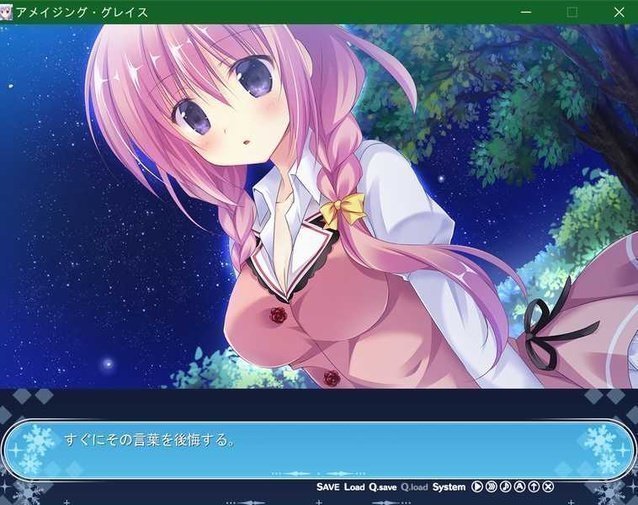
Put simply: lots of people tried to climb over the town’s “Aurora Wall” and see the outside world, and lots of people tried to learn the town’s secrets, but they all mysteriously lost their memories afterward.
The protagonist remembers the “drug” with the owl symbol, because Kotoha told him its side effect is memory loss.
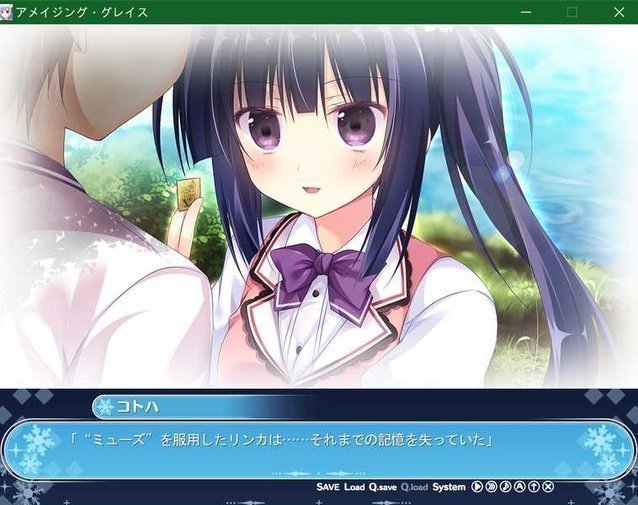
So every time someone tries to learn the truth about the town, some mysterious organization drags them off and forces them to forget. And every loop where the protagonist tries to change the tragedy of December 25th is basically useless—of course it is, because another looper is always working against him from the shadows… Speaking of memory loss, the protagonist remembers his own situation: he has amnesia too, and doesn’t remember anything from before he came to this town…
So next loop, he suggests something new to Yune: why not jump back further, like to before they ate the apples, to see if that’s possible.
Yune tries, and pulls it off. And in this loop, the protagonist makes new discoveries.
First, he identifies the other jumper: Sakuya.
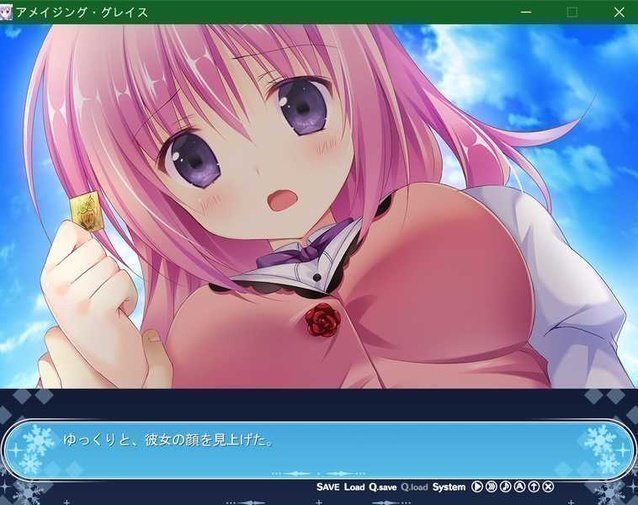
The one who’s been blocking him every time is Sakuya. He’s shocked—Sakuya didn’t eat an apple, so how can she jump? Then he realizes: she ate an apple from last year’s Advent Day. Her save point is a whole year earlier. Every jump, she goes back a year more than he does, arrives earlier, has more time to prepare, which is why he can never solve things in a loop.
But why is Sakuya working against him? Is she behind the explosions? He doesn’t know yet. Once her identity is exposed, though, she hides and doesn’t show up again.
He searches for Sakuya but can’t find her anywhere. The new Christmas is approaching, and Advent Day—the day he and Yune ate the apples—is coming again. This time he has an idea: he doesn’t eat the apple first.
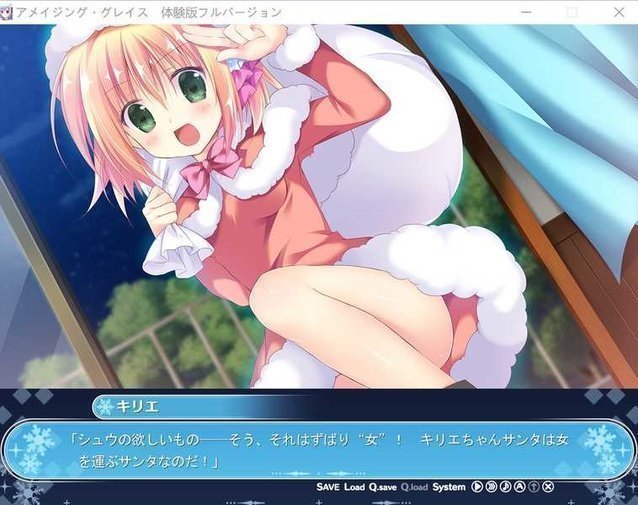
With Sakuya exposed, the protagonist’s investigation becomes much more targeted, and the truth behind many things comes out quickly.
- Sakuya ate the apple last year’s Advent Day. Hers was probably the green wisdom apple, so someone else should have eaten the red life apple—probably the main cause of the fire.
- Almost everyone in town is illiterate. Yes, illiterate—they see writing as special drawings and symbols, and the town uses symbols and marks to convey information. That’s not normal.
- The only people in town who can read are the protagonist and the nun. The protagonist is from outside, so that’s normal. The nun is probably the town’s operator—the one in the monitoring room.
- The protagonist finds a secret passage from the church to the monitoring room, and inside he finds a roster with the full names of many townspeople (yes, the characters in the game all call each other by katakana, no kanji), along with things like “observation reports” and “social experiment reports.”
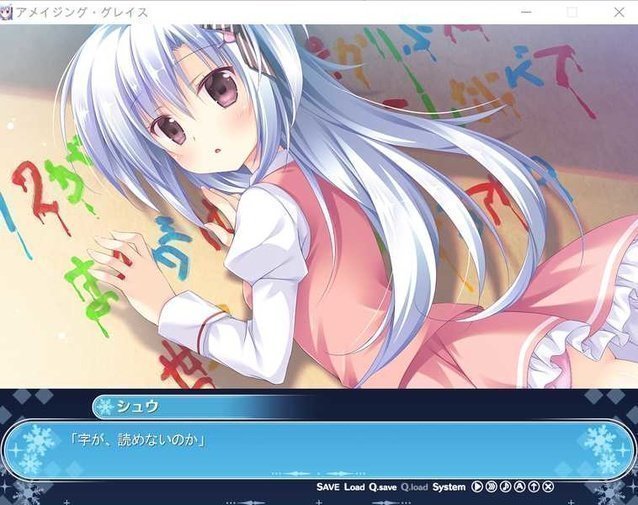
Soon the nun catches the protagonist breaking into the monitoring room. At first she tries to force him and his friends to lose their memories, but it fails. With no other choice, she tells them the truth.
This town was actually an art experiment set up by the Axis powers before World War II. In order to cultivate better artists, they decided to build a school in an isolated environment, removing every element that might compromise the purity of art (including writing), so students could study art purely, untouched by the outside world.
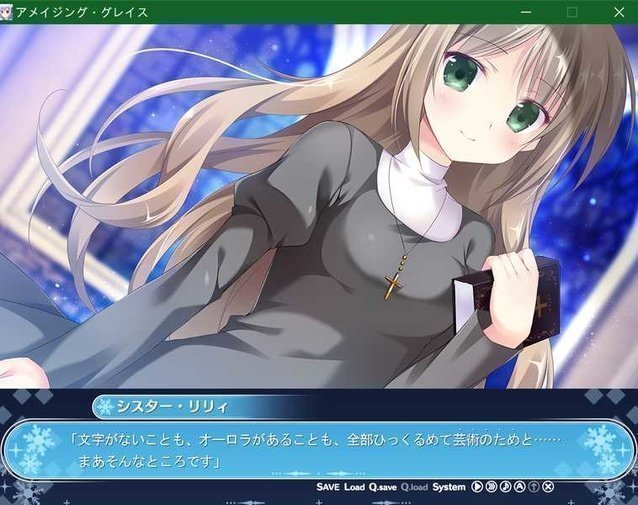
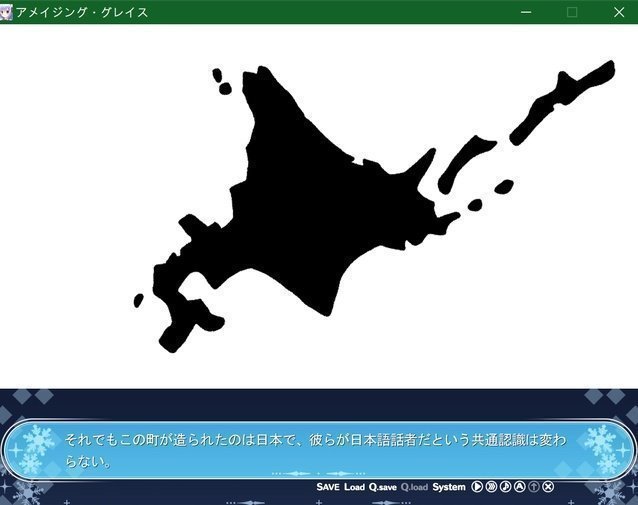
The first town was built in Italy and was destroyed by fire. The second was built in Germany and was apparently stopped by WWII. The third town—this one—is built near Hokkaido, Japan.
Its goal is to produce and cultivate artists in isolation, untouched by language and writing. To better enforce this, they needed to develop amnesia-inducing drugs—otherwise how would you make people forget so much? How would you control the townspeople?
Also, almost everyone who enters the town loses their original name, which is why characters only have katakana names, no kanji. Side note: if you’re playing a mystery galgame and every character’s name is in katakana with no kanji, you can pretty much start considering whether it’s a special world (VR, special environment). Except for MORE games—they’re just lazy with names.
So the nun is just the operator of this town, following orders from above. But the town has recently been struggling to stay afloat. Running it requires enormous funds, sometimes covered by auctioning students’ paintings, but that’s not a sustainable solution. And the third town’s chief overseer in Japan—some rich guy—died. He figured that if the town can’t keep running, they might as well shut it down, and if they’re shutting it down, they should destroy it in an artistic style.
What does “artistic style” mean? Something like the Book of Revelation from the New Testament: the Four Horsemen appear, angels blow seven trumpets, divine disasters destroy the world, and the town vanishes completely—annihilated in apocalyptic aesthetics.
But the rich guy couldn’t arrange something like that himself, so he decided to do what Eden and Pandora’s box did: bring in outside forces to produce “mad artists.”
The town starts allowing some outsiders to apply for entry. The protagonist is one of them—he’s actually the son of that rich guy, and as a music teacher, entering isn’t much of a problem. But his arrival triggers a longing for “the outside world” in many of the townspeople.
More and more people want to explore the outside, like Pandora’s box being opened. More curious people, more mad people. But to keep the town stable, they usually use the owl-symbol drug to force memory loss and prevent unrest—though it’s getting hard to control.
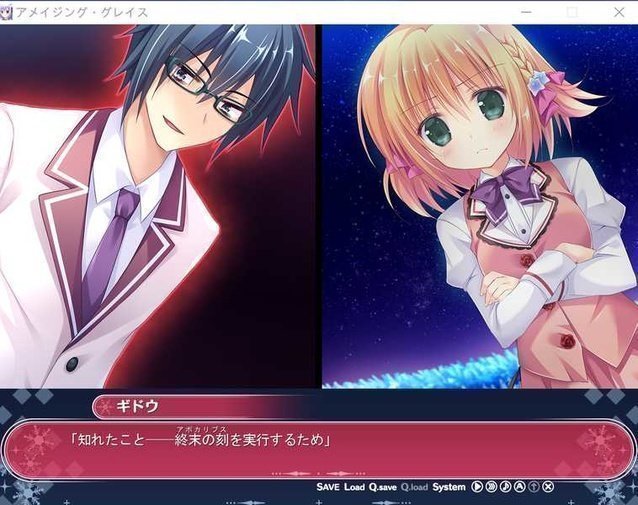
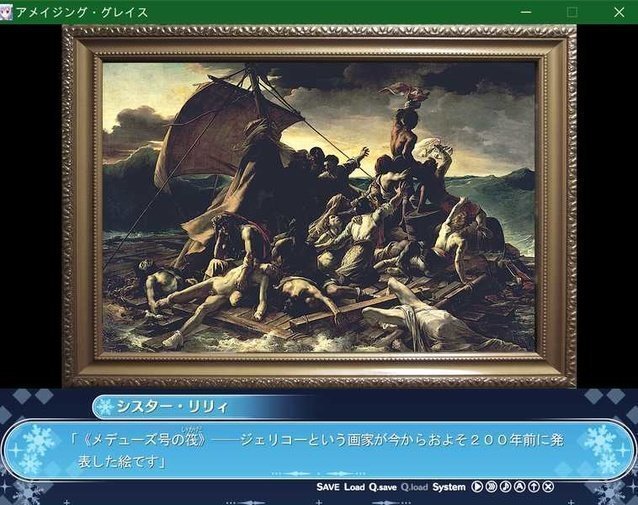
Then one student starts pursuing a special kind of aesthetics. That student is Sakuya’s brother, Gidou. He sees the “Revelation” painting in the gallery and feels the impact of world destruction in the image—decides it’s “apocalyptic aesthetics”—and starts pursuing similar artistic creation.
The Revelation painting itself was made when the first town was destroyed, so it’s a kind of inheritance.
To create a work fitting the Book of Revelation and “apocalyptic aesthetics,” Gidou decides to stage an apocalyptic explosion on Christmas Day and call it art. The plan would have succeeded, except the time-traveling protagonist kept interfering—defusing bombs, digging tunnels.
So Gidou sends his sister Sakuya to stop him. Since they ate the apples on Advent Day a year earlier, their jumps go back further. Every time the protagonist jumps, Sakuya hitches a ride, makes her own preparations, and works against him—which is why so many loops accomplish nothing. The two of them loop endlessly against each other with no result.
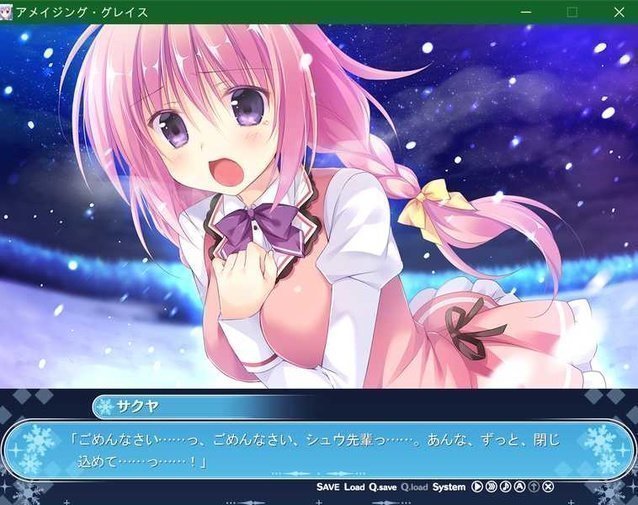
Eventually the protagonist uncovers Gidou’s plan, and with his friends’ help talks him down. Sakuya shows up at the crucial moment and stops her insane brother. But Gidou is confused—if you don’t support my apocalyptic aesthetics, why did you help me jump so many times?
Truth is, Sakuya just wanted more time with the protagonist during the jumps… which is also why, in the common route, the only girl who throws herself at him is Sakuya.
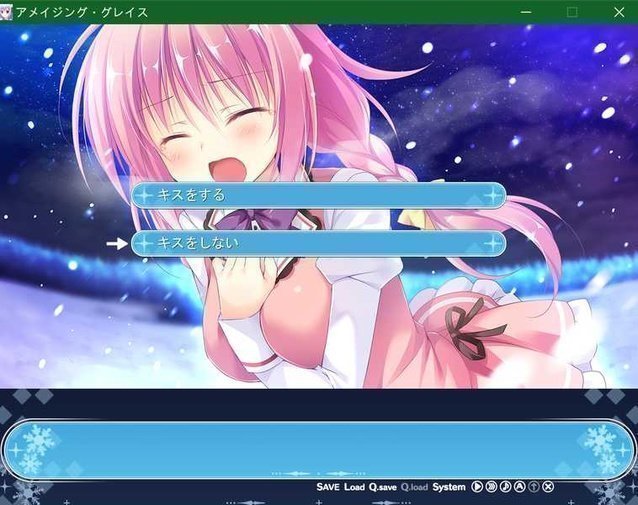
Sakuya confesses to him here. It’s not the first time—she’s liked him for a long time, otherwise she wouldn’t have played along with all those jumps just to be with him. You can accept or reject her. Of course, rejecting her leads to the true end.
The culprit behind the explosions has been found. Problem solved, supposedly. But then the protagonist notices something wrong with Yune. First she goes mute, then she starts disappearing.
That’s when he realizes: Yune ate the apple too—the red life apple. If eating the forbidden fruit grants power, then jumping an unlimited number of times without any cost would be way too cheap, wouldn’t it?
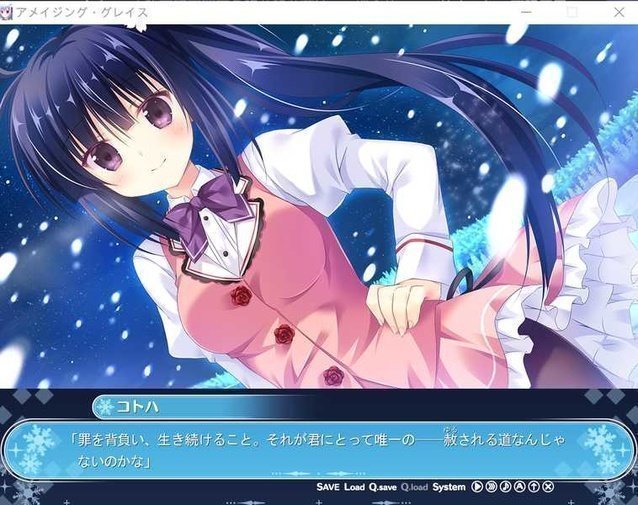
Of course there’s a cost. Every jump by the green-apple eater requires the red-apple eater to pay with their life, or something of equal value.
Yune has a beautiful singing voice, so at first she loses her voice—that’s the cost. But later the protagonist asks her to jump even further back, and that consumes far more than the default jump to the day they ate the apples, so this time it’s not her voice—it’s her life.
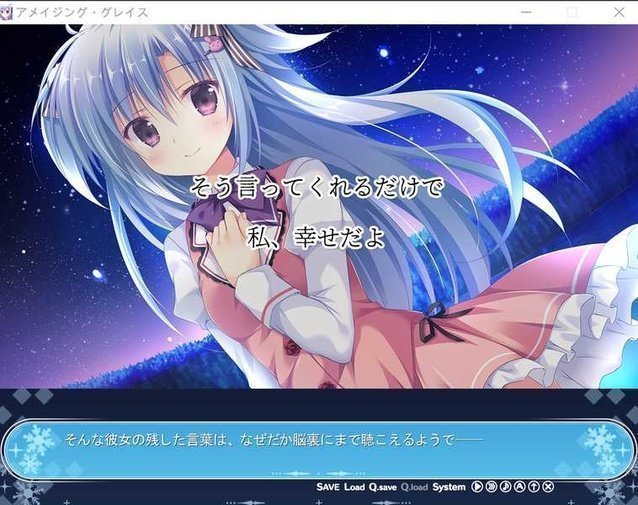
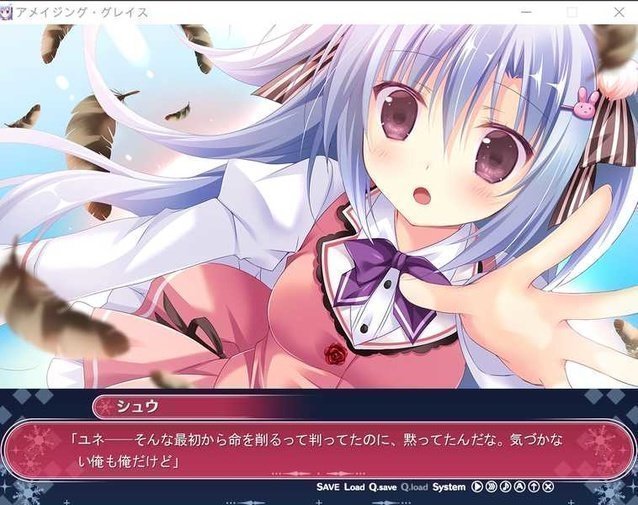
It’s worth noting that Sakuya’s first jump also consumed her brother’s payment. His cost was his aesthetic sense—because of that consumption, he became increasingly obsessed with “apocalyptic aesthetics.” Sakuya’s later jumps hitched rides on Yune, increasing Yune’s consumption, and with Sakuya and the protagonist looping against each other so many times, Yune’s life being used up was inevitable.
In the end, Yune disappears.
But a miracle happens.
Remember how in the final jump, back on Advent Day, the protagonist didn’t let Yune eat the apple? Who ate the apples then?
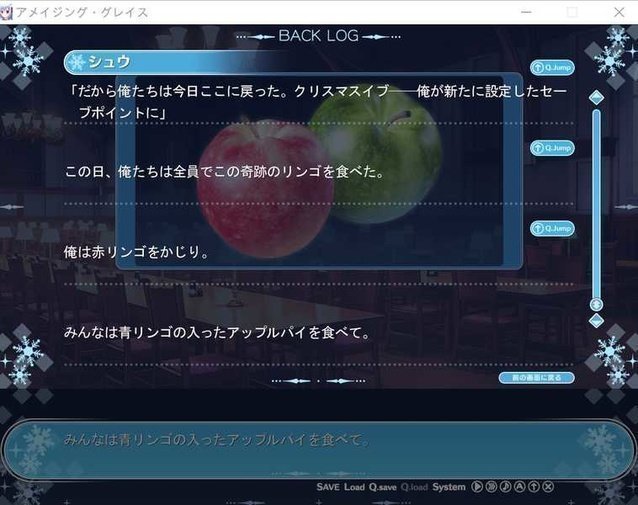
Actually, the protagonist chose to eat the red apple himself and used the green apple to bake an apple pie, which he served to all his friends at the Christmas dinner.
So the protagonist becomes the new red-apple eater, replacing Yune. And once the problem is resolved, all the green-apple eaters jump back one day—the culprit is known, no need to struggle anymore, just redo Christmas and nothing happens.
And the protagonist becomes the red-apple eater, with the cost being only a one-day jump—nothing worth worrying about. Yune is freed from that death loop.
In the end, the problem is resolved and the game reaches its Happy Ending.
Maybe the plot of this game is just too hard to explain clearly, but if I had to simplify it, it’s kind of like a memory leak? The protagonist and his rival keep looping, trying to change the history of the Christmas Eve explosion. The protagonist doesn’t want the town to explode, while the other guy wants it to. The two keep fighting across time, and this endless looping exhausts the system resources that control the time travel. In the end, the protagonist chooses to break out of the loop and fix the bug at its root.
I think this game is better than last year’s もののあはれは彩の頃。. It’s easier to understand, with fewer cultural barriers—after all, Jesus Christ and Christmas are known worldwide, while traditional Kyoto culture is something only Japanese people really get. The plot is also quite rigorous; almost all the foreshadowing gets explained to some degree. It’s just that the logic of the story is still a bit… weird.
For example, the one thing that annoyed me was the Advent Day apple setting. I thought this was clearly a sci-fi story similar to 箱庭ロジック, with high-tech surveillance, amnesia poison, isolation, and so on—but then they throw in a mythical “forbidden fruit” concept, which feels out of place. Still, once you accept it, it’s not completely unreasonable.
In the end, I have to marvel at how the scenario writer, 冬茜トム, keeps getting better at planting foreshadowing. I actually know that one of 冬茜トム’s hallmarks is liking to place a clue right under your nose, then reveal it later to give you that “aha!” moment. That feeling is awesome and is one of the things that keeps me playing mystery-type galgames. The foreshadowing in this work is somewhat similar to ISLAND, but it’s still a notch below—after all, ISLAND didn’t write mysticism, and even the “time travel” was fake.
Of course, the scenario has its flaws: the pacing is terrible. The early parts are slow and sleep-inducing; the middle should reveal clues to keep you hooked, but it stays coy; and then at the end it explodes with revelations, so much that it feels verbose. If they had balanced the final exposition with the boring parts earlier, it would have been much better.
The music is quite interesting, I have to say—not that the BGM is outstanding, but many tracks are arrangements of Christmas songs, giving it a strong festive feel. After all, Christmas is coming. I just don’t know if the composer got the rights, or if Christmas songs are public domain? The OP and ED didn’t leave much of an impression; they sounded fine, and the lyrics were written by 冬茜トム himself. Unfortunately, I couldn’t catch many lines—maybe the lyrics contain spoilers like in ISLAND? I’ll look into it when I get the OST.
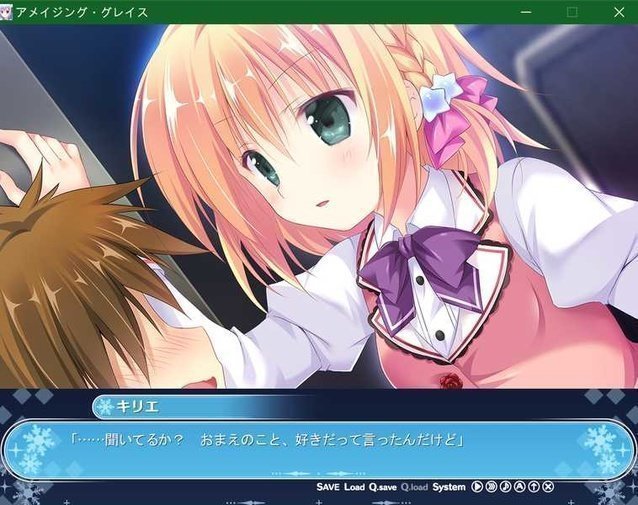
I really want to complain about the art style—I really, really want to complain about 梱枝りこ. The art keeps getting worse, far from the days of Magical Charming. The characters lack spirit, and she’s even worse than her friend-turned-rival ななろばはな, who drew もののあはれは彩の頃。. I’ve always thought that judging an artist’s skill comes down to character expressions and spirit—whether they can depict a character’s joys, angers, sorrows, and various emotions. Clearly, ななろばはな beats 梱枝りこ in that regard. For a game with a mystery vibe, 梱枝りこ somehow turned it into a moe-ge style, and everyone has the same face with just two expressions, making it hard to tell them apart. Then they tell me that サクヤ and ギドウ are siblings based on eye color—I literally spat out my drink. Who even looks at eye color? And it’s worth noting that the game has zero HCGs in the main story. There’s some topless content, but that’s mostly for artistic purposes, like nude modeling, not too erotic. All the HCGs are in the After Story, which I guess caters to different needs? Those who want story get story, those who want to fap can go straight to the CGs? The problem is, who could fap to those CGs…
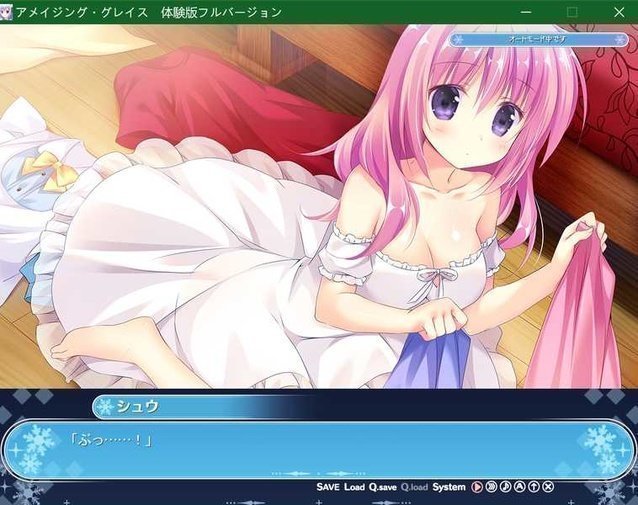
The voice acting really isn’t great, though there are many reasons for that. First, the first few loops are really sleep-inducing with nothing to see. The only enjoyable part is the protagonist’s precise snark at other characters, but the protagonist has no voice actor. I don’t know which newcomer’s alias the main heroine’s voice actor is using, but her performance is far below the veterans. The only standout is 藤咲ウサ, and she’s also the only character with any “romance” scenes. The other heroines have almost no romantic interaction with the protagonist—you wouldn’t believe this is a romance game; it’s just a game with a lot of girls. Sadly, even though 藤咲ウサ comes across as the “true heroine” and even gets her own BGM during her confession—that feeling of wanting to stay with the protagonist so badly that she loops for a whole year is really touching—you still have to reject her, or you can’t get the True End. That’s just fucked up.
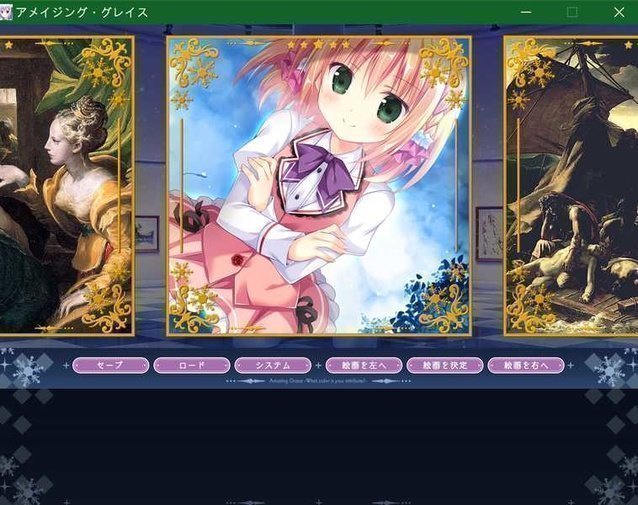
The game itself is basically linear, with some branches that let you pursue other girls early. The choices are presented through an oil painting selection, which is pretentious and useless because the heroine’s portrait style is so jarring that you know exactly who to pick. As long as you reject every girl you meet, you’ll reach the final ending.
And my biggest disappointment is that the game completely lacks a winter atmosphere. Apart from a few Christmas BGM tracks, the other depictions of “winter” are just a bit of snow and a Santa hat. It doesn’t deeply portray winter elements like other games do. If the latter half of the story hadn’t been good, with the lackluster voice acting and CGs, combined with the sleep-inducing early plot, I would have dropped it long ago.
Overall, in today’s industry where everything is doomed, アメイジング・グレイス as a story-focused game can still be rated fairly highly. Maybe I’m too demanding, but I think this year there are only a handful of games with a readable story… oh wait, not even a handful—I can count them on one hand. I can only hope that ルクル slaps me in the face at the end of December, though I think that knockoff あおかな has already lost half the battle.
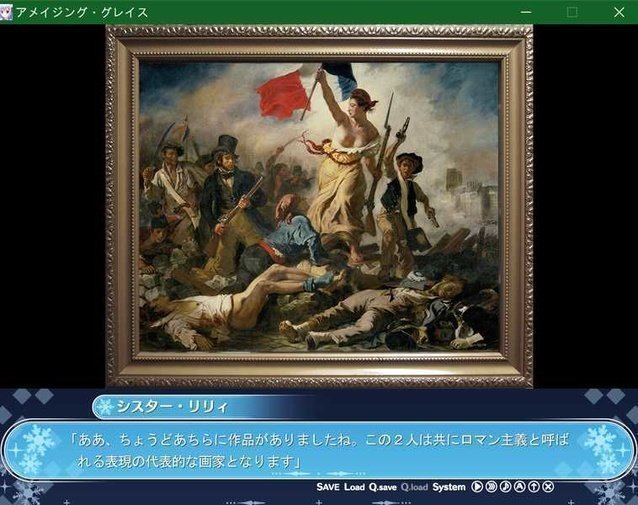
Finally, let me reflect on the game’s incorporation of Christianity. Actually, you can learn a lot from this game—Christian-related oil paintings, stories of Jesus Christ and St. Paul from the Bible, Adam and Eve in the Garden of Eden, and so on. The game integrates these elements, which is a big highlight. For example, the apple the protagonist and heroine eat during time travel corresponds to the forbidden fruit in Eden. The final Christmas explosion and destruction correspond to the descriptions in the Book of Revelation. And the game’s final argument about art is also a worthwhile aside.
The nun asks the protagonist: Is the chair you’re sitting on a work of art?
The protagonist doesn’t know, thinks it’s just an ordinary chair.
The nun says: What if we renamed that chair “The Bridge That Supports Earth and Humanity”? Would it be art then?
The nun also mentions that in some art museum, someone dropped their black-framed glasses on the floor, but nobody picked them up because everyone thought the glasses on the floor were a deliberate work of art—very exciting. That actually seems to be a true story; I saw it on Twitter too.
Sometimes art exists more as a reflection of the human heart. A chair is a chair, glasses are glasses. With hearts willing to appreciate art, perhaps they can become art.
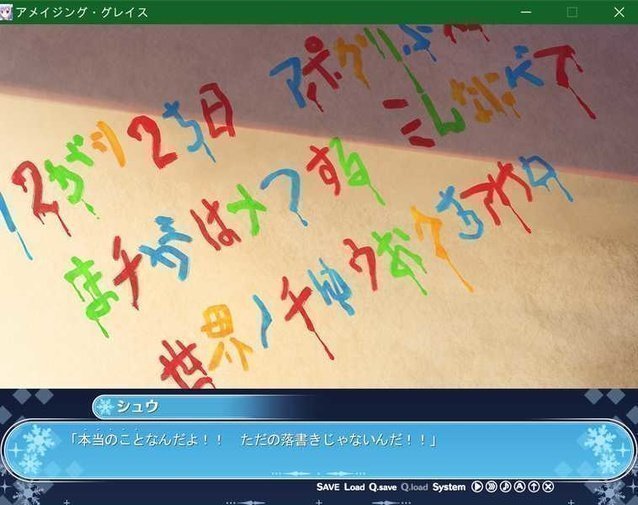
And the illiterate people in the game who mistake Japanese text for “wall paintings” seem to illustrate this point too. Text is only text when everyone agrees on it; otherwise, it’s just graffiti.
The game’s title, “Amazing Grace,” actually refers to the heroine ユネ, who always optimistically believes God will protect her and gives divine blessing to her desperate self.
The game presents this with a CG: ユネ, who should have disappeared, receives a golden apple from God—a symbol of eternal life—and is resurrected.
Meanwhile, ギトウ, the sinner who was tempted by the demon’s work and tried to blow up the town, receives no condemnation; instead, he chooses to “carry his sin and atone for it in the rest of his life.” This is a common Christian idea: since Adam and Eve ate the forbidden fruit in Eden, humans are born with original sin, and spend their lives repenting to heaven to seek inner comfort.
Actually, I think that’s not wrong. Sometimes religion is just a way of thinking that gives you spiritual release and restraint, mostly encouraging people to do good. Just as Buddhism says life is “suffering,” and only after suffering comes sweetness, and reincarnation brings ultimate bliss. Christianity uses a “debt”-like framework, but it’s all the same—these are just mental shackles and regulations.
But… let’s not talk about anything else; just consider the people in the game who receive divine salvation. The golden apple ユネ gets is partly a callback to the foreshadowing at the beginning, and partly just a natural progression. Without the protagonist’s clever move to swap the red apple and eat it himself, breaking the dead loop, how would ユネ be saved? The villain’s salvation is simply based on his own guilt and atonement, with nothing to do with heaven. And the one who persuades him is the protagonist, who isn’t even a Christian.
It’s not faith or God at work; salvation comes more from humans themselves. Many people just don’t want to admit it and attribute it to God.
So at critical moments, besides faith, you have to rely on yourself… If you just pray and nobody does anything, nothing will change.
God loves the world, but He doesn’t necessarily love you.
Comments are hosted on the Chinese main site. This mirror is read-only.