Kotonoha Mau Natsu no Fuurin (言の葉舞い散る夏の風鈴) Review
Kotonoha Mau Natsu no Fuurin (言の葉舞い散る夏の風鈴) had a lot of buzz before release — not because of some insane premise or anything, but because of the staff. Writer Noriaki Hanno had previously done Kage no Umi no Apeiria and the rocket-building thing, and both were received pretty well. This time almost the whole original team was back (with an even stronger artist brought on), so of course people were hyped.
Once the game was announced, though, it looked like there wasn’t anything special in it — at least compared to Apeiria, this one’s setup is basically plain water.
But because of the writer, most people still had high expectations.
And what were we all expecting, exactly? Some crazy twist? High tech? A physics textbook? Logic-puzzle quizzes?
A lot of people probably figured that since the writer had done something that good before, this one should be good too — even with its very “youthful,” very “ordinary” premise, there had to be something thought-provoking underneath.
Well, we were all wrong. It’s just an unbelievably simple, plain-water game.
Hell, it’s not even up to plain-water standards…
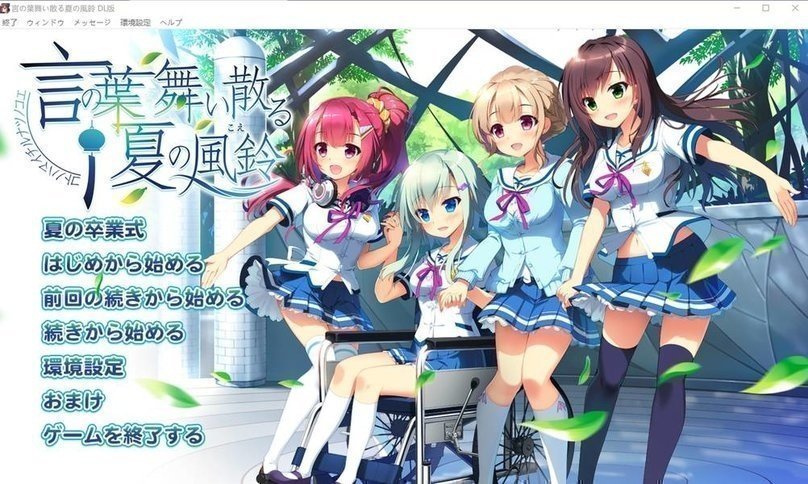
The setup is that the protagonist, by some coincidence, ends up joining the “Seiyuu Club” and documenting its activities, and the game does start off following that premise.
The protagonist is a seiyuu otaku — the kind of gross nerd who’s obsessed with a specific VA’s voice. His favorite is a female VA named Kokoro, and one day at school he hears a voice that sounds just like hers. Using his frighteningly accurate “otaku ear,” he figures out that Kokoro is actually one of his classmates, a girl named Shina Koto. That becomes their little secret.
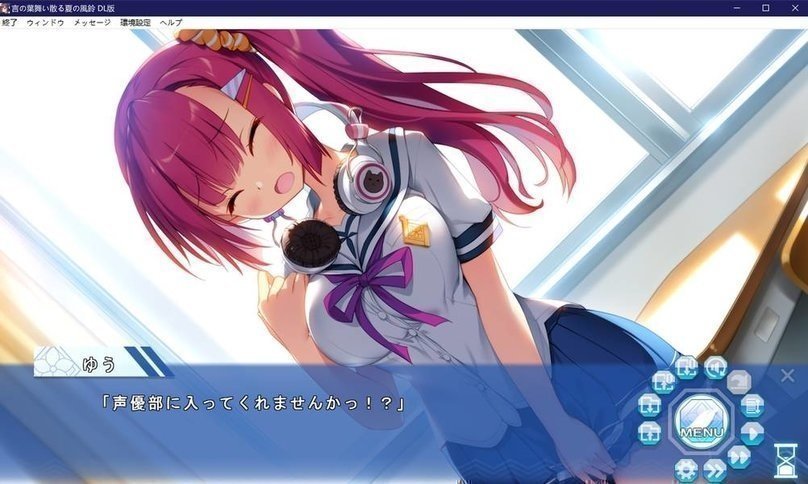
Later, a classmate named Yu Nohara invites him to join the “Seiyuu Club.” Yu is a seiyuu fan who wants to become one herself. At the club he also meets an upperclassman, Yoko Bodai-ju, who founded the club and is also a rich girl with a family fortune. The reason this rich girl started a “Seiyuu Club” is… she tried out for the “Drama Club” and got rejected, so she founded the Seiyuu Club for revenge… and to fight the Drama Club.
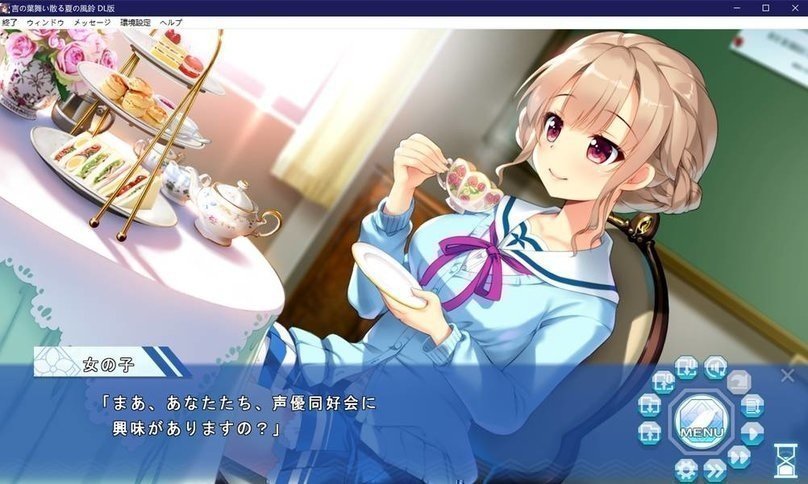
Then the protagonist gets dragged into the Seiyuu Club by Yoko and Yu, but he realizes that while these two are super into seiyuu, their actual skill level is hopeless — they can’t even act. So he brings in Koto, who has actually studied voice acting, and starts training everyone.
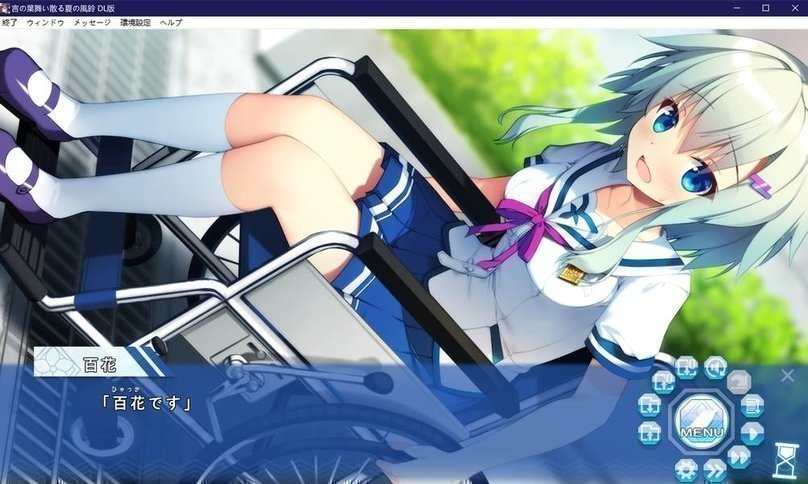
He also meets a wheelchair-bound underclassman, Kanade Momoka, who seems to have a huge talent for voice acting, and pulls her into the club too.
And that’s how the game starts… the story becomes the protagonist and a bunch of girls doing daily recitation and performance training in the Seiyuu Club.
There are four heroines and four routes. Yu, Yoko, and Kanade’s routes are available from the start, and after clearing those three, a “Summer Graduation Ceremony” True End appears on the title screen — that’s Koto’s route.
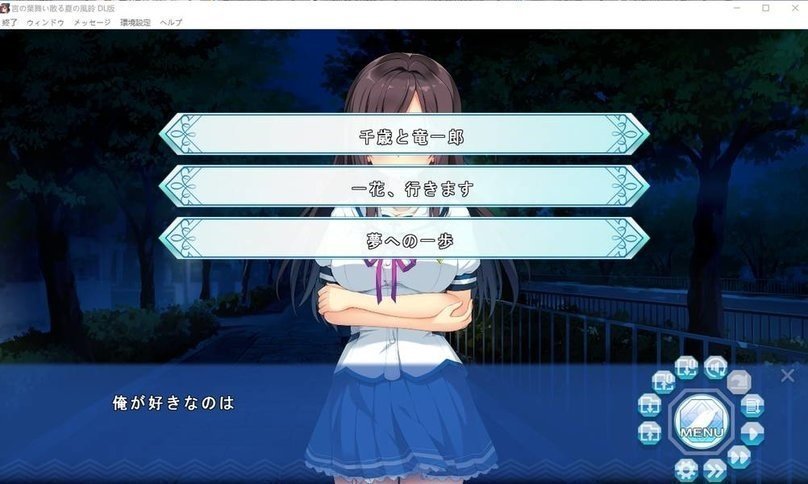
Honestly… there’s not much to say about this game. The branching choices are just the protagonist picking a training script for the club, one script per heroine, and the endings are all basically the same: the heroine gives a great performance with that script and wins a seiyuu award (a super, super, super beginner-level one). Each heroine’s route just has minor differences. Yoko’s, for example, is about making peace with the Drama Club and performing together in the end. Kanade’s route has her naturally talented but physically disabled and lacking confidence, and she eventually wins a big award with Koto’s guidance. Yu’s is a little more normal — she dreams of being a seiyuu but has no talent (bullshit, her VA is Sendai-obasan), and right before the big performance she gets a cough and almost gives up, until the protagonist finds her seiyuu idol to cheer her up.
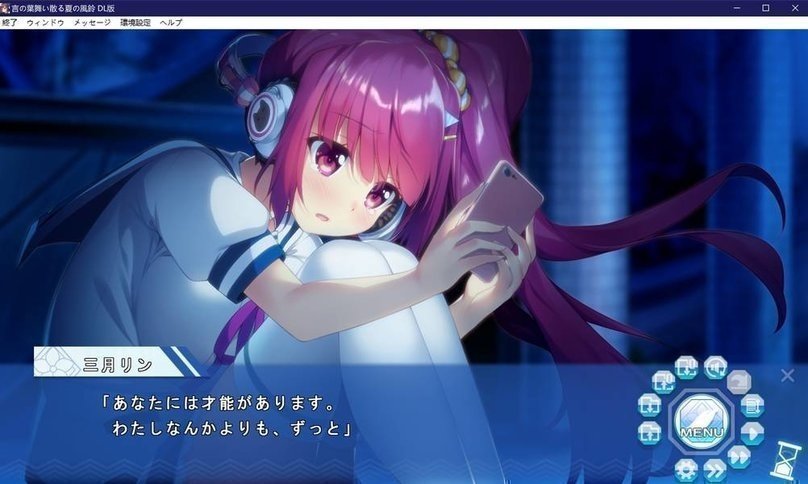
And once you unlock the final True End, you find that this supposed final route has no surprises either.

In the common and individual routes, Koto mentions that she used to be a seiyuu but is going to quit, without telling the protagonist why. The individual route explains it a bit — nothing more than “being a seiyuu is too hard, I can’t keep going” — and in the end Koto, having led the other fans in the club to success, decides to give it another shot, auditions, and through her own effort lands a role…
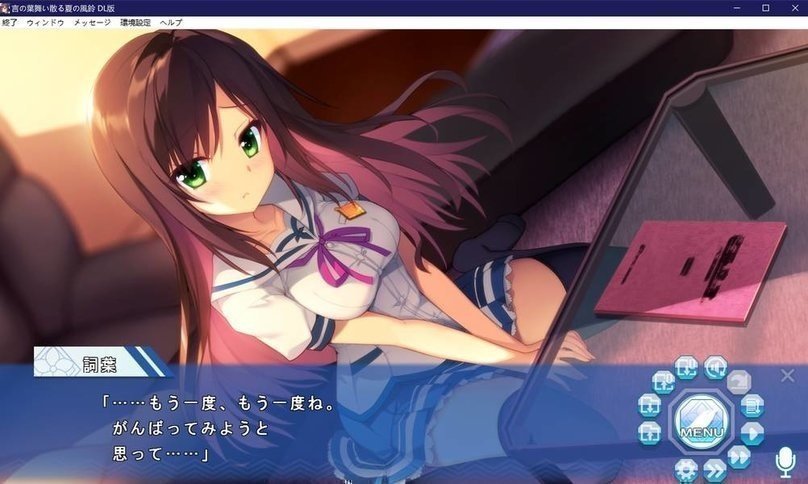
And then the final ending is Koto and the other club members all achieving their dreams. Happy Ending.
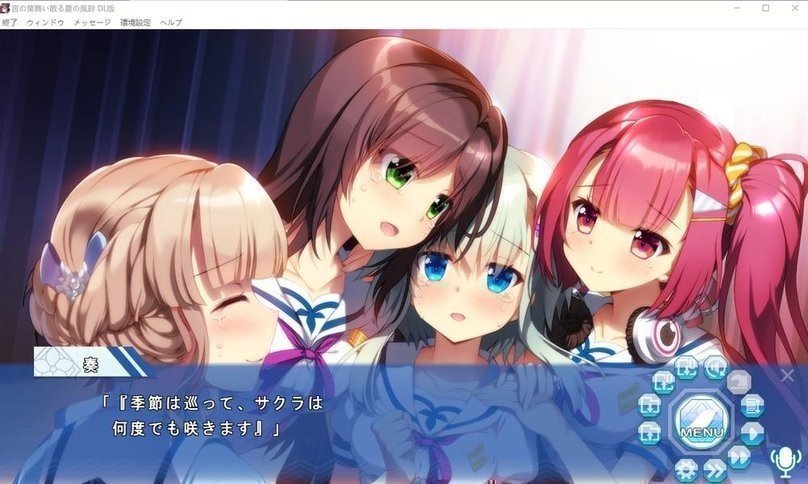
So this game is just a simple story about some hobbyists in a “Seiyuu Club” who eventually achieve their seiyuu dreams. No high tech, no crazy twists, not even any decent romance — mostly the protagonist suddenly confesses (or gets confessed to) after a few lines, then they bang, then a boilerplate ending, ED rolls, one CG, game over.
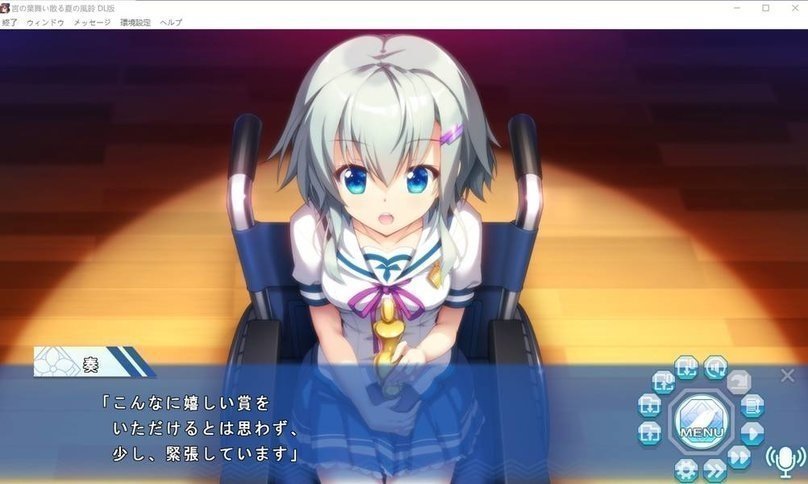
As a game about “seiyuu activities,” it does put a lot of effort into the seiyuu side — there are basic tutorials on vocalization, the difference between abdominal and chest breathing, etc. — but it’s nowhere near enough. And it seems like, in order to show how hard being a seiyuu is, the game uses huge chunks of text to show the recitation parts of training. It’s realistic…
…but also boring. It keeps reminding me of reading textbooks aloud after the teacher in Chinese class — incredibly dull and sleep-inducing. The only amusing parts are when the protagonist joins in the dubbing and produces an extremely distorted voice… it looks like he’s been possessed by Zhao Benshan or something. Weirdly funny.
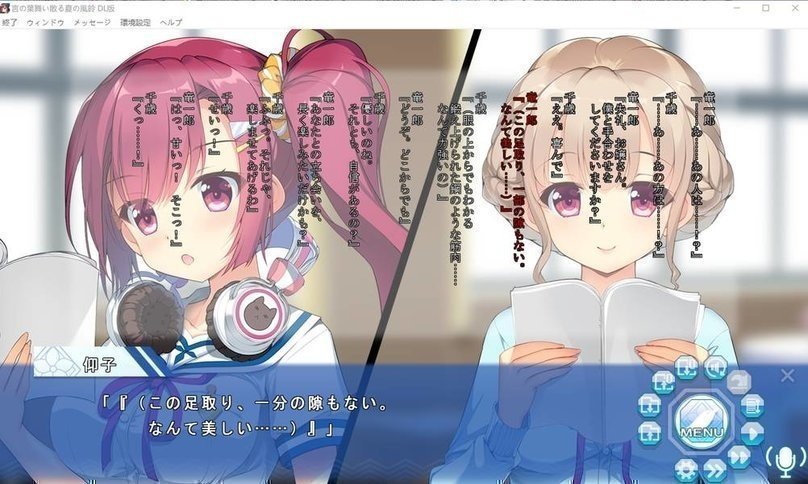
Overall the game has zero ups and downs — not even the most basic ones. “The characters just try hard and immediately succeed.” Writing a story like that feels incredibly lazy. The only route with any interest is… Sendai-obasan’s Yu, the only one who can actually convey the arc of a “seiyuu fan” going from “newbie” to “professional.” Sendai-obasan honestly has it rough too — at the start she has to use her voice acting to portray someone who can’t voice act, which is genuinely difficult.
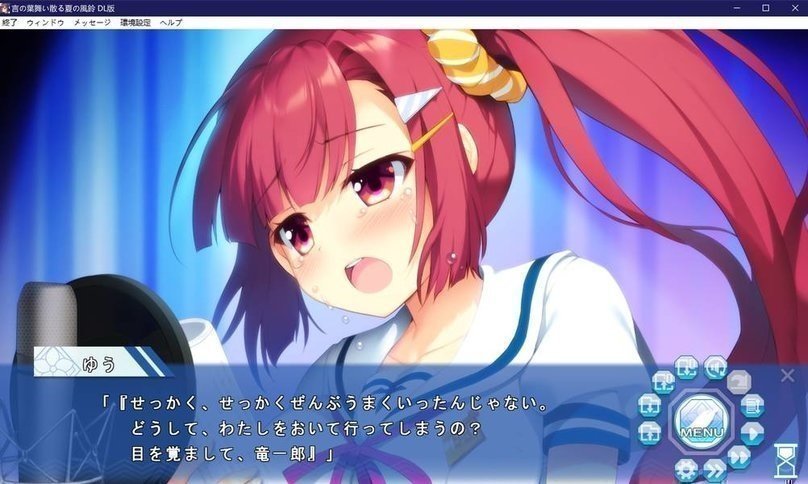
Still, casting Sendai-obasan for that role is a bit baffling. Yu is supposed to be a “fan who can’t act,” and Sendai-obasan already has a hard job voicing Yu, but then she has to use an even harder voice to imitate clumsy acting. It’s just… weird.
Put plainly, Sendai-obasan’s acting is too good, and casting her as this “clumsy character” doesn’t quite fit. Maybe a newcomer would’ve been better.
The best-cast VA in the game is actually Sakurakawa Mio as the main heroine Koto — she switches between multiple voices freely and can even tease the protagonist with her voice. She’s a real powerhouse in the galgame world, even though she’s a year younger than Sendai-obasan…
Overall, Kotonoha Mau Natsu no Fuurin has no highlights. It’s just a perfectly ordinary, by-the-numbers galgame waving the seiyuu banner, and “seiyuu” isn’t even a theme that suits a galgame that well — or rather, the project didn’t use the theme well… though it’s also possible the writer just can’t write daily life and only knows how to write the protagonist being horny. That’s probably what you call limitations.
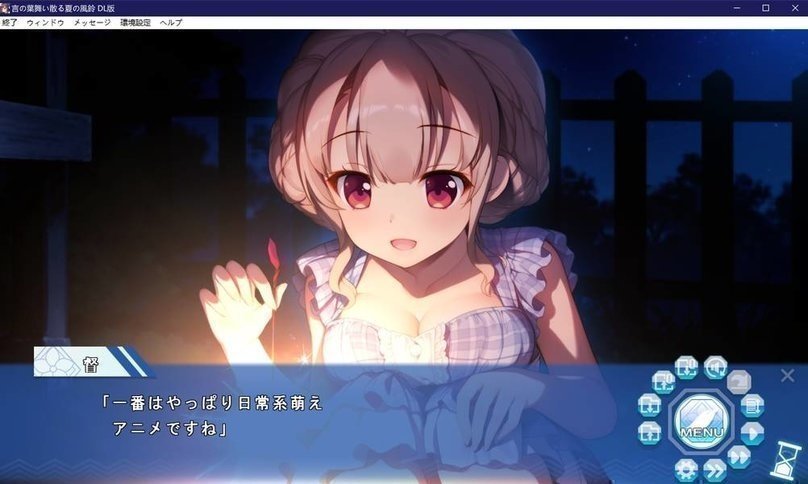
Also the BGM is the same old Silkyplus style — Low, with ugly electronic keyboard sounds that feel super cheap. Some of the CGs look fine, and some are just off-model. No matter how I look at it, this feels like the kind of game that gets buried by the tide of history in no time, and I have no idea why so many people were hyped for it…
If you ask me, Noriaki Hanno should stick to sci-fi and hard science-y content. Stop writing slice-of-life romance. You’re not good at it.
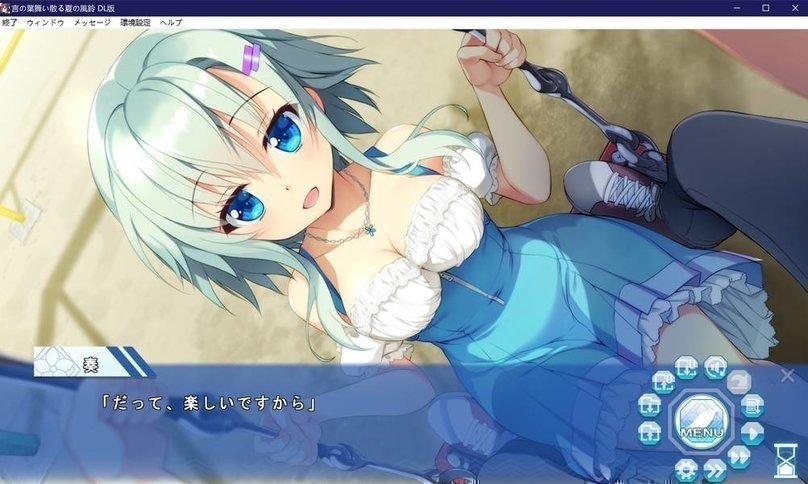
Oh right, there’s a big bug too — late in the game, Ishihara Mai’s character goes mute and loses her voice entirely. It doesn’t come back until the final True End. Maybe Ishihara Mai didn’t get paid and went on strike.
One last thing worth mentioning: the HCGs have plenty of WTF moments. The most obvious one is a scene where Yu is practicing “moaning” for a voice role, and to perform better, in front of everyone, she pulls open her skirt and her panties and starts masturbating… moaning while masturbating as voice practice, with a whole crowd staring at her. The onlookers are impressed, and when she finishes, everyone gives her thunderous applause…
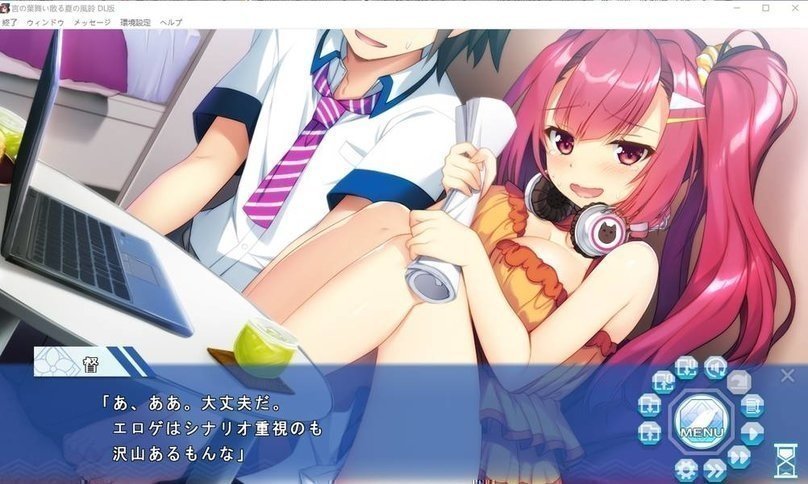
I didn’t know what to say to my screen. Do I call this creative, or… mentally ill?
Does the writer actually think the moans in eroge are recorded by a bunch of older women fingering themselves?
Comments are hosted on the Chinese main site. This mirror is read-only.