Karmalka Circle (カルマルカサークル) Review
Don't Let Otaku Teach You How to Make Games
Long, long ago, seven people committed a grave sin and were struck by divine punishment.
They came to a small island said to be a place where one could speak with the gods, and there they prayed devoutly to the heavens, begging for forgiveness, begging for their own salvation.
AdvertisementBecause their hearts were so devout, the gods above were moved by them, and using their divine power they pardoned the sins of these seven, erasing the crimes they had committed, and the people who had died because of them came back to life.
And because the history of their past crimes had been altered, the seven forgot that they had ever begged the heavens for anything, and went on living happily.
But someone nearby had been watching what these seven did, and that peeping observer wrote down the ritual by which the seven had pleaded with the gods.
This ritual later came to be called “Toki no Shirabe.” Gather seven people, and the ritual could be performed—and you would receive the grace of the gods above, have any wish you desired granted, even change history itself.
In time the ritual was abused by wicked people, causing consequences beyond repair and giving rise to tragedy.
To keep such tragedy from ever happening again, the shrine maidens of the island’s shrine hid away the items needed to perform the ritual, and did everything they could to let the “legend of the seven” fade, wanting this so-called ritual to vanish from the world.
Many years later, people carrying “seven sins” of their own came to this place.
By sheer chance, they were asked to activate a mysterious ritual called “Karumaruka.” Word had it that performing this ritual would erase one’s own sins.
But at the moment the ritual began, they did not choose to erase their sins for their own sake, or even to change history—they chose to stop the ritual forever, and that wish too was accepted by the gods. For they had realized that no matter the past or the future, blindly using the power of the gods to change things was wrong, and that what matters should be held in your own hands.
After that, there was no more “Karumaruka,” and no more “Toki no Shirabe.” The island closest to the gods returned to its quiet.
And so the story of Karumaruka * Circle came to an end.
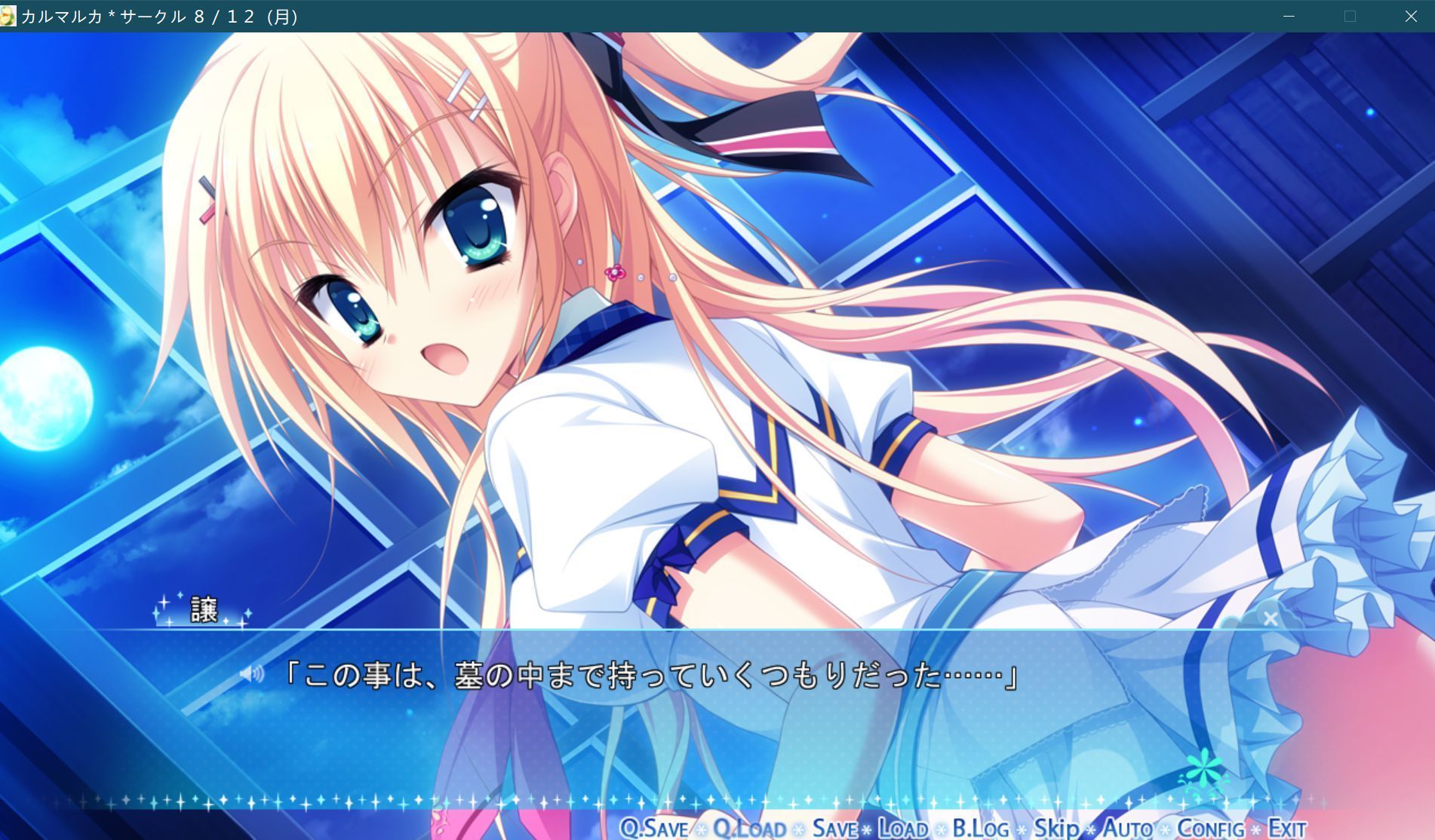
A quick note before we start
I started playing Karumaruka * Circle (カルマルカ*サークル) ages ago, but I never in a million years expected it to take me a whole year and a half to finish.
Maybe that’s a bit of an exaggeration, but it’s true. I used it for a year and a half—go check the ID numbers on these posts, aren’t they a lot earlier than the current ones?
First, why I got interested in this game. Not because it’s from SAGA PLANETS — but out of curiosity.
Mention SAGA PLANETS and what comes to mind is はつゆきさくら (Hatsuyuki Sakura), the “Four Seasons” series, 花咲ワークスプリング, and that latest one, the incredibly stupid 金色ラブリッチェ. Almost nobody brings up カルマルカサークル*.
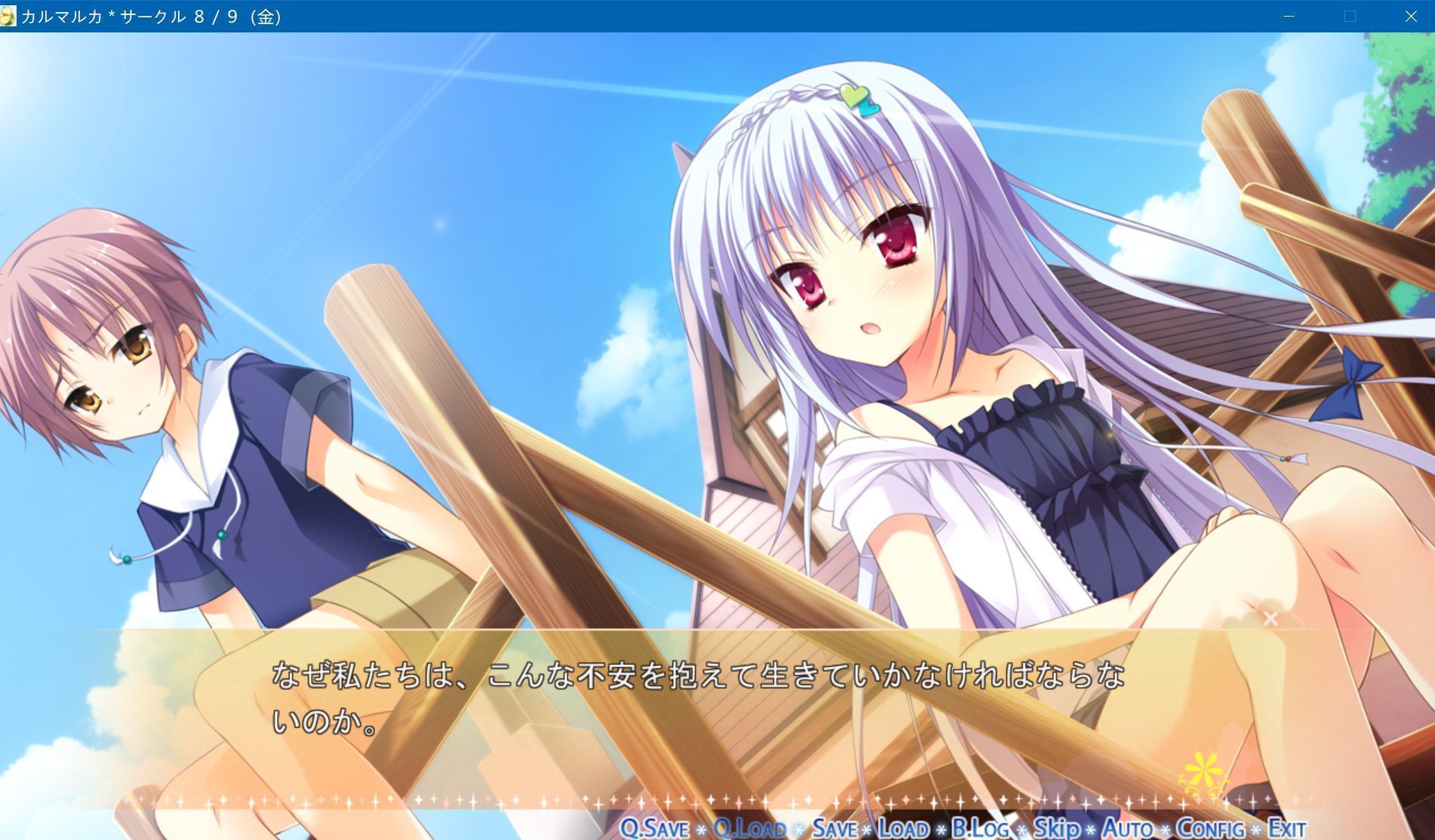
The Chinese fan translation for this one seems to have crawled along too — it wasn’t until last year that a translated version showed up, and this is a game that’s been around for ages.
Not many Japanese people talk about this game either. You do see plenty of folks using its CGs as wallpapers and whatnot, but everyone stays tight-lipped about the content — nobody says a word about what the story is actually about.
So I got curious — what is this game even about? And why does it have basically zero presence?
You’d think a game with this kind of voice cast would be a slam dunk. The CGs look great too, all bright and colorful, and at a glance the setup seems to have real meat on its bones—Tanabata, the seven deadly sins, seven characters, starry skies, all that.
So I started playing this game.
Game Impressions
Why did I spend almost a year and a half on this game? Two reasons, really. One of them is that it just wasn’t high priority—I’d only think about it under the condition of “there’s nothing to play this month, and nothing left over from last month either”… and then I’d get a few days in, a new release would drop, and I’d run off to that instead.
The other reason is… this game is a damn sleeping pill. It throws out a bunch of genuinely cool concepts, but the common route is just way too long… or rather, it feels long because it’s so boring. The game’s core is the “サークル” — the “club” — and they even put that in the title, which is why the Chinese translation of the title has zero cool factor. The common route is just a bunch of people killing time in a vaguely defined “club.” The heroines are each given a “seven deadly sins” motif, but the writing is way too paint-by-numbers. The president’s “sin,” for instance, is “randomly falls asleep.” I still have no fucking idea what sin that’s supposed to be — “sloth”? And the president’s characterization is so by-the-book: she nods off at the drop of a hat, everyone keeps holding meetings, and a single meeting eats up the whole day. She feels like some old party cadre, which oddly enough made her kind of endearing to me. Compared to her, the other routes are even dumber. A lot of the setup is what you’d call “大袈裟” in Japanese — ridiculously overwrought. The blonde voiced by Ai Shimizu keeps going on about how she “killed someone,” and it turns out her dad was just implicated in embezzlement that left someone badly hurt. What the hell kind of murder is that?
Anyway, the game tries really hard during the common route to play up the fact that these heroines are “carrying a huge sin,” but the writer doesn’t dare give them an actual “sin,” so he just throws stuff together and dresses up a bunch of trivial bullshit as “sins” to dump on the heroines.
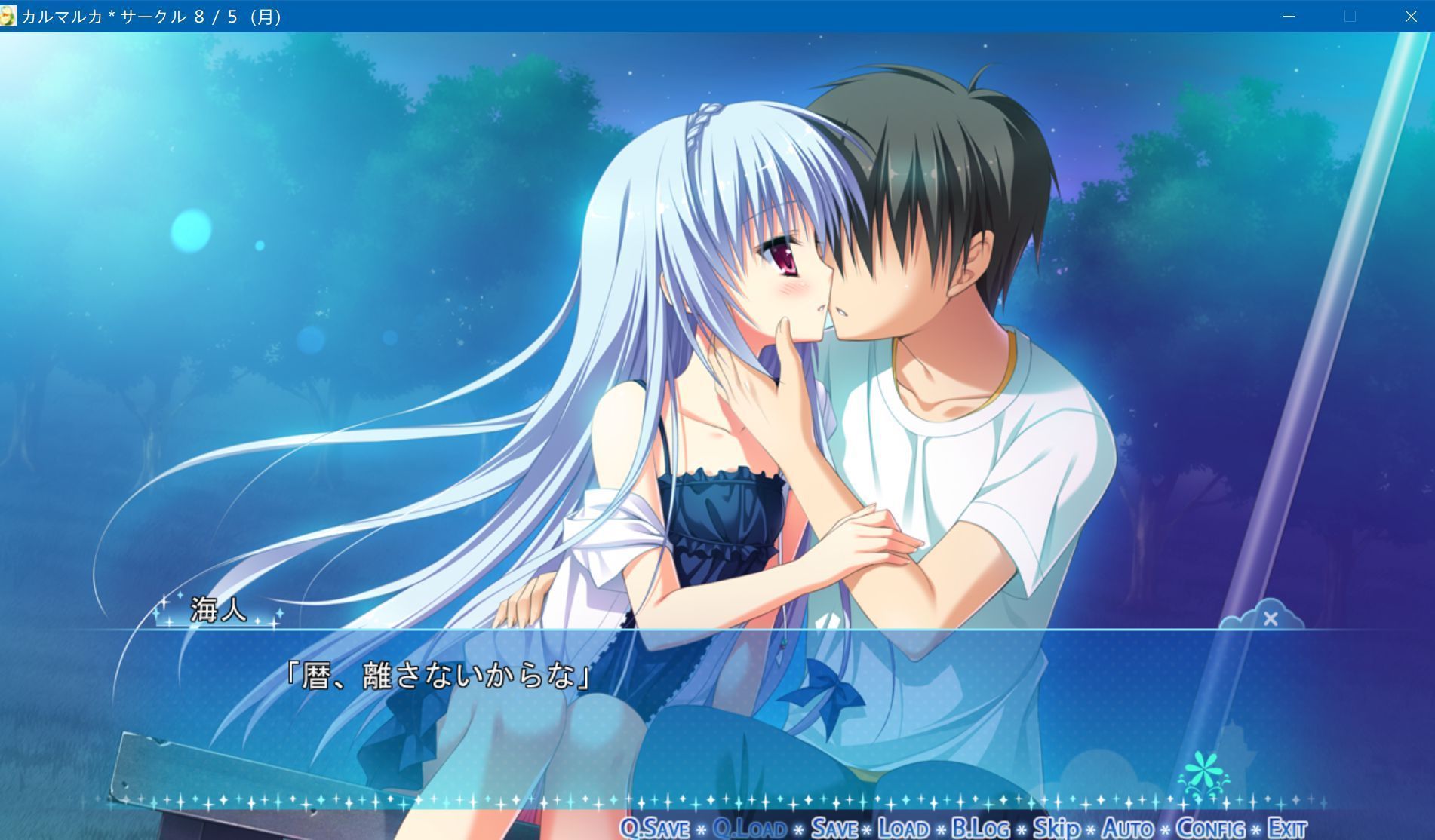
Going by how the plot sets things up, the “seven deadly sins” heroines should have been able to wipe out their “sins” together through the “Karumaruka” ritual, and that would’ve been that — except the ritual fails the first time they try it. The heroine routes all take place in the worldline after the “Karumaruka ritual failed.” And here I have to complain about the individual routes, because really… they’re not good, and a lot of the writing is painfully dumb. There’s the foreign noble princess, the buried math genius, the… fuck, I can’t even remember what the other routes were about anymore. The only one that’s even tangentially connected to the main plot is the blonde voiced by Shimizu Ai who “claims she’s a murderer” — and even then it’s all vague and ominous, with no concrete explanation of why she supposedly “killed someone” or whether the blonde’s father really did “embezzle funds.” The route just ends out of nowhere.
The game actually wants to tell you there’s a Grand Ending at the very end — a True End — and the unlock condition is clearing every heroine’s route and collecting their “seven deadly sins” (though by the end I still couldn’t tell whether each girl’s sin actually matched up).
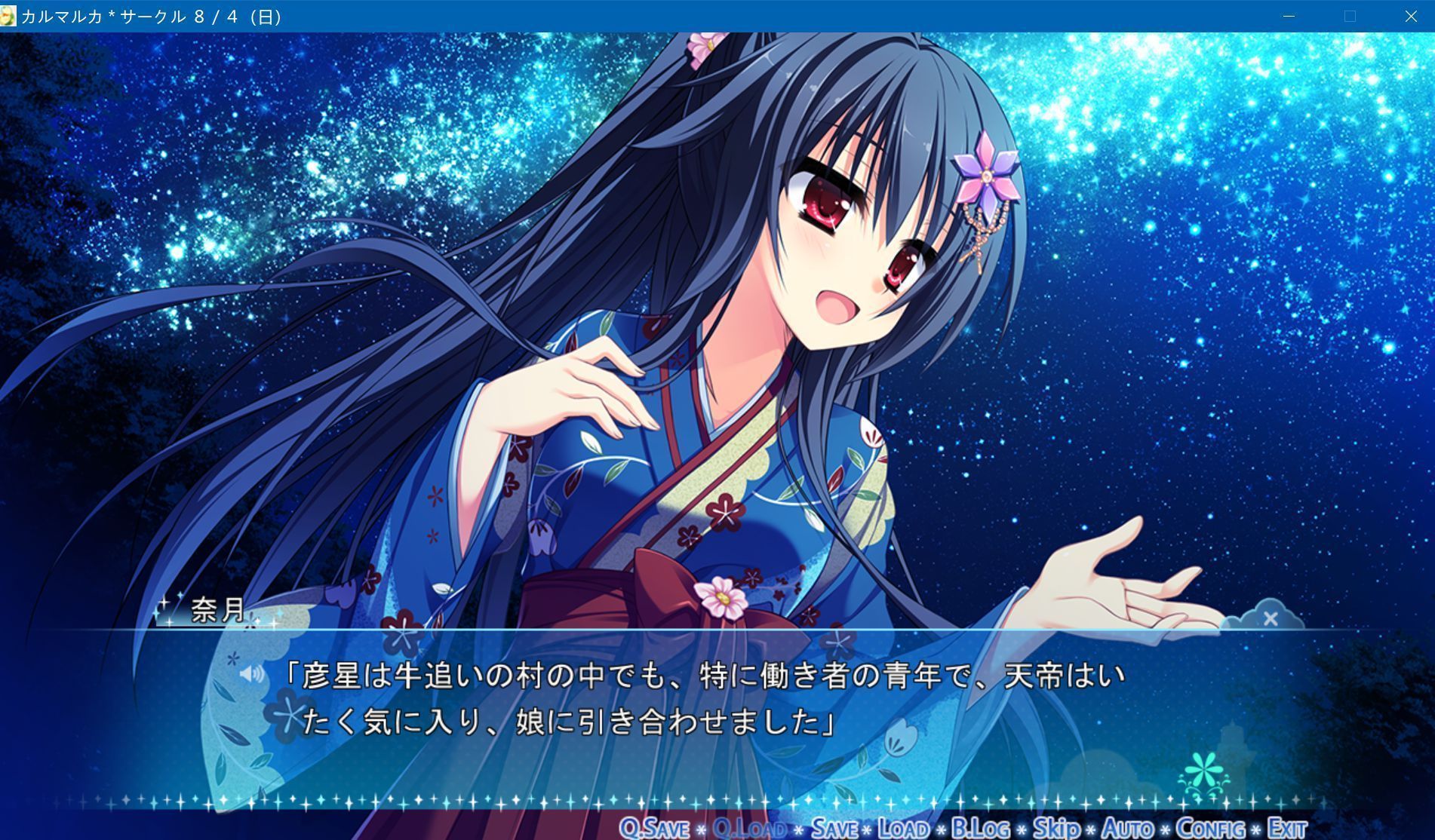
This Grand Ending is where things get interesting. Unlike the bad outcome of the “Karumaruka” ritual in the individual routes, here the ritual actually succeeds — and with its success, the island’s shrine maiden appears. Turns out it’s that classmate from school named “Mirai.” Just like the legend says, the shrine maiden’s goal is to stop the ritual from ever starting again, and in the end the mastermind behind it all is exposed too: the school’s director.
这个理事因为知道岛上有”七人仪式可以改变过去“的传说,就批准成立了一个关于它的同好会,一直鼓励学生去研究,并且希望利用这个仪式来给自己牟利(好像只是想当个校长而已,这也太没出息了),这个仪式原名“刻の調べ”,后来被套上一个七宗罪的外壳改名为”カルマルカ“仪式来骗人,还附加编了很多莫名其妙的传说,让这个”カルマルカ“看起来像是西方的东西而非东方,实际上它是神社里的巫女知道的传承,并非什么七宗罪。
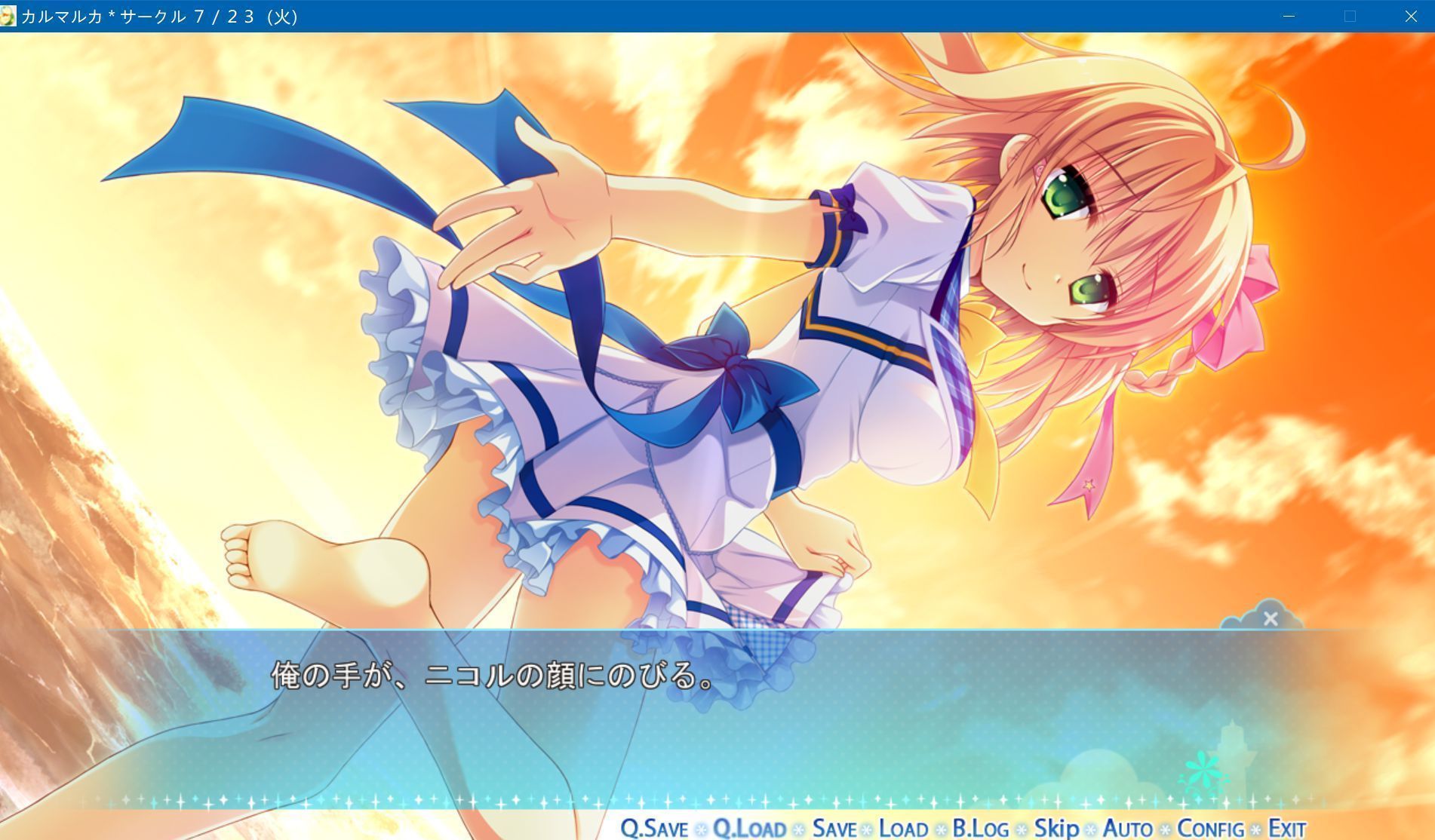
Anyway, in the end the seven members of the fan club successfully activated the ritual, and they promised the shrine maiden they’d pray to the gods to close off this “Seven-Person Prayer” ritual for good — which they pulled off. The school board chairman’s schemes fell apart too; the bribery he’d committed years ago and the injury he caused got dug up, so he’s probably headed to prison. And that’s where the story ends.
So the game’s main plot is, again, exactly what I said earlier: the legend of the seven people’s wish was simply exploited by someone. In the end, for the sake of world peace, the protagonists shut down the ritual. That’s it.
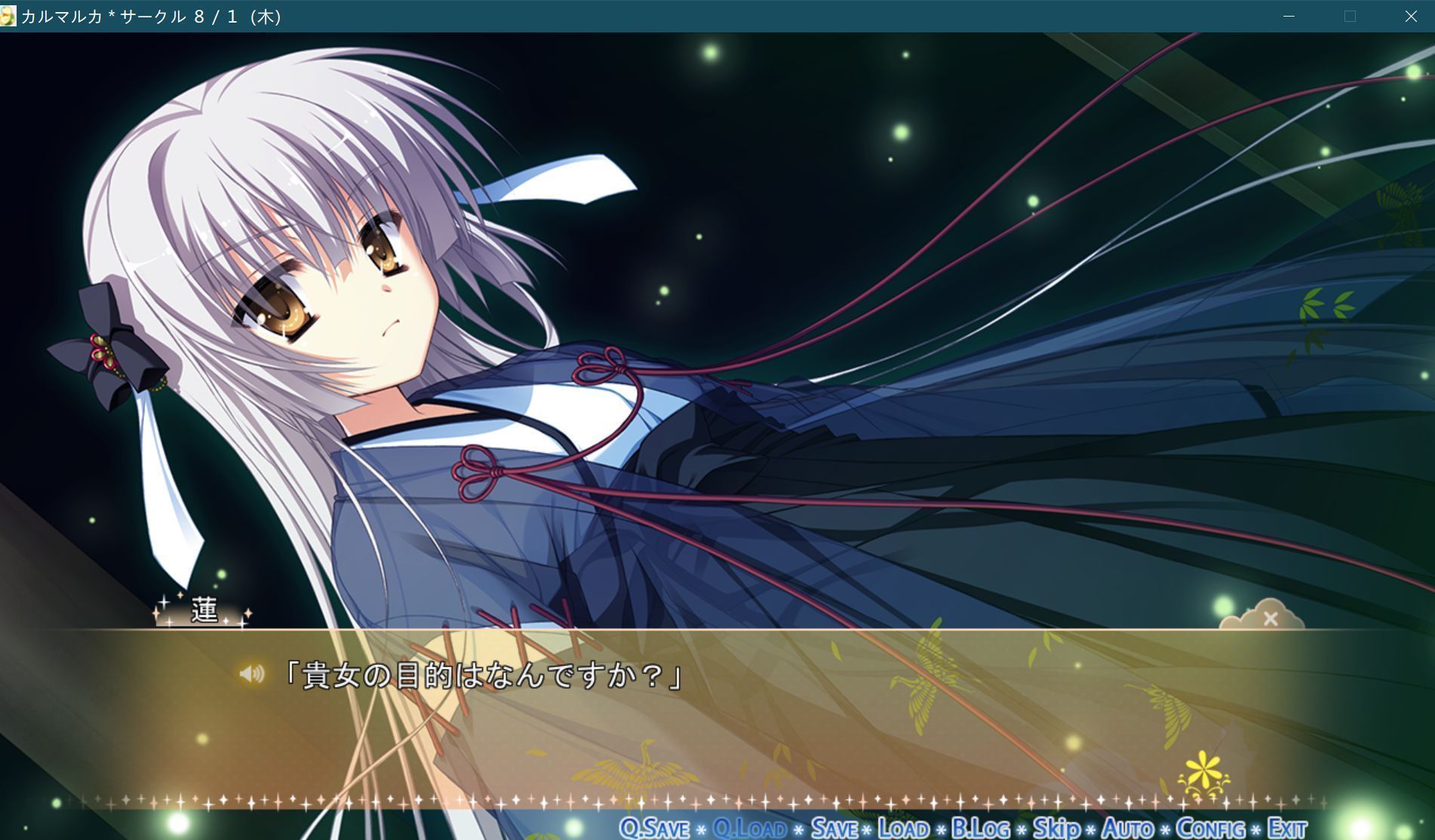
It’s not that the game has nothing to say. The main core is still:
“If you could change history, would you?”
I figure most people have regrets about their past — probably everyone would answer yes. But the game throws out another hypothesis: if you change your own history, other people’s history gets affected too, and your future turns out different as well. Sometimes blindly rewriting the past is really just an escape. All the stuff you went through, that’s exactly what shaped who you are today. If Karumaruka * Circle is trying to say anything, it’s gotta be that “look forward” mindset.
Of course, that’s about as far as this game’s story highlights go. Karumaruka * Circle isn’t without its problems on various fronts, so let’s round them up:
Pros:
- The art looks good, and the CGs are clearly a labor of love
- They didn’t skimp on the voice acting budget
- Stacked lineup of scenario writers
- The animation effects don’t look cheap either—at the very least, the two OPs are a cut above the rest
Cons:
- The setting makes no damn sense
- The story structure is a mess
So if you actually think about it for a second… this game clearly didn’t cut any corners in the places that “need money thrown at them.” The one thing that tanked was the story quality — the one thing money can’t reliably guarantee.
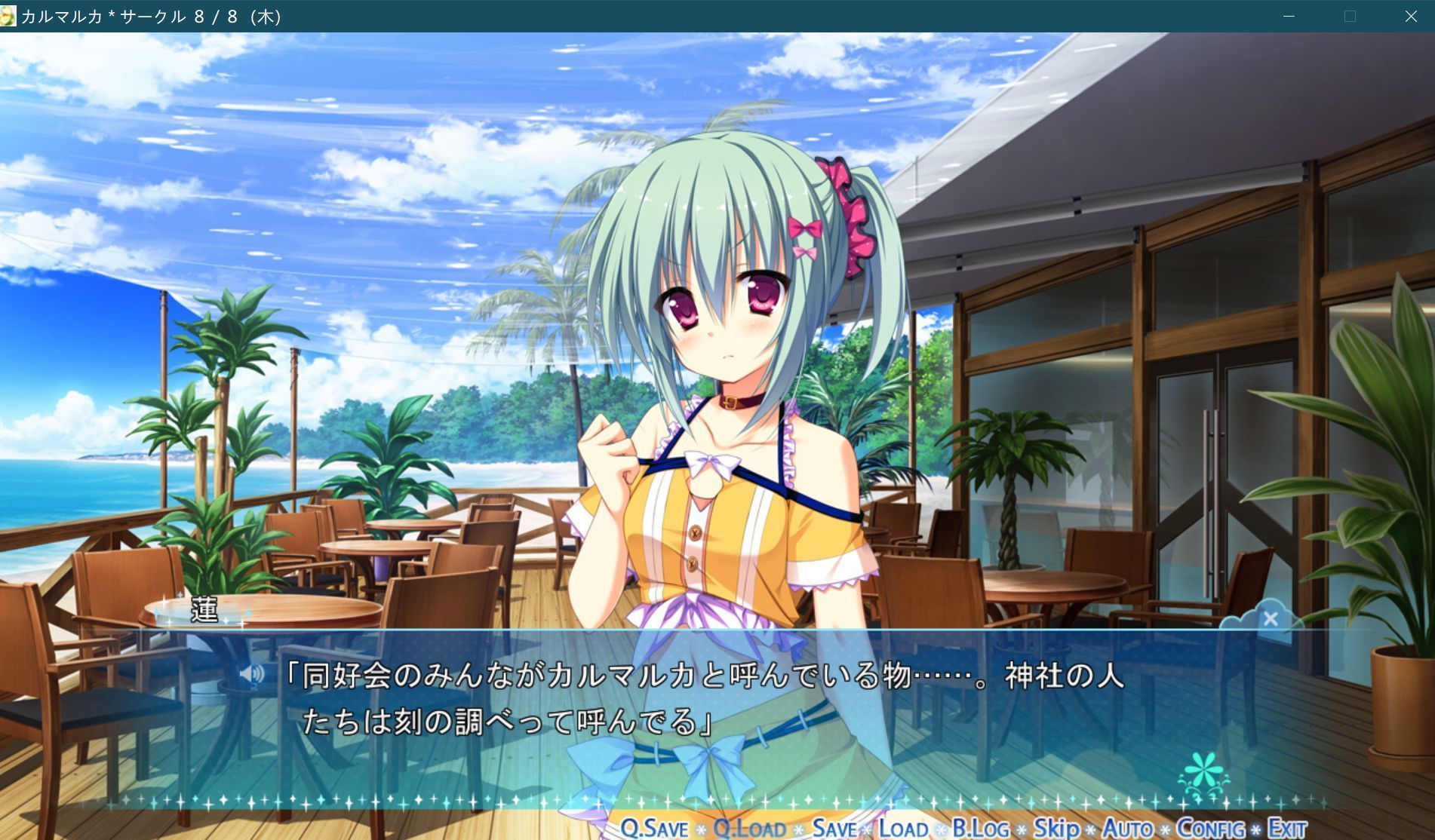
Simply put, this game isn’t short on money in any department, but throwing cash around doesn’t buy you a good story. What’s the reason behind that? Being the masochist I am, I looked into it and came away with a few findings, which I’ll get into here.
How the Game Unfolds
Karumaruka * Circle (カルマルカ*サークル) is SAGA PLANETS’ 18th title, and the staff was almost entirely in-house. At the time, SAGA PLANETS’ previous release, Hatsuyuki Sakura, had been met with unanimous praise, sold well, and brought in a decent pile of money. But the planner and scenario writer of Hatsuyuki Sakura—the mastermind behind the earlier “Four Seasons” series, Niijima Yuu—up and ran off…
But SAGA PLANETS couldn’t care less about that. So what if Niijima Yuu’s gone—does that mean they can’t crank out a hit? They’ve got money now.
So a new project got underway. The kind of project that wants to reach something like what “Niijima Yuu” does — a setting with serious high-concept swagger, a final route with an insane twist, plus a big cast of heroines, every one of them cute, and a star-studded CV lineup. Anyway, SAGA PLANETS at the time wasn’t short on cash.
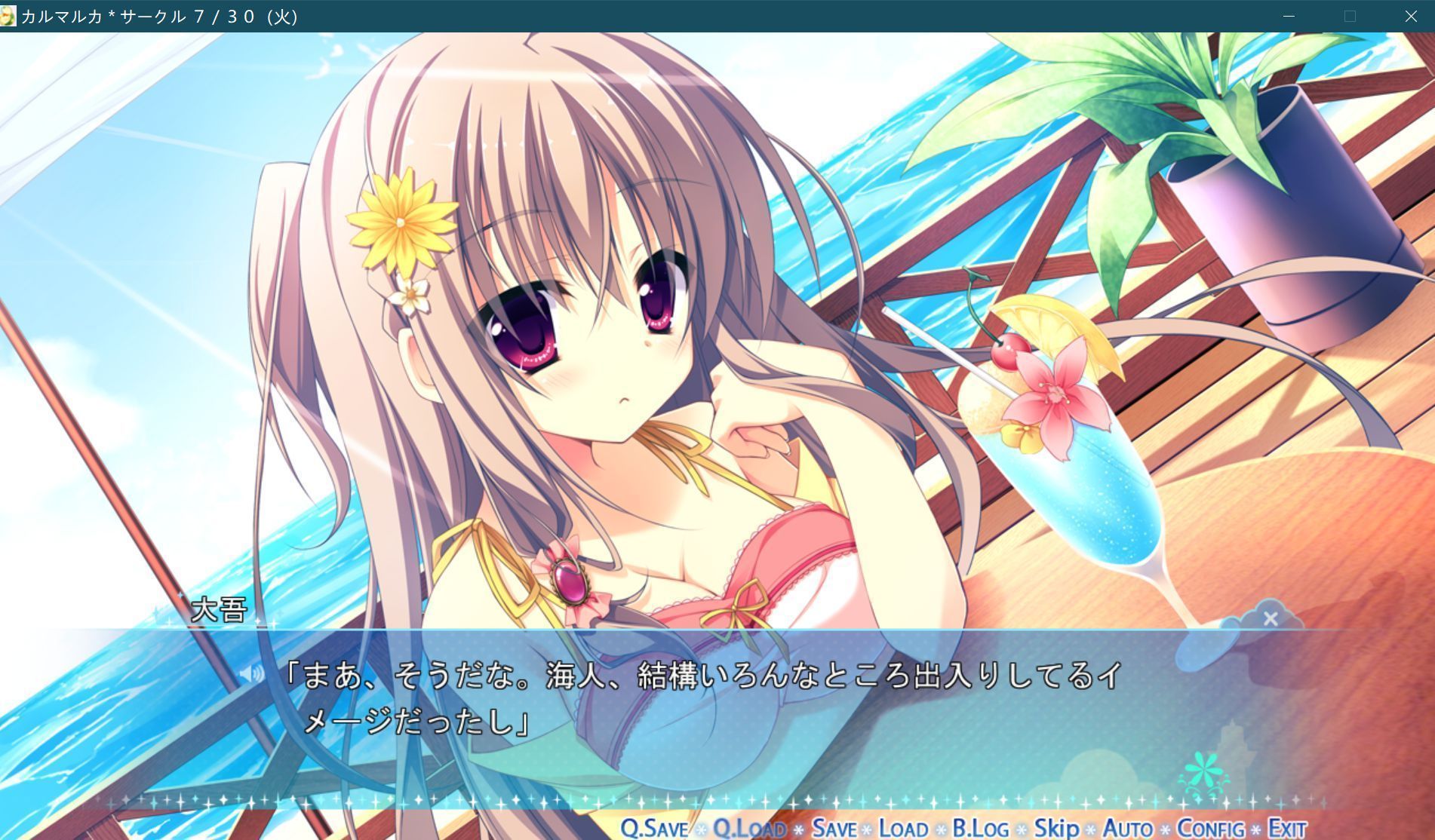
So the concept came together around “Tanabata,” “stars,” and the “seven deadly sins.” The setting was fixed as summer, every big-name artist in the company got drafted in, and even Mamiya Kise, the buck-toothed girl who’d been doing grunt work and coloring around the office, drew her first character. Each heroine, taken on her own, is an absolute powerhouse. A genuinely insane game was about to be born — all that was left was making sure the scenario didn’t derail.
And then SAGA PLANETS went and made an absolutely braindead decision: they actually listened to the players.
I’ve said this more than once: the otaku who play Galgame are a bunch of tasteless morons with no real life experience, low emotional intelligence, and no ability to express themselves, so they can’t write a good story either. Most of what they know about “life,” “women,” and “romance” comes from “porn games.” So if you’re the one telling them stories through Galgame, what the hell is the point of listening to their opinions? Have you ever seen a teacher ask a class of failing students what they want to hear? It’s worthless as a reference, seriously!
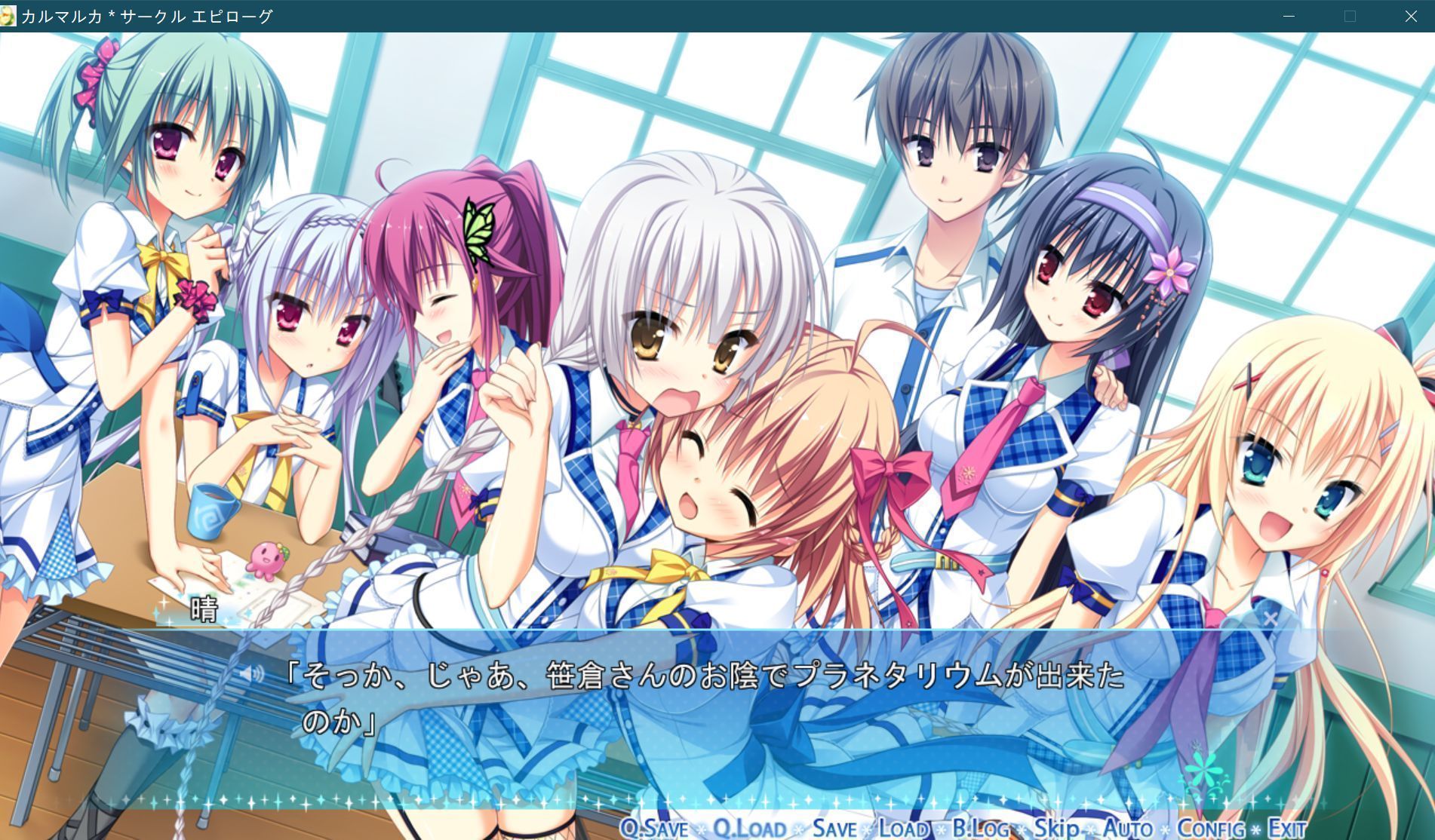
According to what the game’s Wiki page says, SAGA PLANETS changed two things about the game to take player feedback into account. The protagonist of はつゆきさくら was too much of a character and had a foul mouth, which rubbed fragile otaku the wrong way — so in カルマルカ*サークル the protagonist was written as “a perfectly ordinary nice guy,” his personality and presence were drastically toned down, and they successfully turned him into thin air…
But whether a story is good—especially a romance story—naturally comes down to the interactions between the boy and the girl. If you turn the boy into thin air, aren’t you just left with the girl posing and preening all by herself? The heroine loses that back-and-forth, loses her three-dimensionality, and ends up flat. The game loses what made it distinctive and becomes a very ordinary “romance game.” And yet SAGA PLANETS seems pretty happy with this, continuing to pile settings onto each heroine and pad things out. I remember an interview with Niijima Yuu where he said that while working at SAGA PLANETS he was told more than once that the stories he wrote “focus too much on plot and not enough on the girls’ own cuteness”—basically, he kept telling stories instead of properly padding the common route with gags and filler. So now Niijima Yuu has rolled out, and SAGA PLANETS naturally went back to its old ways: the common route is stuffed with everyday filler, and even the True End has everyday filler. Right when the story hits a critical moment, it still doesn’t forget to squeeze in an “outing date” to highlight each girl’s “cuteness,” which directly makes the game long and tedious, constantly slipping into sleep mode.
Aside from the game’s setting, Karumaruka * Circle has another flaw: it’s a multi-writer project. The planning and the scenario aren’t handled by the same person — in fact, the planner didn’t even join the scenario team, and just set the general direction.
So what does that lead to? The planning side does the big talk and pie-in-the-sky promises — “I want a story that goes like this and this, it’s gotta have these elements” — and then the high-priced scenario team they hired just writes to that framework. Every writer is only ticking boxes and finishing the assignment, and that directly strips the game of its soul. Even dumber: the game also crams in 6 individual routes, each with a wildly different style and only a loose connection to the main plot. By the time the main story finally hits its reveals, you’re already exhausted — you’ve even forgotten what was said earlier…
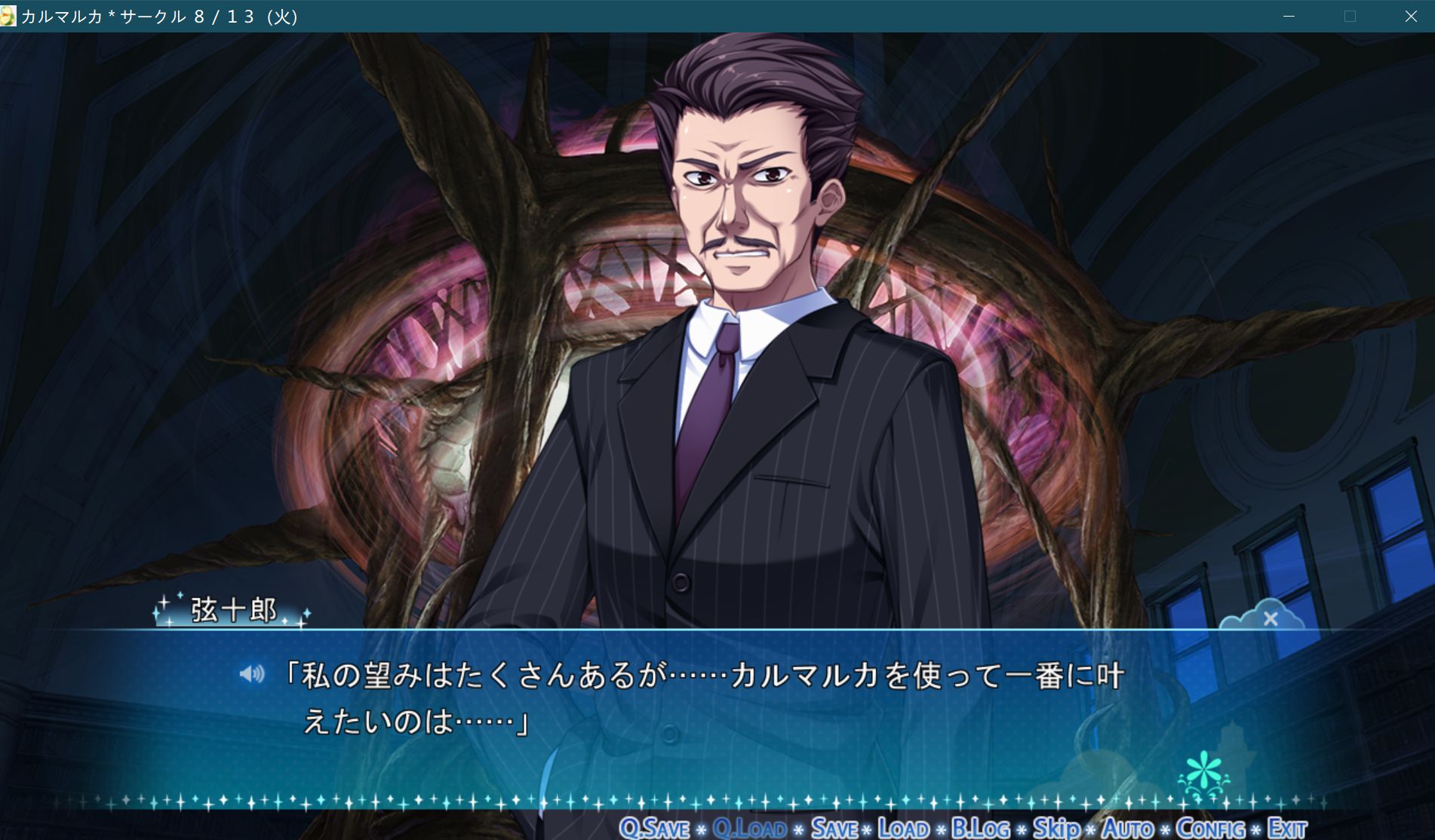
Oh right, the final main route is also painfully long.
That’s just how it goes with these multi-scenario patchwork games that lack a central spine. Karumaruka * Circle (カルマルカサークル) isn’t the first to do it, either — Kisaragi GOLD★STAR was the same way. Weirdly stitched together, weirdly concluded.
I’ve always felt that if a visual novel’s story is going to be good, the “scenario writer, planner, producer” have to be a trinity—kind of like a “dictatorship” production model. The game is built around its story, after all, and only the person telling it understands what he’s actually going for. Spread the work too thin and all you get is sloppy assembly-line output.
Think about it — every one of those “masterpieces” people hype up, isn’t it always the ones where “the scenario writer had the final say”?
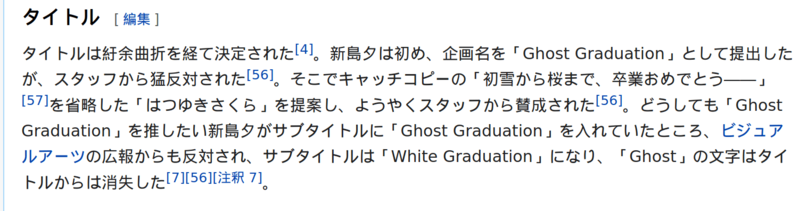
SAGA PLANETS has always struck me as the poster child for “stodgy.” Their games are so often stuck in their ways, scared stiff of offending the otaku — as if “pandering to otaku” alone is enough to move units. Everyone at the company is also incredibly careful with anything that could be read as a negative word, so careful it’s like they’re under heavy censorship. Here’s a picture so you can get a feel for it:
All in all, Karumaruka * Circle is a game that’s little more than a product of throwing money at something, and money can’t buy you a setting or a story. Pandering to otaku doesn’t get you the results you were hoping for either — what you end up with is just something mediocre.
Oh right, the Wiki also has something to say about Karumaruka * Circle’s reception:
According to Furu, the representative of SAGA PLANETS, more than 2,000 impressions were sent in after the release of *Karumaruka * Circle. Furu said that while many of the impressions were positive about the art, others said they wanted the scenario to try a little harder or wanted to be able to pursue the sub-heroines.
See? You listen to the nerd, and the nerd doesn’t even appreciate it.
And the last one, wishing there were lewd art of every single character, is too real. Otaku talk a big game about “I want a route for this character!”, but what they’re actually thinking is just “I want porn of this character.”
So remember this: don’t let an otaku teach you how to make a game. All you need to do is tell the story you want to tell to an otaku.
This one sat in my drafts for over a year and is finally out (there are still two more I have no idea when I’ll get around to posting). It’s 2020 now, and I’m not sure just how “youthful” SAGA PLANETS’ 2020 assembly-line release actually ended up being. Still, at least the planner was involved in the script writing this time, so it shouldn’t be too bad — same deal as with Alcot’s games.
Comments are hosted on the Chinese main site. This mirror is read-only.