Deigracia no Rashinban (デイグラシアの羅針盤) Review
Dayglacia no Rashinban
Dayglacia no Rashinban (デイグラシアの羅針盤) is a doujin game by the circle Catalyst, first released around 2015. In December 2018 it got a graphical upgrade, an OP2, and a port to Nintendo Switch.
Why did I play this?
Because I saw it hyped up in its promo material as being mentioned in the same breath as the famous Ever17. The dev team themselves said it’s not a “spiritual sequel to Ever17,” just “a fan letter to Ever17” — mostly a tribute. There aren’t many reviews of it online, and most of what’s out there isn’t negative. It was only 500 yen on the eShop, so I downloaded it.
So how is it?
Short version: not great. Like most chuuni-era scenario writers, the author of Dayglacia no Rashinban is mostly flexing how much he knows. The setup is basically Ever17, but the story unfolds completely differently. You can see Ever17’s shadow in a lot of the atmosphere, but the narration and the “buried trick” stuff are on a totally different level from Ever17. If you want that Ever17-style “descriptive trick,” this game isn’t for you. If you want “science and pseudoscience” and “a bunch of chuuni teens alternately brooding and getting hyped while lecturing each other,” then sure, this might do it.
What’s the story about?
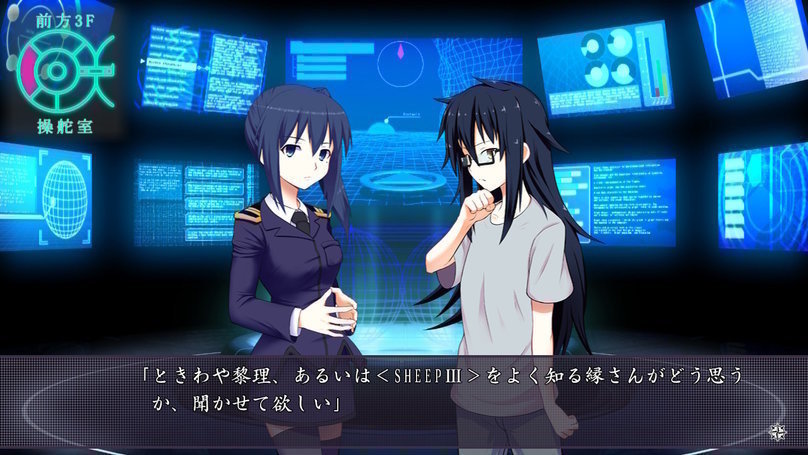
The protagonist joins the maiden voyage of a huge submarine called SHEEP III. It’s a sightseeing trip, but something goes wrong during the dive: the front half of the sub floods completely and the vessel is wrecked. There were 50 tourists aboard; most of them died in the front observation deck, while the protagonist and a few others happened to be in the rear compartment and survived. But the sub keeps sinking out of control. Eventually the protagonist and the remaining survivors are trapped with the sub below 700 m, with no idea how to get out.
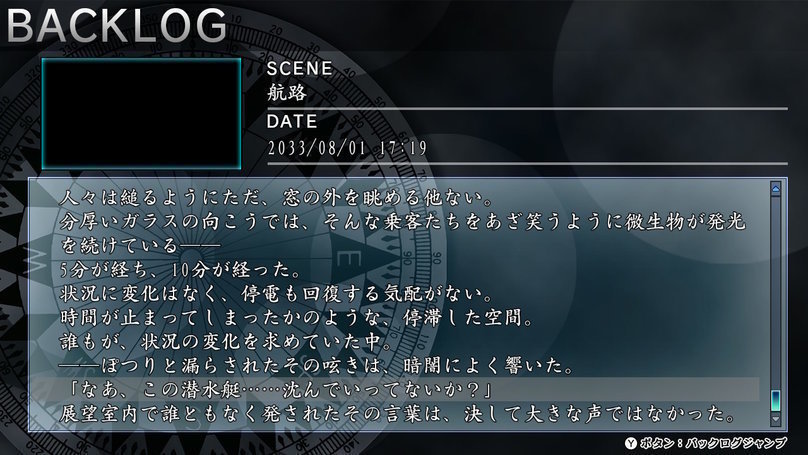
In the end the protagonist pulls off a series of efforts, blows the sub open, separates the flooded front section, and the rear section has enough buoyancy on its own to rise. The group finally escapes.
That story sounds way too simple. There’s no way the game is just that, right?
Right. What I described is only the main line. Dayglacia no Rashinban is way longer than you’d think. The protagonist joined the dive because he wanted to see the sister who died in an accident while working for the submarine company. His sister had been on the previous sub, SHEEP II, and also died in a deep-sea accident. The company covered it up and gave the protagonist some conveniences hoping to shut him up.
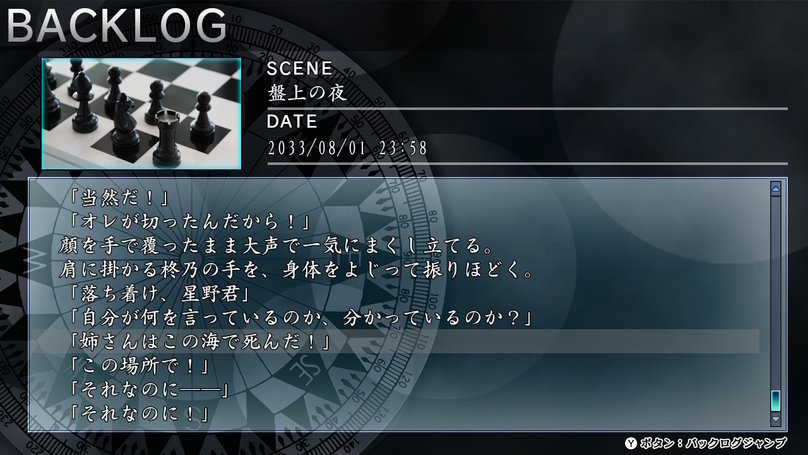
By the way, the protagonist is a programmer. SHEEP III’s dive is fully automated, and he tampered with the dive program to point it at the deep sea where his sister disappeared, just to come here and see if there was any trace of her…
So the SHEEP III accident was caused by the protagonist?
You could say that. This is also the first secret revealed around the middle of the game.
What other secrets does the game have?
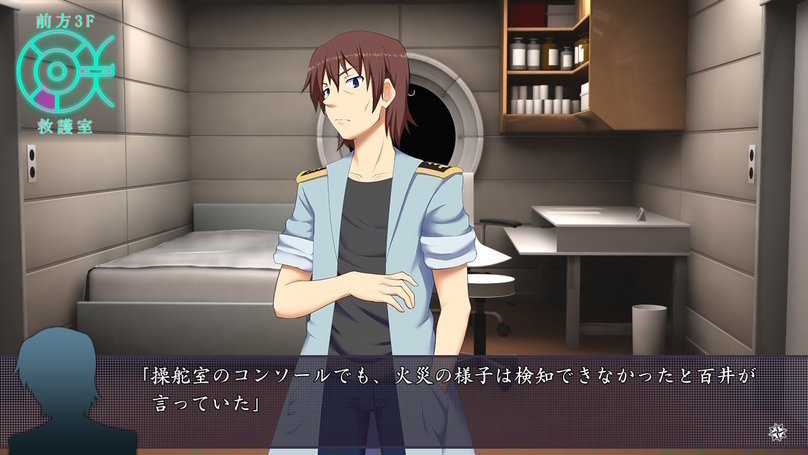
There’s a heroine named Nishikata Tokiwa, called a genius girl in-game. This so-called genius girl tells you later that the sea area where SHEEP III dives was actually zoned off. Nishikata Tokiwa was involved in a series of renewable energy studies, and to support her research the area was isolated with ozone. The sub’s uncontrolled sinking is connected to that ozone barrier. The protagonist altered the route, hit the barrier, caused a gas explosion, and that’s the accident. https://plumz.me

So why isolate that sea area?
Because during the protagonist’s sister’s earlier dives, they found strange organisms on the seafloor. These organisms emit light, invade bodies, control them, possess people, and cause mutations.
Like the T-virus from Resident Evil?
Similar, but not the same. The things on the seafloor aren’t a “virus” but “organisms.” The scientists secretly call them COOA or something (I’ll just call them COOA here). They’re like “ancient organisms.” The SHEEP submarine dives are a cover too — the tourist dives are just an excuse to let the scientists aboard observe this isolated seafloor and see what those weird organisms are up to.

So this is an underwater Resident Evil or Alien?
Pretty much. The game has three endings. In the first two, the protagonist and a few people are trapped on the seafloor. Then, as the weird COOA organisms show up, the people on the sub start going crazy, even killing each other, and only the protagonist and the captain survive. They hid and held out until the rescue team came.
The game starts with 50 people and only 2 survive?
I said there are three endings. The first two are “only two survive.” The final True End is “everyone is saved.”
In the True End, none of the 50 die?
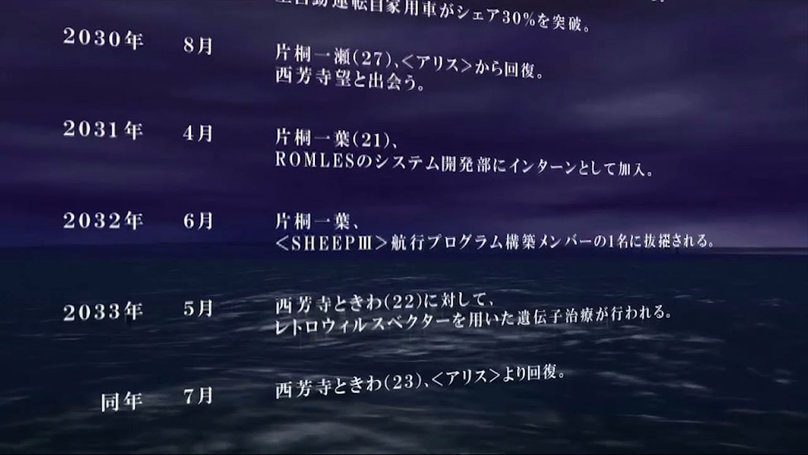
No, no. Most of them died when the front half flooded; by the time the story starts, only the protagonist and a few main characters are left. Even in the True End, only those “remaining main characters” get salvation.
So the game has a route lock?
Yes, and it might be the most creative route lock I’ve seen. At the start the game asks you to input the protagonist’s name. I set him as “Hoshino Fubuki,” and everyone called me “Hoshino-san.” But midway through, the protagonist admits he altered the submarine’s route and caused the accident, and also admits he used a fake name. His real name is “Katagiri Kazuha.” At that point the name you entered at the start is discarded. The protagonist reclaims his name. On this route, he eventually faces a choice to save one of two people, but no matter who you pick, the result doesn’t change: everyone else dies and only he and the captain survive.
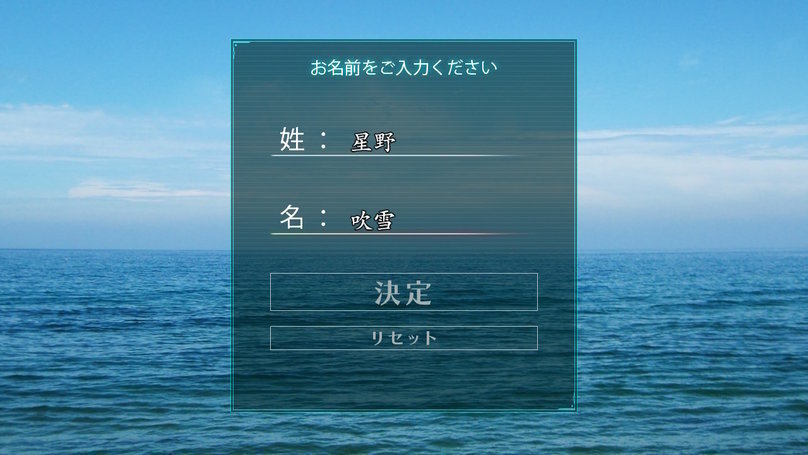
The way into the True End is unusual. When the game asks for your name at the start, you don’t customize it — you enter the protagonist’s real name, “Katagiri Kazuha.” Then in-game the protagonist doesn’t hide his name, the middle revelation scene is gone, the game’s history changes, and he ends up saving all six remaining survivors.
So the True End is hidden in the character name entry? That’s cool. So where does this game actually pay tribute to Ever17?
I think it pays tribute in quite a few places: the protagonist and company trapped underwater, a heroine who mysteriously disappears, surviving underwater — the environments and atmosphere are exactly Ever17. But overall the game also learns from Ever17 and Remember11 in the details, including the True End. The game doesn’t tell you which is the True End; it just presents a “what if” — what if you used the real name from the start, what if you saved so-and-so, how would history change, etc.
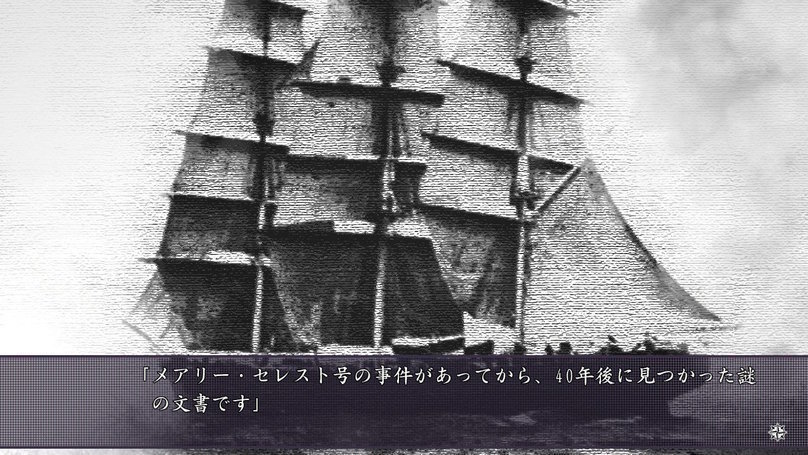
There’s even a scene where the protagonist talks with a white-clad captain in a white room. The protagonist seems to be experiencing the story in a “virtual reality”-like way, and each of the three endings has a “simulated reality” possibility. Which one is real and which is the protagonist’s “IF” is probably something only the author knows.
Sounds deep, the way you put it.
You could say that. The daily-life parts of Dayglacia no Rashinban are packed with “look how much I know” content: the mysteries of Bermuda, solar flares, the origin of deep-sea life, little physics facts about pressure and water pressure. If you’re the type to look each one up, you might learn a lot. That’s why a lot of Japanese players call it a “考察ゲー” (speculation game). But none of it has anything to do with the main plot, and that’s the game’s biggest failure.
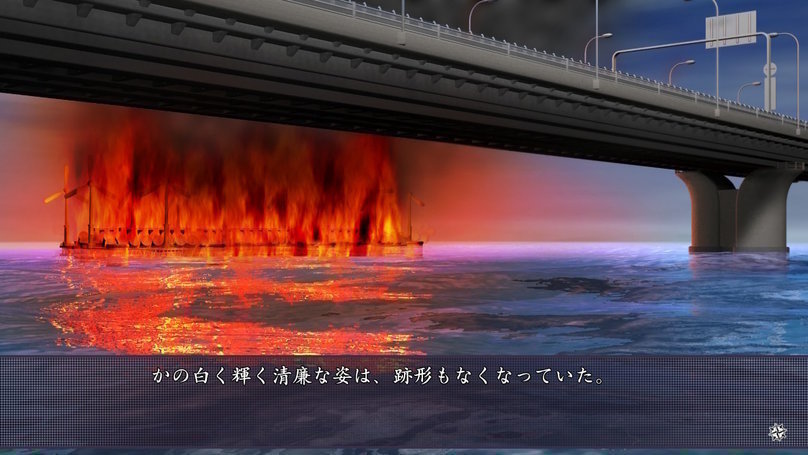
So the game is full of cool-sounding stuff, but the main line is just “trapped underwater, then saved”?
Yes. The pacing is painfully slow. After they get trapped, there’s a long stretch of stalling and flexing, and then when the author feels enough time has passed, he wraps it up fast and the game just ends for no clear reason. The middle has almost no progress; it’s sleep-inducing. When it comes to resolving the mystery, it hoards information and refuses to say anything, which is miserable. The suspense is set up early but not slowly unraveled; tons of circular dialogue bored me to death. Plus it’s a doujin work: almost no CGs, very little BGM, no voice acting — it’s really hard to keep reading. And it’s all-ages, so there’s no fanservice to give you a little jolt either.
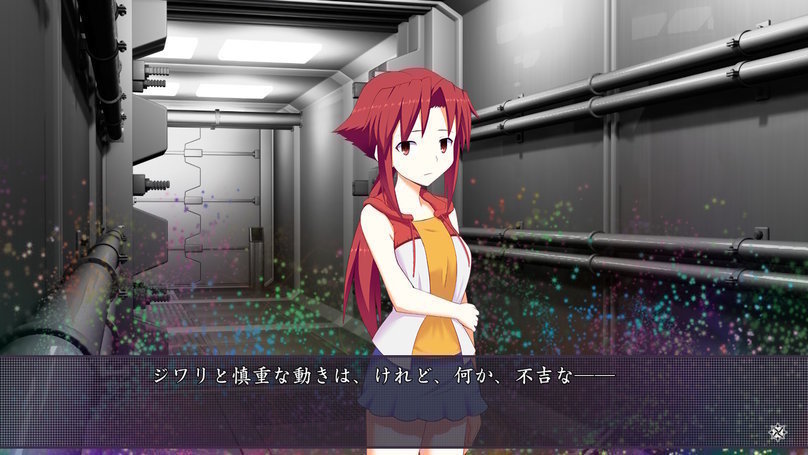
There’s some Extra content, but it’s just one background plus a wall of text. Not exactly compelling.
How do you rate it?
The setup is good, the route lock is creative, and the content is “educational” and worth digging into — but the story itself is very thin. Most of it is chuuni boys and girls talking. It says it’s a tribute to Ever17, but apart from the setup it’s not on the same level as Ever17. A full clear takes 20 hours. For a 500-yen game, that’s more than worth it just to poke around.
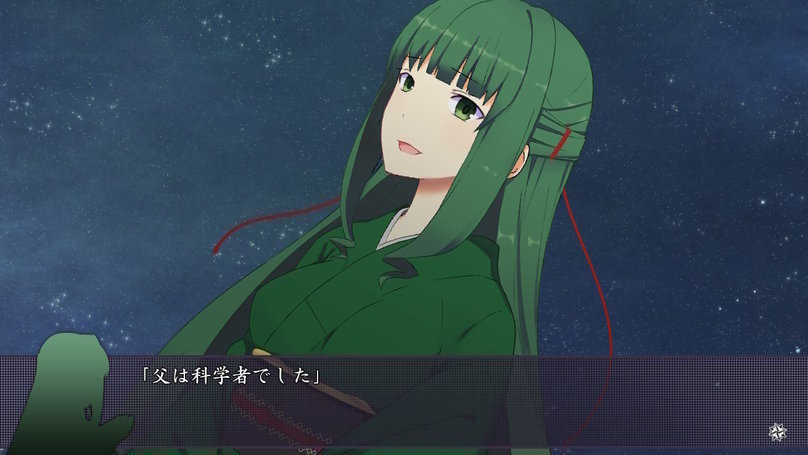
In short: the game has plenty of problems, but as a doujin work for 500 yen with that much content, I can’t complain too much. There are probably plenty of science-minded players who love this kind of flexing; for them it might be worth a try.
Comments are hosted on the Chinese main site. This mirror is read-only.