The game didn't save the anime — the anime saved the game

In Search of the Lost Future (尋找失去的未來) is a visual novel developed by Trumple and released in 2010. Its biggest selling point was the gorgeous art, but the scenario and just about everything else had too many fatal flaws, and Trumple eventually stopped operating — shut down, in plain terms. Companies that put out one title and die aren’t rare, and Trumple is hardly the only one. The game later got a Chinese fan translation, and I’m sure plenty of people have played it — most of them drawn in by the art.

Then In Search of the Lost Future got announced for an anime adaptation… and I was baffled. Why? The company’s already dead. You’re adapting its work — what for? Hoping a sequel sells well enough to summon the company’s ghost back? Or some other reason?

screenshot.178.jpg

Read More

Dehydrating the Veggie Packet in Instant Noodles Is Just Something That Has to Happen

As source material, The Fruit of Grisaia is a goddamn monster of a work. Brutal backstories, psychological detail out the wazoo, and just enough military flavor without turning into a comedy act — it hit me hard the moment I finished the game. The setting has plenty of loose ends, but it’s still leagues better than most of its peers. The characters are well-drawn, and the protagonist is assertive instead of some soft pushover. So when I heard it was getting an anime, I was happy. More people learning about this thing is not a bad outcome.

But The Fruit of Grisaia is, at its core, a visual novel, and VN adaptations run into two problems: reproducing the art, and arranging the story. The first one didn’t worry me once I saw the staff list. Akio Watanabe, the chief animation director, was one of the original artists on The Fruit of Grisaia and worked on the game’s OP animation. He’s drawing his own stuff. How bad can it get? The second is even harder to screw up, because the heroine routes in Grisaia have zero interlocking points and zero conflict — they’re barely related at all. You could just tell them one at a time: finish route one, move to route two, then route three. At most you need an order. Then iQiyi confirmed the anime would be 25 episodes, and I stopped worrying about the story arrangement.

“Each heroine’s route is so long, 25 episodes is plenty to do them justice.”

I was too naive.

选区_851.png

Read More

The End of the Female-Vocal Poison: Phonak PFE122

When it comes to buying earphones and listening to music, I’ve never considered myself an audiophile. I’m just a guy ruined by OCD.

Back in elementary school, I downloaded a song called “Ai Jiu Yi Ge Zi” from Shangdu Info Port at 33.6Kbps. It was only 3MB, 128Kbps as I recall, and at the time I thought the sound quality was absolutely insane.

Then came high school, when I bought Sony’s fragrance-bottle player and downloaded albums from Ukoo.net. 192kbps VBR was already considered good quality. I couldn’t really tell the difference myself, but one time I downloaded a song at 128Kbps, gave it a listen, and noticed something was off.

Later I figured I’d buy a better pair of earphones, so I saved up for a Sennheiser MX500. Put them on and my first thought was that I’d wasted my money:

“This sounds exactly the same as the 10-yuan earphones I had before!”

I saw people online saying these things had “good bass extension,” which I didn’t understand, so I asked my classmate Lu Da. His explanation:

“Ah, that. It’s the sub-bass effect. When it hits it’s not dum-dum-dum, it’s got a bit of reverb and bounce to it, pong-pong-pong.”

I sort of half-understood. Then one day one of the MX500’s drivers died, and I had no choice but to use the pack-in earphones that came with a PDA — maybe slightly better than the 10-yuan ones. Put them on, hit play, and immediately something was wrong.

“Why does this sound so much worse than my MX500?”

That was the start of the tragedy.

Read More

Advertisement

Fixing Excessive Cell Standby Battery Drain on Android 5.0

No idea if this still works. If it doesn’t, or if you’re on Android 7.1.1, check here: https://plumz.me/archives/5167/


Don’t know if the Great Firewall was putting on a show lately or what, but yesterday I noticed my Nexus 6 was just sitting at home and Cell network alone was eating 60% of my battery, way more than Shadowsocks and the screen. Took a closer look and there was always an exclamation mark on the network signal — exclamation mark with Wi-Fi, exclamation mark without Wi-Fi. Everyone knows why the exclamation mark shows up, and I was running Shadowsocks too, even tried connecting straight to a router with a proxy, and it was still there.

Searched Reddit, and the foreigners said excessive cell network drain is related to poor signal quality — which is obviously not normal here. China Unicom’s signal can be shit, but not this shit. The only possibility is that the exclamation mark makes Android unilaterally decide my signal is bad. So the only option was to get rid of that exclamation mark.

After digging around, I found some folk remedy. No idea how it works, but it cured the problem outright.

Read More

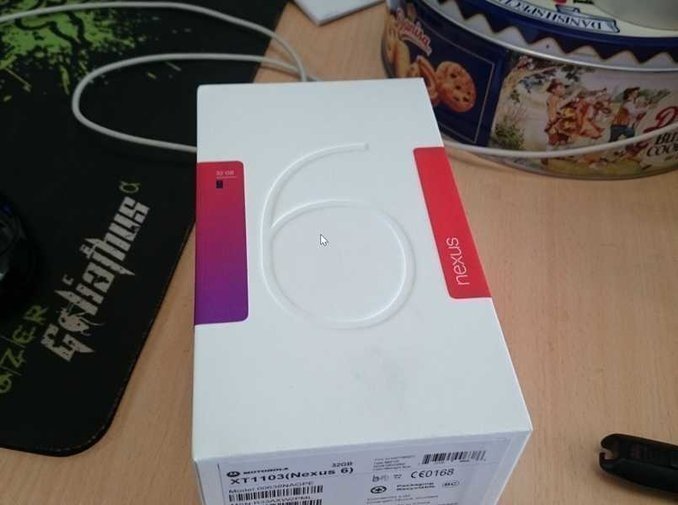
Nexus 6: A Quick Review

The way I bought this Nexus 6 was exactly the same as last time with the Nexus 9 — same channel, and it arrived at pretty much the same time too.

There’s already plenty of info about this phone online, but I’ll still run through it quickly.

screenshot.132.jpg

Read More

Daitoshokan no Hitsujikai: Poor Specs, Decent Feel

First off, I’m not talking about the game — I already covered that here. This time it’s the anime.

Looking at recent years, visual novel adaptations are pretty much drowning in the flood of light novel and manga adaptations when it comes to late-night anime. Not sure if it’s because most eroge studios don’t have much money, or because eroge sell on the 18+ content rather than the story alone, or maybe… making a good VN adaptation is just that hard.

You can count the VN adaptations that really succeeded on one hand. Most of them end up wrapping up half-assedly, the audience watches casually, and by next season it’s forgotten. It’s not that studios can’t do it — it’s that VN adaptations are brutally hard on a limited budget. Anyone who’s played a visual novel knows the big difference from light novels and manga: branch routes into parallel worlds. And in one heroine’s route, the others basically don’t exist. Every VN has several heroines, each with her own fans, so which route to take and how to arrange them becomes a nightmare. Some games even have routes that conflict with each other. Just weaving every heroine’s story into something coherent is hard enough; making that blended mess logical on top of it is damn near impossible. Story is only part of a game or anime, sure, but it’s the core — no amount of pretty production saves a garbage script, and that’s exactly the wall VN adaptations hit right now.

So to dodge the shipping wars, the writers go all out and stretch the common route in the anime longer, longer, and longer. You don’t find out who the protagonist ends up with until the final episode, even though in the game they’ve already been banging like rabbits. Some just say screw it and pull time-travel shenanigans, writing multiple world lines so the protagonist gets a turn with every heroine. Oh, and right — VN adaptations can’t actually show the deed. Ecchi teasing is the absolute limit. A nukige without the H is like a man without his dick: zero combat power. So season after season, VN adaptations drop dead at the finish line, staring up at all the tea-drinking moe shows ahead of them.

So… when we heard Daitoshokan no Hitsujikai was getting an anime, a lot of people were wondering how it was going to die.

选区_836.png

Read More

Mayoeru Futari to Sekai no Subete (迷える2人とセカイのすべて) Review

Mayoi no Futari to Sekai no Subete (迷える2人とセカイのすべて) is LASS’s 2014 release. From the moment the July release date was announced, it slipped, slipped, slipped, slipped, and slipped again, until it finally landed at the end of October.

Why was I paying attention? Because I’m a total LASS fanboy. Not because of Kiritani Hana.

The game’s length isn’t long, and it isn’t short either. After finishing it, my feelings about LASS got a whole lot more complicated.

Honestly, I’ve eaten my share of shit playing visual novels, but this time it was LASS’s shit, and to show off my fanboy credentials I went and actively sought out shit to stuff in my mouth…

So damn depressing!!

screenshot.435.jpg

Read More

VSD1S: A Victory in Tuning

Honestly, I’d heard of Vsonic’s earphones but never actually listened to one. The reason was pretty childish — their boss is always flexing on Weibo, which felt a bit chuuni, so I couldn’t be bothered. But things always turn around. For instance, someone recently gave me a VSD1S.

selection_802.png

Read More

Shoujo Shin'iki ∽ Shoujo Tengoku (少女神域∽少女天獄) Review

If I’m a fan of any visual novel studio, it’s probably LASS.

I can’t forget the shock 11eyes gave me right after graduating college, when I spent half a year clearing it on PSP. Honestly, 11eyes isn’t perfect story-wise—the beginning literally put me to sleep—but its combat scenes and environmental worldbuilding struck a chord. Especially the finale: the Red Night going berserk, the swordsman duel, the scumbag protagonist going full cheat mode while the OST track Eye of the Void plays—it all hit in one continuous rush. Thanks to my fondness for 11eyes, the 11eyes anime remains the worst visual novel adaptation in my personal ranking to this day. I’ve played plenty of games since, but few recapture that feeling. From that moment on, I guess I became a LASS fanboy. I went back and filled in most of LASS’s catalog (except the Nanako series…), and I kept an eye on their future releases.

Shoujo Shin’iki ∽ Shoujo Tengoku (少女神域∽少女天獄) was LASS’s first game in four years after 11eyes sold like hotcakes. Before release, 11eyes’s reputation and popularity drew a lot of attention, but after launch, the reception was wildly different from expectations.

“The biggest landmine of 2013.”

That’s the most widely accepted take. Shoujo Shin’iki ∽ Shoujo Tengoku became Shoujo Tenrai. I didn’t want to believe it, so there was only one way to find out if it was really a landmine: play it myself.

screenshot.37.jpg

So I cleared it pretty quickly. The game isn’t long. To be slightly objective: it’s not a landmine, but it’s not a success either.

Read More

Advertisement

Clover Day's Review

The first time I ran into the word “oudou” was in a Chinese film, where it meant “the way of the king.” Later I saw it again in Japanese anime—specifically episode 9 of season 2 of Baka to Test to Shoukanjuu, when the class rep of Class E yells out “oudou Winning Road.” I figured the word probably carries some different nuance over in Japan.

So when director Ei Aoki said before Aldnoah.Zero aired that it would be an “oudou” work, I thought about it and got what “oudou” means—at least when it’s used as a descriptor for a work.

“Oudou” means template-driven. Sounds like a bad word, but it’s genuinely hard to hate. After all, “oudou” is “oudou” because its templates are mostly the stuff the masses love to see. Present what everyone enjoys over and over, and you won’t get much praise, but you’ll definitely never get panned.

So I don’t know if Aldnoah.Zero counts as oudou, but Clover Day’s absolutely deserves to be called an oudou work among visual novels. screenshot.221.jpg

Read More