Cooking: Easy Baked Guoba

A while back we had way too much rice at home, and stir-frying it over and over got old, so I decided to try something new.

I figured, with all that rice lying around, why not make guoba?

So I got to it.

There are generally two ways to turn rice into guoba. One is deep-frying: press the rice into patties, drop them in hot oil, and the result comes out pretty close to the guoba you get in “guoba with squid.” But deep-frying is obviously a hassle and needs a big vat of oil.

So I went with the other lazy method.

photo_2021-09-16_16-38-08.jpg

Read More

Asagao wa Yoru o Shiranai (アサガオは夜を識らない) Review

I thought about opening with a look at how this new MELLOW studio connects to the old MME, but the more I turned it over the more pointless it seemed. MME is dead. Better to just talk about the game.

The game comes from “Tareka,” the most shitpost-happy scenario writer MME ever had — the one who’d casually write orgies and compensated dating, though every now and then he’d turn out something decent. So even before release, this one reeked of “he’s doing a bit again.”

アサガオは夜を識らない。

The title reads downright literary in Japanese. アサガオ is written 朝顔 in kanji and refers to a purple… trumpet-shaped flower. In English, a morning glory. Literally translated, the title is “The Morning Glory Doesn’t Know the Night.” But the game reads 夜 as あい — the character for love, 愛. Which turns the title into “The Morning Glory Doesn’t Know Love.”

Conveniently, the heroine is also named Asagao, so the pun lands: on paper it’s “the morning glory doesn’t know the night,” in practice it’s “the heroine doesn’t know love.”

From the very first promo, the game kept insisting: this is a true “pure love” story.

screenshot.35.jpg

Anyone with experience knows what it means when a writer keeps hammering on “pure love.” Didn’t Gen Urobuchi call himself the “warrior of love” while claiming he was writing pure love too?

Looking at the key art — the heroine cradling a bleeding rabbit — I steeled myself, felt a flicker of anticipation, and opened the game.

Which, as it turned out, was the start of my disappointment.

Read More

Hajilove -Making*Lovers- (ハジラブ -Making*Lovers-) Review

Making*Lovers is an older SMEE game, and it got a lot of praise. Lots of reasons, but mainly:

  • Great music
  • Funny skits
  • Cute characters
  • Sweet romance

Don’t know about everyone else, but those four are why I loved it. Then SMEE went off and did some messy isekai stuff, finally realized they should get back to basics, and put out this new game. Probably on a tight budget, because it’s wearing the skin of the previous work — same title, Making*Lovers — but to me these two games are fundamentally different.

screenshot.142.jpg

Read More

Advertisement

Xiaomi Car Charger

I’ve been using some rebranded Philips charger in my car all this time — I’ve mentioned it before, and it doubles as a mount so you can glance at navigation. I bought it back then because it was one of the few products that could charge wirelessly. But after all these years, a few things about it have gotten genuinely annoying.

  • The suction cup doesn’t hold well. When it gets too hot, it falls off. At least 4-5 times over the years — rare, sure, but having it drop while you’re driving is pretty nasty.
  • It blocks your view. A big lump like that sitting in the middle does get in the way sometimes.
  • Wireless charging power is too low. After I retired my OnePlus 5 for a Pixel 3XL, this thing couldn’t even charge it — it would actually drain the battery.
  • Besides not charging fast enough, the Pixel 3XL would also disable LTE data from overheating. I’m using this for navigation, damn it — no data, no navigation. Why does it overheat? Because the thing sits dead center. Fine in winter, broken in summer.

Anyway, it’s been several years. Time to replace it.

Read More

Parquet Review

Back at the start of the year, someone told me Yuzusoft was putting out a new title this year.

Sure enough, it dropped a while ago — except nobody saw it coming that it would be an all-ages release. Yuzusoft launched a sub-brand called Yuzusoft Sour, i.e. “Sour Yuzusoft.” Which is a bit of a redundant name, honestly — yuzu is already sour…

And the important part: the game itself, Parquet.

Most Yuzusoft fans instantly lost their minds when they saw the new title was “all-ages,” but I’m fine with it. Yuzusoft can tell a decent story — Senren Banka alone proves that much. If they drop the low-effort “horny” and “fanservice” angle and go story-driven, that’s not automatically a bad idea. If the writing and direction are strong, this could be a good moment to pivot…

“If the writing and direction are strong,” though…

So is this game actually any good?

screenshot.324.jpg

Read More

Renai x Royale Mari & Shion & Aoi Mini After Story (恋愛×ロワイアル まり&汐音&蒼 ミニアフターストーリー) Review

Not sure if it’s the pandemic or what, but the number of visual novel releases has dropped off a cliff this year, and a lot of veteran studios seem to have slowly lost their original passion for the craft. Take HOOKSOFT for example—they and SMEE have planned a pile of new titles this year, but… those titles are hard to describe in polite company.

For instance, Hook’s “Yubisaki” is basically an SMEE game, and SMEE’s new title feels more like a Moonstone Cherry game. But both of those games (including the Hook one that isn’t out yet) have nearly identical promotional styles, down to the website intros. Put it bluntly: these three games are “obviously off the same assembly line.”

I’ve been shitting on assembly-line products ever since I first trashed Yuzusoft’s stuff years ago. Sure, an assembly line boosts efficiency, cuts costs, speeds up production, and raises profits. But games aren’t cold commodity goods—they’re vessels for narrative and, to some extent, culture. Churning that kind of thing out on a production line lowers costs, speeds things up, and maybe increases revenue, but the games themselves naturally become boring as hell.

Read More

Madohi Shiroki no Kamikakushi (まどひ白きの神隠し) Review

There’s this stock setup you see all the time in Japanese anime and games: the protagonist has no known origin, gets treated like a freak and pushed around, and then it turns out he’s actually some kind of savior. Of course Japanese works rarely say “savior” — nine times out of ten they call him a kamisama. Honestly, back when I first started consuming this stuff, hearing “kamisama” still commanded some respect from me. A god, right? Omniscient, omnipotent. Obviously possessed of a towering intellect, ample charisma, and virtues we mere mortals could never hope to reach — the kind of being who can look down on us and address us as “mortals,” bellow Die Mortal! and take a deep, smoldering breath.

But then I noticed how utterly saturated anime and games are with kamisama, and I finally wised up: the so-called “god” in Japan is about as valuable as a shared bike. Shrines dedicated to them are, by the Japanese’s own snark, as commonplace as public toilets (and in reality Japanese public toilets are not fucking commonplace at all — half the time I can only find one in a subway station). As for the “gods” set up in these stories, you don’t need to take them seriously at all. Most gods in anime and games are more useless than ordinary people.

And so along comes yet another game waving the “god” banner, from everyone’s old acquaintance Lump of Sugar.

screenshot.57.jpg

Read More

Happy Live Show Up! (ハッピーライヴ ショウアップ!) Review

FAVORITE games generally give off a certain impression: artsy, fantastical, and long-winded. Especially that one they put out before, Sakura, Moyu. I wouldn’t go so far as to call it “nothing but filler,” but saying it’s “long and stinky” seems fair enough. The prose itself isn’t really the problem — it’s that there’s way too much of that “Japanese-style” circular beating around the bush. Sometimes you’ll be seriously following a two-person conversation for half an hour with zero story progress, and sleepiness hits you fast. Older FAVORITE games had this trait too, but nowhere near this bad, which is exactly why I could get through the Irotoridori no Sekai and AstralAir no Shiroki Towa series but have never been able to finish Sakura, Moyu.

And FAVORITE as a company gives off this really mysterious vibe — their release pace is absurdly slow. But later I figured it out: they’ve got a “sub-label” under them called ωstar. As for what “masterpieces” ωstar has put out, well, if you know, you know. Considering the popularity and sales of those “masterpieces,” FAVORITE’s revenue probably isn’t doing too badly — at the very least, they’re a long way from going under.

But clearly FAVORITE wasn’t content to just sit back and live off past glories. They wanted to expand further. In 2021, they quietly ditched the old logo they’d used for years and swapped in a more direct new trademark, tacking an even more direct slogan underneath it: The Next Generation. At the same time, they announced a new title: ハッピーライヴ ショウアップ! This new game left a lot of traditional “F-company” fans confused. Tsukasa wasn’t the main artist anymore, and both the scenario and planning no longer had Yukito Ushihara involved. The setting and story synopsis also looked “pretty ordinary” no matter how you sliced it — just a bunch of girls wanting to put on a show on stage.

A change like this is going to disappoint a lot of old fans, but it also makes plenty of people curious: will the new-generation-focused FAVORITE really go mid just like that?

screenshot.331.jpg

Read More

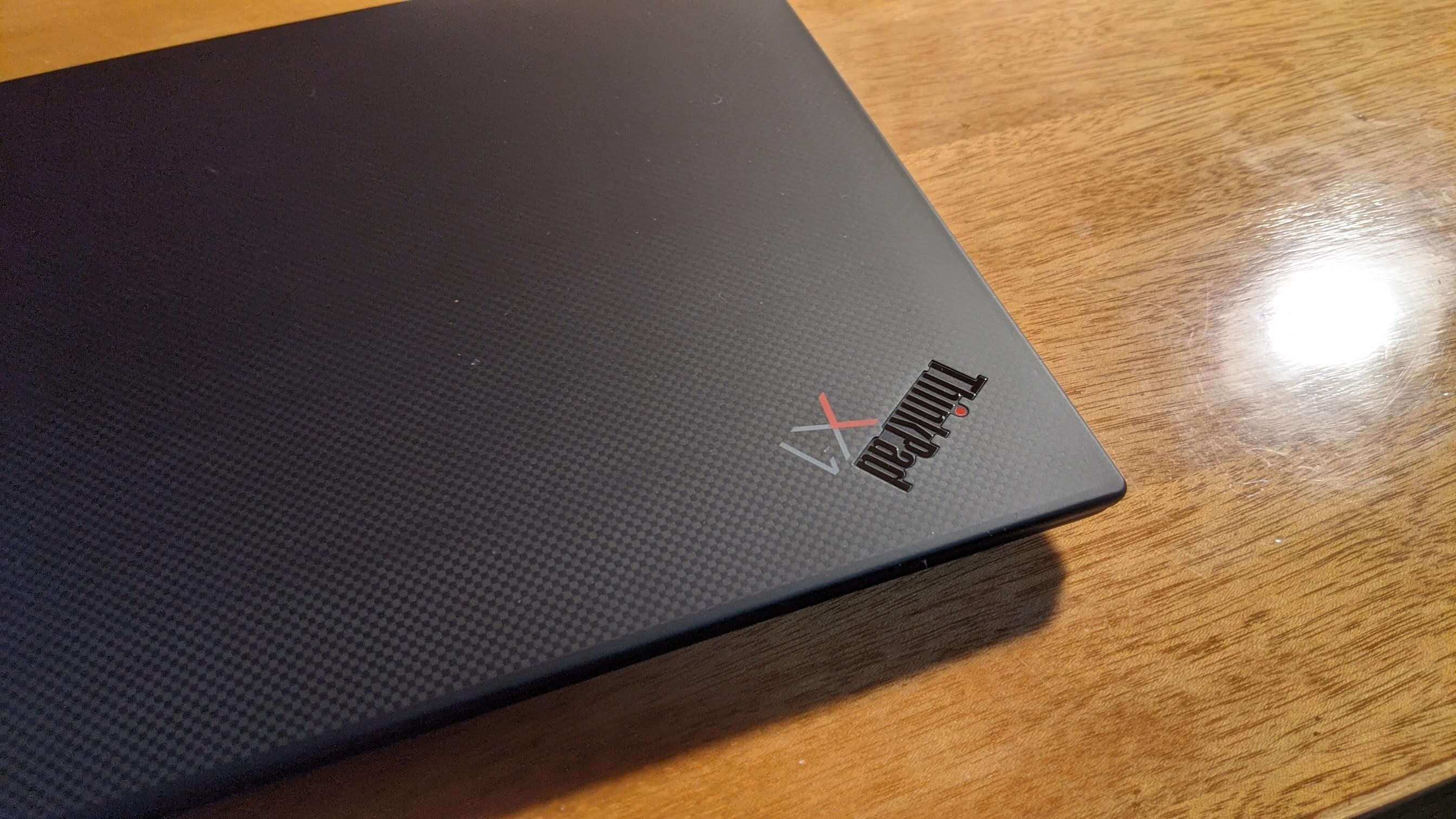
ThinkPad X1 Carbon 9th

My old laptop was gone, so I decided to buy a new one. And since I was buying new, I figured I’d stick with the X1 Carbon line—especially since around Chinese New Year there were rumors that this generation would bring a ton of great changes. Sure enough, right around the holiday, the ThinkPad X1 Carbon 9th was officially announced: a brand-new 4K screen, a new 16:10 aspect ratio, better speakers, a bigger battery, a beefier Iris integrated GPU, and a shorter key travel. Overall it still looked way better than the old versions—at the very least, that screen alone was worth bragging about. So I decided to go for it.

PXL_20210428_112916837.jpg

Read More

Advertisement

Amairo Chocolate 2 (あまいろショコラータ 2) Review

A lot of visual novels try to stir up buzz by making themselves “contrasty,” though this kind of contrast isn’t the same as what an Osaka black shark otaku sees on Twitter — close enough, though. Basically: some games look like moe-bait on the surface but are secretly pitch black inside, while others look like an empty nukige but end up preaching some profound truth…

This game isn’t just superficially “contrasty,” but it’s contrasty enough.

I’m talking about Amairo Chocolata 2 (あまいろショコラータ 2). The previous game even got a Chinese release on Steam under the name 巧克甜恋 — so the Chinese name for this one should probably be 巧克甜恋 2, right? But I haven’t seen any news about a Chinese localization for this one.

screenshot.110.jpg

Read More