Loopers Review

Lately Key seems to have lost its mind, suddenly dropping a bunch of projects, mostly short and quick little pieces. And the weird thing is, Jun Maeda — Key’s star player — is nowhere to be seen. After his latest anime blew up in his face, maybe his ass really did split in half and he retired for good. Either way, this is a good thing for Key. I’ve been sick of Maeda for a while now. Every story he writes follows the exact same pattern: set up something super compelling, some really interesting premise, then once the premise is laid out he starts padding the daily-life scenes, and finally he realizes he’s running out of time and can’t hold it together, so he slams the accelerator on a roller-coaster super-twist, wraps it up in a hurry, and leaves the Key fans who watched it shit the bed screaming impotently into the void. Anyone who’s seen Angel Beats and Charlotte knows exactly what I’m talking about.

Good news is, none of Key’s recent projects have that dumbass Maeda in them~ Fantastic. This month they even released the first one, and I was instantly hyped. It’s called Loopers, and the scenario is by Ryukishi07. I don’t particularly like Ryukishi either, but hey, better than that dumbass Maeda! Plus the artist for this game is seriously good, so I dove right in.

And then… after playing it, I’ve got a bone stuck in my throat. I have to talk about this.

screenshot.1.jpg

Read More

Yubisaki Connection (ゆびさきコネクション) Review

Seeing this title, let’s first define what counts as a “failure” according to the usual forum argument rules.

Everyone knows a visual novel goes through a process from “planning” to “production.” You could say the “planning” is the game’s goal and determines its direction.

Following that logic, if the game’s production completely runs counter to the “planning,” or if the game itself never even fulfills the planning’s original goal, then the game can be considered a “failure.”

So today, let’s talk about one such “failed” game.

Read More

Umi to Yuki no Cyan Blue (海と雪のシアンブルー) Review

Visual novel blurbs have gotten seriously dishonest in recent years.

Like, if a game claims it’s “pure love,” watch out. 90% chance it isn’t.

If a game tells you it’s “a very quiet, uneventful story,” be suspicious. It won’t be uneventful.

If a game tells you it’s yuri, there’s a good chance it’ll inform you the heroines are a bunch of guys’ cum dumpsters.

If a game says “Now on sale to great reviews,” it already got shredded.

Today I’m talking about a game that’s honest in every conceivable way. Seriously, in all my years of playing these things, I’ve never seen a game this honest.

Umi to Yuki no Cyan Blue (海と雪のシアンブルー), from CUBE.

screenshot.1.jpg

Read More

Advertisement

Ruri Sakura (琉璃樱) Review

The Japanese love telling stories, and they especially love telling legends. Unlike Chinese legends, which mostly “stick to a certain framework,” a lot of Japanese legends go completely off the rails. This has to do with the Japanese idea of “eight million gods” — everything is a deity, so who isn’t a little kami? On top of that, many Japanese myths have a certain “Buddhist” flavor, mostly built on the idea of reincarnation. They love telling a legend about a god, and the legend also involves reincarnation — no matter how things develop, it always becomes a circle connected end to end, all to create some kind of thought-provoking effect.

But play that trick too many times and it numbs you. At least it numbed me. I usually call this kind of plot “Japanese-style melodrama that refuses to speak like a human being.”

screenshot.408.jpg

Read More

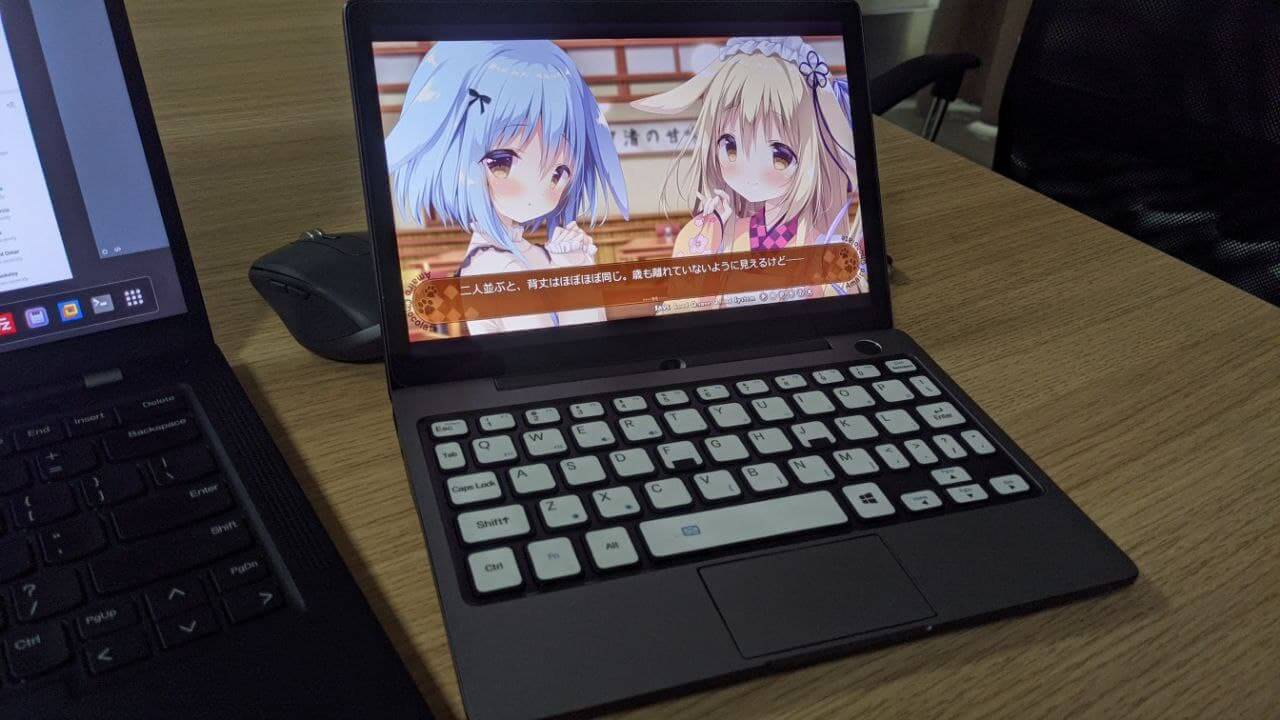
Hands-on: GPD Pocket 2 Max

For the whole of last year my eroge machine was the Chuwi Minibook. It’s got plenty of small problems, but I thought it was fine — good enough for playing games.

Then at the start of this year I lost my laptop bag, and the Chuwi Minibook went with it, so I started thinking about getting a new machine.

My requirements were pretty clear by then:

  • A good screen. The Chuwi Minibook uses PWM dimming, which is a pain over long sessions.
  • Good battery life. A visual novel machine doesn’t need much power, but the battery has to be biiiig.
  • Enough cooling. The Chuwi Minibook got scorching hot when I ran it, and the fan sounded like a plane taking off.
  • Expandable storage, at least NVMe.
  • 16GB of RAM. I like leaving a ton of stuff open in the background.
  • USB-C for docks and charging.

After shopping around, the only thing that fit was the GPD P2 MAX, so I grabbed one on Taobao.

photo_2021-06-02_11-24-27.jpg

Read More

Suteki na Kanojo no Tsukurikata (素敵な彼女の作り方) Review

Everyone knows I like games that pull shitposts. Of course, “I” don’t represent the whole world, so from what I understand, most people who play games — especially visual novels — don’t really like shitpost-y works.

You can see this in the little details. For example, I often see people on some forum, when a new release drops, asking:

“Does this game have any landmines?”

“Is this game pure love?”

Both of these can basically be translated as:

“Is this game just a plain romance routine?”

What I genuinely can’t understand is the “plain romance routine” thing. Ever since the visual novel genre was born, it’s been fixed — at least 20 years now. Is it really necessary to repeat the same story over and over and over again for 20 years?

Recently a game pulled a shitpost again, and a big one at that — so big that even the publisher distanced themselves, and players worldwide were cursing it out… That game is the Chinese-first, Steam-exclusive yuri work:

Suteki na Kanojo no Tsukurikata (素敵な彼女の作り方)

screenshot.373.jpg

Read More

Review: ER4SR

Bought these at the end of last year, when Amazon Global had them on sale for a little over 1200 — the lowest price they’d ever hit, and way cheaper than buying domestically.

I already had a long-serving ER4P, but I still went for these. The biggest reason: the detachable cable. I’m always worried the cable on my ER4P will give out, and as the upgraded model, the ER4SR’s replaceable-cable design is obviously a lot safer.

Surprisingly, the overseas order didn’t get hit with customs, and it arrived safe and sound. The only downside was the long wait for shipping from the US.

photo_2021-05-19_10-17-16.jpg

Read More

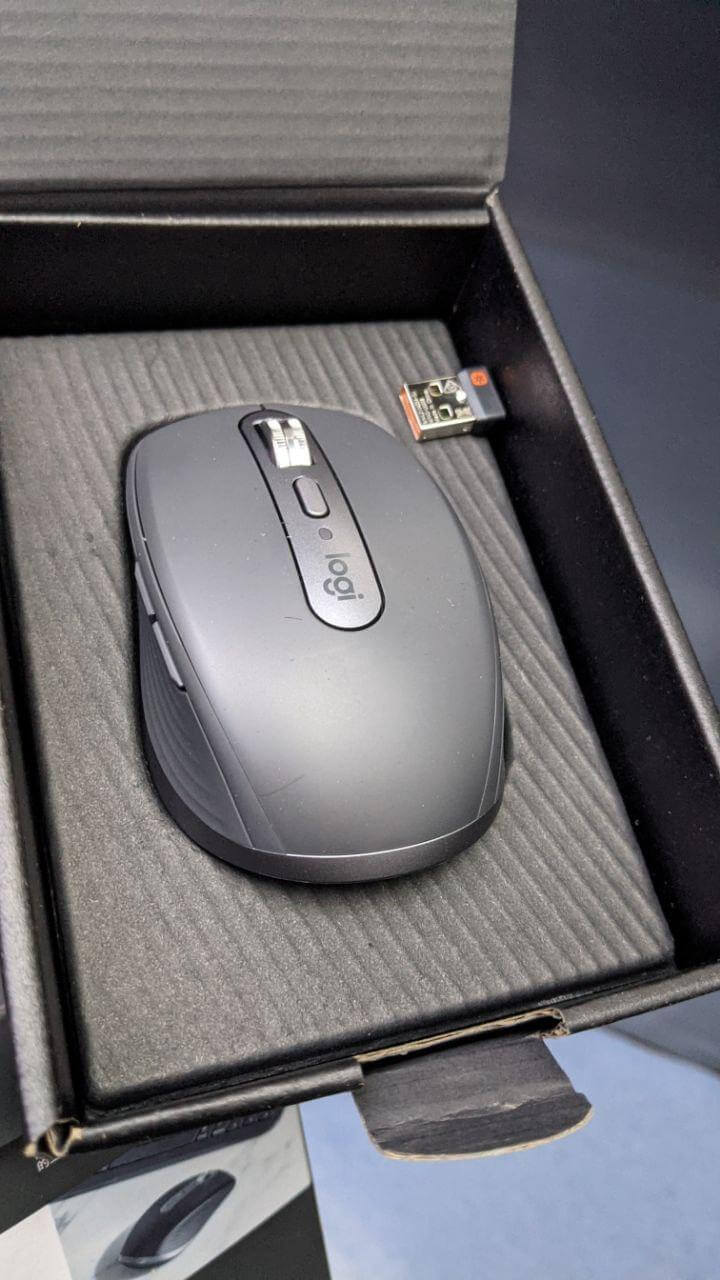
How to Set Up the Logitech Anywhere MX 3 on Linux

I recently bought a Logitech Anywhere MX 3 to go with my new PC, and once it arrived I found out this damn mouse has some changes compared to the previous one:

  • The middle click is now pressing the scroll wheel, not the button behind it
  • The button behind it now toggles the scroll wheel
  • The scroll wheel is still “auto free-spin,” meaning it goes free-spin once you scroll fast enough

Some people like this, some people don’t. I don’t, and I’m really not used to it, so I decided to change it. On Windows you can remap the buttons with software, but on Linux that seems impossible.

Of course, that’s only “seems.” There’s a thing called Logiops that can handle the configuration, and it supports the newer mice too.

https://github.com/PixlOne/logiops

adasd.jpg

Read More

A Few Days with Dell Chromebook 13

Everyone knows my main machine used to be an X1 Carbon 2017. Unfortunately, I lost it earlier this year.

After that, my wife was actually on board with me buying a new one, but the X1 Carbon 2021 was about to launch and the rumors said it was a big upgrade — new 16:10 screen, better GPU and CPU performance. So I decided to wait. But while waiting, I still needed a laptop to get work done.

So I started looking:

  • Performance has to be passable
  • Keyboard has to at least be usable
  • Screen at least 1080p, color gamut can’t be terrible
  • Strong battery life
  • Build quality as good as possible

Read More

Advertisement

Hinata Chihiro wa Shigoto ga Tsuzukanai (日向千尋は仕事が続かない) Review

I.

A while back, my workplace went through a pretty brutal stretch of overtime.

The work itself wasn’t much — just a system upgrade. Once the main system was upgraded, we had to debug the software and interfaces that talk to it. After that, we could go home.

Sounds simple, right? The catch: the main system upgrade had to happen in the middle of the night and took several hours.

The estimate was that the main system would finish upgrading around 2 a.m., and our auxiliary systems could only start testing after 2. By the time we wrapped up, it’d be 3–4 a.m.

The original plan was to upgrade on Saturday, then use Sunday—when fewer people are on the system—to test and fix issues, so everything would be ready for Monday.

That plan fell apart fast. Saturday’s upgrade went terribly.

Read More