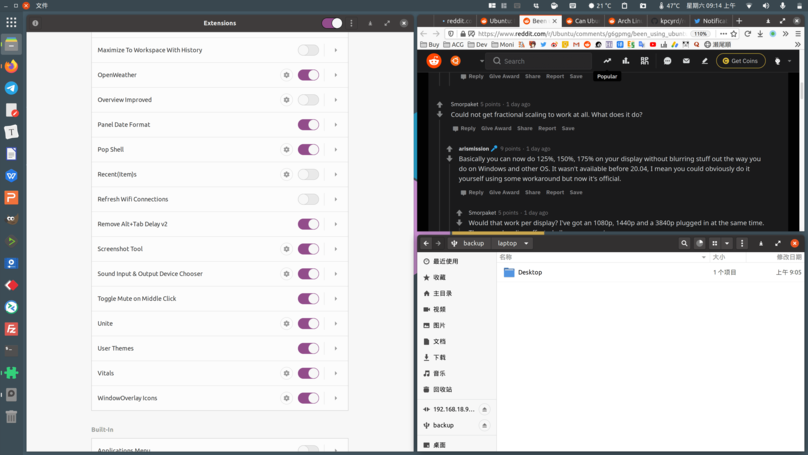
How to Get Fcitx 5 Working on Ubuntu 20.04 Right Now

This article is outdated. For the current method of installing the stable Fcitx5 release on Ubuntu 20.04, go here: /archives/12285/


I went back and forth on whether to put Ubuntu in the title. Decided it was necessary, because right now only Arch Linux (and Debian) have the full Fcitx 5 suite — thanks to nepotism and cold-shoulder vibes respectively — and every single Fcitx 5 install guide online is written for Arch or Debian. All of them copied from each other. Basically zero Ubuntu. I spent a long time poking at Ubuntu’s packages before I noticed Ubuntu 20.04 can already install it.

Read More

ODROID-GO Advance: First Thoughts

The ODROID-GO Advance is the follow-up to that ODROID-GO handheld. Better performance, plus a stick and shoulder buttons. From what I gathered reading various foreign reviews, the performance is supposedly monstrous and it has a huge future ahead of it…

So I bought one. It actually arrived a while ago; I just never had time to put it together, and only recently dug it out and got to work. Recording it here.

photo_2020-05-10_21-52-46.jpg

Read More

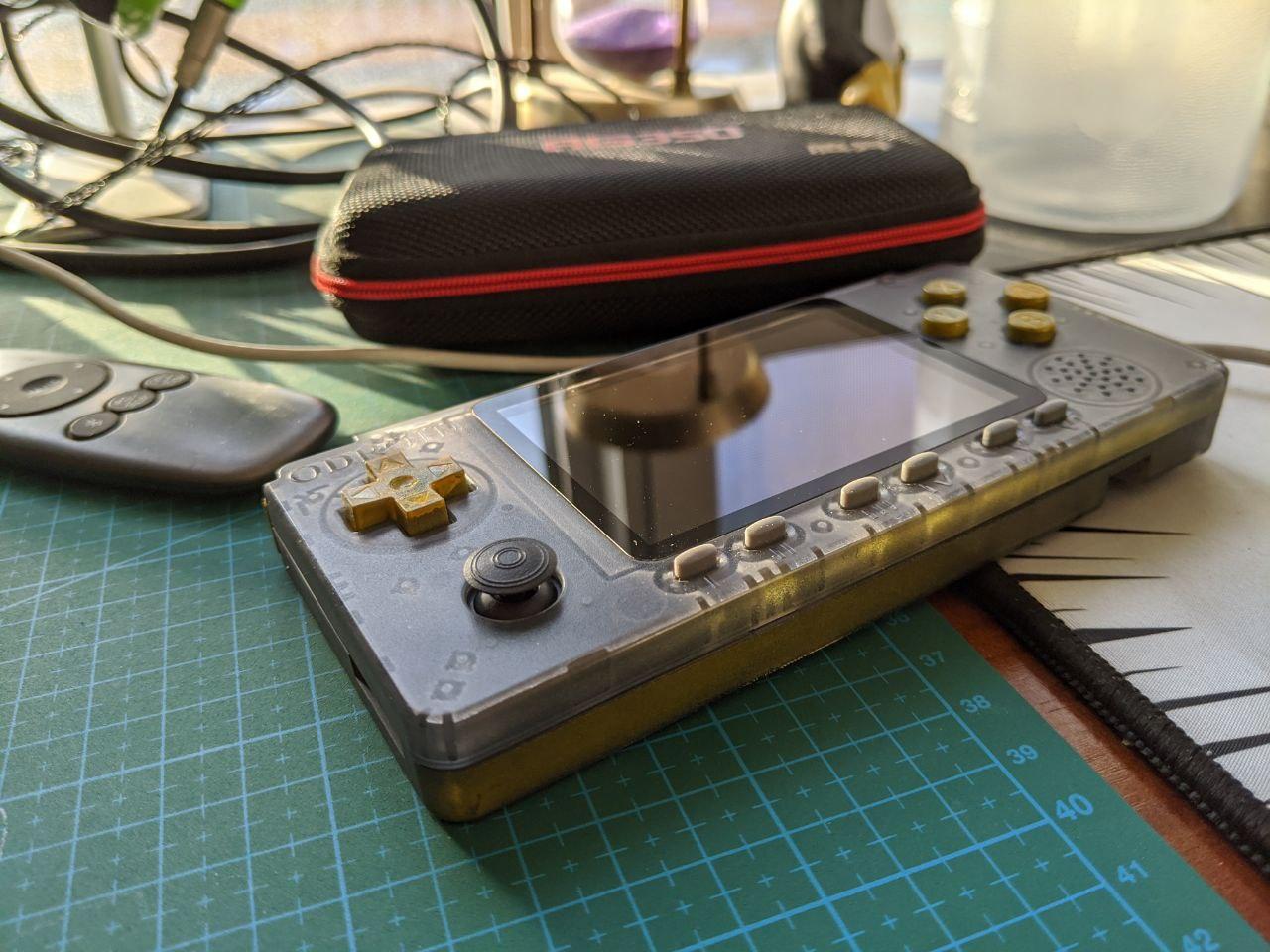
Upgrading the RG350 Firmware (External Card Method)

I’ve had the RG350 for a while now, though I don’t play it all that often — mostly just emulators.

One thing bugs me though: the HDMI output on this handheld has never worked. Officially they said a firmware update would add support, but that firmware never showed up.

Turns out I just wasn’t paying attention, because the firmware has been out since last year.

At first I assumed updating the firmware meant cracking the thing open and pulling out the internal TF card, so I kept putting it off. Today I found out you don’t need to disassemble anything — the external card works fine. So I figured I’d give it a shot.

Read More

Advertisement

Karmalka Circle (カルマルカサークル) Review

Long, long ago, seven people committed a grave sin and were struck by divine punishment.

They came to a small island said to be a place where one could speak with the gods, and there they prayed devoutly to the heavens, begging for forgiveness, begging for their own salvation.

Because their hearts were so devout, the gods above were moved by them, and using their divine power they pardoned the sins of these seven, erasing the crimes they had committed, and the people who had died because of them came back to life.

And because the history of their past crimes had been altered, the seven forgot that they had ever begged the heavens for anything, and went on living happily.

But someone nearby had been watching what these seven did, and that peeping observer wrote down the ritual by which the seven had pleaded with the gods.

This ritual later came to be called “Toki no Shirabe.” Gather seven people, and the ritual could be performed—and you would receive the grace of the gods above, have any wish you desired granted, even change history itself.

In time the ritual was abused by wicked people, causing consequences beyond repair and giving rise to tragedy.

To keep such tragedy from ever happening again, the shrine maidens of the island’s shrine hid away the items needed to perform the ritual, and did everything they could to let the “legend of the seven” fade, wanting this so-called ritual to vanish from the world.

Many years later, people carrying “seven sins” of their own came to this place.

By sheer chance, they were asked to activate a mysterious ritual called “Karumaruka.” Word had it that performing this ritual would erase one’s own sins.

But at the moment the ritual began, they did not choose to erase their sins for their own sake, or even to change history—they chose to stop the ritual forever, and that wish too was accepted by the gods. For they had realized that no matter the past or the future, blindly using the power of the gods to change things was wrong, and that what matters should be held in your own hands.

After that, there was no more “Karumaruka,” and no more “Toki no Shirabe.” The island closest to the gods returned to its quiet.

And so the story of Karumaruka * Circle came to an end.
screenshot460.jpg

Read More

Killing Snap on Ubuntu 20.04

Ubuntu 20.04 is a GNOME distro, running the GNOME 3.26.1 stack, but Canonical always has to do something different. To fight Flatpak they cooked up a thing called Snappy, which these days seems to be called Snap.

I’m not saying Snap is a bad idea. I’m saying Snap as it exists now is bad, and Canonical has gone back to its old tricks:

Force-bundling and pushing it while the ecosystem is immature and the performance and features are both mediocre.

Remember Unity? Late-stage Unity was actually pretty decent, but the early forced push still earned it a mountain of hate.

Read More

Living with Xiaomi Vacuum Cleaner

The place was getting too dusty — the bed and the sofa both had a layer of it — so my wife said we should buy a “mite remover”. I looked into it and, well, a “mite remover” is just a vacuum cleaner with a UV lamp bolted on…

So we might as well buy an actual vacuum. A vacuum isn’t only good for handheld work; you can swap the head and use it on the floor too.

That’s how I ended up with a Xiaomi vacuum. It happened to be on sale — 12 interest-free installments, a 50-yuan coupon, and a free Xiaomi desk lamp thrown in. So I bought it.

photo_2020-05-04_15-48-19.jpg

Read More

Ubuntu 20.04 Setup Notes

Ubuntu 20.04 LTS finally dropped, and I’ve finished upgrading (read: wiped Fedora 32 and reinstalled). Overall this release is well worth using, and the bugs are few. It’s way less of a hassle than previous setups, but there’s still stuff to do. Here’s the rundown.

Screenshot from 2020-05-02 23-08-02.png

Read More

Advertisement