My Favorite Visual Novel of 2019

A lot happened to me in 2019. The most important thing was that I gave my Surface Pro 4 to my wife, which left me with basically no device to keep playing galge on. And the second half of the year was genuinely busy—I abandoned a lot of games, and for some I finished but can’t find the screenshots anymore. But with some recent effort, I’ve slowly written up all my 2019 game impressions, and with yesterday’s final post done, I can finally start this belated game of the year write-up.

So without further ado, here are the works I think are worth recommending.

Read More

Aonatsu Line (アオナツライン) Review

The word “youth” shows up everywhere. But what is it, really?

You see people saying this all the time:

“That TV drama ended, and my youth ended with it.”

“That anime finished, and my youth finished with it.”

“So-and-so got married, and my youth is over.”

If “youth” is just a state you’re in while you’re young, then it ends on its own as you get older. It doesn’t depend on some person, anime, or TV drama.

For different people, “youth” means different things.

Read More

Iai no Shi (慰愛の詩) Review

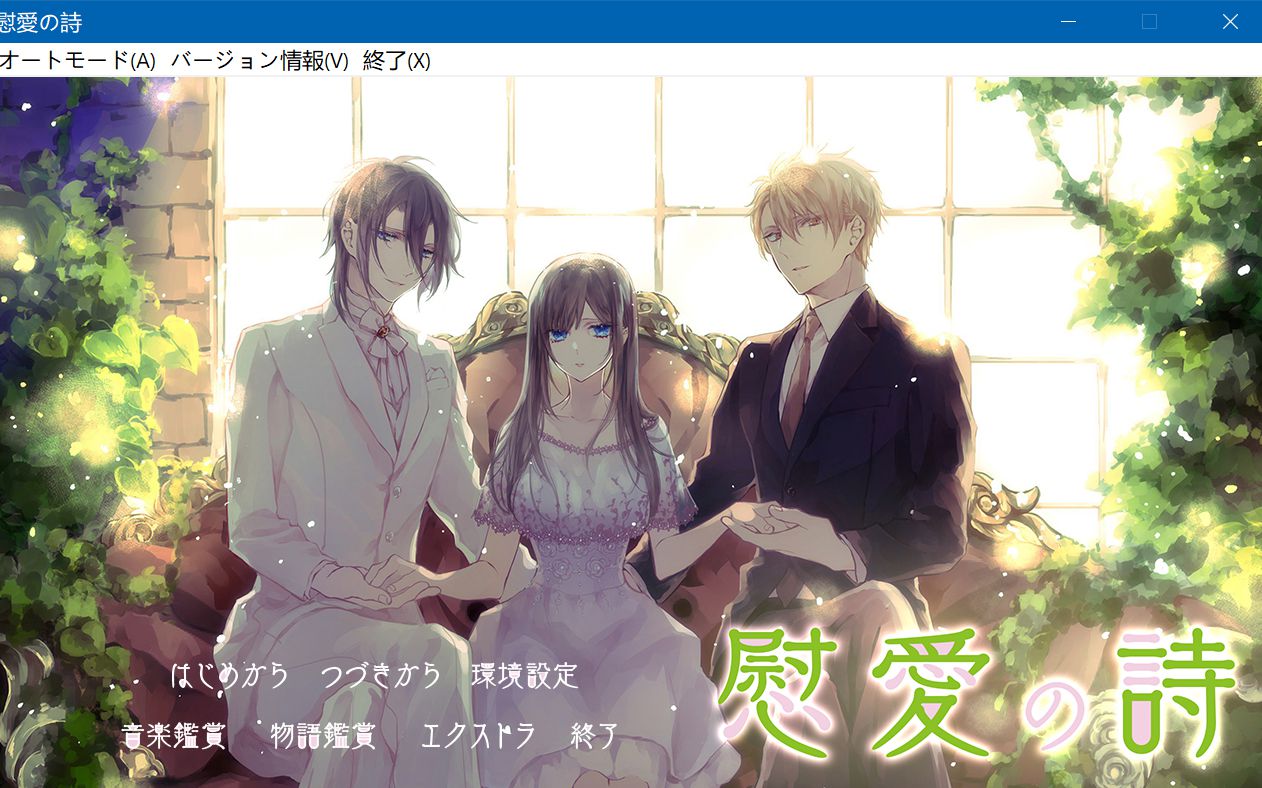
A doujin game caught my eye last year: 慰愛の詩.

The one thing that drew me in: it’s a BL game told from a heroine’s first-person perspective…

And no, I’m not gay. I played it because it’s not just BL — there’s BG in there too.

Putting GL in a BL game sounds like a huge joke, but the joke actually happened, became real, and landed in front of me as a game.

It’s a doujin work, but unusually it has full voice acting. Unfortunately, there are no character sprites.

First, credit where it’s due: the voice acting is spot on, especially the heroine’s portrayal — deep and captivating. The two male leads I couldn’t care less about; they’re serviceable at best. But no sprites really hurts. Maybe they couldn’t find an artist. The backgrounds are just real photos run through Photoshop, so yeah, the budget was clearly tight.

Let’s get into the story.

screenshot80.jpg

Read More

Advertisement

Panical Confusion (パニカル・コンフュージョン) Review

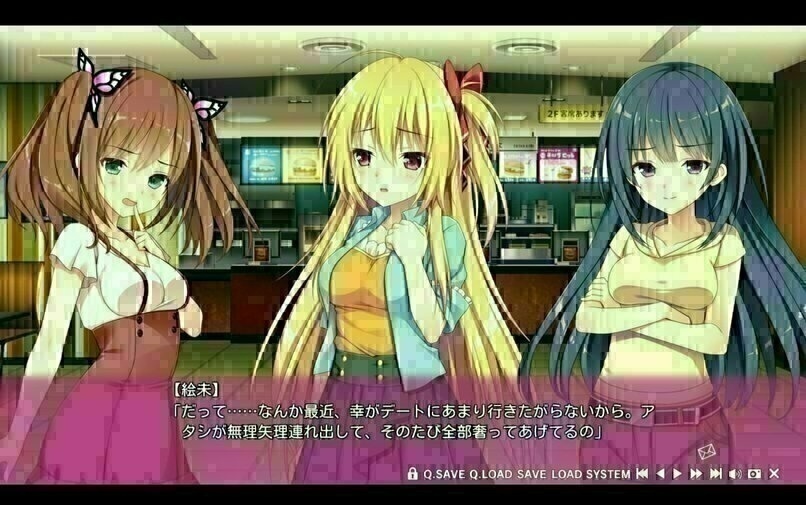
My libido’s been through the roof lately, and on top of that it’s been ages since I played a game with a genuinely cute heroine. Everything on my plate lately has had art that doesn’t do it for me and plots that are aggressively stupid.

Then a thought surfaced: I wanna play a moe nukige. Like, right now.

So I dug through my abandoned-games folder and pulled out Panical Confusion (パニカル・コンフュージョン).

I’d actually downloaded this one ages ago and never touched it, because Japanese otaku didn’t rate it well. Most of what they said boiled down to “the art’s the only good thing about it,” so I kept bumping it down the priority list.

But I’m not the same person I was back then. What I need right now is exactly this kind of moe nukige where the heroine is cute and bonable and there’s nothing else going on — plus heroine #1 is drawn by 白もち桜, so, y’know.

So I opened it.

screenshot3.jpg

Read More

Cross Concerto (クロスコンチェルト) Review

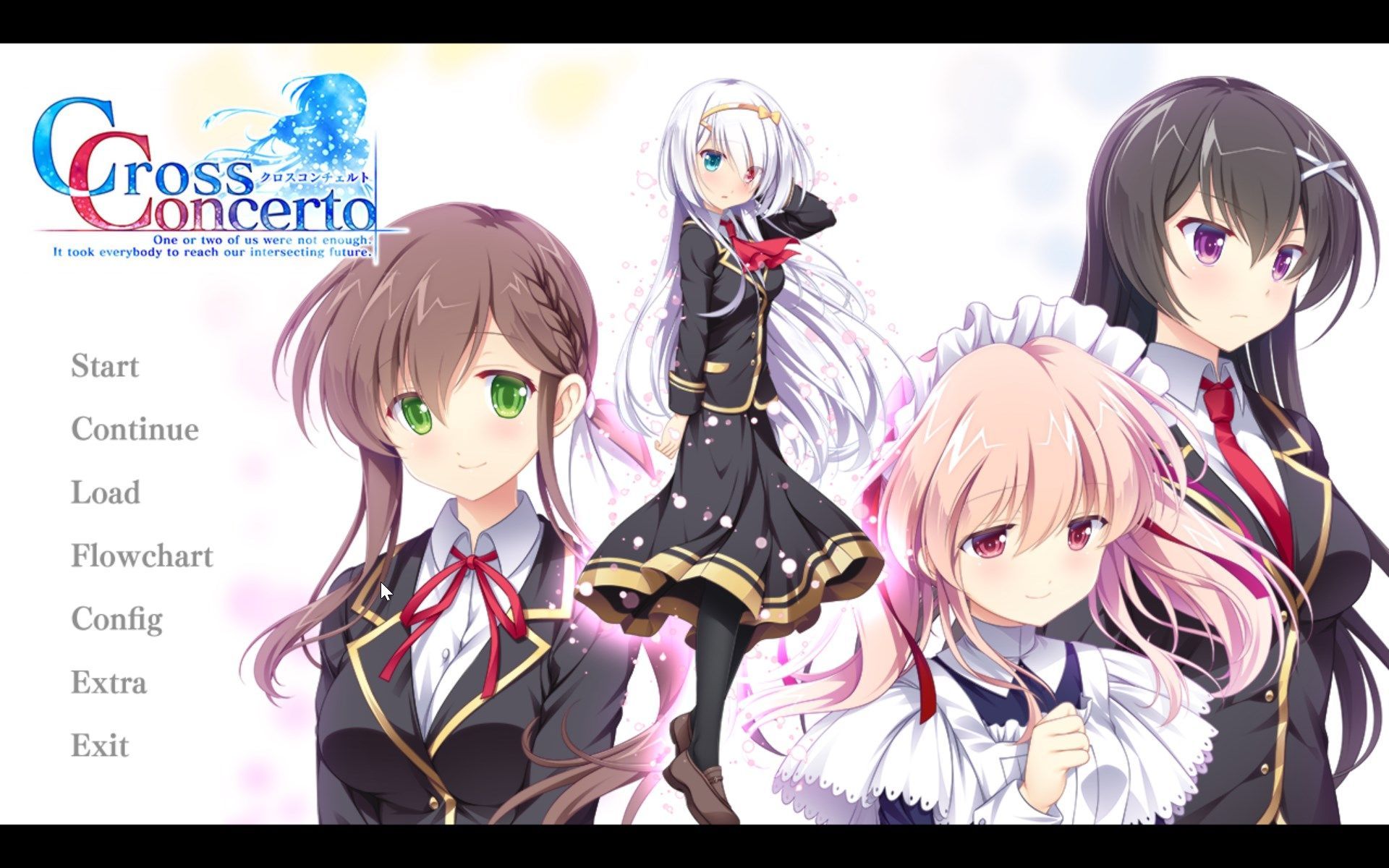
I’ve always thought the Japanese eroge industry should learn some new tricks. Try new game styles, beef up the interaction systems, expand the settings and worldbuilding, and open up more distribution channels — Steam, say, with a Simplified Chinese launch on day one. Boost sales on one hand, improve quality on the other.

But things never go the way I imagine. The Japanese eroge industry learned the first half and threw away the second.

In other words, they started caring more and more about sales and profit. Improve quality? Doesn’t exist. Once in a while there’s a seemingly sincere “big-budget production,” and it’s still some baffling wildcard where the writer runs wild, it bombs, and the whole brand vanishes.

Unlike those wildcards, most of the old brands that “can’t afford to lose” went for steady, solid… scamming.

So we get more and more volume splits and Steam releases, plus all kinds of blunt, simplistic premises. They honestly don’t care what the story’s like — as long as it sells and makes money, that’s fine.

This quick-cash approach naturally left the companies that “actually tell a good story” half-dead. But some of them learned a new trick: crowdfunding.

CrossConcerto_3.jpg

Read More

Ren'ai, Karichaimashita (恋愛、借りちゃいました) Review

Back when I was playing Renai Kari, Shichaimashita (恋愛、借りちゃいました) last year, one question kept nagging at me:

“Why doesn’t this game have a harem route?”

I mean, why does the protagonist have to pick just one heroine when there are two of them throwing themselves at him? Take all the money, man. “The more the merrier” — Lau have been singing that for years, why does nobody get it?

But hey, Asa Project is a HOOK subsidiary, so of course they inherited HOOK’s fine tradition: pump out a mini fandisk within a few months of release and squeeze out whatever cash they can.

After the first fandisk starring the teacher, the second one with both heroines finally showed up…

screenshot143.jpg

Read More

Salte (サルテ) Review

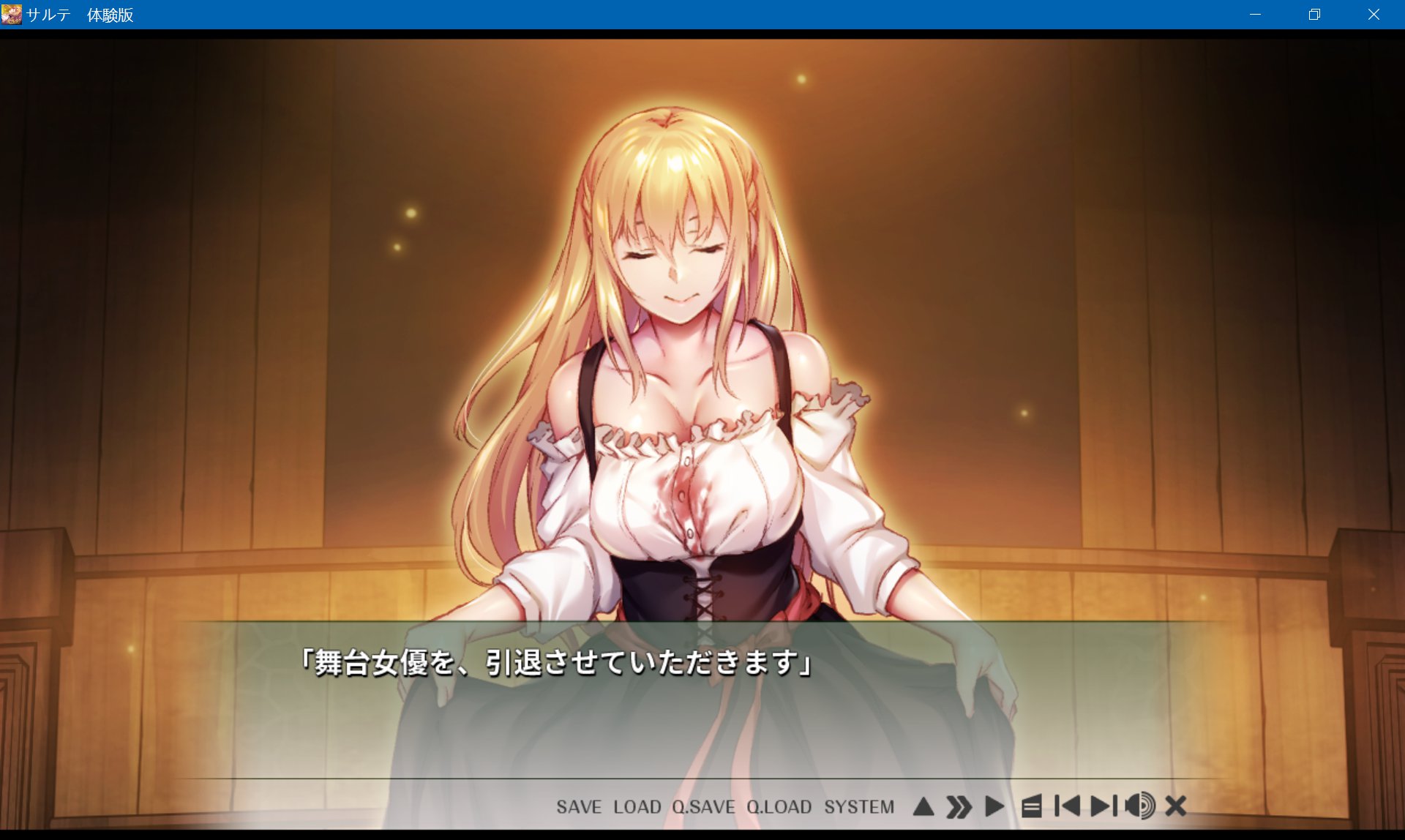
When Saleté wakes up, she finds herself in a strange place that looks like a theater stage—except there’s no audience.

“Hello there, Saleté. You’re dead.”

A masked clown appears and breaks the news in a flippant voice.

“I’m dead?”

“Yes, more or less. Unfortunately, you don’t seem to know you died, or even how you died. So I prepared this place.”

The clown snaps his fingers and the stage lights come on.

“In life you were an actress, and also a princess of a kingdom. I’m going to give you a chance to come back. The condition is that you perform your entire life on this empty stage, up to your death. If you satisfy me, I’ll let you live again.”

“But I don’t remember how I died.”

“As your performance goes on, I’ll give you some hints. Maybe you’ll remember without even noticing. Or… do you want to give up this chance at resurrection?”

screenshot162.jpg

Saleté doesn’t want to give up. She decides to try, and with the limited memories in her head, she begins her monologue and performance on this stage—and begins recalling her life.

Read More

Amairo Chocolata (あまいろショコラータ) Review

Whenever I tell someone new that I play visual novels, I hear the same thing:

“Oh, galge? Yeah I’ve played those, Nekopara, right? Man, that stuff is something else, heh heh.”

Sure, Nekopara technically counts as a visual novel, but every time someone treats “visual novel” and “Nekopara” as the same thing, I get annoyed. Simple reason: I don’t like Nekopara.

Unlike certain other Nekopara-hating keyboard-warrior otaku, I don’t hate it because the artist flip-flops politically, or because the devs are milking Steam. I hate it because the game just isn’t very good.

First off, Nekopara is a nukige, and a pretty mediocre one. The everyday dialogue and setup have nothing going for them—throw it on DLsite and it’d be one of a thousand. Its only real edge was using Emote, which made it look fancy, and one of the biggest reasons it blew up was that it launched with “official non-Japanese language support.” There are otaku all over the world stuck not knowing Japanese, staring at squiggles with no idea what’s being said, refreshing forums every day waiting for a fan translation—it’s agony. Then suddenly there’s a Steam game with an anime art style, Japanese voice acting, localization support, and a cheap price, and it was the only way to play a visual novel on Steam. So it sold like crazy…

Yeah, if I remember right, when Nekopara hit Steam, the only other thing on there was some Willplus game with an English-only release. It was your only option.

So Nekopara’s success was just timing and circumstance. The era made it, not the quality.
screenshot82.png

Read More

Study§Steady (スタディ§ステディ) Review

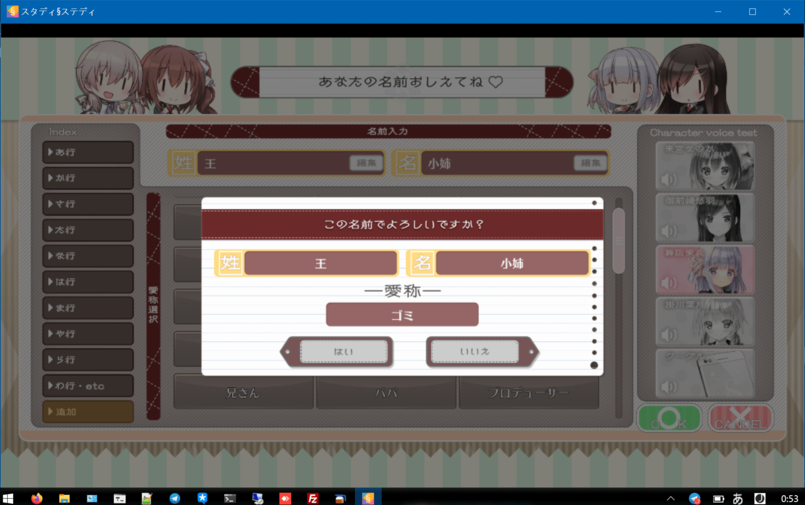
My name is “Miss Wang.” Sex: male.

Don’t get the wrong idea. Wang is my surname, “Miss” is my given name, Miss Wang is what I’m called, and I am indeed a man.

screenshot2.png

Originally I should’ve been lurking around Jiangsu and Zhejiang, but a love triangle with Pigeon Girl and the lady teacher left me so wrecked I decided to take an impromptu trip. I headed north, to a snow-covered place, and was told I’d be going to school here.

I have no friends. I only have my “Koogle.” Koogle is my phone’s voice assistant, and I talk to her like an idiot on the regular.

This godforsaken freezing hellhole, and I have to live here? Absolutely ridiculous.

Good thing I’m not alone here — I’ve got a shot at meeting several girls.

There’s a white-haired rich girl working part-time at Lawson, a black-long-straight-hair, black-tights, quietly-horny senpai, a tiny little seamstress girl, and a hyperthyroid girl who wants to be a vet.

And miraculously, all four of them develop a keen interest in me at the same time. I have to wonder if this school is actually a girls’ school, or if every other guy here is just tragically under-endowed.

Read More

Advertisement

Railroa no Ryakudatsusha (レイルロアの略奪者) Review

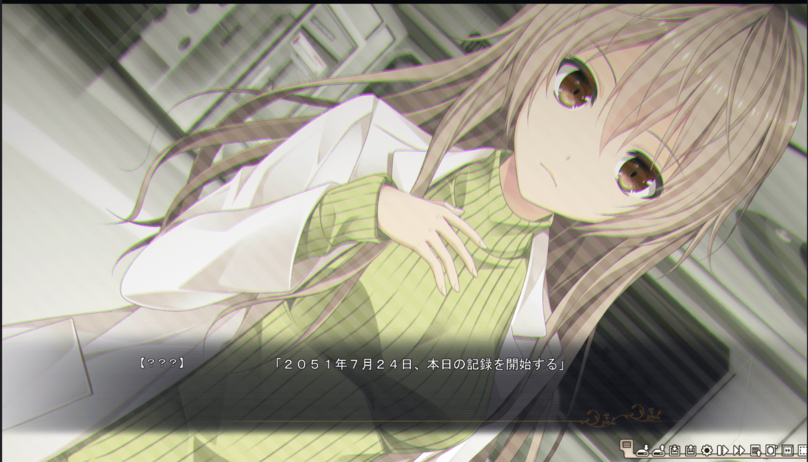
It’s the year 2050. Plague, war, resources running dry, and a whole lot of infighting have humanity staring down extinction.

To head off the tragedy, humanity picks three representatives, forms the “Three Sages,” and hand-selects over a thousand genetically superior people to build a giant biological computer. Led by the Three Sages, the human gene modification project begins. Oh, right — it’s called the “Three Sages” and yes, there really are three people, but that’s just the name of the organization.

screenshot97.png

The modified “new humans” are immune to a ton of viruses and bacteria, their constitutions are way stronger, and there are some “side effects”… a good number of them end up with “superpowers.”

The Three Sages who improved the new humans also rewrote their own genes, gaining ageless, deathless lives along with monstrous physical ability and strength. But they chose to go into hiding, holed up in a secret underground base, quietly watching the new humans live. And so the world goes on for nearly 70 years.

Read More