Fixing VMware Workstation failing to start on Linux Kernel 5.0
As usual, every time the Linux kernel gets an update, VMware Workstation’s vmmon and vmnet modules fail to compile.
No exception this time either.
The fix is blunt: just use a patch.

As usual, every time the Linux kernel gets an update, VMware Workstation’s vmmon and vmnet modules fail to compile.
No exception this time either.
The fix is blunt: just use a patch.
Kotonoha Mau Natsu no Fuurin (言の葉舞い散る夏の風鈴) had a lot of buzz before release — not because of some insane premise or anything, but because of the staff. Writer Noriaki Hanno had previously done Kage no Umi no Apeiria and the rocket-building thing, and both were received pretty well. This time almost the whole original team was back (with an even stronger artist brought on), so of course people were hyped.
Once the game was announced, though, it looked like there wasn’t anything special in it — at least compared to Apeiria, this one’s setup is basically plain water.
But because of the writer, most people still had high expectations.
And what were we all expecting, exactly? Some crazy twist? High tech? A physics textbook? Logic-puzzle quizzes?
A lot of people probably figured that since the writer had done something that good before, this one should be good too — even with its very “youthful,” very “ordinary” premise, there had to be something thought-provoking underneath.
Well, we were all wrong. It’s just an unbelievably simple, plain-water game.
Hell, it’s not even up to plain-water standards…

Crucian carp and tofu soup is a pretty simple and quite nutritious… dish? Or soup? Whatever you call it, it goes down well with rice.
The method isn’t complicated either, and the ingredient list is short:
I played 40 visual novels in 2018 — even fewer than 2017. On one hand that means my real life got more fulfilling; on the other, it means the industry really is done for these days.
Looking back, most of what I played was in the first half of the year. The second half was thin — barely anything out there, and nothing that made me want to pick it up.
Which is fine. Probably even fewer next year. And honestly I hope the industry croaks soon, so more kids can be freed from it and face reality properly.
Still, I did play some. So, as usual, here’s what I think is worth recommending.
When you talk about galge, you can’t not bring up eroge, and when you talk about eroge, you can’t not think of the ones that left a real impression, and when you talk about leaving an impression, you can’t not think of Kami no Ue no Mahou Tsukai, and then you can’t not bring up the writer behind it: Rukuru. And when you talk about Rukuru, you have to talk about his new game with Kiriha at the end of 2018, Sora ni Kizanda Parallelogram. Going from literary subject matter to a sports backdrop—truly a double bloom, literature and sport both, worth keeping an eye on.
I’ve brought up Rukuru more than once, and I’ve recommended the stuff he wrote more than once too. The biggest factor is just how good his stories are. Rukuru can tell a story, and his prose isn’t childish either—it reads comfortably, and that’s his biggest charm and personality. Sure, some people rag on him for all the typos, but who among us who writes every day doesn’t have a few typos (I’m not talking about myself here). So the release of Sora ni Kizanda Parallelogram put me in a bind.
The dilemma is pretty obvious. On one hand I was looking forward to a new Rukuru game and that familiar sour-sweet script of his. On the other hand… this new game… Sora ni Kizanda Parallelogram… doesn’t it feel a little too bootleg?
You don’t need me to say it—anyone with eyes can see it. This so-called Sora ni Kizanda Parallelogram, whether you look at the setting or the character designs, looks extremely similar to a certain work from a certain studio that’s already dead. Yeah, that’s right—Sprite’s Aokana: Four Rhythms Across the Blue, aka Aokana. Same airborne sport, same male lead as coach, same four hair colors for the heroines. Opinions on the game were all over the place at the time; most people figured it was Aokana’s “spiritual successor,” since the setup is just too similar. At the same time, people were guessing based on Rukuru’s previous style—would Sora ni Kizanda Parallelogram have people dying left and right, getting crippled, all that mess…? After all, his previous games were all gloom-and-doom.
So I was worried. So I was torn. But whatever the game turned out to be, you only know once you’ve cleared it. As 2018 came to a close, before the Sino-American co-produced Journey to the West started filming, I finally finished this one. And I ended up even more confused.
“Compared to his previous work, is this game a step forward or a step back?”
Maybe going back over the whole game will make the answer easier to reach.

A while back I modded my OnePlus 5 for wireless charging, so this time I went ahead and did the in-car setup to match.
Right now the only trustworthy car wireless charger you can actually buy online is Philips. I know Philips is a company that slaps its name on just about anything, but they seem to have done this one properly.

Kokoro ga Tsunagu Koi Shirube (ココロが繋ぐ恋標) came out last month. I wasn’t even planning to play it, but then I saw a Japanese review saying it was worth an “80.”
And like an idiot, I believed them.
By all appearances this is MORE’s last gasp: a shell company of a shell company of MME, a factory-line product from KATE. Word is MME disbanded right after this shipped. The whole thing reeks of LASS on its deathbed. Nothing about it says “quality.”
But I saw Japanese players online saying the game has multiple routes, and that aside from the other routes being dogshit, the main Kokoro route is actually good.
And like an idiot, I believed them again.

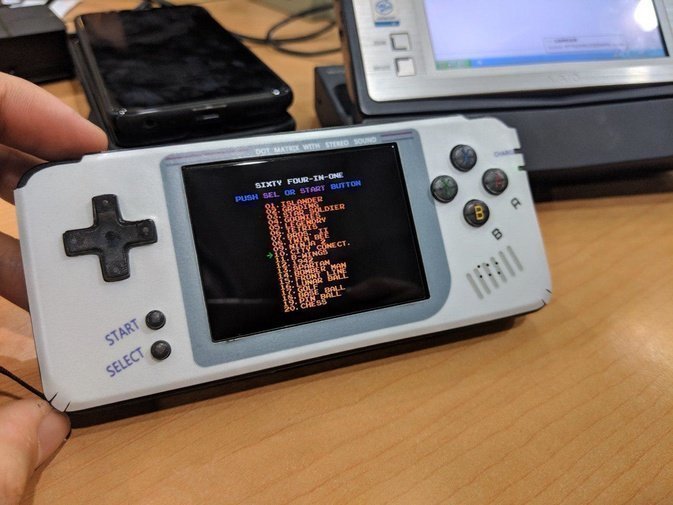
I bought a Retro Game handheld a while back and it felt pretty good, but something was always missing. Even after updating to the foreign custom firmware, plenty of rough edges remained — short standby time, an ugly look, that sort of thing.
The guy behind that firmware has released a new build, possibly the true final version this time. Flashed it and it’s actually decent. Also took the chance to dress the thing up a bit, and I’m liking it more and more.
The title is overselling it a bit. What I originally wanted was a transparent proxy for the LAN. But I’ve been short on time lately, and after poking at it on and off I ended up with just a DNS box. I’ll get around to compiling and installing the transparent proxy gateway another day.
That said, even running nothing but a DNS service taught me a fair bit, especially about how stable the Raspberry Pi is, so I figured I’d write it down in case it helps someone.

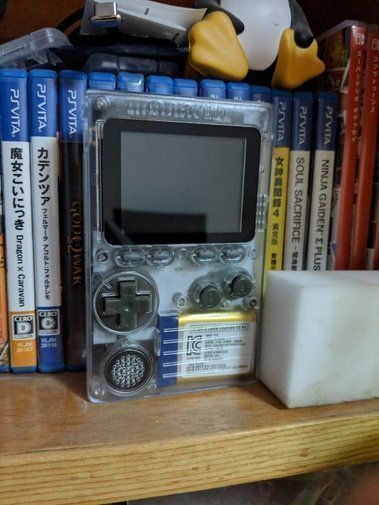
The Odroid Go is a handheld project built around a dev board that you assemble yourself. In theory it’s open source, and you could put one together entirely by hand. Of course, someone also sells you a finished kit, and I happened to catch it on sale, so I ordered one.