Impressions: Pixel Stand

The Pixel Stand was half price on Black Friday.

Great news, except for one small problem: the half-price Pixel Stand was at Best Buy.

If you’ve ever tried to buy stuff from overseas, you know Best Buy is one of those sites where it’s basically impossible. They ruthlessly cancel anything shipping to a forwarding address, which means you need a real US address to buy.

Lucky for me, I had a friend in the States. Thanks to Enneamer, a.k.a. “Dirty Teacher,” I finally got my hands on the one wireless charging dock that can fast-charge a Pixel 3 XL.

photo_2018-12-17_21-47-22.jpg

Read More

Impressions: Google Pixel 3 XL

Honestly, I’ve been using the Google Pixel 3 XL for almost a month now, and I’m really happy with this phone.

Except that not long after I bought it, Google started dropping the price all over the place…

Anyway, this phone is actually pretty expensive, so of course you still want a screen protector and a case after buying it. Since it’s the flagship this time, the accessory ecosystem is pretty complete, and I found suitable products quickly. Way better than stupid Sony.

So let me keep it brief, hopefully it helps anyone thinking of buying one.

photo_2018-12-14_23-06-41 (3).jpg

Read More

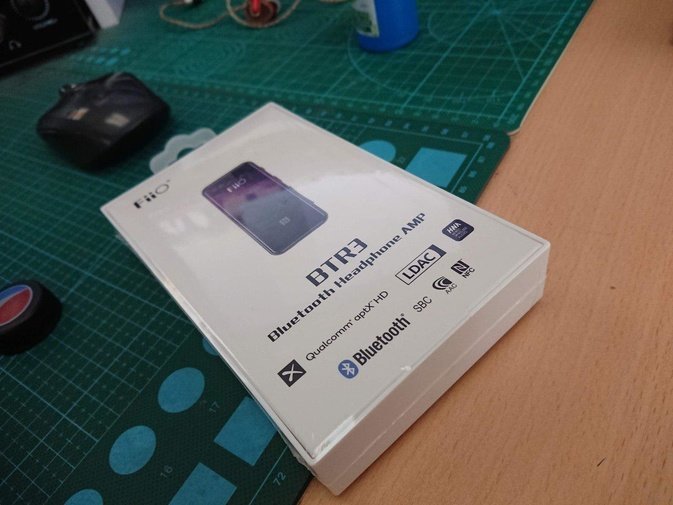
Review: FiiO BTR3

As someone who’s been out of the audiophile game for ages, I find the current enthusiast market kind of funny and kind of sad at the same time.

Ever since I redirected the money I used to spend on headphones into buying music albums, I feel like my horizons have widened. “A ten-thousand-yuan IEM isn’t worth hearing ten thousand albums,” or something like that. At least I’m not like some grade-schooler on Reddit, buying insanely expensive IEMs just to listen to a music library that hasn’t been updated in years, flipping back and forth through the same dumb test tracks. Or running high-end gear to listen to doujin music produced in some low-end studio. That’s just unscientific.

High-end audio gear really does work, sure. But for most people it’s useless, and for most audiophiles it’s also not much use — unless you’re a die-hard classical fan and love other large-ensemble music so much you refuse to listen to anything that isn’t a SACD from a famous studio. Then yes, high-end gear does work. But for most people like me, who listen to pop, occasionally some small-ensemble stuff, and just want to feel the charm of a melody — as long as the headphones don’t have that “boom-tss boom-tss” low-brow tuning and aren’t distorting or off-balance, that’s about enough.

Yes, about enough. How do you know that the ten-thousand-yuan suit-and-tie stack you bought wasn’t used to listen to songs made by someone using a garbage 5-yuan USB cable? With that money you’re better off just listening to more music. So I’ve been increasingly abandoning wired gear and trying Bluetooth.

The biggest advantage of Bluetooth is convenience. The biggest disadvantage is, naturally, sound quality. But with APTX and LDAC gradually opening up, Bluetooth has more or less reached the “listenable” stage.

So I bought the FiiO BTR3 Bluetooth DAC/amp, two and a half months ago…

photo_2018-12-14_22-36-39.jpg

Why did it take me this long to write up my impressions? That’s a long story.

Read More

Advertisement

Amazing Grace -What color is your attribute?- (アメイジング・グレイス -What color is your attribute?-) Review

There’s a fairly famous song called “Amazing Grace.” The Chinese translation usually goes with something like “divine grace,” though the official rendering in a lot of places is “wondrous grace.” It’s actually a religious song with deep roots in Christianity, but it got so famous that it spread around the world and stopped being confined to religious use.

The gist of “Amazing Grace” is right there in the name—praising the grace God has given you, basically a hymn. But what people actually like about it is being moved by that sense of the “sacred” in the song. Maybe that’s the unique appeal of religious music in general.

So at the end of this year, a game showed up carrying the “Amazing Grace” title—an 18X eroge, no less, with Korie Riko as the artist and Tsukiyashiro Tomu on scenario. A stacked lineup.

The last time Tsukiyashiro Tomu and Korie Riko worked together was Magical Charming, and I called that one “the most insane visual novel ever”. The slice-of-life content, the way the foreshadowing unfolded, even the system itself—all of it was full of highlights. After that, Tsukiyashiro Tomu planned a few more games, but they felt a bit middling. Last year’s Mono no Aware wa Iro no Koro. had plenty of highlights in its story too, but something still felt like it was missing a step. So this year Tsukiyashiro Tomu came back, and not only did he drag in his old partner Korie Riko, he also brought out Sakura Saori, who sang the OP for Magical Charming back in the day, and put together this new work: Amazing Grace -What color is your attribute?-. The title means exactly what it says—“Amazing Grace, what color is your attribute?” But look at the staff and it screams Lump of Sugar from every angle. If that bright “Cabbage Soft” logo weren’t sitting right there on top, I think 99% of people would assume this was Lump of Sugar. Same scenario writer, same artist, same OP singer—it’s the exact same formula.

Of course, the reason I played this game wasn’t because I had any expectations for a Cabbage Soft title, and it wasn’t some particular fetish for the writer. It’s just that this is a game about “winter.”

Yeah, anyone who knows me probably gets it. I like the atmosphere of winter, the way everything looks when it’s snowing, so naturally I like games set in winter.

screenshot.3.jpg

So I looked at the release list, saw Amazing Grace, saw the winter setting, saw that the writer probably wasn’t going to screw it up, and decided to give it a shot.

Read More

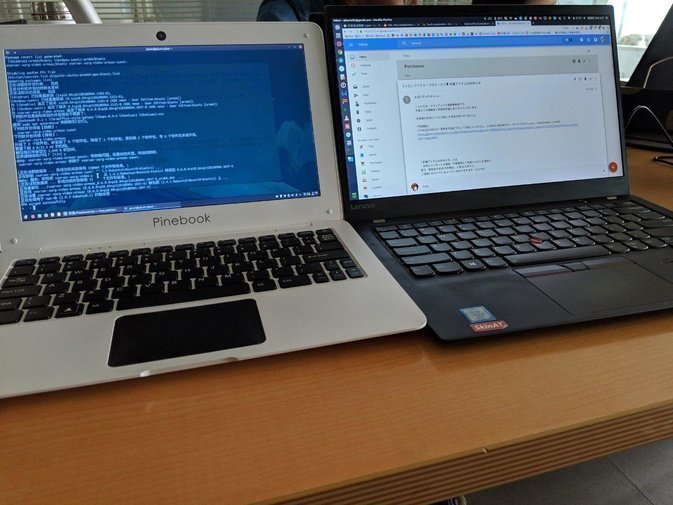
Pinebook: First Thoughts

I decided to buy a Pinebook at least a year ago, back when all the Linux news sites started covering it. Most of them called it “the $99 Linux laptop,” and sure enough it really does cost $99. But there’s nothing especially novel about it, because the so-called Pinebook is just the Pine64 dev board that was crowdfunded on Indiegogo, shoved into a laptop shell. There are already plenty of similar products out there, mostly “Raspberry Pi laptops”—a Pi stuffed into a laptop case, or a 3D-printed shell with a battery and so on.

Let’s look at the main specs of the Pinebook first.

  • 11-inch or 14-inch 1366x768 screen (11-inch is IPS, 14-inch is TN)
  • 2 GB RAM
  • 16GB eMMC
  • Wi-Fi and Bluetooth
  • MicroSD card reader
  • USB port, headphone jack, HDMI output

Nothing impressive there, and none of it is what got me interested in the Pinebook. The biggest selling point of the Pinebook—and its biggest appeal—isn’t performance. It’s that it looks good.

Yes, compared to the whole flood of similar “Raspberry Pi laptops” on the market, the Pinebook is drop-dead gorgeous. Combined with the fact that it’s not expensive at all, I decided to buy one to play with. It’s cheap, and Pine64 claims to be a more advanced 64-bit ARM processor than the original Raspberry Pi (back when Pine64 was crowdfunding, the Pi was still on gen 1, if I remember right). At the very least it should make a decent toy.

But I never expected that from deciding to buy it to actually holding it in my hands, it would take me a full year and more.

Once the machine arrived I played with it for almost two weeks. There were pleasant surprises and disappointments. Picking up shells on the beach, sorting out my thoughts, let me sum up the sweet and the bitter for you.

photo_2018-12-11_22-36-27.jpg

Read More

ThinkPlus Lenovo Lipstick Power Adapter

A hot product a while back. It promised “small” “powerful” “multi-functional” all at once, and on top of that it actually looked good, so I bought one.

Also, I’m a sucker for the ThinkPad red-and-black color scheme. Too tempting.

Turns out I’d pre-ordered it ages ago, only to find out it was just a crowdfunding campaign. I don’t know why these idiots insist on crowdfunding everything. Call it a pre-order, slap a new name on it and call it crowdfunding — genuinely stupid.

Anyway, I got the thing in early December, and the packaging was the familiar ThinkPad style.

photo_2018-12-06_21-12-24 (3).jpg

Read More

A Failed Keyboard Tinkering Session

It was Double 11, so I figured I’d refurbish my old, grimy Kaitian 84 with brown switches — the keyboard I’ve been using for years.

By “refurbish” I mean wash the keycaps and the board itself…

Naturally, I’m lazy, so I didn’t bother washing the keycaps. I just bought new ones and started cleaning the keyboard body.

For the cleaning I used some random cleaning sponge cubes my wife bought — white cube-shaped sponges that look soft but apparently grind like crazy, and they wear down the more you scrub.

Wiped the keyboard clean, put the new keycaps on. Perfect!

Plugged it into the PC to check. Works! Flawless!

photo_2018-12-06_21-12-23.jpg

Then the tragedy hit.

Read More

Nanfu Wireless Power Bank: First Thoughts

They say the Huawei Mate 20 Pro can reverse-charge an iPhone, but honestly, if you’re reverse-charging from a phone, you might as well just use a battery.

In fact, “wireless power banks” like this already exist. I bought a Nanfu one — old brand, trustworthy.

photo_2018-12-05_21-36-13.jpg

Looks like an ordinary power bank from any angle, except it has this wireless charging section.

Read More

Advertisement

Enabling TLS 1.3 on Your Site

Enabling TLS 1.3 support on your site gets you better security. A while back, if you wanted TLS 1.3, you had to compile the latest OpenSSL yourself and then build nginx with the corresponding support turned on. These days you don’t have to do any of that.

photo_2018-12-01_22-15-29.jpg

Read More