Lian'ai Zhujiaofan (恋爱猪脚饭) Review

I found out about Huang Xia because he was bumming around in Zhangzhuang, Zhengzhou — and our work unit was about to move there too. So I stumbled onto him by accident.

Then COVID hit, our unit’s plan fell through, and Huang Xia started walking across the country.

Some people call Huang Xia an idiot, a lazy bum, a piece of shit. I can’t confirm any of that. What I can confirm is that he’s not a dumb one. His videos are formulaic as hell, but there’s this weird absurdist artistry to them — the camera work, the content, the daily situation reports, all of it has a real sense of image. Huang Xia knows exactly what the audience wants, he films the stuff everyone loves to watch, and then when people start flaming him he plays the victim. And it’s not just him — all his “good homies” do the same. Zhang Gongmao and that whole crowd, same deal.

Lots of people say today’s youth are all about deconstruction, deconstruction. Nah. Huang Xia is the real postmodernist artist.

Especially since everyone used to dunk on Huang Xia for being a loser every single day — until Liangzi of the Big Stomach Bag fame burst onto the scene, and suddenly everyone thought Huang Xia was actually not so bad.

Read More

Nandome ka no Hajimemashite (何度目かのはじめまして) Review

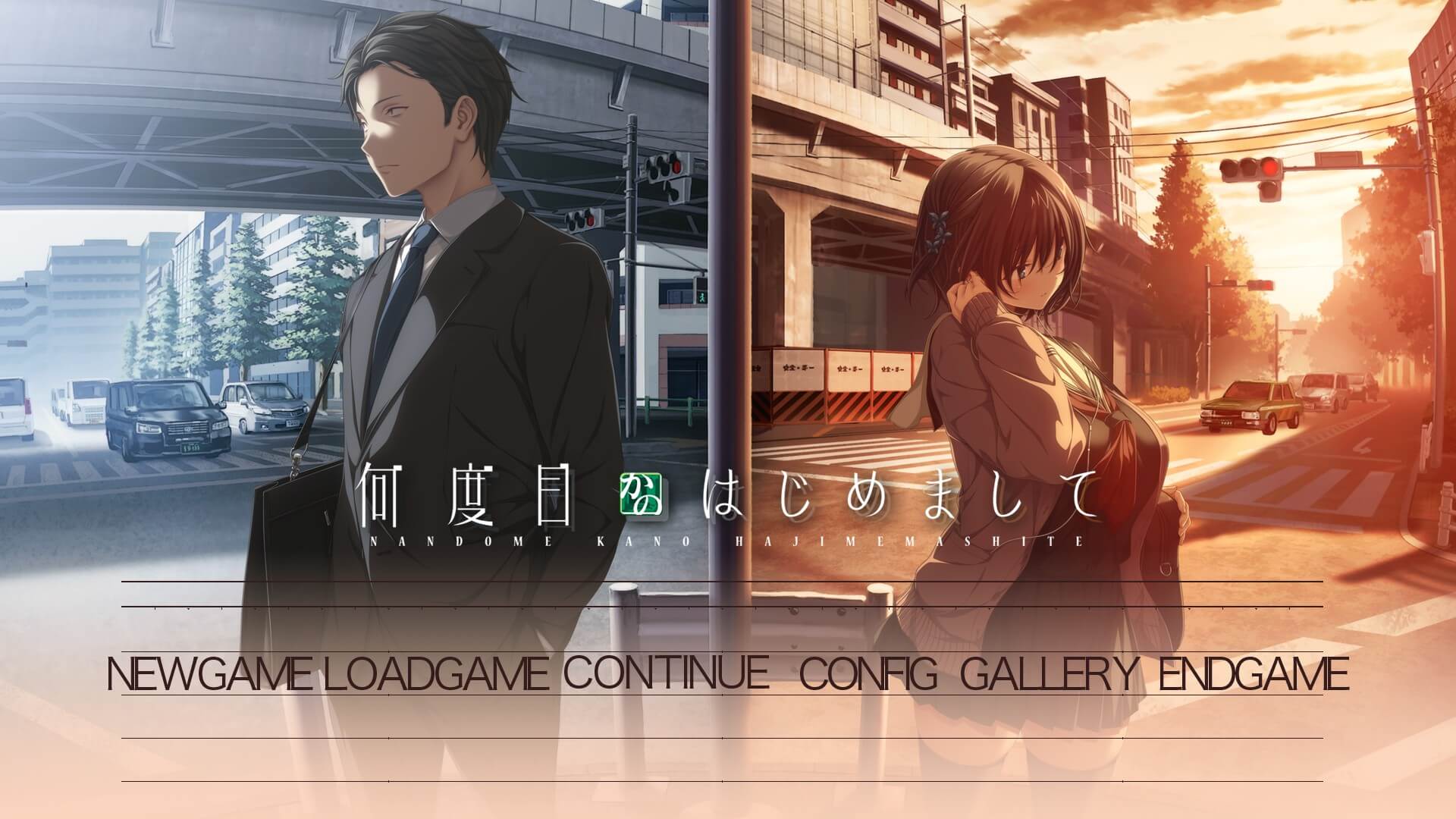
Purple Software out of nowhere dropped this thing called How Many Times Have We Met (何度目かのはじめまして). Turns out it’s not their usual dumbass fantasy schtick — the title alone screams time travel: “the umpteenth first meeting.”

And I, also out of nowhere, ended up playing it. The plot is simple if you want it to be, complicated if you don’t.

Basically, the protagonist is a corporate drone with zero hope in life, shuffling around like a walking corpse. By sheer coincidence he runs into this black cat-looking thing. The cat talks, says it wants to form a contract with him and grant his wish. He naturally says his life is garbage right now, and the cat offers to send him back to the happiest time of his life… high school. About seven days’ worth.

何度目かのはじめまして 10_22_2025 1_41_09 AM.jpg

Read More

LimeLight Lemonade Jam (ライムライト・レモネードジャム) Review

Two years on, after a run of teasers early in the year, Japan’s visual novel powerhouse Yuzusoft has finally put out its full-price R18 proper new release for the year: LimeLight Lemonade Jam (the Chinese title roughly reads as “Spotlight and Lemonade Performance,” since “Jam” can mean fruit jam or a band’s set). And to everyone’s mild surprise, it’s a girl-band story.

From announcement to launch the whole thing ran like classic Yuzusoft: no long gap in between, and they put out a free online demo download well ahead of time — the kind most of today’s so-called “super blockbusters” won’t bother with. Credit where it’s due: no offline demo event, no flying out KOLs on the company dime to say nice things in advance. Just traditional marketing, step by step, and the release didn’t slip. You can smell the mature project management.

ライムライト・レモネードジャム 11_9_2025 2_47_27 PM.jpg

Read More

Advertisement

Lian Ai Qi Tan: Bu Cun Zai De Hui Yi (恋爱绮谭~不存在的回忆~) Review

Straight to the point: me buying this game, and even playing it, has honestly not that much to do with the game itself.

First off, I played the previous entries. To be blunt, only the first one, Memories That Don’t Exist (不存在的夏天), is something I actually understood. The storytelling is weird as hell, full of deliberately contrived “trick narration” and prose soaked in anime-isms — enough that even a veteran otaku like me has to go “damn, the flavor is strong.” But the game also, unusually, has a genuinely beautiful passage in the back half that I still remember to this day, so I walked away thinking it was pretty good.

Then the second game came along and the story started getting strange. Probably because the first one got so much praise, the writer got a bit full of himself and decided the “dregs” from part one were actually correct, so he doubled down. The result is something that looks deeply odd to me: the core is packed with Chinese elements, but the prose isn’t written the way Chinese people actually write, so reading it feels off — like a West Coast gangsta rap track performed entirely on traditional Chinese instruments, with heroes pulling pistols out of their crotches to ganggang each other while dealing mystery pharmaceuticals on the side.

photo_2025-11-20_11-22-09.jpg

Read More

KATANA Project CompleteBox Kouka Kenran (KATANA Project CompleteBox 煌花絢爛) Review

A lot of young kids who’ve just gotten into Japanese otaku culture tend to pick up some misconceptions, putting on a filter of assumed truth: that Japanese people are earnest, professional, reliable, down-to-earth.

Most of that comes from Japan’s rigid personality, the various reigning “masters” (sennin) of every craft, and the healthy growth of niche hobby groups everywhere. Sure, plenty of retro subcultures can find their fanbase in Japan, along with the meticulously researched material those groups put out…

But there are two sides to everything. Japanese people are also utterly shameless about grabbing your money.

Amusecraft has a pile of labels under it, most of them used once and tossed like toilet paper. One of them, CRYSTALiA, was created from the start to launch a new KATANA project — the theme being a futuristic world telling the story of “blades” and “samurai.” To hammer home the tech angle, they set the katana up as something like a smartphone: a high-tech device with its own OS that you can even hack into. The game even added a route for the blonde girl specifically to flesh out this setting. That route has no “samurai” or “duels” — it’s all about developing and controlling this high-tech katana with its built-in chip called “Orikami.”

photo_2025-11-16_23-25-58 (2).jpg

Read More

Renai, Hajimemashite (恋愛、はじめまして) Review

The protagonist, Ogata Iori, is a nothing-special, invisible high schooler living that boring, loser-ish high school life. One morning on his way to school he kicks a wild drunk woman lying by the roadside — weird outfit, wings on her back, a halo on her head (LED-powered). Because he’s an inexperienced Xiao Chun’an type with no street smarts, he blurts out the first thing that comes to mind: “Whoa, are you an angel?”

So this LED-wearing shady woman freezes for a second, then admits it. She’s an angel, sent down here to save him. What does he wish for?

His repressed true nature spills out: he wants the angel to make him happy. The angel freezes — is this a proposition? He corrects himself: he wants a girlfriend, wants to become a normie. The angel figures that’s a piece of cake and agrees.

And so the contract is made. The angel moves into his house and starts living shamelessly off his food and rent.

photo_2025-10-28_17-23-41.jpg

Read More

Jewelry Knights Arcadia -The ends of the world- (ジュエリー・ナイツ・アルカディア -The ends of the world-) Review

Haven’t written a blog in a while, mostly because I had no motivation and writing felt like a pure waste of time. Also, once you get into that “not writing often” state, inertia kicks in—the less you write, the less you want to write, and you just keep being a lazy dog.

Just after finishing a commercial piece, I thought I’d start writing something again. While organizing screenshots, I realized I still had a visual novel I’d played but hadn’t written impressions for. Then something magical happened: I could barely remember playing this game at all. I couldn’t even recall what the story was about—just like the protagonist in that short time-travel piece from Purple Software last month, who completely forgets what happened in the past…

The game is Jewelry Knights Arcadia -The ends of the world-, the sequel to Jewelry Hearts Academia, which I thought was a pretty good big title…?

screenshot.47.jpg

It was only thanks to chat logs with the editor I’d commissioned and various screenshots that I gradually recalled what this game was actually about. And once I remembered, I couldn’t help but cringe.

Read More

Surface Go 2

Preface:

I’ve never really had any particular need for a tablet, but it’s not like I have zero use for one either.

I do want a tablet. My needs are simple: use it as a reader, browse the web, watch videos, read PDFs, listen to something to fall asleep to at night. That’s it.

The tablet I’d been using was a cheap used LG I picked up from OK’s place. I don’t think I ever wrote about it, but for 300 yuan it’s worth the price — it does fine as a video machine. Its biggest problem is the system. It’s an Android tablet, and a Japanese Android tablet at that, packed with all sorts of junk that causes all sorts of problems, whether it’s system updates or app compatibility. For example, I ran into a situation where my proxy app wouldn’t work. If my home network didn’t have a global proxy, this thing really wouldn’t be able to watch YouTube.

So I had an idea: why not try using Linux as a tablet? GNOME, for instance, has been criticized for years for having a UI that’s too “touch-oriented” — so if you actually use it as a touch tablet, wouldn’t it be more suitable?

Once the idea was there, I got to work.

Read More

Living with Lenovo Chromebook Flex 5

Foreword:

A while back I got bored and decided I needed a computer, a “tinkering” toy, with two main goals:

  1. Try out the latest system updates — an aggressive platform
  2. Try out all kinds of new distros

After weighing things back and forth, my requirements for this device gradually became clear:

  1. It has to be cheap, the cheaper the better, and the specs as high as possible
  2. Ideally it supports various form factors — a keyboard, a touchscreen, and Linux-friendly. I mainly use Linux, since I’m already tired of Windows
  3. Durable and light, because after testing I’ll usually just toss it in a corner to gather dust
  4. Ideally some expandability and serviceability, like a ThinkPad
  5. Occasionally usable for emergency work — the kind of thing you can toss anywhere without feeling bad

Read More

Advertisement

Tanetsumi no Uta (たねつみの歌) Review

Misuzu, a Japanese middle schooler who lost her mother at six, is about to turn sixteen. On the night of her birthday, a girl about her own age taps on her window. She says her name is “Yoko”—Misuzu’s mother, come through time from when she was sixteen. Misuzu wants nothing more than to see her mother again, but it’s hard to square this sixteen-year-old girl with the word “mother.”

After a nostalgic tour of the house with this “mother,” Yoko makes an offer: come with her on an adventure.

Misuzu doesn’t know why, but she feels like she’s supposed to go, so she half-stumbles out the door after Yoko. The two pass through a long cave and somehow cross through time again, arriving more than ten years in the future. Yoko makes a phone call, and as if it were all arranged, a married couple appears with a girl of about the same age. The girl is called Tsumugi—and this Tsumugi is the daughter Misuzu will have in the future. So the one bringing Tsumugi to meet Misuzu… is the grown-up, married Misuzu herself.

7.jpg

Read More