Kira Kano (きら☆かの) Review

I’ve had this nagging question for a while now: what exactly is up with this company called Azarashi Soft? They’re constantly doing collabs with different companies and teams, while their own games are all template-ridden “XX girlfriend” romance stuff. So I looked into the company’s background, and it turns out it’s no small deal. Skipping the long story, the parent company of “Azarashi Soft” was actually the precursor to Key, and they also made the fairly well-known game One.

Maybe it’s because they’re a big enterprise, or maybe it’s nostalgia, but the company is still active in the visual novel industry, just now as “Azarashi Soft.” Recently they did another collab with a company that has history — Lump of Sugar, which always seems half-dead — and put out this new game, Kira☆Kano, that looks like it’s chasing the youth trend but actually ends up chasing nothing.

photo_2025-01-24_11-44-21.jpg

Read More

Putorika 1st cut: The Reason She Must Perish (プトリカ 1st cut:The Reason She Must Perish) Review

I’ve always thought of Lucle as something of an outlier among scenario writers in the visual novel market. While other works were still stuck on surface-level romance full of anime stereotypes, Lucle used theatrical prose and direction to deliver something genuinely different — a dimensional strike against a visual novel scene already frozen into “chuuni philosophy,” “dark and edgy,” and “cookie-cutter school confessions.”

After Mahou Tsukai no Hako (紙の上の魔法使い), Suisou Ginka no Istoria (水葬銀貨のイストリア), Sora ni Kizanda Parallelogram (空に刻んだパラレログラム), and Meikai no Rupekaria (冥契のルペルカリア), Lucle went quiet for a long stretch with no new work. Some say he got lazy, but I doubt it. If you’ve followed his narratives, or really sat down and experienced them, it’s easy to spot Lucle’s three favorite tricks: a miserable fate built on contradictions, a weak-willed protagonist, and a villain who whispers demonic temptations at him for the long haul — plus a genius character whose presence he uses to show ordinary people their own inferiority. Meikai no Rupekaria was already the culmination, a distillation of everything Lucle could bring. You can see echoes of his earlier works all over it. Sometimes I think Lucle burned himself out finishing Meikai no Rupekaria.

Or, to put it more bluntly: he ran out of material.

photo_2025-01-22_00-24-31.jpg

Read More

Hakkenden (八剑传) Review

The reason I had my eye on this one is simple: IROTORI’s previous game, Sakura no Saiten, was genuinely good. It kept the story fun and built a unique system on top of it. Sure, it can’t match the “proper” mystery games, but within the visual novel niche it’s in a league of its own, good enough to step outside and trade blows with other text adventures.

And they did exactly that. Sakura no Saiten landed on a bunch of consoles, eventually hit Steam too, and picked up plenty of praise along the way. So when Hachikenden was announced I was already looking forward to it, hoping for something that was “really story-driven.”

Never mind that I’m not especially into Japan’s take on history.

photo_2024-12-16_11-51-37.jpg

Read More

Advertisement

Inverted Angel Review

I first heard about Inverted Angel because I’m a fan of Nakamura Sanso—she sings the theme song (ED) for it.

At first I figured it was just a simple little romance piece, or maybe one of those indie things with a bit of meta and philosophy tossed in, the usual slightly-deep-bait template. Then I actually played it, and I couldn’t help but say out loud:

“What the hell is this?!”

photo_2024-12-06_17-29-47.jpg

Read More

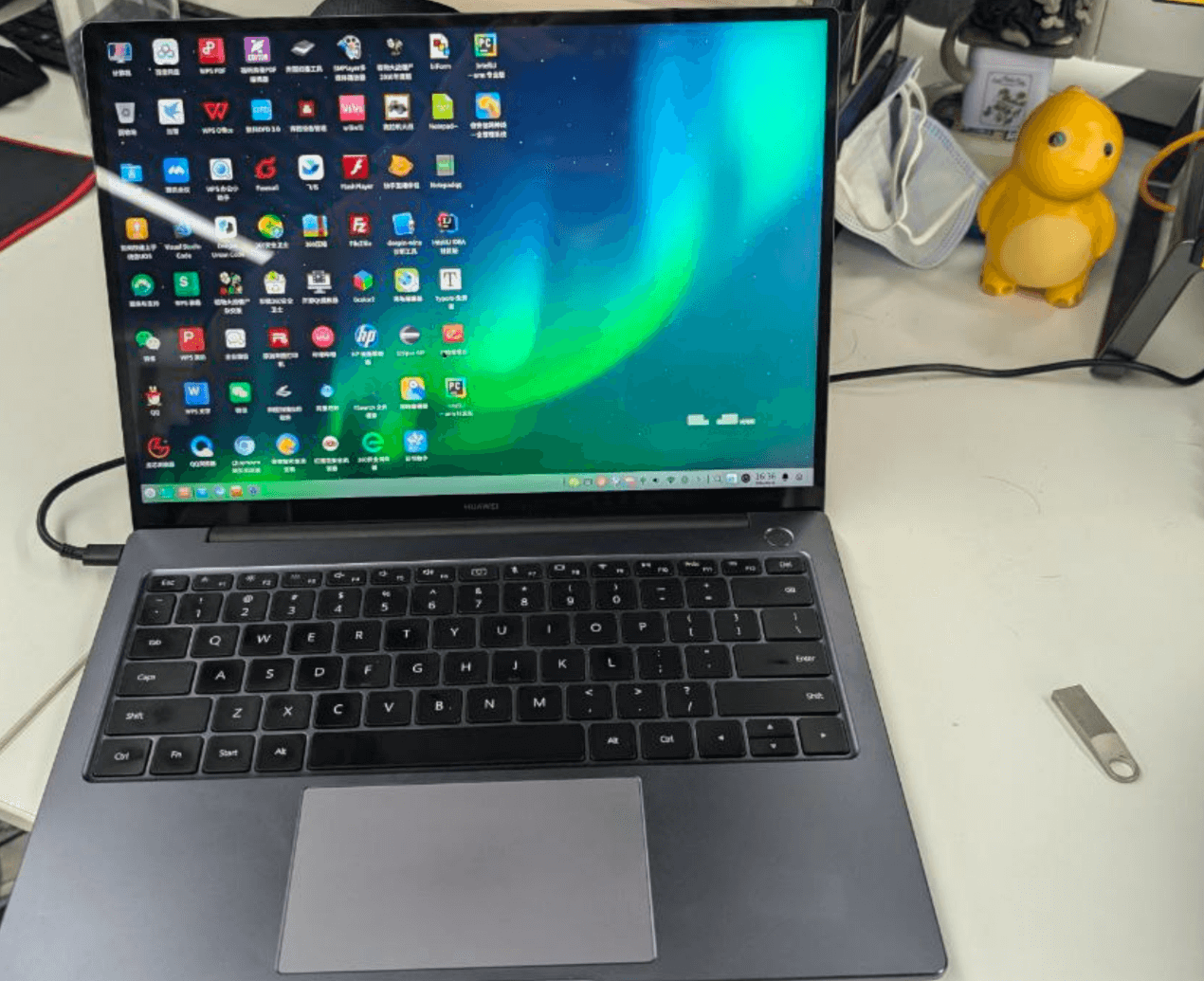
A Few Days with Huawei Qingyun L410

Getting older, I still like looking at the pretty and the hot stuff for the eye candy, but I also like messing around with e-waste. The regular stuff just doesn’t excite me anymore.

And the hottest e-waste lately is all the Linux-based “xinchuang” (信创) gear. “Xinchuang” is basically the mainland’s push for domestic everything—replacing the “Western” and “open source” stuff with fully Chinese products so nobody can strangle you with supply chain sanctions.

Whether that’s realistic, whether it’s feasible, how far along it actually is—let’s set all that aside. At the very least, the xinchuang scene does enough work with and on top of Linux to satisfy a Linux guy’s urge to tinker with junk. I’d wanted a Loongson laptop for a while, but that batch of RMS-endorsed 198-yuan group-buy machines is now stupidly expensive, and the specs and pricing are just absurd. Newer Loongson laptops are also pricey, out of my league, so I just watched from the sidelines.

Then a kind soul reached out a hand. With help from a certain big shot, I somehow got my hands on a “xinchuang laptop.” Carrying that person’s earnest warnings, I started my own xinchuang journey.

Screenshot From 2024-12-02 16-22-29.png

Read More

Hands-on: Playdate

The Playdate is a handheld made and sold by Panic, the studio behind the well-known game Firewatch — or rather, that game is exactly what gave the team the starting capital to build this thing.

As a handheld, the Playdate has a grayscale reflective display that’s supposedly on par with e-ink (no backlight), a small enough size, a yellow shell, and a button layout reminiscent of retro handhelds.

It looks very refined at first glance, but the real standout is the “crank” on the side that tucks in and pulls out. This kind of control device is probably the first I’ve seen in the “handheld” category.

photo_2024-11-28_23-38-02.jpg

Read More

The Hungry Lamb: Traveling in the Late Ming Dynasty Review

I bought this game ages ago but never had time to actually play it. Finally got around to finishing it recently. Same familiar flavor as when I played Lay a Beauty to Rest: The Darkness Peach Blossom Spring, but improved in a lot of places. Overall it left me genuinely pleased, and even surprised me a few times.

Let me state my stance up front: The Hungry Lamb: Traveling in the Late Ming Dynasty is a very good game. Building on its predecessor Lay a Beauty to Rest: The Darkness Peach Blossom Spring, it fixes a lot of the weak points, and honestly it’s the most “correct” game I’ve seen this year in terms of production choices. The studio has found the right approach, and sticking with it will definitely lead to bigger success.

photo_2024-11-28_00-16-06 (2).jpg

Read More

Nagareboshi -a Wish Star- (流る星 -a Wish Star-) Review

This game is a real pain to talk about. If you think Nanakamai’s work on Frontwing titles is “insane” and figured this one at least reaches ATRI or GINKA levels, you’re dreaming. It’s not even half of Corona Blossom. And yeah, the problems aren’t just the art and story… though those are problems too.

photo_2024-11-22_11-43-21.jpg

Read More

Advertisement

Qingyu (青羽) Review

Recently I played a game called Qingyu, and its theme turned out to be the rare Dota 2 esports backdrop. At first I figured it was a shitpost, but after actually playing it, I was kind of surprised. First off, the author clearly plays Dota — it’s packed with memes only old-school 刀斯林 would get. Shame the game came out too early; if it were made now there’d be way more material — 组织语言, 闹麻了, 可以啊, 不Ban猛犸, 唯有责任, 要不你来, lowlowlowlowlow, 香槟, the greatest runner-up…

photo_2024-11-22_11-13-14 (2).jpg

Read More